FDA Approves ADCETRIS® with Lenalidomide and Rituximab for Relapsed and Refractory Diffuse Large B-Cell Lymphoma

SUMMARY: The FDA on February 11, 2025, approved Brentuximab vedotin (ADCETRIS®) in combination with Lenalidomide (REVLIMID®) and a Rituximab product for adult patients with Relapsed or Refractory Large B-Cell Lymphoma (LBCL), including Diffuse Large B-Cell Lymphoma (DLBCL) not otherwise specified (NOS), DLBCL arising from indolent lymphoma, or High-Grade B-Cell Lymphoma (HGBL), after two or more lines of systemic therapy who are ineligible for Autologous hematopoietic Stem Cell Transplantation (auto-HSCT) or CAR T-cell therapy.

The American Cancer Society estimates that in 2025, about 80,350 people will be diagnosed with Non Hodgkin Lymphoma (NHL) in the United States and about 19,390 individuals will die of this disease. Diffuse Large B-Cell Lymphoma (DLBCL) is the most common of the aggressive Non-Hodgkin lymphomas in the United States, and more than 25,000 cases of DLBCL are diagnosed each year in the United States, accounting for more than 25 percent of all lymphoma cases. The incidence has steadily increased 3-4% each year. More than half of patients are 65 or older at the time of diagnosis and the incidence is likely to increase with aging of the American population. The etiology of Diffuse Large B-Cell Lymphoma is unknown. Contributing risk factors include immunosuppression (AIDS, transplantation setting, autoimmune diseases), UltraViolet radiation, pesticides, hair dyes, and diet. DLBCL can develop spontaneously or as a result of Richters transformation of low grade diseases such as Chronic Lymphocytic Leukemia/Small Lymphocytic Lymphoma, Follicular Lymphoma, or Marginal Zone Lymphoma.

DLBCL is a neoplasm of large B cells and the most common chromosome abnormality involves alterations of the BCL-6 gene at the 3q27 locus, which is critical for germinal center formation. Two major molecular subtypes of DLBCL arising from different genetic mechanisms have been identified, using Gene Expression Profiling: Germinal Center B-cell-like (GCB) and Activated B-Cell-like (ABC). Patients in the GCB subgroup have a higher 5-year survival rate, independent of clinical IPI (International Prognostic Index) risk score, whereas patients in the ABC subgroup have a significantly worse outcome. Regardless of molecular subtype, R-CHOP regimen (Rituximab, Cyclophosphamide, Doxorubicin, Vincristine, and Prednisone), given every 21 days, for 6 cycles, delivered with curative intent, is the current standard of care for patients of all ages, with newly diagnosed DLBCL. Approximately 30-40% of patients experience disease progression or relapse during the first 2 years and attempts to improve on R-CHOP regimen have not been successful. Maintenance treatment strategy following R-CHOP, to better control the disease, delay disease progression and improve long term survival, have included Autologous Stem Cell Transplantation, CAR T-cell therapy, maintenance treatment with agents such as oral protein kinase inhibitor Enzastaurin and Everolimus. Outcomes for transplant-ineligible patients with Relapsed/Refractory DLBCL patients remain poor. There is a critical unmet need for this patient group.

Brentuximab Vedotin (ADCETRIS®) is an Antibody-Drug Conjugate (ADC) that targets CD30, which is a surface antigen, expressed on Reed-Sternberg cells, in patients with Classical Hodgkin lymphoma. This ADC consists of an anti-CD30 monoclonal antibody linked to MonoMethyl Auristatin E (MMAE), an antimicrotubule agent. Upon binding to the CD30 molecule on the cancer cells, MMAE is released into the cancer cell, resulting in cell death. Preclinical data and early phase studies provided the rationale for combining Brentuximab vedotin, Lenalidomide and Rituximab for the treatment of Relapsed/Refractory DLBCL.

ECHELON-3 is an ongoing, global, randomized, double-blind, multicenter Phase III study, designed to evaluate the efficacy and safety of Brentuximab vedotin in combination with Lenalidomide and Rituximab, compared to Lenalidomide and Rituximab plus placebo, in adult patients with Relapsed/Refractory DLBCL, regardless of CD30 expression, who have received two or more prior lines of therapy and were ineligible for or had previously failed Hematopoietic Stem Cell Transplant (HSCT) or Chimeric Antigen Receptor (CAR) T-cell therapy.

In this global study, 230 patients were randomized 1:1 to receive either Brentuximab vedotin plus Lenalidomide and Rituximab (BV+R2) – N=112, with Brentuximab vedotin administered at 1.2 mg/kg IV every 3 weeks, Lenalidomide at 20 mg orally daily, and Rituximab at 375 mg/m² IV every 3 weeks, or Placebo plus Lenalidomide and Rituximab (placebo+R2) – N=118. Placebo for Brentuximab vedotin with Lenalidomide and Rituximab was administered in the same manner. Treatment continued until disease progression or unacceptable toxicity. The median age was 71 years, 56% were male, median prior lines of therapy was 3, 29% had prior CAR T-cell therapy, approximately 15% of patients had prior bispecific antibody exposure, and 68% were CD30 negative with CD30 tumor expression of less than 1%. The Primary endpoint was Overall Survival (OS). Secondary endpoints included Progression-Free Survival (PFS), Objective Response Rate (ORR) and Complete Response (CR) Rate.

At the interim analysis, with a median follow-up of 16.4 months, BV+R2 regimen demonstrated a median OS of 13.8 months compared to 8.5 months with placebo+R2, representing a 37% reduction in the risk of death (HR=0.63; P=0.009). The median PFS was 4.2 months in the BV+R2 arm versus 2.6 months in the placebo+R2 arm (HR=0.53; P<0.001). The ORR was 64% with BV+R2 compared to 42% with placebo+R2 (P=0.001). The CR rate was 40% with BV+R2 versus 19% with placebo+R2. The efficacy benefits of BV+R2 were consistent across key subgroups, including patients with CD30-positive and CD30-negative disease, highlighting the broad applicability of the regimen.
Grade 3 or higher adverse events were more frequent in the BV+R2 arm compared to placebo+R2 (88% versus 77%), and the most common Grade 3 or higher adverse events included neutropenia, anemia and diarrhea. Peripheral Neuropathy was higher with BV+R2 compared to placebo+R2, although generally manageable.

In conclusion, the ECHELON-3 study demonstrated that the addition of Brentuximab vedotin to Lenalidomide and Rituximab significantly improved Overall Survival, Progression-Free Survival, and Response Rates in patients with Relapsed/Refractory DLBCL, compared to Lenalidomide and Rituximab alone. This regimen offers a promising new treatment option for patients who have exhausted standard therapies or are ineligible for intensive treatments like CAR-T cell therapy or HSCT. The results underscore the potential of targeted therapies in reshaping the management of DLBCL, providing renewed hope for improved outcomes in this challenging disease setting. As the study continues to follow patients for long-term outcomes, ongoing research will further elucidate the durability of responses and additional safety data, thereby informing future clinical practice guidelines and optimizing patient care strategies.

Brentuximab Vedotin Combination for Relapsed Diffuse Large B-Cell Lymphoma. Bartlett NL, Hahn U, Kim W-S, et al. J Clin Oncol. January 07,2025. https://doi.org/10.1200/JCO-24-02242.

Anthracycline Plus Taxane Based Adjuvant Therapy for High risk Early Stage Breast Cancer

SUMMARY: Breast cancer is the most common cancer among women in the US and about 1 in 8 women (12%) will develop invasive breast cancer during their lifetime. It is estimated that in the US, approximately 316,950 new cases of female breast cancer will be diagnosed in 2025, and about 42,170 women will die of the disease, largely due to metastatic recurrence.

Approximately 50% of all breast cancers are Estrogen Receptor (ER) positive, HER2-negative, axillary node-negative tumors. In the treatment of early-stage breast cancer, particularly in Hormone Receptor-positive (HR-positive) and HER2-negative cases, the standard approach to adjuvant chemotherapy has evolved, with the goal of optimizing patient outcomes while minimizing unnecessary toxicity. Historically, anthracyclines, a class of chemotherapy drugs, were combined with taxanes as part of chemotherapy regimens. However, recent studies have questioned the benefit of adding anthracyclines to treatment, for patients with HR-positive/HER2-negative breast cancer, particularly in those with lower recurrence risk. The addition of anthracyclines has not definitively demonstrated improvements in outcomes like invasive Disease-Free Survival (DFS) for patients with HR-positive/HER2-negative breast cancer who receive taxane-based chemotherapy. Anthracycline-free regimens are typically preferred for lower risk patients, as efficacy is not compromised and there is no heightened risk of long-term side effects, such as leukemia. Yet, a gap exists in the literature regarding the benefit of anthracycline therapy in patients with high-risk profiles, as identified by OncotypeDX assay.

The Oncotype DX breast cancer assay, is a multigene genomic test that analyzes the activity of a group of 21 genes and is able to predict the risk of breast cancer recurrence and likelihood of benefit from systemic chemotherapy following surgery, in women with early-stage breast cancer. Oncotype Dx assay categorizes patients based on Recurrence Scores (RS) into Low risk (0-10), Intermediate risk (11-25), and High risk (26-100) helping clinicians tailor treatment decisions. Despite the widespread clinical use of OncotypeDX, the potential benefits of anthracyclines for patients with high RS scores have not been comprehensively studied.

The Anthracyclines in Early Breast Cancer (ABC) trials demonstrated that the addition of anthracyclines to a taxane-based chemotherapy regimen did not significantly improve invasive DFS for patients with HR-positive breast cancer. As a result, HR-positive/HER2-negative patients with a lower RS or smaller tumors have generally been managed with anthracycline-free regimens.

TAILORx ((Trial Assigning Individualized Options for Treatment) is a Phase III, randomized, prospective, non-inferiority trial in which 10,273 women, 18-75 years of age, with HR-positive, HER2-negative, T1b-T2N0 early-stage axillary node-negative breast cancer were enrolled. Patients had tumors 1.1-5.0 cm in size (or 0.6-1.0 cm and intermediate/high grade). Patients were divided into three groups based on their Recurrence Score (RS). Women with a Low RS of 0-10 received endocrine therapy alone and those with a High RS of 26-100 received endocrine therapy in combination with standard adjuvant chemotherapy which included T-AC (Taxane usually Docetaxel along with anthracycline usually Doxorubicin plus Cyclophosphamide, or TC (Taxane plus Cyclophosphamide, but without an anthracycline). Patient with Intermediate RS of 11-25 (N=6711) were randomly assigned to receive endocrine therapy alone (N=3399) or endocrine therapy and adjuvant chemotherapy (N=3312).TAILORx study concluded that among patients with a Recurrence Score of 11-25, endocrine therapy alone was non-inferior to chemotherapy plus endocrine therapy.

A subset of 2,591 patients, who had a recurrence score between 11 and 100, formed the basis for this analysis. Among them, 437 patients received T-AC, while 2,091 received TC regimen. Outcomes were compared between patients who received T-AC and those who received TC, adjusting for key variables such as age, RS, tumor size, grade, and Estrogen/Progesterone Receptor status. Outcomes were stratified by RS > 31 and < 31.The study population had a median age of 55 years, and median follow up was 7.3 years. The Primary end point of this study was to evaluate Distant Recurrence-Free Interval (DRFI). Other outcomes included Recurrence-Free Survival (RFS) and Overall Survival (OS).

Impact of Recurrence Score
This analysis revealed that the addition of anthracyclines to chemotherapy provided distinct benefits for patients with a high RS, specifically those with an RS of 31 or higher. Among this high risk group, the 5-year Distant Recurrence-Free Interval (DRFI) was significantly improved with T-AC compared to TC (adjusted DRFI rate was 97.5% for T-AC versus 89.4% for TC (adjusted HR=0.27, P=0.01). Similarly, Distant Recurrence-Free Survival (DRFS) was 96.5% for T-AC versus 88.3% for TC (adjusted HR=0.45, P= 0.03), and Recurrence-Free Survival (RFS) was also superior with T-AC. There was a trend towards improved OS at 5 years. For patients with an RS of less than 31, no significant benefit was observed from the addition of anthracyclines. This was particularly true for patients with an RS between 26 and 30, where no clear advantage of T-AC over TC was seen. In these lower-risk patients, both the DRFI and DRFS were similar between the two regimens.
The benefit of T-AC over TC increased further for higher RS values indicating that patients with higher recurrence scores saw more significant benefits from the addition of anthracyclines (HR=0.60 for RS 40 and HR=0.45 for RS 50).

Effect of Tumor Size
The benefit of T-AC in high-risk patients was particularly pronounced in tumors larger than 2 cm. While the primary endpoint of DRFI showed improvement with T-AC when the recurrence score was higher than 31regardless of tumor size, secondary endpoints, including DRFS, were notably enhanced in patients with tumors above the 2 cm size threshold. In contrast, smaller tumors (2 cm or less) did not demonstrate a benefit from the addition of anthracyclines.

Effect in Premenopausal and Postmenopausal Patients
Both premenopausal and postmenopausal patients with high RS showed a benefit from the addition of anthracyclines to chemotherapy. The DRFI advantage was seen in both groups, with statistical significance for premenopausal patients (P=0.032) and a trend toward significance for postmenopausal patients (P=0.028).

Risk of Non-Breast Cancer Deaths
An important consideration when making treatment decisions are the potential risks associated with anthracycline use, especially long-term risks such as leukemia or other non-breast cancer deaths.

In conclusion, the TAILORx analysis suggests that for patients with early stage, HR-positive/HER2-negative breast cancer, OncotypeDX Recurrence Score appears to be a reliable predictor of which patients might benefit from anthracyclines. Patients with a high recurrence score (RS 31 or more) derived significant benefit from the addition of anthracyclines to chemotherapy, especially those with tumors larger than 2 cm. The study was a post-hoc analysis of the TAILORx trial, which was not specifically designed to evaluate the benefit of anthracyclines and must be interpreted with caution pending further validation in prospective trials.

Impact of Anthracyclines in High Genomic Risk Node-Negative HR+/HER2- Breast Cancer. Chen N, et al. Abstract GS3-03. Presented at: San Antonio Breast Cancer Symposium; Dec. 10-13, 2024; San Antonio, TX. Abstract GS3-03

Late Breaking Abstract – 2025 ASCO GI Symposium: OPDIVO® Plus YERVOY® Superior to OPDIVO® Alone in MSI-H/MMR Deficient Metastatic Colorectal Cancer

SUMMARY: ColoRectal Cancer (CRC) is the third most common cancer diagnosed in both men and women in the United States. The American Cancer Society estimates that approximately 154,270 new cases of CRC will be diagnosed in the United States in 2025 and about 52,900 patients will die of the disease. The lifetime risk of developing CRC is about 1 in 23.

The majority of CRC cases (about 75 %) are sporadic whereas the remaining 25 % of the patients have a family history of the disease. Only 5-6 % of patients with CRC with a family history background are due to inherited mutations in major CRC genes, while the rest are the result of accumulation of both genetic mutations and epigenetic modifications of several genes. Colorectal Cancer is a heterogeneous disease classified by its genetics, and even though the diagnosis of Colorectal Cancer in the US is dropping among people 65 years and older, the incidence has been rising in the younger age groups, with 12% of Colorectal Cancer cases diagnosed in people under age 50.

The DNA MisMatchRepair (MMR) system is responsible for molecular surveillance and works as an editing tool that identifies errors within the microsatellite regions of DNA and removes them. Defective MMR system leads to MSI (Micro Satellite Instability) and hypermutation, with the expression of tumor-specific neoantigens at the surface of cancer cells, triggering an enhanced antitumor immune response. MSI is therefore a hallmark of defective/deficient DNA MisMatchRepair (dMMR) system and occurs in 15% of all colorectal cancers. Defective MMR can be a sporadic or heritable event. Approximately 65% of the MSI high colon tumors are sporadic and when sporadic, the DNA MMR gene is MLH1. Defective MMR can manifest as a germline mutation occurring in MMR genes including MLH1, MSH2, MSH6 and PMS2. This produces Lynch Syndrome often called Hereditary Nonpolyposis Colorectal Carcinoma – HNPCC, an Autosomal Dominant disorder that is often associated with a high risk for Colorectal and Endometrial carcinoma, as well as several other malignancies including Ovary, Stomach, Small bowel, Hepatobiliary tract, Brain and Skin. MSI is a hallmark of Lynch Syndrome-associated cancers. MSI high tumors tend to have better outcomes and this has been attributed to the abundance of tumor infiltrating lymphocytes in these tumors from increase immunogenicity. These tumors therefore are susceptible to blockade with immune checkpoint inhibitors.

MSI testing is performed using a PCR or NGS based assay and MSI-High refers to instability at 2 or more of the 5 mononucleotide repeat markers and MSI-Low refers to instability at 1 of the 5 markers. Patients are considered Micro Satellite Stable (MSS) if no instability occurs. MSI-L and MSS are grouped together because MSI-L tumors are uncommon and behave similar to MSS tumors. Tumors considered MSI-H have deficiency of one or more of the DNA MMR genes. MMR gene deficiency can be detected by ImmunoHistoChemistry (IHC). NCCN Guidelines recommend MMR or MSI testing for all patients with a history of Colon or Rectal cancer. Unlike Colorectal and Endometrial cancer, where MSI-H/dMMR testing is routinely undertaken, the characterization of Lynch Syndrome across heterogeneous MSI-H/dMMR tumors is unknown.

Nivolumab (OPDIVO®) is a fully human, immunoglobulin G4 monoclonal antibody that binds to the PD-1 receptor and blocks its interaction with PD-L1 and PD-L2, whereas Ipilimumab (YERVOY®) is a fully human immunoglobulin G1 monoclonal antibody that blocks Immune checkpoint protein/receptor CTLA-4 (Cytotoxic T-Lymphocyte Antigen 4, also known as CD152). Blocking the Immune checkpoint proteins unleashes the T cells, resulting in T cell proliferation, activation and a therapeutic response. The FDA in 2018, granted accelerated approval to Ipilimumab for use in combination with Nivolumab, based on CheckMate-142, for the treatment of patients with MSI-H or dMMR metastatic CRC, that has progressed following treatment with a Fluoropyrimidine, Oxaliplatin, and Irinotecan. The FDA in July, 2017, granted accelerated approval to single agent Nivolumab for treatment of this same group of patients.

The CheckMate 8HW is an ongoing Phase III, multinational, open-label, randomized trial evaluating Nivolumab plus Ipilimumab as compared with Nivolumab alone or chemotherapy, in patients with MSI-H or dMMR metastatic CRC. In this study, patients with unresectable or mCRC and MSI-H/dMMR status by local testing who had received 0-1 prior line of therapy were randomly assigned in a 2:2:1 ratio to receive either Nivolumab monotherapy (N=353), Nivolumab plus Ipilimumab combination therapy (N=354), or the investigator’s choice of chemotherapy (mFOLFOX6 or FOLFIRI with or without Bevacizumab or Cetuximab (N=132). Patients who had previously received two or more prior lines of therapy for unresectable or metastatic disease were randomly assigned, in a 1:1 ratio, to receive Nivolumab plus Ipilimumab or Nivolumab alone. In the Nivolumab monotherapy arm, patients received Nivolumab 240 mg IV once every two weeks for six doses, followed by 480 mg IV every four weeks. In the Nivolumab plus Ipilimumab arm, patients were given Nivolumab 240 mg IV plus Ipilimumab 1mg/kg IV every three weeks for four doses, followed by Nivolumab 480 mg IV every four weeks. The median patient age was 64 years and tumor location was in the right colon in two thirds of the patients. Treatments continued until disease progression or unacceptable toxicity in all treatment groups or a maximum of 2 years. The dual Primary end points were Progression-Free Survival (PFS) as determined by Blinded Independent Central Review (BICR) comparing Nivolumab plus Ipilimumab to chemotherapy in the first-line therapy setting, and PFS comparing Nivolumab monotherapy to Nivolumab plus Ipilimumab across all lines of therapy, in patients with centrally confirmed MSI-H/dMMR metastatic CRC. At a median follow-up of 31.5 months the results from the prespecified interim analysis (the primary analysis) showed that the PFS outcomes were significantly better with Nivolumab plus Ipilimumab than with chemotherapy (HR=0.21; P<0.001).

The researchers herein reported the first results from the other dual Primary endpoint of PFS for Nivolumab plus Ipilimumab versus Nivolumab monotherapy across all lines of therapy in patients with centrally confirmed MSI-H/dMMR metastatic CRC. Of all the randomized patients 296 in the Nivolumab plus Ipilimumab group and 286 in the Nivolumab monotherapy group had centrally confirmed MSI-H/dMMR status. With a median follow-up of 47.0 months, Nivolumab plus Ipilimumab demonstrated clinically meaningful and statistically significant improvement in PFS by BICR versus Nivolumab monotherapy, with a median PFS Not Reached (NR) in the Nivolumab plus Ipilimumab group, compared to 39.3 months for those on Nivolumab monotherapy (HR=0.62; P= 0.0003). The PFS rates at 12, 24, and 36 months were higher in the Nivolumab plus Ipilimumab group at 76%, 71%, 68% versus 63%, 56%, 51% for Nivolumab monotherapy.

The Objective Response Rate (ORR) was significantly higher with Nivolumab plus Ipilimumab at 71%, compared to 58% with Nivolumab alone (P=0.0011). No new safety concerns were identified

It was concluded that the CheckMate 8HW study met its dual Primary endpoints, with Nivolumab plus Ipilimumab demonstrating a statistically significant and clinically meaningful improvement in PFS compared to Nivolumab monotherapy across all lines of therapy in MSI-H/dMMR metastatic CRC. Moreover, Nivolumab plus Ipilimumab was associated with higher ORR, confirming its potential as a new standard of care for patients with MSI-H/dMMR metastatic CRC. The CheckMate 8HW study is a pivotal contribution to the treatment landscape of MSI-H/dMMR metastatic Colorectal cancer, providing compelling evidence for the use of Nivolumab plus Ipilimumab in the first-line and beyond.

First results of nivolumab (NIVO) plus ipilimumab (IPI) vs NIVO monotherapy for microsatellite instability-high/mismatch repair-deficient (MSI-H/dMMR) metastatic colorectal cancer (mCRC) from CheckMate 8HW. Andre T, Elez E, Lenz H-J, et al. J Clin Oncol 43, 2025 (suppl 4; abstr LBA143)

SIGNATERA® ctDNA Assay Can Guide Therapy in Early Stage Colorectal Cancer

SUMMARY: ColoRectal Cancer (CRC) is the third most common cancer diagnosed in both men and women in the United States. The American Cancer Society estimates that approximately 154,270 new cases of CRC will be diagnosed in the United States in 2025 and about 52,900 patients will die of the disease. The lifetime risk of developing CRC is about 1 in 23.

It is estimated that approximately 30% of patients with Stage II or III CRC and 60-70% of patients after oligometastatic resection experience recurrence. Adjuvant chemotherapy for patients with resected, locally advanced, node-positive (Stage III) colon cancer has been the standard of care since the 1990s. However, not all patients with Stage III disease benefit from adjuvant chemotherapy. In the IDEA trial, the absolute Disease Free Survival benefit of adjuvant chemotherapy for the lowest-risk Stage III group and the highest-risk group was 8% and 20%, respectively, suggesting that a substantial number of patients with low-risk Stage III cancer can safely forgo adjuvant chemotherapy or be considered for treatment de-escalation. Even though 80% of patients with Stage II colon cancer are cured with surgery alone, adjuvant chemotherapy is recommended for patients who have Stage II colon cancer with high-risk clinicopathological features, including tumor penetration of the serosa (T4 disease). However, the benefit of adjuvant chemotherapy for patients with Stage II disease remains unclear, with less than 5% of patients benefiting from adjuvant chemotherapy. There is therefore an unmet need for more precise markers to predict risk of recurrence after surgery for resectable colon cancer, other than clinicopathological risk factors, and thus avoid exposure to unnecessary chemotherapy.

Circulating Tumor DNA (ctDNA) refers to DNA molecules that circulate in the bloodstream after cell apoptosis or necrosis, and can be detected in the cell-free component of peripheral blood samples (Liquid Biopsy) in almost all patients with advanced solid tumors including advanced CRC. ctDNA is a valuable biomarker and is directly evaluated for evidence of Minimal Residual Disease and allows early detection of relapse. Several studies have shown that detectable ctDNA following curative intent surgery for early stage cancers, including those with Stage II colon cancer, is associated with a very high risk of recurrence (more than 80%) without further adjuvant therapy. It has remained unclear whether adjuvant treatment is beneficial for these ctDNA-positive patients who are at high risk for recurrence.

The BESPOKE CRC trial is a multicenter, prospective, observational study, designed to evaluate the role of Natera’s SIGNATERA® assay in informing adjuvant chemotherapy decisions for patients with surgically resected pathologic Stage II and III Colorectal Cancer (CRC). SIGNATERA® test is a personalized, tumor-informed ctDNA (circulating tumor DNA) assay for tracking 16 tumor-specific mutations in the blood for Minimal Residual Disease (MRD) determination and molecular monitoring. This study aimed to assess whether ctDNA could improve the decision-making process for adjuvant chemotherapy, thereby influencing the course of treatment and ultimately, patient outcomes.

This study included 1780 patients who had undergone surgical resection for Stage II or III CRC. These patients were enrolled in the study and were followed for their ctDNA status at various time points after their resection. The first ctDNA sample was taken for MRD 2 to 6 weeks following surgery (MRD time point). Subsequent samples were collected at 2, 4, and 6 months, and then every 3 months up to 24 months after resection. The surveillance ctDNA collection started at 6 months or later from surgical resection. The treating oncologists were provided with the ctDNA results of their patients and were allowed to base treatment decisions on these findings, within the context of standard-of-care guidelines. After exclusions, 1166 patients remained in the final analysis, 694 patients in the adjuvant chemotherapy cohort and 472 patients in the observation cohort. The median age of the study participants was 61.8 years, majority of the patients were male (56.7%), most patients had stage III CRC (55.7%), 59.5% of patients received adjuvant chemotherapy, while 83.9% of the participants did not experience a recurrence during the study period. The Primary endpoint of this study was to evaluate the impact of ctDNA testing on adjuvant treatment decisions, as well as the rates of asymptomatic CRC recurrences. Secondary endpoints included the MRD clearance rate, survival rates of MRD-negative patients, Overall Survival, and Patient-Reported Outcomes. The median follow-up was 23.9 months

ctDNA and Disease-Free Survival (DFS)
The study found that postoperative ctDNA positivity was a strong predictor of inferior Disease-Free Survival (DFS) in patients with both Stage II and III disease. At the MRD time point (first ctDNA sample 2-6 weeks post surgery), 7.54% of patients with Stage II disease (N= 517) tested positive for MRD versus 28.35% of patients with Stage III disease (N= 649). These findings were crucial for determining which patients might be at higher risk of recurrence.

  • Among Stage II patients, those with positive postoperative ctDNA had a significantly lower 2-year DFS rate of 45.9%, compared to 91.8% in ctDNA-negative patients (HR=11.23; P <0.0001).
  • Among Stage III patients, those with positive ctDNA were also associated with poorer DFS, with a 2-year DFS rate of 35.5% versus 87.4% for ctDNA-negative patients (HR=8.33; P <0.0001).

Further analyses showed that positive ctDNA at the first surveillance time point was linked with an inferior DFS (HR=20.63; P <0.0001). Patients who became positive for ctDNA at any time during surveillance had a 26.4-times higher risk of recurrence compared to those who remained ctDNA-negative.

ctDNA Clearance and Treatment Efficacy
One of the most compelling findings of the study was the correlation between ctDNA clearance during and after adjuvant chemotherapy and improved DFS. Patients whose ctDNA was cleared during treatment had significantly better outcomes:

  • Hazard ratio for DFS at 3 months after chemotherapy: 0.43 (P <.0001)
  • Hazard ratio for DFS at 6 months: 0.31 (P <.0001)

These results suggest that ctDNA clearance could be a powerful marker for assessing the effectiveness of adjuvant chemotherapy, reinforcing its potential as a treatment monitoring tool.

Recurrence Detection and Metastasis-Directed Therapy
The ctDNA test demonstrated high sensitivity in detecting disease recurrence, particularly in the liver, which had the highest sensitivity at 96%. It also showed high sensitivities in detecting recurrences in low-shedding sites like the lung (76%) and peritoneum (79%). Bone and abdominal wall recurrences had a sensitivity of 100%, though the small number of such cases limits the ability to draw firm conclusions.

Of the 188 patients who experienced disease recurrence, 86% had a prior positive ctDNA test. Notably, 30% of those patients received metastasis-directed therapy, with 81% of them undergoing surgical intervention. This emphasizes the potential of serial ctDNA monitoring in improving early detection of recurrences and facilitating more effective interventions, including metastasis-directed therapy, which could provide these patients with a chance for a cure.

Impact of Adjuvant Chemotherapy in MRD-Positive vs MRD-Negative Patients
The study also highlighted the differing effects of adjuvant chemotherapy in MRD-positive versus MRD-negative patients. While MRD-negative patients saw no significant difference in DFS regardless of whether they received chemotherapy or observation, MRD-positive patients showed a clear benefit from adjuvant chemotherapy:

  • 2-year DFS rates for MRD-positive patients was 40.3% with chemotherapy versus 24.7% with observation (HR=0.48; P =0.0008).
  • 2-year DFS rates for MRD-negative patients was 89.7% with chemotherapy versus 89.5% with observation (HR=0.93; P =0.03).

These results underscore the potential of using ctDNA as a tool to help personalize treatment strategies, offering chemotherapy to those who are most likely to benefit (MRD-positive patients) and sparing others from unnecessary treatment.

Summary of Key Findings

  • Tumor-informed ctDNA assays had a significant impact on adjuvant treatment decisions, influencing chemotherapy de-escalation in 16.3% of Stage II/III CRC cases.
  • Postoperative ctDNA positivity correlated with inferior DFS, making it a strong prognostic tool for identifying high-risk patients.
  • ctDNA clearance during and after chemotherapy was associated with improved DFS, highlighting its potential to monitor treatment efficacy.
  • ctDNA assays demonstrated high sensitivity in detecting recurrences, particularly in the liver, and influenced the use of metastasis-directed therapy.
  • Adjuvant chemotherapy showed a clear benefit in MRD-positive patients, further solidifying the role of this assay in personalizing treatment strategies for CRC patients.

This trial positions ctDNA as a pivotal tool in managing CRC, not only as a prognostic marker but also as a means to optimize treatment and improve patient outcomes.

Circulating tumor DNA for detection of molecular residual disease (MRD) in patients (pts) with stage II/III colorectal cancer (CRC): final analysis of the BESPOKE CRC sub-cohort. Shah P, Aushev V, Ensor J, et al. J Clin Oncol. 2025;43(suppl 4):15. doi:10.1200/JCO.2025.43.4_suppl.15

Superior Overall Survival with Lobectomy Compared to Wedge Resection in Early Stage Lung Cancer

SUMMARY: The American Cancer Society estimates that for 2025, about 226,650 new cases of lung cancer will be diagnosed and 124,730 patients will die of the disease. Lung cancer is the leading cause of cancer-related mortality in the United States. Non-Small Cell Lung Cancer (NSCLC) accounts for approximately 85% of all lung cancers and Adenocarcinoma now is the most frequent histologic subtype of lung cancer.

For patients with early-stage resectable NSCLC, surgery remains the cornerstone of treatment. The primary surgical options are lobectomy which involves the removal of an entire lobe of the lung and is commonly recommended for early-stage disease. In contrast, pneumonectomy involves the removal of an entire lung and is rarely performed due to its high mortality rate. An alternative to lobectomy is sublobar resection, which includes wedge resection and segmentectomy. These procedures are often considered when a patient is deemed high-risk or when the tumor is particularly small. Sublobar resections are viewed as “compromise operations” in patients who might not tolerate a more extensive lobectomy. Wedge resection removes the tumor along with a margin of healthy tissue but does not follow the natural anatomical structure of the lung. Segmentectomy, unlike wedge resection, is considered an anatomical resection. This means it involves removing a whole lung segment (one of the distinct anatomical divisions of the lung), along with any potentially involved lymph nodes in the hilum and mediastinum. Segmentectomy is more extensive than wedge resection but less so than lobectomy. Implementation of lung cancer screening programs for high-risk individuals have led to an increase in the detection of small tumors, which has, in turn, resulted in an uptick in sublobar resections, even among patients with low surgical risks.

The Society of Thoracic Surgeons (STS) General Thoracic Surgery Database (GTSD) is a comprehensive national database that captures extensive data on lung cancer and esophageal cancer surgeries performed across the United States. This invaluable resource provides a benchmark for assessing patient characteristics, surgical procedures and outcomes, making it a crucial tool for guiding clinical practice and patient care. The study in question leverages the Real-World Data from this database to provide new insights into the long-term survival outcomes of various surgical approaches for patients with early-stage NSCLC, specifically Stage IA tumors (2 cm or less).

This study presented at the 2025 Society of Thoracic Surgeons Annual Meeting included 32,340 patients who underwent surgery for Stage IA NSCLC. The following was the breakdown-Lobectomy (N=19,778), Wedge resection (N=8,283) and Segmentectomy (N=4,279). The study sought to evaluate long-term survival, with a focus on 10-year Overall Survival (OS) and 7-year Lung Cancer-Specific Survival (LCSS). By analyzing these outcomes, the researchers aimed to determine which surgical approach provided the best prognosis for these patients.

Lobectomy as expected emerged as the procedure with the highest long-term survival rates, with a 5-year OS rate of 71.9% and a 10-year OS rate of 44.8%. Segmentectomy which is a more extensive procedure than Wedge resection but less so than Lobectomy, showed promising results. The 5-year OS was 69.6%, and the 10-year OS was 44.2%. Wedge resection which is less anatomically precise and typically used in higher-risk patients, had lower survival outcomes, with a 5-year OS of 66.3% and a 10-year OS of 41.4%. Lobectomy was associated with the best overall and cancer-specific survival rates when compared to Wedge resection, while Segmentectomy also demonstrated favorable survival outcomes, though not as robust as Lobectomy.

One of the significant contributions of this study is its ability to highlight the value of Real-World Data in understanding patient outcomes, particularly in situations where randomized controlled trials may fall short. This study emphasizes that in real-world clinical practice, surgeons are often using Sublobar resections as a compromise for patients who may not be candidates for a Lobectomy. These findings are crucial for clinicians in making informed decisions that take into account both the immediate risks and the long-term survival prospects for patients.

The researchers concluded that this study is a significant step forward in understanding the long-term survival outcomes of surgical options for patients with Stage IA NSCLC. The authors added that this study highlights the critical role of surgery in the comprehensive care of lung cancer patients by providing vital nodal staging, in addition to providing tumor tissue to be sequenced for precision medicine, an important aspect of personalized cancer care. Further, surgery is proven to be exceptionally safe, with a low incidence of post-operative complications. This study sets a new standard in the way we approach lung cancer surgery, offering a comprehensive view of the risks and benefits of different surgical approaches for early-stage disease.

Anatomic Lung Resection Linked to Improved Survival for Early-Stage Lung Cancer. Presented at the 2025 Society of Thoracic Surgeons (STS) Annual Meeting. January 25, 2025. https://www.sts.org/press-releases/anatomic-lung-resection-linked-improved-survival-early-stage-lung-cancer.

FDA Approves DATROWAY® for Advanced Metastatic HR-Positive, HER-Negative Breast Cancer

SUMMARY: The FDA on January 17, 2025, approved Datopotamab deruxtecan-dlnk (DATROWAY®, Dato-DXd)), a Trop-2-directed antibody and topoisomerase inhibitor conjugate, for adult patients with unresectable or metastatic, Hormone Receptor (HR)-positive, Human Epidermal growth factor Receptor 2 (HER2)-negative (IHC 0, IHC1+ or IHC2+/ISH-) breast cancer who have received prior endocrine-based therapy and chemotherapy for unresectable or metastatic disease.

Breast cancer is the most common cancer among women in the US and about 1 in 8 women (12%) will develop invasive breast cancer during their lifetime. It is estimated that in the US, approximately 316,950 new cases of female breast cancer will be diagnosed in 2025, and about 42,170 women will die of the disease, largely due to metastatic recurrence. Approximately 70% of breast tumors in patients with metastatic disease are Estrogen Receptor (ER) and/or Progesterone Receptor (PR) positive and HER2-negative. These patients are often treated with single agent endocrine therapy, endocrine therapy in combination with CDK4/6 inhibitor, or chemotherapy. Resistance to hormonal therapy occurs in a majority of the patients and there is therefore an unmet need for agents with novel mechanisms of action.

Datopotamab-deruxtecan (Dato-DXd) is an ADC composed of a TROP2-directed monoclonal antibody conjugated to a potent topoisomerase I inhibitor via a stable tetrapeptide-based cleavable linker. Trop-2 is a transmembrane calcium signal transducer that stimulates cancer cell growth. TROP-2 is overexpressed in several epithelial cancers including cancers of the breast, colon and lung, and has limited expression in normal human tissues. It has been associated with poor Overall and Disease-Free Survival in several types of solid tumors. TROP-2 is expressed in more than 85% of breast tumors including Triple Negative Breast Cancer. Upon binding to TROP-2, the anti-TROP-2 monoclonal antibody is internalized and delivers the payload directly into the tumor cell, making it a suitable transporter for the delivery of cytotoxic drugs. Further, the cleavable linker enables the payload to be released both intracellularly into the tumor cells, as well as the tumor microenvironment, thereby allowing for the delivery of therapeutic concentrations of the active drug in bystander cells to which the conjugate has not bound. Dato-DXd showed encouraging antitumor activity in the TROPION-PanTumor01 trial, an ongoing multicenter, open-label study, evaluating Dato-DXd in different dose levels in solid tumors.

The present FDA approval was based on TROPION-Breast01, which is an open-label, global, Phase III study in which 732 patients (N=732) with HR-positive, HER2-negative previously treated metastatic breast cancer were randomly assigned in a 1:1 ratio to receive either Dato-DXd (N=365) or investigators choice of chemotherapy (N=367). Dato-DXd was given at a dose of 6 mg/kg IV on day 1 every 3 weeks. Investigator choice of chemotherapy consisted of Eribulin mesylate, Vinorelbine, or Gemcitabine, all given IV on days 1 and 8 every 3 weeks, as well as Capecitabine given orally on days 1-14 every 3 weeks. Treatment continued until disease progression or unacceptable toxicities. The median age was 55 yrs, and enrolled patients had received 1 or 2 prior lines of chemotherapy in the inoperable or metastatic setting. Eligible patients had progressed on or were deemed unsuitable for endocrine therapy. Patients were stratified by the number of lines of chemotherapy received in the unresectable/metastatic setting, and treatment with a previous CDK4/6 inhibitor. The Co-Primary end points were Progression Free Survival (PFS) by Blinded Independent Central Review (BICR) and Overall Survival (OS). Secondary end points included Overall Response Rate (ORR), Safety, Patient Reported Outcomes (PRO), and Time to First Subsequent Therapy (TFST).

The Median PFS by BICR in the Dato-DXd arm was 6.9 months versus 4.9 months in the chemotherapy arm (HR=0.63; P < 0.0001). The PFS benefit with Dato-DXd over chemotherapy was noted irrespective of brain metastases and prior duration of treatment with CDK4/6 inhibitors. Although OS data were immature, a trend favoring Dato-DXd was observed. The confirmed ORR was 36.4% and 22.9% and median Duration of Response was 6.7 months and 5.7 months in the Dato-DXd and chemotherapy groups, respectively. The median Time to First Subsequent Therapy was 8.2 months with Dato-DXd and 5.0 months with chemotherapy. Dato-DXd also demonstrated a delay in time to deterioration in global health status/quality of life, compared to chemotherapy. Grade 3 or more treatment-related adverse events with Dato-DXd was lower than with chemotherapy (20.8% versus 44.7%) and the most common toxicities were nausea and stomatitis with Dato-DXd and neutropenia in the chemotherapy arm.

In conclusion, patients receiving Dato-DXd showed statistically significant and clinically meaningful improvement in Progression Free Survival compared to chemotherapy, with a favorable and manageable safety profile. The improved outcomes were observed across subgroups, supporting the benefit of this novel treatment option, for previously treated patients with inoperable/metastatic HR-positive, HER2-negative breast cancer.

Datopotamab Deruxtecan Versus Chemotherapy in Previously Treated Inoperable/Metastatic Hormone Receptor-Positive Human Epidermal Growth Factor Receptor 2-Negative Breast Cancer: Primary Results From TROPION-Breast01. Bardia A, Jhaveri K, Im S-A, et al. for the TROPION-Breast01 Investigators. J Clin Oncol. 2025;43:285-296.

FDA Highlights Importance of DPD Deficiency Discussions with Patients Prior to Capecitabine or Fluorouracil Treatment

SUMMARY: It is estimated that about 3-8% of the Caucasian population have a partial DPD (DihydroPyrimidine Dehydrogenase) deficiency and 0.3% have a complete DPD deficiency. Asian and African populations may be at greater risk of DPD deficiency. More than 8,000 toxic reactions and 1,300 deaths each year are attributed to Fluorouracil and Capecitabine.

The FDA has issued an update regarding the labeling of Capecitabine and 5-FU to raise awareness about the risks linked to DPD deficiency. Healthcare providers are urged to familiarize themselves with these risks and ensure that patients are informed before treatment about the potential for severe and potentially life-threatening side effects associated with DPD deficiency. Providers are also encouraged to discuss DPD testing options with patients.

Fluoropyrimidines, which include both 5-FU and its prodrug Capecitabine, are chemotherapy drugs used to treat cancer. The enzyme DPD, encoded by the DPYD gene, is responsible for breaking down more than 80% of Fluorouracil in the body. In patients with specific genetic variants of the DPYD gene, known to cause a significant reduction or absence of DPD activity (referred to as complete DPD deficiency), there is an elevated risk of severe toxic reactions such as mucositis, diarrhea, neutropenia, and neurotoxicity, which can be fatal. Even patients with partial DPD activity (partial DPD deficiency) may face increased risks of these dangerous side effects.

As part of Project Renewal, the FDAs Oncology Center of Excellence has updated the product labels for both Capecitabine and Fluorouracil to include important information about DPD deficiency. This revision highlights the need for healthcare providers to discuss the possibility of DPD deficiency with patients prior to initiating treatment.

  • Capecitabine or 5-FU should not be recommended for use in patients known to have certain homozygous or compound heterozygous DPYD variants that result in complete DPD deficiency. No dose has been proven safe for patients with complete DPD deficiency.
  • There is insufficient data to recommend a specific dose in patients with partial DPD deficiency.
  • All healthcare providers should inform patients of the potential for serious and life-threatening adverse reactions due to DPD deficiency. Providers should discuss with their patient whether the patient should be tested for genetic variants that are associated with an increased risk of serious adverse reactions from the use of Capecitabine or 5-FU.
  • Providers should consider testing prior to initiating Capecitabine or Fluorouracil to reduce the risk of serious adverse reactions.
  • Providers should be aware of the signs and symptoms associated with adverse reactions due to DPD deficiency and advise patients to immediately contact their provider if these occur, including severe mucositis, diarrhea, neutropenia, and neurotoxicity.
  • Providers should withhold or permanently discontinue Capecitabine or 5-FU based on clinical assessment of the onset, duration, and severity of the observed adverse reactions in patients with evidence of acute early-onset or unusually severe reactions, which may indicate complete DPD deficiency.
  • Four DPYD variants have been associated with impaired DPD activity in White populations, and one variant has been associated with impaired activity in individuals of African ancestry.

The FDA approved Uridine Triacetate (VISTOGARD®) in 2015, for the emergency treatment of adult and pediatric patients, who had severe or life-threatening toxicities within 4 days of treatment, following an overdose of 5-FU or Capecitabine . Uridine Triacetate is a Pyrimidine analog and following oral administration is deacetylated by nonspecific esterases, yielding Uridine in the circulation. Uridine is a direct antagonist of 5-FU and competitively inhibits 5-FU from incorporating in normal tissues, thus reducing cell damage and cell death.

https://www.fda.gov/drugs/resources-information-approved-drugs/safety-announcement-fda-highlights-importance-dpd-deficiency-discussions-patients-prior-capecitabine

Five-year follow-up analysis continues to show long-term survival in patients with PD-L1 <1% mNSCLC using OPDIVO®(nivolumab) + YERVOY®(ipilimumab) + 2 cycles of platinum-doublet chemo

Expert opinion: Luis Raez, MD, FACP, FCCP, FASCO
Content sponsored by Bristol Myers Squibb

OPDIVO® (nivolumab) + YERVOY® (ipilimumab) + 2 cycles of platinum-doublet chemotherapy in 1L mNSCLC

Checkmate 9LA, a randomized, open-label, phase 3 trial, led to the approval of OPDIVO + YERVOY + chemotherapy as a treatment for 1L r/m NSCLC with no EGFR or ALK genomic tumor aberrations and regardless of PD-L1 status.1,3‡ “In my practice, I see a large number of patients with PD-L1 <1% mNSCLC and, in general, PD-L1 <1% has a worse prognosis than PD-L1 >1%,” stated Dr Raez.

*In Checkmate 9LA, patients received 2 cycles of platinum-doublet chemo q3w in the experimental arm and 4 cycles in the comparator arm; NSQ: pemetrexed + carboplatin or cisplatin (optional pemetrexed maintenance therapy in the comparator arm only); SQ: paclitaxel + carboplatin.1 †Dr Raez was compensated by BMS for his contributions to this article. Although PD-L1 status was not a restriction on the trial’s eligibility criteria, it is not part of the approved indication.1

OPDIVO and YERVOY are associated with the following Warnings and Precautions: severe and fatal immune-mediated adverse reactions including pneumonitis, colitis, hepatitis and hepatotoxicity, endocrinopathies, nephritis with renal dysfunction, dermatologic adverse reactions, other immune-mediated adverse reactions; infusion-related reactions; complications of allogeneic hematopoietic stem cell transplantation (HSCT); embryo-fetal toxicity; and increased mortality in patients with multiple myeloma when OPDIVO is added to a thalidomide analogue and dexamethasone, which is not recommended outside of controlled clinical trials.

Please see additional Important Safety Information for OPDIVO and YERVOY below, and U.S. Full Prescribing Information for OPDIVO and YERVOY.

The trial design of Checkmate 9LA included enrolling 719 eligible patients randomized 1:1 to receive either OPDIVO 360 mg q3w + YERVOY 1 mg/kg q6w + 2 cycles of platinum-doublet chemotherapy q3w (n=361) or platinum-doublet chemotherapy alone q3w (n=358).1 Key eligibility criteria included age of 18 years or older, stage IV or recurrent NSCLC, ECOG PS 0/1, and no prior systemic anticancer therapy.1 Treatment continued until disease progression, unacceptable toxicity, or for up to 2 years.1 Patients were stratified by histology (SQ vs NSQ), PD-L1 status (<1% vs ≥1%), and sex.4 The primary endpoint was OS and additional efficacy outcome measures were PFS, ORR, and DOR.3

Checkmate 9LA was the first phase 3 study to demonstrate improved OS regardless of PD-L1 expression.4 Furthermore, this is the only I-O combination with more than 1 in 5 patients with PD-L1 <1% alive at 5 years.1,3 A limitation to note is that Checkmate 9LA was not powered to detect differences in treatment effect in PD-L1 subgroups; therefore, results from this exploratory analysis should be interpreted with caution due to the limited patient numbers and potential imbalances in baseline characteristics within the subgroup.

In the primary analysis (minimum follow-up of 8.1 months), OPDIVO + YERVOY and chemotherapy demonstrated4:

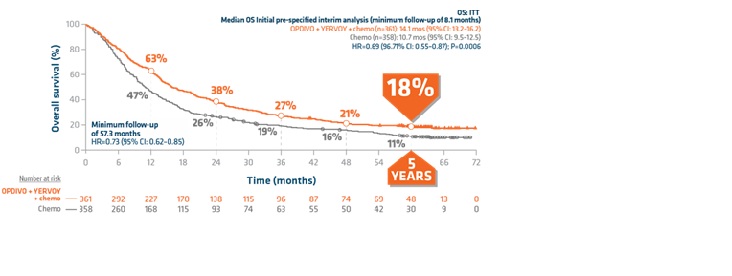
  • Statistically significant and superior mOS (14.1 months; [95% CI: 13.2–16.2]) vs chemotherapy alone (10.7 months; [95% CI: 9.5–12.5]) in the ITT population (HR=0.69; [96.71% CI: 0.55–0.87]; P=0.0006)1
  • Improved overall survival5‡:
    • PD-L1 <1% patient population (14.0 months with OPDIVO + YERVOY and chemo [95% CI: 13.2–NR] vs 10.0 months with chemotherapy alone [95% CI: 7.7–13.7])
    • PD-L1 ≥1% patient population (14.2 months with OPDIVO + YERVOY and chemo [95% CI: 13.1–NR] vs 10.6 with chemotherapy alone [95% CI: 9.4–12.6])

‡Limitation: Checkmate 9LA was not powered to detect differences in treatment effect in PD-L1 subgroups; therefore, results from this exploratory analysis should be interpreted with caution due to the limited patient numbers and potential imbalances in baseline characteristics within the subgroup.

In a 5-year follow-up analysis, durable survival and continued response to treatment were observed with OPDIVO + YERVOY and 2 cycles of chemotherapy compared with chemotherapy alone. The following data were observed at the 57.3-month minimum follow-up3:

  • mOS3:
    • ITT patient population: 15.8 months (95% CI: 13.9–19.7) with OPDIVO + YERVOY and chemo vs 11.0 months (95% CI: 9.5–12.7) with chemo (HR=0.73; [95% CI: 0.62–0.85])
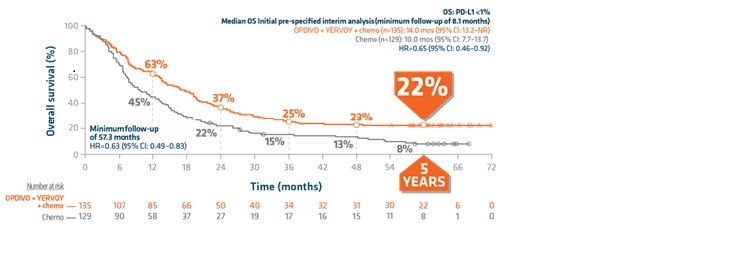
    • PD-L1 <1% patient population: 17.7 months (95% CI: 13.7–20.3) with OPDIVO + YERVOY and chemo vs 9.8 months (95% CI: 7.7–13.5) with chemo (HR=0.63; [95% CI: 0.49–0.83])
    • PD-L1 ≥1% patient population: 15.8 months (95% CI: 13.8–22.2) with OPDIVO + YERVOY and chemo vs 10.9 months (95% CI: 9.5–13.2) with chemo (HR=0.73; [95% CI: 0.59–0.90])

Durable overall survival rate in patients with PD-L1 <1%: The only I-O combination with more than 1 in 5 patients alive at 5 years1,3,5,6
Durable-OS-in-Patients-with-PD-L1-Less-Than-1%

Limitation: Checkmate 9LA was not powered to detect differences in treatment effect in PD-L1 subgroups; therefore, results from this exploratory analysis should be interpreted with caution due to the limited patient numbers and potential imbalances in baseline characteristics within the subgroup.

“22% is high compared with 8% and that is why we like the Checkmate 9LA regimen,” explained Dr Raez.

Overall survival in ITT population: Extended 5-year follow-up analysis1,3,6
OS-in-ITT-Population

  • mDOR3:
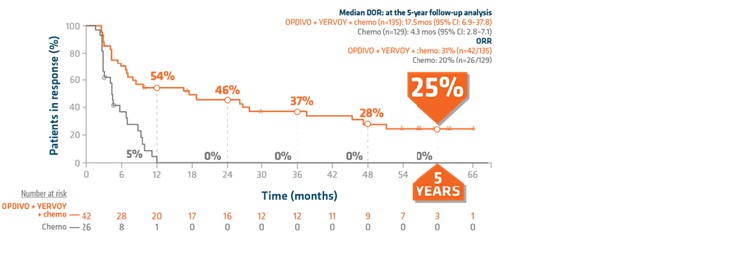
    • PD-L1 <1% patient population: 17.5 months with OPDIVO + YERVOY and chemo (95% CI: 6.9–37.8) vs 4.3 months with chemo (95% CI: 2.8–7.1)
    • PD-L1 ≥1% patient population: 11.8 months (95% CI: 8.6–20.3) vs 5.6 months and chemo (95% CI: 4.3–8.0)
    • ITT patient population: 12.4 months with OPDIVO + YERVOY and chemo (95% CI: 8.7–20.2) vs 5.6 months with chemo (95% CI: 4.4–7.1)

Duration of response in PD-L1 <1%: Extended 5-year follow-up analysis3
Duration-of-Response-in-PD-L1-Less-Than-1%

Limitation: Checkmate 9LA was not powered to detect differences in the treatment effect in this subgroup;
therefore, this exploratory analysis should be interpreted with caution because of the limited patient
numbers and potential imbalances in baseline characteristics within the subgroup.

“This regimen has markedly prolonged the duration of response at 5 years for 25% of patients with PD-L1 <1%” stated Dr. Raez.

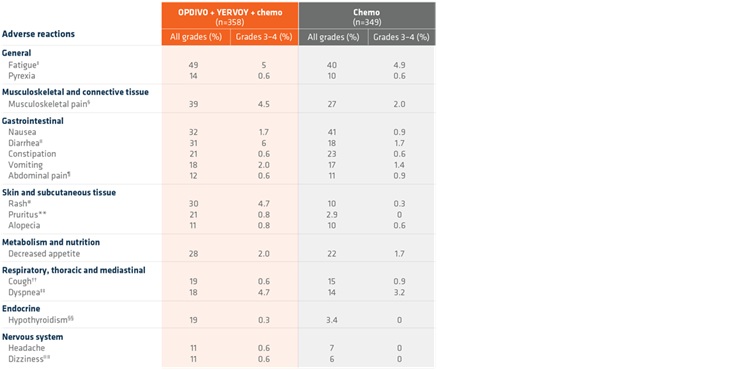
Adverse reactions in >10% of patients receiving OPDIVO + YERVOY and 2 cycles of chemo1*

Adverse-Reactions-Opdivo-Yervoy

  • OPDIVO + YERVOY with chemo was discontinued in 24% of patients due to adverse reactions, and 56% had at least one dose withheld for an adverse reaction1
  • Serious adverse reactions occurred in 57% of patients receiving OPDIVO + YERVOY with chemo1
  • The most frequent (>2%) serious adverse reactions were pneumonia, diarrhea, febrile neutropenia, anemia, acute kidney injury, musculoskeletal pain, dyspnea, pneumonitis, and respiratory failure. Fatal adverse reactions occurred in 7 (2%) patients, and included hepatic toxicity, acute renal failure, sepsis, pneumonitis, diarrhea with hypokalemia, and massive hemoptysis in the setting of thrombocytopenia1
  • The most common (>20%) adverse reactions were fatigue, musculoskeletal pain, nausea, diarrhea, rash, decreased appetite, constipation, and pruritus1
  • Median number of doses was 9 for OPDIVO, 4 for YERVOY, and 2 cycles of chemo7
  • With a minimum follow-up of 57.3 months, no new safety signals were identified for OPDIVO + YERVOY and 2 cycles of chemo3*

Toxicity was graded per NCI CTCAE v4.1
*vs chemo. In Checkmate 9LA, patients received 2 cycles of platinum-doublet chemo q3w in the experimental arm and 4 cycles in the comparator arm; NSQ: pemetrexed + carboplatin or cisplatin (optional pemetrexed maintenance therapy in the comparator arm only); SQ: paclitaxel + carboplatin.1 †Based on types of adverse reactions reported in 1L mNSCLC. Please note clinical trials are conducted under varying conditions, including different trial designs and dosing. Adverse reaction rates cannot be directly compared between trials.1 ‡Includes fatigue and asthenia.1 §Includes myalgia, back pain, pain in extremity, musculoskeletal pain, bone pain, flank pain, muscle spasms, musculoskeletal chest pain, musculoskeletal disorder, osteitis, musculoskeletal stiffness, non-cardiac chest pain, arthralgia, arthritis, arthropathy, joint effusion, psoriatic arthropathy, and synovitis.1 Includes colitis, ulcerative colitis, diarrhea, and enterocolitis.1 ¶Includes abdominal discomfort, abdominal pain, lower abdominal pain, upper abdominal pain, and gastrointestinal pain.1 #Includes acne, dermatitis, acneiform dermatitis, allergic dermatitis, atopic dermatitis, bullous dermatitis, generalized exfoliative dermatitis, eczema, keratoderma blennorrhagica, palmar-plantar erythrodysesthesia syndrome, rash, erythematous rash, generalized rash, macular rash, maculo-papular rash, morbilliform rash, papular rash, pruritic rash, skin exfoliation, skin reaction, skin toxicity, Stevens-Johnson syndrome, and urticaria.1 **Includes pruritus and generalized pruritus.1 ††Includes cough, productive cough, and upper-airway cough syndrome.1 ‡‡Includes dyspnea, dyspnea at rest, and exertional dyspnea.1 §§Includes autoimmune thyroiditis, increased blood thyroid stimulating hormone, hypothyroidism, thyroiditis, and decreased free tri-iodothyronine.1 ║║Includes dizziness, vertigo and positional vertigo.1

“The safety profile in the extended 5-year follow-up analysis of Checkmate 9LA was consistent with the previously known profiles for each component,” explained Dr Raez.

Dosing

OPDIVO® (nivolumab) + low-dose YERVOY® (ipilimumab) (1 mg/kg) and 2 cycles of chemo
1

For the r/m NSCLC dosing regimen in combination with chemo: on the first week, 4 agents will be administered (OPDIVO 360 mg + YERVOY 1 mg/kg + platinum-doublet histology-based chemo†), followed by 3 agents (OPDIVO + platinum-doublet histology-based chemo†) on the third week, 2 agents (OPDIVO + YERVOY) on the sixth week, and OPDIVO monotherapy on the ninth week, followed by maintenance therapy of OPDIVO + YERVOY: OPDIVO 360 mg q3w + YERVOY 1 mg/kg q6w until disease progression, unacceptable toxicity, or for up to 2 years.1 Histology-based chemo: SQ patients: carboplatin AUC 6 + paclitaxel 200 mg/m2 q3w; NSQ patients: carboplatin AUC 5 or 6 or cisplatin 75 mg/m2 + pemetrexed 500 mg/m2 q3w. No chemo maintenance required.1

  • OPDIVO is administered as an IV infusion over 30 minutes1
  • YERVOY is administered as an IV infusion over 30 minutes2

Summary and conclusions
5-year follow-up analysis of Checkmate 9LA continues to show prolonged survival data with OPDIVO + YERVOY and chemo vs chemo alone in patients who have r/m NSCLC across PD-L1 <1% and ≥1% expression.1,3 “Checkmate 9LA shows patient survival data that may be impactful,” stated Dr. Raez.
1L=first line; ALK=anaplastic lymphoma kinase; AUC=area under the curve; CI=confidence interval; DOR=duration of response; ECOG PS=Eastern Cooperative Oncology Group Performance Status; EGFR=epidermal growth factor receptor; HR=hazard ratio; I-O=immuno-oncology; ITT=intent to treat; IV=intravenous; mDOR=median DOR; mNSCLC=metastatic NSCLC; mo=month; mOS=median OS; NR=not reached; NSCLC=non-small cell lung cancer; NSQ=non-squamous; ORR=overall response rate; OS=overall survival; PD-1=programmed death receptor-1; PD-L1=programmed death ligand 1; PFS=progression-free survival; Pt=platinum; q3w=every 3 weeks; q6w=every 6 weeks; r/m=recurrent or metastatic; SQ=squamous.

INDICATION

OPDIVO® (nivolumab), in combination with YERVOY® (ipilimumab) and 2 cycles of platinum-doublet chemotherapy, is indicated for the first-line treatment of adult patients with metastatic or recurrent non-small cell lung cancer (NSCLC), with no EGFR or ALK genomic tumor aberrations.

IMPORTANT SAFETY INFORMATION

Severe and Fatal Immune-Mediated Adverse Reactions

  • Immune-mediated adverse reactions listed herein may not include all possible severe and fatal immune- mediated adverse reactions.
  • Immune-mediated adverse reactions, which may be severe or fatal, can occur in any organ system or tissue. While immune-mediated adverse reactions usually manifest during treatment, they can also occur after discontinuation of OPDIVO or YERVOY. Early identification and management are essential to ensure safe use of OPDIVO and YERVOY. Monitor for signs and symptoms that may be clinical manifestations of underlying immune-mediated adverse reactions. Evaluate clinical chemistries including liver enzymes, creatinine, adrenocorticotropic hormone (ACTH) level, and thyroid function at baseline and periodically during treatment with OPDIVO and before each dose of YERVOY. In cases of suspected immune-mediated adverse reactions, initiate appropriate workup to exclude alternative etiologies, including infection. Institute medical management promptly, including specialty consultation as appropriate.
  • Withhold or permanently discontinue OPDIVO and YERVOY depending on severity (please see section 2 Dosage and Administration in the accompanying Full Prescribing Information). In general, if OPDIVO or YERVOY interruption or discontinuation is required, administer systemic corticosteroid therapy (1 to 2 mg/kg/day prednisone or equivalent) until improvement to Grade 1 or less. Upon improvement to Grade 1 or less, initiate corticosteroid taper and continue to taper over at least 1 month. Consider administration of other systemic immunosuppressants in patients whose immune-mediated adverse reactions are not controlled with corticosteroid therapy. Toxicity management guidelines for adverse reactions that do not necessarily require systemic steroids (e.g., endocrinopathies and dermatologic reactions) are discussed below.

Immune-Mediated Pneumonitis

  • OPDIVO and YERVOY can cause immune-mediated pneumonitis. The incidence of pneumonitis is higher in patients who have received prior thoracic radiation.

Immune-Mediated Colitis

  • OPDIVO and YERVOY can cause immune-mediated colitis, which may be fatal. A common symptom included in the definition of colitis was diarrhea. Cytomegalovirus (CMV) infection/reactivation has been reported in patients with corticosteroid-refractory immune-mediated colitis. In cases of corticosteroid-refractory colitis, consider repeating infectious workup to exclude alternative etiologies.

Immune-Mediated Hepatitis and Hepatotoxicity

  • OPDIVO and YERVOY can cause immune-mediated hepatitis.

Immune-Mediated Endocrinopathies

  • OPDIVO and YERVOY can cause primary or secondary adrenal insufficiency, immune-mediated hypophysitis, immune-mediated thyroid disorders, and Type 1 diabetes mellitus, which can present with diabetic ketoacidosis. Withhold OPDIVO and YERVOY depending on severity (please see section 2 Dosage and Administration in the accompanying Full Prescribing Information). For Grade 2 or higher adrenal insufficiency, initiate symptomatic treatment, including hormone replacement as clinically indicated. Hypophysitis can present with acute symptoms associated with mass effect such as headache, photophobia, or visual field defects. Hypophysitis can cause hypopituitarism; initiate hormone replacement as clinically indicated. Thyroiditis can present with or without endocrinopathy. Hypothyroidism can follow hyperthyroidism; initiate hormone replacement or medical management as clinically indicated. Monitor patients for hyperglycemia or other signs and symptoms of diabetes; initiate treatment with insulin as clinically indicated.

Immune-Mediated Nephritis with Renal Dysfunction

  • OPDIVO and YERVOY can cause immune-mediated nephritis.

Immune-Mediated Dermatologic Adverse Reactions

  • OPDIVO can cause immune-mediated rash or dermatitis. Exfoliative dermatitis, including Stevens-Johnson syndrome (SJS), toxic epidermal necrolysis (TEN), and drug rash with eosinophilia and systemic symptoms (DRESS) has occurred with PD-1/PD-L1 blocking antibodies. Topical emollients and/or topical corticosteroids may be adequate to treat mild to moderate nonexfoliative rashes.
  • YERVOY can cause immune-mediated rash or dermatitis, including bullous and exfoliative dermatitis, SJS, TEN, and DRESS. Topical emollients and/or topical corticosteroids may be adequate to treat mild to moderate non-bullous/exfoliative rashes.
  • Withhold or permanently discontinue OPDIVO and YERVOY depending on severity (please see section 2 Dosage and Administration in the accompanying Full Prescribing Information).

Other Immune-Mediated Adverse Reactions

  • The following clinically significant immune-mediated adverse reactions occurred at an incidence of <1% (unless otherwise noted) in patients who received OPDIVO monotherapy or OPDIVO in combination with YERVOY or were reported with the use of other PD-1/PD-L1 blocking antibodies. Severe or fatal cases have been reported for some of these adverse reactions: cardiac/vascular: myocarditis, pericarditis, vasculitis; nervous system: meningitis, encephalitis, myelitis and demyelination, myasthenic syndrome/myasthenia gravis (including exacerbation), Guillain-Barré syndrome, nerve paresis, autoimmune neuropathy; ocular: uveitis, iritis, and other ocular inflammatory toxicities can occur; gastrointestinal: pancreatitis to include increases in serum amylase and lipase levels, gastritis, duodenitis; musculoskeletal and connective tissue: myositis/polymyositis, rhabdomyolysis, and associated sequelae including renal failure, arthritis, polymyalgia rheumatica; endocrine: hypoparathyroidism; other (hematologic/immune): hemolytic anemia, aplastic anemia, hemophagocytic lymphohistiocytosis (HLH), systemic inflammatory response syndrome, histiocytic necrotizing lymphadenitis (Kikuchi lymphadenitis), sarcoidosis, immune thrombocytopenic purpura, solid organ transplant rejection, other transplant (including corneal graft) rejection.
  • In addition to the immune-mediated adverse reactions listed above, across clinical trials of YERVOY monotherapy or in combination with OPDIVO, the following clinically significant immune-mediated adverse reactions, some with fatal outcome, occurred in <1% of patients unless otherwise specified: nervous system: autoimmune neuropathy (2%), myasthenic syndrome/myasthenia gravis, motor dysfunction; cardiovascular: angiopathy, temporal arteritis; ocular: blepharitis, episcleritis, orbital myositis, scleritis; gastrointestinal: pancreatitis (1.3%); other (hematologic/immune): conjunctivitis, cytopenias (2.5%), eosinophilia (2.1%), erythema multiforme, hypersensitivity vasculitis, neurosensory hypoacusis, psoriasis.
  • Some ocular IMAR cases can be associated with retinal detachment. Various grades of visual impairment, including blindness, can occur. If uveitis occurs in combination with other immune-mediated adverse reactions, consider a Vogt-Koyanagi-Harada–like syndrome, which has been observed in patients receiving OPDIVO and YERVOY, as this may require treatment with systemic corticosteroids to reduce the risk of permanent vision loss.

Infusion-Related Reactions

  • OPDIVO and YERVOY can cause severe infusion-related reactions. Discontinue OPDIVO and YERVOY in patients with severe (Grade 3) or life-threatening (Grade 4) infusion-related reactions. Interrupt or slow the rate of infusion in patients with mild (Grade 1) or moderate (Grade 2) infusion-related reactions.

Complications of Allogeneic Hematopoietic Stem Cell Transplantation

  • Fatal and other serious complications can occur in patients who receive allogeneic hematopoietic stem cell transplantation (HSCT) before or after being treated with OPDIVO or YERVOY. Transplant-related complications include hyperacute graft-versus-host-disease (GVHD), acute GVHD, chronic GVHD, hepatic veno-occlusive disease (VOD) after reduced intensity conditioning, and steroid-requiring febrile syndrome (without an identified infectious cause). These complications may occur despite intervening therapy between OPDIVO or YERVOY and allogeneic HSCT.
  • Follow patients closely for evidence of transplant-related complications and intervene promptly. Consider the benefit versus risks of treatment with OPDIVO and YERVOY prior to or after an allogeneic HSCT.

Embryo-Fetal Toxicity

  • Based on its mechanism of action and findings from animal studies, OPDIVO and YERVOY can cause fetal harm when administered to a pregnant woman. The effects of YERVOY are likely to be greater during the second and third trimesters of pregnancy. Advise pregnant women of the potential risk to a fetus. Advise females of reproductive potential to use effective contraception during treatment with OPDIVO and YERVOY and for at least 5 months after the last dose.

Increased Mortality in Patients with Multiple Myeloma when OPDIVO is Added to a Thalidomide Analogue and Dexamethasone

  • In randomized clinical trials in patients with multiple myeloma, the addition of OPDIVO to a thalidomide analogue plus dexamethasone resulted in increased mortality. Treatment of patients with multiple myeloma with a PD-1 or PD-L1 blocking antibody in combination with a thalidomide analogue plus dexamethasone is not recommended outside of controlled clinical trials.

Lactation

  • There are no data on the presence of OPDIVO or YERVOY in human milk, the effects on the breastfed child, or the effects on milk production. Because of the potential for serious adverse reactions in breastfed children, advise women not to breastfeed during treatment and for 5 months after the last dose.

Serious Adverse Reactions

  • In Checkmate 9LA, serious adverse reactions occurred in 57% of patients (n=358). The most frequent (>2%) serious adverse reactions were pneumonia, diarrhea, febrile neutropenia, anemia, acute kidney injury, musculoskeletal pain, dyspnea, pneumonitis, and respiratory failure. Fatal adverse reactions occurred in 7 (2%) patients, and included hepatic toxicity, acute renal failure, sepsis, pneumonitis, diarrhea with hypokalemia, and massive hemoptysis in the setting of thrombocytopenia.

Common Adverse Reactions

  • In Checkmate 9LA, the most common (>20%) adverse reactions were fatigue (49%), musculoskeletal pain (39%), nausea (32%), diarrhea (31%), rash (30%), decreased appetite (28%), constipation (21%), and pruritus (21%).

Please see US Full Prescribing Information for OPDIVO and YERVOY.

References:

  1. OPDIVO [package insert]. Princeton, NJ: Bristol-Myers Squibb Company.
  2. YERVOY [package insert]. Princeton, NJ: Bristol-Myers Squibb Company.
  3. Reck M, Ciuleanu TE, Schenker M, et al. Five-year outcomes with first-line nivolumab plus ipilimumab with 2 cycles of chemotherapy versus 4 cycles of chemotherapy alone in patients with metastatic non-small cell lung cancer in the randomized CheckMate 9LA trial. Eur J Cancer. Published online August 25, 2024. doi:10.1016/j.ejca.2024.114296
  4. Paz-Ares L, Ciuleanu TE, Cobo M, et al. First-line nivolumab plus ipilimumab combined with two cycles of chemotherapy in patients with non-small-cell lung cancer (CheckMate 9LA): an international, randomised, open-label, phase 3 trial. Lancet Oncol. 2021;22(2):198-211.
  5. Data on file. NIVO 566. Princeton, NJ: Bristol-Myers Squibb Company; 2020.
  6. Reck M, Ciuleanu T-E, Cobo M, et al. First-line nivolumab plus ipilimumab with two cycles of chemotherapy versus chemotherapy alone (four cycles) in advanced non-small cell lung cancer: CheckMate 9LA 2-year update. ESMO Open. 2021;6(5):100273.
  7. Data on file. NIVO 562. Princeton NJ: Bristol-Myers Squibb Company; 2020.

© 2024 Bristol-Myers Squibb Company. OPDIVO® and YERVOY® are registered trademarks of Bristol-Myers Squibb Company.
7356-US-2400513 12/24

Prolonged Survival Benefit with LYNPARZA® in BRCA Mutated Early Stage Breast Cancer

SUMMARY: Breast cancer is the most common cancer among women in the US and about 1 in 8 women (12%) will develop invasive breast cancer during their lifetime. Approximately 319,750 new cases of breast cancer will be diagnosed in 2025 and about 42,680 individuals will die of the disease, largely due to metastatic recurrence.

DNA can be damaged due to errors during its replication or as a result of environmental exposure to UV radiation from the sun or other toxins. The tumor suppressor genes such as BRCA1 (Breast Cancer 1) and BRCA2 help repair damaged DNA and thus play an important role in maintaining cellular genetic integrity, failing which these genetic aberrations can result in malignancies. The BRCA1 gene is located on the long (q) arm of chromosome 17 whereas BRCA2 is located on the long arm of chromosome 13. Mutations in BRCA1 and BRCA2 account for about 20 to 25 percent of hereditary breast cancers and about 5 to 10 percent of all breast cancers. These mutations can be inherited from either of the parents and a child has a 50 percent chance of inheriting this mutation, and the deleterious effects of the mutations are seen even when a second copy of the gene in an individual is normal. Patients with BRCA mutations can present with aggressive, high-risk disease and are at a high risk of recurrence following completion of multimodality therapy including surgery, radiation, and chemotherapy. This is an area of unmet need, warranting identification of additional novel and effective therapies.

BRCA1 and BRCA2 are tumor suppressor genes and they recognize and repair double strand DNA breaks via Homologous Recombination (HR) pathway. Homologous Recombination is a DNA repair pathway utilized by cells to accurately repair DNA double-stranded breaks during the S and G2 phases of the cell cycle, and thereby maintain genomic integrity. The PARP (Poly ADP Ribose Polymerase) family of enzymes include PARP1 and PARP2, and is a related enzymatic pathway that repairs single strand breaks in DNA. In a BRCA mutant, the cancer cell relies solely on PARP pathway for DNA repair to survive.

Olaparib (LYNPARZA®) is a PARP inhibitor, that traps PARP onto DNA at sites of single-strand breaks, thereby preventing their repair and generate double-strand breaks. These breaks cannot be repaired accurately in tumors harboring defects in Homologous Recombination Repair pathway genes, such as BRCA1 or BRCA2 mutations, and this leads to cumulative DNA damage and tumor cell death.

OlympiA is a multicenter, randomized, placebo-controlled, double-blind, Phase III trial of adjuvant Olaparib after neoadjuvant/adjuvant chemotherapy, in patients with germline BRCA1/2 mutations, and high risk HER2-negative early breast cancer. This trial enrolled 1836 patients, including triple-negative and Hormone Receptor positive (HR-positive) breast cancer. All enrolled patients had already received standard adjuvant or neoadjuvant chemotherapy, surgery and if needed, radiation therapy, for early stage breast cancer (Stage II-III). Inclusion criteria required that patients have a high risk of disease recurrence. Patients with triple-negative breast cancer who received adjuvant chemotherapy were required to have axillary node–positive disease or an invasive primary tumor measuring at least 2 cm. Patients who were treated with neoadjuvant chemotherapy were required to have residual invasive breast cancer in the breast or resected lymph nodes (no pathological Complete Response from neoadjuvant therapy). Patients who were treated with adjuvant chemotherapy for HR-positive, HER2-negative breast cancer were required to have 4 or more pathologically confirmed positive lymph nodes. Patients were randomized 1:1 to receive Olaparib 300 mg PO BID continuously for 1 year (N=921) or placebo (N=915). Endocrine therapy and bisphosphonates were allowed. Treatment groups were well balanced. The median age was 42 years, germline mutations were present in BRCA1 in 72% of the patients, in BRCA2 in 27% of the patients, 82% of the patients had triple-negative breast cancer, 18% had HR-positive and HER2 negative disease, 62% were premenopausal and 38% were postmenopausal, 50% of the patients had received adjuvant chemotherapy and 50% had received neoadjuvant chemotherapy. The Primary endpoint was Invasive Disease Free Survival (IDFS) and Secondary endpoints included Distant DFS (DDFS), Overall Survival (OS) and Safety. At the pre-specified interim analysis (2.5 years), the estimated 3-year Invasive DFS was 85.9% for patients who received Olaparib compared with 77.1% for those who received placebo (HR=0.58; P<0.001), representing a 42% reduction in the risk of Invasive DFS with Olaparib compared to placebo. The 3-year Distant DFS was 87.5% versus 80.4% respectively (HR=0.57; P<0.001). The researchers in this updated analysis reported the results of the third pre-specified interim analysis with median follow-up of 6.1 years (maximum follow-up of 9.6 years).

The treatment benefit with Olaparib was maintained with longer follow up, and was similar to previously reported results. The Invasive DFS at 6 years was 79.6% in the Olaparib-treated group versus 70.3% in the placebo group, with an absolute difference of 9.3%, favoring the addition of Olaparib (HR=0.65). The Distant DFS at 6 years was 83.5% versus 75.7%, respectively, with an absolute difference of 7.8% (HR=0.65). The 6-year Overall Survival rate was 87.5% in the Olaparib group versus 83.2% in the placebo group, with a 28% reduction in the risk of death (HR=0.72). The benefit with adjuvant Olaparib was consistent across all key subgroups, including for patients with high risk and HR-positive disease.

Fewer cases of BRCA-associated cancers such as contralateral invasive and non-invasive breast cancers, new primary ovarian cancer and new primary fallopian tube cancer were reported, with adjuvant Olaparib versus placebo. Further, there was no increase in the risk of developing secondary myelodysplastic syndrome or acute myeloid leukemia.

It was concluded that at 6.1 years median follow-up, one year of adjuvant treatment with Olaparib after neoadjuvant or adjuvant chemotherapy continues to demonstrate meaningful improvements in Invasive DFS, Distant DFS and OS in patients with germline BRCA pathogenic variants and high risk, HER2-negative breast cancer, including those with HR-positive tumors. This study highlights the importance of BRCA testing in early stage breast cancer. Perhaps considering one year of adjuvant Olaparib followed by a CDK4/6 inhibitor in HR-positive, BRCA-positive, high risk HER2-negative early stage breast cancer patients, may be a reasonable approach.

Garber J: OlympiA-Phase 3, multicenter, randomized placebo-controlled trial of adjuvant olaparib after (neo)adjuvant chemotherapy in patients with germline BRCA1/BRCA2 pathogenic variants and high-risk HER2-negative primary breast cancer: Longer-term follow-up. 2024 San Antonio Breast Cancer Symposium. Abstract GS1-09. Presented December 11, 2024.

FDA Approves LUMAKRAS® with VECTIBIX® for KRAS G12C-mutated Colorectal Cancer

SUMMARY: The FDA on January 16, 2025, approved Sotorasib (LUMAKRAS®) with Panitumumab (VECTIBIX®) for adult patients with KRAS G12C-mutated metastatic ColoRectal Cancer (mCRC), as determined by an FDA-approved test, who have received prior Fluoropyrimidine, Oxaliplatin, and Irinotecan-based chemotherapy. The FDA also approved the therascreen KRAS RGQ PCR Kit (QIAGEN GmbH) as a companion diagnostic device to aid in identifying patients with colorectal cancer whose tumors harbor KRAS G12C mutations and who may be eligible for LUMAKRAS® with VECTIBIX®.

Colorectal Cancer (CRC) is the third most common cancer diagnosed in both men and women in the United States. The American Cancer Society estimates that approximately 154,270 new cases of CRC will be diagnosed in the United States in 2025 and about 52,900 patients will die of the disease. The lifetime risk of developing CRC is about 1 in 23.

Approximately 15-25% of the patients with CRC present with metastatic disease at the time of diagnosis (synchronous metastases) and 50-60% of the patients with CRC will develop metastatic disease during the course of their illness. First line treatment of metastatic CRC includes Oxaliplatin or Irinotecan, in combination with a Fluoropyrimidine and Leucovorin (FOLFOX or FOLFIRI respectively), along with a VEGF targeting agent such as Bevacizumab or EGFR targeting agents such as Cetuximab (ERBITUX®) and Panitumumab. Patients with Stage IV colorectal cancer are now routinely analyzed for extended RAS and BRAF mutations. KRAS mutations are predictive of resistance to EGFR targeted therapy. Patients who progress following these therapies are considered to have refractory disease. These patients sometimes are rechallenged with previously administered chemotherapeutic agents, but often receive Regorafenib (STIVARGA®), an oral multikinase inhibitor with antiangiogenic activity, or LONSURF® (a fixed dose combination of Trifluridine and Tipiracil). These therapies, however, have shown limited efficacy.

The KRAS (Kirsten rat sarcoma viral oncogene homologue) proto-oncogene encodes a protein that is a member of the small GTPase super family. The KRAS gene provides instructions for making the KRAS protein, which is a part of a signaling pathway known as the RAS/MAPK pathway. By relaying signals from outside the cell to the cell nucleus, the protein instructs the cell to grow, divide and differentiate. KRAS gene is in the Ras family of oncogenes, which also includes two other genes, HRAS and NRAS. When mutated, oncogenes have the potential to change normal cells to cancer cells. KRAS is the most frequently mutated oncogene in human cancers and these cancers are often associated with resistance to targeted therapies and poor outcomes. The KRAS G12C mutation occurs in approximately 12-15% of Non Small Cell Lung Cancers (NSCLC) and in 3-5% of colorectal cancers and other solid cancers. G12C is a single point mutation with a Glycine-to-Cysteine substitution at codon 12. This substitution favors the activated state of KRAS, amplifying signaling pathways that lead to oncogenesis.

Sotorasib is a small molecule that specifically and irreversibly inhibits KRAS G12C protein and traps KRAS G12C in the inactive GDP-bound state, thus blocking downstream proliferation and survival signaling. Unlike the efficacy of single-agent KRAS G12C inhibitors in Non Small Cell Lung Cancer with KRAS G12C mutation, KRAS G12C inhibition alone has limited activity in patients with colorectal cancer. This has been attributed to upstream reactivation of the Epidermal Growth Factor Receptor (EGFR) pathway resulting in treatment-induced resistance, following selective inhibition of KRAS G12C. However, dual KRAS G12C and EGFR blockade can overcome treatment resistance in patients with colorectal cancer with KRAS G12C mutation. In the CodeBreaK 101 Phase 1b trial involving patients with chemorefractory colorectal cancer with mutated KRAS G12C, the Response Rate was 30% with Sotorasib plus Panitumumab, as compared with 9.7% with Sotorasib monotherapy.

The present FDA approval was based on CodeBreaK 300 trial, which is an international, multicenter, open-label, randomized, active-controlled Phase III study, conducted to evaluate the efficacy and safety of two different doses of Sotorasib (960 mg and 240 mg) in combination with Panitumumab as compared with the investigator’s choice of standard-care therapy (Trifluridine-Tipiracil or Regorafenib) in patients with chemorefractory metastatic colorectal cancer with KRAS G12C mutation. A lower dose of Sotorasib 240 mg orally once daily was tested in this study because of the nonlinear pharmacokinetic properties of Sotorasib. A total of 160 patients were randomly assigned in a 1:1:1 ratio to receive Sotorasib 960 mg orally once daily plus Panitumumab 6 mg/kg IV every 2 weeks (the 960 mg Sotorasib/Panitumumab group; N=53), Sotorasib 240 mg orally once daily plus Panitumumab (the 240 mg Sotorasib/Panitumumab group; N=53), with each treatment cycle repeating every 28 days, or the investigator’s choice of standard of care therapy which could be either Trifluridine-Tipiracil 35 mg/m2 (up to a maximum of 80 mg per dose) orally twice daily on days 1-5 and days 8-12 every 28 days, or Regorafenib 160 mg orally once daily for the first 21 days of each 28-day cycle (N=54). Treatment continued until disease progression or unacceptable toxicities. The median age was 61 years and majority of patients had more than 2 or more lines of previous anti-cancer therapy. KRAS G12C mutation was confirmed by prospective central molecular testing. Randomization was stratified according to previous use of antiangiogenic therapy, the time from initial diagnosis of metastatic disease to randomization and ECOG-PS. The Primary end point was Progression Free Survival (PFS) as assessed by Blinded Independent Central Review (BICR). Key Secondary end points included Overall Survival (OS) and Objective Response Rate (ORR) and Duration of Response (DOR).

After a median follow up of 7.8 months, both Sotorasib combinations (960 mg and 240 mg) plus Panitumumab demonstrated significantly longer PFS compared to standard of care therapy. The median PFS was 5.6 months and 3.9 months in the 960 mg Sotorasib/Panitumumab and 240 mg Sotorasib/Panitumumab groups, respectively, as compared with 2.2 months in the standard of care group (HR for 960 mg group=0 49; P=0.006) (HR for 240 mg group=0.58; P=0.03). The improvement in PFS was observed across key subgroups, including tumor sideness/primary tumor location, prior lines of therapy, and the presence or absence of liver metastases. The Objective Response Rate was 26.4%, 5.7%, and 0% in the 960 mg Sotorasib/Panitumumab, 240 mg Sotorasib/Panitumumab, and standard of care groups, respectively and the median DOR was 4.4 months in the 960 mg Sotorasib/Panitumumab group. Overall Survival data is immature. While this trial was not powered to compare the two Sotorasib/Panitumumab groups directly, the 960 mg dose appeared to yield more clinically significant benefits than the 240 mg dose, across all efficacy endpoints, without additional toxic effects. The final analysis of PFS for patients randomized to the 240 mg Sotorasib/Panitumumab arm compared to the standard of care groups was not statistically significant.
Grade 3 or higher treatment-related adverse events occurred in 35.8%, 30.2%, and 43.1% of patients, respectively. Skin-related toxic effects and hypomagnesemia were the most common adverse events observed with Sotorasib/Panitumumab.

It was concluded from this study that Sotorasib 960 mg in combination with Panitumumab resulted in significantly longer Progression Free Survival and a higher Objective Response Rate than standard of care treatment. Ongoing analysis and longer follow-up will provide additional insights into Overall Survival outcomes.

Sotorasib plus Panitumumab in Refractory Colorectal Cancer with Mutated KRAS G12C. Fakih MG, Salvatore L, Esaki T, et al. N Engl J Med 2023;389:2125-2139.