Key Breast Cancer Risk Genes Identified from Two Large Studies

SUMMARY: Breast cancer is the most common cancer among women in the US and about 1 in 8 women (12%) will develop invasive breast cancer during their lifetime. Approximately 284,200 new cases of breast cancer will be diagnosed in 2021 and about 44,130 individuals will die of the disease largely due to metastatic recurrence.

Genetic testing for cancer susceptibility with multigene testing panels is now becoming widely available and affordable. Identification of pathogenic variants in predisposition genes such as BRCA1 and BRCA2 among carriers has provided benefit through early intervention. However, the evidence of an association with cancer is often weak for many other genes on multigene testing panels, and estimates of the cancer risks associated with such variants are often not available. Further, estimates of the prevalence of pathogenic variants in predisposition genes in the general population are lacking.

Two large breast cancer case-control studies analyzed the associations between a number of commonly accepted cancer susceptibility genes and breast cancer risk.

The multinational study by Dorling et al. used a panel of 34 commonly accepted cancer susceptibility genes to perform sequencing on samples from 60,466 women with breast cancer and 53,461 controls (unaffected woman) from 25 countries participating in the Breast Cancer Association Consortium. The authors estimated odds ratios for breast cancer overall and tumor subtypes and evaluated missense-variant associations and classification of pathogenicity. The researchers found strong evidence of an association with breast cancer risk for Protein-Truncating Variants (genetic variants) caused by frameshift mutations in 9 genes, with a significant risk for breast cancer and P value of less than 0.0001 for 5 genes (ATM, BRCA1, BRCA2, CHEK2, and PALB2 – Odds Ratios ranging from 2.1 for ATM to 10.6 for BRCA1), and a P value of less than 0.05 for the other 4 genes (BARD1, RAD51C, RAD51D, and TP53 – Odds Ratio ranging from 1.8 for RAD51D to 3.06 for TP53). Further, it was noted that for the genetic variants in most of these genes, the Odds Ratio differed according to breast cancer subtype. Protein-Truncating Variants in ATM and CHEK2 were more strongly associated with ER-positive disease than with ER-negative disease, whereas genetic variants in BARD1, BRCA1, BRCA2, PALB2, RAD51C, and RAD51D were more strongly associated with ER-negative disease than with ER-positive disease. It was also found that rare missense variants in CHEK2 overall, as well as variants in specific domains in ATM, were associated with moderate breast cancer risk. The researchers also noted that none of the other 25 genes in the panel were informative for the prediction of breast cancer risk. This study places Protein-Truncating Variants in BRCA1, BRCA2, and PALB2 in the high-risk category and Protein-Truncating Variants in ATM, BARD1, CHEK2, RAD51C, and RAD51D in the moderate-risk category.

The US study by Hu et al. used a panel of 28 cancer predisposition genes to perform sequencing on samples from 32,247 women with breast cancer and 32,544 controls (unaffected women) from population-based studies in the Cancer Risk Estimates Related to Susceptibility (CARRIERS) consortium. The researchers assessed the associations between pathogenic variants in each gene and the risk of breast cancer.
The researchers noted that pathogenic variants in 12 established breast cancer predisposition genes were detected in 5% of breast cancer patients and in 1.63% of controls. Pathogenic variants in BRCA1 and BRCA2 were associated with a high risk of breast cancer, with Odds Ratios of 7.62 and 5.23 respectively and pathogenic variants in PALB2 were associated with a moderate risk (Odds Ratio 3.83). Pathogenic variants in BARD1, RAD51C, and RAD51D were associated with increased risks of ER-negative breast cancer and triple-negative breast cancer, whereas pathogenic variants in ATM, CDH1, and CHEK2 were associated with an increased risk of ER-positive breast cancer. Pathogenic variants in the other 16 candidate breast cancer predisposition genes were not associated with an increased risk of breast cancer.

Taken together, the results from these two large case-control studies suggested that variants in 8 genes – BRCA1, BRCA2, PALB2, BARD1, RAD51C, RAD51D, ATM, and CHEK2, had a significant association with breast cancer risk and majority of the other genes tested did not have a significant association with disease. Further, the distribution of mutations among women with breast cancer was different from the distribution among controls (unaffected women). Among breast cancer patients, the majority of mutations were in BRCA1, BRCA2, and PALB2, and among controls, the majority of mutations were in CHEK2 and ATM.

It can be concluded that, these two studies define the genes that are of utmost clinical value for inclusion on sequencing panels, for the prediction of breast cancer risk, and provides estimates of the prevalence of the pathogenic variants in the unaffected population. The authors added that these estimates can inform cancer testing and screening and improve clinical management strategies for women in the general population with inherited pathogenic variants in these genes.

Breast Cancer Risk Genes – Association Analysis in More than 113,000 Women. Breast Cancer Association Consortium; Dorling L, Carvalho S, Allen J, et al. N Engl J Med 2021;384:428-439.

A Population-Based Study of Genes Previously Implicated in Breast Cancer. Hu C, Hart SN, Gnanaolivu R, et al. N Engl J Med 2021;384:440-451.
FDA Approves UKONIQ® for Relapsed or Refractory Marginal Zone and Follicular Lymphomas

SUMMARY: The FDA on February 5, 2021 granted accelerated approval to UKONIQ® (Umbralisib), a kinase inhibitor including PI3K-delta and Casein Kinase CK1-epsilon, for adult patients with Relapsed or Refractory Marginal Zone Lymphoma (MZL) who have received at least one prior anti-CD20-based regimen and adult patients with Relapsed or Refractory Follicular Lymphoma (FL) who have received at least three prior lines of systemic therapy. The American Cancer Society estimates that in 2021, about 81,560 people will be diagnosed with Non Hodgkin Lymphoma (NHL) in the United States and about 20,720 individuals will die of this disease. Indolent Non Hodgkin Lymphomas are mature B cell lymphoproliferative disorders and include Follicular Lymphoma, Nodal Marginal Zone Lymphoma (NMZL), Extranodal Marginal Zone Lymphoma (ENMZL) of Mucosa-Associated Lymphoid Tissue (MALT), Splenic Marginal Zone Lymphoma (SMZL), LymphoPlasmacytic Lymphoma (LPL) and Small Lymphocytic Lymphoma (SLL). Follicular Lymphoma is the most indolent form and second most common form of all NHLs and they are a heterogeneous group of lymphoproliferative malignancies. Approximately 20% of all NHLs are Follicular Lymphomas (FL).

Advanced stage indolent NHL is not curable and as such, prolonging Progression Free Survival (PFS) and Overall Survival (OS), while maintaining Quality of Life, have been the goals of treatment intervention. Asymptomatic patients with indolent NHL are generally considered candidates for “watch and wait” approach. Patients with advanced stage symptomatic Follicular Lymphoma are often treated with induction chemoimmunotherapy followed by maintenance RITUXAN® (Rituximab). This can result in a median PFS of 6-8 yrs and a median OS of 12-15 yrs. However, approximately 30% of the patients will relapse in 3 years and treatment options are limited for patients with relapses, after multiple treatments.

UKONIQ® is an oral, once-daily, dual inhibitor of Phosphatidylinositol-3-Kinase-delta (PI3Kδ) and Casein Kinase 1-epsilon (CK1-epsilon) that exhibits improved selectivity for the delta isoform of PI3K. In contrast with other PI3K inhibitors, there was a low incidence of immune-mediated toxicities with UKONIQ® possibly attributable to enhanced selectivity for the PI3Kδ isoform as well as inhibition of CK1-epsilon.

The present FDA approval was based on the UNITY-NHL trial (NCT02793583), which is global, multicenter, open-label, multicohort, Phase IIb registration study, designed to evaluate the safety and efficacy of UKONIQ® in previously treated NHL patients. This study had a total 208 patients with indolent NHL and included 69 patients with MZL (splenic, nodal, extranodal), 117 patients with FL (grade 1, 2, 3a), and 22 patients with Small Lymphocytic Lymphoma (SLL). MZL patients were Relapsed/Refractory to 1 or more prior lines of treatment, which included an anti-CD20, while FL and SLL patients were Relapsed/Refractory to 2 or more prior lines of therapy, which included an anti-CD20 and an alkylating agent. UKONIQ® was administered at 800 mg orally once daily in 28-day treatment cycles until disease progression or unacceptable tolerability. The median age was 66 years and the median duration of treatment exposure was 8.4 months. Pneumocystis jiroveci Pneumonia (PCP) and anti-viral prophylaxis were mandated for all patients. The Primary endpoint of the study was Overall Response Rate (ORR) as assessed by an Independent Review Committee (IRC) and Secondary endpoints included Duration of Response (DoR), Progression Free Survival (PFS), Time To Response (TTR), and Safety.

With a median follow up of 27.8 months, the ORR for patients with MZL was 49%, with a 16% Complete Response (CR) rate and a Disease Control Rate (CR+PR+SD) of 82.6%. The ORR was consistent amongst MZL subtypes and no patients who achieved CR had experienced disease progression to date. Additionally, the median DoR and median PFS was not reached for this patient population.

Among patients with FL, with a median follow up of 27.5 months, the ORR was 45%, with 5% achieving a CR, and a DCR of 79.5%. The median TTR was 4.6 months and the median DoR was 11.1 months. The median PFS was 10.6 months.

Among SLL patients, with a median follow up of 29.3 months, the ORR was 50%, with 4.5% achieving a CR, and a DCR of 86.4%. The median TTR was 2.7 months and the median DoR was 18.3 months. The median PFS was 20.9 months.

The most common toxicities included increased creatinine, diarrhea/colitis, fatigue, transaminase elevation, musculoskeletal pain, neutropenia, anemia, thrombocytopenia, upper respiratory tract infection, nausea, vomiting, abdominal pain, reduced appetite, and cutaneous reactions.

It was concluded from this study that UKONIQ® has a favorable benefit-risk profile and achieved meaningful clinical activity in a heavily pretreated population of patients with indolent NHL. The authors added that the safety profile was manageable, with a relatively low incidence of immune-mediated toxicities and treatment discontinuations.

Umbralisib, the Once Daily Dual Inhibitor of PI3Kδ and Casein Kinase-1ε Demonstrates Clinical Activity in Patients with Relapsed or Refractory Indolent Non-Hodgkin Lymphoma: Results from the Phase 2 Global Unity-NHL Trial. Zinzani PL, Samaniego F, Jurczak W, et al. Presented at the 62nd ASH Annual Meeting and Exposition, December 5-8, 2020. Abstract # 2934.

TIBSOVO® Improves Survival in IDH1 Mutated Advanced Cholangiocarcinoma

SUMMARY: Bile Duct cancer (Cholangiocarcinoma), comprise about 30% of all primary liver tumors and includes both intrahepatic and extrahepatic bile duct cancers. Klatskin tumor is a type of Cholangiocarcinoma that begins in the hilum, at the junction of the left and right bile ducts. It is the most common type of Cholangiocarcinoma, accounting for more than half of all cases. About 8,000 people in the US are diagnosed with Cholangiocarcinoma each year and approximately 20% of the cases are suitable for surgical resection. The 5-year survival is less than 10%, with limited progress made over the past two decades. There is therefore an unmet need for new effective therapies.

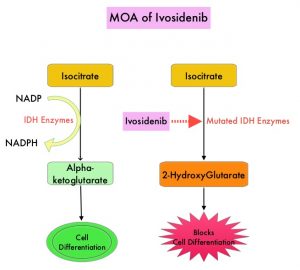
Isocitrate DeHydrogenase (IDH) is a metabolic enzyme that helps generate energy from glucose and other metabolites, by catalyzing the conversion of Isocitrate to Alpha-Ketoglutarate. Alpha-ketoglutarate is required to properly regulate DNA and histone methylation, which in turn is important for gene expression and cellular differentiation. IDH mutations lead to aberrant DNA methylation and altered gene expression thereby preventing cellular differentiation, with resulting immature undifferentiated cells. IDH mutations can thus promote leukemogenesis in Acute Myeloid Leukemia (AML) and tumorigenesis in solid tumors and can result in inferior outcomes. There are three isoforms of IDH. IDH1 is mainly found in the cytoplasm, as well as in peroxisomes, whereas IDH2 and IDH3 are found in the mitochondria, and are a part of the Krebs cycle. Approximately 20% of patients with AML, 70% of patients with Low-grade Glioma and secondary Glioblastoma, 50% of patients with Chondrosarcoma, 20% of patients with Intrahepatic Cholangiocarcinoma, 30% of patients with Angioimmunoblastic T-cell lymphoma and 8% of patients with Myelodysplastic syndromes/Myeloproliferative neoplasms, are associated with IDH mutations.

TIBSOVO® (Ivosidenib) is an oral, targeted, small-molecule inhibitor of mutant IDH1. The FDA in July, 2018, approved TIBSOVO® for adult patients with relapsed or refractory AML with a susceptible IDH1 mutation. A previously published Phase I study demonstrated the safety and activity of TIBSOVO® in patients with IDH1 mutated advanced Cholangiocarcinoma.MOA-of-Ivosidenib

ClarIDHy is an international, randomized, double-blind, Phase III study, in which 187 previously treated patients with advanced Cholangiocarcinoma with an IDH1 mutation were randomly assigned 2:1 to receive TIBSOVO® 500 mg orally once daily (N=126) or matched placebo (N=61). All patients had advanced unresectable Cholangiocarcinoma. The median age was 62 years, 91% had intrahepatic Cholangiocarcinoma, 93% of patients had metastatic disease and 47% had received two prior therapies. The Primary endpoint was Progression Free Survival (PFS) and Secondary endpoints included Safety, Objective Response Rate (ORR) and Overall Survival (OS). Crossover from placebo to TIBSOVO® was permitted upon radiographic disease progression.

This study met its Primary endpoint and the median PFS was 2.7 months for patients treated with TIBSOVO® compared to 1.4 months with placebo (HR=0.37; P<0.0001). More importantly, the median PFS at 6 and 12 months were 32% and 22% in the TIBSOVO® group, whereas no patients randomized to the placebo group were progression-free for 6 or more months, at the time of data cutoff.

The authors now reported the results of final analysis which showed an improvement in the secondary endpoint of OS, favoring patients randomized to TIBSOVO® compared to those randomized to placebo. However, statistical significance was not reached. The median OS for patients in the TIBSOVO® arm was 10.3 months compared to 7.5 months for patients in the placebo arm (HR=0.79; 1-sided P=0.093). A high proportion of patients in the placebo arm (70.5%) crossed over to TIBSOVO®. After adjusting for crossover from placebo to TIBSOVO®, the median OS for patients in the placebo arm was 5.1 months (HR=0.49; 1-sided P<0.0001).

The 6-month survival rate for patients in the TIBSOVO® arm was 69% compared to 57% of patients in the placebo arm, not adjusted for crossover. The 12-month survival rate for patients in the TIBSOVO® arm was 43% compared to 36% for patients in the placebo arm, not adjusted for crossover. Treatment with TIBSOVO® preserved patients’ physical functioning from baseline, as assessed by the EORTC QLQ-C30 questionnaire, whereas patients in the placebo arm experienced decline from baseline starting cycle 2. The most common Adverse Events of any grade for TIBSOVO® were nausea (38%), diarrhea (33.1%) and fatigue (28.9%). Adverse Events leading to discontinuation were more common with placebo compared with total TIBSOVO® (8.5% versus 6.6%).

It was concluded that treatment with TIBSOVO® in patients with advanced Cholangiocarcinoma with an IDH1 mutation, resulted in significant improvement in Progression Free Survival as well as favorable Overall Survival trend, when compared to Placebo, despite a high rate of crossover. This is the first pivotal study demonstrating the clinical benefit of targeting IDH1 mutation in this patient group. This new oral, non-cytotoxic, targeted treatment option, with a tolerable safety profile, will be a welcome addition to treat this aggressive disease, for which there is an unmet need for new therapies.

Final results from ClarIDHy, a global, phase III, randomized, double-blind study of ivosidenib (IVO) versus placebo (PBO) in patients (pts) with previously treated cholangiocarcinoma (CCA) and an isocitrate dehydrogenase 1 (IDH1) mutation. Zhu A, Macarulla T, Javle MM, et al. J Clin Oncol 39, 2021 (suppl 3; abstr 266)

Real-World Data: Surgery Improves Survival in Treatment Responsive Metastatic Breast Cancer

SUMMARY: Breast cancer is the most common cancer among women in the US and about 1 in 8 women (12%) will develop invasive breast cancer during their lifetime. Approximately 284,200 new cases of breast cancer will be diagnosed in 2021 and about 44,130 individuals will die of the disease largely due to metastatic recurrence. Approximately 15-20% of invasive breast cancers overexpress HER2/neu oncogene and about 50% of HER2-positive breast cancers are Hormone Receptor positive. Patients with HER2-positive metastatic breast cancer are often treated with anti-HER2 targeted therapy along with chemotherapy, irrespective of hormone receptor status, and this has resulted in significantly improved treatment outcomes. Not all HER2-positive, Hormone Receptor positive metastatic breast cancer patients, are candidates for chemotherapy. These patients however may benefit from anti-HER2 targeted therapy given along with endocrine therapy.

Approximately 6% of newly diagnosed breast cancer patients present with Stage IV disease. Systemic therapy has been the cornerstone of treatment for patients with metastatic breast cancer. Breast surgery is often not a consideration for patients with metastatic breast cancer. However, breast surgery can be offered for palliation of symptoms, taking into consideration the risks and benefits of such intervention, in a patient with an ulcerated, bleeding, or a fungating tumor mass, that cannot be controlled with systemic therapy.

Surgical resection of metastatic disease is not a new concept. Previously published results from randomized controlled trials among patients with metastatic breast cancer concluded that there was no survival advantage with surgical intervention. However these results have been questioned because of the small number of participants, and did not take into account either the Hormone Receptor, HER-2 status or the sequence of chemotherapy in relation to the surgical intervention. It therefore remains unclear whether surgery, in addition to systemic treatments and radiation therapy, improves survival for certain patients with metastatic breast cancer.

The authors in this real-world study identified 12,838 patients with HER-2 overexpressing and Hormone Receptor positive, Stage IV breast cancer, from the NCI database. They then studied patients who had either systemic therapy alone, systemic therapy and surgery, or had systemic therapy, surgery and radiation, and evaluated whether certain biologic subtypes and timing of chemotherapy were associated with survival advantages. Specifically, they evaluated whether the Hormone Receptor status had an influence on surgical benefit, in these treatment-responsive breast cancer patients, understanding that triple negative breast cancers are not very responsive to treatment. The researchers excluded patients who died within six months of their diagnoses, in order to ensure that only treatment-responsive cancers were being studied. The goal of this study was to understand if surgery made a difference in metastatic breast cancers that were responsive to treatment.

The researchers noted that patients with a surgical intervention tended to have a longer survival, compared to patients with other treatment plans. Patients whose cancers were HER2-positive saw prolonged survival, especially when their treatment plan included surgery. Further, in addition to the benefit of surgery among treatment-responsive metastatic breast cancer patients, the authors noted that systemic therapy before surgery (preoperative systemic therapy which included chemotherapy and targeted therapies) had the greatest survival advantage in patients with positive HER-2 and Estrogen and Progesterone Receptor status.

It was concluded from this study that patients with Stage IV breast cancer responsive to systemic therapy may be able to benefit from the addition of surgery, regardless of their biologic subtype. The authors added that clinicians should evaluate real-world evidence, including this study, when choosing the optimal treatment for their patients with metastatic breast cancer, as it may be difficult to conduct randomized clinical trials in this patient population.

ASO Author Reflections: Surgery Offers Survival Advantage in Treatment-Responsive Metastatic Breast Cancer. Stahl K, Dodge D, and Shen C. Annals of Surgical Oncology, 2020; DOI: 10.1245/s10434-020-09286-9

FDA Approves OPDIVO® plus CABOMETYX® in Newly Diagnosed Advanced Kidney Cancer

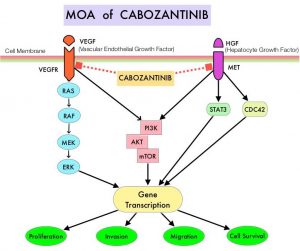
SUMMARY: The FDA on January 22,2021, approved the combination of OPDIVO® (Nivolumab) and CABOMETYX® (Cabozantinib) as first line treatment for patients with advanced Renal Cell Carcinoma (RCC). The American Cancer Society estimates that 76,080 new cases of kidney cancers will be diagnosed in the United States in 2021 and about 13,780 people will die from the disease. Renal Cell Carcinoma (RCC) is by far the most common type of kidney cancer and is about twice as common in men as in women. Modifiable risk factors include smoking, obesity, workplace exposure to certain substances and high blood pressure. The five year survival of patients with advanced RCC is less than 10% and there is significant unmet need for improved therapies for this disease. SUTENT® (Sunitinib) is a MultiKinase Inhibitor (MKI) which simultaneously targets the tumor cell wall, vascular endothelial cell wall as well as the pericyte/fibroblast/vascular/smooth vessel cell wall, and is capable of specifically binding to tyrosine kinases, inhibiting the earlier signaling events and thereby inhibits phosphorylation of VEGF receptor, PDGF receptor, FLT-3 and c-KIT. SUTENT® has been the standard first line intervention for treatment naïve patients with advanced RCC. In a large, multi-center, randomized, Phase III study, the median Progression Free Survival (PFS) with SUTENT® was 9.5 months, the Objective Response Rate (ORR) was 25%, and the median Overall Survival (OS) was 29.3 months, when compared with Interferon Alfa, in patients with treatment-naïve Renal Cell Carcinoma. This was however associated with a high rate of hematological toxicities.

The FDA in 2018, approved combination immunotherapy, OPDIVO® (Nivolumab) plus YERVOY® (Ipilimumab), for the treatment of intermediate or poor-risk, previously untreated advanced Renal Cell Carcinoma (RCC), based on significantly higher Overall Survival (OS) and Objective Response Rates (ORR), compared with SUTENT® (CheckMate 214). Subsequently, two studies, a combination of BAVENCIO® (Avelumab) and INLYTA® (Axitinib) – JAVELIN Renal 101, and KEYTRUDA® (Pembrolizumab) and INLYTA® (KEYNOTE-426), demonstrated superior OS, compared to SUTENT®, and for the first time set the stage for the use of a combination of checkpoint inhibitor and targeted therapy in this patient population.MOA-of-CABOZANTINIB

OPDIVO®, an anti-PD-1 checkpoint inhibitor and CABOMETYX® (Cabozantinib), a small-molecule Tyrosine Kinase Inhibitor, are both approved as single agents, for the second-line treatment of Renal Cell Carcinoma. The rationale for combining these two agents is that OPDIVO® unleashes the immune system and restores antitumor immune response, whereas CABOMETYX® has both antiangiogenic and immunomodulatory properties and may counteract tumor-induced immunosuppression.

CheckMate 9ER study is a multinational, randomized, Phase III trial, in which a combination of OPDIVO® plus CABOMETYX® was compared with single agent SUTENT®, in treatment naïve patients with advanced clear cell Renal Cell Carcinoma. This study included 651 treatment naïve patients with advanced Renal Cell Carcinoma with a clear cell component, who were randomly assigned in a 1:1 ratio to receive OPDIVO® 240 mg IV every 2 weeks along with CABOMETYX® 40 mg orally daily (N=323) or SUTENT® 50 mg orally daily in 4-week-on, 2-week-off cycles (N=328). Treatment was continued until disease progression or unacceptable toxicity. Patients with any IMDC (International Metastatic RCC Database Consortium) risk score were included. Patients with sarcomatoid tumor features were allowed. Patients were stratified by IMDC risk score and tumor PD-L1 expression. The median patient age was 62 years, 58% of patients were in the IMDC intermediate risk category and 75% of patients had tumor PD-L1 expression of less than 1%. The Primary endpoint was Progression Free Survival (PFS) and Secondary endpoints included Overall Survival (OS), Objective Response Rate (ORR) and safety.

At a median follow up of 18.1 months, the median PFS was 16.6 months with OPDIVO® plus CABOMETYX® combination versus 8.3 months with single agent SUTENT® (HR=0.51; P<0.0001), suggesting a doubling of PFS, with a 49% reduction in the risk of disease progression or death. The median Overall Survival, a secondary endpoint, was not reached in either treatment group, but at this first analysis, patients randomized to the OPDIVO® plus CABOMETYX® combination had significantly longer OS, than those receiving SUTENT® (median Not Reached; HR=0.60; P=0.001), suggesting a 40% reduction in the risk of death. These benefits were seen consistently across pre-specified subgroups defined according to IMDC risk categories and PD-L1 expression. The Objective Response Rate (ORR) was also significantly higher and doubled among patients receiving the OPDIVO® plus CABOMETYX® combination, compared to those receiving SUTENT® (55.7% versus 27.1%, P<0.0001). Complete response rates were also higher among those receiving the OPDIVO® plus CABOMETYX® combination (8.0% versus 4.6%), with a shorter median time to response, and longer duration of response. Grade 3 or more Adverse Events were higher among those receiving OPDIVO® plus CABOMETYX® combination, compared to those receiving SUTENT® (60.6% versus 50.9%).

It was concluded that a combination of OPDIVO® plus CABOMETYX® demonstrated superior Progression Free Survival, Overall Survival and Overall Response Rate, compared to SUTENT®, in treatment naïve patients with advanced Renal Cell Carcinoma, and provides a new treatment option for this patient group.

Nivolumab + cabozantinib vs sunitinib in first-line treatment for advanced renal cell carcinoma: first results from the randomized phase 3 CheckMate 9ER trial. Choueiri TK, Powles T, Burotto M, et al. Ann Oncol. 2020;31(4). Abstract 6960.

Maintenance Therapy with NINLARO® in Transplantation Ineligible Multiple Myeloma Patients

SUMMARY: Multiple Myeloma is a clonal disorder of plasma cells in the bone marrow and the American Cancer Society estimates that in the United States, 34,920 new cases will be diagnosed in 2021 and 12,410 patients are expected to die of the disease. Multiple Myeloma (MM) in 2021 remains an incurable disease. The therapeutic goal therefore is to improve Progression Free Survival (PFS) and Overall Survival (OS). Maintenance or Continuous Treatment in patients with newly diagnosed multiple myeloma following induction and consolidation, can result in significantly longer PFS and OS, compared to those patients who receive therapy for a fixed duration of time. REVLIMID® (Lenalidomide) was approved by the FDA in 2017 as maintenance therapy for patients with multiple myeloma following Autologous Stem Cell Transplant (ASCT) and to date is the only drug approved for this indication. REVLIMID® maintenance however is associated with the development of second new primary malignancies and tolerability issues.

Proteasomes are enzymes found in cells and they enable the breakdown of abnormal or mutant proteins. The amino acids from these proteins are recycled to make new proteins. Just like normal cells make proteins, so do cancerous cells. But the proteins made by the cancerous cells are ineffective and in excess. Myeloma cells depend on the Proteasomes to facilitate this metabolic function, to regulate their growth and survival. Proteasome Inhibitors (PIs) inhibit Proteasome function and are a backbone of multiple myeloma treatment. VELCADE® (Bortezomib), a Proteasome Inhibitor has shown promising activity in early clinical trials, as maintenance treatment post-ASCT. The limitations with VELCADE® as maintenance therapy include, parenteral administration and tolerability. There is therefore an unmet need for an effective oral PI maintenance therapy that is convenient for the patients, with acceptable toxicities. NINLARO® (Ixazomib) unlike VELCADE® is a second generation, oral, Proteasome Inhibitor, which disrupts protein metabolism in myeloma cells, by inhibiting Proteasomes and has an antiproliferative and pro-apoptotic effect. In the TOURMALINE-MM3 Phase III trial study, weekly NINLARO® maintenance treatment in responding patients after ASCT resulted in a significant reduction in the risk of progression and death, and was associated with a favorable safety profile.

TOURMALINE-MM4 is an International, randomized, double-blind, placebo-controlled, Phase III trial, conducted to evaluate the efficacy and safety of NINLARO® as maintenance therapy in transplant-ineligible patients after standard-of-care induction therapy. In this study, patients were randomly assigned 3:2 to receive NINLARO® 3 mg orally (N=425) or matching placebo (N=281) on days 1, 8, and 15 of 28-day cycles, as maintenance treatment for 24 months. The dose of NINLARO® was increased to 4 mg from cycle 5, if tolerated during cycles 1-4. Eligible patients had newly diagnosed multiple myeloma, not undergoing Autologous Stem Cell Transplantation (ASCT) and had achieved better than or equal to Partial Response after 6-12 months of standard induction therapy. The median patient age was 73 years and enrolled patients were stratified by induction regimen (PI-containing versus non-PI therapy), preinduction disease Stage (I or II versus III), age at randomization (less than 75 years versus 75 years or older) and response to initial therapy at screening (Complete Response-CR or Very Good Partial Response-VGPR versus Partial Response-PR). About 62% were in CR or VGPR at study entry. The Primary endpoint was Progression Free Survival (PFS). The key Secondary endpoint was Overall Survival (OS).

With a median follow up for PFS of 21.1 months, the median PFS since randomization was 17.4 versus 9.4 months (HR=0.659; P<0.001), suggesting a 34.1% reduction in risk of progression or death with NINLARO® versus placebo. Patients who achieved Complete or Very Good Partial Response postinduction benefitted the most with NINLARO® maintenance treatment, with a median PFS of 25.6 versus 12.9 months with placebo (HR=0.586; P<0.001). NINLARO® maintenance was well tolerated in this elderly population of transplantation-ineligible patients and 70.7% of patients tolerated the 3 mg dose of NINLARO® sufficiently well to escalate the dose to 4 mg. Overall rates of adverse events were similar between groups, and adverse events in the NINLARO® group were mostly grade 1-2 severity and included GI toxicities, rash, and peripheral neuropathy. No new safety signals were seen. There was no increase in new primary malignancies and there was no impact on patients’ self-reported quality of life.

It was concluded that TOURMALINE-MM4 is the first randomized Phase III trial to specifically investigate an induction-agnostic maintenance option for transplantation-ineligible patients with NDMM, and oral NINLARO® maintenance treatment prolonged Progression Free Survival with no unexpected toxicity in this patient population.

Ixazomib as Postinduction Maintenance for Patients With Newly Diagnosed Multiple Myeloma Not Undergoing Autologous Stem Cell Transplantation: The Phase III TOURMALINE-MM4 Trial. Dimopoulos MA, Spicka I, Quach H, et al. J Clin Oncol. 2020;38:4030-4041.