FDA Approves Subcutaneous DARZALEX® in Multiple Myeloma

SUMMARY: The FDA on May 1, 2020 approved DARZALEX® (Daratumumab) and Hyaluronidase-fihj (DARZALEX FASPRO®), for adult patients with newly diagnosed or Relapsed/Refractory multiple myeloma. This new product allows for subcutaneous dosing of DARZALEX®.

DARZALEX FASPRO® is now approved for these previously approved indications for IV DARZALEX®
1) In combination with VELCADE® (Bortezomib), Melphalan and Prednisone in newly diagnosed patients who are ineligible for Autologous Stem Cell Transplant (ASCT)
2) In combination with REVLIMID® (Lenalidomide) and Dexamethasone in newly diagnosed patients, who are ineligible for ASCT and in patients with Relapsed or Refractory multiple myeloma who have received at least one prior therapy
3) In combination with VELCADE® and Dexamethasone in patients who have received at least one prior therapy
4) As monotherapy, in patients who have received at least three prior lines of therapy including a Proteasome Inhibitor (PI) and an Immunomodulatory agent or who are double-refractory to a PI and an immunomodulatory agent.

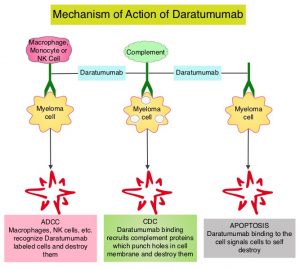
DARZALEX® is a human IgG1 antibody that targets CD38, a transmembrane glycoprotein abundantly expressed on malignant plasma cells and with low levels of expression on normal lymphoid and myeloid cells. DARZALEX® exerts its cytotoxic effect on myeloma cells by multiple mechanisms, including Antibody Dependent Cellular Cytotoxicity (ADCC), Complement Dependent Cytotoxicity (CDC) and direct Apoptosis. Additionally, DARZALEX® may play a role in immunomodulation, by depleting CD38-positive regulator immune suppressor cells, and thereby expanding T cells, in patients responding to therapy.Mechanism-of-Action-of-Daratumumab
This FDA approval is based on COLUMBA Trial, which is a randomized, open-label, multicenter Phase III study, which included 522 patients with multiple myeloma, who had received at least three prior lines of therapy including a Proteasome Inhibitor (PI) and an immunomodulatory drug (IMiD), or whose disease was refractory to both a PI and an IMiD. Patients were randomly assigned to receive a fixed dose of subcutaneously (SC) administered formulation of DARZALEX® 1800 mg weekly for cycles 1-2, every two weeks for cycles 3-6 and every four weeks for cycle 7 and thereafter (N=263), with the subcutaneous preparation given over 3-5 minutes at alternating left and right abdominal sites. In the intravenous group, patients received DARZALEX® 16 mg/kg IV weekly for cycles 1-2, every two weeks for cycles 3-6 and every four weeks for cycle 7 and thereafter (N=259). Each cycle was 28 days. Treatment in both patient groups was continued until disease progression or unacceptable toxicity. The median age was 67 years and the median number of prior therapies was four in each treatment group. Patient characteristics were similar between the two arms except that more patients in the subcutaneous arm had high-risk cytogenetics (26%) compared with the intravenous group (17%). The median duration of treatment was approximately 5 months, with a median of 6 completed cycles of treatment. The median duration of infusion was consistently 5 minutes at each visit in the subcutaneous group. However, in the IV arm, the first infusion lasted 7 hours, the second infusion was 4.3 hours, and subsequent infusions lasted a median of 3.4 hours. The study co-Primary endpoints were Overall Response Rate (ORR) and pharmacokinetic endpoint of the maximum C-trough on cycle 3, day 1 pre-dose.

At a median follow up of 7.5 months, the ORR was 41% for the subcutaneous administered formulation of DARZALEX® compared to 37% for IV DARZALEX® (P<0.0001). The ORR was similar across all clinically relevant subgroups, including body weight. The ratio of geometric means of C-trough for the SC administered formulation of DARZALEX® over IV DARZALEX® was 108%. The Progression Free Survival was comparable between the SC administered formulation of DARZALEX and the current IV formulation of DARZALEX (HR=0.99; P<0.9258). A lower rate of infusion-related reactions was observed in the group that received the SC DARZALEX® compared to IV DARZALEX® (13% vs. 35%, respectively).

It was concluded that the subcutaneous formulation of DARZALEX® resulted in non-inferior pharmacokinetics and efficacy compared to the current IV formulation, and also importantly offers the potential for a fixed-dose administration, shorter administration times and a lower rate of infusion-related reactions with improved safety profile, in patients with Relapsed or Refractory multiple myeloma.

Subcutaneous versus intravenous daratumumab in patients with relapsed or refractory multiple myeloma (COLUMBA): a multicentre, open-label, non-inferiority, randomised, phase 3 trial. Mateos M-V, Nahi H, Legiec W, et al. The Lancet Haematology. Published: March 23, 2020. DOI: https://doi.org/10.1016/S2352-3026(20)30070-3.
ZEJULA® (Niraparib)

The FDA on April 29, 2020 approved ZEJULA® for the maintenance treatment of adult patients with advanced epithelial ovarian, fallopian tube, or primary peritoneal cancer who are in a Complete or Partial Response to first-line platinum-based chemotherapy. ZEJULA® is a product of GlaxoSmithKline.

FDA Approves TRODELVY® for Advanced Triple Negative Breast Cancer

SUMMARY: The FDA on April 22, 2020, granted accelerated approval to TRODELVY® (Sacituzumab govitecan-hziy), for adult patients with metastatic Triple-Negative Breast Cancer (TNBC), who received at least two prior therapies for metastatic disease. Breast cancer is the most common cancer among women in the US and about 1 in 8 women (13%) will develop invasive breast cancer during their lifetime. Approximately 276,480 new cases of invasive female breast cancer will be diagnosed in 2020 and about 42,170 women will die of the disease.

Triple Negative Breast Cancer (TNBC) is a heterogeneous, molecularly diverse group of breast cancers and are ER (Estrogen Receptor), PR (Progesterone Receptor) and HER2 (Human Epidermal Growth Factor Receptor-2) negative. TNBC accounts for 15-20% of invasive breast cancers, with a higher incidence noted in young patients and African American females. It is usually aggressive, and tumors tend to be high grade, and patients with TNBC are at a higher risk of both local and distant recurrence and often develop visceral metastases. Those with metastatic disease have one of the worst prognoses of all cancers with a median Overall Survival of 13 months. The majority of patients with TNBC who develop metastatic disease do so within the first 3 years after diagnosis, whereas those without recurrence during this period of time have survival rates similar to those with ER-positive breast cancers. The lack of known recurrent oncogenic drivers in patients with metastatic TNBC, presents a major therapeutic challenge. Overall survival among patients with pretreated metastatic TNBC has not changed over the past 2 decades and standard chemotherapy is associated with low response rates of 10-15% and a Progression Free Survival of only 2-3 months.

TRODELVY® is an Antibody-Drug Conjugate (ADC) in which SN-38, an active metabolite of Irinotecan, a Topoisomerase I inhibitor, is coupled to the humanized Anti-Trophoblast cell-surface antigen 2 (Trop-2) monoclonal antibody (hRS7 IgG1κ), through the cleavable CL2A linker. SN-38 cannot be given directly to patients because of its toxicity and poor solubility. Trop-2, a transmembrane calcium signal transducer, stimulates cancer-cell growth, and this cell surface receptor is overexpressed in several epithelial cancers including cancers of the breast, colon and lung, and has limited expression in normal human tissues. Trop-2 is expressed in more than 85% of breast tumors including Triple Negative Breast Cancer. Upon binding to Trop-2, the anti-TROP-2 monoclonal antibody is internalized and delivers SN-38 directly into the tumor cell, making it a suitable transporter for the delivery of cytotoxic drugs. Further, the cleavable linker enables SN-38 to be released both intracellularly into the tumor cells as well as the tumor microenvironment, thereby allowing for the delivery of therapeutic concentrations of the active drug in bystander cells to which the conjugate has not bound. Thus, TRODELVY®-bound tumor cells are killed by intracellular uptake of SN-38, whereas the adjacent tumor cells are killed by the extracellular release of SN-38.

IMMU-132-01 is a Phase I/II, basket design, open-label, single-group, multicenter trial involving patients with various types of advanced epithelial cancers, who have received at least one previous therapy for metastatic disease. (One example of a basket design is a single drug evaluated in multiple baskets, with each basket representing a different malignancy or tumor site with the same target). A total of 108 patients with metastatic Triple-Negative Breast Cancer (TNBC) were enrolled between June 2013 and February 2017. Patients received TRODELVY® 10 mg/kg IV on days 1 and 8 every 21 days. Tumor imaging was obtained every 8 weeks, and patients were treated until disease progression or intolerance to therapy. The median patient age was 55 years. Enrolled patients had a median of 3 prior anticancer regimens and 98% had received taxanes and 86% had received anthracyclines. The Primary efficacy end point was the Objective Response Rate (ORR). Other efficacy end points included Time to Response and Duration of Response in patients who had a response, the Clinical Benefit Rate (defined as a Complete or Partial Response or stable disease for at least 6 months), Progression Free and Overall Survival. The median duration of follow up for this basket of 108 patients with metastatic TNBC was 9.7 months.

The Objective Response Rate was 33.3% including a Complete Response Rate of 2.8%. The median Time to Response was 2.0 months and the median Duration of Response was 7.7 months. The Clinical Benefit Rate was 45.4%. There was no meaningful difference in response rates in the various patient subgroups including patient age, onset of metastatic disease, number of previous therapies and the presence or absence of visceral metastases. The median PFS was 5.5 months and median OS was 13.0 months. The most common adverse reactions were, possibly severe neutropenia and diarrhea, fatigue, nausea, vomiting, alopecia and abdominal discomfort.

It was concluded that TRODELVY® was associated with durable Objective Responses in patients with heavily pretreated metastatic Triple Negative Breast Cancer. This unique Antibody Drug Conjugate may be of potential benefit for other Trop-2 expressing advanced epithelial solid tumors.
Sacituzumab Govitecan-hziy in Refractory Metastatic Triple-Negative Breast Cancer. Bardia A, Mayer IA, Vahdat LT, et al. N Engl J Med. 2019;380:741-751.

ELIQUIS® May Be Safer for the Treatment of Venous Thromboembolism Associated with Cancer

SUMMARY: The Center for Disease Control and Prevention (CDC) estimates that approximately 1-2 per 1000 individuals develop Deep Vein Thrombosis (DVT)/Pulmonary Embolism (PE) each year in the United States, resulting in 60,000-100,000 deaths. Venous ThromboEmbolism (VTE) is the third leading cause of cardiovascular mortality, after myocardial infarction and stroke. Ambulatory cancer patients initiating chemotherapy are at varying risk for Venous Thromboembolism (VTE), which in turn can have a substantial effect on health care costs, with negative impact on quality of life.

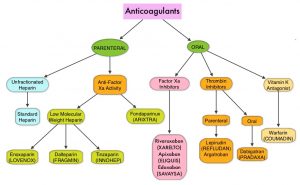
Approximately 20% of cancer patients develop VTE and there is a two-fold increase in the risk of recurrent thrombosis in patients with cancer, compared with those without cancer. The high risk of recurrent VTE, as well as bleeding in this patient group, makes anticoagulant treatment challenging. Treatment with parenteral Low Molecular Weight Heparin (LMWH) preparations is often recommended for this patient group, based on efficacy data. LMWH accelerates the inhibition by Antithrombin of activated Factor X, in the conversion of Prothrombin to Thrombin. Parenteral LMWH however can be inconvenient and expensive, leading to premature discontinuation of treatment.Anticoagulants

Direct Oral Anticoagulant agents have been proven to be as effective as COUMADIN® (Warfarin), a Vitamin K antagonist, for the treatment of VTE, and are associated with less frequent and less severe bleeding, and fewer drug interactions. The Direct Oral AntiCoagulants (DOACs) include PRADAXA® (Dabigatran), which is a direct Thrombin inhibitor and XARELTO® (Rivaroxaban), ELIQUIS® (Apixaban), SAVAYSA® (Edoxaban), BEVYXXA® (Betrixaban), which are Factor Xa inhibitors. Compared to COUMADIN®, the New Oral Anticoagulants have a rapid onset of action, wider therapeutic window, shorter half-lives (7-14 hours in healthy individuals), require no laboratory monitoring and have a fixed dosing schedule.

Three open-label, randomized, controlled trials have compared direct Factor Xa inhibitors with subcutaneous LMWH FRAGMIN® (Dalteparin). In the Hokusai VTE Cancer noninferiority trial, SAVAYSA® (Edoxaban)‎ when compared with FRAGMIN® was associated with a lower rate of recurrent VTE, but this was offset by a similar increase in the risk of major bleeding. In the SELECT-D trial, XARELTO® was associated with relatively low VTE recurrence in patients with cancer, but with higher clinically relevant non-major bleeding, compared with FRAGMIN®. In the ADAM VTE Trial, oral ELIQUIS® therapy was associated with very low rates of bleeding and significantly lower VTE recurrence compared to parenteral FRAGMIN®. The inconsistent results from these studies have been attributed to patient selection (cancer type, types of cancer therapies and prognosis), duration of treatment, and primary efficacy outcomes of these studies. SAVAYSA® and XARELTO® are often recommended as alternatives to LMWH in patients with cancer, although higher risk of clinically important bleeding has been reported with both these agents, particularly in patients with GI malignancies, including pancreatic cancer.

The Caravaggio trial is a multinational, randomized, open-label, noninferiority trial which was conducted to assess whether oral ELIQUIS® would be noninferior to subcutaneous FRAGMIN® (Dalteparin), a LMWH, for the prevention of recurrent VTE in patients with cancer, without increasing the risk of major bleeding. In this study, 1155 patients with cancer who had symptomatic or incidental acute proximal DVT or PE were randomly assigned to receive ELIQUIS® 10 mg orally twice daily for the first 7 days, followed by 5 mg orally twice daily (N=576) or FRAGMIN® 200 IU/kg administered subcutaneously once daily for the first month, followed by 150 IU/kg subcutaneous once daily (N=579). The demographic and clinical characteristics of the patients in both treatment groups were well balanced and advanced active cancers associated with high thromboembolic risk such as lung and colorectal cancers were well represented. This study included patients receiving a variety of cytotoxic and biologic therapies. Anticoagulant treatments were administered for 6 months. The Primary endpoint was objectively confirmed recurrent VTE during the trial period. The principal safety outcome was major bleeding.

The Primary endpoint of recurrent VTE occurred in 5.6% of patients in the ELIQUIS® group and in 7.9% of patients in the FRAGMIN® group (HR=0.63; P<0.001 for noninferiority). Major bleeding occurred in 3.8% of patients in the ELIQUIS® group and 4.0% of patients in the FRAGMIN® group (HR=0.82; P=0.60). Major GI bleeding occurred in 1.9% of patients in the ELIQUIS® group and in 1.7% of patients in the FRAGMIN® group and major non-gastrointestinal bleeding occurred in 1.9% and 2.2% of patients respectively. There were no fatal bleeding episodes noted in the ELIQUIS® group, whereas 2 patients had a fatal bleed in the FRAGMIN® group. These findings with regards to bleeding are in contrast to the results of previously published studies, which showed a higher incidence of bleeding with other Direct Oral AntiCoagulants, compared with FRAGMIN®, in a similar patient population.

It was concluded that in this study which included patients with predominantly advanced active cancer and acute symptomatic VTE, oral ELIQUIS® was noninferior to subcutaneous FRAGMIN® for the treatment of cancer-associated VTE, without an increased risk of major bleeding. The authors added that these findings may expand the proportion of patients with both cancer and VTE who would be eligible for treatment with ELIQUIS®, including patients with active gastrointestinal malignancies. It should be noted however that LMWH should still be preferred for patients who have undergone surgery involving the upper GI tract, as Direct Oral AntiCoagulants are absorbed in the stomach or proximal small bowel, as well as for those patients with bleeding or thrombocytopenia, recurrent VTE, CNS cancers, or those with severe renal impairment, and in the perioperative setting.
Apixaban for the Treatment of Venous Thromboembolism Associated with Cancer. Agnelli G, Becattini C, Meyer G, et al. for the Caravaggio Investigators. N Engl J Med 2020; 382:1599-1607

IMBRUVICA® (Ibrutinib)

The FDA on April 21, 2020 expanded the indication of IMBRUVICA® to include its combination with RITUXAN® (Rituximab) for the initial treatment of adult patients with Chronic Lymphocytic Leukemia (CLL) or Small Lymphocytic Lymphoma (SLL). IMBRUVICA® is a product of Pharmacyclics LLC.