COMETRIQ® Benefits All Patient Subgroups with Advanced Renal Cell Carcinoma

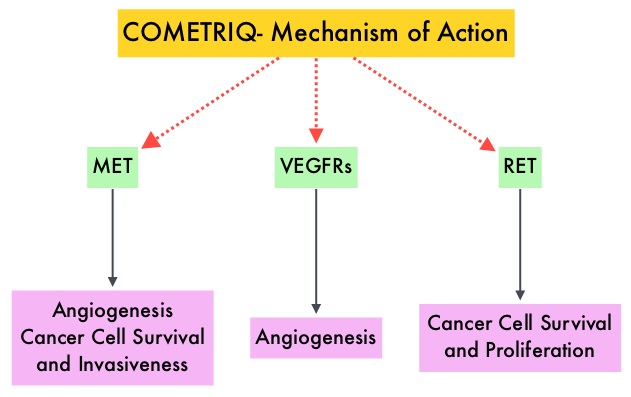
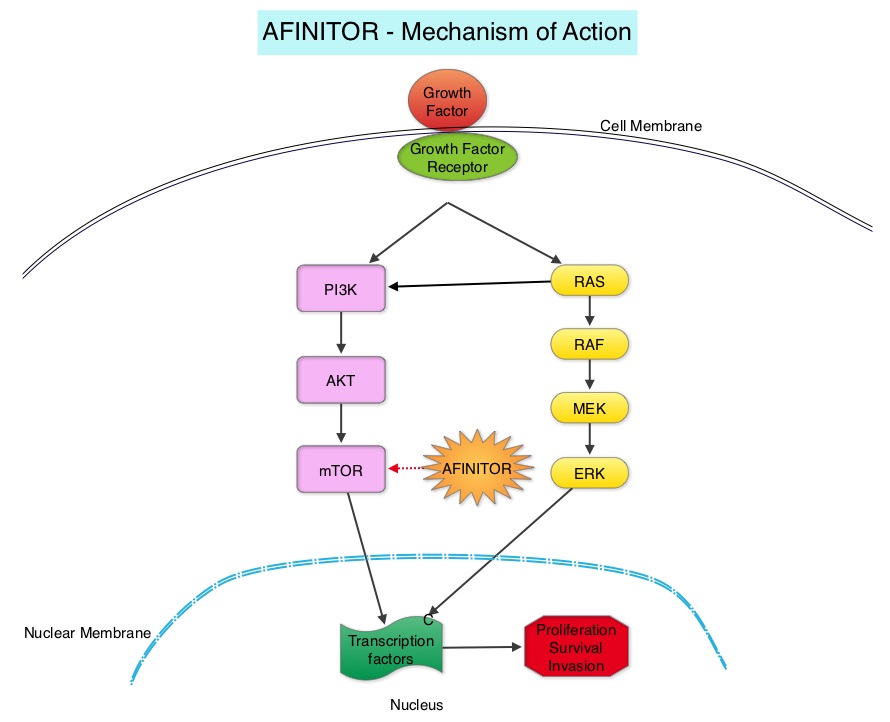
SUMMARY: The American Cancer Society estimates that about 62,700 new cases of kidney cancer will be diagnosed in the United States in 2016 and over 14,000 patients will die from this disease. The VHL (Von Hippel-Lindau) protein is a tumor suppressor gene which is frequently mutated and inactivated in approximately 90% of clear cell Renal Cell Carcinomas (ccRCC). The VHL gene under normal conditions binds to Hypoxia-Inducible Factor (HIF-1 alpha) and facilitates degradation of this factor. Under hypoxic conditions and in patients having biallelic loss of function and mutation of VHL genes, HIF-1alpha is not degraded. Build up of HIF-1 alpha results in increased angiogenesis, increased tumor cell proliferation and survival, as well as metastasis. COMETRIQ® (Cabozantinib) is an oral, small-molecule Tyrosine Kinase Inhibitor (TKI) and inhibits tyrosine kinases including MET, VEGF receptors (VEGFRs), and AXL. Both MET and AXL are up-regulated in Renal Cell Carcinoma as a consequence of VHL inactivation and increased expression of MET and AXL is associated with poor prognosis and development of resistance to VEGFR inhibitors. COMETRIQ® in previous studies has shown objective responses and prolonged disease control in patients with Renal Cell Carcinoma, resistant to VEGFR and mTOR inhibitors. The FDA initially approved COMETRIQ® in 2012, for treatment of patients with metastatic Medullary Thyroid Cancer. AFINITOR® (Everolimus) is a specific inhibitor of mTOR (Mammalian Target of Rapamycin), which is a serine/threonine kinase, and is a standard treatment for patients who progress on a VEGFR-targeted therapy.
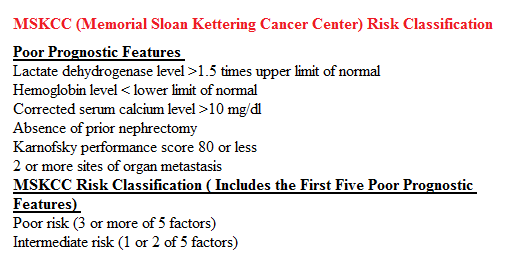
The METEOR is a phase III trial in which 658 patients were randomized 1:1 to receive COMETRIQ® 60 mg PO daily or AFINITOR® 10 mg PO daily. Treatment was continued until disease progression or unacceptable toxicities. Enrolled patients had advanced clear cell Renal Cell Carcinoma and were stratified by MSKCC (Memorial Sloan Kettering Cancer Center) prognostic criteria and number of prior therapies with VEGFR TKIs. Of the enrolled patients in the COMETRIQ® group, 43% of the patients were considered favorable, 43% intermediate and 14% poor risk, by MSKCC criteria. Seventy three percent (73%) of the patients had one prior therapy with VEGFR TKIs and 27% of the patients had 2 or more prior therapies with VEGFR TKIs. To be eligible, patients must have progressed during treatment or within 6 months of the last dose of their most recent VEGFR TKI. Prior therapies included cytokines, chemotherapy, and monoclonal antibodies, including those targeting VEGF, the Programmed Death 1 (PD-1) receptor or its ligand PD-L1. The primary endpoint was Progression Free Survival (PFS) and secondary endpoints included Overall Survival (OS) and Objective Response Rate (ORR). At the time of preplanned interim analysis which included the first 375 patient who underwent randomization, the primary end point of PFS was met, with a significant improvement in PFS with COMETRIQ® compared to AFINITOR® (7.4 months vs 3.8 months; HR=0.58; P< 0.001). In addition, there was a significant improvement in ORR with COMETRIQ® (21% vs 5%; P<0.001) and a trend for improved OS. (N Engl J Med 2015; 373:1814-1823).
In this updated analysis, the authors provided a detailed analysis of the clinical activity of COMETRIQ compared to AFINITOR® across the various patient subgroups. For all 658 patients enrolled, the PFS data was comparable to the interim analysis data, favoring COMETRIQ® (7.4 months versus 3.9 months (HR=0.52; P<0.001). When subgroup analysis was performed in patients with 3 or more metastases sites, the median PFS was 7.3 months versus 3.7 months for COMETRIQ® vs AFINITOR® respectively (HR=0.38). The risk of disease progression was reduced with COMETRIQ® by 74% in patients with visceral and bone metastases compared to AFINITOR® (5.6 vs 1.9 months; HR=0.26). The PFS benefit with COMETRIQ® was not impacted by prior therapy with VEGFR TKIs. However, patients who received prior VEGFR TKI therapy with SUTENT® (Sunitinib) benefited the most with COMETRIQ® (median PFS 9.1 vs 3.7 months (HR=0.43), whereas the PFS benefit with COMETRIQ® for those who received prior VOTRIENT® (Pazopanib) was 7.4 vs 5.1 months (HR=0.67). The PFS benefit was also significantly better in the COMETRIQ® group, for patients previously treated with an anti–PD-1/PD-L1 agents, compared to AFINITOR® (HR=0.22). In the MSKCC poor risk group, the benefit with COMETRIQ® was 5.4 versus 3.5 months with AFINITOR® (HR=0.70). The most common serious toxicities AEs in the COMETRIQ® group were abdominal pain, pleural effusion and diarrhea, whereas in the AFINITOR® arm, the most common serious toxicities were anemia, dyspnea and pneumonia.

The authors concluded that COMETRIQ® is associated with longer Progression Free Survival compared with AFINITOR®, in patients with Renal Cell Carcinoma, following progression on prior VEGFR inhibitor therapy. COMETRIQ® may help overcome treatment resistance and benefits all subgroups of patients with advanced Renal Cell Carcinoma. Studies are underway combining COMETRIQ® with Immune checkpoint inhibitors. Subgroup analyses of METEOR, a randomized phase 3 trial of cabozantinib versus everolimus in patients (pts) with advanced renal cell carcinoma (RCC). Escudier BJ, Motzer RJ, Powles T, et al. J Clin Oncol 34, 2016 (suppl 2S; abstr 499)
Cancer Death Rate Declines in the US

SUMMARY: The American Cancer Society released the Cancer Statistics 2016 report, which includes the most recent data on cancer incidence, mortality, and survival in the US. It is estimated that in 2016, 1,685,210 new cancer cases will be diagnosed in the US and 595,690 cancer deaths are projected.

With a considerable decline in mortality from heart disease, cancer is now the leading cause of death in 21 states. In males, prostate cancer will be the leading cancer diagnosis in 2016 (21%) and Breast Cancer will be the leading cancer diagnosis in women (29%).

Lung Cancer remains the leading cause of cancer death both in men and women (27%). With major therapeutic advances against leukemia, brain cancer is now the leading cause of cancer death among children and adolescents (birth-19 years).

The overall cancer incidence rate in women has remained stable since 1998. However in men, cancer incidence has decreased by 3.1% per year since 2009 and this has been attributed to decline in routine screening with the PSA test. Routine screening with the PSA test is no longer recommended because of high rates of overdiagnosis, estimated at 23% to 42% for screen-detected cancers, which may not result in bad outcomes.

The cancer death rate in the US has dropped by 23% since 1991 which translates to more than 1.7 million deaths averted through 2012. There has been a continued decrease in death rates for the four major cancer sites – lung, breast, prostate, and colon/rectum. This overall decline in cancer deaths may be the result of reduction in smoking prevalence, improved screening modalities for breast, colon and prostate cancers and improvements in treatment.

Despite the overall reduction in cancer mortality, death rates are increasing for cancers of the liver, pancreas, and uterine corpus. Obesity has been shown to increase endometrial cancer risk by 50% for every 5 body mass index (BMI) units. Chronic infection with Helicobacter pylori and Hepatitis B virus has increased the incidence and death rates of stomach and liver cancer, respectively.

The authors concluded that “Advancing the fight against cancer will require continued clinical and basic research, which is dependent on funding, as well as the application of existing cancer control knowledge across all segments of the population, with an emphasis on disadvantaged groups.” With progress being made in cancer prevention using improved screening techniques and behavioral interventions, as well as rapid advances in cancer treatment with the understanding of cancer biology, it is expected that cancer death rate will continue to decline in the years to come. Cancer statistics, 2016. Siegel RL, Miller KD and Jemal A. CA Cancer J Clin 2016;66:7-30.

FDA Approves AFINITOR® for Advanced NeuroEndocrine Tumors of GI or Lung Origin

SUMMARY: The FDA on February 26, 2016 approved AFINITOR® (Everolimus) for the treatment of adult patients with progressive, well-differentiated non-functional, NeuroEndocrine Tumors (NET) of GastroIntestinal (GI) or lung origin with unresectable, locally advanced or metastatic disease. NeuroEndocrine Tumors (NETs) arise from cells of the endocrine and nervous systems and produce biogenic amines and polypeptide hormones. NETs can be clinically symptomatic (functioning) or silent (nonfunctioning). The incidence is higher in African-Americans and is most frequently diagnosed in the small intestine, appendix, rectum, lungs and bronchi. NETs may be sporadic or may be a component of inherited genetic syndromes such as Multiple Endocrine Neoplasia (MEN) types 1 and 2.

Majority of the NETs are nonfunctioning and are diagnosed incidentally but are clinically symptomatic following spread to the liver. Most NETs are classified based on tumor differentiation into 1) Well-differentiated, Low-grade (G1) 2) Well-differentiated, Intermediate-grade (G2) and 3) Poorly differentiated, High-grade (G3). Tumor differentiation and tumor grade often correlate with mitotic count and Ki-67 proliferation index. Even though surgery is curative when the tumor is detected early, this is often not the case, as most patients present with metastatic disease at the time of diagnosis. Somatostatin analogues, such as long acting SANDOSTATIN® LAR Depot (Octreotide), has been shown in the PROMID study to control tumor growth, as well as improve symptoms, in patients with newly diagnosed, well-differentiated metastatic midgut NETs. Following progression on SANDOSTATIN®, these patients have limited treatment options. Everolimus (AFINITOR®), is a mTOR (mammalian Target Of Rapamycin) inhibitor, which has shown activity in advanced NETs, in phase II trials.

The FDA approved AFINITOR® in 2011, for the treatment for patients with progressive, metastatic pancreatic NETs. This approval was based on the phase III RADIANT-3 study, in which the primary end point of Progression Free Survival (PFS) was met, with a PFS of 11 months in the AFINITOR® group and 4.6 months in the placebo group (HR=0.35; P<0.001).

RADIANT-4 is a randomized, double blind phase III trial, in which 302 patients with unresectable, locally advanced or metastatic, well differentiated (low or intermediate grade), non-functional (no current or prior history of carcinoid symptoms), NeuroEndocrine Tumors (NETs) of gastrointestinal or lung origin, were randomly assigned in a 2:1 ratio, to receive AFINITOR® (Everolimus) 10 mg orally once daily plus best supportive care (N=205) or placebo plus BSC (N=97). Tumor locations were, GI tract (N=175), Lung (N=90) and Unknown origin (N=36). The median age was 63 years. The primary endpoint was Progression Free Survival (PFS) and secondary endpoints included Overall Survival (OS), response, and safety.

The median PFS were 11 months and 3.9 months in the AFINITOR® and placebo groups, respectively (HR=0.48; P<0.001), with a 52% reduction in the risk of progression in the AFINITOR® group. In a subgroup analysis which specifically looked at GI NETs, the median PFS was 13.1 months with AFINITOR® versus 5.4 months with placebo (HR=0.56), with a 44% risk reduction in favor of AFINITOR®. In patients with NETs of unknown primary, the median PFS was 13.6 months with AFINITOR® versus 7.5 months with placebo. (HR=0.60), with a 40% risk reduction in favor of AFINITOR®. The most common adverse reactions (incidence greater than or equal to 30%) were stomatitis, infections, diarrhea, peripheral edema, fatigue and rash.

The authors following this subgroup analysis concluded that, there was a 40-44% risk-reduction in favor of AFINITOR®, compared to placebo, for patients with metastatic GI NeuroEndocrine Tumors, as well as NeuroEndocrine Tumors from an unknown primary, thus providing a new treatment option for this patient group. Efficacy and safety of everolimus in advanced, progressive, nonfunctional neuroendocrine tumors (NET) of the gastrointestinal (GI) tract and unknown primary: A subgroup analysis of the phase III RADIANT-4 trial. Singh S, Carnaghi C, Buzzoni R, et al. J Clin Oncol 34, 2016 (suppl 4S; abstr 315)

FDA Approves IBRANCE® in Combination with FASLODEX® for Advanced Breast Cancer

SUMMARY: The FDA on February 19, 2016, approved IBRANCE® (Palbociclib) in combination with FASLODEX® (Fulvestrant), for the treatment of women with Hormone Receptor (HR)-positive, Human Epidermal growth factor Receptor 2 (HER2)-negative advanced or metastatic breast cancer, with disease progression following endocrine therapy. Breast cancer is the most common cancer among women in the US and about 1 in 8 women (12%) will develop invasive breast cancer during their lifetime. Approximately, 246,660 new cases of invasive breast cancer will be diagnosed in 2016 and over 40,450 women will die of the disease. Estrogen Receptor (ER) positive breast cancer cells are driven by estrogens. NOLVADEX® (Tamoxifen) is a nonsteroidal Selective Estrogen Receptor Modulator (SERM) and works mainly by binding to the Estrogen Receptor and thus blocks the proliferative actions of estrogen on the mammary tissue. ARIMIDEX® (Anastrozole) and FEMARA® (Letrozole) are nonsteroidal Aromatase Inhibitors that binds reversibly to the aromatase enzyme and inhibit the conversion of androgens to estrogens in the extra-gonadal tissues. Approximately 80% of breast tumors express Estrogen Receptors and/or Progesterone Receptors and these patients are often treated with anti-estrogen therapy as first line treatment.

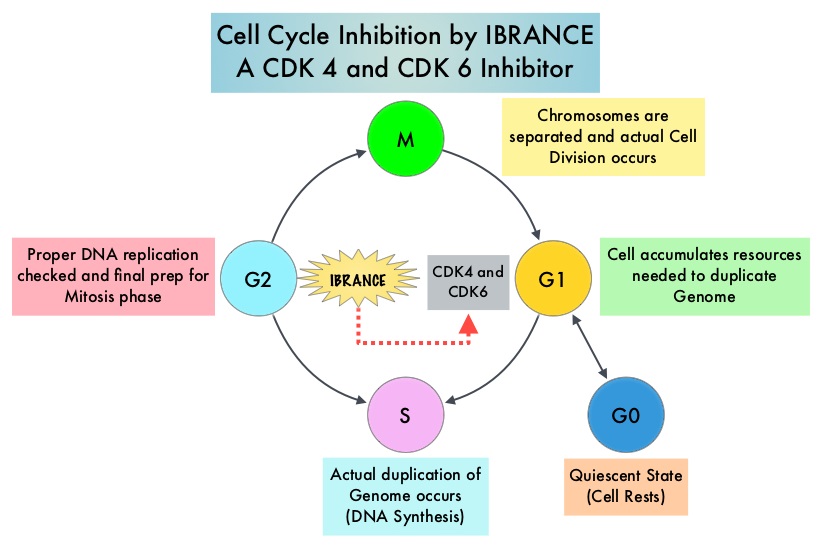
Cyclin Dependent Kinases (CDK) play a very important role to facilitate orderly and controlled progression of the cell cycle. Genetic alterations in these kinases and their regulatory proteins have been implicated in various malignancies. Cyclin Dependent Kinases 4 and 6 (CDK4 and CDK6), phosphorylate RetinoBlastoma protein (RB), and initiate transition from the G1 phase to the S phase of the cell cycle. CDK4 and CDK6 are activated in hormone receptor positive breast cancer, promoting breast cancer cell proliferation. Further, there is evidence to suggest that endocrine resistant breast cancer cell lines depend on CDK4 for cell proliferation. IBRANCE® (Palbociclib) is a reversible, oral, selective, small molecule inhibitor of Cyclin Dependent Kinases, CDK4 and CDK6, and prevents RB1 phosphorylation. IBRANCE® is the first CDK inhibitor approved by the FDA. It exhibits synergy when combined with endocrine therapies. In an open-label, randomized, phase II study, which included treatment naïve postmenopausal women with ER-positive, HER2-negative, advanced breast cancer, IBRANCE® given along with Aromatase Inhibitor FEMARA® (Letrozole), significantly prolonged Progression Free Survival, Overall Response rate and median duration of response, compared to FEMARA® alone. Based on this data, the U. S. Food and Drug Administration in February 2015, granted accelerated approval to IBRANCE® (Palbociclib), for use in combination with FEMARA®, in this patient population. FASLODEX® (Fulvestrant) is a selective estrogen receptor down-regulator presently indicated for the treatment of hormone receptor positive metastatic breast cancer patients, with disease progression following antiestrogen therapy.

The PALOMA3 is double-blind, phase 3 study in which the efficacy and safety of the combination of IBRANCE® and FASLODEX® was evaluated, in premenopausal or postmenopausal women, with hormone receptor positive, HER-2 negative, advanced breast cancer, who had disease progression during prior endocrine therapy. Five hundred and twenty one (N=521) patients were randomly assigned in a 2:1 ratio to receive either FASLODEX® 500 mg IM on days 1 and 15 during cycle 1, of a 28 day cycle, and then on day 1 of each cycle thereafter, along with IBRANCE® 125 mg PO daily for 3 weeks, followed by 1 week off (N=347) or FASLODEX® and placebo (N=174). ZOLADEX® (Goserelin) was administered to premenopausal or perimenopausal patients for the duration of study treatment, starting at least 4 weeks before randomization and continuing every 28 days. The median age was 57 years. One previous line of chemotherapy for metastatic disease was allowed and 79% were post-menopausal, 60% had visceral disease and 75% of the patients had received a previous chemotherapy regimen.

The primary endpoint was Progression Free Survival (PFS) and secondary endpoints included Overall Survival (OS), Response Rates, safety and tolerability. At the time of the preplanned interim analysis, the median Progression Free Survival was 9.2 months in the FASLODEX® / IBRANCE® group and 3.8 months in the FASLODEX® /placebo group (HR=0.42; P<0.001). This PFS benefit was observed across all prespecified patient subgroups, regardless of menopausal status. The most common grade 3 or 4 adverse events in the FASLODEX® / IBRANCE® group were neutropenia (62.0%, vs. 0.6%) and fatigue (2.0% vs. 1.2%). The incidence of febrile neutropenia was very rare (0.6%) and similar in both treatment groups. Treatment discontinuation rate due to adverse events was 2.6% in the IBRANCE® group and 1.7% in the placebo group.

The authors concluded that IBRANCE® in combination with FASLODEX® more than doubled the Progression Free Survival in advanced breast cancer patients, with hormone receptor positive and HER-2 negative disease, who had progressed on prior endocrine therapy. This study has reinforced the importance of CDK4 and CDK6, as key targets for hormone receptor positive breast cancer. Palbociclib in Hormone-Receptor–Positive Advanced Breast Cancer. Turner NC, Ro J, Andre F, et al. N Engl J Med 2015; 373:209-219

FDA Approves GAZYVA® in Combination with TREANDA® for Follicular Lymphoma

SUMMARY: The FDA on February 26, 2016, approved GAZYVA® (Obinutuzumab) for use in combination with TREANDA® (Bendamustine) followed by GAZYVA® monotherapy for the treatment of patients with Follicular Lymphoma (FL) who relapsed after, or are refractory to, a RITUXAN® (Rituximab) containing regimen. GAZYVA® was previously approved for use in combination with Chlorambucil for the treatment of patients with previously untreated Chronic Lymphocytic Leukemia. The American Cancer Society estimates that in 2016, about 72,580 people will be diagnosed with Non Hodgkin Lymphoma (NHL) in the United States and about 20,150 individuals will die of this disease. Indolent Non Hodgkin Lymphomas are mature B cell lymphoproliferative disorders and include Follicular Lymphoma, Nodal Marginal Zone Lymphoma (NMZL), Extranodal Marginal Zone Lymphoma (ENMZL) of Mucosa-Associated Lymphoid Tissue (MALT) lymphoma, Splenic Marginal Zone Lymphoma (SMZL), LymphoPlasmacytic Lymphoma (LPL) and Small Lymphocytic Lymphoma (SLL). Follicular Lymphoma is the most indolent form and second most common form of all NHLs and they are a heterogeneous group of lymphoproliferative malignancies. Approximately 20% of all NHLs are Follicular Lymphomas. Advanced stage indolent NHL are not curable and as such, prolonging Progression Free Survival (PFS) and Overall Survival (OS), while maintaining quality of life (QoL), has been the goals of treatment intervention. Asymptomatic patients with indolent NHL are generally considered candidates for “watch and wait” approach, whereas those with B symptoms (fever, night sweats, and weight loss), painful lymphadenopathy/splenomegaly, organ compromise and cytopenias are generally considered candidates for therapy.

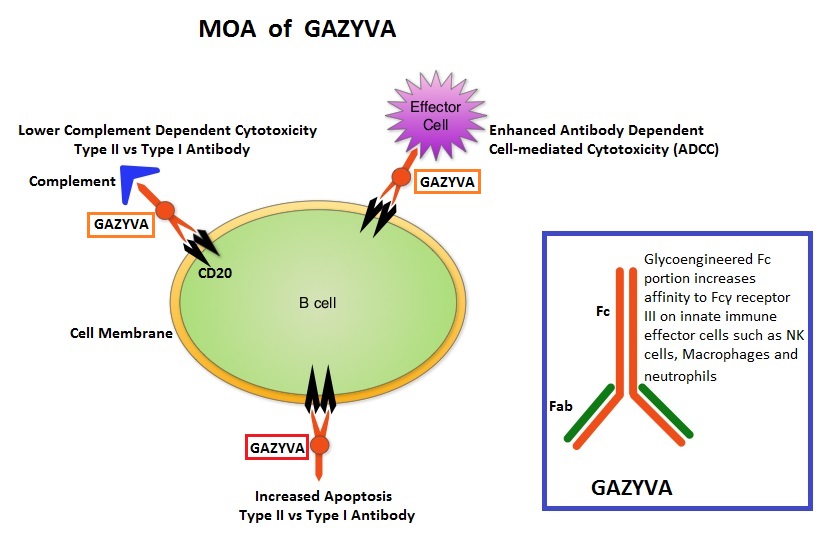
GAZYVA® (Obinutuzumab) is glycoengineered, fully humanized, third generation, type II anti-CD20 antibody (IgG1 monoclonal antibody) that selectivity binds to the extracellular domain of the CD20 antigen on malignant human B cells. By virtue of binding affinity of the glycoengineered Fc portion of GAZYVA® to Fcγ receptor III on innate immune effector cells such as natural killer cells, macrophages and neutrophils, Antibody-Dependent Cell-mediated Cytotoxicity (ADCC) and Antibody-Dependent Cellular phagocytosis is significantly enhanced, whereas it induces very little Complement-Dependent Cytotoxicity. This is in contrast to RITUXAN® (Rituximab), which is a first generation type I, chimeric anti-CD20 targeted monoclonal antibody that kills lymphoma cells primarily by Complement-Dependent Cytotoxicity and also ADCC.

GADOLIN is a pivotal multicenter, open-label phase III, study in which TREANDA® (Bendamustine) alone was compared with TREANDA® plus GAZYVA® followed by GAZYVA® maintenance, in patients with indolent NHL (iNHL), refractory to RITUXAN®. Four hundred and thirteen (N=413) RITUXAN® refractory iNHL were randomized and patients in the control arm received TREANDA® 120 mg/m2 IV on days 1 and 2 every 28 days for a total of 6 cycles. Patients in the experimental arm received TREANDA® 90 mg/m2 IV on days 1 and 2 every 28 days for 6 cycles and GAZYVA® 1000mg IV days 1,8 and 15 every 28 days of cycle 1 and on day 1 of cycles 2-6. In patients with non-progressive disease in the experimental arm, GAZYVA® was continued (maintenance) every 2 months for up to 2 years. Both treatment groups were well balanced and the median age was 63 years, with a median of two prior lines of therapy. More than 90% of patients in each treatment group were refractory to their previous therapy and between 76% and 81% were double-refractory to both RITUXAN® and an alkylating agent. The Primary end point was Progression Free Survival (PFS) and Secondary end points included Overall Survival and Response Rate.

The study was unblinded at the time of planned interim analysis and had to be halted early, upon recommendations from the Independent Data Monitoring Committee, as the primary end point was reached. The median Progression Free Survival was 29 months with GAZYVA®/ TREANDA® plus maintenance GAZYVA® versus 14 months with TREANDA® monotherapy and no maintenance (HR=0.52; P<0.001). This meant a 45% reduction in the rate of disease progression. There was however no difference in the Response Rates between the treatment groups and the best Overall Response Rate up to 12 months from start of treatment was, 76.6% in the TREANDA® alone group and 78.6% in the TREANDA® plus GAZYVA® group. Median Overall Survival has not yet been reached in either arm and longer follow up is needed. The combination experimental group experienced more grade 3 adverse events such as infusion related reactions and neutropenia whereas the TREANDA® alone group experienced more thrombocytopenia, anemia and pneumonia.

The authors concluded that GAZYVA® in combination with TREANDA® is superior to TREANDA® alone, in patients with RITUXAN® refractory indolent Non Hodgkin Lymphoma, with a significant improvement in Progression Free survival. The lack of difference in the Response Rate begs the question, if the improvement in PFS was predominantly contributed by the continuous maintenance treatment with GAZYVA®. GADOLIN: Primary results from a phase III study of obinutuzumab plus bendamustine compared with bendamustine alone in patients with rituximab-refractory indolent non-Hodgkin lymphoma. Sehn LH, Chua NS, Mayer J, et al. J Clin Oncol 33, 2015 (suppl; abstr LBA8502)

FDA Approves VISTOGARD®, an Antidote for 5-FU Overexposure

SUMMARY: The United States FDA approved VISTOGARD® (Uridine Triacetate) for the emergency treatment of adult and pediatric patients, who had severe or life-threatening toxicities within 4 days of treatment, following an overdose of 5-FluoroUracil (5-FU) or XELODA® (Capecitabine). VISTOGARD® is a Pyrimidine analog and following oral administration is deacetylated by nonspecific esterases, yielding Uridine in the circulation. Uridine is a direct antagonist of 5-FU and competitively inhibits 5-FU from incorporating in normal tissues, thus reducing cell damage and cell death.

The approval of VISTOGARD® was based on two separate trials in which 135 adult and pediatric cancer patients at increased risk for toxicity with 5-FU or XELODA® were included. Risk for toxicity could be due to 5-FU overdose and accidental XELODA® ingestion (N=111) or DihydroPyrimidine Dehydrogenase (DPD) deficiency and/or patients who experienced rapid onset of severe toxicities (N=24). These patients received VISTOGARD® granules 10 grams every 6 hours for 20 doses, starting within 96 hours after the termination of 5-FU therapy. The primary endpoint of the studies was survival at 30 days or until chemotherapy could resume, if prior to 30 days.

Of those who were treated with VISTOGARD® for overdose, 97 percent were still alive at 30 days. Of those treated with VISTOGARD® for early-onset severe or life-threatening toxicity, 89 percent were alive at 30 days. In both studies, 33 percent of patients resumed chemotherapy in less than 30 days. Adverse events were mild and uncommon and included nausea, vomiting and diarrhea.

The authors concluded that VISTOGARD® is a safe and effective antidote for 5-FU overexposure, and can facilitate rapid recovery and resumption of chemotherapy. Patients should take VISTOGARD® as soon as possible after overdose, regardless of symptoms or within 4 days of severe or life threatening toxicity. It should be noted that VISTOGARD® is not recommended for treatment of non-emergency adverse events associated with 5-FU and XELODA®, as this therapy may significantly decrease the efficacy of these chemotherapy agents. Clinical trial experience with uridine triacetate for 5-fluorouracil toxicity. Ma WW, Saif WM, El-Rayes BF, et al. J Clin Oncol 34, 2016 (suppl 4S; abstr 655)

Lobectomy Superior to Sublobar Resection in Early Stage Non Small Cell Lung Cancer

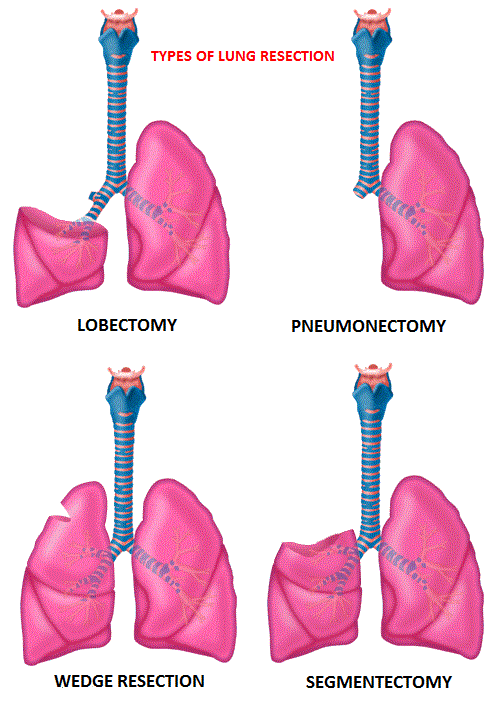
SUMMARY: Lung cancer is the second most common cancer in both men and women and the American Cancer Society estimates that for 2016 about 224,390 new cases of lung cancer will be diagnosed and over 158,000 patients will die of the disease. Lung cancer is the leading cause of cancer-related mortality in the United States. Lobectomy is the treatment of choice for resectable Non Small Cell Lung Cancer (NSCLC). Pneumonectomy is rarely performed due to unacceptably high mortality rate. Sublobar resection (Wedge resection or Segmentectomy) is considered a “compromise operation” in selected high risk patients with early stage lung cancer. With the approval of lung cancer screening in high risk individuals and subsequent detection of small tumors, Sublobar resections have been on the rise, even in good-risk patients, in many institutions. Sublobar resection includes Wedge resection and Segmentectomy. In Wedge resection, the lung tumor is removed with a surrounding margin of normal lung tissue, and is not an anatomical resection. Segmentectomy, unlike Wedge resection, is an anatomical resection that usually includes one or more pulmonary parenchymal segments with the dissection of intraparenchymal and hilar lymph nodes. Wedge resection is inferior to anatomic Segmentectomy and is associated with an increased risk of local recurrence and decreased survival in patients with Stage I NSCLC.

The authors in this study analyzed the National Cancer Data Base (NCDB) and the primary goal of this study was to understand practice patterns in the surgical management of patients with clinical Stage IA NSCLC, as well as identify predictors of surgical management with Sublobar resection versus Lobectomy and also evaluate the extent of pathologic lymph node assessment, performed in association with Sublobar resections, in a community practice setting. A secondary goal was to compare long term survival between Sublobar resection versus Lobectomy.

In this large analysis, 39,403 patients from the National Cancer Data Base (NCDB) were included, of whom 75.5% (N=29,736) underwent Lobectomy and 24.5% (N=9667) had Sublobar resection (Wedge resection 84.7%; N = 8192 and Segmental resection 15.3%; N = 1475). Lymph node evaluation was not performed in 2788 (28.8%) of Sublobar resection patients, and 7298 (75.5%) of Sublobar resections were for tumors ≤ 2 cm.

It was noted that Lobectomy was associated with significantly improved 5-year survival compared to Sublobar resection (66.2% vs. 51.2%; adjusted HR=0.66; P <0 .001). Among patients who underwent Sublobar resection, lymph node sampling was associated with significantly better 5-year survival compared to patients who did not have lymph node sampling (58.2% vs. 46.4%; P < 0.001), although these outcomes were still inferior to Lobectomy.

The authors concluded that for patients with Stage 1A NSCLC, surgical Lobectomy significantly improved survival compared to Sublobar resection. Patients ineligible for Lobectomy and treated with Sublobar resection, should undergo lymph node samplings to help guide appropriate post operative therapy. Sublobar Resection for Clinical Stage IA Non–small-cell Lung Cancer in the United States. Speicher PJ, Gu L, Gulack BC, et al. Clinical Lung Cancer 2016;17:47-55

Cardiac Outcomes of Patients Receiving Adjuvant Weekly TAXOL® and HERCEPTIN®

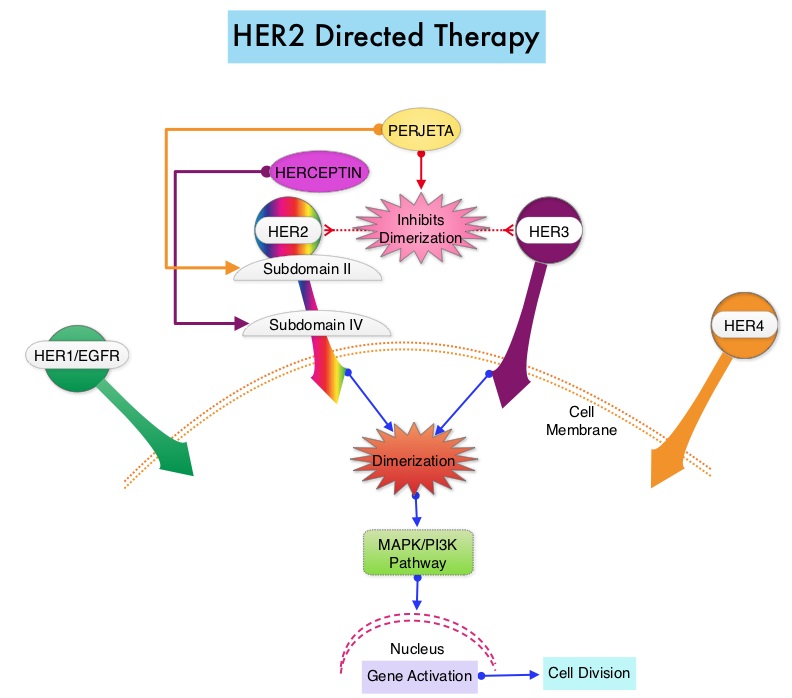
SUMMARY: Breast cancer is the most common cancer among women in the US and about 1 in 8 women (12%) will develop invasive breast cancer during their life time. Approximately, 246,660 new cases of invasive breast cancer were diagnosed in 2016 and 40,450 women will die of the disease. The HER or erbB family of receptors consist of HER1, HER2, HER3 and HER4. Approximately 20-25% of invasive breast cancers overexpress HER2/neu oncogene, which is a negative predictor of outcomes without systemic therapy. HERCEPTIN® (Trastuzumab) is a humanized monoclonal antibody targeting HER2. HERCEPTIN® binds to subdomain IV of the HER2 extracellular domain and blocks the downstream cell signaling pathways (PI3K-AKT pathway) and induces Antibody Dependent Cellular Cytotoxicity (ADCC). HERCEPTIN® in combination with chemotherapy has been proven to significantly improve Progression Free Survival and Overall Survival in patients with advanced breast cancer. Adjuvant chemotherapy in combination with HERCEPTIN® has been shown to reduce the relative risk of relapse by 52% and relative risk of death by 33%. The National Comprehensive Cancer Network (NCCN) has recommended adjuvant chemotherapy with HERCEPTIN® for patients with small, HER positive, node-negative tumors, including those with T1bN0 tumors, even though there are little or no data supporting this recommendation, because these patients are generally not included in adjuvant therapy studies. Further, the chemotherapy regimens often recommended (ACTH, TCH) along with HERCEPTIN® are relatively toxic.

In a previously published study, it was noted that a less toxic regimen such as HERCEPTIN®, given along with weekly TAXOL® (Paclitaxel), had significant efficacy in patients with node negative patients with tumors measuring up to 3 cm in greatest dimension, decreasing the risk of recurrence in this patient group, most notable during the first three years after diagnosis. (Tolaney SM, Barry WT, Dang CT, et al. N Engl J Med 2015;372:134-141). Risk risk factors associated with HERCEPTIN® induced cardiotoxicity include, age over 50 years, borderline LVEF (Left Ventricular Ejection Fraction) before HERCEPTIN® treatment, history of cardiovascular disease, cardiovascular risk factors such as diabetes, dislipidemia or elevated body mass index (>30), sequence in which chemotherapy is administered and prior treatment with Anthracyclines (cumulative doses more than 300 mg/m2). However, unlike Anthracycline induced cardiotoxicity, HERCEPTIN® induced cardiotoxicity is reversible and there are no ultrastructural changes noted in cardiomyocytes in HERCEPTIN® induced cardiotoxicity.

This publication is a secondary analysis of the above mentioned previously published study and the authors here reported the cardiac safety data of a HERCEPIN® based nonanthracycline treatment, (TAXOL® with HERCEPTIN®), for patients with early-stage, node negative, HER2 positive breast cancer and the utility of monitoring LVEF in this patient group. This clinical trial enrolled 406 patients with node-negative, HER2 positive breast cancer 3 cm, or smaller with a baseline LVEF of 50% or greater. Treatment consisted of TAXOL® 80 mg/m2 IV weekly administered concurrently with HERCEPTIN® IV for 12 weeks, followed by HERCEPTIN® monotherapy for 39 weeks. HERCEPTIN® could be administered 2 mg/kg weekly or 6 mg/kg every 3 weeks during the monotherapy phase. Radiation and hormone therapy were administered as planned, following completion of the 12 weeks of chemotherapy. Patient LVEF was assessed at baseline, 12 weeks, 6 months, and 1 year. Median age was 55 years and 29% of the patients had hypertension, and 7% had diabetes. The median follow up was 4 years.

It was noted that a significant, asymptomatic LVEF decline was seen in 3.2% of the patients and 0.5% developed grade 3 Left Ventricular Systolic Dysfunction. The median LVEF at baseline was 65%, at 12 weeks was 64%, at 6 months was 64%; and at 1 year was 64%. The authors concluded that cardiotoxicity from a combination of TAXOL® and HERCEPTIN® is low and a baseline LVEF assessment may be adequate for the majority of patients although serial LVEF assessments could be considered for patients considered at a higher risk for cardiotoxicity. Cardiac Outcomes of Patients Receiving Adjuvant Weekly Paclitaxel and Trastuzumab for Node-Negative, ERBB2-Positive Breast Cancer. Dang C, Guo H, Najita J, et al. JAMA Oncol. 2016;2:29-36

Adjuvant GLEEVEC® Improves Overall Survival in High Risk GI Stromal Tumors

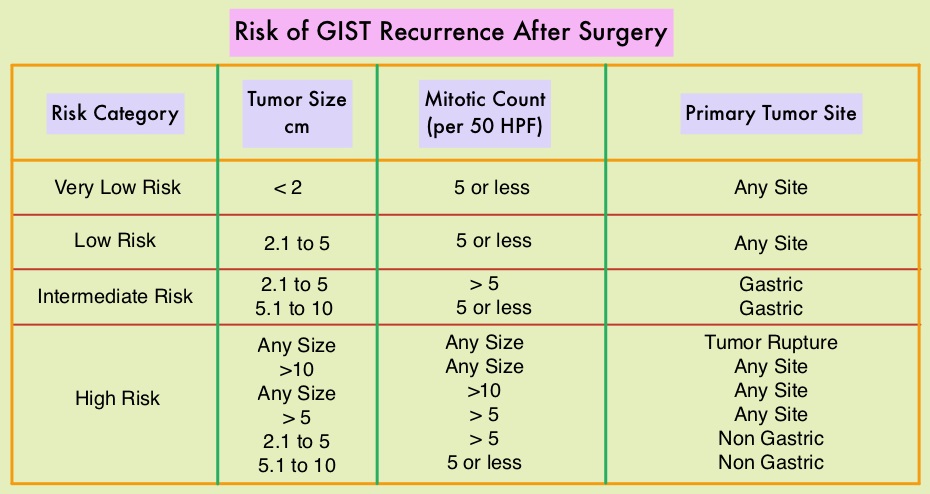
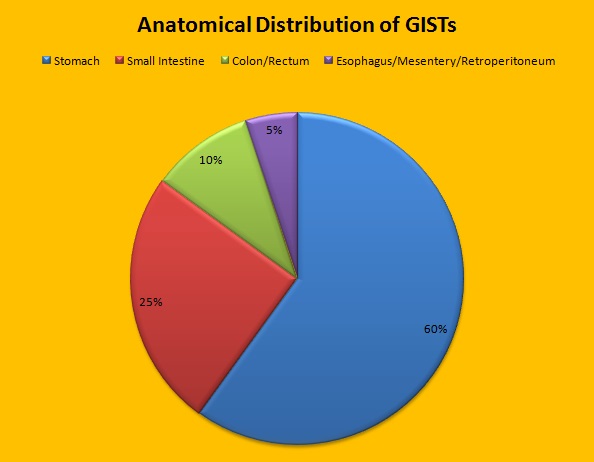
SUMMARY: The American Cancer Society estimates that in the US, about 4000-5000 cases of Gastro Intestinal Stromal Tumors (GISTs) are diagnosed each year. GI Stromal Tumor (GIST) is one of the most common types of Soft Tissue Sarcoma and can develop anywhere along the GI tract, but are primarily found in the stomach. GISTs originate from the interstitial cells of Cajal or related stem cells and are associated with activating mutations in KIT or PDGFRA (Platelet-Derived Growth Factor Receptor-A). These two mutations are mutually exclusive and are important in the molecular pathogenesis of these tumors. Treatment of patients with advanced or metastatic GIST with Tyrosine Kinase Inhibitor GLEEVEC® (Imatinib) achieves high Objective Response and diseases stabilization rates. Patients with KIT exon 9 mutation have a poor prognosis compared to those with KIT exon 11 mutation and benefit from a higher dose of GLEEVEC® (800 mg daily). It should also be noted that patients with PDGFRA D842V mutation are GLEEVEC® resistant. Approximately two thirds of the patients with GISTs are cured with surgery but recurrences are frequent and this risk of relapse is dependent on the tumor size, mitotic rate and primary tumor site. The risk stratification of GISTs by Joensuu, unlike the NIH criteria, takes into account primary tumor site and tumor rupture as well, which can influence outcomes.

Adjuvant therapy with three years of GLEEVEC®, following curative surgery of high risk GISTs, is recommended and has been shown to improve Recurrence Free Survival (RFS). However, whether adjuvant GLEEVEC® improves overall survival has remained unclear. To address this further the authors in this publication performed a second planned analysis of the SSGXVIII/AIO trial after a longer follow up. In this open label study, 400 patients following surgery were randomly assigned to receive adjuvant GLEEVEC® for either 12 months (N=200) or for 36 months (N=200). Eligible patients had completely resected, KIT-positive GIST, with high risk features, per the modified National Institutes of Health criteria. The median age was 61 years and the primary objective was Recurrence Free Survival (RFS), and the secondary objectives included Overall Survival and Safety.

The second planned analysis was done 3 years after the first analysis of the trial and was intended to compare Overall Survival between the treatment groups, after additional follow up of these patients. The median follow up was 90 months. It was noted that the patients who were treated with 36 months of adjuvant GLEEVEC® had a longer RFS than those who were treated for 12 months (5-year RFS was 71.1% versus 52.3%, HR=0.60; P<0.001). The Overall Survival (OS) also favored the 36 month treatment group compared with the 12 month treatment group (5-year OS was 91.9% versus 85.3%, HR=0.60; P=0.036).

The authors concluded that 3 years of adjuvant GLEEVEC® therapy results in longer Overall Survival than 1 year of adjuvant GLEEVEC®, with a superior 5-year survival rate, in patients with high-risk GIST. Trials are underway evaluating the benefit of adjuvant GLEEVEC® for longer than 3 years. Adjuvant Imatinib for High-Risk GI Stromal Tumor: Analysis of a Randomized Trial. Joensuu H, Eriksson M, Hall KS, et al. J Clin Oncol 2016;34:244-250

Unique Toxicities of Immunotherapy for the Practicing Physician

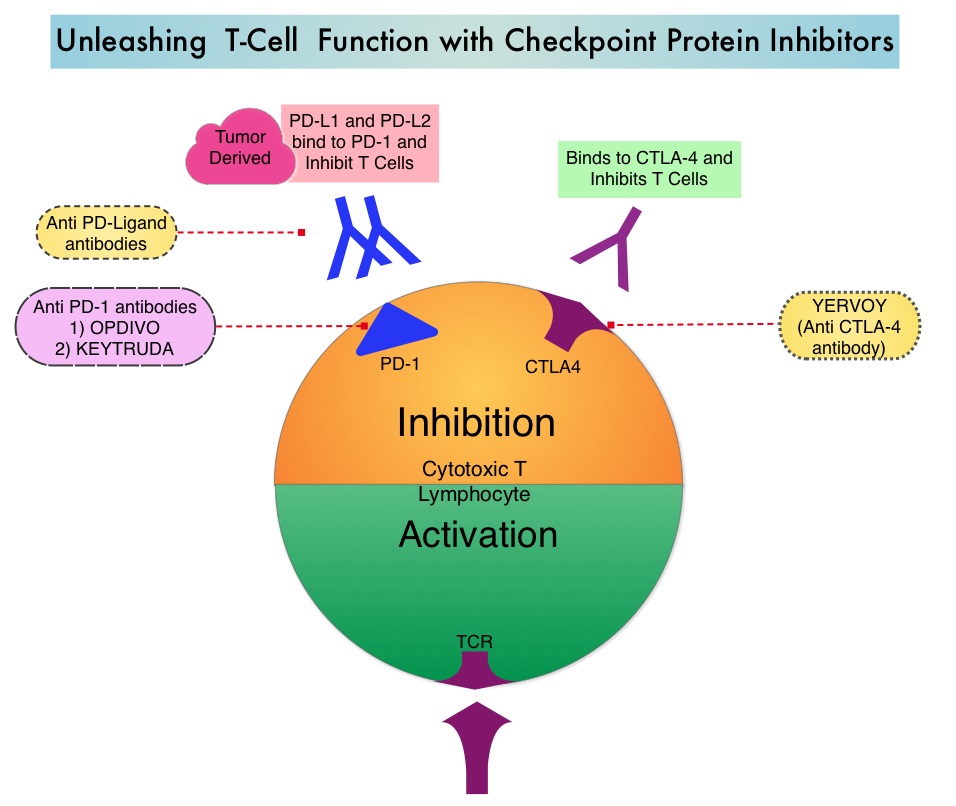
SUMMARY: Immunotherapy in cancer management includes Cancer Vaccines, Cytokine therapy, Adoptive Cell therapy and therapy with Check Point protein inhibitors such as YERVOY®, KEYTRUDA® and OPDIVO®. Toxicities related to these immunotherapeutic interventions are mediated by T cells resulting in exaggerated T cell response and potential damage to normal tissues. A brief summary of the more common adverse events associated with cancer immunotherapy, is listed below-

CANCER VACCINES

PROVENGE® (Sipuleucel-T) is an autologous, cellular immunotherapy indicated for the treatment of asymptomatic or minimally symptomatic metastatic Castrate Resistant (hormone-refractory) Prostate Cancer. This product is the only currently approved Cancer Vaccine and consists of autologous CD54+ cells activated with recombinant PAP/GM-CSF (Prostate Acid Phosphatase, an antigen expressed in the prostate cancer tissue, linked to immune cell activator, Granulocyte Macrophage-Colony Stimulating Factor). Vaccine therapies work by promoting type 1 or type 2 immune reactions. In type 1 immune reaction, T helper type 1 (Th1) lymphocytes secrete Interleukin-2 (IL-2), Interferon gamma, and lymphotoxin-alpha and facilitate intense phagocytic activity whereas in type 2 immunity, Th2 cells secrete IL-4, IL-5, IL-9, IL-10, and IL-13 and is characterized by high antibody titers. Cancer Vaccines are associated with minimal toxicities because the antigens associated with the tumor are overexpressed in the cancer cells and are not usually detectable in normal cells. Common side effects include local reactions, fever, chills, fatigue, rash, back pain and Melanoma vaccines are associated with vitiligo.

CYTOKINE THERAPY

Both INTRON® A (Interferon alfa-2b) and ROFERON® A (Interferon alfa-2a) are approved for a variety of malignant conditions as well as for Chronic Hepatitis B and C. In addition to fever, chills and flu like symptoms, two thirds of the patients have nausea and anorexia and up to 45% of the patients may experience symptoms of depression. Patients should be monitored for cytopenias, diarrhea, liver toxicities as well as thyroid dysfunction and autoimmune disorders may be exacerbated with Interferon.

PROLEUKIN® (High dose IL-2) is administered in an inpatient setting with cardiac monitoring, as patients often develop capillary leak syndrome and hypotension in addition to flu like symptoms and liver function abnormalities. This has been attributed to release of Nitric Oxide, IL-1, Tumor Necrosis Factor alpha, and IFN gamma. Patients may also develop autoimmune related thyroid dysfunction, cytopenias as well as neurotoxicity and will therefore require close monitoring.

ADOPTIVE CELL THERAPY

Unlike Cancer Vaccines, Adoptive T cell therapy is a type of passive immunization which involves the transfusion of autologous or allogeneic T cells into patients with malignancies. These tumor reactive T cells can be genetically engineered or grown ex vivo and their efficacy can be enhanced by other immunotherapies, such as Cancer Vaccines, Cytokine administration or in some instances cytotoxic chemotherapy and radiation therapy. BLINCYTO® (Blinatumomab) is a genetically engineered bispecific CD19 directed CD3 T-cell engager, approved by the FDA, that binds to CD19 (expressed on B-cells) and CD3 (expressed on T-cells). It is indicated for the treatment of Philadelphia chromosome-negative relapsed or refractory B-cell precursor Acute Lymphoblastic Leukemia (ALL). Administration of BLINCYTO® or high dose IL-2 given along with T cells, can cause Cytokine Release Syndrome (CRS), associated with fever, tachycardia, vascular leak, oliguria, and hypotension. This has been attributed to IL-6 and ACTEMRA® (Tocilizumab), an IL-6 receptor antagonist may be of benefit for these patients along with IV fluids, nonsteroidal anti-inflammatory agents and vasopressors. Other toxicities that require monitoring include flu like symptoms, liver function abnormalities, B-cell aplasia, cytopenias and neurotoxicity.

THERAPY WITH CHECKPOINT INHIBITORS

The FDA approved checkpoint inhibitors include, YERVOY® (Ipilimumab) which targets CTLA-4, KEYTRUDA® (Pembrolizumab) and OPDIVO® (Nivolumab), which block checkpoint PD-1. The toxicities associated with YERVOY® are dose dependant. Some common side effects of check point inhibitors include skin rash, flu like symptoms, liver function abnormalities, diarrhea and colitis, cytopenias, thyroid and adrenal function abnormalities. Rare cases of pneumonitis, encephalitis, Guillain-Barré syndrome, and a myasthenia gravis–like syndrome have been reported. With close monitoring, early diagnosis and intervention with Corticosteroids, these toxicities can be alleviated. REMICADE® (Infliximab), a chimeric monoclonal antibody against Tumor Necrosis Factor alpha (TNF-alpha), should be offered to those whose colitis does not resolve within 3 days of high dose steroids or for relapse of colitis with steroid taper.

Toxicities of Immunotherapy for the Practitioner. Weber JS, Yang JC, Atkins MB, et al. J Clin Oncol 2015;33:2092-2099