Lobar or Sublobar Resection for Peripheral Stage IA Non Small Cell Lung Cancer

SUMMARY: Lung cancer is the second most common cancer in both men and women and accounts for about 13% of all new cancers and 21% of all cancer deaths. The American Cancer Society estimates that for 2023, about 238,340 new cases of lung cancer will be diagnosed and 127,070 patients will die of the disease. Lung cancer is the leading cause of cancer-related mortality in the United States. Non-Small Cell Lung Cancer (NSCLC) accounts for approximately 85% of all lung cancers. Of the three main subtypes of NSCLC, 30% are Squamous Cell Carcinomas (SCC), 40% are Adenocarcinomas and 10% are Large Cell Carcinomas. With changes in the cigarette composition and decline in tobacco consumption over the past several decades, Adenocarcinoma now is the most frequent histologic subtype of lung cancer.

Low Dose CT (LDCT) screening for lung cancer resulted in a 20% reduction in mortality In the National Lung Screening Trial (NLST). The USPSTF expanded the criteria for lung cancer screening in 2021 and recommended annual screening with Low-Dose CT for adults aged 50-80 years who have a 20 pack-year smoking history and currently smoke or have quit within the past 15 years. Approximately 15% of patients present with early stage (T1-2 N0) disease, and these numbers are likely to increase with the more rigorous implementation of lung cancer screening programs.

Surgical resection is the primary treatment for approximately 30% of patients with NSCLC who present with early Stage (I–IIIA) disease. Pneumonectomy is rarely performed due to unacceptably high mortality rate. Lobectomy has been the standard of surgical care for patients with clinical T1N0 NSCLC since the mid 1990s. This was based on the results of a randomized trial comparing Lobectomy with Sublobar resection in patients with clinical T1N0 NSCLC. In this trial, the frequency of local recurrence was three times higher with Sublobar resection compared with Lobectomy, and lung cancer-related mortality was 50% higher with Sublobar resection.Types-of-Lung-Resection
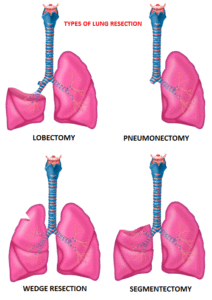
Sublobar resection includes Wedge resection and Segmentectomy. In Wedge resection, the lung tumor is removed with a surrounding margin of normal lung tissue, and is not an anatomical resection. Segmentectomy, unlike Wedge resection, is an anatomical resection that usually includes one or more pulmonary parenchymal segments with the dissection of intraparenchymal and hilar lymph nodes. Advances in imaging as well as staging by means of mediastinoscopy, and routine intraoperative lymphadenectomy has enabled the identification of small, peripheral NSCLCs for which Sublobar resection was potentially appropriate. Sublobar resection was considered a “compromise operation” in selected high risk patients with early stage lung cancer. With the approval of lung cancer screening in high risk individuals and subsequent detection of small tumors, Sublobar resections have been on the rise and may be the preferred surgical option, even in good-risk patients, in many institutions. Sublobar resection preserves pulmonary function and leaves open more treatment options for NSCLC patients, who remain at high risk for metachronous primary NSCLC, following curative intervention for their first NSCLC.

With the implementation of CT-based lung cancer screening recently, lung cancers are likely detected at a very early stage (T1a-bN0; 2 cm or less, node negative tumors). Further, Adenocarcinoma now is the most frequent histologic subtype of lung cancer and present as peripherally located tumors. Advances in preoperative staging such as endobronchial ultrasonography, have improved patient selection for treatment. Majority of surgical resections are now performed by means of video or robotic-assisted thoracic surgery. This has improved postoperative outcomes, with significant reduction in perioperative morbidity, mortality and median length of hospital stay after either Sublobar resection or Lobectomy.

The authors in this study reported the results of a randomized international trial comparing Sublobar resection (wedge resection or segmentectomy) with Lobectomy, in patients with clinical Stage IA NSCLC, with a tumor size of 2 cm or less. Cancer and Leukemia Group B (CALGB) 140503 was a multicenter, international, randomized, noninferiority, Phase III trial, involving patients with NSCLC clinically staged as T1aN0. In this study, a total of 697 patients, after intraoperative confirmation of node-negative disease, were randomly assigned to undergo either Sublobar resection (N=340) or Lobar resection (N=357). Of the 340 patients assigned to Sublobar resection, 201 (59.1%) underwent wedge resection and 129 (37.9%) underwent an anatomical segmental resection. Wedge resection was allowed in the current trial as it is the most frequently practiced method of Sublobar resection in North America and Europe and its inclusion would make the trial more representative of a “real world” setting. The median patient age was 68 years. Approximately 50% of patients had tumor size 1.0-1.5 cm, 40% had tumor size 1.5-2.0 cm, and two thirds of the patients had Adenocarcinoma histology. Over 90% of the patients were current or former smokers. The Primary end point was Disease-Free Survival (DFS), defined as the time between randomization and disease recurrence or death from any cause. Secondary end points included Overall Survival (OS), locoregional and systemic recurrence, and pulmonary functions.

After a median follow up of 7 years, Sublobar resection was noninferior to Lobar resection for DFS (HR for disease recurrence or death=1.01). The 5-year DFS was 63.6% after Sublobar resection and 64.1% after Lobar resection. The Overall Survival after Sublobar resection was similar to that after Lobar resection (HR for death, 0.95). The 5-year OS was 80.3% after Sublobar resection and 78.9% after Lobar resection. No substantial difference was seen between the two groups in the incidence of locoregional or distant recurrence. At 6 months postoperatively, pulmonary functions favored the Sublobar resection group.

It was concluded that Sublobar resection by either anatomical segmentectomy or wedge resection, for patients with peripheral NSCLC with a tumor size of 2 cm or less and pathologically confirmed node-negative disease in the hilar and mediastinal lymph nodes, was non inferior to Lobectomy, with respect to Disease Free Survival and with similar Overall Survival, and is an effective management approach for this subgroup of patients with NSCLC.

Lobar or Sublobar Resection for Peripheral Stage IA Non–Small-Cell Lung Cancer. Altorki N, Wang X, Kozono D, et al. N Engl J Med 2023; 388:489-498


A POSITIVE Trial for Hormone Receptor Positive Breast Cancer Survivors Desiring Pregnancy

SUMMARY: Breast cancer is the most common cancer among women in the US and about 1 in 8 women (12%) will develop invasive breast cancer during their lifetime. It is estimated that approximately 300,590 new cases of breast cancer will be diagnosed in 2023 and about 43,700 individuals will die of the disease, largely due to metastatic recurrence. About 70% of breast tumors express Estrogen Receptors and/or Progesterone Receptors, and Hormone Receptor (HR)-positive/HER2-negative breast cancer is the most frequently diagnosed molecular subtype. Majority of these patients are diagnosed with early stage disease and are often cured with a combination of surgery, radiotherapy, adjuvant chemotherapy, and hormone therapy. However approximately 20% of patients will experience local recurrence or distant relapse during the first 10 years of treatment.

The median age at the time of breast cancer diagnosis in the US is 62 years. However approximately 5% of new diagnoses each year occur in those who are under 40 years. These young patients with Hormone Receptor (HR)-positive breast cancer receiving modern adjuvant endocrine therapy have excellent long-term outcomes. Nonetheless, 40-60% of patients who are diagnosed with breast cancer at age 40 or younger are concerned about their future fertility and pregnancy, as many have not completed their family planning at diagnosis due to delay in childbearing.

The POSITIVE (Pregnancy Outcome and Safety of Interrupting Therapy for Women with Endocrine Responsive Breast Cancer) trial is a multicenter, global, single-arm prospective study, designed to evaluate whether temporary interruption of adjuvant endocrine therapy to attempt pregnancy is associated with a higher risk of breast cancer recurrence. This study included 517 women with Stage I-III Hormone Receptor (HR)-positive early breast cancer, 42 years or less, who had received 18-30 months of adjuvant endocrine therapy and wished to interrupt endocrine therapy for pregnancy. The study permitted treatment interruption for up to 2 years (after a 3 month endocrine therapy washout period) to allow pregnancy, delivery and breastfeeding, followed by endocrine therapy resumption to complete the planned duration of 5-10 of adjuvant endocrine therapy. The median age was 37 years, 75% were nulliparous, fertility preservation was used by 51% of women, 93% had Stage I/II disease, 66% were node negative and 62% had received neo/adjuvant chemotherapy. Tamoxifen alone was the most prescribed endocrine therapy (42%), followed by Tamoxifen plus Ovarian Function Suppression (OFS) (35%).

The Primary endpoint of the study was Breast Cancer-Free Interval (BCFI), defined as the time from study enrollment to the first invasive breast cancer event (local/regional/distant recurrence or contralateral breast cancer). Three interim safety analyses were conducted by a Data Safety Monitoring Committee, and determined that the trial would be suspended if there were more than 46 breast cancer recurrences within approximately 3 years of average follow-up. This threshold however was not reached.

At a median follow up of 41 months, of the 497 patients evaluated for pregnancy status, 74% (N=368) had at least one pregnancy, with 70% of the pregnancies occurring within 2 years. Additionally, 63.8% (N=317) had at least one live birth, with a total of 365 babies born. Birth defects were low at 2% and the rates of conception and childbirth were similar to rates in the general public. The 3-year breast cancer recurrence rate among patients who halted therapy was 8.9%, similar to the 9.2% rate in an external control cohort from the SOFT/TEXT trials, which examined adjuvant endocrine therapy in premenopausal patients. Long term follow up is ongoing to assess recurrence risk over time, and trial participants were strongly recommended to resume endocrine therapy following their pregnancy attempts or success.

The authors concluded that these data provide guidance to younger patients diagnosed with early breast cancer on endocrine therapy, who may be hoping to have children. They added that such decisions should be made in close consultation with health professionals.

Pregnancy outcome and safety of interrupting therapy for women with endocrine responsive breast cancer: primary results from the POSITIVE trial (IBCSG 48-14 / BIG 8-13). Partridge A, Niman SM, Ruggeri M, et al. Presented at 2022 San Antonio Breast Cancer Symposium; December 6-10, 2022; San Antonio, TX.

FDA Approves JAYPIRCA® for Relapsed or Refractory Mantle Cell Lymphoma

SUMMARY: The FDA on January 27, 2023, granted accelerated approval to JAYPIRCA® (Pirtobrutinib) for Relapsed or Refractory Mantle Cell Lymphoma (MCL) after at least two lines of systemic therapy, including a BTK inhibitor.

The American Cancer Society estimates that in 2023, about 80,550 people will be diagnosed with Non Hodgkin Lymphoma (NHL) in the United States and about 20,180 individuals will die of this disease. In the US, approximately 3,300 new cases of MCL are diagnosed each year. Mantle Cell Lymphoma is an aggressive B-cell lymphoma and accounts for approximately 6% of all Non Hodgkin Lymphomas in adults, and is associated with a high relapse rate, following dose-intensive therapies. Early and late relapses in patients with MCL have been attributed to persistence of residual disease. Majority of patients with MCL are elderly and are not candidates for aggressive treatment or Autologous Stem Cell Transplantation.

Bruton’s Tyrosine Kinase (BTK) is a member of the Tec family of kinases, downstream of the B-cell receptor, and is predominantly expressed in B-cells. It is a mediator of B-cell receptor signaling in normal and transformed B-cells. BTK inhibitors inhibit cell proliferation and promotes programmed cell death (Apoptosis) by blocking B-cell activation and signaling. BTK is a validated molecular target found across numerous B-cell leukemias and lymphomas including Chronic Lymphocytic Leukemia (CLL), Mantle Cell Lymphoma (MCL), and Waldenstrom Macroglobulinemia (WM). The 3 covalent BTK inhibitors presently approved by the FDA for MCL include IMBRUVICA® (Ibrutinib) approved in 2013, CALQUENCE® (Acalabrutinib) approved in 2017, and BRUKINSA® (Zanubrutinib) approved in 2019. Covalent BTK inhibitors have transformed the treatment landscape of Mantle Cell Lymphoma. Despite the efficacy of covalent BTK inhibitors, treatment failure often occurs through development of resistance or intolerance.

JAYPIRCA® is a highly selective, reversible (non-covalent) Bruton’s Tyrosine Kinase (BTK) inhibitor, developed to reversibly bind BTK, deliver consistently high target coverage regardless of BTK turnover rate, and preserve activity in the presence of the C481 acquired resistance mutations. JAYPIRCA® is 300 times more selective in BTK inhibition versus 98% of other kinases tested in preclinical studies and inhibits both wildtype and C481-mutant BTK with equal low nM potency, and has favorable oral pharmacology. JAYPIRCA® is well tolerated and demonstrated promising efficacy in patients with poor-prognosis B-cell malignancies following prior therapy, including prior covalent BTK inhibitors (Mato et al. Lancet, 2021).

The BRUIN Phase I/II clinical trial is the ongoing first-in-human, global, open-label, multicenter single armstudy, which evaluated the efficacy of JAYPIRCA® in previously treated patients with Mantle Cell Lymphoma (MCL), Chronic Lymphocytic Leukemia (CLL), Small Lymphocytic Lymphoma (SLL), or other Non-Hodgkin Lymphomas (NHL). The trial included a Phase I dose-escalation component in which the daily dosing of JAYPIRCA® between 25 mg and 300 mg was evaluated, a Phase Ib drug combination safety arm, and a Phase II dose-expansion component, in which JAYPIRCA® 200 mg daily, as a part of 28-day cycles, is being evaluated.

The present FDA approval is based on data from a subset of patients with Mantle Cell Lymphoma (N=120) in the BRUIN Phase I/II trial, treated with JAYPIRCA® 200 mg once daily until disease progression or unacceptable toxicity. Patients had received a median of three prior lines of therapy with 93% having two or more prior lines, and all patients received one or more prior lines of therapy containing a covalent BTK inhibitor. The most common prior BTK inhibitors received were Ibrutinib (67%), Acalabrutinib (30%), and Zanubrutinib (8%), and 83% had discontinued their last BTK inhibitor due to refractory or progressive disease. Patients with active Central Nervous System Lymphoma or allogeneic Hematopoietic Stem Cell Transplantation or CAR T-cell therapy within 60 days were excluded. The main efficacy measures were Overall Response Rate (ORR) and Duration of Response (DOR), as assessed by an Independent Review Committee, using 2014 Lugano criteria.

The ORR was 50%, with a Complete Response rate of 13%, and the Partial Response rate was 38%. The Time to Response was 1.8 months. The estimated median Duration of Response was 8.3 months, and the estimated Duration of Response rate at 6 months was 65.3%. The most common adverse reactions in 15% or more of MCL patients were fatigue, musculoskeletal pain, diarrhea, edema, dyspnea, pneumonia, and bruising. Grade 3 or 4 laboratory abnormalities in 10% or more of patients were cytopenias.

It was concluded that JAYPIRCA® offers a new approach to targeting the BTK pathway for Relapsed and Refractory Mantle Cell Lymphoma patients, previously treated with a covalent BTK inhibitor. The researchers added that this approval of JAYPIRCA® represents an important advance for this group of patients who currently have limited treatment options and have a poor prognosis.

Efficacy of Pirtobrutinib in Covalent BTK-Inhibitor Pre-Treated Relapsed / Refractory Mantle Cell Lymphoma: Additional Patients and Extended Follow-up from the Phase 1/2 BRUIN Study. Wang ML, Shah NN, Jurczak W. Presented at the 64th ASH Annual Meeting and Exposition, December 10-13, 2022, New Orleans, Louisiana. Abstract # 4218.

FDA Approves Adjuvant KEYTRUDA® in NSCLC Irrespective of PD-L1 Expression

SUMMARY: The FDA on January 26, 2023, approved KEYTRUDA® (Pembrolizumab) for adjuvant treatment following resection and platinum-based chemotherapy for Stage IB (T2a ≥4 cm), II, or IIIA Non-Small Cell Lung Cancer (NSCLC). Lung cancer is the second most common cancer in both men and women and accounts for about 13% of all new cancers and 21% of all cancer deaths. The American Cancer Society estimates that for 2023, about 238,340 new cases of lung cancer will be diagnosed and 127,070 patients will die of the disease. Lung cancer is the leading cause of cancer-related mortality in the United States. Non-Small Cell Lung Cancer (NSCLC) accounts for approximately 85% of all lung cancers. Of the three main subtypes of NSCLC, 30% are Squamous Cell Carcinomas (SCC), 40% are Adenocarcinomas and 10% are Large Cell Carcinomas. With changes in the cigarette composition and decline in tobacco consumption over the past several decades, Adenocarcinoma now is the most frequent histologic subtype of lung cancer.

The 5-year survival rate for patients diagnosed with lung cancer in the US is about 25%, which is a significant improvement over the past 5 years, in part due to earlier detection from lung cancer screening, reduction in smoking, advances in diagnostic and surgical procedures, as well as the introduction of new therapies. However, the 5-year survival rate remains significantly lower among communities of color at 20%. Early detection and screening remain an important unmet need, as 44% of lung cancer cases are not found until they are advanced. In the US, only 5.8% of those individuals at high risk were screened in 2021.

Surgical resection is the primary treatment for approximately 30% of patients with NSCLC who present with early Stage (I–IIIA) disease. These patients are often treated with platinum-based adjuvant chemotherapy to decrease the risk of recurrence. Nonetheless, 45-75% of these patients develop recurrent disease. There is therefore an unmet need for this patient population.

KEYTRUDA® (Pembrolizumab) is a fully humanized, Immunoglobulin G4, anti-PD-1, monoclonal antibody, that binds to the PD-1 receptor and blocks its interaction with ligands PD-L1 and PD-L2. By doing so, it unleashes the tumor-specific effector T cells, and is thereby able to undo PD-1 pathway-mediated inhibition of the immune response.

KEYNOTE-091/EORTC-1416-LCG/ETOP-8-15 – PEARLS trial is a multicenter, randomized, triple-blind, placebo-controlled Phase III trial, which compared the efficacy of KEYTRUDA® with placebo, among patients with resected NSCLC. In this study, 1,177 patients with completely resected Stage IB (T2a ≥4 cm), II, or IIIA NSCLC with negative margins, and with tumor tissue available for PD-L1 testing were included. Systematic complete or lobe-specific mediastinal lymph node dissection was recommended. In the least, the subcarinal and 1 lobe-specific lymph node must have been examined. Eligible patients had not received neoadjuvant radiotherapy or chemotherapy, had ECOG PS of 0-1, and adjuvant chemotherapy for up to four cycles was optional. Adjuvant chemotherapy could be considered for those with Stage IB disease and was strongly recommended for those with Stage II and IIIA disease. Patients were randomized (1:1) to receive KEYTRUDA® 200 mg or placebo IV every three weeks and treatment was continued until disease recurrence, unacceptable toxicity, or up to 1 year. Both treatment groups were well balanced. The median patient age was 65 years, majority of patients (68%) were male, approximately 65% of patients had nonsquamous histology, 56% of patients had Stage II disease and 86% of patients had received adjuvant platinum-based chemotherapy following complete resection. Stratification factors included disease stage, receipt of adjuvant chemotherapy, PD-L1 Tumor Proportion Score and geographic region of the world. The median duration of exposure to KEYTRUDA® was 11.7 months and 68% of patients in the KEYTRUDA® group were exposed to KEYTRUDA® for at least 6 months. The major efficacy outcome measure was investigator-assessed Disease-Free Survival (DFS). An additional efficacy outcome was Overall Survival (OS).

The trial met its Primary endpoint, demonstrating a statistically significant improvement in DFS in the overall population. In patients who received adjuvant platinum-based chemotherapy following surgical resection, KEYTRUDA® reduced the risk of disease recurrence or death by 27% (HR=0.73) versus placebo, regardless of PD-L1 expression. For patients who received adjuvant chemotherapy, median DFS regardless of PD-L1 expression was 58.7 months in the KEYTRUDA® group versus 34.9 months in the placebo group. In an exploratory subgroup analysis of the 167 patients who did not receive adjuvant chemotherapy, the DFS Hazard Ratio was 1.25. Overall survival Data were not mature.

It was concluded that these data support the benefit of KEYTRUDA® as a new adjuvant immunotherapy treatment option, for early-stage NSCLC following complete resection, and if indicated, adjuvant chemotherapy, regardless of PD-L1 expression.

EORTC-1416-LCG/ETOP 8-15 – PEARLS/KEYNOTE-091 study of pembrolizumab versus placebo for completely resected early-stage non-small cell lung cancer (NSCLC): Outcomes in subgroups related to surgery, disease burden, and adjuvant chemotherapy use.O’Brien M, Paz-Ares L, Jha N, et al. DOI: 10.1200/JCO.2022.40.16_suppl.8512 Journal of Clinical Oncology 40, no. 16_suppl (June 01, 2022) 8512-8512.Published online June 02, 2022.

Low Dose Dasatinib as Frontline Therapy in Newly Diagnosed Chronic Myeloid Leukemia

SUMMARY: Chronic Myeloid Leukemia (CML) constitutes approximately 10% of all new cases of leukemia. The American Cancer Society estimates that 6,660 new CML cases will be diagnosed in the United States in 2015 and about 1,140 people will die of the disease. Chronic Myeloid Leukemia in Chronic Phase (CML-CP) is a clonal myeloproliferative disorder and the hallmark of CML, the Philadelphia Chromosome (Chromosome 22), is a result of a reciprocal translocation between chromosomes 9 and 22, wherein the ABL gene from chromosome 9, fuses with the BCR gene on chromosome 22. As a result, the auto inhibitory function of the ABL gene is lost and the BCR-ABL fusion gene is activated resulting in cell proliferation and leukemic transformation of hematopoietic stem cells. With the development of small molecule tyrosine kinase inhibitors (TKIs) targeting BCR-ABL1, the 10-year survival rate in CML in Chronic phase is 80-90%. There are presently four TKIs (First Generation-Imatinib; Second Generation- Nilotinib, Dasatinib and Bosutinib) approved by the FDA for frontline therapy of patients with newly diagnosed CML-CP. Treatment with second generation TKIs has demonstrated significantly deeper and faster cytogenetic and Major MolecularResponses, but without any impact on long-term survival.

Dasatinib (SPRYCEL®) is an oral second generation TKI and is 325 times more potent than imatinib in inhibiting unmutated BCR-ABL1 kinase in vitro. It additionally inhibits the Src family of kinases, which are key regulators of signal transduction. Dasatinib 100mg once daily was approved by the FDA in 2010 for the treatment of patients with newly diagnosed Philadelphia chromosome-positive (Ph+) chronic myeloid leukemia (CML) in chronic phase, based on the Pivotal DASISION Study. In this trial, Dasatinib demonstrated Superior Efficacy with Higher and Faster Molecular and Confirmed Complete Cytogenetic Response Rates, compared to Imatinib by 12 months. In this trial drug-related pleural effusions occurred more frequently with Dasatinib than with Imatinib (28% versus <1%), as well as myelosuppression (20%), and, occasionally, pulmonary hypertension (5%).

Dasatinib in early clinical trials demonstrated activity at lower doses with better safety profile. Further in the DASISION trial, the efficacy of Dasatinib was maintained among patients who had their dose reduced, while improving its safety profile. Low-dose Dasatinib appears to be safe and effective in patients with Chronic Myeloid Leukemia in Chronic Phase (CML-CP). However there are no randomized trials comparing the outcome with standard-dose Dasatinib.

This present study was conducted to compare the outcome of patients with newly diagnosed CML-CP treated with Dasatinib 50 versus 100 mg/day. The researchers analyzed 233 patients with newly diagnosed CML-CP treated with low-dose Dasatinib (N = 83) or standard-dose Dasatinib (N = 150). Using Propensity score analysis with 1:1 matching, 77 patients in each cohort were identified without significant baseline differences.

Response rates were reported as the cumulative incidences of Complete Cytogenetic Response (CCyR), Major Molecular Response (MMR), Molecular Response with 4.0 (MR4.0) and 4.5 (MR4.5) log reduction. MMR was defined as BCR-ABL1/ABL1 (IS) ≤0.1%, MR4.0 defined as BCR-ABL1/ABL1 (IS) ≤0.01% and MR4.5 defined as BCR-ABL1/ABL1 (IS) ≤0.0032%. Additional comparisons between the two groups included Overall Survival (OS) calculated from the start date of the therapy to the date of death from any cause at any time or date of last follow-up, Event-Free Survival (EFS) to the date of any of the events while on study as defined in the IRIS study, Failure-Free Survival (FFS) was calculated from the start date of therapy to the dates of treatment discontinuation for any reason except of treatment-free remission, Transformation-Free Survival (TFS), to the date of transformation to accelerated or blast phases during study. Patients on low-dose Dasatinib with suboptimal response by European LeukemiaNet (ELN) 2013 criteria had the option to increase the dose to 100 mg/day. The median age was 47 years. By Sokal risk score, 66% patients had low-risk, 25% had intermediate-risk, and 9% had high-risk disease. The median follow-up time was 60 months.

The 3-year MMR rates were 92% and 84% for low-dose and standard-dose Dasatinib, respectively (P=0.23). Dasatinib 50 mg/day induced higher cumulative incidence of MR4.0 (77% versus 66%; P=0.04) and MR4.5 (77% vs. 62%; P=0.02) at 3 years. The 4-year FFS, EFS and OS rates were 89% versus 77% (P=0.04), 95% versus 92% (P=0.06), and 97% versus 96% (P=0.78) with low-dose and standard-dose Dasatinib, respectively. The incidence of any grade pleural effusion was 5% with Dasatinib 50 mg/day compared to 21% with Dasatinib 100 mg/day.

It was concluded that Dasatinib 50mg daily is a new, cost-effective therapeutic option for frontline therapy in CML-CP and is at least as effective as Dasatinib 100 mg/day, with a better safety profile.

Low-dose dasatinib 50 mg/day versus standard-dose dasatinib 100 mg/day as frontline therapy in chronic myeloid leukemia in chronic phase: A propensity score analysis. Jabbour E, Sasaki K, Haddad FG, et al. Am J Hematol. 2022;97:1413-1418.

EGFR Exon 20 Insertion Mutations – These Are NOT Your Common EGFR Mutations


Written By: David M. Waterhouse, MD, MPH & Anita Koshy, MD
This promotional educational activity is brought to you by Janssen Biotech, Inc., and is not certified for continuing medical education.
Dr. Waterhouse is a paid consultant writing on behalf of Janssen Biotech, Inc., and must present this information in compliance with FDA requirements applicable to Janssen Biotech, Inc.

It is estimated that approximately 237,000 people in the US will be diagnosed with lung cancer in 2022. Despite advancements in standard-of-care treatments for lung cancer, this disease remains the leading cause of cancer death in both males and females.1 Nonetheless, the burgeoning number of targeted therapies for some types of lung cancer, particularly non-small cell lung cancer (NSCLC), have allowed for improvements in mortality and survival.2 As of 2022, there are ~20 targeted therapies for ~9 actionable driver mutations in stage IV NSCLC.3,4 In order to determine optimal targeted therapies, the NCCN Clinical Practice Guidelines in Oncology (NCCN Guidelines®) recommend comprehensive biomarker testing, like next-generation sequencing (NGS), for all eligible patients at diagnosis of advanced NSCLC.5

Common EGFR Mutations (Exon 19 deletion and Exon 21 [L858R] mutations)

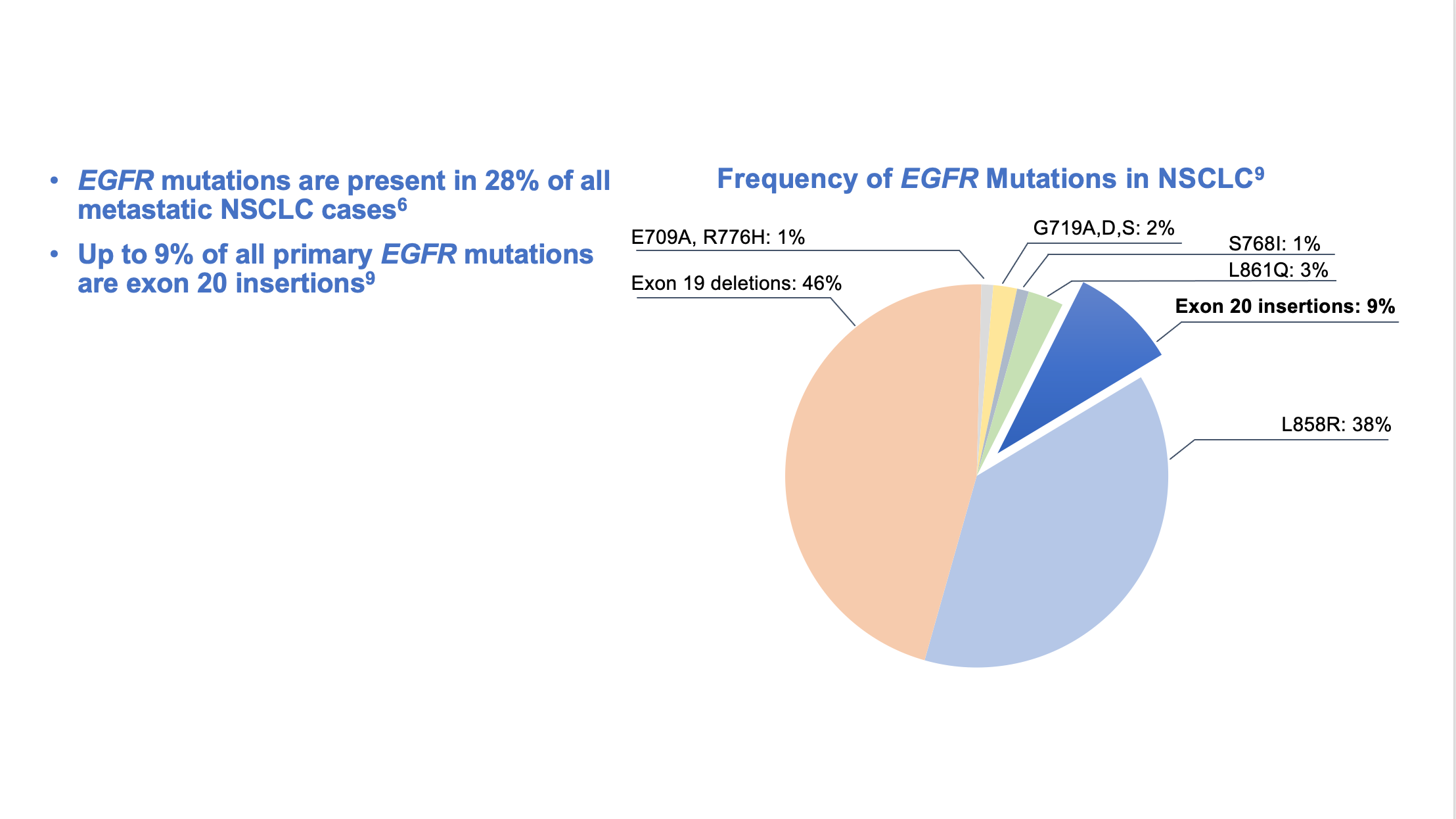
Epidermal growth factor receptor (EGFR) is a potent oncogene commonly altered in NSCLC, and EGFR driver mutations may be found in as many as 28% of metastatic NSCLC patients.6 Tyrosine kinase inhibitors (TKIs) directed against EGFR were among the first molecular targeted agents used for treatment of advanced NSCLC.7 Initial studies of EGFR TKIs showed that patient characteristics associated with EGFR mutations, such as non-smoking status, female gender, East Asian origin, and adenocarcinoma histology suggested a greater benefit from EGFR TKIs compared with first-line chemotherapy.8 Later studies identified gene mutations that could target the kinase domain of EGFR and predicted response to such inhibitors. The variable deletions of at least 3 amino acid residues in exon 19, as well as the single point mutation leucine-858 to arginine (L858R) in exon 21, are often referred to as “common” activating EGFR mutations and represent the vast majority (90%) of all observed EGFR kinase domain mutations in NSCLC.8 (Figure 1)EGFR-Mutations

EGFR Exon 20 Insertion Mutations

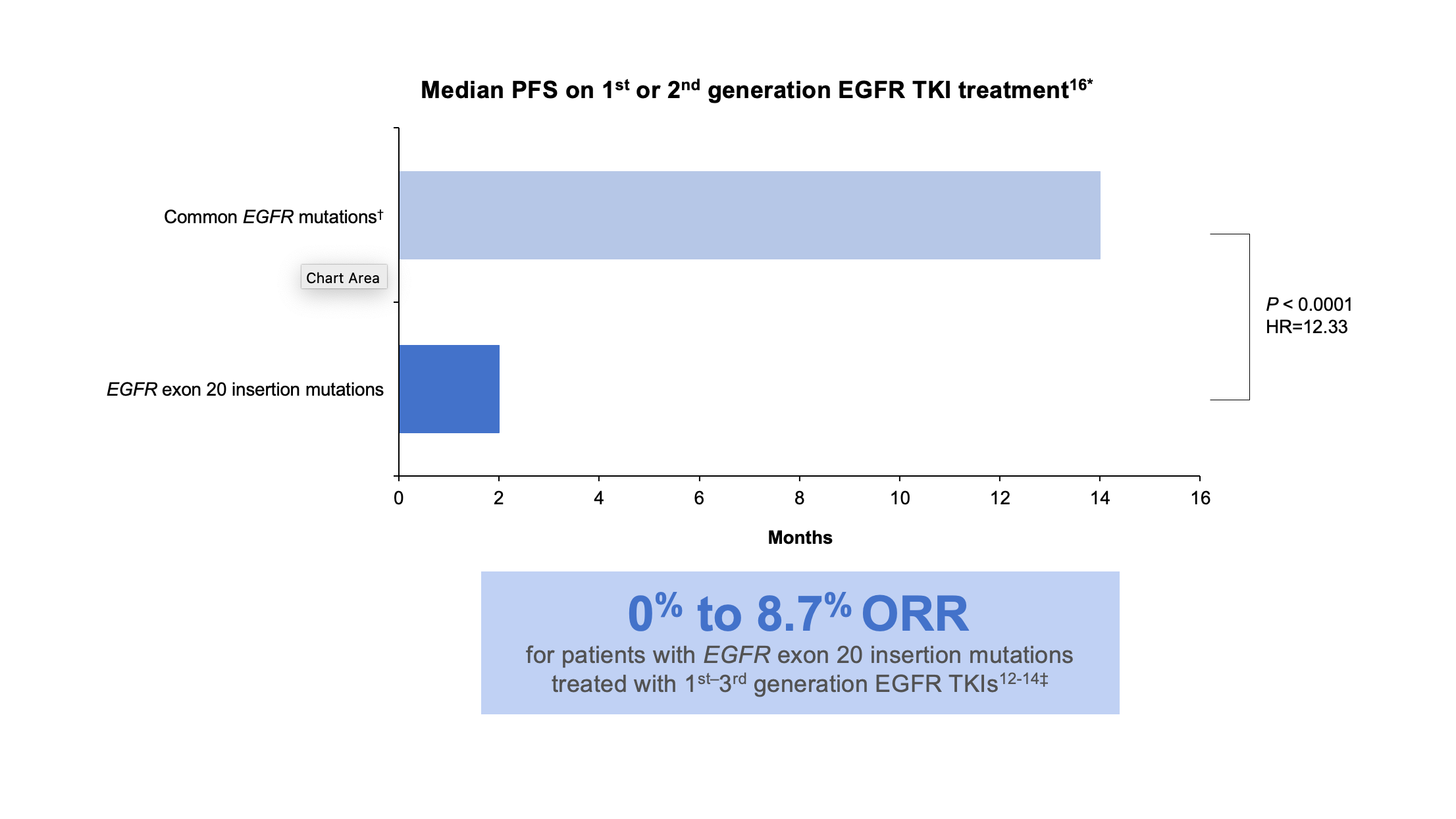
Exon 20 insertion mutations are the third most prevalent type of activating EGFR mutations in NSCLC and are associated with a poor prognosis.9-11 These mutations are also enriched in women, non-smokers, Asian populations, and those with adenocarcinoma. Exon 20 insertion mutations, however, lack the key structural features that confer sensitivity of L858R and exon19 deletion mutations to first-and second-generation EGFR inhibitors. In-frame base pair insertions in exon 20 result in activation of EGFR, but, unlike the common activating EGFR mutations, they are associated with reduced affinity to most clinically available EGFR TKIs indicated for common EGFR mutations. Data are limited and variable, but multiple studies found that patients with EGFR exon 20 insertion mutations had an overall response rate of 0% to 8.7% when treated with first-, second-, or third-generation EGFR TKIs.12-16 (Figure 2)

Median-PFS-First-Second-Generation_TKI

*These data were taken from a retrospective observational study.16
†Common mutations include L858R, L861Q, and exon 19 deletions.16
‡These data were taken from multiple sources: a cohort study, a prospective post hoc analysis of phase 2 and phase 3 trials, a single-center retrospective analysis, and a systematic literature review and meta-analysis.12-14
HR, hazard ratio; ORR, overall response rate; PFS, progression-free survival.

Study results also demonstrate limited efficacy of immuno-oncology (IO) monotherapy in this patient population compared to patients with wild-type EGFR. In a retrospective study using real-world data, patients with EGFR exon 20 insertion mutation-positive NSCLC were associated with a 58% increased risk of shorter time to next-line therapy after first-line IO monotherapy compared to patients with wild-type NSCLC.17

The NCCN Guidelines® do not recommend most TKIs or IO monotherapy for treating patients with mNSCLC and EGFR exon 20 insertion mutations in the first- or second-line setting. Instead, the Guidelines recommend platinum-based chemotherapy as the standard first-line treatment for NSCLC with EGFR exon 20 insertion mutations.

§Exceptions include p.A763_Y764insFQEA and p.A763_Y764insLQEA.5

EGFR Testing

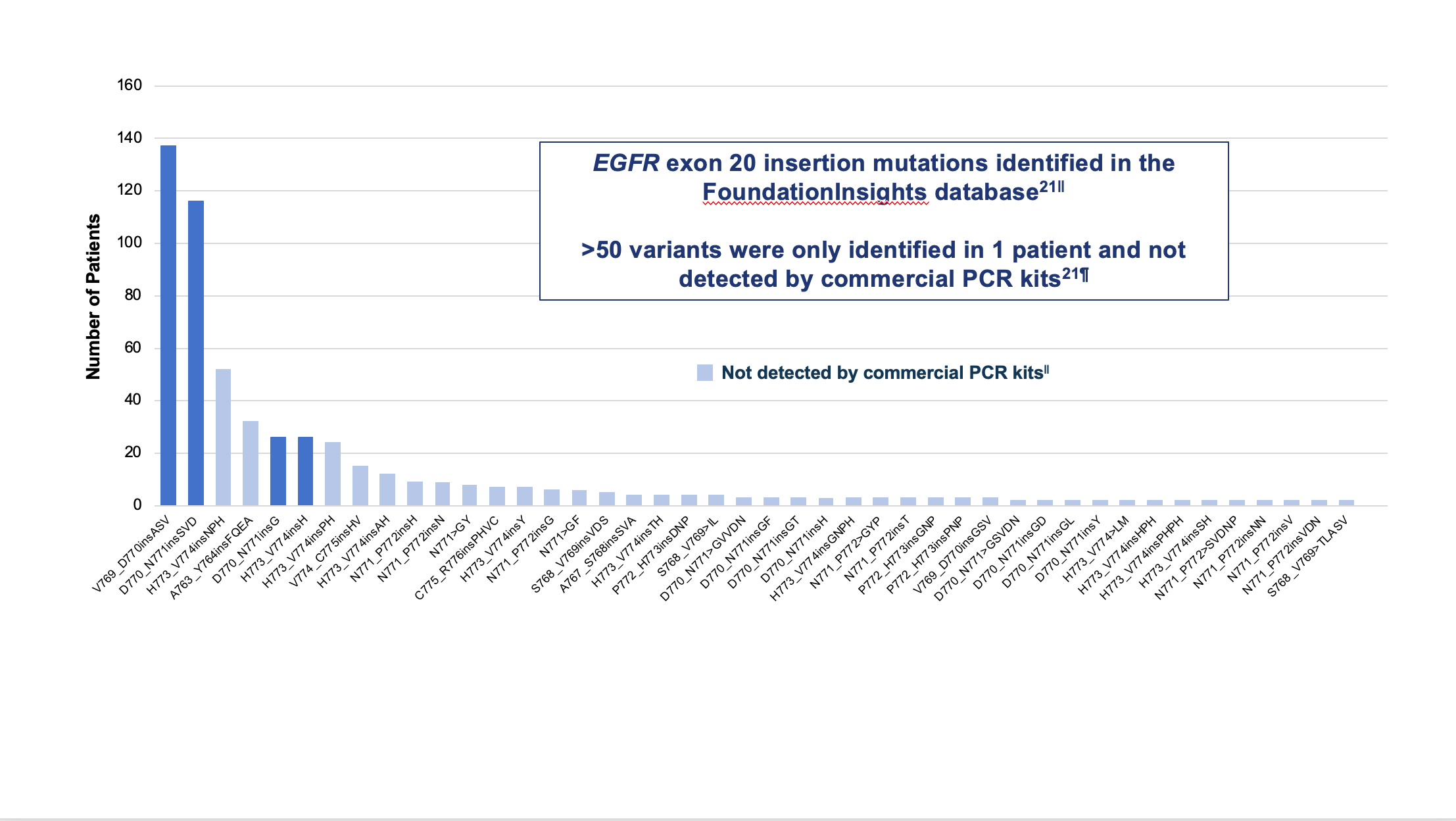
The NCCN Guidelines recommend comprehensive biomarker testing, like NGS, prior to the initiation of first-line therapy, if clinically feasible.5 Despite that recommendation, rates of broad biomarker testing remain low, according to real-world evidence.18,19 In a retrospective observational chart review study among 3,474 patients with advanced NSCLC receiving first-line therapy in the US Oncology Network, the EGFR testing rate was found to be 70%, but comprehensive NGS testing was completed in only 42% of patients.20 Failure to order comprehensive NGS testing is particularly problematic when it comes to identifying EGFR exon 20 insertions. There are over 100 unique EGFR exon 20 insertion variants, and polymerase chain reaction (PCR) testing can miss approximately 50% of the insertions identified by NGS.21 (Figure 3)

EGFR-Mutations-Foundation-Medicine

||Analysis from mutation profiles of 36,465 lung adenocarcinomas from Foundation Medicine (Cambridge, MA) FoundationInsights database, which is a database of 315,688 patient genomic profiles across 150 cancer types.
¶Commercially available qPCR methods were Roche cobas® EGFR mutation test v2 and Qiagen therascreen EGFR RGQ PCR kit.

Another notable issue is the accurate application of NGS data to clinical care. In multiple retrospective, observational cohort studies, approximately 17% to 24% of treatment-naive and 14% to 22% of second-line patients with EGFR exon 20 insertions received EGFR TKIs.11,17,22** Studies also found that approximately 7% to 40% of treatment-naive and 26% to 41% of second-line patients received IO monotherapy.17,22,23 These therapies (ie, most TKIs indicated for common mutations†† and IO monotherapies) are not recommended for first- or second-line therapy for EGFR exon 20 insertion mutations.5

**EGFR TKIs included first-, second- and third-generations.
††Exceptions include p.A763_Y764insFQEA and p.A763_Y764insLQEA.

Current Treatment Strategies for Patients With Exon 20 Insertion Mutations

Chemotherapy with a platinum doublet remains the recommended treatment option for the first-line treatment of patients with an EGFR exon 20 insertion mutation.5 When many of these patients progress, subsequent treatment options are needed. The NCCN Guidelines recommend amivantamab-vmjw or mobocertinib as subsequent therapy options for patients with EGFR exon 20 insertion mutations who have progressed on or after initial systemic therapy.5

Conclusion:

  • Advances made in the treatment of NSCLC have improved patient mortality and survival,2 and these advancements are due in part to the discovery of actionable mutations, like common EGFR mutations, and targeted therapies3,4,7,8
  • Multiple studies have found, however, that patients with EGFR exon 20 insertion mutations had a poor overall response when treated with first-, second-, or third-generation EGFR TKIs,11-15,17 and that IO monotherapies provide little benefit as a first-line treatment in patients with EGFR mutations, including exon 20 insertions17
  • The NCCN Guidelines recommend:
    • Testing eligible patients with mNSCLC for targetable genetic alterations to both identify potentially appropriate targeted therapies and avoid therapies unlikely to provide clinical benefit5
    • Treating patients who harbor a common EGFR mutation (exon 19 deletion and exon 21 [L858R] mutations) with an EGFR TKI in the first line of treatment, whereas those with an EGFR exon 20 insertion mutation are best treated with a regimen containing a platinum doublet5
    • Amivantamab-vmjw or mobocertinib as subsequent therapy options for patients with EGFR+ mNSCLC with exon 20 insertion mutations who have progressed on or after initial systemic therapy per the NCCN Guidelines5

References
1. National Cancer Institute. Cancer stat facts: common cancer sites. Accessed September 30, 2022. https://seer.cancer.gov/statfacts/html/common.html
2. Siegel RL, Miller KD, Fuchs HE, Jemal A. Cancer statistics, 2021.CA Cancer J Clin. 2021;71:7-33.
3. Benjamin DJ, Haslam A, Gill J, Prasad V. Targeted therapy in lung cancer: Are we closing the gap in years of life lost? Cancer Med. 2022;11(18):3417-3424.
4. Targeted Therapy in Metastatic Non–Small Cell Lung Cancer: Recent Updates and Controversies. Angel Qin. ASCO Daily News. Published January 19, 2022. Accessed November 14, 2022. https://dailynews.ascopubs.org/do/10.1200/ADN.22.200810/
5. Referenced with permission from the NCCN Clinical Practice Guidelines in Oncology (NCCN Guidelines®) for Non-Small Cell Lung Cancer V.6.2022. © National Comprehensive Cancer Network, Inc. 2022. All rights reserved. Accessed December 2, 2022. To view the most recent and complete version of the guideline, go online to NCCN.org. NCCN makes no warranties of any kind whatsoever regarding their content, use or application and disclaims any responsibility for their application or use in anyway.
6. Jordan EJ, Kim HR, Arcila ME, et al. Prospective comprehensive molecular characterization of lung adenocarcinomas for efficient patient matching to approved and emerging therapies. Cancer Discov. 2017;7(6):596-609.
7. Luo SY, Lam DC. Oncogenic driver mutations in lung cancer. Transl Respir Med. 2013;1(1):6.
8. Gazdar AF. Activating and resistance mutations of EGFR in non-small-cell lung cancer: role in clinical response to EGFR tyrosine kinase inhibitors. Oncogene. 2009;28 (Suppl 1):S24-S31.
9. Arcila ME, Nafa K, Chaft JE, et al. EGFR exon20 insertion mutations in lung adenocarcinomas: prevalence, molecular heterogeneity, and clinicopathologic characteristics. Mol Cancer Ther. 2013;12(2):220-229.
10. Leal JL, Alexander M, Itchins M, et al. EGFR exon 20 insertion mutations: clinicopathological characteristics and treatment outcomes in advanced non-small cell lung cancer. Clin Lung Cancer. 2021;22(6):e859-e869.
11. Bazhenova L, Minchom A, Viteri S, et al. Comparative clinical outcomes for patients with advanced NSCLC harboring EGFR exon 20 insertion mutations and common EGFR mutations. Lung Cancer. 2021;162:154-161.
12. Wu JY, Yu CJ, Shih JY. Effectiveness of treatments for advanced non-small-cell lung cancer with exon 20 insertion epidermal growth factor receptor mutations. Clin Lung Cancer. 2019;20:e620-e630.
13. Yang JC, Sequist LV, Geater SL, et al. Clinical activity of afatinib in patients with advanced non-small-cell lung cancer harbouring uncommon EGFR mutations: a combined post-hoc analysis of LUX-Lung 2, LUX-Lung 3, and LUX-Lung 6.Lancet Oncol. 2015;16(7):830-838.
14. Kate S, Chougule A, JoshiA, et al. Outcome of uncommon EGFR mutation positive newly diagnosed advanced non-small cell lung cancer patients: a single center retrospective analysis. Lung Cancer (Auckl). 2019;10:1-10.
15. Kwon CS, Lin HM, Crossland V, et al. Non-small cell lung cancer with EGFR exon 20 insertion mutation: a systematic literature review and meta-analysis of patient outcomes. Curr Med Res Opin. 2022;38(8):1341-1350.
16. Robichaux JP, Elamin YY, Tan Z, et al. Mechanisms and clinical activity of an EGFR and HER2 exon 20-selective kinase inhibitor in non-small cell lung cancer. Nat Med. 2018;24:638-646.
17. Girard N, Minchom A, Ou SI, et al. Comparative clinical outcomes between EGFR ex20 ins and wild type NSCLC treated with immune checkpoint inhibitors. Clin Lung Cancer. 2022;23(7):571-577.
18. Paz-Ares L, Gondos A, Saldana D, et al. Genomic testing among patients with newly diagnosed advanced non-small cell lung cancer in the United States: A contemporary clinical practice patterns study. Lung Cancer. 2022;167:41-48.
19. Waterhouse DM, Tseng WY, Espirito JL, Robert NJ. Understanding contemporary molecular biomarker testing rates and trends for metastatic NSCLC among community oncologists. Clin Lung Cancer. 2021;22(6):e901-e910.
20. Robert N, Chen L, Espirito J, et al. Trends in molecular testing for metastatic non-small cell lung cancer in the US Oncology Network community practices. J Thorac Oncol. 2021;16(10) (suppl):S1169.
21. Bauml J, Viteri S, Minchom A, et al. Underdiagnosis of EGFR exon 20 insertion mutation variants: estimates from NGS-based real-world datasets. Presented at: the IASLC 2020 World Conference on Lung Cancer; January 28-31, 2021;Singapore.
22. He J, Pericone CD, Vanderpoel J. Real-world patient characteristics, treatment patterns, and mutation testing patterns among US patients with advanced non-small cell lung cancer harboring EGFR mutations. Adv Ther. 2022;39(7):3347-3360.
23. Choudhury NJ, Schoenfeld AJ, Flynn J, et al. Response to standard therapies and comprehensive genomic analysis for patients with lung adenocarcinoma with EGFR exon 20 insertions. Clin Cancer Res. 2021;27(10):2920-2927.

© Janssen Biotech, Inc. 2022 12/22 cp-345345v1

FDA Approves ORSERDU® for ESR-1 Mutated Advanced Breast Cancer

SUMMARY: The FDA on January 27, 2023, approved ORSERDU® (Elacestrant) for postmenopausal women or adult men with ER-positive, HER2-negative, ESR1-mutated advanced or metastatic breast cancer, with disease progression following at least one line of endocrine therapy. FDA also approved the Guardant360 CDx assay as a companion diagnostic device to identify patients with breast cancer for treatment with ORSERDU®.

Breast cancer is the most common cancer among women in the US and about 1 in 8 women (12%) will develop invasive breast cancer during their lifetime. It is estimated that approximately 300,590 new cases of breast cancer will be diagnosed in 2023 and about 43,700 individuals will die of the disease, largely due to metastatic recurrence. Approximately 70% of breast tumors express Estrogen Receptors and/or Progesterone Receptors. The most common subtype of metastatic breast cancer is Hormone Receptor-positive (HR-positive), HER2-negative breast cancer (65% of all metastatic breast tumors), and these patients are often treated with anti-estrogen therapy as first line treatment. However, resistance to hormonal therapy occurs in a majority of the patients, with a median Overall Survival (OS) of 36 months. With the development of Cyclin Dependent Kinases (CDK) 4/6 inhibitors, endocrine therapy plus a CDK4/6 inhibitor is the mainstay, for the management of ER+/HER2-negative metastatic breast cancer, as first line therapy. Even with this therapeutic combination, most patients will eventually experience disease progression, including the development of ESR1 (Estrogen Receptor gene alpha) mutations.

ESR1 (Estrogen Receptor 1) gene mutation is the most common acquired mutation noted in breast tumors as they progress from primary to metastatic setting. These mutations promote ligand independent Estrogen Receptor activation and have been shown to promote resistance to estrogen deprivation therapy. It appears that ESR1 mutations are harbored in metastatic ER-positive breast cancers with prior Aromatase Inhibitor (AI) therapy, but not in primary breast cancers, suggesting that ESR1 mutations may be selected by prior therapy with an AI in advanced breast cancer. In a previously published study (JAMA Oncol.2016;2:1310-1315), ESR1 mutations Y537S and D538G mutations detected in baseline plasma samples from ER+/HER- advanced breast cancer patients, was associated with shorter Overall Survival. In this study it was noted that there was a three-fold increase in the prevalence of these mutations in patients who had failed first line hormonal therapy for metastatic disease, compared with those who were initiating first line therapy for advanced breast cancer (33% versus 11%). It is estimated that 40% of ER-positive, HER2-negative advanced or metastatic breast cancer patients have tumors that harbor ESR1 mutations.

Fulvestrant (FASLODEX®) is a parenteral, Selective Estrogen Receptor Degrader (SERD) and is the only SERD approved for the treatment of postmenopausal women with HR-positive metastatic breast cancer. However, acquired ESR1 mutations can also occur following Fulvestrant treatment, possibly because of poor bioavailability and incomplete ER blockade when administered intramuscularly. There is therefore an urgent unmet need for an alternate SERD that has activity in tumors harboring ESR1 mutations, and has improved bioavailability allowing oral administration.

ORSERDU® (Elacestrant) is an oral, nonsteroidal, Selective Estrogen Receptor Degrader (SERD) that degrades the Estrogen Receptor (ER) in a dose-dependent manner and inhibits estradiol-dependent functions of ER target gene transcription induction and breast cancer cell proliferation. Estradiol-stimulated tumor growth was diminished by ORSERDU® in the HR-positive xenograft models derived from heavily pretreated patients, including models resistant to CDK 4/6 inhibitors, Fulvestrant and those harboring ESR1 mutations Y537S and D538G. In an early Phase I trial, ORSERDU® was noted to have an acceptable safety profile and demonstrated single-agent activity with confirmed Partial Responses in heavily pretreated patients with HR-positive metastatic breast cancer.

The present FDA approval was based on the EMERALD trial, which is a multicenter, International, randomized, open-label, Phase III study, designed to evaluate the benefit of ORSERDU® in patients with ER+/HER2- advanced or metastatic breast cancer. In this study, 478 postmenopausal women with ER+/HER2- metastatic breast cancer were randomly assigned 1:1 to receive either ORSERDU® 400 mg orally daily (N=239) or the Standard of Care which included investigator’s choice of Fulvestrant or an Aromatase Inhibitor including Anastrozole, Letrozole, or Exemestane (N=239). Treatment was given until disease progression. Both treatment groups were well balanced. The median patient age was 63 years, and patients must have progressed or relapsed on or after 1 or 2 lines of endocrine therapy for advanced disease, one of which was given in combination with a CDK4/6 inhibitor, had 1 or fewer lines of chemotherapy for advanced disease, and had an ECOG performance status of 0 or 1. ESR1 mutational status was determined by blood circulating tumor deoxyribonucleic acid (ctDNA) using the Guardant360 CDx assay and was limited to ESR1 missense mutations in the ligand binding domain. In the study, 48% (N=228) had tumors with mutated ESR1 and 43% received two prior endocrine therapies. These patients were evenly distributed in both treatment groups. Patients were stratified by ESR1-mutation status, prior treatment with Fulvestrant, and visceral metastases. The co-Primary end points were Progression Free Survival (PFS) in the overall population, and in those with ESR1 mutations. Overall Survival (OS) was a Secondary end point.

This study met both co-Primary endpoints and treatment with ORSERDU® resulted in a statistically significant and clinically meaningful improvement in PFS, compared with Standard of Care treatment. In the group of patients whose tumors had ESR1 mutations, the median PFS was 3.8 months in the ORSERDU® group and 1.9 months in the Standard of Care group (HR=0.55; P=0.0005), reducing the risk of progression or death by 45%. A post-hoc analysis of the PFS results based on the duration of prior CDK4/6 inhibitors usage was presented at San Antonio Breast Cancer Symposium (SABCS) in December 2022. The median PFS was 8.6 months in the ORSERDU® group versus 1.9 months in the Standard of Care group, in those patients whose tumors harbored ESR1 mutations and had been treated with a CDK4/6 inhibitors for at least 12 months.

It can be concluded from this study that ORSERDU® is the first oral Selective Estrogen Receptor Degrader for ER-positive, HER2-negative advanced breast cancer patients with ESR1 mutations, and offers a novel therapeutic option for this patient group.

Elacestrant (oral selective estrogen receptor degrader) Versus Standard Endocrine Therapy for Estrogen Receptor–Positive, Human Epidermal Growth Factor Receptor 2–Negative Advanced Breast Cancer: Results From the Randomized Phase III EMERALD Trial. Bidard F-C, Kaklamani VG, Neven P, et al. DOI: 10.1200/JCO.22.00338 Journal of Clinical Oncology. Published online May 18, 2022.

Long Term Overall Survival Benefit with VIDAZA® plus VENCLEXTA® in Elderly AML Patients

SUMMARY: The American Cancer Society estimates that in 2023, 20,380 new cases of Acute Myeloid Leukemia (AML) will be diagnosed in the United States and 11,310 patients will die of the disease. AML is one of the most common types of leukemia in adults and can be considered as a group of molecularly heterogeneous diseases with different clinical behavior and outcomes. A significant percentage of patients with newly diagnosed AML are not candidates for intensive chemotherapy or have disease that is refractory to standard chemotherapy. Even with the best available therapies, the 5-year Overall Survival in patients 65 years of age or older is less than 5%. Cytogenetic analysis has been part of routine evaluation when caring for patients with AML. By predicting resistance to therapy, tumor cytogenetics will stratify patients based on risk, and help manage them accordingly. Even though cytotoxic chemotherapy may lead to long term remission and cure in a minority of patients with favorable cytogenetics, patients with high-risk features such as unfavorable cytogenetics, molecular abnormalities, prior myelodysplasia, and advanced age, have poor outcomes with conventional chemotherapy alone. More importantly, with the understanding of molecular pathology of AML, personalized and targeted therapies are becoming an important part of the AML treatment armamentarium.

The pro-survival (anti-apoptotic) protein BCL2 is over expressed by AML cells and regulates clonal selection and cell survival. A new class of anticancer agents known as BH3-mimetic drugs mimic the activity of the physiologic antagonists of BCL2 and related proteins and promote apoptosis (programmed cell death). VENCLEXTA® (Venetoclax) is a second generation, oral, selective, small molecule inhibitor of BCL2 and restores the apoptotic processes in tumor cells. VIDAZA® (Azacitidine) is a hypomethylating agent that promotes DNA hypomethylation by inhibiting DNA methyltransferases. VIDAZA® has been shown to significantly improve Overall Survival (OS), when compared to conventional care regimens, in elderly unfit patients with newly diagnosed AML, who are not candidates for intensive chemotherapy. The combination of VIDAZA® and VENCLEXTA® in a previously published Phase Ib study was highly efficacious, with significant responses, duration of response and Overall Survival benefit.

VIALE-A is a Phase III, multicenter, randomized, double-blind, placebo-controlled confirmatory trial, conducted to evaluate the efficacy and safety of a combination of VIDAZA® and VENCLEXTA®, as compared with VIDAZA® plus placebo (the control regimen), in previously untreated patients with AML, who were ineligible for intensive induction therapy. In this study, 431 patients (N=431) with previously untreated AML were randomly assigned in a 2:1 ratio to receive either VIDAZA® plus VENCLEXTA® (N=286), or VIDAZA® plus placebo (N=145). Enrolled patients were ineligible for standard induction chemotherapy because of coexisting conditions, 75 years of age or older, or both. All patients received VIDAZA® 75 mg/m2 subcutaneously or IV on days 1 through 7 of every 28-day cycle. Patients in the study group also received VENCLEXTA® 100 mg orally on day 1 and 200 mg on day 2 and target dose of 400 mg on day 3, and continued daily until day 28 during cycle 1, to mitigate Tumor Lysis Syndrome. The dose of VENCLEXTA® was initiated at 400 mg daily in all subsequent 28-day cycles. In the control group, a matching placebo was administered orally, once daily, in 28-day cycles. The median age was 76 years in both groups, approximately 60% were male and 76% were Caucasian. Molecular abnormalities of interest included FLT-3, observed in 14% of patients receiving VIDAZA® plus VENCLEXTA®, IDH1/2, observed in 25% of patients, TP53, observed in 23.3% of patients and NPM1, observed in 16.6% of patients. Secondary AML was reported in 25% of the patients in the VIDAZA® plus VENCLEXTA® group and in 24% of the patients in the control group. All the patients were hospitalized on or before day 1 of cycle 1 and for at least 24 hours after receiving the final dose of VENCLEXTA®, in order to receive prophylaxis against the Tumor Lysis Syndrome and for monitoring. The Primary endpoint was Overall Survival (OS). The Secondary end points included Complete Remission (CR) rates, composite Complete Remission (Complete Remission or Complete Remission with incomplete hematologic recovery), RBC and platelet transfusion independence, and Quality of Life according to Patient-Reported Outcomes.

At a median follow up of 20.5 months, the median OS was 14.7 months in the VIDAZA® plus VENCLEXTA® group versus 9.6 months in the VIDAZA® plus placebo group (HR=0.66; P<0.001). VIDAZA® plus VENCLEXTA® combination resulted in a CR rate of 36.7% versus 17.9%; P<0.001 and composite CR of 66.4% versus 28.3%; P<0.001, when compared to the control regimen. Most responses were seen after the first 28-day cycle. The median time to first response was 1.3 versus and 2.8 months respectively, duration of CR was 17.5 months versus 13.3 months and median duration of composite CR was 17.5 months in the VIDAZA® plus VENCLEXTA® group and 13.4 months in the control group. RBC transfusion independence occurred in 59.8% of the patients in the VIDAZA® plus VENCLEXTA® group and in 35.2% of those in the control group (P<0.001), and platelet transfusion independence occurred in 68.5% and 49.7% (P<0.001), respectively. The benefits with VIDAZA® plus VENCLEXTA® were noted in almost all molecular subgroups compared to the control regimen. The response rates were highest among patients with FLT3 mutations (72.4% versus 36.4%, P=0.02) and those with IDH1 or IDH2 mutations (75.4 % versus 10.7%, P<0.001), respectively.

The researchers conducted 2 years of additional follow-up to determine the long-term survival benefit of VIDAZA® plus VENCLEXTA® combination and at this meeting reported the analysis of VIALE-A trial, after the occurrence of 100% of the pre-planned survival events. With a median follow-up of 43.2 months, the median Overall Survival (OS) benefit since the interim analysis in the overall population was maintained and was 14.7 months in the VIDAZA® plus VENCLEXTA® group versus 9.6 months in the VIDAZA® plus placebo group (HR=0.58; P<0.001). Among patients with Measurable Residual Disease (MRD) <10-3 who had achieved either Complete Remission (CR) or CR with incomplete hematologic recovery (CRi), the median OS was reached at 34.2 months in the VIDAZA® plus VENCLEXTA® group and 25.0 months in the control group. For patients in the IDH1/2 mutant subgroup, the median OS at final analysis with VIDAZA® plus VENCLEXTA® was 19.9 months and was 6.2 months in the control group (HR=0.31; P<0.001). Overall safety profiles were comparable between the treatment groups.

The 2-year follow up analysis of the VIALE-A trial confirmed the sustained Overall Survival benefit of VIDAZA® plus VENCLEXTA® combination in patients with AML, ineligible for intensive chemotherapy, with no new safety findings noted.

Long-Term Follow-up of the Phase 3 Viale-a Clinical Trial of Venetoclax Plus Azacitidine for Patients with Untreated Acute Myeloid Leukemia Ineligible for Intensive Chemotherapy. Pratz KW, Jonas BA, Pullarkat VA, et al. Presented at the 64th ASH Annual Meeting and Exposition, December 10-13, 2022, New Orleans, Louisiana. Abstract # 219

FDA Approves Tucatinib with Trastuzumab for Colorectal Cancer

SUMMARY: The FDA on January 19, 2023, granted accelerated approval to Tucatinib (TUKYSA®) in combination with Trastuzumab for RAS wild-type HER2-positive unresectable or metastatic colorectal cancer that has progressed following Fluoropyrimidine, Oxaliplatin, and Irinotecan-based chemotherapy. ColoRectal Cancer (CRC) is the third most common cancer diagnosed in both men and women in the United States. The American Cancer Society estimates that approximately 153,020 new cases of CRC will be diagnosed in the United States in 2023 and about 52,550 patients are expected to die of the disease. The lifetime risk of developing CRC is about 1 in 23.

Approximately 15-25% of the patients with CRC present with metastatic disease at the time of diagnosis (synchronous metastases) and 50-60% of the patients with CRC will develop metastatic disease during the course of their illness. First line treatment of metastatic CRC include Oxaliplatin or Irinotecan, in combination with a Fluoropyrimidine and Leucovorin (FOLFOX or FOLFIRI), along with a VEGF targeting agent such as Bevacizumab or EGFR targeting agents such as Cetuximab and Panitumumab. Patients with Stage IV colorectal cancer are now routinely analyzed for extended RAS and BRAF mutations. KRAS mutations are predictive of resistance to EGFR targeted therapy.

Human Epidermal Growth Factor Receptor 2 (HER2) is overexpressed in 3-5% of patients with RAS wild-type metastatic colorectal cancer. HER2-positive tumors are IHC3+ by Immunohistochemistry or IHC2+/FISH [Fluorescence in Situ Hybridization] amplified. There are currently no FDA-approved therapies that specifically target HER2 in colorectal cancer. Previously published studies have indicated that patients with HER2-positive CRC have less benefit from EGFR targeted therapies. In the HERACLES trial, a combination of two HER2 targeted therapies prolonged Overall Survival (OS) in RAS wild-type metastatic colorectal cancer.

Tucatinib (TUKYSA®) is an oral Tyrosine Kinase Inhibitor that is highly selective for the kinase domain of HER2, with minimal inhibition of Epidermal Growth Factor Receptor. Trastuzumab (HERCEPTIN®) is a humanized monoclonal antibody targeting HER2/neu oncogene.

MOUNTAINEER is a U.S. and European multicenter, open-label, randomized, prospective, Phase II study, conducted among patients with previously treated HER2-positive metastatic colorectal cancer. This U.S. investigator-sponsored trial initially consisted of a single cohort (Cohort A) of patients who received Tucatinib 300 mg orally BID in combination with Trastuzumab 8 mg/kg IV given as a loading dose on Cycle 1, Day 1, followed by maintenance dose of Trastuzumab 6 mg/kg IV on Day 1 every three weeks thereafter. Patients were treated until disease progression or unacceptable toxicity. This trial was subsequently expanded globally to include patients who were randomized to receive Tucatinib plus Trastuzumab (Cohort B) or Tucatinib monotherapy (Cohort C). Enrolled patients were required to have HER2-positive, RAS wild-type, unresectable or metastatic colorectal cancer and prior treatment with Fluoropyrimidine, Oxaliplatin, Irinotecan, and an anti-Vascular Endothelial Growth Factor (VEGF) monoclonal antibody. Patients whose tumors were MisMatch Repair (dMMR) deficient or were MicroSatellite Instability-High (MSI-H) must also have received an anti PD-1 monoclonal antibody. Patients who received prior anti-HER2 targeted therapy were excluded. Over two thirds of the patients had liver or lung metastases and had received a median of 3 prior lines of systemic therapy. The Primary endpoint was Objective Response Rate (ORR) as assessed by blinded Independent Central Review (ICR) in patients receiving the combination of Tucatinib and Trastuzumab (Cohorts A and B). Secondary endpoints included Duration of Response, Progression Free Survival (PFS), Overall Survival (OS) and safety and tolerability of the combination regimen.

At a median follow up of 20.7 months, the ORR among patients treated with a combination of Tucatinib and Trastuzumab (N=84) was 38.1% and the median Duration of Response was 12.4 months. The Disease Control Rate was 71.4%. The median Progression Free Survival was 8.2 months and median Overall Survival was 24.1 months. In the Cohort C patients who received Tucatinib monotherapy (N=30), the ORR by 12 weeks was 3.3% and the Disease Control Rate was 80%. Participants who did not respond to Tucatinib monotherapy by 12 weeks or had disease progressed at any time had the option to receive the combination of Tucatinib and Trastuzumab. Tucatinib in combination with Trastuzumab was well tolerated. Grade 1 or 2 diarrhea was the most common adverse event, followed by fatigue and nausea. Treatment discontinuation due to adverse events was low at 5.8%.

It was concluded that in this largest prospective trial to date among patients with chemotherapy-refractory HER2-positive metastatic colorectal cancer, Tucatinib in combination with Trastuzumab demonstrated durable and clinically meaningful antitumor activity and is a new chemotherapy-free treatment option for this group of patients. Studies are underway investigating Tucatinib plus Trastuzumab in earlier lines of therapy

MOUNTAINEER: Open-label, phase 2 study of tucatinib in combination with trastuzumab for HER2-positive metastatic colorectal cancer. Strickler JH, Cercek A, Siena S, et al: ESMO World Congress on Gastrointestinal Cancers 2022. Abstract LBA-2. Presented July 2, 2022.

FDA Approves BRUKINSA® for Chronic Lymphocytic Leukemia or Small Lymphocytic Lymphoma

SUMMARY: The FDA on January 19, 2023, approved BRUKINSA® (Zanubrutinib) for Chronic Lymphocytic Leukemia (CLL) or Small Lymphocytic Lymphoma (SLL). The American Cancer Society estimates that for 2023, about 18,740 new cases of Chronic Lymphocytic Leukemia (CLL) will be diagnosed in the US and 4490 patients will die of the disease. CLL accounts for about one-quarter of the new cases of leukemia. The average age of patients diagnosed with CLL is around 70 years, and is rarely seen in people under age 40, and is extremely rare in children.

Bruton’s Tyrosine Kinase (BTK) is a member of the Tec family of kinases, downstream of the B-cell receptor and is predominantly expressed in B-cells. It is a mediator of B-cell receptor signaling in normal and transformed B-cells. BTK inhibitors inhibit cell proliferation and promotes programmed cell death (Apoptosis) by blocking B-cell activation and signaling.

Zanubrutinib (BRUKINSA®) is an irreversible, potent, next-generation, small molecule inhibitor of Bruton’s Tyrosine Kinase, designed to deliver targeted and sustained inhibition of the BTK protein by optimizing bioavailability, half-life, and selectivity, while minimizing off-target inhibition of TEC- and EGFR-family kinases. It has been hypothesized that the increased selectivity of BRUKINSA® may minimize toxicities, (such as those often associated with Ibrutinib (IMBRUVICA®) and improve efficacy outcomes. BRUKINSA® demonstrated promising efficacy among patients with CLL/SLL (Small Lymphocytic Lymphoma), in early phase trials.

SEQUOIA is a randomized, multicenter, global Phase III trial, designed to evaluate the efficacy and safety of BRUKINSA® compared to Bendamustine plus Rituximab in patients with treatment naïve CLL or SLL. This trial consists of three cohorts:
Cohort 1 (N=479): Patients NOT harboring del(17p) were randomized 1:1 to receive BRUKINSA® (N=241) or Bendamustine plus Rituximab (N=238) until disease progression or unacceptable toxicity. Patients with del(17p) were not randomized to Bendamustine plus Rituximab, as they experience poor clinical outcomes and poor response to chemoimmunotherapy. Data from this group comprise the Primary endpoint
Cohort 2 (N=110): Patients WITH del(17p) received BRUKINSA® as a monotherapy.
Cohort 3 (enrollment ongoing): Patients WITH del(17p) or pathogenic TP53 variant receiving BRUKINSA® in combination with Venetoclax.

Treatment in Cohort 1 consisted of BRUKINSA® 160 mg orally twice daily as 28-day cycles or Bendamustine 90 mg/m2 IV on Days 1 and 2 for six cycles plus Rituximab 375 mg/m2 IV, the day before or on Day 1 of Cycle 1, and 500 mg/m2 IV on Day 1 of Cycles 2-6. Both treatment groups were well balanced, with more than 50% with unmutated IGHV gene and 18% with del(11q) in each group. Eligible patients had untreated CLL or SLL requiring treatment as per International Workshop on CLL criteria, were 65 years or older, or 18 years or older with comorbidities, WITHOUT del(17p), and had an ECOG PS of 0-2. The Primary endpoint of the SEQUOIA trial was Progression Free Survival (PFS) per Independent Review Committee (IRC) assessment in the randomized Cohort 1 group of patients. Secondary endpoints included Overall Response Rates (ORR), Overall Survival (OS) and Safety.

At the interim analysis, with a median follow-up of 26.2 months, BRUKINSA demonstrated superiority in PFS over Bendamustine plus Rituximab. The median PFS was Not Reached in the BRUKINSA® group and was 33.7 months in the Bendamustine plus Rituximab group. The 24-month PFS rate was 85.5% in the BRUKINSA® group, compared to 69.5% in in the Bendamustine plus Rituximab group (HR=0.42; P<0.0001). This PFS benefit was consistently observed across key patient subgroups, including patients with del(11q), unmutated IGHV status, Binet Stage C, and bulky disease.

In a separate non-randomized group of patients in Cohort 2 of SEQUOIA trial, BRUKINSA® monotherapy was evaluated in 110 patients with previously untreated CLL/SLL, WITH 17p deletion. The Overall Response Rate (ORR) per IRC was 88% and the median Duration of Response (DOR) was not reached after a median follow-up of 25.1 months. The 18-month PFS in this group was 90.6%. Across clinical trials of BRUKINSA® the most common adverse events were neutropenia, upper respiratory tract infection, thrombocytopenia, hemorrhage, and musculoskeletal pain. Atrial fibrillation or flutter were reported in 3.7% of patients.

The researchers from this study concluded that BRUKINSA® significantly improved Progression Free Survival compared to Bendamustine plus Rituximab, in patients with untreated CLL and SLL with an acceptable safety profile, like what has been reported in other BRUKINSA® clinical trials, with consistently low rates of atrial fibrillation. They added that BRUKINSA® as a highly selective BTK inhibitor, can potentially provide a chemo-free treatment option for CLL patients.

Zanubrutinib versus bendamustine and rituximab in untreated chronic lymphocytic leukaemia and small lymphocytic lymphoma (SEQUOIA): a randomised, controlled, phase 3 trial. Tam CS, Brown JR, Kahl BS, et al. The Lancet Oncology 2022;23:1031-1043