

Biomarkers May Predict Response to Enfortumab Vedotin in Advanced Urothelial Cancer

SUMMARY: The American Cancer Society estimates that in 2023, approximately 82,290 new cases of Bladder Cancer will be diagnosed and 16,710 patients will die of the disease. Bladder cancer is the fourth most common cancer in men, but it is less common in women. A third of the patients initially present with locally invasive or metastatic disease. Patients with urothelial carcinoma are currently treated in the first line setting with a Platinum based chemotherapy regimen and a checkpoint Inhibitor (PD-1 or PD-L1 inhibitor) in the second line setting. Treatment options for patients who progress after first and second line therapies are limited, with poor outcomes. The response rates with standard chemotherapy in this patient population, is about 10%. Approximately 50% of patients with advanced urothelial carcinoma are ineligible for Cisplatin-based chemotherapy. There is therefore a critical need for effective and tolerable first line treatment options in locally advanced or metastatic Urothelial Carcinoma.

Enfortumab vedotin-ejfv (PADCEV®) is an Antibody-Drug Conjugate (ADC) that targets Nectin-4, a cell adhesion molecule highly expressed in urothelial cancers and other solid tumors. Nectin-4 has been implicated in tumor cell growth and proliferation. Following binding to Nectin-4 on the cell surface, Enfortumab vedotin becomes internalized and is processed by lysosomes, with the liberation of its cytotoxic payload, Monomethyl auristatin E, which in turn disrupts microtubule assembly, leading to cell cycle arrest and apoptosis. Enfortumab vedotin resulted in significantly longer Overall Survival, Progression Free Survival, and a higher Overall Response Rate, than standard chemotherapy, in patients with locally advanced or metastatic urothelial carcinoma, who had previously received Platinum-based treatment and a PD-1 or PD-L1 inhibitor. However there are limited data available on biomarkers predictive of outcomes when treated with Enfortumab vedotin.

The researchers in this study investigated potential biomarkers of response to Enfortumab vedotin by analyzing data from the UNITE (Urothelial Cancer Network to Investigate Therapeutic Experiences) database. This analysis include 170 patients from 16 different sites, with available Next Generation Sequencing using institutional or commercial platforms, treated with Enfortumab vedotin alone, outside of a clinical trial setting, for whom outcomes were available. The median age was 70 years, 78% were men, 65% had pure urothelial histology, 69% had primary bladder tumor, and 68% had 2 or more lines of therapy before Enfortumab vedotin.

The following molecular biomarkers were assessed: Tumor Mutation Burden (TMB), PD-L1 status, presence of 1 or more DNA damage response mutations such as BRCA1, BRCA2, PALB2, ATM, CHEK2, CDK12, BARD1, PPP2R2A, or RAD51B, and somatic alterations such as TERTp, TP53, ARID1A, CDKN2A, CDKN2B, FGFR3, ERBB2, CCND1, KDM6A, MTAP, PIK3CA, RB1, TSC1, in 10% or more of patients. Investigators determined observed response to Enfortumab vedotin in patients with scans after one or more doses of the therapy.

For all patients included in this analysis, the Observed Response Rate was 47%, median Progression Free Survival was 6 months and median Overall Survival was 12 months. The Observed Response Rates were higher in patients with ERBB2 and TSC1 alterations versus wild-type (67% versus 44%; P=0.05 and 68% versus 25%; P=0.04, respectively). Shorter median Progression Free Survival was noted in patients with CDKN2A, CDKN2B, and MTAP alterations, whereas patients with high Tumor Mutation Burden (10 or more Mut/Mb) had longer median Overall Survival.

It was concluded that analysis of this large, multicenter, retrospective cohort of patients with advanced urothelial carcinoma, identified several potential biomarkers associated with differential outcomes to Enfortumab vedotin, and these findings may help inform clinical decision making and potential therapy sequencing.

Biomarkers of response to enfortumab vedotin (EV) in patients (pts) with advanced urothelial carcinoma (aUC): Analysis of the UNITE study. Jindal T, Kilari D, Alhalabi O, et al.DOI: 10.1200/JCO.2023.41.6_suppl.450 Journal of Clinical Oncology.

Rucaparib or Physicians Choice of Therapy in Metastatic Prostate Cancer

SUMMARY: Prostate cancer is the most common cancer in American men with the exclusion of skin cancer, and 1 in 9 men will be diagnosed with Prostate cancer during their lifetime. It is estimated that in the United States, about 288,300 new cases of Prostate cancer will be diagnosed in 2023 and 34,700 men will die of the disease.

The development and progression of Prostate cancer is driven by androgens. Androgen Deprivation Therapy (ADT) or testosterone suppression has therefore been the cornerstone of treatment of advanced Prostate cancer and is the first treatment intervention. Androgen Deprivation Therapies have included bilateral orchiectomy or Gonadotropin Releasing Hormone (GnRH) analogues, with or without first generation Androgen Receptor (AR) inhibitors such as CASODEX® (Bicalutamide), NILANDRON® (Nilutamide) and EULEXIN® (Flutamide) or with second-generation Androgen-Receptor Pathway Inhibitors (ARPI), which include, ZYTIGA® (Abiraterone), XTANDI® (Enzalutamide) and ERLEADA® (Apalutamide). Approximately 10-20% of patients with advanced Prostate cancer will progress to Castration Resistant Prostate Cancer (CRPC) within five years during ADT, and over 80% of these patients will have metastatic disease at the time of CRPC diagnosis. The estimated mean survival of patients with CRPC is 9-36 months, and there is therefore an unmet need for new effective therapies.

DNA damage is a common occurrence in daily life by UV light, ionizing radiation, replication errors, chemical agents, etc. This can result in single and double strand breaks in the DNA structure which must be repaired for cell survival. The two vital pathways for DNA repair in a normal cell are BRCA1/BRCA2 and PARP. BRCA1 and BRCA2 genes recognize and repair double strand DNA breaks via Homologous Recombination Repair (HRR) pathway. Homologous Recombination is a type of genetic recombination and is a DNA repair pathway utilized by cells to accurately repair DNA double-stranded breaks during the S and G2 phases of the cell cycle, and thereby maintain genomic integrity. Homologous Recombination Deficiency (HRD) is noted following mutation of genes involved in HR repair pathway. At least 15 genes are involved in the Homologous Recombination Repair (HRR) pathway including BRCA1, BRCA2 and ATM genes. The BRCA1 gene is located on the long (q) arm of chromosome 17 whereas BRCA2 is located on the long arm of chromosome 13. BRCA1 and BRCA2 are tumor suppressor genes and functional BRCA proteins repair damaged DNA, and play an important role in maintaining cellular genetic integrity. They regulate cell growth and prevent abnormal cell division and development of malignancy. Recently published data has shown that deleterious Germline and/or Somatic mutations in BRCA1, BRCA2, ATM, or other Homologous Recombination DNA-repair genes, are present in about 25% of patients with advanced prostate cancer, including metastatic CRPC. Approximately 12% of men with metastatic CRPC harbor a deleterious BRCA1 or BRCA2 mutation (BRCA1, 2%; BRCA2, 10%). Mutations in BRCA1 and BRCA2 also account for about 20-25% of hereditary breast cancers, about 5-10% of all breast cancers, and 15% of ovarian cancers.

The PARP (Poly ADP Ribose Polymerase), family of enzymes include, PARP1and PARP2, and is a related enzymatic pathway that repairs single strand breaks in DNA. In a BRCA mutant, the cancer cell relies solely on PARP pathway for DNA repair to survive. PARP inhibitors trap PARP onto DNA at sites of single-strand breaks, preventing their repair and generating double-strand breaks that cannot be repaired accurately in tumors harboring defects in Homologous Recombination Repair pathway genes, such as BRCA1 or BRCA2 mutations, and this leads to cumulative DNA damage and tumor cell death.

RUBRACA® (Rucaparib) is an oral, small molecule inhibitor of PARP inhibitor, and in the Phase II TRITON2 study, Rucaparib showed a high level of activity in metastatic Castration Resistant Prostate Cancer (CRPC) associated with a deleterious BRCA alteration, in patients who had received previous treatment with a second-generation Androgen-Receptor Pathway Inhibitor (ARPI) and taxane-based chemotherapy.

TRITON3 is an open-label, controlled, randomized, Phase III trial, conducted to evaluate the benefit of Rucaparib in men with metastatic CRPC at an earlier stage of treatment, and to confirm and expand on data from the TRITON2 study. This study enrolled patients who had metastatic CRPC with a BRCA1, BRCA2, or ATM alteration, who had disease progression after treatment with a second-generation ARPI, and who had not received previous chemotherapy for metastatic CRPC. Patients were randomly assigned in a 2:1 ratio to receive Rucaparib 600 mg orally twice daily or a physician’s choice of therapy (Docetaxel or a second-generation ARPI such as Abiraterone acetate or Enzalutamide). Abiraterone acetate or Enzalutamide could not be selected if the patient had received either drug before trial initiation. Approximately 56% received Docetaxel in the control group. The median age was 70 years and baseline genomic, demographic, and disease characteristics were well balanced in the two groups although men of African descent were underrepresented relative to the general population. Among the patients who had undergone randomization, 302 patients had a BRCA alteration and 103 patients had an ATM alteration. In this study, there were smaller numbers of patients with BRCA1 alterations than with BRCA2 alterations. The Primary end point was the median duration of imaging-based Progression Free Survival (PFS) according to Independent Review. Secondary outcomes included Overall Survival (OS) and Objective Response Rate (ORR), Duration of Response, Time to progression according to Prostate Specific Antigen (PSA) testing and Patient-Reported Outcomes.

At 62 months, the median duration of imaging-based PFS was significantly longer in the Rucaparib group than in the control group, both in the BRCA subgroup (11.2 months and 6.4 months, respectively; HR=0.50) and in the intention-to-treat group (10.2 months and 6.4 months, respectively; HR=0.61; P<0.001 for both comparisons). These findings demonstrating the benefit of Rucaparib compared to the Docetaxel control group are significant, as numerous previous studies either did not include Docetaxel in the control group, or did not show the superiority of PARP inhibition to Docetaxel. These study findings were consistent with the results of previous studies, suggesting that repeated use of second-generation ARPIs appeared to have only modest activity and inferior to PARP inhibition. Among patients with measurable disease at baseline, the confirmed Objective Response in the Rucaparib group and the control group was 45% and 17% respectively in the BRCA subgroup, 35% and 16% respectively, in the intention-to-treat population and no response and 14% respectively in the ATM subgroup. Because there were a smaller number of patients with BRCA1 alterations than with BRCA2 alterations in this study, the treatment benefit was not conclusive in those with BRCA1 alterations.

In an exploratory analysis in the ATM subgroup, the median duration of imaging-based PFS was 8.1 months in the Rucaparib group and 6.8 months in the control group (HR=0.95), suggesting limited efficacy of Rucaparib in the ATM subgroup, similar to the results of previous clinical trials involving PARP inhibitors. The most frequent adverse events with Rucaparib were fatigue and nausea.

It was concluded that in patients with metastatic Castration-Resistant Prostate Cancer in whom treatment with an Androgen Receptor Pathway Inhibitor (ARPI) had failed, the use of Rucaparib resulted in a longer duration of imaging-based Progression Free Survival than a physician’s choice of Docetaxel or a second-generation ARPI.

Rucaparib or Physician’s Choice in Metastatic Prostate Cancer. Fizazi K, Piulats JM, Reaume MN, et al., for the TRITON3 Investigators. N Engl J Med 2023; 388:719-732.

Low Dose Dasatinib as Frontline Therapy in Newly Diagnosed Chronic Myeloid Leukemia

SUMMARY: Chronic Myeloid Leukemia (CML) constitutes approximately 10% of all new cases of leukemia. The American Cancer Society estimates that 6,660 new CML cases will be diagnosed in the United States in 2015 and about 1,140 people will die of the disease. Chronic Myeloid Leukemia in Chronic Phase (CML-CP) is a clonal myeloproliferative disorder and the hallmark of CML, the Philadelphia Chromosome (Chromosome 22), is a result of a reciprocal translocation between chromosomes 9 and 22, wherein the ABL gene from chromosome 9, fuses with the BCR gene on chromosome 22. As a result, the auto inhibitory function of the ABL gene is lost and the BCR-ABL fusion gene is activated resulting in cell proliferation and leukemic transformation of hematopoietic stem cells. With the development of small molecule tyrosine kinase inhibitors (TKIs) targeting BCR-ABL1, the 10-year survival rate in CML in Chronic phase is 80-90%. There are presently four TKIs (First Generation-Imatinib; Second Generation- Nilotinib, Dasatinib and Bosutinib) approved by the FDA for frontline therapy of patients with newly diagnosed CML-CP. Treatment with second generation TKIs has demonstrated significantly deeper and faster cytogenetic and Major MolecularResponses, but without any impact on long-term survival.

Dasatinib (SPRYCEL®) is an oral second generation TKI and is 325 times more potent than imatinib in inhibiting unmutated BCR-ABL1 kinase in vitro. It additionally inhibits the Src family of kinases, which are key regulators of signal transduction. Dasatinib 100mg once daily was approved by the FDA in 2010 for the treatment of patients with newly diagnosed Philadelphia chromosome-positive (Ph+) chronic myeloid leukemia (CML) in chronic phase, based on the Pivotal DASISION Study. In this trial, Dasatinib demonstrated Superior Efficacy with Higher and Faster Molecular and Confirmed Complete Cytogenetic Response Rates, compared to Imatinib by 12 months. In this trial drug-related pleural effusions occurred more frequently with Dasatinib than with Imatinib (28% versus <1%), as well as myelosuppression (20%), and, occasionally, pulmonary hypertension (5%).

Dasatinib in early clinical trials demonstrated activity at lower doses with better safety profile. Further in the DASISION trial, the efficacy of Dasatinib was maintained among patients who had their dose reduced, while improving its safety profile. Low-dose Dasatinib appears to be safe and effective in patients with Chronic Myeloid Leukemia in Chronic Phase (CML-CP). However there are no randomized trials comparing the outcome with standard-dose Dasatinib.

This present study was conducted to compare the outcome of patients with newly diagnosed CML-CP treated with Dasatinib 50 versus 100 mg/day. The researchers analyzed 233 patients with newly diagnosed CML-CP treated with low-dose Dasatinib (N = 83) or standard-dose Dasatinib (N = 150). Using Propensity score analysis with 1:1 matching, 77 patients in each cohort were identified without significant baseline differences.

Response rates were reported as the cumulative incidences of Complete Cytogenetic Response (CCyR), Major Molecular Response (MMR), Molecular Response with 4.0 (MR4.0) and 4.5 (MR4.5) log reduction. MMR was defined as BCR-ABL1/ABL1 (IS) ≤0.1%, MR4.0 defined as BCR-ABL1/ABL1 (IS) ≤0.01% and MR4.5 defined as BCR-ABL1/ABL1 (IS) ≤0.0032%. Additional comparisons between the two groups included Overall Survival (OS) calculated from the start date of the therapy to the date of death from any cause at any time or date of last follow-up, Event-Free Survival (EFS) to the date of any of the events while on study as defined in the IRIS study, Failure-Free Survival (FFS) was calculated from the start date of therapy to the dates of treatment discontinuation for any reason except of treatment-free remission, Transformation-Free Survival (TFS), to the date of transformation to accelerated or blast phases during study. Patients on low-dose Dasatinib with suboptimal response by European LeukemiaNet (ELN) 2013 criteria had the option to increase the dose to 100 mg/day. The median age was 47 years. By Sokal risk score, 66% patients had low-risk, 25% had intermediate-risk, and 9% had high-risk disease. The median follow-up time was 60 months.

The 3-year MMR rates were 92% and 84% for low-dose and standard-dose Dasatinib, respectively (P=0.23). Dasatinib 50 mg/day induced higher cumulative incidence of MR4.0 (77% versus 66%; P=0.04) and MR4.5 (77% vs. 62%; P=0.02) at 3 years. The 4-year FFS, EFS and OS rates were 89% versus 77% (P=0.04), 95% versus 92% (P=0.06), and 97% versus 96% (P=0.78) with low-dose and standard-dose Dasatinib, respectively. The incidence of any grade pleural effusion was 5% with Dasatinib 50 mg/day compared to 21% with Dasatinib 100 mg/day.

It was concluded that Dasatinib 50mg daily is a new, cost-effective therapeutic option for frontline therapy in CML-CP and is at least as effective as Dasatinib 100 mg/day, with a better safety profile.

Low-dose dasatinib 50 mg/day versus standard-dose dasatinib 100 mg/day as frontline therapy in chronic myeloid leukemia in chronic phase: A propensity score analysis. Jabbour E, Sasaki K, Haddad FG, et al. Am J Hematol. 2022;97:1413-1418.

EGFR Exon 20 Insertion Mutations – These Are NOT Your Common EGFR Mutations


Written By: David M. Waterhouse, MD, MPH & Anita Koshy, MD
This promotional educational activity is brought to you by Janssen Biotech, Inc., and is not certified for continuing medical education.
Dr. Waterhouse is a paid consultant writing on behalf of Janssen Biotech, Inc., and must present this information in compliance with FDA requirements applicable to Janssen Biotech, Inc.

It is estimated that approximately 237,000 people in the US will be diagnosed with lung cancer in 2022. Despite advancements in standard-of-care treatments for lung cancer, this disease remains the leading cause of cancer death in both males and females.1 Nonetheless, the burgeoning number of targeted therapies for some types of lung cancer, particularly non-small cell lung cancer (NSCLC), have allowed for improvements in mortality and survival.2 As of 2022, there are ~20 targeted therapies for ~9 actionable driver mutations in stage IV NSCLC.3,4 In order to determine optimal targeted therapies, the NCCN Clinical Practice Guidelines in Oncology (NCCN Guidelines®) recommend comprehensive biomarker testing, like next-generation sequencing (NGS), for all eligible patients at diagnosis of advanced NSCLC.5

Common EGFR Mutations (Exon 19 deletion and Exon 21 [L858R] mutations)

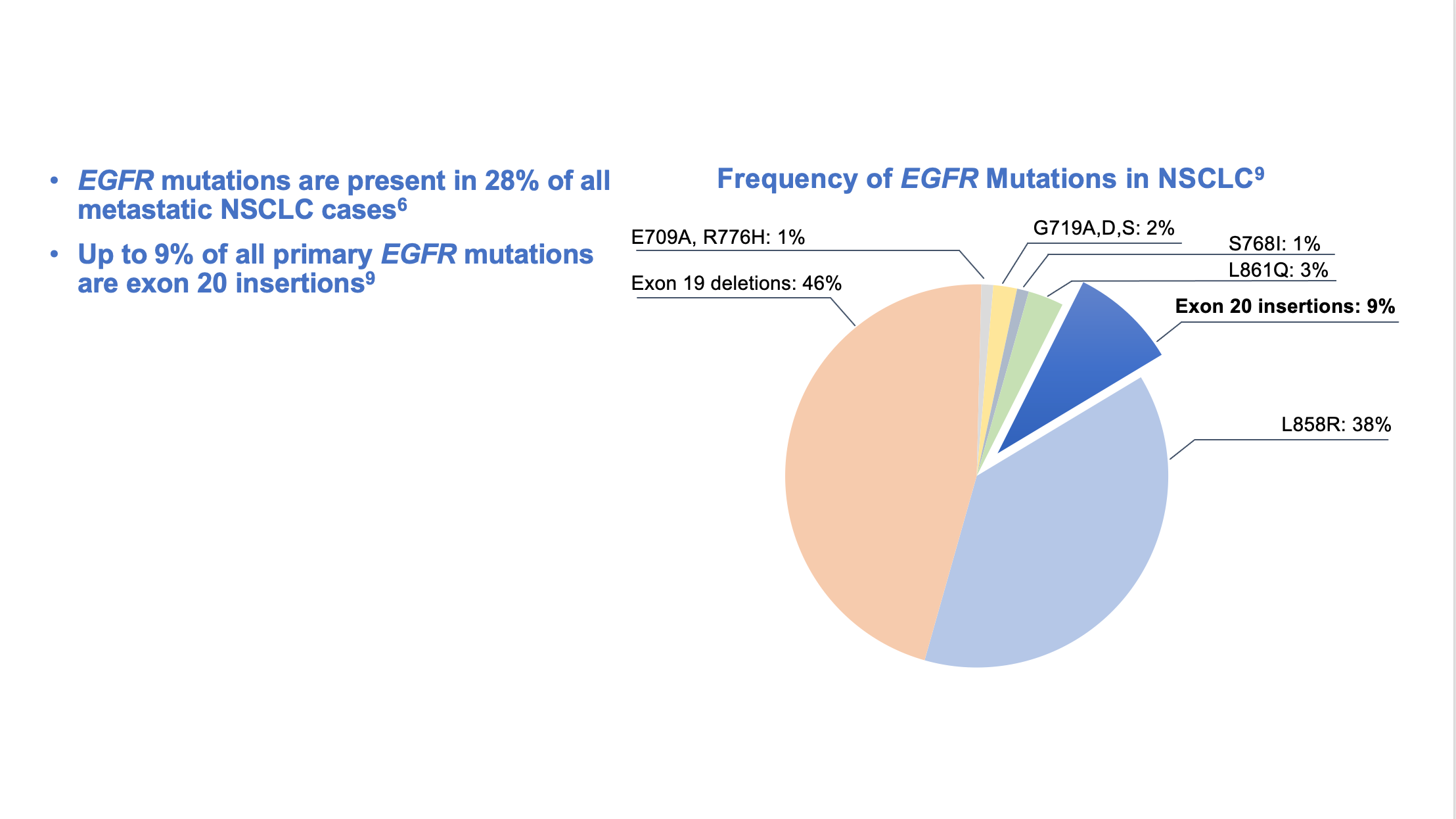
Epidermal growth factor receptor (EGFR) is a potent oncogene commonly altered in NSCLC, and EGFR driver mutations may be found in as many as 28% of metastatic NSCLC patients.6 Tyrosine kinase inhibitors (TKIs) directed against EGFR were among the first molecular targeted agents used for treatment of advanced NSCLC.7 Initial studies of EGFR TKIs showed that patient characteristics associated with EGFR mutations, such as non-smoking status, female gender, East Asian origin, and adenocarcinoma histology suggested a greater benefit from EGFR TKIs compared with first-line chemotherapy.8 Later studies identified gene mutations that could target the kinase domain of EGFR and predicted response to such inhibitors. The variable deletions of at least 3 amino acid residues in exon 19, as well as the single point mutation leucine-858 to arginine (L858R) in exon 21, are often referred to as “common” activating EGFR mutations and represent the vast majority (90%) of all observed EGFR kinase domain mutations in NSCLC.8 (Figure 1)EGFR-Mutations
EGFR Exon 20 Insertion Mutations

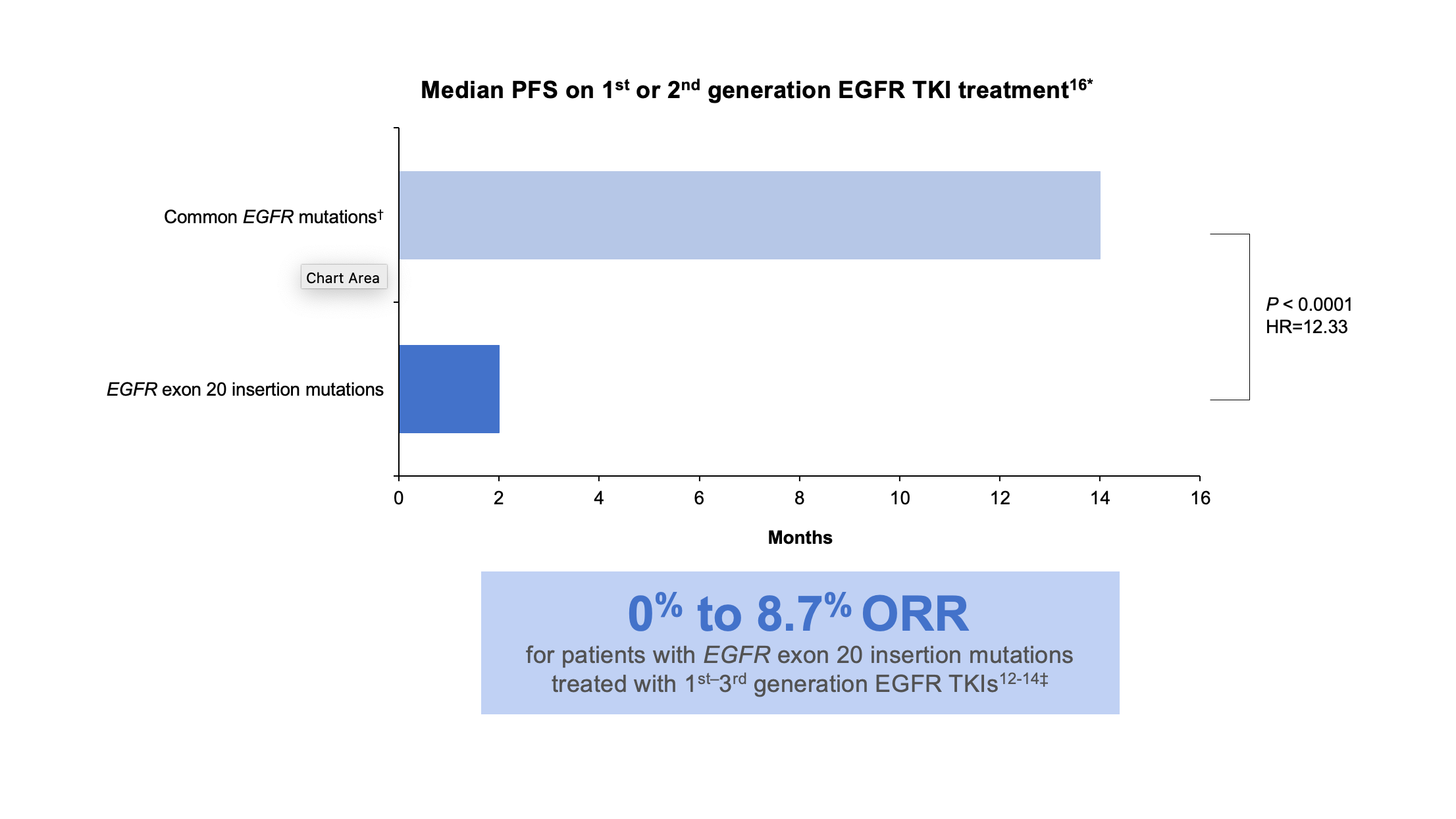
Exon 20 insertion mutations are the third most prevalent type of activating EGFR mutations in NSCLC and are associated with a poor prognosis.9-11 These mutations are also enriched in women, non-smokers, Asian populations, and those with adenocarcinoma. Exon 20 insertion mutations, however, lack the key structural features that confer sensitivity of L858R and exon19 deletion mutations to first-and second-generation EGFR inhibitors. In-frame base pair insertions in exon 20 result in activation of EGFR, but, unlike the common activating EGFR mutations, they are associated with reduced affinity to most clinically available EGFR TKIs indicated for common EGFR mutations. Data are limited and variable, but multiple studies found that patients with EGFR exon 20 insertion mutations had an overall response rate of 0% to 8.7% when treated with first-, second-, or third-generation EGFR TKIs.12-16 (Figure 2)
Median-PFS-First-Second-Generation_TKI

*These data were taken from a retrospective observational study.16
†Common mutations include L858R, L861Q, and exon 19 deletions.16
‡These data were taken from multiple sources: a cohort study, a prospective post hoc analysis of phase 2 and phase 3 trials, a single-center retrospective analysis, and a systematic literature review and meta-analysis.12-14
HR, hazard ratio; ORR, overall response rate; PFS, progression-free survival.

Study results also demonstrate limited efficacy of immuno-oncology (IO) monotherapy in this patient population compared to patients with wild-type EGFR. In a retrospective study using real-world data, patients with EGFR exon 20 insertion mutation-positive NSCLC were associated with a 58% increased risk of shorter time to next-line therapy after first-line IO monotherapy compared to patients with wild-type NSCLC.17

The NCCN Guidelines® do not recommend most TKIs or IO monotherapy for treating patients with mNSCLC and EGFR exon 20 insertion mutations in the first- or second-line setting. Instead, the Guidelines recommend platinum-based chemotherapy as the standard first-line treatment for NSCLC with EGFR exon 20 insertion mutations.

§Exceptions include p.A763_Y764insFQEA and p.A763_Y764insLQEA.5

EGFR Testing

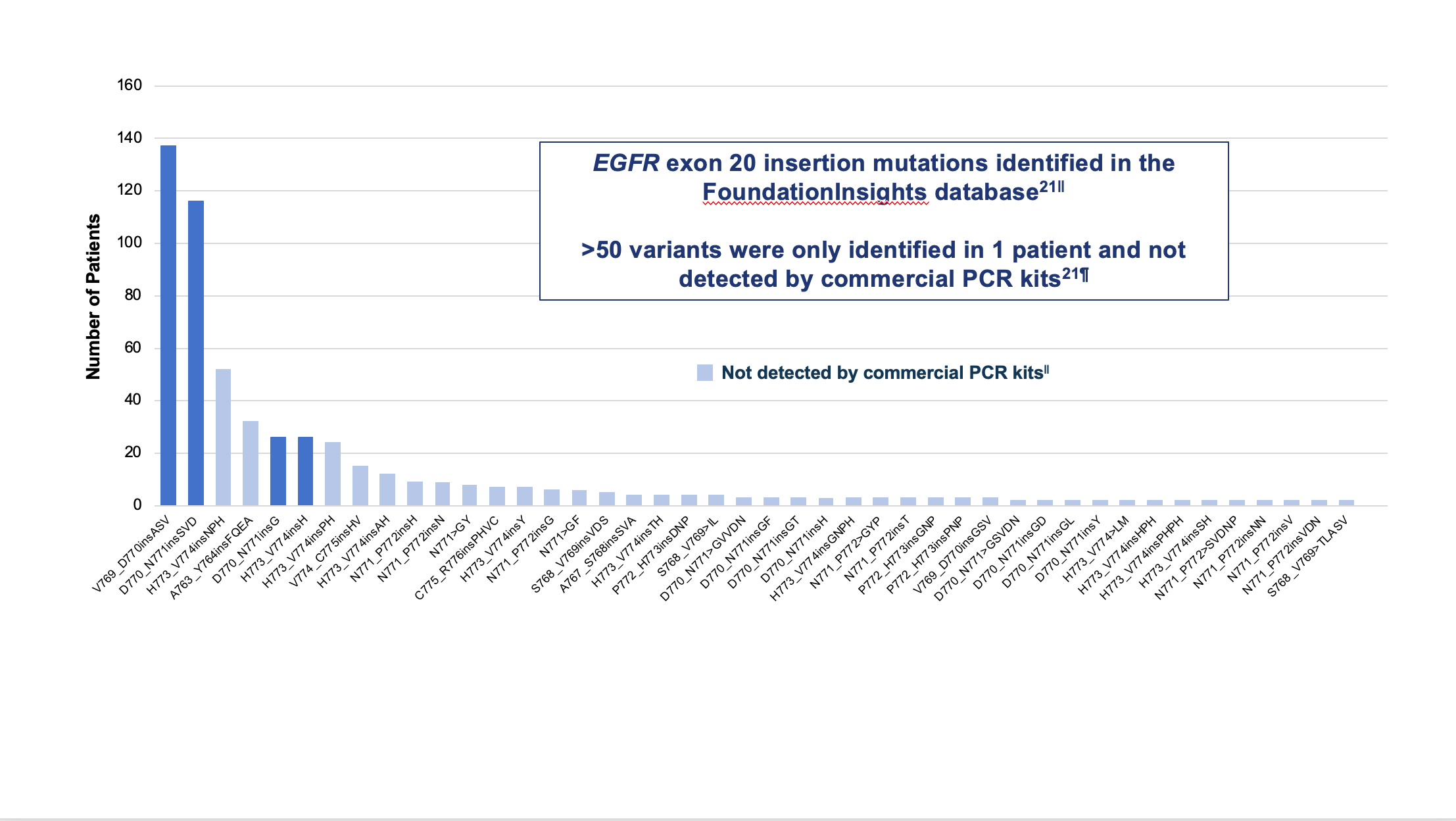
The NCCN Guidelines recommend comprehensive biomarker testing, like NGS, prior to the initiation of first-line therapy, if clinically feasible.5 Despite that recommendation, rates of broad biomarker testing remain low, according to real-world evidence.18,19 In a retrospective observational chart review study among 3,474 patients with advanced NSCLC receiving first-line therapy in the US Oncology Network, the EGFR testing rate was found to be 70%, but comprehensive NGS testing was completed in only 42% of patients.20 Failure to order comprehensive NGS testing is particularly problematic when it comes to identifying EGFR exon 20 insertions. There are over 100 unique EGFR exon 20 insertion variants, and polymerase chain reaction (PCR) testing can miss approximately 50% of the insertions identified by NGS.21 (Figure 3)
EGFR-Mutations-Foundation-Medicine

||Analysis from mutation profiles of 36,465 lung adenocarcinomas from Foundation Medicine (Cambridge, MA) FoundationInsights database, which is a database of 315,688 patient genomic profiles across 150 cancer types.
¶Commercially available qPCR methods were Roche cobas® EGFR mutation test v2 and Qiagen therascreen EGFR RGQ PCR kit.

Another notable issue is the accurate application of NGS data to clinical care. In multiple retrospective, observational cohort studies, approximately 17% to 24% of treatment-naive and 14% to 22% of second-line patients with EGFR exon 20 insertions received EGFR TKIs.11,17,22** Studies also found that approximately 7% to 40% of treatment-naive and 26% to 41% of second-line patients received IO monotherapy.17,22,23 These therapies (ie, most TKIs indicated for common mutations†† and IO monotherapies) are not recommended for first- or second-line therapy for EGFR exon 20 insertion mutations.5

**EGFR TKIs included first-, second- and third-generations.
††Exceptions include p.A763_Y764insFQEA and p.A763_Y764insLQEA.

Current Treatment Strategies for Patients With Exon 20 Insertion Mutations

Chemotherapy with a platinum doublet remains the recommended treatment option for the first-line treatment of patients with an EGFR exon 20 insertion mutation.5 When many of these patients progress, subsequent treatment options are needed. The NCCN Guidelines recommend amivantamab-vmjw or mobocertinib as subsequent therapy options for patients with EGFR exon 20 insertion mutations who have progressed on or after initial systemic therapy.5

Conclusion:

  • Advances made in the treatment of NSCLC have improved patient mortality and survival,2 and these advancements are due in part to the discovery of actionable mutations, like common EGFR mutations, and targeted therapies3,4,7,8
  • Multiple studies have found, however, that patients with EGFR exon 20 insertion mutations had a poor overall response when treated with first-, second-, or third-generation EGFR TKIs,11-15,17 and that IO monotherapies provide little benefit as a first-line treatment in patients with EGFR mutations, including exon 20 insertions17
  • The NCCN Guidelines recommend:
    • Testing eligible patients with mNSCLC for targetable genetic alterations to both identify potentially appropriate targeted therapies and avoid therapies unlikely to provide clinical benefit5
    • Treating patients who harbor a common EGFR mutation (exon 19 deletion and exon 21 [L858R] mutations) with an EGFR TKI in the first line of treatment, whereas those with an EGFR exon 20 insertion mutation are best treated with a regimen containing a platinum doublet5
    • Amivantamab-vmjw or mobocertinib as subsequent therapy options for patients with EGFR+ mNSCLC with exon 20 insertion mutations who have progressed on or after initial systemic therapy per the NCCN Guidelines5

References
1. National Cancer Institute. Cancer stat facts: common cancer sites. Accessed September 30, 2022. https://seer.cancer.gov/statfacts/html/common.html
2. Siegel RL, Miller KD, Fuchs HE, Jemal A. Cancer statistics, 2021.CA Cancer J Clin. 2021;71:7-33.
3. Benjamin DJ, Haslam A, Gill J, Prasad V. Targeted therapy in lung cancer: Are we closing the gap in years of life lost? Cancer Med. 2022;11(18):3417-3424.
4. Targeted Therapy in Metastatic Non–Small Cell Lung Cancer: Recent Updates and Controversies. Angel Qin. ASCO Daily News. Published January 19, 2022. Accessed November 14, 2022. https://dailynews.ascopubs.org/do/10.1200/ADN.22.200810/
5. Referenced with permission from the NCCN Clinical Practice Guidelines in Oncology (NCCN Guidelines®) for Non-Small Cell Lung Cancer V.6.2022. © National Comprehensive Cancer Network, Inc. 2022. All rights reserved. Accessed December 2, 2022. To view the most recent and complete version of the guideline, go online to NCCN.org. NCCN makes no warranties of any kind whatsoever regarding their content, use or application and disclaims any responsibility for their application or use in anyway.
6. Jordan EJ, Kim HR, Arcila ME, et al. Prospective comprehensive molecular characterization of lung adenocarcinomas for efficient patient matching to approved and emerging therapies. Cancer Discov. 2017;7(6):596-609.
7. Luo SY, Lam DC. Oncogenic driver mutations in lung cancer. Transl Respir Med. 2013;1(1):6.
8. Gazdar AF. Activating and resistance mutations of EGFR in non-small-cell lung cancer: role in clinical response to EGFR tyrosine kinase inhibitors. Oncogene. 2009;28 (Suppl 1):S24-S31.
9. Arcila ME, Nafa K, Chaft JE, et al. EGFR exon20 insertion mutations in lung adenocarcinomas: prevalence, molecular heterogeneity, and clinicopathologic characteristics. Mol Cancer Ther. 2013;12(2):220-229.
10. Leal JL, Alexander M, Itchins M, et al. EGFR exon 20 insertion mutations: clinicopathological characteristics and treatment outcomes in advanced non-small cell lung cancer. Clin Lung Cancer. 2021;22(6):e859-e869.
11. Bazhenova L, Minchom A, Viteri S, et al. Comparative clinical outcomes for patients with advanced NSCLC harboring EGFR exon 20 insertion mutations and common EGFR mutations. Lung Cancer. 2021;162:154-161.
12. Wu JY, Yu CJ, Shih JY. Effectiveness of treatments for advanced non-small-cell lung cancer with exon 20 insertion epidermal growth factor receptor mutations. Clin Lung Cancer. 2019;20:e620-e630.
13. Yang JC, Sequist LV, Geater SL, et al. Clinical activity of afatinib in patients with advanced non-small-cell lung cancer harbouring uncommon EGFR mutations: a combined post-hoc analysis of LUX-Lung 2, LUX-Lung 3, and LUX-Lung 6.Lancet Oncol. 2015;16(7):830-838.
14. Kate S, Chougule A, JoshiA, et al. Outcome of uncommon EGFR mutation positive newly diagnosed advanced non-small cell lung cancer patients: a single center retrospective analysis. Lung Cancer (Auckl). 2019;10:1-10.
15. Kwon CS, Lin HM, Crossland V, et al. Non-small cell lung cancer with EGFR exon 20 insertion mutation: a systematic literature review and meta-analysis of patient outcomes. Curr Med Res Opin. 2022;38(8):1341-1350.
16. Robichaux JP, Elamin YY, Tan Z, et al. Mechanisms and clinical activity of an EGFR and HER2 exon 20-selective kinase inhibitor in non-small cell lung cancer. Nat Med. 2018;24:638-646.
17. Girard N, Minchom A, Ou SI, et al. Comparative clinical outcomes between EGFR ex20 ins and wild type NSCLC treated with immune checkpoint inhibitors. Clin Lung Cancer. 2022;23(7):571-577.
18. Paz-Ares L, Gondos A, Saldana D, et al. Genomic testing among patients with newly diagnosed advanced non-small cell lung cancer in the United States: A contemporary clinical practice patterns study. Lung Cancer. 2022;167:41-48.
19. Waterhouse DM, Tseng WY, Espirito JL, Robert NJ. Understanding contemporary molecular biomarker testing rates and trends for metastatic NSCLC among community oncologists. Clin Lung Cancer. 2021;22(6):e901-e910.
20. Robert N, Chen L, Espirito J, et al. Trends in molecular testing for metastatic non-small cell lung cancer in the US Oncology Network community practices. J Thorac Oncol. 2021;16(10) (suppl):S1169.
21. Bauml J, Viteri S, Minchom A, et al. Underdiagnosis of EGFR exon 20 insertion mutation variants: estimates from NGS-based real-world datasets. Presented at: the IASLC 2020 World Conference on Lung Cancer; January 28-31, 2021;Singapore.
22. He J, Pericone CD, Vanderpoel J. Real-world patient characteristics, treatment patterns, and mutation testing patterns among US patients with advanced non-small cell lung cancer harboring EGFR mutations. Adv Ther. 2022;39(7):3347-3360.
23. Choudhury NJ, Schoenfeld AJ, Flynn J, et al. Response to standard therapies and comprehensive genomic analysis for patients with lung adenocarcinoma with EGFR exon 20 insertions. Clin Cancer Res. 2021;27(10):2920-2927.

© Janssen Biotech, Inc. 2022 12/22 cp-345345v1

FDA Approves ORSERDU® for ESR-1 Mutated Advanced Breast Cancer

SUMMARY: The FDA on January 27, 2023, approved ORSERDU® (Elacestrant) for postmenopausal women or adult men with ER-positive, HER2-negative, ESR1-mutated advanced or metastatic breast cancer, with disease progression following at least one line of endocrine therapy. FDA also approved the Guardant360 CDx assay as a companion diagnostic device to identify patients with breast cancer for treatment with ORSERDU®.

Breast cancer is the most common cancer among women in the US and about 1 in 8 women (12%) will develop invasive breast cancer during their lifetime. It is estimated that approximately 300,590 new cases of breast cancer will be diagnosed in 2023 and about 43,700 individuals will die of the disease, largely due to metastatic recurrence. Approximately 70% of breast tumors express Estrogen Receptors and/or Progesterone Receptors. The most common subtype of metastatic breast cancer is Hormone Receptor-positive (HR-positive), HER2-negative breast cancer (65% of all metastatic breast tumors), and these patients are often treated with anti-estrogen therapy as first line treatment. However, resistance to hormonal therapy occurs in a majority of the patients, with a median Overall Survival (OS) of 36 months. With the development of Cyclin Dependent Kinases (CDK) 4/6 inhibitors, endocrine therapy plus a CDK4/6 inhibitor is the mainstay, for the management of ER+/HER2-negative metastatic breast cancer, as first line therapy. Even with this therapeutic combination, most patients will eventually experience disease progression, including the development of ESR1 (Estrogen Receptor gene alpha) mutations.

ESR1 (Estrogen Receptor 1) gene mutation is the most common acquired mutation noted in breast tumors as they progress from primary to metastatic setting. These mutations promote ligand independent Estrogen Receptor activation and have been shown to promote resistance to estrogen deprivation therapy. It appears that ESR1 mutations are harbored in metastatic ER-positive breast cancers with prior Aromatase Inhibitor (AI) therapy, but not in primary breast cancers, suggesting that ESR1 mutations may be selected by prior therapy with an AI in advanced breast cancer. In a previously published study (JAMA Oncol.2016;2:1310-1315), ESR1 mutations Y537S and D538G mutations detected in baseline plasma samples from ER+/HER- advanced breast cancer patients, was associated with shorter Overall Survival. In this study it was noted that there was a three-fold increase in the prevalence of these mutations in patients who had failed first line hormonal therapy for metastatic disease, compared with those who were initiating first line therapy for advanced breast cancer (33% versus 11%). It is estimated that 40% of ER-positive, HER2-negative advanced or metastatic breast cancer patients have tumors that harbor ESR1 mutations.

Fulvestrant (FASLODEX®) is a parenteral, Selective Estrogen Receptor Degrader (SERD) and is the only SERD approved for the treatment of postmenopausal women with HR-positive metastatic breast cancer. However, acquired ESR1 mutations can also occur following Fulvestrant treatment, possibly because of poor bioavailability and incomplete ER blockade when administered intramuscularly. There is therefore an urgent unmet need for an alternate SERD that has activity in tumors harboring ESR1 mutations, and has improved bioavailability allowing oral administration.

ORSERDU® (Elacestrant) is an oral, nonsteroidal, Selective Estrogen Receptor Degrader (SERD) that degrades the Estrogen Receptor (ER) in a dose-dependent manner and inhibits estradiol-dependent functions of ER target gene transcription induction and breast cancer cell proliferation. Estradiol-stimulated tumor growth was diminished by ORSERDU® in the HR-positive xenograft models derived from heavily pretreated patients, including models resistant to CDK 4/6 inhibitors, Fulvestrant and those harboring ESR1 mutations Y537S and D538G. In an early Phase I trial, ORSERDU® was noted to have an acceptable safety profile and demonstrated single-agent activity with confirmed Partial Responses in heavily pretreated patients with HR-positive metastatic breast cancer.

The present FDA approval was based on the EMERALD trial, which is a multicenter, International, randomized, open-label, Phase III study, designed to evaluate the benefit of ORSERDU® in patients with ER+/HER2- advanced or metastatic breast cancer. In this study, 478 postmenopausal women with ER+/HER2- metastatic breast cancer were randomly assigned 1:1 to receive either ORSERDU® 400 mg orally daily (N=239) or the Standard of Care which included investigator’s choice of Fulvestrant or an Aromatase Inhibitor including Anastrozole, Letrozole, or Exemestane (N=239). Treatment was given until disease progression. Both treatment groups were well balanced. The median patient age was 63 years, and patients must have progressed or relapsed on or after 1 or 2 lines of endocrine therapy for advanced disease, one of which was given in combination with a CDK4/6 inhibitor, had 1 or fewer lines of chemotherapy for advanced disease, and had an ECOG performance status of 0 or 1. ESR1 mutational status was determined by blood circulating tumor deoxyribonucleic acid (ctDNA) using the Guardant360 CDx assay and was limited to ESR1 missense mutations in the ligand binding domain. In the study, 48% (N=228) had tumors with mutated ESR1 and 43% received two prior endocrine therapies. These patients were evenly distributed in both treatment groups. Patients were stratified by ESR1-mutation status, prior treatment with Fulvestrant, and visceral metastases. The co-Primary end points were Progression Free Survival (PFS) in the overall population, and in those with ESR1 mutations. Overall Survival (OS) was a Secondary end point.

This study met both co-Primary endpoints and treatment with ORSERDU® resulted in a statistically significant and clinically meaningful improvement in PFS, compared with Standard of Care treatment. In the group of patients whose tumors had ESR1 mutations, the median PFS was 3.8 months in the ORSERDU® group and 1.9 months in the Standard of Care group (HR=0.55; P=0.0005), reducing the risk of progression or death by 45%. A post-hoc analysis of the PFS results based on the duration of prior CDK4/6 inhibitors usage was presented at San Antonio Breast Cancer Symposium (SABCS) in December 2022. The median PFS was 8.6 months in the ORSERDU® group versus 1.9 months in the Standard of Care group, in those patients whose tumors harbored ESR1 mutations and had been treated with a CDK4/6 inhibitors for at least 12 months.

It can be concluded from this study that ORSERDU® is the first oral Selective Estrogen Receptor Degrader for ER-positive, HER2-negative advanced breast cancer patients with ESR1 mutations, and offers a novel therapeutic option for this patient group.

Elacestrant (oral selective estrogen receptor degrader) Versus Standard Endocrine Therapy for Estrogen Receptor–Positive, Human Epidermal Growth Factor Receptor 2–Negative Advanced Breast Cancer: Results From the Randomized Phase III EMERALD Trial. Bidard F-C, Kaklamani VG, Neven P, et al. DOI: 10.1200/JCO.22.00338 Journal of Clinical Oncology. Published online May 18, 2022.

FDA Approves Tucatinib with Trastuzumab for Colorectal Cancer

SUMMARY: The FDA on January 19, 2023, granted accelerated approval to Tucatinib (TUKYSA®) in combination with Trastuzumab for RAS wild-type HER2-positive unresectable or metastatic colorectal cancer that has progressed following Fluoropyrimidine, Oxaliplatin, and Irinotecan-based chemotherapy. ColoRectal Cancer (CRC) is the third most common cancer diagnosed in both men and women in the United States. The American Cancer Society estimates that approximately 153,020 new cases of CRC will be diagnosed in the United States in 2023 and about 52,550 patients are expected to die of the disease. The lifetime risk of developing CRC is about 1 in 23.

Approximately 15-25% of the patients with CRC present with metastatic disease at the time of diagnosis (synchronous metastases) and 50-60% of the patients with CRC will develop metastatic disease during the course of their illness. First line treatment of metastatic CRC include Oxaliplatin or Irinotecan, in combination with a Fluoropyrimidine and Leucovorin (FOLFOX or FOLFIRI), along with a VEGF targeting agent such as Bevacizumab or EGFR targeting agents such as Cetuximab and Panitumumab. Patients with Stage IV colorectal cancer are now routinely analyzed for extended RAS and BRAF mutations. KRAS mutations are predictive of resistance to EGFR targeted therapy.

Human Epidermal Growth Factor Receptor 2 (HER2) is overexpressed in 3-5% of patients with RAS wild-type metastatic colorectal cancer. HER2-positive tumors are IHC3+ by Immunohistochemistry or IHC2+/FISH [Fluorescence in Situ Hybridization] amplified. There are currently no FDA-approved therapies that specifically target HER2 in colorectal cancer. Previously published studies have indicated that patients with HER2-positive CRC have less benefit from EGFR targeted therapies. In the HERACLES trial, a combination of two HER2 targeted therapies prolonged Overall Survival (OS) in RAS wild-type metastatic colorectal cancer.

Tucatinib (TUKYSA®) is an oral Tyrosine Kinase Inhibitor that is highly selective for the kinase domain of HER2, with minimal inhibition of Epidermal Growth Factor Receptor. Trastuzumab (HERCEPTIN®) is a humanized monoclonal antibody targeting HER2/neu oncogene.

MOUNTAINEER is a U.S. and European multicenter, open-label, randomized, prospective, Phase II study, conducted among patients with previously treated HER2-positive metastatic colorectal cancer. This U.S. investigator-sponsored trial initially consisted of a single cohort (Cohort A) of patients who received Tucatinib 300 mg orally BID in combination with Trastuzumab 8 mg/kg IV given as a loading dose on Cycle 1, Day 1, followed by maintenance dose of Trastuzumab 6 mg/kg IV on Day 1 every three weeks thereafter. Patients were treated until disease progression or unacceptable toxicity. This trial was subsequently expanded globally to include patients who were randomized to receive Tucatinib plus Trastuzumab (Cohort B) or Tucatinib monotherapy (Cohort C). Enrolled patients were required to have HER2-positive, RAS wild-type, unresectable or metastatic colorectal cancer and prior treatment with Fluoropyrimidine, Oxaliplatin, Irinotecan, and an anti-Vascular Endothelial Growth Factor (VEGF) monoclonal antibody. Patients whose tumors were MisMatch Repair (dMMR) deficient or were MicroSatellite Instability-High (MSI-H) must also have received an anti PD-1 monoclonal antibody. Patients who received prior anti-HER2 targeted therapy were excluded. Over two thirds of the patients had liver or lung metastases and had received a median of 3 prior lines of systemic therapy. The Primary endpoint was Objective Response Rate (ORR) as assessed by blinded Independent Central Review (ICR) in patients receiving the combination of Tucatinib and Trastuzumab (Cohorts A and B). Secondary endpoints included Duration of Response, Progression Free Survival (PFS), Overall Survival (OS) and safety and tolerability of the combination regimen.

At a median follow up of 20.7 months, the ORR among patients treated with a combination of Tucatinib and Trastuzumab (N=84) was 38.1% and the median Duration of Response was 12.4 months. The Disease Control Rate was 71.4%. The median Progression Free Survival was 8.2 months and median Overall Survival was 24.1 months. In the Cohort C patients who received Tucatinib monotherapy (N=30), the ORR by 12 weeks was 3.3% and the Disease Control Rate was 80%. Participants who did not respond to Tucatinib monotherapy by 12 weeks or had disease progressed at any time had the option to receive the combination of Tucatinib and Trastuzumab. Tucatinib in combination with Trastuzumab was well tolerated. Grade 1 or 2 diarrhea was the most common adverse event, followed by fatigue and nausea. Treatment discontinuation due to adverse events was low at 5.8%.

It was concluded that in this largest prospective trial to date among patients with chemotherapy-refractory HER2-positive metastatic colorectal cancer, Tucatinib in combination with Trastuzumab demonstrated durable and clinically meaningful antitumor activity and is a new chemotherapy-free treatment option for this group of patients. Studies are underway investigating Tucatinib plus Trastuzumab in earlier lines of therapy

MOUNTAINEER: Open-label, phase 2 study of tucatinib in combination with trastuzumab for HER2-positive metastatic colorectal cancer. Strickler JH, Cercek A, Siena S, et al: ESMO World Congress on Gastrointestinal Cancers 2022. Abstract LBA-2. Presented July 2, 2022.

TAILORx Long Term Update for Patients with Early Stage Breast Cancer

SUMMARY: Breast cancer is the most common cancer among women in the US and about 1 in 8 women (12%) will develop invasive breast cancer during their lifetime. It is estimated that approximately 300,590 new cases of breast cancer will be diagnosed in 2023 and about 43,700 individuals will die of the disease, largely due to metastatic recurrence.

Approximately 50% of all breast cancers are Estrogen Receptor (ER) positive, HER2-negative, axillary node-negative tumors. Patients with early-stage breast cancer often receive adjuvant chemotherapy. The Oncotype DX breast cancer assay, is a multigene genomic test that analyzes the activity of a group of 21 genes and is able to predict the risk of breast cancer recurrence and likelihood of benefit from systemic chemotherapy, following surgery, in women with early-stage breast cancer. Chemotherapy recommendations for Hormone Receptor positive, HER negative, early-stage breast cancer patients, are often made based on tumor size, grade, ImmunoHistoChemical (IHC) markers such as Ki-67, nodal status and Oncotype DX Recurrence Score (RS) assay. Oncotype Dx assay categorizes patients based on Recurrence Scores into Low risk (0-10), Intermediate risk (11-25), and High risk (26-100). It has been unclear whether patients in the Intermediate risk group benefited from the addition of chemotherapy to endocrine therapy. TAILORx was specifically designed to address this question and provide a very definitive answer.

TAILORx ((Trial Assigning Individualized Options for Treatment) is a phase III, randomized, prospective, non-inferiority trial, and is the largest breast cancer treatment trial ever conducted, and the first precision medicine trial ever done, according to the authors. In this study, 10,273 women, 18-75 years of age, with hormone receptor-positive, HER2-negative, T1b-T2N0 early-stage axillary node-negative breast cancer were enrolled. Patients had tumors 1.1-5.0 cm in size (or 0.6-1.0 cm and intermediate/high grade). Patients were divided into three groups based on their Recurrence Score. Women with a Low Recurrence Score of 0-10 received endocrine therapy alone and those with a High Recurrence Score of 26-100 received endocrine therapy in combination with standard adjuvant chemotherapy. Patient with Intermediate Recurrence Score of 11-25 (N=6711) were randomly assigned to receive endocrine therapy alone (N=3399) or endocrine therapy and adjuvant chemotherapy (N=3312). The Primary endpoint was invasive Disease-Free Survival, defined as recurrence of cancer in the breast, regional lymph nodes, and/or distant organs, a second primary cancer in the opposite breast or another organ, or death from any cause. The researchers conducted an updated analysis, in which patients were followed for an additional 3.5 years, for an average of 11 years. The Primary endpoint in the updated analysis was invasive Disease-Free Survival (DFS) at a median follow-up of 11.0 years in the randomized population and 10.4 years in the overall population.

The previous TAILORx study conclusions remain unchanged. Among patients with a Recurrence Score of 11-25, endocrine therapy alone was non-inferior to chemotherapy plus endocrine therapy. The 5-year invasive DFS with endocrine therapy alone was 92.8% versus 93.1% with chemotherapy plus endocrine (HR=1.08; P=0.26). The 12-year invasive DFS with endocrine therapy alone was 76.8% versus 77.4% with chemotherapy plus endocrine therapy (HR =1.08). Although among those patients with a Recurrence Score of 0-25, less than 10% of patients had disease recurrence by 12 years, late recurrence events beyond 5 years exceeded earlier recurrence, regardless of treatment. There was also a higher risk of early recurrence in Black women.

It was concluded that with longer follow-up, the main TAILORx study findings remain unchanged, and clinicians should continue to use the 21-gene recurrence score results to guide decisions about the use of chemotherapy.

Trial Assigning Individualized Options for Treatment (TAILORx): An update including 12-year event rates. Sparano J, Gray RJ, Makower D, et al. Presented at SABCS 2022. December 6-10, 2022. Abstract GS1-05.

TUKYSA® Combination in HER2-Positive Metastatic Breast Cancer Patients with Brain Metastases

SUMMARY: Breast cancer is the most common cancer among women in the US and about 1 in 8 women (12%) will develop invasive breast cancer during their lifetime. Approximately 290,560 new cases of breast cancer will be diagnosed in 2022 and about 43,780 individuals will die of the disease, largely due to metastatic recurrence.

The HER or erbB family of receptors consist of HER1, HER2, HER3 and HER4. Approximately 15-20% of invasive breast cancers overexpress HER2/neu oncogene, which is a negative predictor of outcomes without systemic therapy. Patients with HER2-positive metastatic breast cancer are often treated with anti-HER2 targeted therapy along with chemotherapy, irrespective of hormone receptor status, and this has resulted in significantly improved treatment outcomes. HER2-targeted therapies include HERCEPTIN® (Trastuzumab), TYKERB® (Lapatinib), PERJETA® (Pertuzumab), KADCYLA® (ado-Trastuzumab emtansine), ENHERTU® (Trastuzumab deruxtecan) and MARGENZA® (Margetuximab). Dual HER2 blockade with HERCEPTIN® and PERJETA®, given along with chemotherapy (with or without endocrine therapy), as first line treatment, in HER2-positive metastatic breast cancer patients, was shown to significantly improve Progression Free Survival (PFS) as well as Overall Survival (OS). The superior benefit with dual HER2 blockade has been attributed to differing mechanisms of action and synergistic interaction between HER2 targeted therapies. Patients progressing on Dual HER2 blockade often receive KADCYLA® which results in an Objective Response Rate (ORR) of 44% and a median PFS of 9.6 months, when administered after HERCEPTIN® and a taxane. There is however no standard treatment option for this patient population following progression on KADCYLA®.

With advances in systemic therapies for this patient population, the incidence of brain metastases as a sanctuary site has increased. Approximately 50% of patients with HER2-positive metastatic breast cancer develop brain metastases. However, systemic HER2-targeted agents, including Tyrosine Kinase Inhibitors, as well as chemotherapy have limited antitumor activity in the brain. Local therapeutic interventions for brain metastases include neurosurgical resection and Stereotactic or Whole-Brain Radiation Therapy. There is a high unmet need for systemic treatment options to treat established brain metastases and reduce the risk for progression in the Central Nervous System (CNS).

TUKYSA® (Tucatinib) is an oral Tyrosine Kinase Inhibitor that is highly selective for the kinase domain of HER2 with minimal inhibition of Epidermal Growth Factor Receptor. In a Phase 1b dose-escalation trial, TUKYSA® in combination with HERCEPTIN® and XELODA® (Capecitabine) showed encouraging antitumor activity in patients with HER2-positive metastatic breast cancer, including those with brain metastases.

HER2CLIMB is an international, randomized, double-blind, placebo-controlled trial in which the combination of TUKYSA® plus HERCEPTIN® and XELODA® was compared with placebo plus HERCEPTIN® and XELODA®. A total of 612 patients with unresectable locally advanced or metastatic HER2-positive breast cancer, who were previously treated with HERCEPTIN®, PERJETA® (Pertuzumab) and KADCYLA® (ado-Trastuzumab emtansine) were enrolled. Patients were randomly assigned in a 2:1 ratio to receive either TUKYSA® 300 mg orally twice daily throughout the treatment period (N=410) or placebo orally twice daily (N=201), in combination with HERCEPTIN® 6 mg/kg IV once every 21 days, following an initial loading dose of 8 mg/kg, and XELODA® 1000 mg/m2 orally twice daily on days 1 to 14 of each 21-day cycle. Stratification factors included presence or absence of brain metastases, ECOG Performance Status and geographic region. The median patient age was 52 years and patient demographics as well as disease characteristics at baseline were well balanced between the two treatment groups. In the total treatment population, 47.5% had brain metastases at baseline, 48.3% in the TUKYSA® combination group and 46% in the placebo combination group. The Primary endpoint was Progression Free Survival (PFS). Secondary end points included Overall Survival (OS), PFS among patients with brain metastases, confirmed Objective Response Rate (ORR), and Safety.

At median follow-up of 29.6 months, median OS in all patients with brain metastases at baseline was 9.1 months longer in the TUKYSA® combination group compared to the placebo combination group (21.6 versus 12.5 months, HR=0.60; P<0.001), with a 40% reduction in the risk of death with the TUKYSA® combination. The estimated 1-year OS was 70.0% for the TUKYSA® combination group and 50.6% for the placebo combination group and the estimated 2-year OS was 48.5% and 25.1% respectively.

The researchers in this exploratory subgroup analyses reported efficacy outcomes for patients with brain metastases, as well as time to new brain lesion(s) as the site of first progression or death, in all patients enrolled in HER2CLIMB trial, at a median follow up of 29.6 months.

There was greater CNS Progression Free Survival in the TUKYSA® combination group compared with the placebo combination group and was 5.7 months longer (9.9 versus 4.2 months, HR=0.39; P<0.001), with a 61% reduction in the risk of CNS progression with the TUKYSA® combination. The estimated 1 and 2-year CNS Progression Free Survivals were 38.4% versus 7.9% and 19.3% versus 0%, respectively.

Among those with active brain metastases and measurable disease at baseline, the intracranial Objective Response Rates for the TUKYSA® combination group were 47.3% versus 20.0% for the placebo combination group, with a median duration of intra cranial response of 8.6 versus 3.0 months, respectively.

The risk of developing new brain lesions as the site of first progression or death was reduced by 45% in the TUKYSA® combination group versus the placebo-combination group (HR=0.55; P =0.006).

The authors concluded that in this exploratory subgroup analysis, TUKYSA® in combination with HERCEPTIN® and XELODA® provided a clinically meaningful survival benefit, while reducing the risk of developing new brain lesions. The authors added that HER2CLIMB is currently the only double-blind, randomized, controlled clinical trial for patients with HER2-positive metastatic breast cancer, that prospectively included patients with both active and stable brain metastases.

Tucatinib vs Placebo, Both in Combination with Trastuzumab and Capecitabine, for Previously Treated ERBB2 (HER2)-Positive Metastatic Breast Cancer in Patients With Brain Metastases: Updated Exploratory Analysis of the HER2CLIMB Randomized Clinical Trial. Lin NU, Murthy RK, Abramson V, et al. JAMA Oncol. Published online December 1, 2022. doi:10.1001/jamaoncol.2022.5610

FDA Grants Accelerated Approval to KRAZATI® for KRAS G12C-mutated NSCLC

SUMMARY: The FDA on December 12, 2022, granted accelerated approval to KRAZATI® (Adagrasib), a RAS GTPase family inhibitor, for adult patients with KRAS G12C-mutated locally advanced or metastatic Non-Small Cell Lung Cancer (NSCLC), as determined by an FDA-approved test, who have received at least one prior systemic therapy. FDA also approved the QIAGEN therascreen KRAS RGQ PCR kit (tissue) and the Agilent Resolution ctDx FIRST Assay (plasma) as companion diagnostics for KRAZATI®. If no mutation is detected in a plasma specimen, the tumor tissue should be tested.

The American Cancer Society estimates that for 2022, about 236,740 new cases of lung cancer will be diagnosed and 135,360 patients will die of the disease. Lung cancer is the leading cause of cancer-related mortality in the United States. Non-Small Cell Lung Cancer (NSCLC) accounts for approximately 85% of all lung cancers. Of the three main subtypes of NSCLC, 30% are Squamous Cell Carcinomas (SCC), 40% are Adenocarcinomas and 10% are Large Cell Carcinomas. With changes in the cigarette composition and decline in tobacco consumption over the past several decades, Adenocarcinoma now is the most frequent histologic subtype of lung cancer.

The KRAS (kirsten rat sarcoma viral oncogene homologue) proto-oncogene encodes a protein that is a member of the small GTPase super family. The KRAS gene provides instructions for making the KRAS protein, which is a part of a signaling pathway known as the RAS/MAPK pathway. By relaying signals from outside the cell to the cell nucleus, the protein instructs the cell to grow, divide and differentiate. The KRAS protein is a GTPase and converts GTP into GDP. To transmit signals, the KRAS protein must be turned on by binding to a molecule of GTP. When GTP is converted to GDP, the KRAS protein is turned off or inactivated, and when the KRAS protein is bound to GDP, it does not relay signals to the cell nucleus. The KRAS gene is in the Ras family of oncogenes, which also includes two other genes, HRAS and NRAS. When mutated, oncogenes have the potential to change normal cells cancerous.

KRAS is the most frequently mutated oncogene in human cancers and are often associated with resistance to targeted therapies and poor outcomes. The KRAS G12C mutation occurs in approximately 25% of Non-Small Cell Lung Cancers (NSCLC) and in 3-5% of colorectal cancers and other solid cancers. KRAS G12C is one of the most prevalent driver mutations in NSCLC and accounts for a greater number of patients than those with ALK, ROS1, RET, and TRK 1/2/3 mutations combined. KRAS G12C cancers are genomically more heterogeneous and occur more frequently in current or former smokers and are likely to be more complex genomically than EGFR mutant or ALK rearranged cancers. G12C is a single point mutation with a Glycine-to-Cysteine substitution at codon 12. This substitution favors the activated state of KRAS, resulting in a predominantly GTP-bound KRAS oncoprotein, amplifying signaling pathways that lead to oncogenesis.

KRAZATI® (Adagrasib) is a potent, orally available, small molecule covalent inhibitor of KRAS G12C. This drug irreversibly and selectively binds KRAS G12C in its inactive, GDP-bound state. Unlike LUMAKRAS® (Sotorasib), which is also a selective covalent inhibitor of KRAS G12C, KRAZATI® has a longer drug half-life of 23 hours, as compared to 5 hours for LUMAKRAS®, has dose-dependent extended exposure, and can penetrate the CNS. Approximately, 27-42% of patients with NSCLC harboring KRAS G12C mutations have CNS metastases, with poor outcomes. KRYSTAL-1 is a Phase I/II multiple expansion cohort trial involving patients with advanced solid tumors harboring a KRAS G12C mutation. KRAZATI® demonstrated clinical activity in patients with KRAS G12C-mutated solid tumors, including colorectal, pancreatic, and biliary tract cancers. Further, preliminary data from two patients with untreated CNS metastases from a Phase 1b cohort showed antitumor activity against CNS metastases, with satisfactory concentrations of KRAZATI® in the CSF.

The present FDA approval was based on the results from Cohort A, a Phase 2 cohort of the KRYSTAL-1 study in which KRAZATI® at a dose of 600 mg orally twice daily was evaluated in patients with KRAS G12C-mutated NSCLC, previously treated with chemotherapy and anti-Programmed Death 1 (PD-1) or Programmed Death Ligand 1 (PD-L1) therapy. This registration study included a total of 116 unresectable or metastatic NSCLC patients, with histologically confirmed diagnosis, with KRAS G12C mutation (detected in tumor tissue at a local or central laboratory), who had previously received treatment with at least one platinum-containing chemotherapy regimen and checkpoint inhibitor therapy (in sequence or concurrently), and who had measurable tumor lesions. Enrolled patients received KRAZATI® 600 mg capsule twice daily, and treatment was continued until disease progression or unacceptable toxicities. The median patient age was 64 years, 97% had adenocarcinoma histology, 98% had both platinum-based therapy and checkpoint inhibitor therapy, and 21% of patients had CNS metastases. Key exclusion criteria included active CNS metastases (patients were eligible if CNS metastases were adequately treated and neurologically stable), carcinomatous meningitis, and previous treatment with a KRAS G12C inhibitor. Exploratory Biomarker Analyses included candidate biomarkers (PD-L1 Tumor Proportion Score and mutational status of STK11, KEAP1, TP53, and CDKN2A on tumor-tissue specimens, blood specimens, or both, for their association with tumor response. The Primary end point was Objective Response Rate as assessed by blinded Independent Central Review. Secondary end points included the Duration of Response, Progression Free Survival, Overall Survival, and safety. The median follow up was 12.9 months and the median duration of treatment was 5.7 months.

Of 112 patients with measurable disease at baseline, the confirmed Objective Response Rate was 42.9% and the median Duration of Response was 8.5 months. The median Progression Free Survival was 6.5 months, and the median Overall Survival was 12.6 months, at a median follow up of 15.6 months. Among 33 patients with previously treated, stable CNS metastases, the intracranial confirmed Objective Response Rate was 33.3%. Treatment-related adverse events occurred in 97.4% of the patients and 53% were Grade 1 or 2 toxicities. KRAZATI® was discontinued in 6.9% of patients due to adverse events.

It was concluded that among patients with previously treated KRAS G12C-mutated NSCLC, KRAZATI® showed significant clinical efficacy without new safety signals and encouraging intracranial activity. The researchers added that these are the first clinical data demonstrating CNS-specific activity of a KRAS G12C inhibitor in this patient population.

Adagrasib in Non–Small-Cell Lung Cancer Harboring a KRASG12C Mutation. Jänne PA, Riely GJ, Gadgeel SM, et al. N Engl J Med 2022; 387:1238-1239

FDA Approves REZLIDHIA® for Acute Myeloid Leukemia

SUMMARY: The FDA on December 1, 2022, approved REZLIDHIA® (Olutasidenib) capsules for adult patients with Relapsed or Refractory Acute Myeloid Leukemia (AML) with a susceptible IDH1 mutation, as detected by an FDA-approved test. The FDA on the same day also approved the Abbott RealTime IDH1 Assay to select patients for REZLIDHIA®.

The American Cancer Society estimates that for 2022, about 20,050 new cases of Acute Myeloid Leukemia (AML) will be diagnosed in the United States and 11,540 patients will die of the disease. AML can be considered as a group of heterogeneous diseases with different clinical behavior and outcomes. Cytogenetic analysis has been part of routine evaluation when caring for patients with AML. By predicting resistance to therapy, tumor cytogenetics will stratify patients, based on risk and help manage them accordingly. Even though cytotoxic chemotherapy may lead to long term remission and cure in a minority of patients with favorable cytogenetics, patients with high risk features such as unfavorable cytogenetics, molecular abnormalities, prior Myelodysplasia and advanced age, have poor outcomes with conventional chemotherapy alone. AML mainly affects older adults and the median age at diagnosis is 68 years. A significant majority of patients with AML are unable to receive intensive induction chemotherapy due to comorbidities and therefore receive less intensive, noncurative regimens, with poor outcomes.

Isocitrate DeHydrogenase (IDH) is a metabolic enzyme that helps generate energy from glucose and other metabolites, by catalyzing the conversion of Isocitrate to Alpha-Ketoglutarate. Alpha-ketoglutarate is required to properly regulate DNA and histone methylation, which in turn is important for gene expression and cellular differentiation. IDH mutations lead to aberrant DNA methylation and altered gene expression, thereby preventing cellular differentiation, with resulting immature undifferentiated cells. IDH mutations can thus promote leukemogenesis in Acute Myeloid Leukemia and tumorigenesis in solid tumors and can result in inferior outcomes. There are three isoforms of IDH. IDH1 is mainly found in the cytoplasm, as well as in peroxisomes, whereas IDH2 and IDH3 are found in the mitochondria, and are a part of the Krebs cycle.

Approximately 20-25% of patients with AML, 70% of patients with Low-grade Glioma and secondary Glioblastoma, 50% of patients with Chondrosarcoma, 20% of patients with Intrahepatic Cholangiocarcinoma, 30% of patients with Angioimmunoblastic T-Cell Lymphoma and 8% of patients with Myelodysplastic syndromes/Myeloproliferative neoplasms, are associated with IDH mutations. IDH2 mutations are more common than IDH1 mutations, occurring in approximately 15% to 20% of patients with AML. The presence of IDH mutations has both prognostic and predictive value. Patients with an IDH mutation and a Nucleo¬phosmin (NPM1) mutation usually have a better prognosis whereas patients with mutations in IDH and FMS-like tyrosine kinase 3 (FLT3) do not. Further IDH mutations predict response to specific IDH1 and IDH2 inhibitors in the Relapsed and Refractory setting. The presence of an IDH mutation is therefore not only prognostic, but also predictive of response to certain therapies.

The two IDH inhibitors presently available in the US include IDHIFA® (Enasidenib), approved for the treatment of patients with Relapsed or Refractory AML with IDH2 mutation and TIBSOVO® (Ivosidenib), approved for AML patients with the IDH1 mutation who have Relapsed/Refractory disease, as well as monotherapy for newly diagnosed AML patients 75 years or older with comorbidities that preclude the use of intensive induction chemotherapy. IDHIFA® can be associated with indirect hyperbilirubinemia, which is of no clinical consequence, whereas with TIBSOVO® there is a small risk of QT interval prolongation. Both agents can lead to Differentiation Syndrome in 10-15% of patients which requires systemic steroids and hemodynamic monitoring for at least 3 days.

REZLIDHIA® is a potent, selective, oral, brain-penetrant, small molecule inhibitor of mutant IDH1, that has exhibited favorable tolerability and clinical activity in high-risk AML patients in a Phase 1 trial (Watts JM, et al. Blood 2019). The present FDA approval was based on the Phase 1/2 Study 2102-HEM-101 trial (NCT02719574), which included 147 adult patients with Relapsed or Refractory AML with an IDH1 mutation, confirmed using the above now approved assay. Enrolled patients had pathologically proven AML, except those with Acute Promyelocytic Leukemia with the t(15;17) translocation, or intermediate high, or very high-risk MDS as defined by the WHO criteria or Revised International Prognostic Scoring System. REZLIDHIA® 150 mg was given orally, twice daily, until disease progression, unacceptable toxicity, or Hematopoietic Stem Cell Transplantation. The median treatment duration was 4.7 months. Sixteen (11%) patients underwent Hematopoietic Stem Cell Transplantation following treatment with REZLIDHIA®. The Primary end points included the rate of Complete Remission (CR) plus Complete Remission with partial hematologic recovery (CRh). Secondary end points included time to response, Duration of Response, Event-Free Survival, Overall Survival, and Relapse-Free Survival.

The Complete Remission plus Complete Remission with partial hematologic recovery rate with REZLIDHIA® was 35%, with 32% CR and 2.7% CRh. The median time to CR+CRh was 1.9 months and the median duration of CR+CRh was 25.9 months. Among the 86 patients who were Red Blood Cell (RBC) and/or platelet transfusions dependent at baseline, 34% became RBC and platelet transfusion independent during any 56-day post-baseline period. Of the 61 patients who were RBC and platelet transfusions independent at baseline, 64% remained transfusion independent during any 56-day post-baseline period. The most common adverse reactions were nausea, diarrhea, constipation, mucositis, fatigue/malaise, arthralgia, fever, rash, leukocytosis, dyspnea, and transaminitis. Health care professionals and patients should be aware of the risk of Differentiation Syndrome, which can be fatal.

REZLIDHIA® is the third IDH inhibitor currently approved for the treatment of Acute Myeloid Leukemia.

https://www.fda.gov/drugs/resources-information-approved-drugs/fda-approves-olutasidenib-relapsed-or-refractory-acute-myeloid-leukemia-susceptible-idh1-mutation.