FDA Grants Accelerated Approval to BRAFTOVI® with ERBITUX® and mFOLFOX6 for Metastatic CRC with a BRAF V600E Mutation

SUMMARY: The FDA on December 20, 2024, granted accelerated approval to Encorafenib (BRAFTOVI®) in combination with Cetuximab (ERBITUX®) and modified Fluorouracil, Leucovorin, and Oxaliplatin (mFOLFOX6) for patients with metastatic colorectal cancer with a BRAF V600E mutation, as detected by an FDA-approved test (Qiagen therascreen BRAF V600E RGQ polymerase chain reaction kit). ColoRectal Cancer (CRC) is the third most common cancer diagnosed in both men and women in the United States. The American Cancer Society estimates that approximately 152,810 new cases of CRC were diagnosed in the United States in 2024 and about 53,010 patients died of the disease. The lifetime risk of developing CRC is about 1 in 23.

Advanced colon cancer is often incurable and standard chemotherapy when combined with anti EGFR (Epidermal Growth Factor Receptor) targeted monoclonal antibodies such as VECTIBIX® (Panitumumab) and ERBITUX® (Cetuximab) as well as anti VEGF agent AVASTIN® (Bevacizumab), have demonstrated improvement in Progression Free Survival (PFS) and Overall Survival (OS). The benefit with anti EGFR agents however is only demonstrable in patients with metastatic CRC (mCRC) whose tumors do not harbor KRAS mutations in codons 12 and 13 of exon 2 (KRAS Wild Type). It is now also clear that even among the KRAS Wild Type patient group about 15-20% have other rare mutations such as NRAS and BRAF mutations, which confer resistance to anti EGFR agents. Patients with stage IV colorectal cancer are now routinely analyzed for extended RAS and BRAF mutations. KRAS mutations are predictive of resistance to EGFR targeted therapy. Approximately 8-15% of all metastatic CRC tumors present with BRAF V600E mutations, and BRAF V600E is recognized as a marker of poor prognosis in this patient group. These patients tend to have aggressive disease with a higher rate of peritoneal metastasis and do not respond well to standard treatment intervention. Approximately 20% of the BRAF-mutated population in the metastatic setting has MSI-High tumors, but MSI-High status does not confer protection to this patient group.

The Mitogen-Activated Protein Kinase pathway (MAPK pathway) is an important signaling pathway which enables the cell to respond to external stimuli. This pathway plays a dual role, regulating cytokine production and participating in cytokine dependent signaling cascade. The MAPK pathway of interest is the RAS-RAF-MEK-ERK pathway. The RAF family of kinases includes ARAF, BRAF and CRAF signaling molecules. BRAF is a very important intermediary of the RAS-RAF-MEK-ERK pathway. The BRAF V600E mutations results in constitutive activation of the MAP kinase pathway. Inhibiting BRAF can transiently reduce MAP kinase signaling. However, this can result in feedback upregulation of EGFR signaling pathway, which can then reactivate the MAP kinase pathway. This aberrant signaling can be blocked by dual inhibition of both BRAF and EGFR. It should be noted that BRAF V600E-mutated CRC is inherently less sensitive to BRAF inhibition than Malignant Melanoma.

BRAFTOVI® (Encorafenib) is a BRAF inhibitor and has target binding characteristics that differ from other BRAF inhibitors such as ZELBORAF® (Vemurafenib) and TAFINLAR® (Dabrafenib), with a prolonged target dissociation half-life and higher potency. The FDA in 2020, approved Encorafenib in combination with Cetuximab (ERBITUX®) for the treatment of adult patients with metastatic ColoRectal Cancer (mCRC) with a BRAF V600E mutation, detected by an FDA-approved test, after prior therapy, based on the BEACON CRC trial. However, first line treatment options for this group of patients remains an unmet need.

BREAKWATER is an ongoing, active-controlled, open-label, multicenter, randomized, Phase 3 study in which first line Encorafenib plus Cetuximab plus or minus chemotherapy was compared with Standard of Care chemotherapy alone, in patients with BRAF V600E-mutant mCRC. In this trial, patients were initially randomly assigned 1:1:1 to receive either Encorafenib orally once daily with Cetuximab IV infusion every 2 weeks (Encorafenib plus Cetuximab arm), Encorafenib orally once daily with Cetuximab IV infusion every 2 weeks and mFOLFOX6 every 2 weeks (Encorafenib plus Cetuximab plus mFOLFOX6 arm), or control group patients who received mFOLFOX6 (Leucovorin, Fluorouracil and Oxaliplatin) or FOLFOXIRI (Leucovorin, Fluorouracil, Oxaliplatin, and Irinotecan), both every 2 weeks, or Capecitabine plus Oxaliplatin (every 3 weeks), each with or without Bevacizumab . The trial was subsequently amended to limit randomization and compare the Encorafenib plus Cetuximab plus mFOLFOX6 group and the control group. Treatment in both groups continued until disease progression, unacceptable toxicity. The Primary endpoint was Progression Free Survival (PFS) and Objective Response Rate (ORR) and Secondary endpoints included Duration of Response, Overall survival, Time to Response and patient Reported Outcomes.

The present FDA accelerated approval was based on the results of the Encorafenib plus Cetuximab plus mFOLFOX6 group, compared to the control group. The major efficacy outcome measure was confirmed ORR assessed by Blinded Independent Central Review and evaluated in the first 110 patients randomly assigned in each treatment group. The ORR was 61% in the Encorafenib plus Cetuximab plus mFOLFOX6 group compared to 40% in the control group. Median Duration of Response was 13.9 months and 11.1 months in the two groups respectively. PFS and OS data in this ongoing trial are immature. The most common grade 3 or 4 laboratory abnormalities were increased lipase and decreased neutrophil count.

In conclusion, a combination of Encorafenib and Cetuximab plus mFOLFOX6 resulted in a statistically significant and clinically meaningful improvement in Response Rate and Durability of Response in treatment-naïve metastatic CRC patients with a BRAF V600E mutation. Continued approval for this indication is contingent upon verification of clinical benefit.

https://www.fda.gov/drugs/resources-information-approved-drugs/fda-grants-accelerated-approval-encorafenib-cetuximab-and-mfolfox6-metastatic-colorectal-cancer-braf

Defining durability with AUGTYRO® (repotrectinib), the next-generation TKI for ROS1+ NSCLC

Expert opinion: Jyoti Malhotra, MD, MPH
Content sponsored by: Bristol Myers Squibb
Dr. Malhotra was compensated by BMS for her contributions to this article.

Introduction: Unmet need in ROS1+ NSCLC
The identification of ROS1 as a therapeutic target in NSCLC has led to the development and approval of several first-generation TKIs.3-5 Despite this, the median duration of response is ~2 years with these first-generation TKIs.6,7 A different approach is needed.

1L AUGTYRO in locally advanced or metastatic ROS1+ NSCLC

TRIDENT-1, a global, phase 1/2, single-arm, multicohort, open-label trial, led to the approval of AUGTYRO as a treatment option in adult patients for locally advanced or metastatic ROS1+ NSCLC.1,2,8 AUGTYRO is the first and only approved next-generation TKI for this indication.8,9 “This approval has made it possible for newly diagnosed patients to have access to [another] treatment option that may provide disease control,” stated Dr. Malhotra.

                                               TRIDENT-1 Trial Design1,3,10,11In TRIDENT-1, the phase 2 dose expansion cohort included 127 patients who were either TKI-naïve (n=71) or had received a TKI (n=56).2 The primary endpoint was ORR and some of the secondary efficacy outcome measures were DOR and intracranial response. Baseline characteristics were reported for patients who had and had not received a prior TKI.2
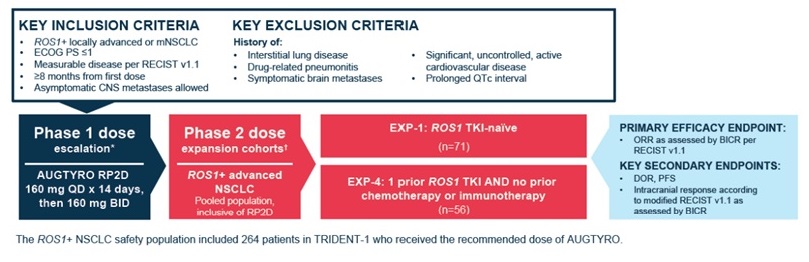
There are warnings and precautions associated with AUGTYRO to keep in mind. These include central nervous system adverse reactions, interstitial lung disease (ILD)/pneumonitis, hepatotoxicity, myalgia with creatinine phosphokinase (CPK) elevation, hyperuricemia, skeletal fractures, and embryo-fetal toxicity.1 Additional information related to warnings and precautions can be found here.

In the primary analysis, efficacy results for the TKI-naïve population (n=71) treated with AUGTYRO were as follows12:

  • ORR of 79% ([95% CI: 68–88]; median follow-up for ORR data: 18.1 months)
    • CR of 6% (n=4)
    • PR of 73% (n=52)
  • mDOR of 34 months ([95% CI: 25.6–NE]; range: 1.4+ to 42.4+ months; median follow-up for DOR data: 24.0 months)1,10
  • icORR observed in 7/8 patients with measurable baseline brain metastasis (median follow-up for icORR data: 18.1 months)1,12

                         Change in tumor burden by BICR in the TKI-naïve population12*
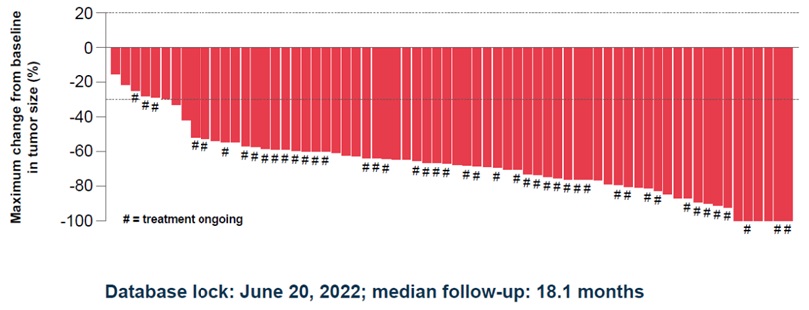
                           *Three patients discontinued study treatment before completing any post-baseline scans.12

In a follow-up analysis, continued response to treatment was seen with AUGTYRO. At the 33.9-month median follow-up, efficacy results for the TKI-naïve population treated with AUGTYRO were as follows9:
• cORR of 79% (n=71; [95% CI: 68–88])
• mDOR of 34.1 months (n=71; [95% CI: 27.4–NE])
• icORR of 89% (n=9; [95% Cl: 52–100]) in patients with measurable baseline brain metastasis

“TRIDENT-1 demonstrated an ORR of 79%, but more notably, a long mDOR of 34 months—this is almost 3 years,” explained Dr. Malhotra.

In TRIDENT-1, the most common reactions reported in ≥20% of 426 patients treated with AUGTYRO at the recommended dose were dizziness, dysgeusia, peripheral neuropathy, constipation, dyspnea, fatigue, ataxia, cognitive impairment, muscular weakness, and cognitive impairment.1 AUGTYRO was discontinued in 7% of patients, interrupted in 50% of patients, and dosage was reduced in 38% of patients due to adverse reactions.1 Serious adverse reactions occurred in 35% of patients receiving AUGTYRO. The most frequent (≥2%) serious adverse reactions were pneumonia, dyspnea, pleural effusion, and hypoxia. Fatal adverse reactions occurred in 3.5% of patients and included pneumonia, pneumonia aspiration, cardiac arrest, sudden cardiac death, cardiac failure, hypoxia, dyspnea, respiratory failure, tremor, and disseminated intravascular coagulation.1

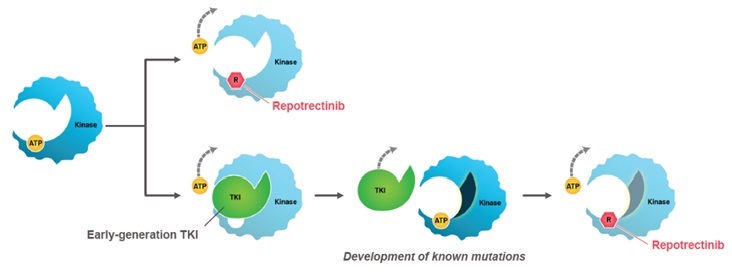
AUGTYRO is a next-generation ROS1 TKI with a compact structure that is smaller than currently available ROS1 TKIs.1,13,14
• Potential to decrease the development of ROS1 resistance mutations
• Potential to circumvent known ROS1 resistance mutations
• Physiochemical parameters for enhanced intracranial activity

                                    Mechanism of Action1,13

Dosing of AUGTYRO

The recommended oral dose of AUGTYRO is1:
• 160 mg (4x 40-mg capsules, or a single 160-mg capsule, QD) for the first 14 days
• 160 mg (4x 40-mg capsules, or a single 160-mg capsule, BID) on Day 15 and onward, until disease progression or unacceptable toxicity

“More recently, the 160 mg tablet is also available for use, which is great because now patients only need to take one tablet,” stated Dr. Malhotra. AUGTYRO can be taken with or without food.1 Patients should be advised not to drink grapefruit juice or eat grapefruit while taking AUGTYRO.1 Capsules should be swallowed whole at approximately the same time every day as prescribed.1 Contents of the capsule should not be opened, crushed, chewed, or dissolved.1 If a dose is missed or if a patient vomits at any time after taking a dose, instruct patients to skip the dose and resume at a regularly scheduled time.1 Two doses should not be taken at the same time.1 Adjustable dosing allows for dose modification if needed for adverse reactions. Recommended dosage reductions for adverse reactions are the following1:

  • For the dose of 160 mg QD:
    • First dose reduction: 120 mg QD
    • Second dose reduction: 80 mg QD
  • For the dose of 160 mg BID:
    • First dose reduction: 120 mg BID
    • Second dose reduction: 80 mg BID

A prescription for 40-mg capsules is required for dose reductions.1 Additional detailed dose reduction recommendations are available for key adverse reactions.1

Summary and conclusions
AUGTYRO is the next-generation TKI helping patients with ROS1+ NSCLC start strong.1,2,9 Results from the TRIDENT-1 trial and continued response for TKI-naïve patients at the ~3-year follow-up analysis support its current place in therapy.1,2,9 “AUGTYRO is definitely my preferred drug for 1L ROS1+ NSCLC treatment—we are seeing responses for years,” stated Dr. Malhotra.

1L=first line; ATP=adenosine triphosphate; BICR=blinded independent central review; BID=twice daily; CI=confidence interval; CNS=central nervous system; cORR=confirmed ORR; CR=complete response; DOR=duration of response; ECOG PS=Eastern Cooperative Oncology Group performance status; EXP=expansion cohort; icORR=intracranial ORR; mDOR=median DOR; mNSCLC=metastatic NSCLC; NE=not evaluable; NSCLC=non-small cell lung cancer; ORR=overall response rate; PFS=progression-free survival; PR=partial response; QD=everyday; QTc=corrected QT; RECIST=Response Evaluation Criteria in Solid Tumors; ROS1=ROS proto oncogene 1; RP2D=recommended phase 2 dose; TKI=tyrosine kinase inhibitor.

INDICATION
AUGTYRO® (repotrectinib) is indicated for the treatment of adult patients with locally advanced or metastatic ROS1-positive non-small cell lung cancer (NSCLC).

IMPORTANT SAFETY INFORMATION

Warnings & Precautions
Central Nervous System Adverse Reactions
• Among the 426 patients who received AUGTYRO in Study TRIDENT-1, a broad spectrum of central nervous system (CNS) adverse reactions including dizziness, ataxia, and cognitive disorders occurred in 77% of patients with Grade 3 or 4 events occurring in 4.5%.
• Dizziness, including vertigo, occurred in 65%; Grade 3 dizziness occurred in 2.8% of patients. The median time to onset was 7 days (1 day to 1.4 years). Dose interruption was required in 9% of patients, and 11% required dose reduction of AUGTYRO due to dizziness.
• Ataxia, including gait disturbance and balance disorder, occurred in 28% of patients; Grade 3 ataxia occurred in 0.5%. The median time to onset was 15 days (1 day to 1.4 years). Dose interruption was required in 5% of patients, 8% required dose reduction and one patient (0.2%) permanently discontinued AUGTYRO due to ataxia.
• Cognitive impairment, including memory impairment and disturbance in attention, occurred in 25% of patients. Cognitive impairment included memory impairment (15%), disturbance in attention (12%), and confusional state (2%); Grade 3 cognitive impairment occurred in 0.9% of patients. The median time to onset of cognitive disorders was 37 days (1 day to 1.4 years). Dose interruption was required in 2% of patients, 2.1% required dose reduction and 0.5% permanently discontinued AUGTYRO due to cognitive adverse reactions.
• Mood disorders occurred in 6% of patients. Mood disorders occurring in >1% of patients included anxiety (2.6%); Grade 4 mood disorders (mania) occurred in 0.2% of patients. Dose interruption was required in 0.2% of patients and 0.2% required a dose reduction due to mood disorders.
• Sleep disorders including insomnia and hypersomnia occurred in 18% of patients. Sleep disorders observed in >1% of patients were somnolence (9%), insomnia (6%) and hypersomnia (1.6%). Dose interruption was required in 0.7% of patients, and 0.2% required a dose reduction due to sleep disorders.
• The incidences of CNS adverse reactions reported were similar in patients with and without CNS metastases.
• Advise patients not to drive or use machines if they are experiencing CNS adverse reactions. Withhold and then resume at same or reduced dose upon improvement, or permanently discontinue AUGTYRO based on severity.
Interstitial Lung Disease (ILD)/Pneumonitis
• Among the 426 patients treated with AUGTYRO, ILD/pneumonitis (pneumonitis [2.8%] and ILD [0.2%]) occurred in 3.1%; Grade 3 ILD/pneumonitis occurred in 1.2%. The median time to onset was 45 days (19 days to 0.9 years). Dose interruption was required in 1.4% of patients, 0.5% required dose reduction, and 1.1% permanently discontinued AUGTYRO due to ILD/pneumonitis.
• Monitor patients for new or worsening pulmonary symptoms indicative of ILD/pneumonitis. Immediately withhold AUGTYRO in patients with suspected ILD/pneumonitis and permanently discontinue AUGTYRO if ILD/pneumonitis is confirmed.
Hepatotoxicity
• Among the 426 patients treated with AUGTYRO, increased alanine transaminase (ALT) occurred in 38%, increased aspartate aminotransferase (AST) occurred in 41%, including Grade 3 or 4 increased ALT in 3.3% and increased AST in 2.9%. The median time to onset of increased ALT or AST was 15 days (range: 1 day to 1.9 years). Increased ALT or AST leading to dose interruptions or reductions occurred in 2.8% and 1.2% of patients, respectively. Hyperbilirubinemia leading to dose interruptions occurred in 0.5%.
• Monitor liver function tests, including ALT, AST and bilirubin, every 2 weeks during the first month of treatment, then monthly thereafter and then as clinically indicated. Withhold and then resume at same or reduced dose upon improvement or permanently discontinue AUGTYRO based on the severity.
Myalgia with Creatine Phosphokinase (CPK) Elevation
• AUGTYRO can cause myalgia with or without creatine phosphokinase (CPK) elevation. Among the 426 patients treated with AUGTYRO, myalgia occurred in 13% of patients, with Grade 3 in 0.7%. Median time to onset of myalgia was 19 days (range: 1 day to 2 years). Concurrent increased CPK within a 7-day window was observed in 3.7% of patients. AUGTYRO was interrupted in one patient with myalgia and concurrent CPK elevation.
• Advise patients to report any unexplained muscle pain, tenderness, or weakness. Monitor serum CPK levels during AUGTYRO treatment and monitor CPK levels every 2 weeks during the first month of treatment and as needed in patients reporting unexplained muscle pain, tenderness, or weakness. Initiate supportive care as clinically indicated. Based on severity, withhold and then resume AUGTYRO at same or reduced dose upon improvement.
Hyperuricemia
• Among the 426 patients treated with AUGTYRO, 21 patients (5%) experienced hyperuricemia reported as an adverse reaction, 0.7% experienced Grade 3 or 4 hyperuricemia. One patient without pre-existing gout required urate-lowering medication.
• Monitor serum uric acid levels prior to initiating AUGTYRO and periodically during treatment. Initiate treatment with urate-lowering medications as clinically indicated. Withhold and then resume at same or reduced dose upon improvement, or permanently discontinue AUGTYRO based on severity.
Skeletal Fractures
• Among 426 adult patients who received AUGTYRO, fractures occurred in 2.3%. Fractures involved the ribs (0.5%), feet (0.5%), spine (0.2%), acetabulum (0.2%), sternum (0.2%), and ankles (0.2%). Some fractures occurred at sites of disease and prior radiation therapy. The median time to fracture was 71 days (range: 31 days to 1.4 years). AUGTYRO was interrupted in 0.3% of patients.
• Of 26 evaluable patients in an ongoing open-label study in pediatric patients, fractures occurred in one 12-year-old patient (ankle/foot) and one 10-year-old patient (stress fracture). AUGTYRO was interrupted in both patients. AUGTYRO is not approved for use in pediatric patients less than 12 years of age.
• Promptly evaluate patients with signs or symptoms (e.g., pain, changes in mobility, deformity) of fractures. There are no data on the effects of AUGTYRO on healing of known fractures and risk of future fractures.
Embryo-Fetal Toxicity
• Based on literature reports in humans with congenital mutations leading to changes in tropomyosin receptor tyrosine kinase (TRK) signaling, findings from animal studies, and its mechanism of action, AUGTYRO can cause fetal harm when administered to a pregnant woman.
• Advise pregnant women of the potential risk to a fetus. Advise females of reproductive potential to use effective non-hormonal contraception during treatment with AUGTYRO and for 2 months following the last dose, since AUGTYRO can render some hormonal contraceptives ineffective.
• Advise male patients with female partners of reproductive potential to use effective contraception during treatment with AUGTYRO and for 4 months after the last dose.
Adverse Reactions
• The safety of AUGTYRO was evaluated in 426 patients in TRIDENT-1. The most common adverse reactions (≥20%) were dizziness, dysgeusia, peripheral neuropathy, constipation, dyspnea, fatigue, ataxia, cognitive impairment, muscular weakness, and nausea.
Drug Interactions
Effects of Other Drugs on AUGTYRO
Strong and Moderate CYP3A Inhibitors
• Avoid concomitant use with strong or moderate CYP3A inhibitors. Concomitant use of AUGTYRO with a strong or a moderate CYP3A inhibitor may increase repotrectinib exposure, which may increase the incidence and severity of adverse reactions of AUGTYRO. Discontinue CYP3A inhibitors for 3 to 5 elimination half-lives of the CYP3A inhibitor prior to initiating AUGTYRO.

P-gp Inhibitors
• Avoid concomitant use with P-gp inhibitors. Concomitant use of AUGTYRO with a P-gp inhibitor may increase repotrectinib exposure, which may increase the incidence and severity of adverse reactions of AUGTYRO.
Strong and Moderate CYP3A Inducers
• Avoid concomitant use with strong or moderate CYP3A inducers. Concomitant use of AUGTYRO with a strong or moderate CYP3A inducer may decrease repotrectinib plasma concentrations, which may decrease efficacy of AUGTYRO.
Effects of AUGTYRO on other Drugs
Certain CYP3A4 Substrates
• Avoid concomitant use unless otherwise recommended in the Prescribing Information for CYP3A substrates, where minimal concentration changes can cause reduced efficacy. If concomitant use is unavoidable, increase the CYP3A4 substrate dosage in accordance with approved product labeling.
• Repotrectinib is a CYP3A4 inducer. Concomitant use of repotrectinib decreases the concentration of CYP3A4 substrates, which can reduce the efficacy of these substrates.
Contraceptives
• Repotrectinib is a CYP3A4 inducer, which can decrease progestin or estrogen exposure to an extent that could reduce the effectiveness of hormonal contraceptives.
• Avoid concomitant use of AUGTYRO with hormonal contraceptives. Advise females of childbearing potential to use an effective nonhormonal contraceptive.
Please see US Full Prescribing Information for AUGTYRO.

References:

1. AUGTYRO [package insert]. Princeton, NJ: Bristol-Myers Squibb Company.
2. Drilon A, Camidge DR, Lin JJ, et al. Repotrectinib in ROS1 fusion–positive non–small-cell lung cancer. N Engl J Med. 2024;390(2):118-131.
3. Lin JJ, Shaw AT. Recent advances in targeting ROS1 in lung cancer. J Thorac Oncol. 2017;12(11):1611-1625.
4. Rikova K, Guo A, Zeng Q, et al. Global survey of phosphotyrosine signaling identifies oncogenic kinases in lung cancer. Cell. 2007;131:1190-1203.
5. US Food and Drug Administration. FDA Approves Crizotinib Capsules. Published March 11, 2016. Accessed October 21, 2024. https://www.fda.gov/drugs/resources-information-approved-drugs/fda-approves-crizotinib-capsules.
6. Drilon A, Chiu CH, Fan Y, et al. Long-Term Efficacy and Safety of Entrectinib in ROS1 Fusion-Positive NSCLC. JTO Clin Res Rep. 2022;3(6):100332. Published 2022 Apr 29. doi:10.1016/j.jtocrr.2022.100332.
7. Shaw AT, Riely GJ, Bang YJ, et al. Crizotinib in ROS1-rearranged advanced non-small-cell lung cancer (NSCLC): updated results, including overall survival, from PROFILE 1001. Ann Oncol. 2019;30(7):1121-1126. doi:10.1093/annonc/mdz131.
8. US Food and Drug Administration. Center for Drug Evaluation and Research. AUGTYRO Label and Approval History. NDA218213. Published November 15, 2023. Accessed October 16, 2024. https://www.accessdata.fda.gov/drugsatfda_docs/appletter/2023/218213Orig1s000ltr.pdf.
9. Drilon A, Dziadziuszko R, Camidge DR, et al. Repotrectinib in tyrosine kinase inhibitor (TKI)-naïve patients with advanced ROS1 fusion-positive (ROS1+) NSCLC in the phase 1/2 TRIDENT-1 trial: clinical update, treatment beyond progression and subsequent therapies. Oral presentation at ASCO 2024. Poster 386.
10. Cho BC, Camidge DR, Lin JJ, et al. Repotrectinib in patients with ROS1 fusion-positive non-small cell lung cancer: update from the pivotal phase 1/2 TRIDENT-1 trial. Oral presentation at WCLC 2023. Abstract OA03.06.
11. ClinicalTrials.gov. A study of repotrectinib (TPX-0005) in patients with advanced solid tumors harboring ALK, ROS1, or NTRK1-3 rearrangements. Accessed April 19, 2024. https://clinicaltrials.gov/study/NCT03093116.
12. Cho BC, Lin JJ, Camidge DR, et al. Pivotal topline data from the phase 1/2 TRIDENT-1 trial of repotrectinib in patients with ROS1+ advanced non-small cell lung cancer (NSCLC). Oral presentation at ENA 2022. Abstract 2LBA.
13. Drilon A, Ou SI, Cho BC, et al. Repotrectinib (TPX-0005) is a next-generation ROS1/TRK/ALK inhibitor that potently inhibits ROS1/TRK/ALK solvent-front mutations. Cancer Discov. 2018;8(10):1227-1236.
14. Murray BW, Rogers E, Zhai D, et al. Molecular Characteristics of Repotrectinib That Enable Potent Inhibition of TRK Fusion Proteins and Resistant Mutations. Mol Cancer Ther. 2021;20(12):2446-2456. doi:10.1158/1535-7163.MCT-21-0632

© 2024 Bristol-Myers Squibb Company. AUGTYRO®, is a registered trademark of
Bristol-Myers Squibb Company.
3600-US-2400322 11/24

ENHERTU® after Endocrine Therapy in Advanced Breast Cancer

SUMMARY: Breast cancer is the most common cancer among women in the US and about 1 in 8 women (12%) will develop invasive breast cancer during their lifetime. It is estimated that in the US, approximately 310,720 new cases of female breast cancer will be diagnosed in 2024, and about 42,250 individuals will die of the disease, largely due to metastatic recurrence.

The HER or erbB family of receptors consist of HER1, HER2, HER3 and HER4. Approximately 15-20% of invasive breast cancers overexpress HER2/neu oncogene, which is a negative predictor of outcomes without systemic therapy. Patients with high levels of HER2 expression (IHC 3+ or 2+/FISH+) are classified as HER2-positive. Patients with HER2-positive metastatic breast cancer are often treated with anti-HER2 targeted therapy along with chemotherapy, irrespective of hormone receptor status, and this has resulted in significantly improved treatment outcomes. Tumors that are not classified as HER2-positive are classified as HER2-negative. Despite being classified as HER2-negative, majority these tumors still have some level of HER2 expression.

About 70% of breast tumors express Estrogen Receptors and/or Progesterone Receptors, and Hormone Receptor (HR)-positive/HER2-negative breast cancer is the most frequently diagnosed molecular subtype. It is estimated that approximately 60-65% of HR-positive/HER2-negative breast cancers are HER2-low and potentially an additional 25% may be HER2-ultralow. These patients are often treated with single agent endocrine therapy, endocrine therapy in combination with CDK4/6 inhibitor, or chemotherapy. Resistance to hormonal therapy occurs in a majority of the patients and there is therefore an unmet need for agents with novel mechanisms of action. Further, there are no targeted therapies specifically approved for patients with HER2-low or HER2-ultralow expression, prior to chemotherapy.

ENHERTU® (Trastuzumab Deruxtecan) is an Antibody-Drug Conjugate (ADC) composed of a humanized monoclonal antibody specifically targeting HER2, with the amino acid sequence similar to Trastuzumab, a cleavable tetrapeptide-based linker, and a potent cytotoxic Topoisomerase I inhibitor as the cytotoxic drug (payload). ENHERTU® has a favorable pharmacokinetic profile and the tetrapeptide-based linker is stable in the plasma and is selectively cleaved by cathepsins that are up-regulated in tumor cells. Unlike KADCYLA® (ado-Trastuzumab emtansine), another ADC targeting HER2, ENHERTU® has a higher drug-to-antibody ratio (8 versus 4), released payload easily crosses the cell membrane with resulting potent cytotoxic effect on neighboring tumor cells regardless of target expression, and the released cytotoxic agent (payload) has a short half-life, thus minimizing systemic exposure.

DESTINY-Breast06 is a global, randomized, open-label Phase III trial evaluating the efficacy and safety of ENHERTU® versus chemotherapy in patients with HR-positive, HER2-low, or HER2-ultralow advanced or metastatic breast cancer. This study enrolled 866 patients (N=713 for HER2-low and N=153 for HER2-ultralow). HER2-low was defined as IHC 1+ or 2+ or FISH negative and HER2-ultralow was defined as IHC 0 with membrane staining. Patients were randomized 1:1 to receive ENHERTU® 5.4 mg/kg every 3 weeks (N=436) or physicians choice of chemotherapy which included Capecitabine, Paclitaxel, or nab-Paclitaxel (N=430). Patients in the trial had no prior chemotherapy for advanced or metastatic disease and received at least two lines of prior endocrine therapy in the metastatic setting. Patients were also eligible if they had received one prior line of endocrine therapy combined with a CDK4/6 inhibitor in the metastatic setting and experienced disease progression within six months of starting 1st-line treatment, or received endocrine therapy as an adjuvant treatment and experienced disease recurrence within 24 months. Patients were stratified based on prior CDK4/6 inhibitor use, HER2 expression and prior taxane use in the non-metastatic setting. Patients in the trial had received a median of two prior lines of endocrine therapy. In the overall trial population, 14.9% of patients in the ENHERTU® group and 19.2% in the chemotherapy group had received one prior line of endocrine therapy. No patients had received prior chemotherapy for metastatic disease. The Primary endpoint was Progression Free Survival (PFS) in the HER2-low patient population as measured by Blinded Independent Central Review (BICR). Key Secondary endpoints included Progression Free Survival (PFS) in the overall trial population (HER2-low and HER2-ultralow), Overall survival (OS) in the HER2-low patient population, Objective Response Rate (ORR), Duration of response (DOR) and Safety. The median duration of follow-up was 18.2 months.

In the primary analysis of this study, results showed that in the HER2-low expression patients, ENHERTU® reduced the risk of disease progression or death by 38%, with a median PFS was 13.2 months in the ENHERTU® group, compared to 8.1 months for chemotherapy (HR=0.62; P<0.0001). For the overall trial population (HER2-low and HER2-ultralow), the median PFS results were similar and the median PFS was 13.2 months for ENHERTU® versus 8.1 months for chemotherapy (HR=0.63; P<0.0001). ENHERTU® reduced the risk of disease progression or death by 37% compared to chemotherapy.

A prespecified exploratory analysis showed that the improvement in PFS was consistent between patients with HER2-low and HER2-ultralow expression. In patients with HER2-ultralow expression, ENHERTU® reduced the risk of disease progression or death by 22% compared to chemotherapy, with a median PFS of 13.2 months versus 8.3 months, respectively (HR=0.78).

The Objective Response Rate (ORR) in HER2-Low Population was 56.5% for ENHERTU® compared to 32.2% for chemotherapy, in the Overall Trial Population was 57.3% for ENHERTU® versus 31.2% for chemotherapy, and in the HER2-Ultralow Subgroup was 61.8% for ENHERTU® versus 26.3% for chemotherapy. The median duration of response across these three groups was 14.3 months.

The safety profile of ENHERTU® was consistent with previous breast cancer clinical trials and no new safety concerns identified. The most common Grade 3 or higher treatment-related adverse events occurring in 5% or more of patients treated with ENHERTU® were neutropenia (20.7%) and anemia (5.8%). Interstitial Lung Disease (ILD), adjudicated as drug-related by an independent committee, occurred in 11.3% of patients treated with ENHERTU®. The majority of ILD events were low grade.

The results from the DESTINY-Breast06 trial underscore the significant clinical benefits of ENHERTU® in improving PFS and ORR in patients with HR-positive, HER2-low, and HER2-ultralow metastatic breast cancer, offering a promising alternative to standard chemotherapy. These findings highlight the potential of ENHERTU® to become a new standard of care for this patient population, pending further investigation and regulatory approval. The detailed positive outcomes underscore the clinical benefits and reinforce the promise of ENHERTU® in treating this challenging cancer subtype.

Trastuzumab Deruxtecan after Endocrine Therapy in Metastatic Breast Cancer. Bardia A, Hu X, Dent R, et al. for the DESTINY-Breast06 Trial Investigators. N Engl J Med 2024;391:2110-2122. DOI: 10.1056/NEJMoa2407086.

RYBREVANT® plus LAZCLUZE® versus TAGRISSO® in Previously Untreated EGFR-Mutated Advanced NSCLC

SUMMARY: Lung cancer is the second most common cancer in both men and women and accounts for about 13% of all new cancers and 21% of all cancer deaths. The American Cancer Society estimates that for 2024, about 234,580 new cases of lung cancer will be diagnosed and 125,070 patients will die of the disease. Lung cancer is the leading cause of cancer-related mortality in the United States. Non-Small Cell Lung Cancer (NSCLC) accounts for approximately 85% of all lung cancers. Of the three main subtypes of NSCLC, 30% are Squamous Cell Carcinomas (SCC), 40% are Adenocarcinomas and 10% are Large Cell Carcinomas. With changes in the cigarette composition and decline in tobacco consumption over the past several decades, Adenocarcinoma now is the most frequent histological subtype of lung cancer. Approximately 10-15% of Caucasian patients and 35-50% of Asian patients with Adenocarcinomas, harbor activating EGFR mutations, and 90% of these mutations are either exon 19 deletions or L858R substitution mutation in exon 21.

Epidermal Growth Factor Receptor (EGFR) plays an important role in regulating cell proliferation, survival and differentiation, and is overexpressed in a variety of epithelial malignancies. EGFR targeted Tyrosine Kinase Inhibitors (TKIs) such as Gefitinib, Erlotinib, Afatinib, Dacomitinib and Osimertinib (TAGRISSO®) target the EGFR signaling cascade. However, patients eventually develop drug resistance due to new EGFR mutations. Another important cause of drug resistance to TKIs is due to the activation of parallel RTK (Receptor Tyrosine Kinase) pathways such as Hepatocyte Growth Factor/Mesenchymal-Epithelial Transition factor (HGF/MET) pathway, thereby bypassing EGFR TKI inhibitors. These patients are often treated with platinum-based chemotherapy as the next line of therapy, resulting in a median Progression Free Survival of about 5 months.

Amivantamab (RYBREVANT®) is a fully human bispecific antibody directed against EGFR and MET receptors. Amivantamab binds extracellularly and simultaneously blocks ligand-induced phosphorylation of EGFR and c-MET, inhibiting tumor growth and promoting tumor cell death. Further, Amivantamab down regulates receptor expression on tumor cells thus preventing drug resistance mediated by new emerging mutations of EGFR or c-MET. By binding to the extracellular domain of the receptor protein, Amivantamab can bypass primary and secondary TKI resistance at the active site. Amivantamab also engages effector cells such as Natural Killer cells, monocytes, and macrophages via its optimized Fc domain. Amivantamab demonstrated activity against a wide range of activating and resistance mutations in EGFR-mutated NSCLC, and in patients with MET exon 14 skip mutations, and is approved for the treatment of patients with EGFR exon 20 insertion mutations, whose disease progressed on or after platinum-based chemotherapy.

Lazertinib (LAZCLUZE®) is a highly selective, third-generation TKI that penetrates the CNS, with demonstrated efficacy in activating EGFR mutations and acquired T790M “gatekeeper” point mutation. Combining Amivantamab with Lazertinib has been shown to provide a synergistic benefit by targeting the extracellular and catalytic EGFR domains. The combination of Amivantamab plus Lazertinib has shown clinically meaningful and durable antitumor activity in patients with previously untreated or Osimertinib-pretreated EGFR –mutated advanced NSCLC, with clinical activity against a broad spectrum of secondary EGFR and MET molecular alterations and even in tumors of patients without an identified resistance mechanism.

The MARIPOSA trial is an international, randomized Phase 3 study, conducted to assess the efficacy and safety of a combination of Amivantamab and Lazertinib as compared with Osimertinib alone, as first-line treatment in patients with EGFR-mutated advanced NSCLC. In this study, a third arm evaluated Lazertinib monotherapy, to dissect the individual contributions of each component in the combination. This study included 1074 patients (N=1074) with untreated EGFR-mutated advanced NSCLC who were randomly assigned in a 2:2:1 ratio to receive Amivantamab plus Lazertinib (N=429), Osimertinib monotherapy (N=429), or Lazertinib monotherapy (N=216). Amivantamab was administered weekly at a dose of 1050 mg IV (or 1400 mg IV in patients with a body weight of 80 kg or more) for the first 4 weeks (cycle 1), with the first infusion split over a period of 2 days (with 350 mg given on cycle 1, day 1, and the remainder given on cycle 1, day 2). Starting at cycle 2, the same Amivantamab dose was administered every 2 weeks. Osimertinib 80 mg and Lazertinib 240 mg were taken orally daily. The median age was 63 years, majority of patients were Asian women or White and had never smoked. Approximately 60% had EGFR exon 19 deletions and 40% had exon 21 L858R mutations. Randomization was stratified according to EGFR mutation type (ex19del or L858R), Asian race (yes or no), and history of brain metastases (yes or no). The Primary end point was Progression-Free Survival (PFS) in the Amivantamab plus Lazertinib group as compared with the Osimertinib group, as assessed by Blinded Independent Central Review. Secondary end points included Overall Survival (OS), Objective Response (defined as a Complete or Partial Response), Duration of Response, and Safety.

The median PFS was significantly longer in the Amivantamab plus Lazertinib group at 23.7 months compared to 16.6 months in the Osimertinib group ((HR for progression or death = 0.70; P<0.001). The Objective Response was 86% in the Amivantamab plus Lazertinib group and 85% in the Osimertinib group. Among patients with a confirmed response (336 in the Amivantamab plus Lazertinib group and 314 in the Osimertinib group), the median response duration was 25.8 months and 16.8 months, respectively. In a planned interim Overall Survival analysis, Hazard Ratio for death with Amivantamab plus Lazertinib was 0.80 (95% CI, 0.61–1.05).

EGFR and MET-related toxic effects were the most common side effects and most adverse events were of grade 1 or 2. The treatment discontinuation due to adverse events occurred in 10% of patients in the Amivantamab plus Lazertinib group versus 3% in the Osimertinib group. The incidence of venous thromboembolic adverse events was higher with Amivantamab Plus Lazertinib than with Osimertinib and most of the thromboembolic events in the Amivantamab plus Lazertinib group occurred during the first 4 months of treatment. This has been attributed to a transitory prothrombotic state caused by a mechanism of rapid tumor-cell death by the Amivantamab plus Lazertinib combination.

In conclusion, the combination of Amivantamab plus Lazertinib demonstrated superior efficacy over Osimertinib as a first-line therapy for EGFR-mutated advanced NSCLC, offering longer Progression-Free Survival and Duration of Response.

Amivantamab plus Lazertinib in Previously Untreated EGFR-Mutated Advanced NSCLC. Cho BC, Lu S, Felip E, et al. for the MARIPOSA Investigators. N Engl J Med 2024;391:1486-1498.

TAGRISSO® after Chemoradiotherapy in Stage III EGFR-Mutated NSCLC

SUMMARY: The FDA on September 25, 2024, approved Osimertinib (TAGRISSO®) for adult patients with locally advanced, unresectable (Stage III) Non-Small Cell Lung Cancer (NSCLC) whose disease has not progressed during or following concurrent or sequential platinum-based chemoradiation therapy and whose tumors have EGFR exon 19 deletions or exon 21 L858R mutations, as detected by an FDA-approved test. Lung cancer is the second most common cancer in both men and women and accounts for about 13% of all new cancers and 21% of all cancer deaths. The American Cancer Society estimates that for 2024, about 234,580 new cases of lung cancer will be diagnosed and 125,070 patients will die of the disease. Lung cancer is the leading cause of cancer-related mortality in the United States. Non-Small Cell Lung Cancer (NSCLC) accounts for approximately 85% of all lung cancers. Approximately one third of all patients with NSCLC have Stage III, locally advanced disease at the time of initial presentation and 60 to 90% of these patients have unresectable disease. These patients are treated with concurrent chemoradiotherapy (CRT) followed by consolidation therapy with Durvalumab (IMFINZI®) in patients without progression, as this regimen confers an Overall Survival advantage, and is considered the standard of care (PACIFIC trial).

EGFR (Epidermal Growth Factor Receptor) mutations are found in up to one third of patients with unresectable Stage III NSCLC. There are currently no approved targeted treatments for patients with unresectable Stage III EGFR-mutated NSCLC. The current standard of care, which includes consolidation therapy with Durvalumab, may not offer clear benefits to this subset of patients with EGFR mutations.

Osimertinib (TAGRISSO®) is a highly selective third-generation, irreversible Epidermal Growth Factor Receptor Tyrosine Kinase Inhibitor (TKI), presently approved by the FDA, for the first-line treatment of patients with metastatic NSCLC, whose tumors have Exon 19 deletions or Exon 21 L858R mutations, as well as treatment of patients with metastatic EGFR T790M mutation-positive NSCLC, whose disease has progressed on or after EGFR-TKI therapy. Osimertinib is also approved by the FDA as adjuvant treatment for resected Stage IB–IIIA EGFR-mutated NSCLC. Further, Osimertinib has higher CNS penetration and is therefore able to induce responses in 70-90% of patients with brain metastases.

LAURA was a global, randomized, double-blind, placebo-controlled, multicenter Phase III trial conducted to assess the efficacy and safety of Osimertinib in patients with unresectable Stage III NSCLC harboring EGFR mutations (EGFR exon 19 deletion or exon 21 L858R mutation). The trial enrolled patients who had not experienced disease progression during or after definitive platinum-based chemoradiotherapy (CRT). A total of 216 patients who had undergone CRT were randomly assigned 2:1 to receive Osimertinib 80 mg orally once daily (N=143) or placebo once per day (N=73). Treatment was continued until Blinded Independent Central Review (BICR)–assessed disease progression, unacceptable toxicity, or other discontinuation criteria were met. Upon disease progression, patients in the placebo arm were permitted to receive Osimertinib, allowing for crossover therapy. Stratification factors included method of CRT (concurrent versus sequential) and disease Stage (IIIA versus IIIB/C). Both treatment groups were well balanced. The median patient age was 63 years, approximately 60% of participants were female, 83% were Asian, 69% had never smoked and 85% had Stage IIIA and B disease. Majority of patients received concurrent CRT rather than sequential CRT. The Primary end point was Progression Free Survival (PFS) as assessed by BICR. Key Secondary end points included Overall Survival (OS), survival without progression of CNS disease (CNS Progression Free Survival), Objective Response Rate (ORR), Duration of Response, Quality of Life, and Safety.

Treatment with Osimertinib resulted in significant PFS improvement compared to placebo. The median PFS was 39.1 months in the Osimertinib group versus 5.6 months in the placebo group, representing an 84% reduction in the risk of disease progression or death (HR=0.16; P<0.001). Additionally, a higher percentage of patients in the Osimertinib group remained alive and progression-free at 12 months compared to the placebo group (74% versus 22% respectively). Subgroup analyses were conducted to evaluate the consistency of treatment effects across various demographic and clinical factors. The benefits of Osimertinib were observed across all prespecified subgroups, indicating a consistent treatment effect, regardless of patient characteristics. The incidence of new lesions was lower with Osimertinib compared to placebo (22% versus 68%), and this included new brain lesions (8% versus 29%) and new lung lesions (6% versus 29%) respectively. The Objective Response Rate was higher with Osimertinib than with placebo (57% versus 33%). The median Duration of Response was longer with Osimertinib (36.9 months) than with placebo (6.5 months). Interim OS data showed a favorable trend for Osimertinib, although maturity was limited at the time of analysis. Further follow-up will be conducted to assess OS as a secondary endpoint. The adverse event profile of Osimertinib was generally consistent with previous studies. Grade 3 or higher adverse events occurred more frequently in the Osimertinib group, with radiation pneumonitis being the most common. However, no new safety concerns emerged during the trial.

In summary, treatment with Osimertinib resulted in significantly longer Progression Free Survival than placebo in patients with unresectable Stage III EGFR-mutated NSCLC following definitive CRT, and should be considered the new standard of care for this group of patients. Overall, the LAURA study represents a major breakthrough in the treatment of EGFR-mutated Stage III NSCLC, addressing an unmet need for targeted therapies in this setting. Further follow-up will provide additional insights into the long-term efficacy and safety of Osimertinib in this patient population.

Osimertinib after Chemoradiotherapy in Stage III EGFR-Mutated NSCLC. Lu S, Kato T, Dong X, et al. for the LAURA Trial Investigators. N Engl J Med. 2024;391:585-597.

FDA Grants Accelerated Approval to ZIIHERA®for Metastatic HER2-Positive Biliary Tract Cancer

SUMMARY: The FDA on November 20, 2024, granted accelerated approval to Zanidatamab-hrii (ZIIHERA®), a bispecific HER2-directed antibody, for previously treated, unresectable or metastatic HER2-positive (IHC 3+) Biliary Tract Cancer (BTC), as detected by an FDA-approved test. The FDA simultaneously also approved VENTANA PATHWAY anti-HER-2/neu (4B5) Rabbit Monoclonal Primary Antibody as a companion diagnostic device to aid in identifying patients with BTC who may be eligible for treatment with Zanidatamab.

Biliary Tract Cancer (Cholangiocarcinoma) is a rare and highly aggressive heterogenous cancer and is the second most common type of primary liver cancer after Hepatocellular carcinoma. It comprises about 30% of all primary liver tumors and includes both intrahepatic and extrahepatic bile duct cancers. It is estimated that approximately 211,000 patients are diagnosed with Biliary Tract Cancer and 174,000 patients will die of the disease each year globally. Biliary Tract Cancer is most frequently diagnosed in patients between 50 to 70 years old, and 75% of patients are diagnosed at an advanced stage. BTCs consist of intrahepatic cholangiocarcinoma, extrahepatic cholangiocarcinoma, gallbladder cancer, and Ampulla of Vater cancer. Klatskin tumor is a type of Cholangiocarcinoma that begins in the hilum, at the junction of the left and right bile ducts. It is the most common type of Cholangiocarcinoma, accounting for more than half of all cases. About 8,000 people in the US are diagnosed with Cholangiocarcinoma each year and approximately 20% of the cases are suitable for surgical resection. Patients diagnosed with Biliary Tract Cancer have a very poor prognosis, and the 5-year survival among those with advanced stage disease is less than 10%, with limited progress made over the past two decades. There is therefore an urgent unmet need for new effective therapies. Patients with advanced Biliary Tract cancers often receive chemotherapy in the first and second line settings, with limited benefit. Gemcitabine and Cisplatin combination is currently the first line standard-of-care treatment.

BTCs are heterogenous and thus their pathogenesis and genomic drivers may vary. HER2 overexpression or gene amplification is one of the genomic drivers and HER2 overexpression rates vary depending on the anatomic origin of the Biliary Tract Cancer. Extrahepatic cholangiocarcinoma has a higher rate of HER2 overexpression (about 16-18%), compared to intrahepatic cholangiocarcinoma (about 5%), and about 10-16% for gallbladder cancers, making HER2 a potential therapeutic target in a vast majority of these patients.

Zanidatamab is a novel HER2-targeted, humanized, immunoglobulin G1 (IgG1), bispecific monoclonal antibody, that targets two distinct non-overlapping extracellular domains of HER2, ECD2 and ECD4 (biparatopic binding). This results in dual HER2 signal blockade, HER2 clustering, receptor internalization, and downregulation. This inhibits HER2 activation, HER2-mediated signaling and HER2-mediated tumor cell growth. The specific binding of Zanidatamab to tumor cells and HER2 aggregation also activates various immune-mediated responses, including Complement-Dependent Cytotoxicity (CDC), Antibody-Dependent Cellular Cytotoxicity (ADCC), and Antibody-Dependent Cellular Phagocytosis (ADCP) against tumor cells that overexpress HER2. Zanidatamab binds to HER2-expressing tumor cells with greater antibody saturation than Trastuzumab or Pertuzumab.

The present FDA approval was based on data from HERIZON-BTC-01 (NCT04466891), a pivotal Phase 2b, open-label, multicenter, single-arm trial, that evaluated the efficacy and safety of Zanidatamab in patients with HER2-positive BTC. This study included 87 patients with unresectable or metastatic HER2-positive BTC, and all patients received at least one prior Gemcitabine-containing regimen in the advanced disease setting. The median age was 64 years, 54% were women, 66% were Asian, 52% had gallbladder cancer, 30% had intrahepatic cholangiocarcinoma and 18% had extrahepatic cholangiocarcinoma. Patients received Zanidatamab at 20 mg/kg IV every two weeks in 28-day cycles.
Patients were assigned to one of two cohorts based on immunohistochemistry (IHC) status.
Cohort 1 (HER2-positive): Patients with IHC 3+ or IHC 2+ disease (N=80 total, including 62 with IHC 3+).
Cohort 2 (HER2-negative): Patients with IHC 0 or 1+ disease (N=7).
The major efficacy outcome measures were Objective Response Rate (ORR) and Duration of Response (DOR) as determined by an Independent Central Review.

Among the 62 patients with IHC3+ status per central assessment, the ORR was 52% and the median DOR was 14.9 months. The median Overall Survival was 18.1 months for IHC 3+ patients and 5.2 months for IHC 2+ patients. Common treatment related adverse events included diarrhea, infusion related reactions, nausea, vomiting, fatigue, and elevated liver enzymes. Treatment discontinuation rate was 2.3%.

In conclusion, the approval of Zanidatamab represents a significant advancement in the management of HER2-positive BTC and a critical unmet need. A Phase 3 trial is planned to evaluate Zanidatamab in the first-line setting for metastatic BTC.

Zanidatamab in previously-treated HER2-positive (HER2+) biliary tract cancer (BTC): Overall survival (OS) and longer follow-up from the phase 2b HERIZON-BTC-01 study. Pant S, Fan J, Oh D-Y, et al. J Clin Oncol. 2024;42(suppl 16):4091. doi:10.1200/JCO.2024.42.16_suppl.4091.

FDA Approves REVUFORJ® for Acute Leukemia with KMT2A Translocation

SUMMARY: The FDA on November 15, 2024, approved Revumenib (REVUFORJ®), a menin inhibitor, for Relapsed or Refractory acute leukemia with a lysine methyltransferase 2A gene (KMT2A) translocation in adult and pediatric patients 1 year and older. The American Cancer Society estimates that in 2024, 20,800 new cases of Acute Myeloid Leukemia (AML) will be diagnosed in the United States and 11,220 patients will die of the disease. AML is one of the most common types of leukemia in adults and can be considered as a group of molecularly heterogeneous diseases with different clinical behavior and outcomes. A significant percentage of patients with newly diagnosed AML are not candidates for intensive chemotherapy or have disease that is refractory to standard chemotherapy. Even with the best available therapies, the 5-year Overall Survival in patients 65 years of age or older is less than 5%. Cytogenetic analysis has been part of routine evaluation when caring for patients with AML. By predicting resistance to therapy, tumor cytogenetics will stratify patients based on risk, and help manage them accordingly. Even though cytotoxic chemotherapy may lead to long term remission and cure in a minority of patients with favorable cytogenetics, patients with high-risk features such as unfavorable cytogenetics, molecular abnormalities, prior myelodysplasia, and advanced age, have poor outcomes with conventional chemotherapy alone. More importantly, with the understanding of molecular pathology of AML, personalized and targeted therapies are becoming an important part of the AML treatment armamentarium. Over 50% of AML cases lack targetable mutations, relying instead on toxic chemotherapy.

Rearrangements of KMT2A gene previously known as MLL are found in 80% of infant Acute Lymphoblastic Leukemia (ALL) and in 5-15% of acute leukemia cases in children and adults, including myeloid, lymphoid, or mixed phenotypes. NPM1 mutations are the most common genetic alteration in adult Acute Myeloid Leukemia (AML), occurring in up to 30% of cases. Acute leukemias with KMT2A rearrangements have a poor prognosis, with a 5-year overall survival rate of less than 25%. There are no targeted therapies currently approved specifically for acute leukemia with KMT2A gene rearrangements or NPM1 mutations. Both KMT2A gene rearrangements and NPM1 mutations cause blood cells to regress to a stem-cell-like state, leading to the formation of leukemia cells. For leukemias driven by KMT2A gene rearrangements and NPM1 mutations, menin is a critical oncogenic cofactor. Menin interacts with the protein MLL1 (produced by KMT2A), forming a menin–MLL1 complex. This complex binds to chromatin and activates aberrant gene pathways, specifically HOX genes and their cofactor MEIS1, critical for leukemia development.

Revumenib is a potent, oral, small molecule menin inhibitor. It blocks the menin–MLL1 interaction, preventing the formation of the menin–MLL1 complex. By disrupting this complex, Revumenib stops the aberrant activation of HOX and MEIS1 gene expression and allows leukemia cells to either die or differentiate back into normal blood cells. Unlike other targeted therapies that block dysfunctional proteins, Revumenib prevents aberrant gene expression at its source. Its ability to target a common mechanism in AML makes it broadly applicable. Preclinical Studies demonstrated that menin inhibition reverses leukemia progression by downregulating HOX and MEIS1 transcription disrupting oncogenic complexes formed by either option for patients with KMT2A gene arrangements or NPM1-mutated AML. Revumenib showed dramatic antileukemic activity, making this agent promising.

AUGMENT-101 is a single-arm cohort of an open-label, multicenter trial which included 104 adult and pediatric patients (at least 30 days old) with Relapsed or Refractory (R/R) acute leukemia with a KMT2A translocation. Eligible patients had a corrected QT interval of less than 450 milliseconds and those with an11q23 partial tandem duplication were excluded. Revumenib was administered at a dose that was approximately equivalent to 160 mg in adults orally twice daily. Treatment was continued until progressive disease, unacceptable toxicity, failure to achieve a morphological leukemia-free state by 4 cycles of treatment, or Hematopoietic Stem Cell Transplantation (HSCT). The median patient age was 37 years, 83% of patients had AML, 15% had Acute Lymphoblastic Leukemia, and 2% had mixed phenotype acute leukemia. Approximately 59% had relapsed/refractory disease, 21% had primary refractory disease, 20% of patients had untreated relapsed disease and 44% of patients underwent prior HSCT. The main efficacy outcome measures were Complete Remission (CR) plus CR with partial hematologic recovery (CRh), the duration of CR plus CRh, and conversion from transfusion dependence to independence.

The CR plus CRh rate was 21.2%, and the median CR plus CRh duration was 6.4 months. Of the 22 patients achieving CR or CRh, the median time to CR or CRh was 1.9 months. Among the 83 patients dependent on RBC and/or platelet transfusions at baseline, 14% became independent of RBC and platelet transfusions during any 56-day post-baseline period. Of the 21 patients independent of both RBC and platelet transfusions at baseline, 48% remained transfusion independent during any 56-day post-baseline period. The most common adverse reactions noted in this study were hemorrhage, nausea, increased phosphate, musculoskeletal pain, neutropenia, infection, elevated liver enzymes, differentiation syndrome, QT prolongation and fatigue.

It was concluded that Revumenib is the first menin inhibitor and its efficacy represents a substantial improvement over previously available therapies, and represents a major breakthrough for patients with Relapsed or Refractory acute leukemia with a KMT2A translocation.

https://www.fda.gov/drugs/resources-information-approved-drugs/fda-approves-revumenib-relapsed-or-refractory-acute-leukemia-kmt2a-translocation

Adjuvant TAFINLAR® plus MEKINIST® in Stage III Melanoma – 10 Year Follow up

SUMMARY: The American Cancer Society estimates that for 2024, about 100,640 new cases of melanoma of the skin will be diagnosed in the United States and 8,290 people are expected to die of the disease. The rates of melanoma have been rising rapidly over the past few decades, but this has varied by age. Surgical resection with a curative intent is the standard of care for patients with early-stage melanoma.

Patients with resected Stage IIB/C disease comprise a significant group of patients at significant risk of recurrence. Patients with Stage IIB disease have primary tumors that are more than 2 mm, and 4 mm or less in thickness, with ulceration (T3b), or more than 4 mm in thickness without ulceration (T4a). Patients with Stage IIC disease have primary tumors more than 4 mm in thickness with ulceration (T4b). Although Stage II melanoma is less advanced than Stage III, the 5-year risk of recurrence in patients with Stage IIB or Stage IIC disease without adjuvant therapy is approximately 35% and 50% respectively. The 5-year Melanoma-Specific Survival (MSS) rates for patients with Stage IIB/IIC disease are similar to those for Stage IIIA, Stage IIIB and Stage IIIC disease.

The Mitogen-Activated Protein Kinase pathway (MAPK pathway) is an important signaling pathway which enables the cell to respond to external stimuli. This pathway plays a dual role, regulating cytokine production and participating in cytokine dependent signaling cascade. The MAPK pathway of interest is the RAS-RAF-MEK-ERK pathway. The RAF family of kinases includes ARAF, BRAF and CRAF signaling molecules. BRAF is a very important intermediary of the RAS-RAF-MEK-ERK pathway. BRAF mutations have been demonstrated in 6-8% of all malignancies. The most common BRAF mutation in melanoma is at the V600E/K site and is detected in approximately 50% of melanomas, and result in constitutive activation of the MAPK pathway.

TAFINLAR® (Dabrafenib) is a selective oral BRAF inhibitor and MEKINIST® (Trametinib) is a potent and selective inhibitor of MEK gene, which is downstream from RAF in the MAPK pathway. In patients with BRAF V600 mutation-positive unresectable or metastatic melanoma, a combination of TAFINLAR® and MEKINIST® resulted in a median Overall Survival (OS) of more than 2 years, with approximately 20% of the patients remaining progression free at 3 years. These encouraging results led to the study of this combination in patients with Stage III melanoma, with BRAF V600E or V600K mutations, after complete surgical resection.

COMBI-AD, an international, multi-center, randomized, double-blind, placebo-controlled, Phase III trial, in which 870 patients with completely resected Stage III melanoma, and with BRAF V600E or V600K mutations were enrolled. Patients were randomly assigned in a 1:1 to receive TAFINLAR® 150 mg orally twice daily in combination with MEKINIST® 2 mg orally once daily (N=438) or two matched placebos (N=432). Treatment was given for 12 months. Eligible patients had undergone completion lymphadenectomy, with no clinical or radiographic evidence of residual regional node disease. None of the patients had received previous systemic anticancer treatment or radiotherapy for melanoma. BRAF V600 mutation status was confirmed in primary tumor tissue or lymph node tissue by a central reference laboratory. The median age was 50 years. Both treatment groups were well balanced and 18% had Stage IIIA disease, 41% had Stage IIIB disease, and 40% had Stage IIIC disease. Of the enrolled patients, 91% had a BRAF V600E mutation, and 9% had a BRAF V600K mutation. The Primary end point was Relapse Free Survival (RFS) and Secondary end points included Overall Survival (OS), Distant Metastasis-Free Survival, Freedom from relapse, and Safety.

The authors had previously reported the results for RFS and Distant Metastasis-Free Survival at 5 years of follow up. Overall survival was not analyzed as the data was not mature. The minimum duration of follow up was 59 months. The RFS at 5 years was 52% with TAFINLAR® plus MEKINIST® and 36% with placebo (HR for relapse or death=0.51). The Distant Metastasis-Free Survival at 5 years was 65% with TAFINLAR® plus MEKINIST® and 54% with placebo (HR for distant metastasis or death=0.55). As has been reported in previous studies, majority of relapses occurred within the first 3 years after surgery.

The researchers herein reported the final results of the COMBI-AD trial after a long-term follow-up of more than 8 years. The RFS continued to favor TAFINLAR® plus MEKINIST® over placebo. The median RFS was 93.1 months with TAFINLAR® plus MEKINIST® and 16.6 months with placebo (HR for relapse or death= 0.52). The estimated RFS at 10 years was 48% with TAFINLAR® plus MEKINIST® and 32% with placebo. A relapse with distant metastasis occurred in 28% of patients in the combination-therapy group and in 37% of patients in the placebo group (HR for distant metastasis or death=0.56). The estimated Distant Metastasis-Free Survival at 10 years was 63% and 48%, respectively. The estimated Overall Survival at 8 years was 71% with TAFINLAR® plus MEKINIST® and 65% with placebo (HR for death=0.80; P=0.06). However, this benefit was not statistically significant. A consistent survival benefit was seen across several prespecified subgroups, including those with BRAF V600E mutated tumors (HR for death=0.75). There was no new safety signals noted.

It was concluded that after nearly 10 years of follow-up, 12 months of adjuvant therapy with a combination of TAFINLAR® plus MEKINIST® resulted in longer Relapse Free and Distant metastasis-free Survival, compared to placebo, among patients with resected Stage III melanoma, with 25% reduction in the risk of death among those with BRAF V600E mutations.

Final Results for Adjuvant Dabrafenib plus Trametinib in Stage III Melanoma. Long GV, Hauschild A, Santinami M, et al. N Engl J Med 2024;391:1709-1720.

FDA Approves VYLOY® with Chemotherapy for Biomarker Positive Gastric or GEJ Adenocarcinoma

SUMMARY: The FDA on October 18, 2024, approved Zolbetuximab-clzb (VYLOY®), a claudin 18.2 (CLDN18.2)-directed cytolytic antibody, with fluoropyrimidine and platinum-containing chemotherapy, for the first-line treatment of adults with locally advanced unresectable or metastatic Human Epidermal growth factor Receptor 2 (HER2)-negative Gastric or GastroEsophageal Junction (GEJ) adenocarcinoma whose tumors are CLDN18.2 positive, as determined by an FDA-approved test. The FDA also approved the VENTANA CLDN18 (43-14A) RxDx Assay (Ventana Medical Systems, Inc./Roche Diagnostics) as a companion diagnostic device to identify patients with Gastric or GEJ adenocarcinoma who may be eligible for treatment with Zolbetuximab.

The American Cancer Society estimates that in the US about 26,890 new gastric cancer cases will be diagnosed in 2024 and about 10,880 people will die of the disease. It is one of the leading causes of cancer-related deaths in the world. Several hereditary syndromes such as Hereditary Diffuse Gastric Cancer (HDGC), Lynch syndrome (Hereditary Nonpolyposis Colorectal Cancer) and Familial Adenomatous Polyposis (FAP) have been associated with a predisposition for Gastric cancer. Additionally, one of the strongest risk factor for Gastric adenocarcinoma is infection with Helicobacter pylori (H.pylori), which is a gram-negative, spiral-shaped microaerophilic bacterium.

Patients with localized disease (Stage II and Stage III) are often treated with multimodality therapy and 40% of the patients may survive for 5 years or more. However, majority of the patients with Gastric and GastroEsophageal junction (GEJ) adenocarcinoma have advanced disease at the time of initial presentation and have limited therapeutic options with little or no chance for cure. The five-year relative survival rate for patients with metastatic disease is approximately 6%. These patients frequently are treated with platinum containing chemotherapy along with a fluoropyrimidine such as modified FOLFOX6 or CAPOX. Patients with HER2-positive disease are usually treated with chemotherapy plus Trastuzumab, and for those patients with HER2-negative disease, patients receive chemotherapy along with a checkpoint inhibitor, or checkpoint inhibitor alone, if the tumors express PD-L1.

CLDN18.2 protein found in normal gastric cells, and is a major component of epithelial and endothelial tight junctions controlling the flow of molecules between cells. Pre-clinical studies have shown that CLDN18.2 expression which can also be present in gastric tumors, increases as cancer progresses, and may become more exposed on the surface of the cancer cells and accessible to targeted therapies with antibodies. CLDN18.2 is expressed in 30-40% of Gastric adenocarcinomas.

Zolbetuximab is a first-in-class chimeric IgG1 monoclonal antibody that targets and binds to CLDN18.2, a transmembrane protein. The binding interaction of Zolbetuximab to CLDN18.2 activates Antibody-Dependent Cellular Cytotoxicity (ADCC) and Complement Dependent Cytotoxicity (CDC) resulting in cancer cell death.

SPOTLIGHT trial is a Phase III, global, multi-center, double-blind, randomized study, in which the efficacy and safety of Zolbetuximab plus mFOLFOX6 was compared with placebo plus mFOLFOX6, as first-line treatment of patients with CLDN18.2-positive, HER2- negative, locally advanced unresectable or metastatic Gastric or GastroEsophageal Junction cancer. This study met the Primary endpoint and the median Progression Free Survival (PFS) was 10.6 months with the Zolbetuximab plus mFOLFOX6 combination versus 8.67 months with placebo plus mFOLFOX6 (HR=0.75; P=0.0066) and this was statistically significant. The Overall Survival (OS) was also significantly improved (18.23 versus 15.54 months, HR=0.75; P=0.0053), making this one of the longest durations of median OS seen in Phase III trials for this patient population.

GLOW trial is a global, multi-center, double-blind, randomized Phase III study, conducted to assess the efficacy and safety of Zolbetuximab plus CAPOX (N=254) versus placebo plus CAPOX (N=253) as a first-line treatment for patients with CLDN18.2-positive/HER2-negative, unresectable, locally advanced or metastatic Gastric or GEJ cancer. In this trial, 507 eligible patients were randomly assigned 1:1 to receive Zolbetuximab 800 mg/m2 IV as a loading dose on cycle 1, day 1, of the first 21-day cycle, followed by 600 mg/m2 IV on day 1 of subsequent cycles, along with CAPOX regimen consisting of Capecitabine 1000 mg/m2 orally twice daily on days 1-14 of each cycle and Oxaliplatin 130 mg/m2 IV on day 1 of each cycle, or the same CAPOX regimen plus placebo. CAPOX was given for 8 cycles in both treatment groups and patients could continue beyond 8 cycles with Zolbetuximab or placebo plus Capecitabine at investigator’s decision, and treatment continued until disease progression or unacceptable toxicities. CLDN18.2 positive was defined as at least 75% of tumor cells with moderate-to-strong membranous CLDN18.2 staining and patients were stratified by region (Asia versus non-Asia), number of organs with metastases, and prior gastrectomy (yes versus no). The median patient age was 60 years, majority of patients were male from Asia, not having prior gastrectomy, having stomach as the primary tumor site, and having an ECOG performance status of 1. Basline characteristics were similar in both treatment groups. The Primary end point was Progression Free Survival (PFS) and Secondary endpoints included Overall Survival (OS), Overall Response Rate (ORR), Duration of Response (DOR), and Safety.

At a median follow up of 12.6 months, the combination of Zolbetuximab plus CAPOX significantly improved PFS, and the median PFS was 8.2 months, compared with 6.8 months for those given placebo plus CAPOX (HR=0.68; P=0.0007). The median OS was 14.4 months versus 12.2 months respectively (HR=0.77; P=0.01). The PFS and OS benefits were sustained at 24 months, and the benefits were observed across most subgroups. The most common side effects were nausea and vomiting and the authors recommended increasing the infusion duration time, or splitting the dose over a 2 day period, in addition to the administration of prophylactic antiemetics.

The researchers concluded that the addition of first-line Zolbetuximab to CAPOX significantly improved PFS and OS in patients with CLDN18.2-positive, HER2-negative, unresectable, locally advanced or metastatic Gastric or GEJ cancer. The authors added that Zolbetuximab plus CAPOX represents a potential new first-line therapy for this patient group. Taken together, both GLOW and SPOTLIGHT trials showed a similar reduction in the risk of disease progression or death and a similar reduction in the risk of death with the addition of Zolbetuximab to chemotherapy, when compared with placebo plus chemotherapy.

Zolbetuximab plus CAPOX in CLDN18.2-positive gastric or gastroesophageal junction adenocarcinoma: the randomized, phase 3 GLOW trial. Shah MA, Shitara K, Ajani JA, et al. Nature Medicine 2023; 29:2133–2141

ENHERTU® Effective Against Brain Metastases in Patients with HER2+ Breast Cancer

SUMMARY: Breast cancer is the most common cancer among women in the US and about 1 in 8 women (12%) will develop invasive breast cancer during their lifetime. It is estimated that in the US, approximately 310,720 new cases of female breast cancer will be diagnosed in 2024, and about 42,250 individuals will die of the disease, largely due to metastatic recurrence.

The HER or erbB family of receptors consist of HER1, HER2, HER3 and HER4. Approximately 15-20% of invasive breast cancers overexpress HER2/neu oncogene, which is a negative predictor of outcomes without systemic therapy. Patients with high levels of HER2 expression (IHC 3+ or 2+/FISH positive) are classified as HER2-positive. Patients with HER2-positive metastatic breast cancer are often treated with anti-HER2 targeted therapy along with chemotherapy, irrespective of hormone receptor status, and this has resulted in significantly improved treatment outcomes.

With advances in systemic therapies for this patient population, the incidence of brain metastases as a sanctuary site has increased. Approximately 50% of patients with HER2-positive metastatic breast cancer develop brain metastases which result in a significantly worse prognosis compared to those without brain metastases. Local therapeutic interventions for brain metastases include neurosurgical resection and Stereotactic or Whole-Brain Radiation Therapy. However, CNS progression usually occurs within 6-12 months post-treatment. Furthermore, Whole-Brain Radiation Therapy, while commonly used for multiple brain metastases, is linked with cognitive decline, which is a particular concern for HER2+ breast cancer patients who can live several years after their diagnosis.

With regards to systemic treatment options for brain metastases, various other HER2-directed therapies have been explored including Tucatinib (TUKYSA®), which can cross the blood brain barrier. Tucatinib combined with Trastuzumab and Capecitabine is currently the preferred systemic treatment for HER2+ metastatic breast cancer patients with active brain metastases. The HER2CLIMB study investigated this combination in patients who had been previously treated. In patients with measurable brain metastasis at baseline, those receiving Tucatinib combined with Capecitabine, and Trastuzumab showed a confirmed intracranial Objective Response Rate (ORR) of 47.3%. CNS Progression-Free Survival (PFS) was 9.9 months for all patients and 9.6 months for those with active brain metastases.

Trastuzumab Deruxtecan-T-DXd (ENHERTU®) is an Antibody-Drug Conjugate (ADC) composed of a humanized monoclonal antibody specifically targeting HER2, with the amino acid sequence similar to Trastuzumab, a cleavable tetrapeptide-based linker, and a potent cytotoxic Topoisomerase I inhibitor as the cytotoxic drug (payload). T-DXd has a favorable pharmacokinetic profile and the tetrapeptide-based linker is stable in the plasma and is selectively cleaved by cathepsins that are up-regulated in tumor cells. Unlike ado-Trastuzumab emtansine (KADCYLA®), another ADC targeting HER2, T-DXd has a higher drug-to-antibody ratio (8 versus 4), released payload easily crosses the cell membrane with resulting potent cytotoxic effect on neighboring tumor cells regardless of target expression, and the released cytotoxic agent (payload) has a short half-life, thus minimizing systemic exposure.

T-DXd has also shown promising intracranial activity in several studies, such as DESTINY-Breast01, 02, and 03, as well as the ongoing DESTINY-Breast07 and the DEBBRAH study, among others. These studies reported encouraging responses in patients with active brain metastases, suggesting potential efficacy in this difficult-to-treat population.

DESTINY-Breast12 is an open-label, multicentre, Phase IIIb/IV 2-cohort, non-comparative clinical trial designed to evaluate the efficacy and safety of T-DXd 5.4 mg/kg in patients with previously treated advanced/metastatic HER2-positive breast cancer. This study included two cohorts – patients without brain metastases (Cohort 1) and patients with brain metastases (Cohort 2), who have experienced disease progression following prior anti-HER2-based regimens and have received no more than two lines of therapy in the metastatic setting. Patients were enrolled into one of two cohorts according to the presence or absence of brain metastases at baseline. A total of 504 eligible patients (N=504) were enrolled across multiple sites of whom 263 patients had baseline brain metastases, and 241 patients had no baseline brain metastases. All patients received T-DXd 5.4 mg per kg every three weeks until disease progression or unacceptable toxicity occurred. Notably, patients with leptomeningeal metastases were excluded, as well as those who had received Tucatinib in prior treatments, to avoid confounding effects from a drug known to affect CNS lesions. The study allowed the inclusion of patients with stable or active brain metastases (previously treated and progressing), though it excluded those with no clinical indication for immediate retreatment of their brain metastases. Tumor assessments were performed regularly using MRI or CT scans. The Primary endpoint of Cohort 1 (non-brain metastases cohort) was Objective Response Rate (ORR) as assessed by Independent Review and the Primary endpoint of Cohort 2 (brain metastases cohort) was Progression-Free Survival (PFS). Additional endpoints included CNS PFS, CNS ORR, ORR in the brain metastases cohort and Safety.

Results showed a 12-month PFS rate of 61.6% for patients with brain metastases, with CNS-specific PFS of 58.9%. Those with stable brain metastases had a 12-month PFS of 62.9%, while patients with active brain metastases had a 12-month CNS PFS of 60.1%. For patients without brain metastases at baseline, the ORR was 62.7%, with a significant proportion achieving Partial or Complete Responses. A post-hoc analysis revealed a CNS ORR of 82.6% in patients with active brain metastases who had not undergone prior local CNS therapy and 50% in those who had progressed after prior local CNS treatments. Importantly, the safety profile of T-DXd was consistent with prior studies, though Interstitial Lung Disease (ILD) or pneumonitis occurred in approximately 13-16% of patients, with a small percentage experiencing Grade 5 (fatal) events.

In summary, the DESTINY-Breast12 study highlights the efficacy of Trastuzumab deruxtecan in treating HER2+ metastatic breast cancer, particularly in patients with brain metastases. These findings provide valuable insights into managing a challenging subset of breast cancer patients who often experience poor outcomes due to CNS progression. Further research is warranted to refine treatment strategies, especially for patients with ILD risk factors, and to explore potential combinatory regimens for long-term CNS control.

Trastuzumab deruxtecan in HER2-positive advanced breast cancer with or without brain metastases: a phase 3b/4 trial. Harbeck, N., Ciruelos, E., Jerusalem, G. et al .for the the DESTINY-Breast12 study group. Nat Med (2024). https://doi.org/10.1038/s41591-024-03261-7