FDA Approves OPDIVO® for MSI-H or dMMR Metastatic Colorectal Cancer

SUMMARY: The FDA on July 31, 2017, granted accelerated approval to OPDIVO® (Nivolumab) for the treatment of patients 12 years and older with MisMatch Repair deficient (dMMR) and MicroSatellite Instability-High (MSI-H) metastatic ColoRectal Cancer, that has progressed following treatment with a Fluoropyrimidine, Oxaliplatin, and Irinotecan. ColoRectal Cancer (CRC) is the third most common cancer diagnosed in both men and women in the United States. The American Cancer Society estimates that approximately 135,430 new cases of ColoRectal Cancer will be diagnosed in the United States in 2017 and over 50,260 patients are expected to die of the disease. The lifetime risk of developing ColoRectal Cancer is about 1 in 20 (5%).

The DNA MisMatchRepair (MMR) system is responsible for molecular surveillance and works as an editing tool that identifies errors within the microsatellite regions of DNA and removes them. Defective MMR system leads to MSI (Micro Satellite Instability) and hypermutation, triggering an enhanced antitumor immune response. MSI (Micro Satellite Instability) is therefore a hallmark of defective/deficient DNA MisMatchRepair (MMR) system and occurs in 15% of all colorectal cancers. Defective MisMatchRepair can be a sporadic or heritable event. Approximately 65% of the MSI tumors are sporadic and when sporadic, the DNA MisMatchRepair gene is MLH1. Defective MisMatchRepair can also manifest as a germline mutation occurring in 1 of the 4 MisMatchRepair genes which include MLH1, MSH2, MSH6, PMS2. This produces Lynch Syndrome (Hereditary Nonpolyposis Colorectal Carcinoma – HNPCC), an Autosomal Dominant disorder and is the most common form of hereditary colon cancer, accounting for 35% of the MSI colorectal cancers. MSI tumors tend to have better outcomes and this has been attributed to the abundance of tumor infiltrating lymphocytes in these tumors from increase immunogenicity. These tumors therefore are susceptible to PD-1 blockade with immune checkpoint inhibitors.
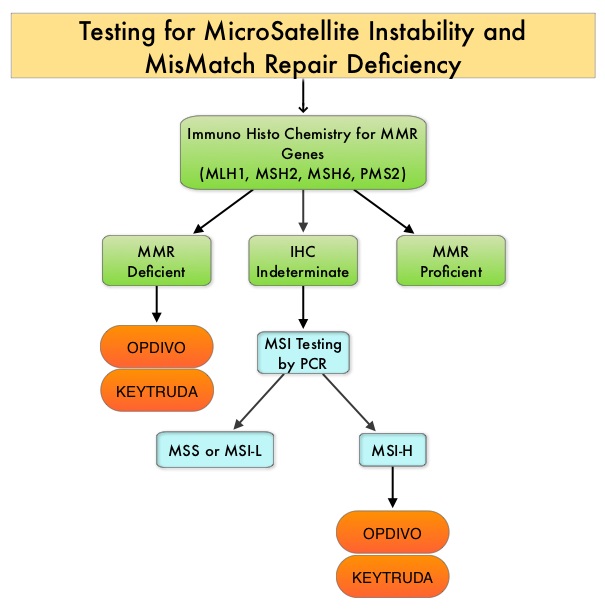
MSI (Micro Satellite Instability) testing is performed using a PCR based assay and MSI-High refers to instability at 2 or more of the 5 mononucleotide repeat markers and MSI-Low refers to instability at 1 of the 5 markers. Patients are considered Micro Satellite Stable (MSS) if no instability occurs. MSI-L and MSS are grouped together because MSI-L tumors are uncommon and behave similar to MSS tumors. Tumors considered MSI-H have deficiency of one or more of the DNA MisMatchRepair genes. MMR gene deficiency can be detected by ImmunoHistoChemistry (IHC). MLH1 gene is often lost in association with PMS2. NCCN Guidelines recommend MMR or MSI testing for all patients with a history of Colon or Rectal cancer.

This latest approval for OPDIVO® was based on results from the phase II CheckMate-142 trial, which is a multicenter, open label, single arm study, involving 53 patients with dMMR or MSI-H metastatic ColoRectal Cancer, who had disease progression during, after, or were intolerant to prior treatment with Fluoropyrimidine, Oxaliplatin, and Irinotecan-based chemotherapy. These 53 patients were a subset of the 74 patients who received at least one prior treatment regimen containing a Fluoropyrimidine with Oxaliplatin or Irinotecan for metastatic disease. All patients received OPDIVO® 3 mg/kg by intravenous infusion every 2 weeks until unacceptable toxicity or radiographic progression. The median age was 53 years. The Primary endpoint was Objective Response Rate (ORR) and exploratory endpoints included Safety, Progression Free Survival, Overall Survival and efficacy in biomarker-defined populations.

The Objective Response Rate as assessed by independent radiographic review committee, was 28% in the 53 patients who received prior Fluoropyrimidine, Oxaliplatin, and Irinotecan and responses lasted 6 months or more for the 67% of the responding patients. There was 1 complete response and 14 partial responses. The ORR was 32% among the 74 patients in the overall population. These responses and Clinical Benefit was seen regardless of PD-L1 expression, BRAF mutation status, KRAS mutation status, and clinical history of Lynch Syndrome. The most common adverse reactions related to OPDIVO® included fatigue, asthenia, rash, fever, nausea, diarrhea, musculoskeletal pain, cough and dyspnea.

The authors concluded that patients with metastatic ColoRectal Cancer who have dMMR or MSI-H tumors are less likely to respond to conventional chemotherapy and OPDIVO® demonstrated durable responses and disease control in this heavily pretreated patient group. Nivolumab in patients with DNA mismatch repair deficient/microsatellite instability high metastatic colorectal cancer: Update from CheckMate 142. Overman MJ, Lonardi S, Leone F, et al. J Clin Oncol 35, 2017 (suppl 4S; abstract 519).
OPDIVO® (Nivolumab)

The FDA on August 1, 2017 granted accelerated approval to OPDIVO®, for the treatment of patients 12 years and older with MisMatch Repair deficient (dMMR) and MicroSatellite Instability High (MSI-H) metastatic ColoRectal Cancer, that has progressed following treatment with a Fluoropyrimidine, Oxaliplatin, and Irinotecan. OPDIVO® is a product of Bristol-Myers Squibb Company.

Three Months of Adjuvant Therapy Adequate for Stage III Colon Cancer

The IDEA Collaboration is a prospective, pre-planned pooled analysis of 6 concurrently conducted randomized phase III trials, which included 12,834 patients from 12 countries. They concluded that a risk-based approach has to be taken when making adjuvant chemotherapy recommendations for patients with stage III colon cancer. Three months of adjuvant chemotherapy is adequate for patients with T1-3, N1 disease. This study data was presented at 2017 ASCO Annual Meeting.

Praxis Extended RAS Panel

The FDA on June 29, 2017 granted marketing approval to the Praxis Extended RAS Panel, a Next Generation Sequencing (NGS) test, to detect certain genetic mutations in RAS genes, in tumor samples of patients with metastatic ColoRectal Cancer (mCRC). The test is used to aid in the identification of patients who may be eligible for treatment with VECTIBIX® (Panitumumab). Praxis Extended RAS Panel is offered by Illumina, Inc.

Late Breaking Abstract – ASCO 2017 Three Months of Adjuvant Therapy Adequate for Stage III Colon Cancer Patients with T1-3, N1 Disease

SUMMARY: ColoRectal Cancer (CRC) is the third most common cancer diagnosed in both men and women in the United States. The American Cancer Society estimates that approximately 135,430 new cases of ColoRectal Cancer will be diagnosed in the United States in 2017 and over 50,260 patients are expected to die of the disease. Adjuvant chemotherapy for patients with resected, locally advanced, node-positive (stage III) colon cancer, has been the standard of care since 1990s. Adjuvant treatment with an ELOXATIN® (Oxaliplatin) based chemotherapy regimen has been considered standard intervention since 2004, for patients with stage III colon cancer following surgical resection and has been proven to decrease the chance of recurrent disease. Chemotherapy regimens have included (FOLFOX – Leucovorin, 5-FluoroUracil, ELOXATIN®) or CAPOX/XELOX (XELODA®/Capecitabine and ELOXATIN®/Oxaliplatin), given over a period of 6 months. ELOXATIN® can however be associated with neuropathy which can be long lasting or permanent, depending on the duration of therapy. Additional toxicities with longer duration of chemotherapy include diarrhea, fatigue as well as more office visits.

The IDEA Collaboration is a prospective, pre-planned pooled analysis of 6 concurrently conducted randomized phase III trials which included 12,834 patients from 12 countries. The goal of this study was to determine if 3 months of adjuvant chemotherapy would be as effective as 6 months of therapy and would be Non Inferior. Of the enrolled patients with Stage III disease, 13% had T1-2 disease, 66% had T3 disease, and 21% had T4 tumors. Twenty eight percent (28%) of the patients had N2 disease and 40% of the patients received XELOX chemotherapy. Approximately 60% had low-risk disease (T1-3, N1) and 40% had high-risk (T4 or N2). The primary endpoint was Disease Free Survival (DFS). The median follow up was 39 months.

It was noted that a shorter 3 month course of adjuvant chemotherapy was associated with a less than 1% lower risk of recurrence at 3 years compared to the standard 6 month course of therapy (74.6% versus 75.5%). In the subset of patients considered to be at low risk of cancer recurrence (1-3 positive lymph nodes and tumor not completely penetrating through the bowel wall), there was almost no difference in the DFS between a 3-month versus 6-month course of therapy (83.1% vs 83.3%). Even though Non Inferiority was not established for the overall cohort of patients, patients with stage T1-3 N1 disease showed Non Inferiority for 3 months versus 6 month course of adjuvant therapy. Further, 3 months of XELOX adjuvant therapy was Non Inferior to 6 months of ELOXATIN® based adjuvant therapy. Grade 2 or more neurotoxicity was significantly lower for patients who received 3 months of adjuvant therapy versus 6 months (P <0.0001), regardless of the treatment regimen (17% vs 48% for FOLFOX and 15% vs 45% for XELOX, respectively).

It was concluded by the IDEA collaboration that, a risk-based approach has to be taken when making adjuvant chemotherapy recommendations for patients with stage III colon cancer. Three months of adjuvant chemotherapy is adequate for patients with T1-3, N1 disease. For patients with T4 and/or N2 disease or other high risk factors, the duration of adjuvant therapy has to be determined based on patient preference, assessment of recurrent risk and tolerability. Prospective pooled analysis of six phase III trials investigating duration of adjuvant (adjuv) oxaliplatin-based therapy (3 vs 6 months) for patients (pts) with stage III colon cancer (CC): The IDEA (International Duration Evaluation of Adjuvant chemotherapy) collaboration. Shi Q, Sobrero AF, Shields AF, et al. J Clin Oncol 35, 2017 (suppl; abstr LBA1)

PET-CT in Colorectal Cancer Patients with a Rising CEA Can Detect Occult Recurrent Disease Amenable to Curative Therapy

SUMMARY: ColoRectal Cancer (CRC) is the third most common cancer diagnosed in both men and women in the United States. The American Cancer Society estimates that approximately 135,430 new cases of ColoRectal Cancer will be diagnosed in the United States in 2017 and over 50,260 patients are expected to die of the disease. Patients with ColoRectal Carcinoma are often followed up with regular CEA measurements after curative surgical resection and a rising CEA may be the first sign of CRC recurrence and warrants further investigation. Approximately 50% of the patients with early-stage disease after surgical resection will relapse with metastatic disease, during the first 3 years of follow-up. They may present with synchronous disease defined as distant metastases occurring within 6 months, and metachronous disease defined as distant metastases occuring beyond 6 months, of the primary diagnosis of CRC. These patients with oligo-metastatic disease, when detected early, may be potentially curable.

The authors in this study sought to (a) evaluate the utility of PET-CT in detecting occult disease recurrence in patients with raised CEA and (b) establish the prognostic effects of early detection of disease recurrence in patients with CRC. This retrospective analysis screened1200 patients from 2004 to 2010, with a confirmed diagnosis of CRC, who on follow up after curative therapy underwent FDG PET-CT imaging, for an elevated CEA, after normal findings on conventional investigations. Patients who had already received treatment with curative intent for synchronous or metachronous oligo-metastatic disease, including surgical resection, radiofrequency ablation (RFA), and radical chemoradiation, were also included. An elevated CEA level was defined as more than 3 ng/mL in nonsmokers and more than 5 ng/mL in smokers. A minimum of clinical and radiological follow up for 12 months or histopathological confirmation, were required, to ascertain recurrent disease. Eighty eight (N=88) patients who underwent PET-CT imaging because of any clinical indication and met the eligibility criteria, were included in the study. The mean age of patients was 66 years and 59% were male.

Recurrent disease was confirmed in 64% of the patients within the 12 months after their FDG PET-CT scan and the PET scan was able to detect the site of subtle relapse. The sensitivity of PET-CT to detect recurrence was 88% and the specificity was 88% as well. Fifty five percent (55%) of the patients with PET-CT-detected relapsed disease were deemed eligible for further curative therapy of whom 70% went on to receive potentially curative therapy. The Positive Predictive Value and Negative Predictive Value for FDG PET-CT to predict recurrence were 93% and 80% respectively.

The median Time To Progression for patients who received potentially curative therapy for the PET-CT-detected recurrence was 8.8 months versus 2.2 months for the patients not treated with curative intent. The median Overall Survival was 39.9 months for those who received potentially curative treatment versus 15.6 months for those who did not receive curative therapy. The 5-year survival rate in the curative group was 36.8% versus 6.1% in the non-curative group (P <0.001).

The authors concluded that early use of FDG PET-CT in patients with rising CEA levels is a highly sensitive and specific tool for the detection of occult ColoRectal Cancer recurrence, and in more than 50% of these patients, recurrent disease may still be amenable to curative therapy, and long-term survival can be achieved in a subgroup of this patient population. Survival Outcomes in Asymptomatic Patients With Normal Conventional Imaging but Raised Carcinoembryonic Antigen Levels in Colorectal Cancer Following Positron Emission Tomography-Computed Tomography Imaging. Khana K, Athaudaa A, Aitken K, et al. The Oncologist 2016;21:1502-1508

Location of Primary Tumor in the Colon Predicts Survival and Choice of Treatment in Metastatic Colorectal Cancer

SUMMARY: ColoRectal Cancer (CRC) is the third most common cancer diagnosed in both men and women in the United States. The American Cancer Society estimates that approximately 135,430 new cases of ColoRectal Cancer will be diagnosed in the United States in 2017 and over 50,260 patients are expected to die of the disease. Several published studies have demonstrated a nearly 20% reduced risk of death for patients diagnosed with left sided colon cancer compared with those who had right sided tumors. Venook and colleagues had previously presented their findings from a retrospective evaluation of the phase III 80405 clinical trial which included data from 1,025 metastatic ColoRectal Cancer patients with KRAS wild-type disease. The researchers assessed the impact of tumor location on Overall and Progression Free Survival in this group of patients. The median age was 59 yrs and 293 patients had a right-sided primary tumor (location in the cecum to hepatic flexure) and 732 patients had a left-sided primary tumor (location in the splenic flexure to rectum). It was noted that patients with tumors originating in the right side of the colon had much shorter median Overall Survival (19.4 months) compared to patients with left-sided tumors (33.3 months), (HR=1.60; P<0.001), with a 14 month survival improvement in the left versus right-sided primary tumors, for patients with metastatic disease. Tumor location in the colon also had a bearing on response to ERBITUX® (Cetuximab) and AVASTIN® (Bevacizumab). For the patient group who received ERBITUX®, the median Overall Survival (OS) was 36 months for patients with left-sided tumors but only 16.7 months for patients with right-sided tumors. For those who received AVASTIN®, the median OS was 31.4 months for patients with left-sided tumors and 24.2 months for those with right-sided tumors. The median Progression Free Survival was also influenced by the site of the primary tumor and was 11.5 months for left-sided tumors versus 8.9 months for right-sided tumors in the overall cohort of patients (HR = 1.26; P = 0.002). It was concluded that the biology of tumors originating in the right colon may be different from those originating in the left colon and regardless of KRAS mutational status, AVASTIN® based, first line chemotherapy regimen should be considered, for all patients with metastatic colorectal cancer, with a right-sided colon primary tumor and ERBITUX® should be avoided in this patient group.

Understanding that there is a difference in outcomes with biologic therapy, based on tumor location in the colon, the authors in this study evaluated the molecular variations of tumors arising in different parts of the left colon. Using protein expression, gene amplification and NextGen sequencing, 1,457 primary tumors (125 from splenic flexure to descending colon, 460 in the sigmoid colon and 872 in the rectum) were examined. MicroSatellite Instability (MSI) was measured by PCR and tumor mutational load was calculated using somatic nonsynonymous missense mutations.

They noted that the incidence of  to MSI significantly decreased from right colon (22%), to descending colon (7%),sigmoid colon (4%) to rectum (1%) and this was statistically significant (P=0.01). Rectal tumors had a higher frequency of TP53 and APC gene mutations and higher expression of TOPO1, ERCC1 and MGMT, compared to tumors in the descending colon. Compared to sigmoid colon tumors, rectal tumors had a higher expression of TOPO1, MGMT, TLE3 and TUBB3.

The authors concluded that tumors arising in the rectum have a distinct set of genetic alterations compared with other left colon tumors, and these distinct biologic entities may need to be addressed with individually tailored therapy. Molecular variances between rectal and left-sided colon cancers. Marshall J, Lenz H, Xiu J, et al. J Clin Oncol 35, 2017 (suppl 4S; abstract 522)

Dual Inhibition Improves Outcomes for Patients with BRAF-Mutated Colorectal Tumors

SUMMARY: ColoRectal Cancer (CRC) is the third most common cancer diagnosed in both men and women in the United States. The American Cancer Society estimates that approximately 135,430 new cases of ColoRectal Cancer will be diagnosed in the United States in 2017 and over 50,260 patients are expected to die of the disease. The DNA MisMatchRepair (MMR) system is responsible for molecular surveillance and works as an editing tool that identifies errors within the microsatellite regions of DNA and removes them. Defective MMR system leads to MSI (Micro Satellite Instability) and hypermutation, triggering an enhanced antitumor immune response. MSI (Micro Satellite Instability) is therefore a hallmark of defective/deficient DNA MisMatchRepair (MMR) system and occurs in 15% of all colorectal cancers. Defective MisMatchRepair can be a sporadic or heritable event. Approximately 65% of the MSI tumors are sporadic and MSI-High tumors tend to have better outcomes. Patients with stage IV colorectal cancer are now routinely analyzed for extended RAS and BRAF mutations. KRAS mutations are predictive of resistance to Epidermal Growth Factor Receptor (EGFR) targeted therapy. Approximately 5-10% of all metastatic CRC tumors present with BRAF V600 mutations and BRAF V600 is recognized as a marker of poor prognosis in this patient group. These patients tend to have aggressive disease with a higher rate of peritoneal metastasis and do not respond well to standard treatment intervention. Approximately 25% of the BRAF-mutated population in the metastatic setting has MSI-High tumors, but MSI-High status does not confer protection to this patient group.

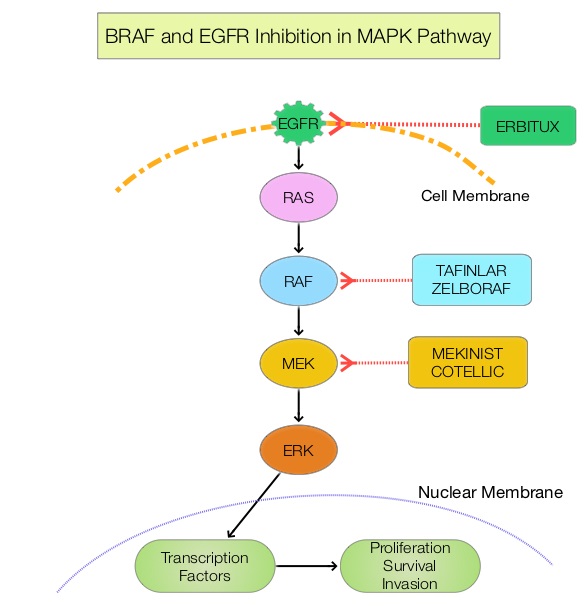
The Mitogen-Activated Protein Kinase pathway (MAPK pathway) is an important signaling pathway which enables the cell to respond to external stimuli. This pathway plays a dual role, regulating cytokine production and participating in cytokine dependent signaling cascade. The MAPK pathway of interest is the RAS-RAF-MEK-ERK pathway. The RAF family of kinases includes ARAF, BRAF and CRAF signaling molecules. BRAF is a very important intermediary of the RAS-RAF-MEK-ERK pathway. The BRAF V600 mutations results in constitutive activation of the MAP kinase pathway. Inhibiting BRAF can transiently reduce MAP kinase signaling. However, this can result in feedback upregulation of EGFR signaling pathway, which can then reactivate the MAP kinase pathway. This aberrant signaling can be blocked by dual inhibition of both BRAF and EGFR.

ZELBORAF® (Vemurafenib), is a selective oral inhibitor of mutated BRAF whereas ERBITUX® (Cetuximab) is a monoclonal antibody targeting Epidermal Growth Factor Receptor (EGFR). Preclinical studies have shown that adding CAMPTOSAR® (Irinotecan) to ZELBORAF® and ERBITUX®, in patients with refractory BRAF V600E metastatic CRC, led to a durable responses and this combination was safe and tolerable. However, both single agent ZELBORAF® and ERBITUX® were shown to have limited activity in this patient group.

Based on this scientific rationale, a phase II trial was conducted (SWOG 1406), in which 106 metastatic ColoRectal Cancer patients, with mutations in BRAF V600 and extended RAS wild-type, were enrolled. Patients were randomized to receive CAMPTOSAR® 180 mg/m2 IV every 14 days and ERBITUX® 500 mg/m2 IV every 14 days, with or without ZELBORAF® 960 mg orally twice daily. The median age was 62 years and about 50% of patients had received 1 prior regimen for metastatic or locally advanced unresectable metastatic CRC, and 39% had received prior treatment with CAMPTOSAR® . Prior therapy with anti-EGFR agent or RAF or MEK inhibitors was not allowed. Crossover from the control arm to the experimental group was allowed, after documented disease progression. The primary endpoint was Progression Free Survival.

The median Progression Free Survival was 4.4 months with the triplet, versus 2.0 months with CAMPTOSAR® plus ERBITUX® (HR=0.42; P =0.0002). The response rate was 16% versus 4%, and the Disease Control Rate was 67% versus 22% (P =0.001), with a higher Duration of Response with the addition of ZELBORAF® to CAMPTOSAR® and ERBITUX® (Triplet). Approximately 50% of the patients in the control group crossed over to the experimental group at the time of disease progression. Overall Survival data and efficacy at cross-over, data, remain immature. Patients in the experimental group (Triplet group) experienced more grade 3/4 toxicities such as neutropenia, anemia and nausea, and this increase was attributed to increased duration of exposure to therapy.

The authors concluded that the addition of ZELBORAF® to the combination of CAMPTOSAR® and ERBITUX® resulted in a 58% reduction in the risk of disease progression and a higher Disease Control Rate, suggesting that simultaneous EGFR and BRAF inhibition (Dual Inhibition) is effective in BRAF V600 mutated ColoRectal Cancer. Subgroup analysis will examine the role of CAMPTOSAR® pre-treatment and the outcomes of patients based on tumor MicroSatellite Instability. Randomized trial of irinotecan and cetuximab with or without vemurafenib in BRAF-mutant metastatic colorectal cancer (SWOG 1406). Kopetz S, McDonough SL, Morris VK, et al. J Clin Oncol 35, 2017 (suppl 4S; abstract 520)

Influence of Tumor Genetics (MSI) on Prognostic Effect of BRAF and KRAS Mutations in Patients with Colon Cancer

SUMMARY: ColoRectal Cancer (CRC) is the third most common cancer diagnosed in both men and women in the United States. The American Cancer Society estimates that approximately 135,000 new cases of ColoRectal Cancer will be diagnosed in the United States in 2016 and over 49,000 patients are expected to die of the disease. The role of adjuvant chemotherapy in patients with Stage III ColoRectalCancer (CRC) has been well established, with improvement in Disease Free Survival (DFS) and Overall Survival (OS). However, not all patients equally benefit from this therapy. Patients with MSI (Micro Satellite Instability) tumor phenotype have better survival when cancer is at an earlier stage although this beneficial effect in Stage III colon cancer remains unclear.

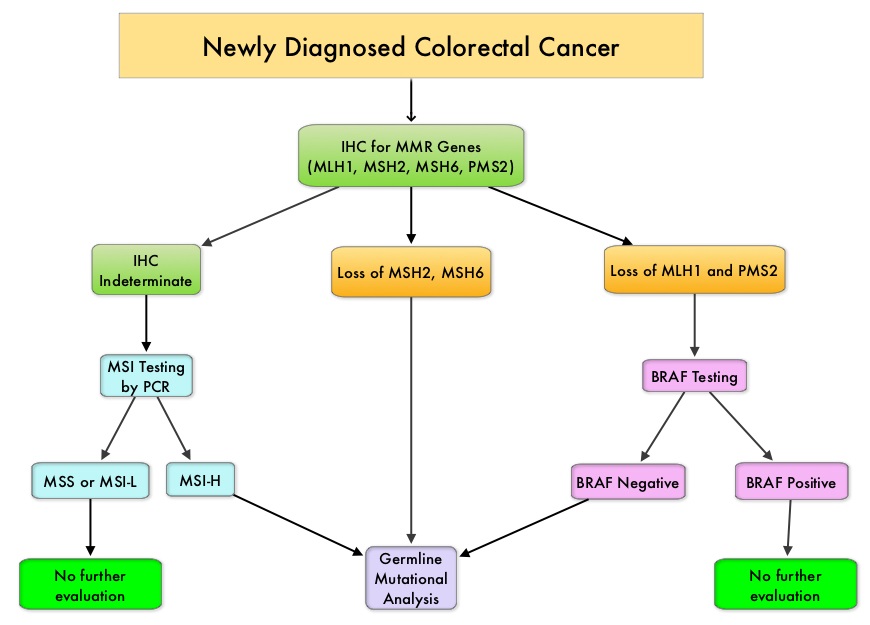
The DNA MisMatchRepair (MMR) system is responsible for molecular surveillance and works as an editing tool that identifies errors within the microsatellite regions of DNA and removes them. Defective MMR system leads to MSI (Micro Satellite Instability) and hypermutation, triggering an enhanced antitumor immune response. MSI (Micro Satellite Instability) is therefore a hallmark of defective/deficient DNA MisMatchRepair (MMR) system and occurs in 15% of all colorectal cancers. Defective MisMatchRepair can be a sporadic or heritable event. Approximately 65% of the MSI tumors are sporadic and when sporadic, the DNA MisMatchRepair gene is MLH1. Defective MisMatchRepair can also manifest as a germline mutation occurring in 1 of the 4 MisMatchRepair genes which include MLH1, MSH2, MSH6, PMS2. This produces Lynch Syndrome (Hereditary Nonpolyposis Colorectal Carcinoma – HNPCC), an autosomal dominant disorder and is the most common form of hereditary colon cancer, accounting for 35% of the MSI colorectal cancers. MSI tumors tend to have better outcomes and this has been attributed to the abundance of tumor infiltrating lymphocytes in these tumors from increase immunogenicity. These tumors are susceptible to PD-1 blockade and respond to treatment with checkpoint inhibitors such as Pembrolizumab (N Engl J Med 372:2509-2520, 2015).

MSI (Micro Satellite Instability) testing is performed using a PCR based assay and MSI-High refers to instability at 2 or more of the 5 mononucleotide repeat markers and MSI-Low refers to instability at 1 of the 5 markers. Patients are considered Micro Satellite Stable (MSS) if no instability occurs. MSI-L and MSS are grouped together because MSI-L tumors are uncommon and behave similar to MSS tumors. Tumors considered MSI-H have deficiency of one or more of the DNA MisMatchRepair genes. MMR gene deficiency can be detected by ImmunoHistoChemistry (IHC). MLH1 gene is often lost in association with PMS2.

Patients with stage IV colorectal cancer are now routinely analyzed for extended RAS and BRAF mutations because KRAS mutations are predictive of resistance to EGFR targeted therapy and BRAF V600E is recognized as a marker of poor prognosis in this patient group. BRAF mutations occur in approximately 45% of patients with sporadic colorectal cancer with MSI but not seen in patients with Lynch syndrome. The prognostic effect of these mutations in early stage disease has however remained controversial. This publication is a Post Hoc Analysis of the PETACC-8 study, a randomized phase III trial, in which patients with resected Stage III colon cancer received treatment with adjuvant FOLFOX with or without Cetuximab. The authors in this publication examined the prognostic effect of BRAF and KRAS mutations in this patient population, as it relates to MSI of the tumor.

The PETACC-8 trial enrolled 2559 patients with surgically resected colon cancer, treated with adjuvant FOLFOX chemotherapy regimen. The median age was 60 years. MisMatch Repair, BRAF V600E, and KRAS exon 2 mutational status, were determined on tumor blocks that were collected prospectively from the enrolled patients. MSI phenotype was noted in 9.9% (N=177), KRAS mutations in 33.1% (N=588) and BRAF V600E mutations in 9% (N=148) of the patients. The primary end point was Disease Free Survival (DFS) and Overall Survival (OS), as it relates to these mutations.

In multivariate analysis, MSI and BRAF V600E mutations for DFS were not prognostic, whereas KRAS mutation was associated with significantly shorter DFS (P<0.001) and OS (P=0.008). The subgroup analysis showed that in patients with Micro Satellite Stable (MSS) tumors, DFS and OS was inferior among those with KRAS and BRAF V600E mutation and were independently associated with worse clinical outcomes. In patients with MSI tumors, KRAS status was not prognostic, whereas BRAF V600E mutation was associated with significantly longer DFS (P=0.04), but not OS (P=0.08).

The authors based on this large analysis of patients with Stage III colon cancer receiving FOFOX adjuvant chemotherapy, concluded that BRAF V600E and KRAS mutations were significantly associated with shorter DFS and OS in patients with Micro Satellite Stable (MSS) tumors, but not in patients with MSI tumors. Prognostic Effect of BRAF and KRAS Mutations in Patients With Stage III Colon Cancer Treated With Leucovorin, Fluorouracil, and Oxaliplatin With or Without Cetuximab. A Post Hoc Analysis of the PETACC-8 Trial. Taieb J, Zaanan A, Le Malicot, et al. JAMA Oncol. 2016;2:643-653.

Location of Primary Tumor Predicts Survival and Choice of Treatment in Metastatic Colorectal Cancer

SUMMARY: ColoRectal Cancer (CRC) is the third most common cancer diagnosed in both men and women in the United States. The American Cancer Society estimates that approximately 135,000 new cases of ColoRectal Cancer will be diagnosed in the United States in 2016 and over 49,000 patients are expected to die of the disease. Even though prognosis for patients with Colon Cancer has improved over the past two to three decades, it has remained unclear if improvement in survival was greater for left sided Colon Cancer versus cancer originating in the Right hemicolon.

Venook and colleagues had previously presented data from the primary analysis of a phase III CALGB/SWOG 80405 study which compared AVASTIN®: (Bevacizumab) or ERBITUX® (Cetuximab), given in conjunction with FOLFOX (Leucovorin, 5-Fluorouracil, Oxaliplatin) or FOLFIRI (Leucovorin, 5-FU, Irinotecan), as first line treatment of metastatic colorectal cancer. This study showed that chemotherapy plus ERBITUX® resulted in similar Overall Survival (29.9 months) as chemotherapy plus AVASTIN® (29 months) as well as Progression Free Survival (PFS). The present publication is a retrospective evaluation from the phase III 80405 clinical trial which included data from 1,025 patients with KRAS wild-type disease. The researchers assessed the impact of tumor location on Overall and PFS in this group of patients. The median age was 59 yrs and 293 patients had a right-sided primary tumor (location in the cecum to hepatic flexure) and 732 patients had a left-sided primary tumor (location in the splenic flexure to rectum).

It was noted that patients with tumors originating in the right side of the colon had much shorter median Overall Survival (19.4 months) compared to patients with left-sided tumors (33.3 months), (HR=1.60; P<0.001), with a 14 month survival improvement in the left versus right-sided primary tumors, for patients with metastatic disease. Tumor location in the colon also had a bearing on response to ERBITUX® and AVASTIN®. For the patient group who received ERBITUX®, the median Overall Survival (OS) was 36 months for patients with left-sided tumors but 16.7 months for patients with right-sided tumors. For those who received AVASTIN®, the median OS was 31.4 months for patients with left-sided tumors and 24.2 months for those with right-sided tumors. The median PFS was also influenced by the site of the primary tumor and was 8.9 months for right-sided tumors versus 11.5 months for left-sided tumors in the overall cohort of patients (HR = 1.26; P = 0.002). In a separate analysis, the authors also evaluated data from an additional 213 patients in CALGB/SWOG 80405 study who harbored KRAS mutations. These patients were originally included in this study prior to knowledge that ERBITUX® only benefited KRAS wild-type tumors. In this group of patients, those with left-sided primary tumors again achieved a longer median OS (30.3 months) compared to 23.1 months, among patients with right-sided tumors.

It was concluded that the biology of tumors originating in the right colon may be different from those originating in the left colon with ERBITUX® showing superiority over AVASTIN® when combined with chemotherapy in KRAS wild-type patients with left-sided colon cancer, whereas patients with right-sided colon cancer appear to benefit more from AVASTIN® based chemotherapy regimen. Regardless of KRAS mutational status, AVASTIN® based, first line chemotherapy regimen should be considered, for all patients with metastatic colorectal cancer, with a right-sided primary tumor. Impact of primary (1º) tumor location on overall survival (OS) and progression-free survival (PFS) in patients (pts) with metastatic colorectal cancer (mCRC): Analysis of CALGB/SWOG 80405 (Alliance). Venook AP, Niedzwiecki D, Innocenti F, et al. J Clin Oncol 34, 2016 (suppl; abstr 3504)