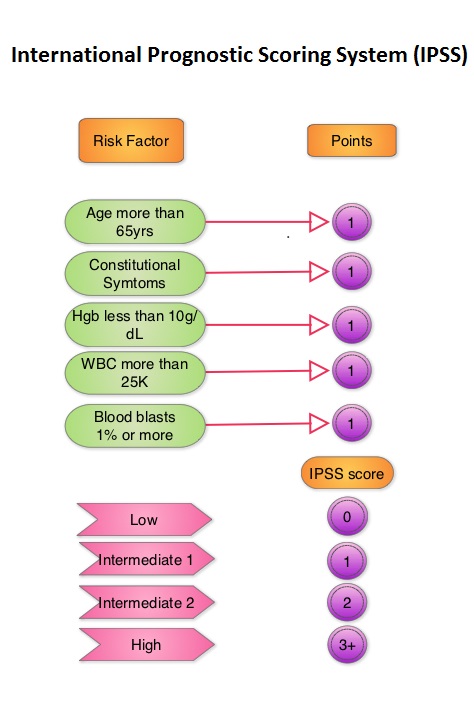
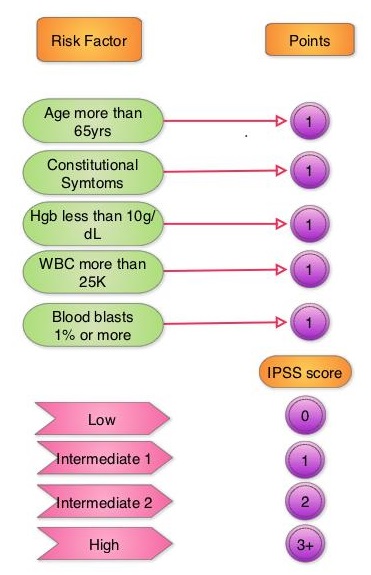
SUMMARY: Myelofibrosis (MF) is a progressive MyeloProliferative Neoplasm (MPN) characterized by bone marrow fibrosis, anemia, splenomegaly, and systemic symptoms. Cytokine driven debilitating symptoms such as fatigue, fever, night sweats, weight loss, pruritus and bone or muscle pain can further impact quality of life of an individual. Myelofibrosis can be primary (PMF) or secondary to Polycythemia Vera (PV) or Essential Thrombocythemia (ET).
The disease is frequently driven by mutations in JAK2, CALR, or MPL, with aberrant JAK-STAT signaling contributing to excessive inflammatory cytokine production, clonal proliferation, and cytopenias. Notably, thrombocytopenia (platelet count ≤100 × 10⁹/L) is a marker of high-risk disease, associated with poor prognosis and limited treatment options due to the hematologic toxicity of existing JAK inhibitors like Ruxolitinib and Fedratinib.
JAK2 mutations such as JAK2 V617F are seen in approximately 60% of the patients with PMF and ET and 95% of patients with PV. Unlike CML where the BCR-ABL fusion gene triggers the disease, JAK2 mutations are not initiators of the disease and are not specific for MPN. Further, several other genetic events may contribute to the abnormal JAK2-STAT signaling.
Pacritinib (VONJO®) is a JAK2/IRAK1/ACVR1 inhibitor with minimal JAK1 activity, allowing it to be administered at full dose in patients regardless of baseline platelet count. It is FDA-approved for the treatment of intermediate- or high-risk MF with platelet counts <50 × 10⁹/L.
PERSIST-2 Trial Design
PERSIST-2 was a randomized, controlled Phase 3 study evaluating Pacritinib in MF patients with baseline thrombocytopenia (platelets ≤100 × 10⁹/L), regardless of prior JAK inhibitor exposure. This study evaluated Pacritinib in MF patients with thrombocytopenia, a population typically underrepresented in prior JAK inhibitor trials.
Study Arms:
- Pacritinib 200 mg twice daily (BID) – now FDA-approved dose
- Pacritinib 400 mg once daily – discontinued due to unfavorable tolerability
- Best Available Therapy (BAT) – including low-dose Ruxolitinib
Patient Population (N=311):
- Median platelet count: ~54 × 10⁹/L
- 46% had received prior Ruxolitinib
- 63% were transfusion-dependent at baseline
Primary and Secondary Endpoints
- Primary endpoint: Proportion of patients achieving ≥35% Spleen Volume Reduction (SVR35) at Week 24, measured by MRI or CT.
- Key secondary endpoint: ≥50% reduction in Total Symptom Score (TSS50) based on the Myelofibrosis Symptom Assessment Form (MFSAF v2.0).
Primary Results:
Among patients receiving Pacritinib 200 mg BID (N=74) vs BAT (N=72):
- SVR35 at Week 24: 22% vs 3% (P=0.001)
- TSS50 at Week 24: 25% vs 14% (not statistically significant)
- Red blood cell transfusion independence at Week 24: 37% vs 14% (P=0.04)
- SVR was consistent across platelet subgroups, including <50 × 10⁹/L
Landmark OS Analysis (2024): Early Spleen Response Predicts Survival
A retrospective landmark analysis was conducted using a Week 12 timepoint to evaluate the association between early Spleen Volume Reduction and Overall Survival (OS) in PERSIST-2. Patients alive and on study at the 12-week assessment were included (N=173; Pacritinib N=89, BAT N=84).
- SVR thresholds analyzed: ≥35%, ≥20%, ≥10% (SVR10), and >0% (SVR0).
- Most prognostic threshold: SVR10 at Week 12 showed the strongest association with improved OS for Pacritinib (HR: 0.00; 95% CI: 0.00–0.14; P<0.01). No deaths occurred among SVR10 responders.
- No OS benefit was observed with any SVR threshold in the BAT group, including among Ruxolitinib-treated patients.
These findings suggest that even modest Spleen Volume Reduction (≥10%) at Week 12 may serve as a prognostic marker for survival benefit in thrombocytopenic MF patients receiving Pacritinib, but not with BAT, including Ruxolitinib.
Clinical Implications and Conclusion:
This analysis is the first to demonstrate a survival advantage associated with spleen response in thrombocytopenic MF patients, a subgroup often ineligible for full-dose JAK2 inhibition. Given that SVR10 at Week 12 predicts better OS only in Pacritinib-treated patients, early spleen response may serve as a meaningful clinical benchmark for assessing benefit in this high-risk population. These findings reinforce the role of Pacritinib as a frontline option for Myelofibrosis patients with low platelet counts, and highlight the need for individualized treatment based on disease biology and cytopenia profile.
Pacritinib response is associated with overall survival in myelofibrosis: PERSIST-2 landmark analysis of survival. Ajufo H, Bewersdorf JP, Harrison C, et al. Eur J Haematol. 2025;114(2):238-247. doi:10.1111/ejh.14321
 The approval of INREBIC®was based on findings from the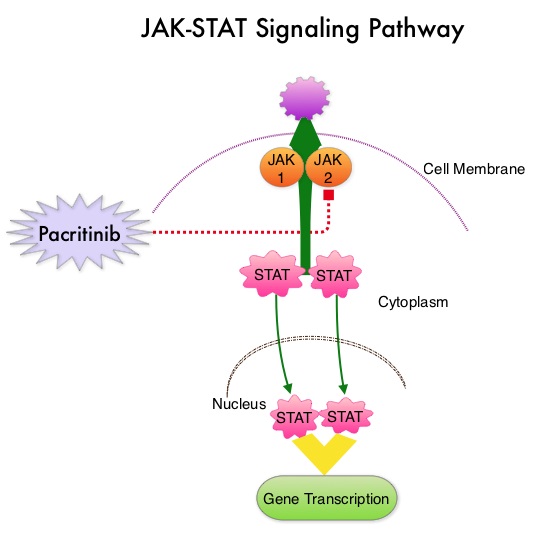
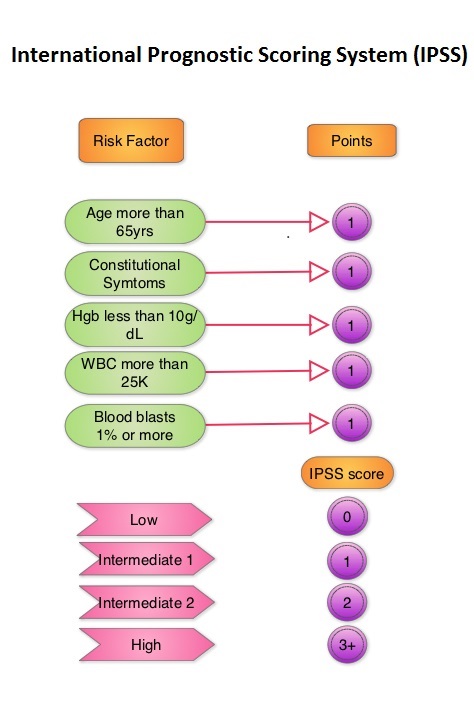 JAKAFI® (Ruxolitinib) is a potent JAK1 and JAK2 inhibitor approved by the FDA in 2011 to treat intermediate or high-risk Myelofibrosis. It is however not indicated for patients with platelet counts under 50,000/μl, and this group represents approximately one third of Myelofibrosis patients and have limited or no treatment options. Previously published PERSIST-1 trial showed that Pacritinib significantly reduced Spleen Volume and Myelofibrosis associated symptoms, in patients with low platelet count, when compared to Best Available Therapy (excluding JAKAFI®).
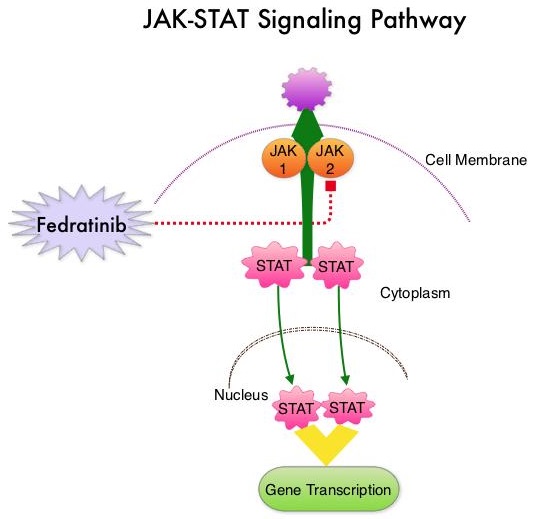
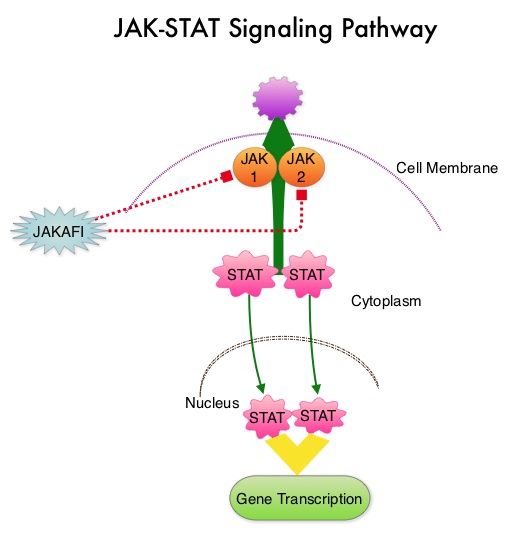 The JAK-STAT signaling pathway has been implicated in the pathogenesis of Myelofibrosis. This pathway normally is responsible for passing information from outside the cell through the cell membrane to the DNA in the nucleus for gene transcription. Janus Kinase (JAK) family of tyrosine kinases are cytoplasmic proteins and include JAK1, JAK2, JAK3 and TYK2. JAK1 helps propagate the signaling of inflammatory cytokines whereas JAK2 is essential for growth and differentiation of hematopoietic stem cells. These tyrosine kinases mediate cell signaling by recruiting STAT’s (Signal Transducer and Activator of Transcription), with resulting modulation of gene expression. In patients with MPN, the aberrant myeloproliferation is the result of dysregulated JAK2-STAT signaling as well as excess production of inflammatory cytokines associated with this abnormal signaling. These cytokines contribute to the symptoms often reported by patients with MF. JAK2 mutations such as JAK2 V617F are seen in approximately 60% of the patients with PMF and ET and 95% of patients with PV. Unlike CML where the BCR-ABL fusion gene triggers the disease, JAK2 mutations are not initiators of the disease and are not specific for MPN. Further, several other genetic events may contribute to the abnormal JAK2-STAT signaling.
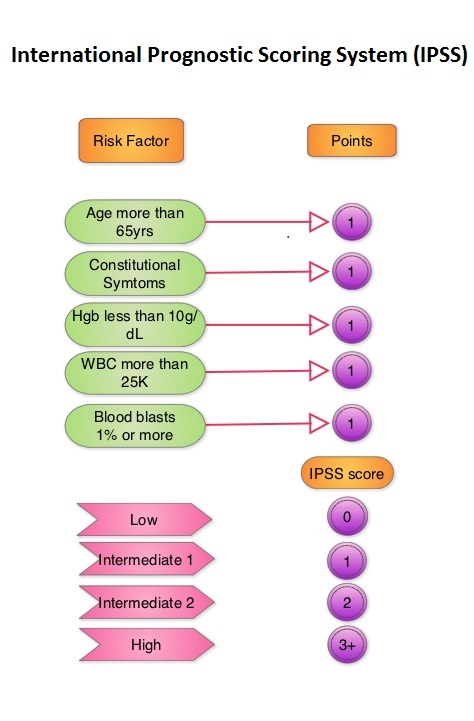 The authors now reported the final long term efficacy and safety results after 5 years of treatment with JAKAFI® in the COMFORT-I study. In COMFORT-I study, 309 intermediate or high risk patients were randomized to receive either JAKAFI® (N=155) or Placebo (N=154). The Primary end point was a 35% or more reduction in spleen size at 24 weeks. The preplanned 5- year analysis occurred when all patients reached the 5-year visit or discontinued treatment. Patients in the placebo group could crossover to the JAKAFI® group after the primary analysis (when all patients completed week 24) or at any time if they had pre-specified worsening of splenomegaly. Of the 154 patients randomized to placebo, 111 patients crossed over to the JAKAFI® group and the median time to crossover was 41 weeks.
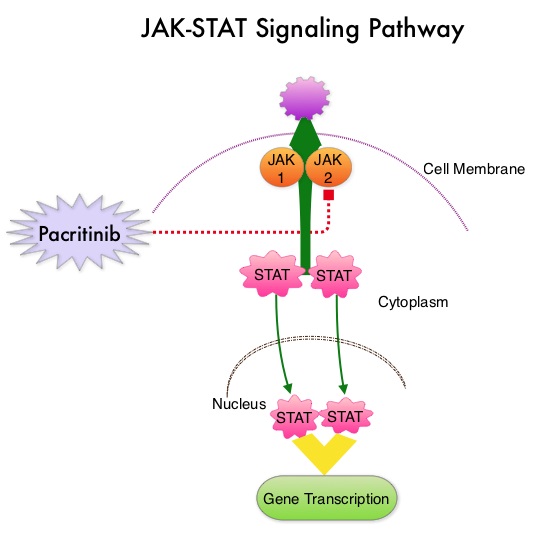 The JAK-STAT signaling pathway has been implicated in the pathogenesis of Myelofibrosis. This pathway normally is responsible for passing information from outside the cell through the cell membrane to the DNA in the nucleus, for gene transcription. Janus Kinase (JAK) family of tyrosine kinases are cytoplasmic proteins and include JAK1, JAK2, JAK3 and TYK2. JAK1 helps propagate the signaling of inflammatory cytokines whereas JAK2 is essential for growth and differentiation of hematopoietic stem cells. These tyrosine kinases mediate cell signaling by recruiting STAT’s (Signal Transducer and Activator of Transcription), with resulting modulation of gene expression. In patients with MPN, the aberrant myeloproliferation is the result of dysregulated JAK2-STAT signaling as well as excess production of inflammatory cytokines associated with this abnormal signaling. These cytokines contribute to the symptoms often reported by patients with MF. JAK2 mutations such as JAK2 V617F are seen in approximately 60% of the patients with PMF and ET and 95% of patients with PV. Unlike CML where the BCR-ABL fusion gene triggers the disease, JAK2 mutations are not initiators of the disease and are not specific for MPN. Further, several other genetic events may contribute to the abnormal JAK2-STAT signaling.
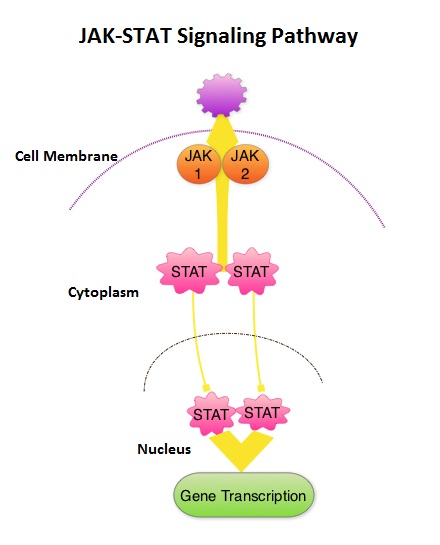 This pathway normally is responsible for passing information from outside the cell through the cell membrane to the DNA in the nucleus for gene transcription. Janus Kinase (JAK) family of tyrosine kinases are cytoplasmic proteins and include JAK1, JAK2, JAK3 and TYK2. JAK1 helps propagate the signaling of inflammatory cytokines whereas JAK2 is essential for growth and differentiation of hematopoietic stem cells. These tyrosine kinases mediate cell signaling by recruiting STAT’s (Signal Transducer and Activator of Transcription), with resulting modulation of gene expression. In patients with MPN, the aberrant myeloproliferation is the result of dysregulated JAK2-STAT signaling as well as excess production of inflammatory cytokines associated with this abnormal signaling. These cytokines contribute to the symptoms often reported by patients with MF. JAK2 mutations such as JAK2 V617F are seen in approximately 60% of the patients with PMF and ET and 95% of patients with PV. Unlike CML where the BCR-ABL fusion gene triggers the disease, JAK2 mutations are not initiators of the disease and are not specific for MPN. Further, several other genetic events may contribute to the abnormal JAK2-STAT signaling. JAKAFI® is a potent JAK1 and JAK2 inhibitor and exerts its mechanism of action by targeting and inhibiting the dysregulated JAK2-STAT signaling pathway. The FDA approval of JAKAFI® for the treatment of Intermediate and high risk Myelofibrosis was based on 2 phase III trials – COMFORT (Controlled Myelofibrosis Study with Oral JAK1/JAK2 Inhibitor Treatment) – I and COMFORT-II studies. In COMFORT-I study, 309 intermediate or high risk patients were randomized to receive either JAKAFI® (N=155) or Placebo (N=154). The primary end point of a 35% or more reduction in spleen size at 24 weeks was noted in 42% of those who received JAKAFI® vs 0.7% in the placebo group (P<0.0001). Most patients in the JAKAFI® group had some reduction in the spleen volume whereas majority of those in the placebo arm had increase in splenomegaly. There was a 46% reduction in the TSS (Total Symptom Score) at week 24 in the JAKAFI® group compared to 5% in the placebo group and majority of patients in the later group had worsening of symptoms (P<0.0001). When JAKAFI® was compared to Best Available Therapy (BAT) in the COMFORT-II study, 28% of the patients in the JAKAFI® group met the primary endpoint of a 35% or more reduction in the spleen volume at 48 weeks compared to none in the BAT group (P<0.0001). Over 55% had a mean decrease in spleen size in the JAKAFI® compared to a 4% mean increase in the BAT group. The 2 year follow up analyses from both these trials showed improved overall survival and a reduction in the risk of death for patients randomized to JAKAFI®, compared to those in the control groups. There was weight gain with alleviation of cachexia and improvements in splenomegaly and symptoms were durable. This benefit was seen in patients regardless of JAK mutations. It remains to be seen if JAKAFI® will benefit patients with Polycythemia Vera and Essential Thrombocythemia. Kantarjian HM, Silver RT, Komrokji RS, et al. Clinical Lymphoma Myeloma and Leukemia 2013; 13:638-645