MRI Targeted Biopsy Superior to Standard TRUS Guided Biopsy for Prostate Cancer Diagnosis

SUMMARY: Prostate cancer is the most common cancer in American men with the exclusion of skin cancer, and 1 in 9 men will be diagnosed with prostate cancer during their lifetime. It is estimated that in the United States, about 164,690 new cases of prostate cancer will be diagnosed in 2018 and 29,430 men will die of the disease. TransRectal UltraSound (TRUS) guided biopsy has been the standard of care for diagnosing prostate cancer in men with a clinical suspicion of prostate cancer, based on an abnormal Digital Rectal Examination and/or an elevated Prostate Specific Antigen (PSA) level. TransRectal UltraSound (TRUS) guided biopsy is a blind biopsy of the lateral and posterior peripheral zone of the prostate using a template, and 10 to 12 cores of prostate tissue is obtained. Even though this may result in a higher rate of prostate cancer detection, many detected are low grade tumors that do not benefit from treatment, and these patients are on active surveillance for their low risk disease. The major limitation of this biopsy procedure is the risk of under-sampling a more significant tumor that is located in a region of the prostate not usually targeted with a template. Further, in patients with a rising PSA with a prior negative biopsy, patients are often subjected to a repeat blind biopsy with the same limitations as the original biopsy. Since biopsy access is through the rectum and only specific zones of the prostate are sampled, large areas of the prostate, especially the anterior and central prostate, are not routinely sampled and clinically significant higher-grade cancers are sometimes missed.

Multiparametric MRI (mp-MRI) combines anatomic imaging in the form of T2-weighted imaging, with functional imaging and is being used to detect or rule out cancer in men who have persistent concern for prostate cancer. Previously published studies have shown that MRI-targeted biopsies alone have shown similar or higher rates of detection of clinically significant cancer in the prostate gland and lower rates of detection of clinically insignificant cancer, when compared to standard TRUS guided biopsy. This interesting advantage allows the use of mp-MRI as a triage test to avoid a biopsy if the results were negative, and if positive could be used for targeting abnormal areas in the prostate during biopsy.

The PRECISION (Prostate Evaluation for Clinically Important Disease: Sampling Using Image Guidance or Not?) trial is a multicenter, randomized, noninferiority study, which prospectively evaluated whether mp-MRI with targeted biopsy in the presence of an abnormal lesion, was noninferior to standard TRUS guided biopsy, in the detection of clinically significant prostate cancer in men, with a clinical suspicion of prostate cancer, who had not undergone biopsy previously. A total of 500 men were randomly assigned in a 1:1 of whom 252 participants were assigned to the MRI-targeted biopsy group (N=252) and 248 to the standard 10-12 core TRUS guided biopsy group (N=248). The baseline characteristics of the participants were similar in the two groups. Eligible participants were required to have a PSA level of 20ng/ml or less, no evidence of extracapsular disease on Digital Rectal Examination and be suitable candidates for an MRI and biopsy of the prostate. Clinically significant prostate cancer was defined as the presence of disease of Gleason sum 7 or higher. Men who had a positive mp-MRI test underwent MRI-targeted biopsy of only these qualifying lesions (up to three areas). The Primary outcome was the proportion of men who received a diagnosis of clinically significant cancer. Secondary outcomes included the proportion of men who received a diagnosis of clinically insignificant cancer.

It was noted that multiparametric MRI was superior to standard TRUS guided biopsy, with a significantly higher percentage of men receiving a diagnosis of clinically significant prostate cancer in the MRI-targeted biopsy group, as compared with the standard TRUS guided biopsy group (38% versus 26%, P=0.005). Further, fewer men in the MRI-targeted biopsy group than in the standard biopsy group received a diagnosis of clinically insignificant cancer (9% versus. 22%, P<0.001). In the MRI-targeted biopsy group, 28% of the men had mp-MRI results that were not suggestive of prostate cancer, and therefore did not undergo biopsy.

It was concluded that in men with a clinical suspicion of prostate cancer and had not undergone biopsy previously, the use of risk assessment with MRI before biopsy and MRI-targeted biopsy, was superior to standard TRUS guided biopsy. MRI-targeted biopsy is able to identify a high proportion of men who would benefit from treatment, and minimizes the identification of men with clinically insignificant cancer, thereby preventing overtreatment. Utilizing mp-MRI, more than 25% of the participants in this study were able to avoid a biopsy. MRI-Targeted or Standard Biopsy for Prostate-Cancer Diagnosis. Kasivisvanathan V, Rannikko AS, Borghi M, et al. N Engl J Med 2018; 378:1767-1777
Elevated Postoperative CEA is an Early Indicator of Colon Cancer Recurrence

SUMMARY: ColoRectal Cancer (CRC) is the third most common cancer diagnosed in both men and women in the United States. The American Cancer Society estimates that approximately 140,250 new cases of ColoRectal Cancer will be diagnosed in the United States in 2018 and over 50,630 patients are expected to die of the disease. CarcinoEmbryonic Antigen (CEA) is a group of highly related glycoproteins involved in cell adhesion and was first described in 1965. CEA is normally produced in gastrointestinal tissue during fetal development and is usually present at very low levels in the serum of healthy adults. Elevated serum levels of CEA are seen in certain malignancies and also in heavy smokers. Measurement of CEA is recommended for patients with colorectal cancer as a surveillance tool for early detection of potentially curable recurrent disease, following primary resection. Further, elevated preoperative CEA in patients with nonmetastatic colorectal cancer is associated with worse outcomes, in patients with early-stage disease (Stages I-III), independent of tumor stage. Lack of CEA normalization after resection of the primary tumor, is indicative of residual occult disease. Clinically, patients with an elevated preoperative CEA and an otherwise normal contrast-enhanced CT of the chest, abdomen, and pelvis proceed to surgery with the assumption that the primary lesion is the source of the elevated CEA.

This study was conducted to determine whether pre or postoperative CEA is more prognostic and more specifically whether patients with elevated preoperative CEA that normalizes after resection of the primary tumor had a risk of recurrence similar to that of patients with normal preoperative CEA. In this retrospective cohort study conducted at a comprehensive cancer center, 1027 consecutive patients with Stage I-III colon cancer who underwent curative resection and who had a preoperative CEA result available, were identified. Patients were then grouped into 3 cohorts – normal preoperative CEA, elevated preoperative but normalized postoperative CEA, and elevated preoperative and postoperative CEA. The Primary end point was Recurrence Free Survival (RFS) at 3 years.

The 3-year RFS rate for the patients with elevated preoperative CEA (N=312) was 82.3% compared with 89.7% for the patients (N=715) with normal preoperative CEA (HR=1.68; P=0.05). This represented a 7.4% higher 3-year RFS among patients with normal preoperative CEA compared with those with elevated preoperative levels. The negative prognostic impact of elevated preoperative CEA was negated in those patients whose CEA normalized in the postoperative period. Patients with elevated postoperative CEA (N=57) had a 3-year RFS of 74.5% compared with 89.4% for the patients with either normal preoperative CEA (N=715) or normalized postoperative CEA (N=142), (HR=2.53; P=0.001). This represented a 14.9% higher 3-year RFS for patients with normal postoperative CEA, regardless of preoperative level, compared to those with elevated postoperative CEA. Multivariate analyses confirmed that elevated postoperative CEA but not normalized postoperative CEA was independently associated with shorter RFS.

It was concluded that elevated preoperative CEA that normalizes after resection is not an indicator of poor prognosis. Patients with elevated postoperative CEA are at increased risk for recurrence especially within the first 12 months after surgery. Routine measurement of postoperative, rather than preoperative CEA is strongly recommended and CEA can be a valuable biomarker and is an early indicator of tumor recurrence. Association of Preoperative and Postoperative Serum Carcinoembryonic Antigen and Colon Cancer Outcome. Konishi T, Shimada Y, Hsu M, et al. JAMA Oncol. 2018;4:309-315

Lung Immune Prognostic Index (LIPI) Identifies Advanced Non Small Cell Lung Cancer Patients Unlikely to Benefit from Treatment with Immune Checkpoint Inhibitors

SUMMARY: Lung cancer is the second most common cancer in both men and women and accounts for about 14% of all new cancers and 27% of all cancer deaths. The American Cancer Society estimates that for 2018 about 234,030 new cases of lung cancer will be diagnosed and over 154,050 patients will die of the disease. Lung cancer is the leading cause of cancer-related mortality in the United States. Non Small Cell Lung Cancer (NSCLC) accounts for approximately 85% of all lung cancers. Of the three main subtypes of Non Small Cell Lung Cancer (NSCLC), 30% are Squamous Cell Carcinomas (SCC), 40% are Adenocarcinomas and 10% are Large cell carcinomas.Unleashing-T-Cell-Funtion-with-Combination-Immunotherapy

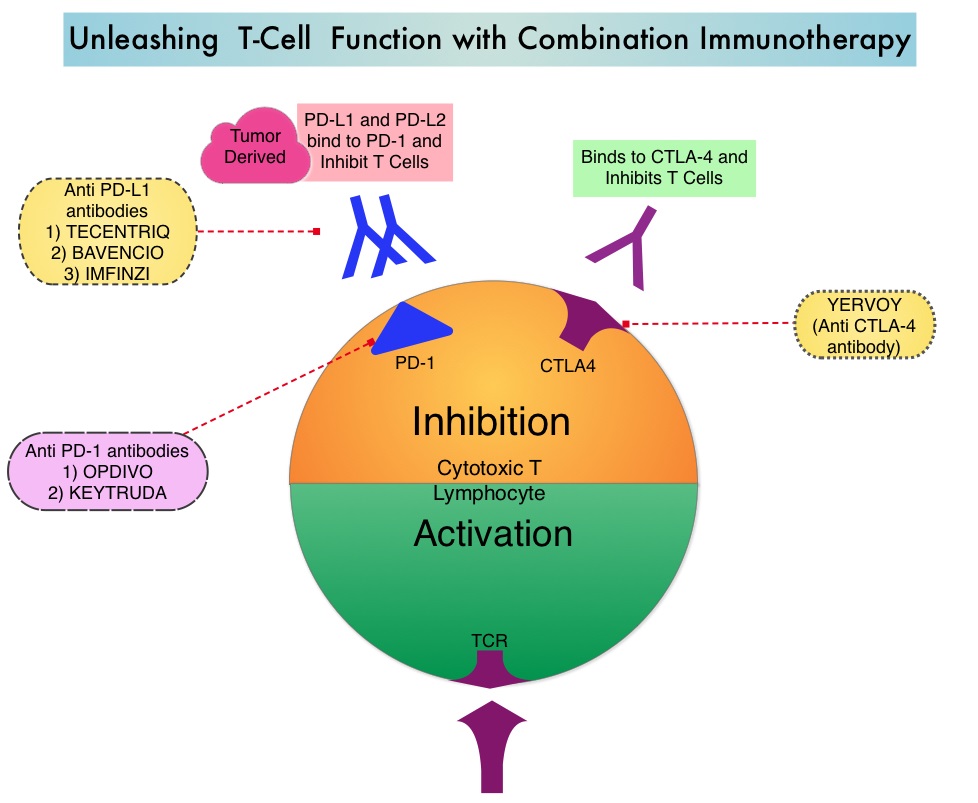
Immunotherapy with PD-1/PD-L1 (Programmed Death-1/Programmed Death-Ligand 1) inhibitors, also called Immune Checkpoint Inhibitors (ICIs), has changed the treatment paradigm for patients with advanced NSCLC. In previously treated patients with NSCLC, the Overall Response Rates (ORR) with single agent Immune Checkpoint Inhibitors (ICIs) range from 14-20%, with median Overall Survival (OS) of 10 to 12 months. In those with PD-L1 expression of 50% or more by ImmunoHistoChemical (IHC) analysis, the ORR can reach up to 30% with a median OS of 20 months. However, in patients with negative or weak PD-L1 expression (1%-49% positive tumor cells), who account for approximately two thirds of the NSCLC population, the response rates range from 8-19% with a median OS slightly below 10 months. Even among those with tumors expressing PD-L1 expression of 50% or more, not all patients benefit from Immunotherapy with ICIs. Therefore identifying biomarkers for patients likely to respond to ICI therapy, and predicting resistance is important and relevant in selecting the appropriate patients for treatment with ICIs.

There is growing evidence on the role of inflammation in cancer biology and systemic inflammatory response may have prognostic significance in different cancer types. Inflammatory process in various cancers imparts immunoresistance to ICIs, by activating oncogenic signaling pathways, there by promoting cancer growth and dissemination, with resulting poor outcomes. Derived Neutrophil-to-Lymphocyte ratio (dNLR) and serum Lactate DeHydrogenase (LDH) level have been investigated as potential inflammatory biomarkers in patients with cancer. The dNLR is calculated using a formula dNLR= Absolute Neutrophil Count/(White Blood Count – Absolute Neutrophil Count). These ratios are simple and easy to calculate from routine blood tests. Both these biomarkers have been correlated with Immune Checkpoint Inhibitor outcomes, in patients with melanoma. In two large studies involving patients with advanced melanoma treated with Ipilimumab and Pembrolizumab, dNLR of 3 or more and LDH of at least 2.5 times Upper Limit of Normal (ULN), reflected a pro-inflammatory status and resulted in poor outcomes.

Based on this important finding in malignant melanoma, the authors conducted a multicenter, retrospective study to determine whether combining the two factors – pretreatment dNLR and LDH (Lung Immune Prognostic Index-LIPI), was associated with resistance to ICIs in patients with advanced NSCLC. In this study, LIPI was developed on the basis of dNLR (derived Neutrophil-to-Lymphocyte Ratio) of greater than 3 and LDH greater than Upper Limit of Normal (ULN). LIPI was used to stratify patients with NSCLC into 3 groups (Good= 0 factors; Intermediate= 1 of 2 factors, Poor= 2 factors). The pooled cohort treated with ICIs included 466 patients with advanced NSCLC of whom 161 patients were treated at a single institution, to test the potential of the biomarkers score (test cohort) and the hypothesis was then validated in a larger multicentric validation cohort of 305 patients treated at 8 European academic centers. To determine whether the LIPI is specific to Immune Checkpoint Inhibitors (ICIs), a control cohort of 162 patients with advanced NSCLC, treated exclusively with chemotherapy, were also evaluated for LIPI. The median patient age was 62 years, 58% had Adenocarcinoma and 34% had Squamous histology, 74% had PD-L1 expression of at least 1% by IHC analysis and 26% had negative results. Median follow up was 12 months. The Primary end point was Overall Survival (OS) and Secondary end points included Progression Free Survival (PFS) and Disease Control Rate (DCR).

It was noted that in the test cohort, median PFS and OS were 3 and 10 months, respectively which is consistent with prior reports in patients with NSCLC, treated with PD-1 inhibitors in second or later lines. A dNLR greater than 3 and LDH greater than ULN were independently associated with OS. The median OS for Poor, Intermediate, and Good LIPI was 3 months, 10 months and 34 months respectively, and median PFS was 2 months, 3.7 months and 6.3 months respectively (P<0.001). This suggested that the population with a Poor (high) LIPI were more likely to have progressive disease as their best response to immunotherapy and had both shorter PFS and OS, compared to those with an Intermediate or Good (low) LIPI. Disease Control Rate (Complete plus Partial Response plus Stable disease) was also correlated with dNLR greater than 3 and LDH greater than ULN. These results were reproducible in the ICI validation cohort for OS, PFS, and DCR. LIPI however was not associated with outcome in patients treated with chemotherapy only, providing support that it might be a predictor of benefit from Immune Checkpoint Inhibitors (ICIs).

It was concluded that pretreatment LIPI, combining derived Neutrophil-to-Lymphocyte ratio (dNLR) greater than 3 and serum LDH level greater than Upper Limit of Normal, correlated with worse outcomes for Immune Checkpoint Inhibitors (ICIs). The authors suggested that this is the first study to explore LIPI in NSCLC and can serve as a potentially useful tool when selecting patients for treatment with Immune Checkpoint Inhibitors, and LIPI might be useful for identifying patients unlikely to benefit from treatment with an ICI. Association of the Lung Immune Prognostic Index With Immune Checkpoint Inhibitor Outcomes in Patients With Advanced Non–Small Cell Lung Cancer. Mezquita L, Auclin E, Ferrara R, et al. JAMA Oncol. 2018;4:351-357

Infection is an Independent Risk Factor for Venous Thromboembolism

SUMMARY: The Center for Disease Control and Prevention (CDC) estimates that approximately 1-2 per 1000 individuals develop Deep Vein Thrombosis/Pulmonary Embolism (PE) each year in the United States, resulting in 60,000-100,000 deaths. Venous ThromboEmbolism (VTE) is the third leading cause of cardiovascular mortality, after myocardial infarction and stroke. Currently, VTE prophylaxis is recommended only for hospitalized patients and this intervention prevents only about 50% of the VTE burden in the general community. Therefore, identifying non-hospitalized individuals at risk for VTE is important to further reduce the incidence of VTE and improve survival.

Infections, which are common, have been associated with VTE. These episodes however have been labeled idiopathic, as these patients are not pregnant or postpartum, have not been on hormone therapy or hormonal contraception, do not have active malignancy and have not had recent nursing home confinement, trauma, fracture, immobilization or leg paresis. Infection promotes thrombosis from endothelial damage and tissue factor-induced activation of the procoagulant pathway, as well as downregulation of the endogenous anticoagulant pathway, and inhibition of fibrinolysis. Venous thrombosis has also been linked to neutrophil activation and promotion of platelet aggregation through the P-selectin mediated pathway.

In order to address the independent association of recent infection with VTE, the authors performed a population-based, case-control study within their local community, nested within the population of Olmsted County, Minnesota, to estimate the magnitude of risk of VTE due to active infection, taking advantage of Rochester Epidemiology Project (REP) resources, to identify all Olmsted County residents with incident VTE and matched controls drawn from the same population. The authors identified 1303 cases of objectively diagnosed incident Deep Vein Thrombosis or Pulmonary Embolism over the 13-year period from 1988 to 2000 along with 1494 matched controls without VTE. They then looked for an association of infection and site of infection with VTE, after adjusting for all other known VTE risk factors.

It was noted that infection and site of infection were risk factors for VTE, compared with no infection. Any infection increased the odds of VTE by 4.5 fold (P<0.0001) compared with no infection, when unadjusted for other VTE risk factors. The odds of VTE due to any infection was 2.4 fold higher compared with no infection, after adjusting for all established VTE risk factors (P<0.0001). An Odds Ratio (OR) is a measure of association between an exposure and an outcome. The OR represents the odds that an outcome will occur given a particular exposure, compared to the odds of the outcome occurring in the absence of that exposure. Intra-abdominal infection imparted the highest magnitude of risk (OR, 18), followed by oral infection (OR, 12), systemic bloodstream infection (OR, 11), lower respiratory infection such as pneumonia (OR, 3.6), and symptomatic urinary tract infection (OR, 2.2). Oral infection was a significant independent risk factor for VTE compared with no infection, after adjusting for other risk factors and for other infections (OR, 11.6). Oral candidiasis comprised 75% of oral infections among VTE patients. It is conceivable that oral candidiasis is a potential marker for patient debility that may be a VTE risk factor, not captured by the other covariates.

It was concluded that infection is an independent risk factor for VTE and VTE risk can be further stratified by site of infection. Is Infection an Independent Risk Factor for Venous Thromboembolism? A Population-Based, Case-Control Study. Cohoon KP, Ashrani AA, Crusan DJ, et al. The American Journal of Medicine 2018;131:307-316

FDA Approves TAFINLAR® and MEKINIST® Combination for Locally Advanced or Metastatic BRAF V600E-Mutant Anaplastic Thyroid Cancer

SUMMARY: The FDA on May 4, 2018, approved TAFINLAR® (Dabrafenib) and MEKINIST® (Trametinib) in combination, for the treatment of patients with locally advanced or metastatic Anaplastic Thyroid Cancer (ATC) with BRAF V600E mutation, and with no satisfactory locoregional treatment options. ATC is a rare, highly aggressive, undifferentiated malignancy and accounts for 1-2% of all thyroid cancers in the United States and up to 10% of thyroid cancers worldwide. They are all considered Stage IV at diagnosis and are among the most lethal cancers. Despite multimodality therapy with surgery, external beam radiation, and systemic chemotherapy, response rates to standard therapies are less than 15% with a median survival of 5-12 months and a one year Overall Survival of 20-40%.BRAF-and-MEK-Inhibition-in-MAPK-Pathway

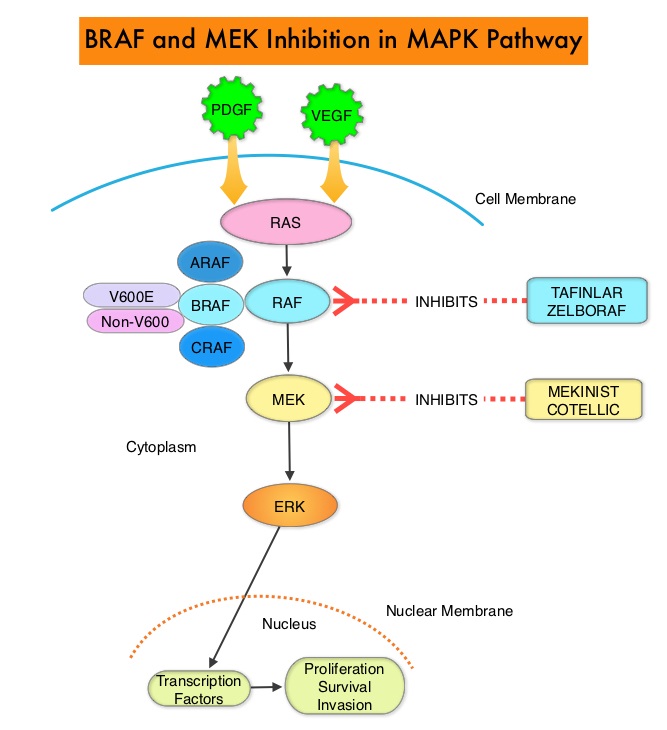
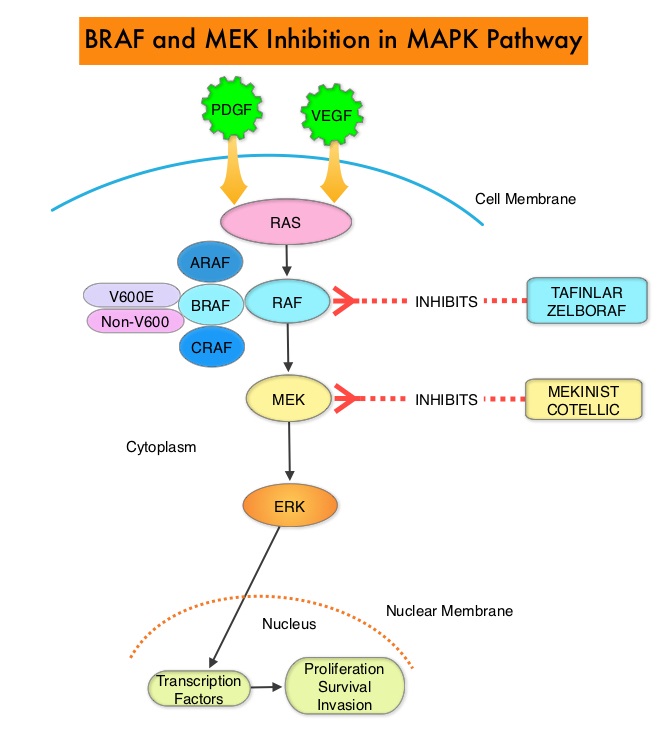
The Mitogen-Activated Protein Kinase pathway (MAPK pathway) is an important signaling pathway which enables the cell to respond to external stimuli. This pathway plays a dual role, regulating cytokine production and participating in cytokine dependent signaling cascade. The MAPK pathway of interest is the RAS-RAF-MEK-ERK pathway. The RAF family of kinases includes ARAF, BRAF and CRAF signaling molecules. BRAF is a very important intermediary of the RAS-RAF-MEK-ERK pathway. BRAF mutations have been demonstrated in 6-8% of all malignancies. Approximately 20-50% of ATCs harbor activating BRAF V600 mutations and in about 50% of ATCs, well-differentiated papillary thyroid cancer precedes or coexists with ATC. It has been postulated that BRAFV600 mutations may be a common and early driver in these well-differentiated thyroid tumors and additional mutations in the course of the disease lead to progressive de-differentiation to ATC. Inhibiting both BRAF and MEK kinases has been shown to enhance antitumor activity and prevent MAPK pathway reactivation, a known resistance mechanism. Combined BRAF plus MEK inhibition has been shown to increase Overall Response Rate (ORR), Duration of Response, Progression Free Survival (PFS), and Overall Survival (OS), compared with BRAF inhibitor monotherapy, in patients with BRAFV600–mutant Melanoma and Non Small Cell Lung Cancer.

This present FDA approval for Anaplastic Thyroid Cancer (ATC) was based on a multicenter, open-label, nonrandomized, phase II trial, which was designed to simultaneously evaluate efficacy and safety of a combination of TAFINLAR® and MEKINIST® in patients with BRAF V600E mutated cancer, in prespecified histologies. A total of 100 patients with BRAF V600E mutated rare cancers in seven prespecified tumor histologies were enrolled. Sixteen (N=16) patients with ATC enrolled in this study were evaluable for response. Patients received TAFINLAR® 150 mg twice daily and MEKINIST® 2 mg once daily, both given orally, until disease progression or unacceptable toxicity. The median patient age was 72 years, 88% had prior surgery, 81% had external beam radiotherapy and 38% had prior chemotherapy. The Primary end point was Overall Response Rate. Secondary end points included Duration of Response, Progression Free Survival, Overall Survival, and safety.

The confirmed Overall Response Rate was 69% and median Duration of Response, Progression Free Survival, and Overall Survival were not reached as a result of ongoing responses at the time of data cut off. Kaplan-Meier estimates at 12 months of Duration of Response, Progression Free Survival, and Overall Survival were 90%, 79%, and 80%, respectively. Responses typically occurred early in the treatment course (within the first 8 weeks of therapy). The most common adverse events were fatigue, pyrexia and nausea and the overall safety profile was similar to previous reports in advanced Metastatic Melanoma and Non Small Cell Lung Cancer.

It was concluded that the combination of TAFINLAR® plus MEKINIST® was well tolerated and is the first regimen to have demonstrated robust clinical activity in BRAF V600E mutated Anaplastic Thyroid Cancer. This is the first FDA approved treatment for patients with this aggressive form of thyroid cancer, and the third malignancy with BRAF V600E gene mutation (others being Melanoma and NSCLC), that this drug combination has been approved to treat. Dabrafenib and Trametinib Treatment in Patients with Locally Advanced or Metastatic BRAF V600–Mutant Anaplastic Thyroid Cancer. Subbiah V, Kreitman RJ, Wainberg AZ, et al. J Clin Oncol. 2018;36:7-13

Increased Risk of Anaplastic Large-Cell Lymphoma with Breast Implants

SUMMARY: Breast implants are among the most commonly used medical devices and the number of women with breast implants diagnosed with Anaplastic Large Cell Lymphoma in the breast (breast-ALCL) have increased over the past 10 years. The FDA in 2011, identified a possible association between breast implants and the development of Anaplastic Large Cell Lymphoma (ALCL), and there has been growing body of medical literature describing the natural history and long term outcomes of the disease. In 2016, the World Health Organization designated Breast Implant-Associated Anaplastic Large Cell Lymphoma (BIA-ALCL) as a T-Cell Lymphoma that can develop following breast implants.

The incidence of ALCL is higher with macrotextured implants than smooth implants. It has been postulated that textured implants have an increased surface area and a local inflammatory response, elicited by silicone-derived products or specific bacterial species adherent to the prosthesis surface (Biofilm) may play a role, potentiating capsular contracture and increasing T-cell response and possible conversion to BIA-ALCL. It remains unclear however, whether certain women including those with proven BRCA mutations have a genetically determined increased risk to develop lymphoma when exposed to breast implants via a genetically determined altered or exaggerated local immunological response. There are presently no evidence-based guidelines on how this condition should be detected, treated or followed up. It is however, suggested that any seroma more than 6-12 months after breast implantation, in the absence of infection, should be evaluated with ultrasonography and mammography, to identify a mass or lymph nodes that are suspicious for lymphoma. The seroma should be aspirated and the fluid analyzed for cytology, cultures, flow cytometry and cell block. If cytology is negative, patients should be closely monitored for recurrence of seroma. Biopsy should be performed if a mass is present, and if ALCL is confirmed, patients will respond to capsulectomy and removal of the implant, as ALCL confined within the capsule often have an indolent course and good prognosis. In contrast, patients who present with a distinct mass may have a more aggressive disease course and poor prognosis, and require chemotherapy and/or radiation therapy. Postoperatively evaluation if BIA-ALCL is confirmed, should include a PET-CT scan and bone marrow biopsy to rule out systemic disease. It is recommended that patients receive clinical follow up at least every 6 months for 5 years along with breast ultrasonography for 2 years, and those who undergo reinsertion of the implant should be followed up beyond 5 years.

In this publication, a case-control study was conducted, comparing the prevalence of breast implants between women with primary breast-ALCL and women with primary breast lymphomas other than ALCL, using a comprehensive Dutch pathology database. The purpose of this study was to determine the relative and absolute risks of breast ALCL in women with breast implants. The authors identified all patients diagnosed with primary Non Hodgkin Lymphoma in the breast between 1990 and 2016 and retrieved clinical data, including breast implant status, from the treating physicians, through the population-based nationwide Dutch pathology registry. They then calculated the risk of breast-ALCL in women both with and without breast implants.

The estimated prevalence of breast implants in women aged 20-70 years was 3.3%. It was noted that among 43 patients with breast-ALCL (median age 59 years), 32 had ipsilateral breast implants, compared with 1 among 146 women with other primary breast lymphomas. The median time to development of Breast Implant-Associated Anaplastic Large Cell Lymphoma (BIA-ALCL) was 13 years after an implant was placed. Most cases of BIA-ALCL (75%) in this Dutch study were associated with macrotextured implants and the Complete Remission rate was 90% after treatment and only 6% of the 32 affected women died of disseminated disease. In this study, the number of women with implants needed to cause 1 breast-ALCL case before age 75 years was 6920. Affected patients had implants for cosmetic reasons alone, for reconstruction in transgender surgery, after breast cancer surgery, and after prophylactic mastectomy for high breast cancer risk.

It was concluded that breast implants are associated with increased risk of breast-ALCL, but the absolute risk remains small. With an increasing number of breast implant insertions, the need for increased awareness among the public, medical professionals, and regulatory bodies is imperative and it is essential to promote alternative cosmetic procedures, and recognize this rare clinical entity. Breast Implants and the Risk of Anaplastic Large-Cell Lymphoma in the Breast. de Boer M, van Leeuwen FE, Hauptmann M, et al. JAMA Oncol. 2018;4:335-341.

FDA Approves KYMRIAH® for Relapsed or Refractory Large B-Cell Lymphoma

SUMMARY: The FDA on May 1, 2018 approved KYMRIAH®, a CD19-directed genetically modified autologous T-cell immunotherapy, for adult patients with Relapsed or Refractory Large B-Cell Lymphoma, after two or more lines of systemic therapy including Diffuse Large B-Cell Lymphoma (DLBCL) Not Otherwise Specified (NOS), High grade B-Cell Lymphoma and DLBCL arising from Follicular Lymphoma. The American Cancer Society estimates that in 2018, about 74,680 people will be diagnosed with Non Hodgkin Lymphoma (NHL) in the United States and about 19,910 individuals will die of this disease. Diffuse Large B-Cell Lymphoma is the most common of the aggressive Non-Hodgkin lymphomas in the United States, and the incidence has steadily increased 3-4% each year. The etiology of DLBCL is unknown. Contributing risk factors include immunosuppression (AIDS, transplantation setting, autoimmune diseases), ultraviolet radiation, pesticides, hair dyes, and diet.

What is (CAR) T-cell immunotherapy?

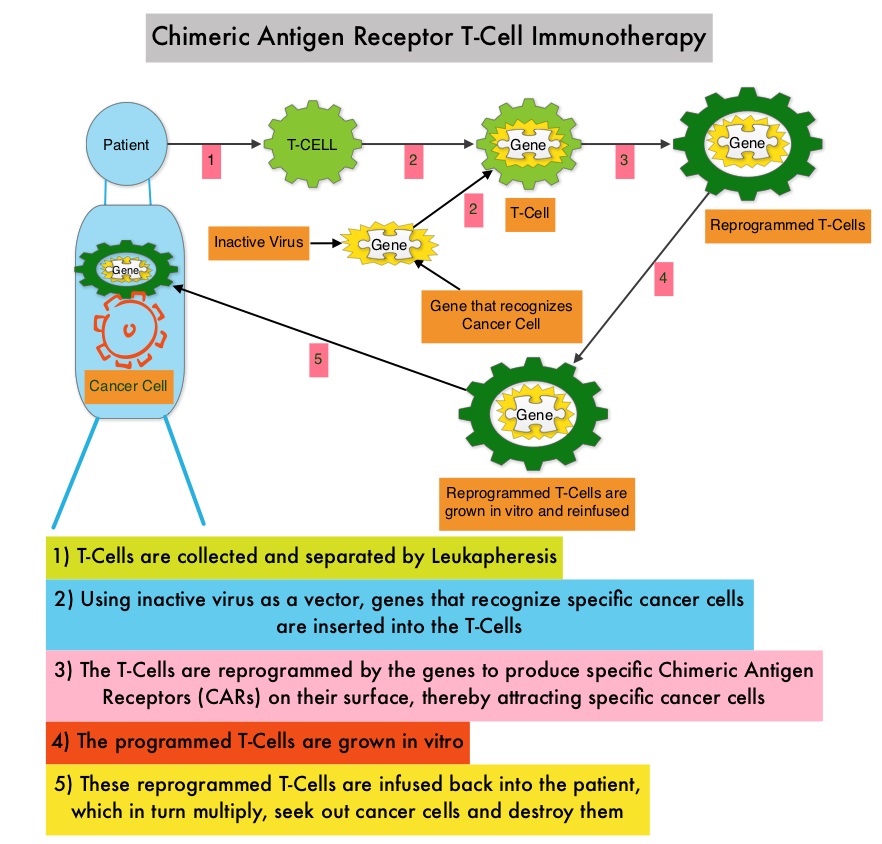
Chimeric Antigen Receptor (CAR) T-cell therapy is a type of immunotherapy and consists of T cells collected from the patient’s blood in a leukapheresis procedure, and genetically engineered to produce special receptors on their surface called Chimeric Antigen Receptors (CAR). These reprogrammed cytotoxic T cells with the Chimeric Antigen Receptors on their surface are now able to recognize a specific antigen on tumor cells. These genetically engineered and reprogrammed CAR T-cells are grown in the lab and are then infused into the patient. These cells in turn proliferate in the patient’s body and the engineered receptor on the cell surface help recognize and kill cancer cells that expresses that specific antigen. KYMRIAH® (genetically engineered T-cells) seeks out cancer cells expressing the antigen CD19, which is found uniquely on B cells and destroy them. Patients, following treatment with CAR T-cells, develop B-cell aplasia (absence of CD19 positive cells) due to B-cell destruction and may need immunoglobin replacement. Hence, B-cell aplasia can be a useful therapeutic marker, as continued B-cell aplasia has been seen in all patients who had sustained remission, following CAR T-cell therapy. Cytokine Release Syndrome, an inflammatory process is the most common and serious side effect of CAR T-cell therapy and is associated with marked elevation of Interleukin-6. Cytokine release is important for T-cell activation and can result in high fevers and myalgias. This is usually self limiting although if severe can be associated with hypotension and respiratory insufficiency. Tocilizumab (ACTEMRA®), an Interleukin-6 receptor blocking antibody produces a rapid improvement in symptoms. This is however not recommended unless the symptoms are severe and life threatening, as blunting the cytokine response can in turn negate T-cell proliferation. Elevated serum Ferritin and C-reactive protein levels are surrogate markers for severe Cytokine Release Syndrome.Chimeric-Antigen-Receptor-T-Cell-Immunotherapy

The CAR T-cells have been shown to also access sanctuary sites such as the central nervous system and eradicate cancer cells. CD19 antigen is expressed by majority of the B-cell malignancies and therefore most studies using CAR T-cell therapy have focused on the treatment of advanced B-cell malignancies such as Chronic Lymphocytic Leukemia (CLL), Acute Lymphoblastic Leukemia (ALL) and Non Hodgkin lymphoma (NHL), such as Diffuse Large B-Cell Lymphoma (DLBCL).

The approval of KYMRIAH® was based on a single-arm, open-label, multi-center, global, pivotal phase II trial (JULIET), in adults with Relapsed or Refractory DLBCL and DLBCL after transformation from Follicular lymphoma. The study enrolled 147 patients, 99 of whom received the CAR T-cell infusion with a single dose of KYMRIAH®, which was manufactured at 2 sites (United States and Germany). Eligible patients were 18 years or older with Relapsed or Refractory DLBCL and had progressed after receiving two or more lines of chemotherapy, including an Anthracycline and Rituximab, and were ineligible for or failed Autologous Stem Cell Transplant (auto-SCT). The median number of prior lines of therapy was 3 and 47% of patients had prior auto-SCT. Prior to infusion with KYMRIAH®, 90% of patients received bridging therapy, 93% received lymphodepleting chemotherapy, which in most patients consisted of Fludarabine/Cyclophosphamide. The median age was 56 years and 77% of patients had Stage III or IV disease at the time of enrollment. The median time from infusion to data cutoff was 5.6 months. The Primary endpoint was best Overall Response Rate-ORR (Complete Response-CR + Partial Response-PR), per independent review committee.

In this primary analysis, the authors reported the outcomes among 81 patients who received KYMRIAH® manufactured in the United States, with more than 3 months of follow up. The Objective Response Rate was 53%, the Complete Response rate was 39.5% and Partial Response rate 13.6%. At month 3, the CR rate was 32% and the PR rate 6%. Among patients evaluable at 6 months (N=46), the CR Rate was 30% and PR rate was 7%. Response rates were consistent across prognostic subgroups, including those who received prior auto-SCT and those with Double-Hit lymphoma. The median Duration of Response and the median Overall Survival were not reached. The 6-month probability of being relapse free was 73.5% and the 6-month probability of Overall Survival was 64.5%. Grade 3 or 4 adverse events were reported in 86% of the patients and Cytokine-Release Syndrome occurred in 58%. CRS was managed with ACTEMRA® in 15% of patients with good response and 11% of patients received corticosteroids. Neurologic adverse events were reported in 12% of patients. No deaths were attributed to KYMRIAH®.

It was concluded that KYMRIAH® produces high Response Rates with 95% of Complete Responses at 3 months being sustained at 6 months, in heavily pretreated adult patients with Relapsed or Refractory Diffuse Large B-Cell Lymphoma (DLBCL). This first global study of CAR T-cell therapy in DLBCL also demonstrated that centralized manufacturing of CAR T-cells is feasible. Schuster SJ, Bishop MR, Tam CS, et al. Primary Analysis of Juliet: A Global, Pivotal, Phase 2 trial of CTL019 in Adult Patients with Relapsed or Refractory Diffuse Large B-Cell Lymphoma. Presented at: ASH Annual Meeting and Exposition; Dec. 9-12, 2017; Atlanta. Abstract 577.

KEYTRUDA® Plus Standard Chemotherapy Improves Overall Survival in Newly Diagnosed Metastatic Non-Small Cell Lung Cancer

SUMMARY: Lung cancer is the second most common cancer in both men and women and accounts for about 14% of all new cancers and 27% of all cancer deaths. The American Cancer Society estimates that for 2018 about 234,030 new cases of lung cancer will be diagnosed and over 154,050 patients will die of the disease. Lung cancer is the leading cause of cancer-related mortality in the United States. Non Small Cell Lung Cancer (NSCLC) accounts for approximately 85% of all lung cancers. Of the three main subtypes of Non Small Cell Lung Cancer (NSCLC), 30% are Squamous Cell Carcinomas (SCC), 40% are Adenocarcinomas and 10% are Large cell carcinomas.

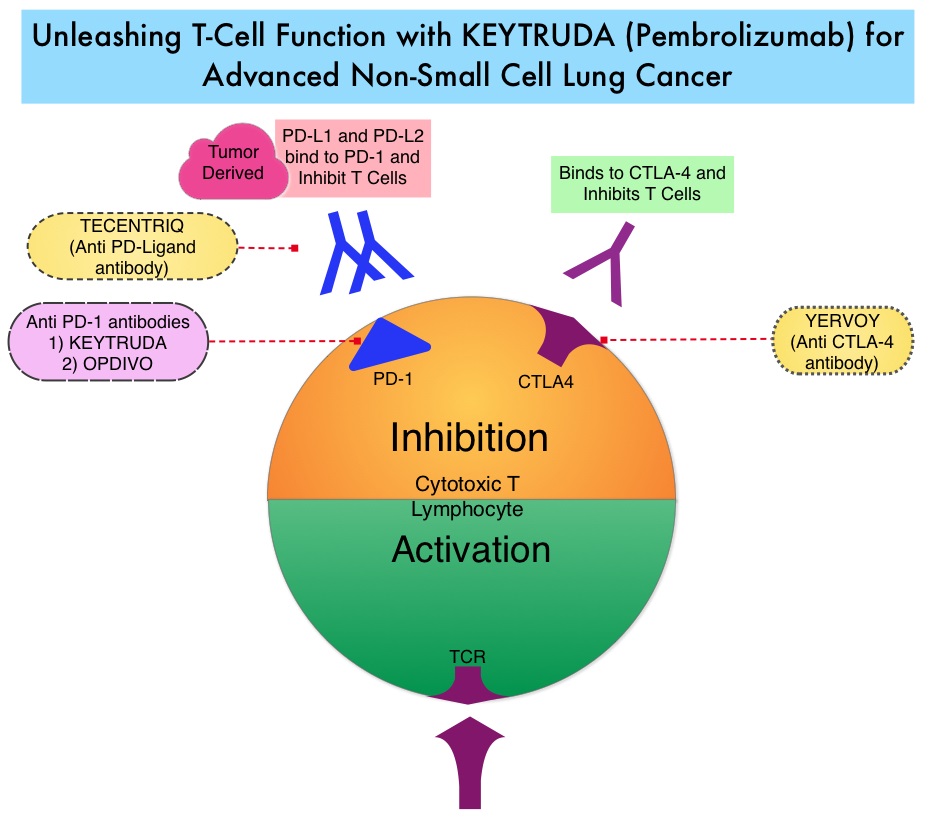
KEYTRUDA® is a fully humanized, Immunoglobulin G4, anti-PD-1, monoclonal antibody, that binds to the PD-1 receptor and blocks its interaction with ligands PD-L1 and PD-L2, thereby undoing PD-1 pathway-mediated inhibition of the immune response and unleashing the tumor-specific effector T cells. High level of Programmed Death-Ligand 1 (PD-L1) expression is defined as membranous PD-L1 expression on at least 50% of the tumor cells, regardless of the staining intensity. It is estimated that based on observations from previous studies, approximately 25% of the patients with advanced NSCLC have a high level of PD-L1 expression and high level of PD-L1 expression has been associated with significantly increased response rates to KEYTRUDA®. The FDA approved KEYTRUDA® for the first-line treatment of advanced NSCLC with high PD-L1 expression (Tumor Proportion Score of 50% or more), and for previously treated advanced NSCLC with a PD-L1 Tumor Proportion Score of 1% or more. This present study provides convincing phase III evidence to support the use of triplet therapy in NSCLC.Unleashing-T-Cell-Function-with-Keytruda (Pembrolizumab)-for-Advanced-Non-Small-Cell-Lung-Cancer

KEYNOTE-189 is a double-blind, phase III trial in which 616 patients with untreated stage IV non-squamous NSCLC, without sensitizing EGFR or ALK mutations, were randomly assigned in a 2:1 ratio to receive treatment with four cycles of KEYTRUDA®/Pemetrexed/Carboplatin or placebo plus the same chemotherapy. Patients received either KEYTRUDA® 200mg or saline placebo, both administered IV every 3 weeks for up to 35 cycles. All the patients received four cycles of the investigator’s choice of Cisplatin 75 mg/m2 IV or Carboplatin AUC 5 along with Pemetrexed 500 mg/m2, all administered IV every 3 weeks, followed by maintenance Pemetrexed 500 mg/m2 every 3 weeks. Patients in the placebo combination group were allowed to crossover to KEYTRUDA® monotherapy upon disease progression. Patients with symptomatic brain metastasis were excluded and patients were stratified according to PD-L1 expression (Tumor Proportion Score, 1% or more versus less than 1%), choice of platinum-based drug (Cisplatin versus Carboplatin), and smoking history. Both treatment groups were well balanced and about 17% had brain metastasis and one-third were untreated. A PD-L1 Tumor Proportion Score of 1% or more was reported in 63% of the patients, Carboplatin was the preferred platinum-based drug in 72% of the patients, and 88% of the patients were current or former smokers. The co-Primary end points were Overall Survival (OS) and Progression Free Survival (PFS).

After a median follow-up of 10.5 months, the estimated rate of Overall Survival (OS) at 12 months was 69.2% in the KEYTRUDA®-combination group versus 49.4% in the placebo-combination group. The median OS was not reached in the KEYTRUDA®-combination group and was 11.3 months in the placebo-combination group (HR=0.49; P<0.001). This represented a 51% reduction in the risk of death in the KEYTRUDA®-combination group. The OS benefit was seen across all PD-L1 subgroups including those with a PD-L1 Tumor Proportion Score of less than 1%. However, the greatest benefit was noted in the group expressing high levels of PD-L1 with Tumor Proportion Score 50% or more (12-month OS rate of 73% versus 48.1%; HR=0.42). The median Progression Free Survival was 8.8 months in the KEYTRUDA®-combination group and 4.9 months in the placebo-combination group (HR=0.52; P<0.001). This represented a 48% reduction in the risk of disease progression. The Objective Response Rate (ORR) was 47.6% in the KEYTRUDA®-combination group and 18.9% in the placebo-combination group (P<0.001) and ORR was highest among those with a PD-L1 Tumor Proportion Score of 50% or more (61.4% vs 22.9%). There was no significant difference in grade 3 adverse events in the two treatment groups.

It was concluded that in patients with previously untreated metastatic non-squamous NSCLC without EGFR or ALK mutations, the addition of KEYTRUDA® to standard chemotherapy of Pemetrexed and a platinum-based drug resulted in significantly longer Overall Survival and Progression Free Survival than chemotherapy alone, regardless of PD-L1 status and should therefore be considered as a new standard of care, in the front-line setting. Pembrolizumab plus Chemotherapy in Metastatic Non–Small-Cell Lung Cancer. Gandhi L, Rodriguez-Abreu D, Gadgeel S, et al. for the KEYNOTE-189 Investigators. April 16, 2018 DOI: 10.1056/NEJMoa1801005

FDA Approves AndexXa®, The First Antidote for Factor Xa Inhibitors

The FDA on May 3, 2018 approved AndexXa&reg; (Andexanet Alfa), a recombinant coagulation Factor Xa, inactivated-zhzo), for patients treated with XARELTO&reg; (Rivaroxaban) and ELIQUIS&reg; (Apixaban), when reversal of anticoagulation is needed due to life-threatening or uncontrolled bleeding. The approval of AndexXa&reg; was based on data from two Phase III ANNEXA studies (ANNEXA-A and ANNEXA-R) as well as interim data from the ongoing ANNEXA-4 study. AndexXa&reg; significantly reduced anti-Factor Xa activity of Factor Xa Inhibitors by over 90% compared with placebo, with reversal persisting for 1 to 2 hours after completion of the infusion. The availability of this antidote assures both patients and Health Care Providers to consider Factor Xa inhibitors with greater confidence.

FDA Approves Adjuvant TAFINLAR® plus MEKINIST® for Stage III BRAF-Mutated Melanoma

SUMMARY: The FDA on April 30, 2018, granted regular approval to TAFINLAR® (Dabrafenib) and MEKINIST® (Trametinib), in combination, for the adjuvant treatment of patients with melanoma with BRAF V600E or V600K mutations, as detected by an FDA-approved test, and involvement of lymph node(s), following complete resection. It is estimated that in the US, approximately 91,270 new cases of melanoma will be diagnosed in 2018 and about 9,320 patients are expected to die of the disease. The incidence of melanoma has been on the rise for the past three decades. Surgical resection with a curative intent is the standard of care for patients with early stage melanoma, with a 5-year survival rate of 98% for stage I disease and 90% for stage II disease. Stage III malignant melanoma however is a heterogeneous disease, and the risk of recurrence is dependent on the number of positive nodes, as well as presence of palpable versus microscopic nodal disease. Further, patients with a metastatic focus of more than 1 mm in greatest dimension in the affected lymph node, have a significantly higher risk of recurrence or death than those with a metastasis of 1 mm or less. Patients with stage IIIA disease have a disease-specific survival rate of 78% whereas those patients with stage IIIB and stage IIIC disease have disease-specific survival rates of 59% and 40% respectively.BRAF-and-MEK-Inhibition-in-MAPK-Pathway

The Mitogen-Activated Protein Kinase pathway (MAPK pathway) is an important signaling pathway which enables the cell to respond to external stimuli. This pathway plays a dual role, regulating cytokine production and participating in cytokine dependent signaling cascade. The MAPK pathway of interest is the RAS-RAF-MEK-ERK pathway. The RAF family of kinases includes ARAF, BRAF and CRAF signaling molecules. BRAF is a very important intermediary of the RAS-RAF-MEK-ERK pathway. BRAF mutations have been demonstrated in 6-8% of all malignancies. The most common BRAF mutation in melanoma is at the V600E/K site and is detected in approximately 50% of melanomas and result in constitutive activation of the MAPK pathway.

TAFINLAR®,is a selective oral BRAF inhibitor and MEKINIST® is a potent and selective inhibitor of MEK gene, which is downstream from RAF in the MAPK pathway. In patients with BRAF V600 mutation-positive unresectable or metastatic melanoma, a combination of TAFINLAR® and MEKINIST® resulted in a median Overall Survival (OS) of more than 2 years, with approximately 20% of the patients remaining progression free at 3 years. These encouraging results led to the study of this combination in patients with stage III melanoma, with BRAFV600E or V600K mutations, after complete surgical resection.

This FDA approval was based on COMBI-AD, an international, multi-center, randomized, double-blind, placebo-controlled, phase III trial, in which 870 patients with completely resected, stage III melanoma and with BRAF V600E or V600K mutations were enrolled. Patients were randomly assigned in a 1:1 to receive TAFINLAR® 150 mg orally twice daily in combination with MEKINIST® 2 mg orally once daily (N=438) or two matched placebos (N=432). Treatment was given for 12 months. Eligible patients had undergone completion lymphadenectomy, with no clinical or radiographic evidence of residual regional node disease. None of the patients had received previous systemic anticancer treatment or radiotherapy for melanoma. BRAF V600 mutation status was confirmed in primary tumor tissue or lymph node tissue by a central reference laboratory. The median age was 50 years. Both treatment groups were well balanced and 18% had stage IIIA disease, 41% had stage IIIB disease, and 40% had stage IIIC disease. Of the enrolled patients, 91% had a BRAF V600E mutation, and 9% had a BRAF V600K mutation. The Primary end point was Relapse Free Survival (RFS) and Secondary end points included Overall Survival (OS), Distant metastasis-free survival, Freedom from relapse, and Safety.

At a median follow up of 2.8 years, the estimated 3-year RFS rate was 58% in the combination therapy group and 39% in the placebo group (HR=0.47; P<0.001), and this represented a 53% lower risk of relapse. At the time of this analysis, median RFS rate had not yet been reached in the combination therapy group and was 16.6 months in the placebo group. The improved RFS benefit with the combination therapy was consistent across patient subgroups, regardless of lymph node involvement or primary tumor ulceration. The risk of distant metastases or death was reduced by 49% with the combination therapy versus placebo (HR=0.51; P<0.001). The safety profile of TAFINLAR® plus MEKINIST® was consistent with that observed with the combination, in patients with metastatic melanoma, and the common side effects were pyrexia, fatigue, nausea, vomiting, diarrhea, headache, rash, arthralgia, and myalgia.

It was concluded that adjuvant combination therapy with TAFINLAR® plus MEKINIST® in patients with stage III melanoma with BRAF V600E or V600K mutations, resulted in a significantly lower risk of recurrence, compared to placebo, with no new adverse events. With more than half the patients with stage III melanoma having a recurrence after surgery, this first effective oral targeted combination therapy, will be an important adjuvant treatment option. Adjuvant Dabrafenib plus Trametinib in Stage III BRAF-Mutated Melanoma. Long GV, Hauschild A, Santinami M, et al. N Engl J Med 2017; 377:1813-1823