FDA Approves DATROWAY® for Advanced Metastatic HR-Positive, HER-Negative Breast Cancer

SUMMARY: The FDA on January 17, 2025, approved Datopotamab deruxtecan-dlnk (DATROWAY®, Dato-DXd)), a Trop-2-directed antibody and topoisomerase inhibitor conjugate, for adult patients with unresectable or metastatic, Hormone Receptor (HR)-positive, Human Epidermal growth factor Receptor 2 (HER2)-negative (IHC 0, IHC1+ or IHC2+/ISH-) breast cancer who have received prior endocrine-based therapy and chemotherapy for unresectable or metastatic disease.

Breast cancer is the most common cancer among women in the US and about 1 in 8 women (12%) will develop invasive breast cancer during their lifetime. It is estimated that in the US, approximately 316,950 new cases of female breast cancer will be diagnosed in 2025, and about 42,170 women will die of the disease, largely due to metastatic recurrence. Approximately 70% of breast tumors in patients with metastatic disease are Estrogen Receptor (ER) and/or Progesterone Receptor (PR) positive and HER2-negative. These patients are often treated with single agent endocrine therapy, endocrine therapy in combination with CDK4/6 inhibitor, or chemotherapy. Resistance to hormonal therapy occurs in a majority of the patients and there is therefore an unmet need for agents with novel mechanisms of action.

Datopotamab-deruxtecan (Dato-DXd) is an ADC composed of a TROP2-directed monoclonal antibody conjugated to a potent topoisomerase I inhibitor via a stable tetrapeptide-based cleavable linker. Trop-2 is a transmembrane calcium signal transducer that stimulates cancer cell growth. TROP-2 is overexpressed in several epithelial cancers including cancers of the breast, colon and lung, and has limited expression in normal human tissues. It has been associated with poor Overall and Disease-Free Survival in several types of solid tumors. TROP-2 is expressed in more than 85% of breast tumors including Triple Negative Breast Cancer. Upon binding to TROP-2, the anti-TROP-2 monoclonal antibody is internalized and delivers the payload directly into the tumor cell, making it a suitable transporter for the delivery of cytotoxic drugs. Further, the cleavable linker enables the payload to be released both intracellularly into the tumor cells, as well as the tumor microenvironment, thereby allowing for the delivery of therapeutic concentrations of the active drug in bystander cells to which the conjugate has not bound. Dato-DXd showed encouraging antitumor activity in the TROPION-PanTumor01 trial, an ongoing multicenter, open-label study, evaluating Dato-DXd in different dose levels in solid tumors.

The present FDA approval was based on TROPION-Breast01, which is an open-label, global, Phase III study in which 732 patients (N=732) with HR-positive, HER2-negative previously treated metastatic breast cancer were randomly assigned in a 1:1 ratio to receive either Dato-DXd (N=365) or investigators choice of chemotherapy (N=367). Dato-DXd was given at a dose of 6 mg/kg IV on day 1 every 3 weeks. Investigator choice of chemotherapy consisted of Eribulin mesylate, Vinorelbine, or Gemcitabine, all given IV on days 1 and 8 every 3 weeks, as well as Capecitabine given orally on days 1-14 every 3 weeks. Treatment continued until disease progression or unacceptable toxicities. The median age was 55 yrs, and enrolled patients had received 1 or 2 prior lines of chemotherapy in the inoperable or metastatic setting. Eligible patients had progressed on or were deemed unsuitable for endocrine therapy. Patients were stratified by the number of lines of chemotherapy received in the unresectable/metastatic setting, and treatment with a previous CDK4/6 inhibitor. The Co-Primary end points were Progression Free Survival (PFS) by Blinded Independent Central Review (BICR) and Overall Survival (OS). Secondary end points included Overall Response Rate (ORR), Safety, Patient Reported Outcomes (PRO), and Time to First Subsequent Therapy (TFST).

The Median PFS by BICR in the Dato-DXd arm was 6.9 months versus 4.9 months in the chemotherapy arm (HR=0.63; P < 0.0001). The PFS benefit with Dato-DXd over chemotherapy was noted irrespective of brain metastases and prior duration of treatment with CDK4/6 inhibitors. Although OS data were immature, a trend favoring Dato-DXd was observed. The confirmed ORR was 36.4% and 22.9% and median Duration of Response was 6.7 months and 5.7 months in the Dato-DXd and chemotherapy groups, respectively. The median Time to First Subsequent Therapy was 8.2 months with Dato-DXd and 5.0 months with chemotherapy. Dato-DXd also demonstrated a delay in time to deterioration in global health status/quality of life, compared to chemotherapy. Grade 3 or more treatment-related adverse events with Dato-DXd was lower than with chemotherapy (20.8% versus 44.7%) and the most common toxicities were nausea and stomatitis with Dato-DXd and neutropenia in the chemotherapy arm.

In conclusion, patients receiving Dato-DXd showed statistically significant and clinically meaningful improvement in Progression Free Survival compared to chemotherapy, with a favorable and manageable safety profile. The improved outcomes were observed across subgroups, supporting the benefit of this novel treatment option, for previously treated patients with inoperable/metastatic HR-positive, HER2-negative breast cancer.

Datopotamab Deruxtecan Versus Chemotherapy in Previously Treated Inoperable/Metastatic Hormone Receptor-Positive Human Epidermal Growth Factor Receptor 2-Negative Breast Cancer: Primary Results From TROPION-Breast01. Bardia A, Jhaveri K, Im S-A, et al. for the TROPION-Breast01 Investigators. J Clin Oncol. 2025;43:285-296.

FDA Highlights Importance of DPD Deficiency Discussions with Patients Prior to Capecitabine or Fluorouracil Treatment

SUMMARY: It is estimated that about 3-8% of the Caucasian population have a partial DPD (DihydroPyrimidine Dehydrogenase) deficiency and 0.3% have a complete DPD deficiency. Asian and African populations may be at greater risk of DPD deficiency. More than 8,000 toxic reactions and 1,300 deaths each year are attributed to Fluorouracil and Capecitabine.

The FDA has issued an update regarding the labeling of Capecitabine and 5-FU to raise awareness about the risks linked to DPD deficiency. Healthcare providers are urged to familiarize themselves with these risks and ensure that patients are informed before treatment about the potential for severe and potentially life-threatening side effects associated with DPD deficiency. Providers are also encouraged to discuss DPD testing options with patients.

Fluoropyrimidines, which include both 5-FU and its prodrug Capecitabine, are chemotherapy drugs used to treat cancer. The enzyme DPD, encoded by the DPYD gene, is responsible for breaking down more than 80% of Fluorouracil in the body. In patients with specific genetic variants of the DPYD gene, known to cause a significant reduction or absence of DPD activity (referred to as complete DPD deficiency), there is an elevated risk of severe toxic reactions such as mucositis, diarrhea, neutropenia, and neurotoxicity, which can be fatal. Even patients with partial DPD activity (partial DPD deficiency) may face increased risks of these dangerous side effects.

As part of Project Renewal, the FDAs Oncology Center of Excellence has updated the product labels for both Capecitabine and Fluorouracil to include important information about DPD deficiency. This revision highlights the need for healthcare providers to discuss the possibility of DPD deficiency with patients prior to initiating treatment.

  • Capecitabine or 5-FU should not be recommended for use in patients known to have certain homozygous or compound heterozygous DPYD variants that result in complete DPD deficiency. No dose has been proven safe for patients with complete DPD deficiency.
  • There is insufficient data to recommend a specific dose in patients with partial DPD deficiency.
  • All healthcare providers should inform patients of the potential for serious and life-threatening adverse reactions due to DPD deficiency. Providers should discuss with their patient whether the patient should be tested for genetic variants that are associated with an increased risk of serious adverse reactions from the use of Capecitabine or 5-FU.
  • Providers should consider testing prior to initiating Capecitabine or Fluorouracil to reduce the risk of serious adverse reactions.
  • Providers should be aware of the signs and symptoms associated with adverse reactions due to DPD deficiency and advise patients to immediately contact their provider if these occur, including severe mucositis, diarrhea, neutropenia, and neurotoxicity.
  • Providers should withhold or permanently discontinue Capecitabine or 5-FU based on clinical assessment of the onset, duration, and severity of the observed adverse reactions in patients with evidence of acute early-onset or unusually severe reactions, which may indicate complete DPD deficiency.
  • Four DPYD variants have been associated with impaired DPD activity in White populations, and one variant has been associated with impaired activity in individuals of African ancestry.

The FDA approved Uridine Triacetate (VISTOGARD®) in 2015, for the emergency treatment of adult and pediatric patients, who had severe or life-threatening toxicities within 4 days of treatment, following an overdose of 5-FU or Capecitabine . Uridine Triacetate is a Pyrimidine analog and following oral administration is deacetylated by nonspecific esterases, yielding Uridine in the circulation. Uridine is a direct antagonist of 5-FU and competitively inhibits 5-FU from incorporating in normal tissues, thus reducing cell damage and cell death.

https://www.fda.gov/drugs/resources-information-approved-drugs/safety-announcement-fda-highlights-importance-dpd-deficiency-discussions-patients-prior-capecitabine

Five-year follow-up analysis continues to show long-term survival in patients with PD-L1 <1% mNSCLC using OPDIVO®(nivolumab) + YERVOY®(ipilimumab) + 2 cycles of platinum-doublet chemo

Expert opinion: Luis Raez, MD, FACP, FCCP, FASCO
Content sponsored by Bristol Myers Squibb

OPDIVO® (nivolumab) + YERVOY® (ipilimumab) + 2 cycles of platinum-doublet chemotherapy in 1L mNSCLC

Checkmate 9LA, a randomized, open-label, phase 3 trial, led to the approval of OPDIVO + YERVOY + chemotherapy as a treatment for 1L r/m NSCLC with no EGFR or ALK genomic tumor aberrations and regardless of PD-L1 status.1,3‡ “In my practice, I see a large number of patients with PD-L1 <1% mNSCLC and, in general, PD-L1 <1% has a worse prognosis than PD-L1 >1%,” stated Dr Raez.

*In Checkmate 9LA, patients received 2 cycles of platinum-doublet chemo q3w in the experimental arm and 4 cycles in the comparator arm; NSQ: pemetrexed + carboplatin or cisplatin (optional pemetrexed maintenance therapy in the comparator arm only); SQ: paclitaxel + carboplatin.1 †Dr Raez was compensated by BMS for his contributions to this article. Although PD-L1 status was not a restriction on the trial’s eligibility criteria, it is not part of the approved indication.1

OPDIVO and YERVOY are associated with the following Warnings and Precautions: severe and fatal immune-mediated adverse reactions including pneumonitis, colitis, hepatitis and hepatotoxicity, endocrinopathies, nephritis with renal dysfunction, dermatologic adverse reactions, other immune-mediated adverse reactions; infusion-related reactions; complications of allogeneic hematopoietic stem cell transplantation (HSCT); embryo-fetal toxicity; and increased mortality in patients with multiple myeloma when OPDIVO is added to a thalidomide analogue and dexamethasone, which is not recommended outside of controlled clinical trials.

Please see additional Important Safety Information for OPDIVO and YERVOY below, and U.S. Full Prescribing Information for OPDIVO and YERVOY.

The trial design of Checkmate 9LA included enrolling 719 eligible patients randomized 1:1 to receive either OPDIVO 360 mg q3w + YERVOY 1 mg/kg q6w + 2 cycles of platinum-doublet chemotherapy q3w (n=361) or platinum-doublet chemotherapy alone q3w (n=358).1 Key eligibility criteria included age of 18 years or older, stage IV or recurrent NSCLC, ECOG PS 0/1, and no prior systemic anticancer therapy.1 Treatment continued until disease progression, unacceptable toxicity, or for up to 2 years.1 Patients were stratified by histology (SQ vs NSQ), PD-L1 status (<1% vs ≥1%), and sex.4 The primary endpoint was OS and additional efficacy outcome measures were PFS, ORR, and DOR.3

Checkmate 9LA was the first phase 3 study to demonstrate improved OS regardless of PD-L1 expression.4 Furthermore, this is the only I-O combination with more than 1 in 5 patients with PD-L1 <1% alive at 5 years.1,3 A limitation to note is that Checkmate 9LA was not powered to detect differences in treatment effect in PD-L1 subgroups; therefore, results from this exploratory analysis should be interpreted with caution due to the limited patient numbers and potential imbalances in baseline characteristics within the subgroup.

In the primary analysis (minimum follow-up of 8.1 months), OPDIVO + YERVOY and chemotherapy demonstrated4:

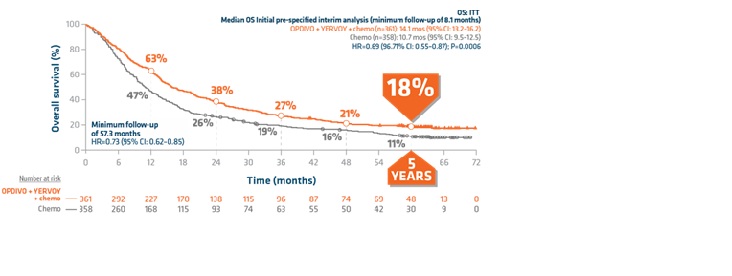
  • Statistically significant and superior mOS (14.1 months; [95% CI: 13.2–16.2]) vs chemotherapy alone (10.7 months; [95% CI: 9.5–12.5]) in the ITT population (HR=0.69; [96.71% CI: 0.55–0.87]; P=0.0006)1
  • Improved overall survival5‡:
    • PD-L1 <1% patient population (14.0 months with OPDIVO + YERVOY and chemo [95% CI: 13.2–NR] vs 10.0 months with chemotherapy alone [95% CI: 7.7–13.7])
    • PD-L1 ≥1% patient population (14.2 months with OPDIVO + YERVOY and chemo [95% CI: 13.1–NR] vs 10.6 with chemotherapy alone [95% CI: 9.4–12.6])

‡Limitation: Checkmate 9LA was not powered to detect differences in treatment effect in PD-L1 subgroups; therefore, results from this exploratory analysis should be interpreted with caution due to the limited patient numbers and potential imbalances in baseline characteristics within the subgroup.

In a 5-year follow-up analysis, durable survival and continued response to treatment were observed with OPDIVO + YERVOY and 2 cycles of chemotherapy compared with chemotherapy alone. The following data were observed at the 57.3-month minimum follow-up3:

  • mOS3:
    • ITT patient population: 15.8 months (95% CI: 13.9–19.7) with OPDIVO + YERVOY and chemo vs 11.0 months (95% CI: 9.5–12.7) with chemo (HR=0.73; [95% CI: 0.62–0.85])
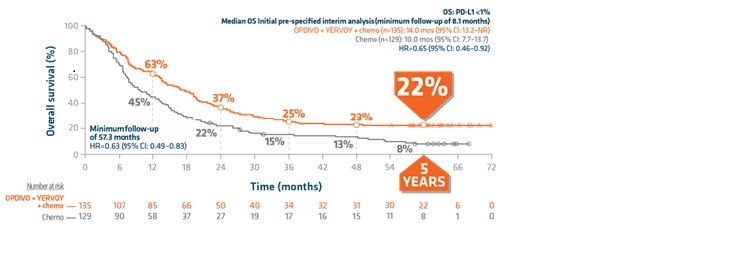
    • PD-L1 <1% patient population: 17.7 months (95% CI: 13.7–20.3) with OPDIVO + YERVOY and chemo vs 9.8 months (95% CI: 7.7–13.5) with chemo (HR=0.63; [95% CI: 0.49–0.83])
    • PD-L1 ≥1% patient population: 15.8 months (95% CI: 13.8–22.2) with OPDIVO + YERVOY and chemo vs 10.9 months (95% CI: 9.5–13.2) with chemo (HR=0.73; [95% CI: 0.59–0.90])

Durable overall survival rate in patients with PD-L1 <1%: The only I-O combination with more than 1 in 5 patients alive at 5 years1,3,5,6
Durable-OS-in-Patients-with-PD-L1-Less-Than-1%

Limitation: Checkmate 9LA was not powered to detect differences in treatment effect in PD-L1 subgroups; therefore, results from this exploratory analysis should be interpreted with caution due to the limited patient numbers and potential imbalances in baseline characteristics within the subgroup.

“22% is high compared with 8% and that is why we like the Checkmate 9LA regimen,” explained Dr Raez.

Overall survival in ITT population: Extended 5-year follow-up analysis1,3,6
OS-in-ITT-Population

  • mDOR3:
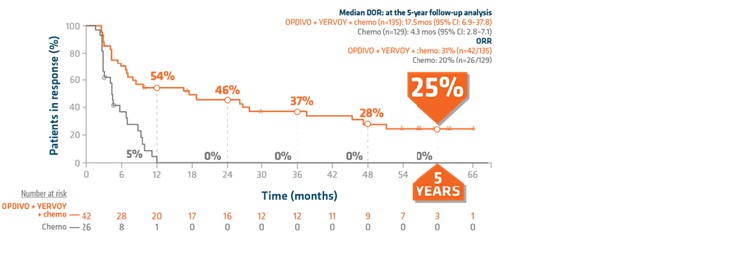
    • PD-L1 <1% patient population: 17.5 months with OPDIVO + YERVOY and chemo (95% CI: 6.9–37.8) vs 4.3 months with chemo (95% CI: 2.8–7.1)
    • PD-L1 ≥1% patient population: 11.8 months (95% CI: 8.6–20.3) vs 5.6 months and chemo (95% CI: 4.3–8.0)
    • ITT patient population: 12.4 months with OPDIVO + YERVOY and chemo (95% CI: 8.7–20.2) vs 5.6 months with chemo (95% CI: 4.4–7.1)

Duration of response in PD-L1 <1%: Extended 5-year follow-up analysis3
Duration-of-Response-in-PD-L1-Less-Than-1%

Limitation: Checkmate 9LA was not powered to detect differences in the treatment effect in this subgroup;
therefore, this exploratory analysis should be interpreted with caution because of the limited patient
numbers and potential imbalances in baseline characteristics within the subgroup.

“This regimen has markedly prolonged the duration of response at 5 years for 25% of patients with PD-L1 <1%” stated Dr. Raez.

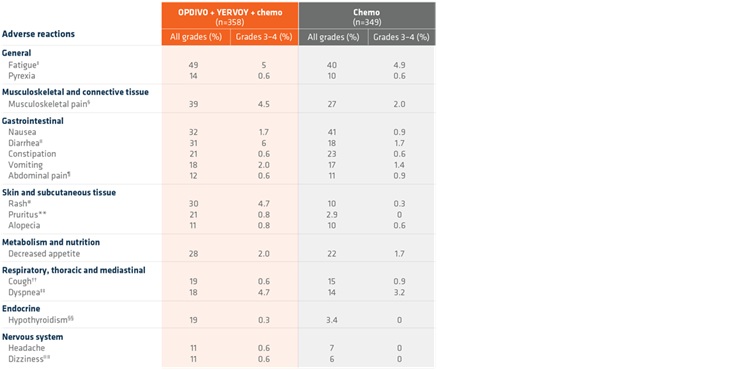
Adverse reactions in >10% of patients receiving OPDIVO + YERVOY and 2 cycles of chemo1*

Adverse-Reactions-Opdivo-Yervoy

  • OPDIVO + YERVOY with chemo was discontinued in 24% of patients due to adverse reactions, and 56% had at least one dose withheld for an adverse reaction1
  • Serious adverse reactions occurred in 57% of patients receiving OPDIVO + YERVOY with chemo1
  • The most frequent (>2%) serious adverse reactions were pneumonia, diarrhea, febrile neutropenia, anemia, acute kidney injury, musculoskeletal pain, dyspnea, pneumonitis, and respiratory failure. Fatal adverse reactions occurred in 7 (2%) patients, and included hepatic toxicity, acute renal failure, sepsis, pneumonitis, diarrhea with hypokalemia, and massive hemoptysis in the setting of thrombocytopenia1
  • The most common (>20%) adverse reactions were fatigue, musculoskeletal pain, nausea, diarrhea, rash, decreased appetite, constipation, and pruritus1
  • Median number of doses was 9 for OPDIVO, 4 for YERVOY, and 2 cycles of chemo7
  • With a minimum follow-up of 57.3 months, no new safety signals were identified for OPDIVO + YERVOY and 2 cycles of chemo3*

Toxicity was graded per NCI CTCAE v4.1
*vs chemo. In Checkmate 9LA, patients received 2 cycles of platinum-doublet chemo q3w in the experimental arm and 4 cycles in the comparator arm; NSQ: pemetrexed + carboplatin or cisplatin (optional pemetrexed maintenance therapy in the comparator arm only); SQ: paclitaxel + carboplatin.1 †Based on types of adverse reactions reported in 1L mNSCLC. Please note clinical trials are conducted under varying conditions, including different trial designs and dosing. Adverse reaction rates cannot be directly compared between trials.1 ‡Includes fatigue and asthenia.1 §Includes myalgia, back pain, pain in extremity, musculoskeletal pain, bone pain, flank pain, muscle spasms, musculoskeletal chest pain, musculoskeletal disorder, osteitis, musculoskeletal stiffness, non-cardiac chest pain, arthralgia, arthritis, arthropathy, joint effusion, psoriatic arthropathy, and synovitis.1 Includes colitis, ulcerative colitis, diarrhea, and enterocolitis.1 ¶Includes abdominal discomfort, abdominal pain, lower abdominal pain, upper abdominal pain, and gastrointestinal pain.1 #Includes acne, dermatitis, acneiform dermatitis, allergic dermatitis, atopic dermatitis, bullous dermatitis, generalized exfoliative dermatitis, eczema, keratoderma blennorrhagica, palmar-plantar erythrodysesthesia syndrome, rash, erythematous rash, generalized rash, macular rash, maculo-papular rash, morbilliform rash, papular rash, pruritic rash, skin exfoliation, skin reaction, skin toxicity, Stevens-Johnson syndrome, and urticaria.1 **Includes pruritus and generalized pruritus.1 ††Includes cough, productive cough, and upper-airway cough syndrome.1 ‡‡Includes dyspnea, dyspnea at rest, and exertional dyspnea.1 §§Includes autoimmune thyroiditis, increased blood thyroid stimulating hormone, hypothyroidism, thyroiditis, and decreased free tri-iodothyronine.1 ║║Includes dizziness, vertigo and positional vertigo.1

“The safety profile in the extended 5-year follow-up analysis of Checkmate 9LA was consistent with the previously known profiles for each component,” explained Dr Raez.

Dosing

OPDIVO® (nivolumab) + low-dose YERVOY® (ipilimumab) (1 mg/kg) and 2 cycles of chemo
1

For the r/m NSCLC dosing regimen in combination with chemo: on the first week, 4 agents will be administered (OPDIVO 360 mg + YERVOY 1 mg/kg + platinum-doublet histology-based chemo†), followed by 3 agents (OPDIVO + platinum-doublet histology-based chemo†) on the third week, 2 agents (OPDIVO + YERVOY) on the sixth week, and OPDIVO monotherapy on the ninth week, followed by maintenance therapy of OPDIVO + YERVOY: OPDIVO 360 mg q3w + YERVOY 1 mg/kg q6w until disease progression, unacceptable toxicity, or for up to 2 years.1 Histology-based chemo: SQ patients: carboplatin AUC 6 + paclitaxel 200 mg/m2 q3w; NSQ patients: carboplatin AUC 5 or 6 or cisplatin 75 mg/m2 + pemetrexed 500 mg/m2 q3w. No chemo maintenance required.1

  • OPDIVO is administered as an IV infusion over 30 minutes1
  • YERVOY is administered as an IV infusion over 30 minutes2

Summary and conclusions
5-year follow-up analysis of Checkmate 9LA continues to show prolonged survival data with OPDIVO + YERVOY and chemo vs chemo alone in patients who have r/m NSCLC across PD-L1 <1% and ≥1% expression.1,3 “Checkmate 9LA shows patient survival data that may be impactful,” stated Dr. Raez.
1L=first line; ALK=anaplastic lymphoma kinase; AUC=area under the curve; CI=confidence interval; DOR=duration of response; ECOG PS=Eastern Cooperative Oncology Group Performance Status; EGFR=epidermal growth factor receptor; HR=hazard ratio; I-O=immuno-oncology; ITT=intent to treat; IV=intravenous; mDOR=median DOR; mNSCLC=metastatic NSCLC; mo=month; mOS=median OS; NR=not reached; NSCLC=non-small cell lung cancer; NSQ=non-squamous; ORR=overall response rate; OS=overall survival; PD-1=programmed death receptor-1; PD-L1=programmed death ligand 1; PFS=progression-free survival; Pt=platinum; q3w=every 3 weeks; q6w=every 6 weeks; r/m=recurrent or metastatic; SQ=squamous.

INDICATION

OPDIVO® (nivolumab), in combination with YERVOY® (ipilimumab) and 2 cycles of platinum-doublet chemotherapy, is indicated for the first-line treatment of adult patients with metastatic or recurrent non-small cell lung cancer (NSCLC), with no EGFR or ALK genomic tumor aberrations.

IMPORTANT SAFETY INFORMATION

Severe and Fatal Immune-Mediated Adverse Reactions

  • Immune-mediated adverse reactions listed herein may not include all possible severe and fatal immune- mediated adverse reactions.
  • Immune-mediated adverse reactions, which may be severe or fatal, can occur in any organ system or tissue. While immune-mediated adverse reactions usually manifest during treatment, they can also occur after discontinuation of OPDIVO or YERVOY. Early identification and management are essential to ensure safe use of OPDIVO and YERVOY. Monitor for signs and symptoms that may be clinical manifestations of underlying immune-mediated adverse reactions. Evaluate clinical chemistries including liver enzymes, creatinine, adrenocorticotropic hormone (ACTH) level, and thyroid function at baseline and periodically during treatment with OPDIVO and before each dose of YERVOY. In cases of suspected immune-mediated adverse reactions, initiate appropriate workup to exclude alternative etiologies, including infection. Institute medical management promptly, including specialty consultation as appropriate.
  • Withhold or permanently discontinue OPDIVO and YERVOY depending on severity (please see section 2 Dosage and Administration in the accompanying Full Prescribing Information). In general, if OPDIVO or YERVOY interruption or discontinuation is required, administer systemic corticosteroid therapy (1 to 2 mg/kg/day prednisone or equivalent) until improvement to Grade 1 or less. Upon improvement to Grade 1 or less, initiate corticosteroid taper and continue to taper over at least 1 month. Consider administration of other systemic immunosuppressants in patients whose immune-mediated adverse reactions are not controlled with corticosteroid therapy. Toxicity management guidelines for adverse reactions that do not necessarily require systemic steroids (e.g., endocrinopathies and dermatologic reactions) are discussed below.

Immune-Mediated Pneumonitis

  • OPDIVO and YERVOY can cause immune-mediated pneumonitis. The incidence of pneumonitis is higher in patients who have received prior thoracic radiation.

Immune-Mediated Colitis

  • OPDIVO and YERVOY can cause immune-mediated colitis, which may be fatal. A common symptom included in the definition of colitis was diarrhea. Cytomegalovirus (CMV) infection/reactivation has been reported in patients with corticosteroid-refractory immune-mediated colitis. In cases of corticosteroid-refractory colitis, consider repeating infectious workup to exclude alternative etiologies.

Immune-Mediated Hepatitis and Hepatotoxicity

  • OPDIVO and YERVOY can cause immune-mediated hepatitis.

Immune-Mediated Endocrinopathies

  • OPDIVO and YERVOY can cause primary or secondary adrenal insufficiency, immune-mediated hypophysitis, immune-mediated thyroid disorders, and Type 1 diabetes mellitus, which can present with diabetic ketoacidosis. Withhold OPDIVO and YERVOY depending on severity (please see section 2 Dosage and Administration in the accompanying Full Prescribing Information). For Grade 2 or higher adrenal insufficiency, initiate symptomatic treatment, including hormone replacement as clinically indicated. Hypophysitis can present with acute symptoms associated with mass effect such as headache, photophobia, or visual field defects. Hypophysitis can cause hypopituitarism; initiate hormone replacement as clinically indicated. Thyroiditis can present with or without endocrinopathy. Hypothyroidism can follow hyperthyroidism; initiate hormone replacement or medical management as clinically indicated. Monitor patients for hyperglycemia or other signs and symptoms of diabetes; initiate treatment with insulin as clinically indicated.

Immune-Mediated Nephritis with Renal Dysfunction

  • OPDIVO and YERVOY can cause immune-mediated nephritis.

Immune-Mediated Dermatologic Adverse Reactions

  • OPDIVO can cause immune-mediated rash or dermatitis. Exfoliative dermatitis, including Stevens-Johnson syndrome (SJS), toxic epidermal necrolysis (TEN), and drug rash with eosinophilia and systemic symptoms (DRESS) has occurred with PD-1/PD-L1 blocking antibodies. Topical emollients and/or topical corticosteroids may be adequate to treat mild to moderate nonexfoliative rashes.
  • YERVOY can cause immune-mediated rash or dermatitis, including bullous and exfoliative dermatitis, SJS, TEN, and DRESS. Topical emollients and/or topical corticosteroids may be adequate to treat mild to moderate non-bullous/exfoliative rashes.
  • Withhold or permanently discontinue OPDIVO and YERVOY depending on severity (please see section 2 Dosage and Administration in the accompanying Full Prescribing Information).

Other Immune-Mediated Adverse Reactions

  • The following clinically significant immune-mediated adverse reactions occurred at an incidence of <1% (unless otherwise noted) in patients who received OPDIVO monotherapy or OPDIVO in combination with YERVOY or were reported with the use of other PD-1/PD-L1 blocking antibodies. Severe or fatal cases have been reported for some of these adverse reactions: cardiac/vascular: myocarditis, pericarditis, vasculitis; nervous system: meningitis, encephalitis, myelitis and demyelination, myasthenic syndrome/myasthenia gravis (including exacerbation), Guillain-Barré syndrome, nerve paresis, autoimmune neuropathy; ocular: uveitis, iritis, and other ocular inflammatory toxicities can occur; gastrointestinal: pancreatitis to include increases in serum amylase and lipase levels, gastritis, duodenitis; musculoskeletal and connective tissue: myositis/polymyositis, rhabdomyolysis, and associated sequelae including renal failure, arthritis, polymyalgia rheumatica; endocrine: hypoparathyroidism; other (hematologic/immune): hemolytic anemia, aplastic anemia, hemophagocytic lymphohistiocytosis (HLH), systemic inflammatory response syndrome, histiocytic necrotizing lymphadenitis (Kikuchi lymphadenitis), sarcoidosis, immune thrombocytopenic purpura, solid organ transplant rejection, other transplant (including corneal graft) rejection.
  • In addition to the immune-mediated adverse reactions listed above, across clinical trials of YERVOY monotherapy or in combination with OPDIVO, the following clinically significant immune-mediated adverse reactions, some with fatal outcome, occurred in <1% of patients unless otherwise specified: nervous system: autoimmune neuropathy (2%), myasthenic syndrome/myasthenia gravis, motor dysfunction; cardiovascular: angiopathy, temporal arteritis; ocular: blepharitis, episcleritis, orbital myositis, scleritis; gastrointestinal: pancreatitis (1.3%); other (hematologic/immune): conjunctivitis, cytopenias (2.5%), eosinophilia (2.1%), erythema multiforme, hypersensitivity vasculitis, neurosensory hypoacusis, psoriasis.
  • Some ocular IMAR cases can be associated with retinal detachment. Various grades of visual impairment, including blindness, can occur. If uveitis occurs in combination with other immune-mediated adverse reactions, consider a Vogt-Koyanagi-Harada–like syndrome, which has been observed in patients receiving OPDIVO and YERVOY, as this may require treatment with systemic corticosteroids to reduce the risk of permanent vision loss.

Infusion-Related Reactions

  • OPDIVO and YERVOY can cause severe infusion-related reactions. Discontinue OPDIVO and YERVOY in patients with severe (Grade 3) or life-threatening (Grade 4) infusion-related reactions. Interrupt or slow the rate of infusion in patients with mild (Grade 1) or moderate (Grade 2) infusion-related reactions.

Complications of Allogeneic Hematopoietic Stem Cell Transplantation

  • Fatal and other serious complications can occur in patients who receive allogeneic hematopoietic stem cell transplantation (HSCT) before or after being treated with OPDIVO or YERVOY. Transplant-related complications include hyperacute graft-versus-host-disease (GVHD), acute GVHD, chronic GVHD, hepatic veno-occlusive disease (VOD) after reduced intensity conditioning, and steroid-requiring febrile syndrome (without an identified infectious cause). These complications may occur despite intervening therapy between OPDIVO or YERVOY and allogeneic HSCT.
  • Follow patients closely for evidence of transplant-related complications and intervene promptly. Consider the benefit versus risks of treatment with OPDIVO and YERVOY prior to or after an allogeneic HSCT.

Embryo-Fetal Toxicity

  • Based on its mechanism of action and findings from animal studies, OPDIVO and YERVOY can cause fetal harm when administered to a pregnant woman. The effects of YERVOY are likely to be greater during the second and third trimesters of pregnancy. Advise pregnant women of the potential risk to a fetus. Advise females of reproductive potential to use effective contraception during treatment with OPDIVO and YERVOY and for at least 5 months after the last dose.

Increased Mortality in Patients with Multiple Myeloma when OPDIVO is Added to a Thalidomide Analogue and Dexamethasone

  • In randomized clinical trials in patients with multiple myeloma, the addition of OPDIVO to a thalidomide analogue plus dexamethasone resulted in increased mortality. Treatment of patients with multiple myeloma with a PD-1 or PD-L1 blocking antibody in combination with a thalidomide analogue plus dexamethasone is not recommended outside of controlled clinical trials.

Lactation

  • There are no data on the presence of OPDIVO or YERVOY in human milk, the effects on the breastfed child, or the effects on milk production. Because of the potential for serious adverse reactions in breastfed children, advise women not to breastfeed during treatment and for 5 months after the last dose.

Serious Adverse Reactions

  • In Checkmate 9LA, serious adverse reactions occurred in 57% of patients (n=358). The most frequent (>2%) serious adverse reactions were pneumonia, diarrhea, febrile neutropenia, anemia, acute kidney injury, musculoskeletal pain, dyspnea, pneumonitis, and respiratory failure. Fatal adverse reactions occurred in 7 (2%) patients, and included hepatic toxicity, acute renal failure, sepsis, pneumonitis, diarrhea with hypokalemia, and massive hemoptysis in the setting of thrombocytopenia.

Common Adverse Reactions

  • In Checkmate 9LA, the most common (>20%) adverse reactions were fatigue (49%), musculoskeletal pain (39%), nausea (32%), diarrhea (31%), rash (30%), decreased appetite (28%), constipation (21%), and pruritus (21%).

Please see US Full Prescribing Information for OPDIVO and YERVOY.

References:

  1. OPDIVO [package insert]. Princeton, NJ: Bristol-Myers Squibb Company.
  2. YERVOY [package insert]. Princeton, NJ: Bristol-Myers Squibb Company.
  3. Reck M, Ciuleanu TE, Schenker M, et al. Five-year outcomes with first-line nivolumab plus ipilimumab with 2 cycles of chemotherapy versus 4 cycles of chemotherapy alone in patients with metastatic non-small cell lung cancer in the randomized CheckMate 9LA trial. Eur J Cancer. Published online August 25, 2024. doi:10.1016/j.ejca.2024.114296
  4. Paz-Ares L, Ciuleanu TE, Cobo M, et al. First-line nivolumab plus ipilimumab combined with two cycles of chemotherapy in patients with non-small-cell lung cancer (CheckMate 9LA): an international, randomised, open-label, phase 3 trial. Lancet Oncol. 2021;22(2):198-211.
  5. Data on file. NIVO 566. Princeton, NJ: Bristol-Myers Squibb Company; 2020.
  6. Reck M, Ciuleanu T-E, Cobo M, et al. First-line nivolumab plus ipilimumab with two cycles of chemotherapy versus chemotherapy alone (four cycles) in advanced non-small cell lung cancer: CheckMate 9LA 2-year update. ESMO Open. 2021;6(5):100273.
  7. Data on file. NIVO 562. Princeton NJ: Bristol-Myers Squibb Company; 2020.

© 2024 Bristol-Myers Squibb Company. OPDIVO® and YERVOY® are registered trademarks of Bristol-Myers Squibb Company.
7356-US-2400513 12/24

Prolonged Survival Benefit with LYNPARZA® in BRCA Mutated Early Stage Breast Cancer

SUMMARY: Breast cancer is the most common cancer among women in the US and about 1 in 8 women (12%) will develop invasive breast cancer during their lifetime. Approximately 319,750 new cases of breast cancer will be diagnosed in 2025 and about 42,680 individuals will die of the disease, largely due to metastatic recurrence.

DNA can be damaged due to errors during its replication or as a result of environmental exposure to UV radiation from the sun or other toxins. The tumor suppressor genes such as BRCA1 (Breast Cancer 1) and BRCA2 help repair damaged DNA and thus play an important role in maintaining cellular genetic integrity, failing which these genetic aberrations can result in malignancies. The BRCA1 gene is located on the long (q) arm of chromosome 17 whereas BRCA2 is located on the long arm of chromosome 13. Mutations in BRCA1 and BRCA2 account for about 20 to 25 percent of hereditary breast cancers and about 5 to 10 percent of all breast cancers. These mutations can be inherited from either of the parents and a child has a 50 percent chance of inheriting this mutation, and the deleterious effects of the mutations are seen even when a second copy of the gene in an individual is normal. Patients with BRCA mutations can present with aggressive, high-risk disease and are at a high risk of recurrence following completion of multimodality therapy including surgery, radiation, and chemotherapy. This is an area of unmet need, warranting identification of additional novel and effective therapies.

BRCA1 and BRCA2 are tumor suppressor genes and they recognize and repair double strand DNA breaks via Homologous Recombination (HR) pathway. Homologous Recombination is a DNA repair pathway utilized by cells to accurately repair DNA double-stranded breaks during the S and G2 phases of the cell cycle, and thereby maintain genomic integrity. The PARP (Poly ADP Ribose Polymerase) family of enzymes include PARP1 and PARP2, and is a related enzymatic pathway that repairs single strand breaks in DNA. In a BRCA mutant, the cancer cell relies solely on PARP pathway for DNA repair to survive.

Olaparib (LYNPARZA®) is a PARP inhibitor, that traps PARP onto DNA at sites of single-strand breaks, thereby preventing their repair and generate double-strand breaks. These breaks cannot be repaired accurately in tumors harboring defects in Homologous Recombination Repair pathway genes, such as BRCA1 or BRCA2 mutations, and this leads to cumulative DNA damage and tumor cell death.

OlympiA is a multicenter, randomized, placebo-controlled, double-blind, Phase III trial of adjuvant Olaparib after neoadjuvant/adjuvant chemotherapy, in patients with germline BRCA1/2 mutations, and high risk HER2-negative early breast cancer. This trial enrolled 1836 patients, including triple-negative and Hormone Receptor positive (HR-positive) breast cancer. All enrolled patients had already received standard adjuvant or neoadjuvant chemotherapy, surgery and if needed, radiation therapy, for early stage breast cancer (Stage II-III). Inclusion criteria required that patients have a high risk of disease recurrence. Patients with triple-negative breast cancer who received adjuvant chemotherapy were required to have axillary node–positive disease or an invasive primary tumor measuring at least 2 cm. Patients who were treated with neoadjuvant chemotherapy were required to have residual invasive breast cancer in the breast or resected lymph nodes (no pathological Complete Response from neoadjuvant therapy). Patients who were treated with adjuvant chemotherapy for HR-positive, HER2-negative breast cancer were required to have 4 or more pathologically confirmed positive lymph nodes. Patients were randomized 1:1 to receive Olaparib 300 mg PO BID continuously for 1 year (N=921) or placebo (N=915). Endocrine therapy and bisphosphonates were allowed. Treatment groups were well balanced. The median age was 42 years, germline mutations were present in BRCA1 in 72% of the patients, in BRCA2 in 27% of the patients, 82% of the patients had triple-negative breast cancer, 18% had HR-positive and HER2 negative disease, 62% were premenopausal and 38% were postmenopausal, 50% of the patients had received adjuvant chemotherapy and 50% had received neoadjuvant chemotherapy. The Primary endpoint was Invasive Disease Free Survival (IDFS) and Secondary endpoints included Distant DFS (DDFS), Overall Survival (OS) and Safety. At the pre-specified interim analysis (2.5 years), the estimated 3-year Invasive DFS was 85.9% for patients who received Olaparib compared with 77.1% for those who received placebo (HR=0.58; P<0.001), representing a 42% reduction in the risk of Invasive DFS with Olaparib compared to placebo. The 3-year Distant DFS was 87.5% versus 80.4% respectively (HR=0.57; P<0.001). The researchers in this updated analysis reported the results of the third pre-specified interim analysis with median follow-up of 6.1 years (maximum follow-up of 9.6 years).

The treatment benefit with Olaparib was maintained with longer follow up, and was similar to previously reported results. The Invasive DFS at 6 years was 79.6% in the Olaparib-treated group versus 70.3% in the placebo group, with an absolute difference of 9.3%, favoring the addition of Olaparib (HR=0.65). The Distant DFS at 6 years was 83.5% versus 75.7%, respectively, with an absolute difference of 7.8% (HR=0.65). The 6-year Overall Survival rate was 87.5% in the Olaparib group versus 83.2% in the placebo group, with a 28% reduction in the risk of death (HR=0.72). The benefit with adjuvant Olaparib was consistent across all key subgroups, including for patients with high risk and HR-positive disease.

Fewer cases of BRCA-associated cancers such as contralateral invasive and non-invasive breast cancers, new primary ovarian cancer and new primary fallopian tube cancer were reported, with adjuvant Olaparib versus placebo. Further, there was no increase in the risk of developing secondary myelodysplastic syndrome or acute myeloid leukemia.

It was concluded that at 6.1 years median follow-up, one year of adjuvant treatment with Olaparib after neoadjuvant or adjuvant chemotherapy continues to demonstrate meaningful improvements in Invasive DFS, Distant DFS and OS in patients with germline BRCA pathogenic variants and high risk, HER2-negative breast cancer, including those with HR-positive tumors. This study highlights the importance of BRCA testing in early stage breast cancer. Perhaps considering one year of adjuvant Olaparib followed by a CDK4/6 inhibitor in HR-positive, BRCA-positive, high risk HER2-negative early stage breast cancer patients, may be a reasonable approach.

Garber J: OlympiA-Phase 3, multicenter, randomized placebo-controlled trial of adjuvant olaparib after (neo)adjuvant chemotherapy in patients with germline BRCA1/BRCA2 pathogenic variants and high-risk HER2-negative primary breast cancer: Longer-term follow-up. 2024 San Antonio Breast Cancer Symposium. Abstract GS1-09. Presented December 11, 2024.

FDA Approves LUMAKRAS® with VECTIBIX® for KRAS G12C-mutated Colorectal Cancer

SUMMARY: The FDA on January 16, 2025, approved Sotorasib (LUMAKRAS®) with Panitumumab (VECTIBIX®) for adult patients with KRAS G12C-mutated metastatic ColoRectal Cancer (mCRC), as determined by an FDA-approved test, who have received prior Fluoropyrimidine, Oxaliplatin, and Irinotecan-based chemotherapy. The FDA also approved the therascreen KRAS RGQ PCR Kit (QIAGEN GmbH) as a companion diagnostic device to aid in identifying patients with colorectal cancer whose tumors harbor KRAS G12C mutations and who may be eligible for LUMAKRAS® with VECTIBIX®.

Colorectal Cancer (CRC) is the third most common cancer diagnosed in both men and women in the United States. The American Cancer Society estimates that approximately 154,270 new cases of CRC will be diagnosed in the United States in 2025 and about 52,900 patients will die of the disease. The lifetime risk of developing CRC is about 1 in 23.

Approximately 15-25% of the patients with CRC present with metastatic disease at the time of diagnosis (synchronous metastases) and 50-60% of the patients with CRC will develop metastatic disease during the course of their illness. First line treatment of metastatic CRC includes Oxaliplatin or Irinotecan, in combination with a Fluoropyrimidine and Leucovorin (FOLFOX or FOLFIRI respectively), along with a VEGF targeting agent such as Bevacizumab or EGFR targeting agents such as Cetuximab (ERBITUX®) and Panitumumab. Patients with Stage IV colorectal cancer are now routinely analyzed for extended RAS and BRAF mutations. KRAS mutations are predictive of resistance to EGFR targeted therapy. Patients who progress following these therapies are considered to have refractory disease. These patients sometimes are rechallenged with previously administered chemotherapeutic agents, but often receive Regorafenib (STIVARGA®), an oral multikinase inhibitor with antiangiogenic activity, or LONSURF® (a fixed dose combination of Trifluridine and Tipiracil). These therapies, however, have shown limited efficacy.

The KRAS (Kirsten rat sarcoma viral oncogene homologue) proto-oncogene encodes a protein that is a member of the small GTPase super family. The KRAS gene provides instructions for making the KRAS protein, which is a part of a signaling pathway known as the RAS/MAPK pathway. By relaying signals from outside the cell to the cell nucleus, the protein instructs the cell to grow, divide and differentiate. KRAS gene is in the Ras family of oncogenes, which also includes two other genes, HRAS and NRAS. When mutated, oncogenes have the potential to change normal cells to cancer cells. KRAS is the most frequently mutated oncogene in human cancers and these cancers are often associated with resistance to targeted therapies and poor outcomes. The KRAS G12C mutation occurs in approximately 12-15% of Non Small Cell Lung Cancers (NSCLC) and in 3-5% of colorectal cancers and other solid cancers. G12C is a single point mutation with a Glycine-to-Cysteine substitution at codon 12. This substitution favors the activated state of KRAS, amplifying signaling pathways that lead to oncogenesis.

Sotorasib is a small molecule that specifically and irreversibly inhibits KRAS G12C protein and traps KRAS G12C in the inactive GDP-bound state, thus blocking downstream proliferation and survival signaling. Unlike the efficacy of single-agent KRAS G12C inhibitors in Non Small Cell Lung Cancer with KRAS G12C mutation, KRAS G12C inhibition alone has limited activity in patients with colorectal cancer. This has been attributed to upstream reactivation of the Epidermal Growth Factor Receptor (EGFR) pathway resulting in treatment-induced resistance, following selective inhibition of KRAS G12C. However, dual KRAS G12C and EGFR blockade can overcome treatment resistance in patients with colorectal cancer with KRAS G12C mutation. In the CodeBreaK 101 Phase 1b trial involving patients with chemorefractory colorectal cancer with mutated KRAS G12C, the Response Rate was 30% with Sotorasib plus Panitumumab, as compared with 9.7% with Sotorasib monotherapy.

The present FDA approval was based on CodeBreaK 300 trial, which is an international, multicenter, open-label, randomized, active-controlled Phase III study, conducted to evaluate the efficacy and safety of two different doses of Sotorasib (960 mg and 240 mg) in combination with Panitumumab as compared with the investigator’s choice of standard-care therapy (Trifluridine-Tipiracil or Regorafenib) in patients with chemorefractory metastatic colorectal cancer with KRAS G12C mutation. A lower dose of Sotorasib 240 mg orally once daily was tested in this study because of the nonlinear pharmacokinetic properties of Sotorasib. A total of 160 patients were randomly assigned in a 1:1:1 ratio to receive Sotorasib 960 mg orally once daily plus Panitumumab 6 mg/kg IV every 2 weeks (the 960 mg Sotorasib/Panitumumab group; N=53), Sotorasib 240 mg orally once daily plus Panitumumab (the 240 mg Sotorasib/Panitumumab group; N=53), with each treatment cycle repeating every 28 days, or the investigator’s choice of standard of care therapy which could be either Trifluridine-Tipiracil 35 mg/m2 (up to a maximum of 80 mg per dose) orally twice daily on days 1-5 and days 8-12 every 28 days, or Regorafenib 160 mg orally once daily for the first 21 days of each 28-day cycle (N=54). Treatment continued until disease progression or unacceptable toxicities. The median age was 61 years and majority of patients had more than 2 or more lines of previous anti-cancer therapy. KRAS G12C mutation was confirmed by prospective central molecular testing. Randomization was stratified according to previous use of antiangiogenic therapy, the time from initial diagnosis of metastatic disease to randomization and ECOG-PS. The Primary end point was Progression Free Survival (PFS) as assessed by Blinded Independent Central Review (BICR). Key Secondary end points included Overall Survival (OS) and Objective Response Rate (ORR) and Duration of Response (DOR).

After a median follow up of 7.8 months, both Sotorasib combinations (960 mg and 240 mg) plus Panitumumab demonstrated significantly longer PFS compared to standard of care therapy. The median PFS was 5.6 months and 3.9 months in the 960 mg Sotorasib/Panitumumab and 240 mg Sotorasib/Panitumumab groups, respectively, as compared with 2.2 months in the standard of care group (HR for 960 mg group=0 49; P=0.006) (HR for 240 mg group=0.58; P=0.03). The improvement in PFS was observed across key subgroups, including tumor sideness/primary tumor location, prior lines of therapy, and the presence or absence of liver metastases. The Objective Response Rate was 26.4%, 5.7%, and 0% in the 960 mg Sotorasib/Panitumumab, 240 mg Sotorasib/Panitumumab, and standard of care groups, respectively and the median DOR was 4.4 months in the 960 mg Sotorasib/Panitumumab group. Overall Survival data is immature. While this trial was not powered to compare the two Sotorasib/Panitumumab groups directly, the 960 mg dose appeared to yield more clinically significant benefits than the 240 mg dose, across all efficacy endpoints, without additional toxic effects. The final analysis of PFS for patients randomized to the 240 mg Sotorasib/Panitumumab arm compared to the standard of care groups was not statistically significant.
Grade 3 or higher treatment-related adverse events occurred in 35.8%, 30.2%, and 43.1% of patients, respectively. Skin-related toxic effects and hypomagnesemia were the most common adverse events observed with Sotorasib/Panitumumab.

It was concluded from this study that Sotorasib 960 mg in combination with Panitumumab resulted in significantly longer Progression Free Survival and a higher Objective Response Rate than standard of care treatment. Ongoing analysis and longer follow-up will provide additional insights into Overall Survival outcomes.

Sotorasib plus Panitumumab in Refractory Colorectal Cancer with Mutated KRAS G12C. Fakih MG, Salvatore L, Esaki T, et al. N Engl J Med 2023;389:2125-2139.

FDA Grants Accelerated Approval to BIZENGRI® for Non Small Cell Lung Cancer and Pancreatic Adenocarcinoma

SUMMARY: The FDA on December 4, 2024, granted accelerated approval to Zenocutuzumab-zbco (BIZENGRI®) for adults with advanced, unresectable, or metastatic Non-Small Cell Lung Cancer (NSCLC) harboring a neuregulin 1 (NRG1) gene fusion with disease progression on or after prior systemic therapy, or advanced, unresectable, or metastatic pancreatic adenocarcinoma harboring a NRG1 gene fusion with disease progression on or after prior systemic therapy. This represents the first FDA approval of a systemic therapy for patients with NSCLC or pancreatic adenocarcinoma harboring an NRG1 gene fusion.

Genomic rearrangements involving the neuregulin 1 (NRG1) gene have been implicated in a variety of solid tumors, including lung, breast, pancreas, ovarian, and prostate cancers. NRG1 fusions are rare oncogenic drivers occurring in less than 1% of solid tumors, highly enriched in KRAS-wild-type pancreatic adenocarcinoma and invasive mucinous adenocarcinoma of the lung. NRG1 fusions produce chimeric ligands that activate the ERBB Receptor Tyrosine Kinase (RTK) family, a group of proteins frequently exploited by cancer cells to promote tumor growth. In lung cancer, NRG1 fusions are associated with poor prognosis in patients with lung cancer, with low Response Rates to standard chemotherapy and immunotherapy, and a short Overall Survival.

The ERBB RTK family includes EGFR (ERBB1), HER2 (ERBB2), HER3 (ERBB3), and HER4 (ERBB4). These proteins mediate crucial cell signaling pathways that regulate growth and survival. They can be oncogenically activated by ligand stimulation such as NRG1 fusion proteins binding to HER3 or HER4, mutations and translocations that may confer constitutive enzymatic activity, such as EGFR kinase domain mutations, the EGFRvIII variant (where the extracellular region of EGFR is deleted), EGFR fusions or gene amplification, or protein overexpression resulting in increasing receptor abundance on cell surfaces to amplify signaling.

NRG1 preferentially binds to HER3 and HER4, promoting their heterodimerization with other ERBB family members like HER2 and EGFR. This interaction is critical because HER3, a pseudokinase, lacks intrinsic enzymatic activity and depends on phosphorylation by its heterodimer partners. The activated HER3 forms docking sites for SH2-domain proteins, triggering multiple downstream signal transduction pathways like the PI3K pathway, which drive proliferation and survival.

Zenocutuzumab is a bispecific humanized immunoglobulin G1 (IgG1) containing two different Fab arms targeting the extracellular domains of HER2 and HER3. The HER2-targeting arm binds HER2, concentrating the antibody locally and positioning it (Dock) to block NRG1 binding to HER3 (Dock-and-block mechanism). The HER3-targeting arm prevents HER3 from undergoing the conformational changes necessary for heterodimerization with HER2 and EGFR. This dual targeting halts HER3 phosphorylation, disrupting downstream oncogenic signaling. Moreover, the glycoengineered IgG1 backbone of Zenocutuzumab enhances its affinity for Fc receptors, boosting Antibody-Dependent Cellular Cytotoxicity (ADCC)-a mechanism by which immune cells destroy antibody-coated tumor cells.

The present approval is supported by the Phase 1/2 eNRGy ongoing trial, which is an open-label, multicenter, multicohort, dose-escalation study of Zenocutuzumab, in patients with solid tumors with a NRG1 fusion. Enrolled patients had a median of one prior line of therapy, including platinum chemotherapy (72%) and Afatinib (11%). The median patient age was 64 years and most were female (62%), and 51% were Asian. The most common NRG1 fusion partners were CD74 (57%), SLC3A2 (22%), SDC4/7 (9%), and CDH1/2 (3%). Most NRG1 fusions were identified by RNA sequencing (81%), followed by DNA sequencing (14%). Patients received Zenocutuzumab 750 mg IV every 2 weeks until disease progression. The major efficacy outcome measures were confirmed Overall Response Rate (ORR) and Duration of Response (DOR), determined by Blinded Independent Central Review.

The ORR for NSCLC was 33% and median DOR was 7.4 months. The ORR for pancreatic adenocarcinoma was 40% and the DOR was 3.7-16.6 months. In the pooled safety population, the most common adverse reactions were diarrhea, musculoskeletal pain, fatigue, nausea, infusion-related reactions, dyspnea, rash, constipation, vomiting, abdominal pain, and edema. The most common Grade 3 or 4 laboratory abnormalities were increased gamma-glutamyl transferase, anemia, thrombocytopenia and hyponatremia.

It was concluded from this analysis that Zenocutuzumab provided robust and durable efficacy in advanced NRG1 positive NSCLC and pancreatic adenocarcinoma, with a well-tolerated safety profile, and represents a potential first and best-in-class therapy for patients with NRG1 fusion solid tumors.

https://www.fda.gov/drugs/resources-information-approved-drugs/fda-grants-accelerated-approval-zenocutuzumab-zbco-non-small-cell-lung-cancer-and-pancreatic

FDA Grants Accelerated Approval to BRAFTOVI® with ERBITUX® and mFOLFOX6 for Metastatic CRC with a BRAF V600E Mutation

SUMMARY: The FDA on December 20, 2024, granted accelerated approval to Encorafenib (BRAFTOVI®) in combination with Cetuximab (ERBITUX®) and modified Fluorouracil, Leucovorin, and Oxaliplatin (mFOLFOX6) for patients with metastatic colorectal cancer with a BRAF V600E mutation, as detected by an FDA-approved test (Qiagen therascreen BRAF V600E RGQ polymerase chain reaction kit). ColoRectal Cancer (CRC) is the third most common cancer diagnosed in both men and women in the United States. The American Cancer Society estimates that approximately 152,810 new cases of CRC were diagnosed in the United States in 2024 and about 53,010 patients died of the disease. The lifetime risk of developing CRC is about 1 in 23.

Advanced colon cancer is often incurable and standard chemotherapy when combined with anti EGFR (Epidermal Growth Factor Receptor) targeted monoclonal antibodies such as VECTIBIX® (Panitumumab) and ERBITUX® (Cetuximab) as well as anti VEGF agent AVASTIN® (Bevacizumab), have demonstrated improvement in Progression Free Survival (PFS) and Overall Survival (OS). The benefit with anti EGFR agents however is only demonstrable in patients with metastatic CRC (mCRC) whose tumors do not harbor KRAS mutations in codons 12 and 13 of exon 2 (KRAS Wild Type). It is now also clear that even among the KRAS Wild Type patient group about 15-20% have other rare mutations such as NRAS and BRAF mutations, which confer resistance to anti EGFR agents. Patients with stage IV colorectal cancer are now routinely analyzed for extended RAS and BRAF mutations. KRAS mutations are predictive of resistance to EGFR targeted therapy. Approximately 8-15% of all metastatic CRC tumors present with BRAF V600E mutations, and BRAF V600E is recognized as a marker of poor prognosis in this patient group. These patients tend to have aggressive disease with a higher rate of peritoneal metastasis and do not respond well to standard treatment intervention. Approximately 20% of the BRAF-mutated population in the metastatic setting has MSI-High tumors, but MSI-High status does not confer protection to this patient group.

The Mitogen-Activated Protein Kinase pathway (MAPK pathway) is an important signaling pathway which enables the cell to respond to external stimuli. This pathway plays a dual role, regulating cytokine production and participating in cytokine dependent signaling cascade. The MAPK pathway of interest is the RAS-RAF-MEK-ERK pathway. The RAF family of kinases includes ARAF, BRAF and CRAF signaling molecules. BRAF is a very important intermediary of the RAS-RAF-MEK-ERK pathway. The BRAF V600E mutations results in constitutive activation of the MAP kinase pathway. Inhibiting BRAF can transiently reduce MAP kinase signaling. However, this can result in feedback upregulation of EGFR signaling pathway, which can then reactivate the MAP kinase pathway. This aberrant signaling can be blocked by dual inhibition of both BRAF and EGFR. It should be noted that BRAF V600E-mutated CRC is inherently less sensitive to BRAF inhibition than Malignant Melanoma.

BRAFTOVI® (Encorafenib) is a BRAF inhibitor and has target binding characteristics that differ from other BRAF inhibitors such as ZELBORAF® (Vemurafenib) and TAFINLAR® (Dabrafenib), with a prolonged target dissociation half-life and higher potency. The FDA in 2020, approved Encorafenib in combination with Cetuximab (ERBITUX®) for the treatment of adult patients with metastatic ColoRectal Cancer (mCRC) with a BRAF V600E mutation, detected by an FDA-approved test, after prior therapy, based on the BEACON CRC trial. However, first line treatment options for this group of patients remains an unmet need.

BREAKWATER is an ongoing, active-controlled, open-label, multicenter, randomized, Phase 3 study in which first line Encorafenib plus Cetuximab plus or minus chemotherapy was compared with Standard of Care chemotherapy alone, in patients with BRAF V600E-mutant mCRC. In this trial, patients were initially randomly assigned 1:1:1 to receive either Encorafenib orally once daily with Cetuximab IV infusion every 2 weeks (Encorafenib plus Cetuximab arm), Encorafenib orally once daily with Cetuximab IV infusion every 2 weeks and mFOLFOX6 every 2 weeks (Encorafenib plus Cetuximab plus mFOLFOX6 arm), or control group patients who received mFOLFOX6 (Leucovorin, Fluorouracil and Oxaliplatin) or FOLFOXIRI (Leucovorin, Fluorouracil, Oxaliplatin, and Irinotecan), both every 2 weeks, or Capecitabine plus Oxaliplatin (every 3 weeks), each with or without Bevacizumab . The trial was subsequently amended to limit randomization and compare the Encorafenib plus Cetuximab plus mFOLFOX6 group and the control group. Treatment in both groups continued until disease progression, unacceptable toxicity. The Primary endpoint was Progression Free Survival (PFS) and Objective Response Rate (ORR) and Secondary endpoints included Duration of Response, Overall survival, Time to Response and patient Reported Outcomes.

The present FDA accelerated approval was based on the results of the Encorafenib plus Cetuximab plus mFOLFOX6 group, compared to the control group. The major efficacy outcome measure was confirmed ORR assessed by Blinded Independent Central Review and evaluated in the first 110 patients randomly assigned in each treatment group. The ORR was 61% in the Encorafenib plus Cetuximab plus mFOLFOX6 group compared to 40% in the control group. Median Duration of Response was 13.9 months and 11.1 months in the two groups respectively. PFS and OS data in this ongoing trial are immature. The most common grade 3 or 4 laboratory abnormalities were increased lipase and decreased neutrophil count.

In conclusion, a combination of Encorafenib and Cetuximab plus mFOLFOX6 resulted in a statistically significant and clinically meaningful improvement in Response Rate and Durability of Response in treatment-naïve metastatic CRC patients with a BRAF V600E mutation. Continued approval for this indication is contingent upon verification of clinical benefit.

https://www.fda.gov/drugs/resources-information-approved-drugs/fda-grants-accelerated-approval-encorafenib-cetuximab-and-mfolfox6-metastatic-colorectal-cancer-braf

Adjuvant KEYTRUDA® Improves Disease Free Survival in Muscle-Invasive Urothelial Carcinoma

SUMMARY: The American Cancer Society estimates that in the United States for 2024, about 83,190 new cases of bladder cancer were diagnosed and approximately 16,840 patients died of the disease. Bladder cancer is the fourth most common cancer in men, but it is less common in women. Bladder cancer accounts for 90% of urothelial cancers, and urothelial cancer can also be found in the renal pelvis, ureter and urethra.

A third of the patients initially present with locally invasive disease. The standard treatment for Cisplatin-eligible patients with Muscle-Invasive Bladder Cancer (MIBC) is neoadjuvant chemotherapy followed by radical cystectomy. However, the high relapse rate and risk of death despite this treatment has prompted further research into optimizing outcomes. There is presently no clear consensus with regards to the routine use of adjuvant Cisplatin-based chemotherapy. Further, not all patients are eligible for adjuvant or neoadjuvant Cisplatin-based chemotherapy.

Immune checkpoints are cell surface inhibitory proteins/receptors that are expressed on activated T cells. They harness the immune system and prevent uncontrolled immune reactions. By inhibiting checkpoint proteins and their ligands, T cells are unleashed, resulting in T cell proliferation, activation and a therapeutic response. It has been noted that PD-L1 is widely expressed in tumor and immune cells of patients with urothelial carcinoma. This in turn helps cancer cells to evade detection from the immune system by binding to the PD-1 receptor on cytotoxic T lymphocytes.

Pembrolizumab (KEYTRUDA®) is a fully humanized, Immunoglobulin G4, anti-PD-1, monoclonal antibody, that binds to the PD-1 receptor and blocks its interaction with ligands PD-L1 and PD-L2. By doing so, it unleashes the tumor-specific effector T cells, and is thereby able to undo PD-1 pathway-mediated inhibition of the immune response.

AMBASSADOR trial (Alliance A031501) is a randomized Phase 3 study, conducted to evaluate whether Pembrolizumab could enhance Disease-Free Survival (DFS) and Overall Survival (OS) in patients with high-risk Muscle Invasive Urothelial Carcinoma (MIUC) after radical surgery, compared to observation alone. This study enrolled 702 patients with high-risk MIUC who underwent radical surgery (cystectomy or nephroureterectomy) within 4-16 weeks before registration. Patients were considered to have high-risk MIUC if they were not eligible for or declined neoadjuvant cisplatin-based chemotherapy and had pT3 or higher, or pN+, or microscopic positive surgical margins, or if they have persistent muscle-invasive disease (defined as a pathological stage of ypT2 or higher or ypN+ or microscopic positive surgical margins) despite the receipt of neoadjuvant chemotherapy at the time of radical surgery. Patients were randomized in a 1:1 ratio, to receive Pembrolizumab 200 mg IV every 3 weeks for 1 year (N=354) or to undergo observation (N=348). Both treatment groups were well balanced and stratification factors for randomization included PD-L1 status (positive or negative, with positivity defined as a Combined Positive Score of 10 or more using the PD-L1 IHC 22C3 pharmDx assay), prior receipt of neoadjuvant chemotherapy, and pathological stage. The median age was 69 years and patients with upper tract and urethral urothelial carcinoma were included in this study. The coPrimary endpoints were DFS and OS, and key Secondary endpoints included DFS and OS stratified by PD-L1 expression.

As of July 2024, with a median follow-up of 44.8 months, the median DFS was significantly longer in the Pembrolizumab group (29.6 months) compared to the observation group (14.2 months). The Hazard Ratio (HR) for disease progression or death was 0.73 (P=0.003), demonstrating a clear benefit. The DFS benefit was observed across all subgroups, regardless of age, PD-L1 status, receipt of neoadjuvant chemotherapy, pathological stage, or tumor location. PD-L1 status therefore should not be used to select patients for treatment with adjuvant Pembrolizumab. The Overall Survival data remain immature. The safety profile of Pembrolizumab was consistent with previous studies, though Grade 3 or higher adverse events were more frequent in the Pembrolizumab group (50.6%) compared to the observation group (31.6%).

In conclusion, adjuvant Pembrolizumab significantly improves DFS in patients with high-risk MIUC post-radical surgery, offering a promising treatment option for this population. These results, together with emerging tools such as circulating tumor DNA (ctDNA) may enable more precise patient selection and stratification, optimizing the use of adjuvant therapies. As Overall Survival data mature and biomarker research evolves, the role of Pembrolizumab may become even more defined within the broader context of urothelial carcinoma treatment.

Adjuvant Pembrolizumab versus Observation in Muscle-Invasive Urothelial Carcinoma. Apolo AB, Ballman KV, Sonpavde G, et al. N Engl J Med 2025;392:45-55

10 Year Survival Benefit in Advanced Melanoma with OPDIVO® plus YERVOY®

SUMMARY: The American Cancer Society estimates that in 2024, about 100,640 new cases of melanoma were diagnosed in the United States and 8,290 people died of the disease. The rates of melanoma have been rising rapidly over the past few decades, but this has varied by age.

A better understanding of Immune checkpoints has opened the doors for the discovery of novel immune targets. Immune checkpoints are cell surface inhibitory proteins/receptors that harness the immune system and prevent uncontrolled immune reactions. Survival of cancer cells in the human body may be related to their ability to escape immune surveillance, by inhibiting T lymphocyte activation. Under normal circumstances, inhibition of an intense immune response and switching off the T cells of the immune system is accomplished by Immune checkpoints or gate keepers. With the recognition of Immune checkpoint proteins and their role in suppressing antitumor immunity, antibodies have been developed that target the membrane bound inhibitory Immune checkpoint proteins/receptors such as CTLA-4 (Cytotoxic T-Lymphocyte Antigen 4, also known as CD152), PD-1(Programmed cell Death 1), etc. By blocking the Immune checkpoint proteins, T cells are unleashed, resulting in T cell proliferation, activation and a therapeutic response.

YERVOY® (Ipilimumab) is a fully human immunoglobulin G1 monoclonal antibody that blocks Immune checkpoint protein/receptor CTLA-4, and was the first systemic therapy in randomized Phase III trials, to show prolonged Overall Survival (OS) in patients with advanced melanoma. YERVOY® in a pooled analysis of data from 12 studies showed a 3-year Overall Survival of 26% among treatment naive patients, and survival up to 10 years in approximately 20% of all patients, with advanced melanoma. The two PD-1 inhibitors of interest are OPDIVO® (Nivolumab) and KEYTRUDA® (Pembrolizumab), which are fully human, Immunoglobulin G4, anti-PD-1 targeted monoclonal antibodies that bind to the PD-1 receptor, and block its interaction with ligands PD-L1 and PD-L2, following which the tumor-specific effector T cells are unleashed. They are thus able to undo PD-1 pathway-mediated inhibition of the immune response. When compared with YERVOY® in patients with advanced melanoma, PD-1 inhibitors, both OPDIVO® and KEYTRUDA® have demonstrated superior Overall Survival (OS), Progression Free Survival (PFS), and Objective Response Rate (ORR), with a better safety profile. OPDIVO® in combination with YERVOY® in a Phase I study resulted in an Overall Survival of 68% at 3 years among patients with advanced melanoma, regardless of prior therapies.

CheckMate 067 is a double-blind Phase III study in which patients with previously untreated advanced melanoma were randomly assigned in a 1:1:1 ratio to receive one of the three regimens: OPDIVO® 1 mg/kg every 3 weeks plus YERVOY® 3 mg/kg every 3 weeks for four doses, followed by OPDIVO® 3 mg/kg every 2 weeks (N=314); OPDIVO® 3 mg/kg every 2 weeks plus placebo (N=316); or YERVOY® 3 mg/kg every 3 weeks for four doses plus placebo (N=315). Randomization was stratified according to BRAF mutation status, metastasis stage, and Programmed cell Death Ligand 1 (PD-L1) status. Treatment was continued until disease progression or unacceptable toxicities. The two Primary end points were PFS and OS in the OPDIVO® plus YERVOY® group, and in the OPDIVO® group versus the YERVOY® group.

The researchers had previously reported the results from the 6.5 year analysis, which showed durable improved outcomes with OPDIVO® plus YERVOY®, and OPDIVO® alone, when compared to single agent YERVOY®, among patients with advanced melanoma. The authors in this publication reported the final 10-year results for the CheckMate 067 trial, including results for Overall Survival and Melanoma-Specific Survival, as well as Durability of Response.

With a minimum follow-up of 10 years, median Overall Survival for patients treated with OPDIVO® plus YERVOY® combination therapy was 71.9 months, for those treated with single agent OPDIVO® was 36.9 months, and 19.9 months with single agent YERVOY®. The Hazard Ratio for death was 0.53 for OPDIVO® plus YERVOY® as compared with YERVOY® and was 0.63 for single agent OPDIVO® as compared with YERVOY®. Median Melanoma-Specific Survival was more than 120 months with OPDIVO® plus YERVOY® combination therapy (Not Reached, with 37% of the patients alive at the end of the trial), 49.4 months with single agent OPDIVO®, and 21.9 months with YERVOY®. Among patients who had been alive and progression free at 3 years, 10-year Melanoma-Specific Survival was 96% with OPDIVO® plus YERVOY®, 97% with single agent OPDIVO®, and 88% with YERVOY®.

In conclusion, these 10-year data have shown ongoing survival benefits with OPDIVO® plus YERVOY® and with single agent OPDIVO®, as compared with YERVOY® monotherapy, in patients with advanced melanoma, potentially offering a curative therapy for responding patients.

Final, 10-Year Outcomes with Nivolumab plus Ipilimumab in Advanced Melanoma. Wolchok JD, Chiarion-Sileni V, Rutkowsk P, et al. for the CheckMate 067 Investigators. N Engl J Med 2025;392:11-22.

No Additional Benefit When Oxaliplatin is Added to 5-FU Based Adjuvant Chemotherapy in High Risk Stage II Colon Cancer

SUMMARY: ColoRectal Cancer (CRC) is the third most common cancer diagnosed in both men and women in the United States. The American Cancer Society estimates that approximately 152,810 new cases of CRC were diagnosed in the United States in 2024 and about 53,010 patients died of the disease. The lifetime risk of developing CRC is about 1 in 23.

Colon cancer treatment strategies have advanced significantly over the years. Since 2004, the introduction of Oxaliplatin into adjuvant chemotherapy regimens has been a cornerstone in improving outcomes for patients with Stage III colon cancer. The most commonly adopted protocols include FOLFOX (a combination of Folinic acid or Leucovorin, 5-fluorouracil (5-FU), and Oxaliplatin) and a regimen combining Capecitabine with Oxaliplatin. These regimens gained validation through critical trials such as MOSAIC, NSABP C-07, and XELOXA, which demonstrated the survival benefits of Oxaliplatin-based combinations.

However, for patients with Stage II colon cancer, the role of adjuvant chemotherapy remains controversial. While many oncologists recommend adjuvant therapy for Stage II patients, its effectiveness is not universally supported by clinical data. The QUASAR trial showed limited benefits of Leucovorin and 5-FU in this population. Adding Oxaliplatin to adjuvant regimens has been explored to improve outcomes, particularly for high-risk patients. However, Oxaliplatin can be associated with neuropathy which can be long lasting or permanent, depending on the duration of therapy. Additional toxicities with longer duration of chemotherapy include diarrhea, fatigue as well as more office visits.

High-risk Stage II colon cancer is a heterogeneous group, and definitions of high-risk features vary across studies. High-risk features have included T4 tumors, bowel perforation, obstruction, poor histological differentiation, vascular invasion, or fewer than 10 lymph nodes examined. The heterogeneity of high-risk Stage II colon cancer complicates treatment decisions, with new clinical prognostic factors such as the site of tumor origin in the colon (tumor sidedness), age, and BMI having been described, in addition to the stage of the disease.

To clarify the benefits of Oxaliplatin in Stage II colon cancer, researchers performed a pooled analysis of the MOSAIC and NSABP C-07 trials. These studies collectively included 4,654 patients, of whom 1,595 had Stage II colon cancer, and were treated with either 5-FU and Leucovorin alone or 5-FU and Leucovorin plus Oxaliplatin. The Primary objective was to determine whether the addition of Oxaliplatin to 5-FU and Leucovorin provided a significant survival advantage for Stage II patients, particularly those with high-risk features. The analysis examined outcomes such as Overall Survival (OS) and Time to Relapse (TTR). Prognostic variables included T stage, presence of bowel perforation or obstruction, lymph node count, tumor sidedness, sex, age, and histological differentiation. Multivariable models and Kaplan-Meier survival analyses were employed to assess the impact of these variables. Patients with Stage III colon cancer were included only for interaction tests to compare treatment effects across stages.

The data from this pooled analysis revealed several important findings.
1. Prognostic Factors: Independent prognostic variables for Stage II colon cancer included sex, age, bowel perforation/obstruction, and tumor sidedness. These factors were associated with OS but did not predict a benefit from Oxaliplatin-based treatment.
2. Survival Outcomes: The addition of Oxaliplatin to 5-FU and Leucovorin did not significantly improve OS or TTR in Stage II colon cancer, even among high-risk subgroups. In contrast, a clear benefit was observed in Stage III colon cancer patients, suggesting a differential effect of Oxaliplatin based on cancer stage.
3. High-Risk Subgroup Analysis: Among patients with high-risk features such as T4 tumors or inadequate lymph node sampling, there was no statistically significant OS or TTR benefit from addition of Oxaliplatin to 5-FU and Leucovorin.
4. Interaction Between Stage and Therapy: The analysis confirmed an interaction between cancer Stage (II versus III) and the benefit of Oxaliplatin. Stage II colon cancer patients derived no added advantage from Oxaliplatin, while Stage III patients experienced substantial improvements in survival outcomes.

These results challenge existing guidelines from the American Society of Clinical Oncology (ASCO) and the European Society for Medical Oncology (ESMO), which recommend Oxaliplatin-based regimens for high-risk Stage II colon cancer. The findings suggest that current definitions of high-risk features are insufficient to justify the use of Oxaliplatin in this population. Moreover, discrepancies between Disease-Free Survival (DFS) and OS in Stage II colon cancer indicate that DFS is not a reliable surrogate endpoint in this group. The lack of benefit from Oxaliplatin emphasizes the need for more precise prognostic tools to identify Stage II patients who might benefit from adjuvant therapy.

Several limitations affected the study. Key data on biomarkers, such as MicroSatellite Instability (MSI) and MisMatch Repair (MMR) status, were unavailable for nearly half the cohort, preventing their inclusion in prognostic analyses. Emerging tools like circulating tumor DNA (ctDNA), which show promise in identifying relapse risk, were also unavailable during the study period. Despite the lack of benefit observed with Oxaliplatin, novel prognostic approaches are needed to identify Stage II colon cancer patients at a high risk of relapse. Future clinical trials incorporating ctDNA-based stratification may refine treatment approaches and reduce unnecessary exposure to neurotoxic agents like Oxaliplatin.

In conclusion, for patients with Stage II colon cancer, the addition of Oxaliplatin to 5-FU based adjuvant therapy does not improve Overall Survival or Time To Relapse. Current clinical and pathologic criteria for high-risk classification fail to justify the routine use of Oxaliplatin, emphasizing the need for alternative risk stratification tools. These findings call for a reevaluation of treatment guidelines to ensure that therapeutic decisions are informed by robust, individualized risk assessments.

Assessment of the Addition of Oxaliplatin to Fluoropyrimidine-Based Adjuvant Chemotherapy in Patients with High-Risk Stage II Colon Cancer: An ACCENT Pooled Analysis. Chibaudel B, Raeisi M, Cohen R, et al. J Clin Oncology 2024;42:4187-4195