Duration of Anticoagulation Therapy in Cancer Patients with Isolated Distal Deep Vein Thrombosis

SUMMARY: The Center for Disease Control and Prevention (CDC) estimates that approximately 1-2 per 1000 individuals develop Deep Vein Thrombosis (DVT)/Pulmonary Embolism (PE) each year in the United States, resulting in 60,000-100,000 deaths. Venous ThromboEmbolism (VTE) is the third leading cause of cardiovascular mortality, after myocardial infarction and stroke. Ambulatory cancer patients initiating chemotherapy are at varying risk for Venous Thromboembolism (VTE), which in turn can have a substantial effect on health care costs, with negative impact on quality of life.

Approximately 20% of cancer patients develop VTE and about 20% of all VTE cases occur in patients with cancer. There is a two-fold increase in the risk of recurrent thrombosis in patients with cancer, compared with those without cancer, and patients with cancer and VTE are at a markedly increased risk for morbidity and mortality. The high risk of recurrent VTE, as well as bleeding in this patient group, makes anticoagulant treatment challenging. Treatment with parenteral Low Molecular Weight Heparin (LMWH) preparations is often recommended for this patient group, based on efficacy data. LMWH activates antithrombin, which in turn accelerates the inactivation of coagulation enzymes thrombin (Factor IIa), Factor Xa and Factor IXa. Parenteral LMWH however can be inconvenient and expensive, leading to premature discontinuation of treatment.

Direct Oral Anticoagulant agents have been proven to be as effective as COUMADIN® (Warfarin), a Vitamin K antagonist, for the treatment of VTE, and are associated with less frequent and less severe bleeding, and fewer drug interactions. The Direct Oral AntiCoagulants (DOACs) include PRADAXA® (Dabigatran), which is a direct Thrombin inhibitor and XARELTO® (Rivaroxaban), ELIQUIS® (Apixaban), SAVAYSA® (Edoxaban), BEVYXXA® (Betrixaban), which are Factor Xa inhibitors. Compared to COUMADIN®, the New Oral Anticoagulants have a rapid onset of action, wider therapeutic window, shorter half-lives (7-14 hours in healthy individuals), require no laboratory monitoring and have a fixed dosing schedule.

Patients with cancer are often found to have distal DVTs. In patients with isolated distal DVT, the best treatment strategy remains unclear and evidence is lacking for the optimal duration of anticoagulation therapy. Further, prolonged anticoagulation therapy, beneficial as it may be, could increase the risk of bleeding.

The ONCO DVT study is a multicenter, open-label, adjudicator-blinded, randomized, clinical trial, conducted at 60 institutions in Japan. This study included 601 cancer patients with isolated distal DVT, who were randomly assigned in a 1:1 ratio, to receive either Edoxaban (SAVAYSA®) for 12 months (N=296) or 3 months (N=305). Edoxaban was given at a dose of 60 mg orally once daily but it was dose-reduced to 30 mg in 75% of patients due to either creatinine clearance of 30-50 mL/min or a body weight of 60 kg or less, or due to concomitant treatment with potent P-glycoprotein inhibitors. The researchers hypothesized that 12-month Edoxaban treatment was superior to a 3-month Edoxaban treatment for reducing thrombotic events, in cancer patients with isolated distal DVT. Eligible patients had active cancer and newly diagnosed isolated distal DVT confirmed by ultrasonography. The mean age was 71 years and 72% of the patients were women. The most common type of cancer was gynecologic cancer (27%), followed by lung cancer (11%), colon cancer (10%) and pancreatic cancer (8%). The most common reason for conducting ultrasonography was due to a high-risk status with elevated D-dimer levels (38%), followed by elevated D-dimer levels before surgery (24%) and suspected DVT based on the symptoms (20%). Patients were excluded from this study if they were on anticoagulation therapy at the time of the diagnosis, if they had pulmonary embolism, or if they were expected to have a life prognosis of 3 months or less by the treating physicians. The Primary endpoint was symptomatic recurrent Venous ThromboEmbolism (VTE) or VTE-related death at 12 months. The Secondary endpoint was major bleeding at 12 months, according to the criteria of the International Society on Thrombosis and Hemostasis.

The Primary endpoint of a symptomatic recurrent VTE event or VTE-related death occurred in 1% of patients in the 12-month Edoxaban group and in 7.2% of patients in the 3-month Edoxaban group (odds ratio, 0.13). The Secondary endpoint of major bleeding occurred in 9.5% of patients in the 12-month edoxaban group and in 7.2%of patients in the 3-month edoxaban group (Odds Ratio=1.34), and this was not statistically significant. There were no differences noted in prespecified subgroup analyses, stratified by age, body weight and renal function.

It was concluded that in cancer patients with symptomatic or asymptomatic isolated distal DVT, anticoagulation with Edoxaban for 12 months was superior to 3 months with respect to symptomatic recurrent VTE or VTE-related death, without increasing the risk of bleeding. The authors added that this is the first and only randomized clinical trial to show the superiority of longer duration, over shorter duration anticoagulation therapy, for reducing thrombotic events in cancer patients with isolated distal DVT. Since this study only included Japanese, it is unclear if this data would be applicable to people of other races and ethnicities.

Edoxaban for 12 Months Versus 3 Months in Cancer Patients with Isolated Distal Deep Vein Thrombosis (ONCO DVT study): An Open-label, Multicenter, Randomized Clinical Trial. Yamashita Y, Morimoto T, Muraoka N, et al., on behalf of the ONCO DVT Study Investigators. Originally published 28 Aug 2023. https://doi.org/10.1161/CIRCULATIONAHA.123.066360 Circulation. 2023;0
Targeting ESR1 Mutations in Estrogen-Positive Advanced Breast Cancer

Written By: Debra Patt, MD, PhD, MBA

In the golden age of oncology, many patients can now live with cancer as a chronic disease. Understanding how to optimally block cancer growth and how cancers develop mechanisms of resistance is critical to improving therapy.

For most patients with advanced breast cancer, estrogen blockade is the mainstay of early cancer treatments. Optimizing estrogen blockade in combination with other targets has dramatically improved progression-free and overall survival in patients with advanced breast cancer. Optimizing endocrine blockade in patients with ER+ advanced breast cancer is not only an effective therapy that improves outcomes, but also delays other systemic therapy, like chemotherapy, which have a toxicity profile that is typically more severe than endocrine therapy alone. By delaying chemotherapy with effective endocrine therapy, patients can enjoy longer disease-free intervals and maintain a high quality of life. While estrogen-positive breast cancer can be targeted by many estrogen-targeted therapies, resistance to aromatase inhibition through the development of ESR1 mutations is an important mechanism of resistance that contributes to cancer progression via the endocrine blockade.1

As we continue to make progress in cancer care, becoming familiar with new therapies is critical. This article will review elacestrant, approved by the Food and Drug Administration (FDA) in January 2023 for patients with estrogen receptor-positive (ER+) advanced breast cancer with ESR1 mutations after at least one line of endocrine therapy.

The superior response among patients with ESR1 mutations led to FDA approval among patients with ESR1 mutations who had received at least one line of endocrine therapy. Because ESR1 mutation status is central to FDA approval and the basis of many coverage determinations from payers, assessing ESR1 mutation status accurately is an important aspect of treatment. ESR1 mutations can develop in patients with ER+ advanced breast cancer and can change over time. In patients with treatment naïve early-stage breast cancer, de novo ESR1 mutations are relatively rare, but as patients are exposed to therapy, ESR1 mutations are acquired, making them a common mechanism of resistance in patients with metastatic disease.2 Because mutations develop over time with the evolutionary pressure of therapy, a patient’s ESR1 mutation status, when they are initially diagnosed with ER+ metastatic disease, can later change after exposure to aromatase inhibition. If analysis for ESR1 mutations is conducted early in a patient’s treatment and is found negative, resistance may emerge and only be demonstrated with subsequent molecular testing. There is evidence that blood-based serial testing may be a useful way to identify patients who are eligible for treatment.3 In January 2023, Guardant Health, through the Guardant 360 CDx, was approved by the FDA as a tool to test the blood for ESR1 mutations to assess for eligibility for elacestrant. By using sequential serologic testing, patients can have an assessment of molecular characteristics without undergoing additional biopsy. Because such a small number of patients have ESR1 mutations when they are treatment naïve, but it becomes much more likely through the course of a patient’s disease, repeat testing is the primary way to assess if ESR1 mutations have evolved over time, and can be conducted via plasma assessment.

Elacestrant works by binding estrogen receptor alpha and acting as a Selective Estrogen Receptor Down regulator (SERD), allowing degradation of the estrogen receptor. The FDA approved elacestrant in 2023 based on the reporting of the phase III EMERALD trial showing that patients with ER-positive and HER2 negative advanced breast cancer who had had one to two lines of endocrine therapy, pretreatment with a cyclin-dependent kinase 4/6 inhibitor, and not more than one line of chemotherapy, achieved a significant progression-free survival advantage when treated with elacestrant in comparison to other therapy.4 The population was further stratified as the whole population vs. just those with ESR1 mutations. In the entire population treated with elacestrant, PFS was prolonged (HR=0.70; 95% CI=0.55-0.88), and the results were more striking in those with ESR1 mutations (HR=0.55; 95% CI=0.39-0.77). In this group of pretreated patients with advanced breast cancer, ESR1 mutations were detected in 47.8% of patients. The progression-free survival of patients in the EMERALD trial was 3.8 months among patients receiving elacestrant in comparison to 1.9 months for other commonly prescribed endocrine therapies.

Elecestrant was well tolerated with treatment-related grade 3/4 adverse events in 7.2% of patients receiving elecestrant in comparison to 3.1% in patients receiving standard-of-care. Nausea was the most common side effect occurring to any extent in 35% of patients receiving elecestrant (though grade 3 was 2.5% and grade 4 was 0.9%) in comparison to 18.8% in patients who were receiving standard-of-care treatment. Other common side effects include abdominal pain, vomiting, diarrhea, constipation, elevation of liver function tests, cytopenias, hyponatremia, and fatigue. To mitigate side effects, it can help to take the medication with food, administer it at the same time each day, and use supportive anti-nausea and anti-diarrheal guidance upfront, in addition to dose reductions as appropriate.

In our modern era of cancer treatment, optimizing the use of incremental therapy can benefit patients. Making sure we consider ESR1 mutations in patients with ER+ advanced breast cancer, offer appropriate testing as patients are exposed to different treatments, and anticipate and mitigate side effects as appropriate will help us manage patients with ER+ advanced breast cancer optimally.

References
1) Brett, J.O., Spring, L.M., Bardia, A. et al. ESR1 mutation as an emerging clinical biomarker in metastatic hormone receptor-positive breast cancer. Breast Cancer Res 23, 85 (2021). https://doi.org/10.1186/s13058-021-01462-3.
2) Kinslow CJ, Tang A, Chaudhary KR, Cheng SK. Prevalence of Estrogen Receptor Alpha (ESR1) Somatic Mutations in Breast Cancer. JNCI Cancer Spectr. 2022 Sep 1;6(5):pkac060. doi: 10.1093/jncics/pkac060. PMID: 35959983; PMCID: PMC9438742.
3) Sundaresan TK, Dubash TD, Zheng Z, Bardia A, Wittner BS, Aceto N, Silva EJ, Fox DB, Liebers M, Kapur R, Iafrate J, Toner M, Maheswaran S, Haber DA. Evaluation of endocrine resistance using ESR1 genotyping of circulating tumor cells and plasma DNA. Breast Cancer Res Treat. 2021 Jul;188(1):43-52. doi: 10.1007/s10549-021-06270-z. Epub 2021 Jun 8. PMID: 34101078; PMCID: PMC8667563.
4) Bidard FC, Kaklamani VG, Neven P, Streich G, Montero AJ, Forget F, Mouret-Reynier MA, Sohn JH, Taylor D, Harnden KK, Khong H, Kocsis J, Dalenc F, Dillon PM, Babu S, Waters S, Deleu I, García Sáenz JA, Bria E, Cazzaniga M, Lu J, Aftimos P, Cortés J, Liu S, Tonini G, Laurent D, Habboubi N, Conlan MG, Bardia A. Elacestrant (oral selective estrogen receptor degrader) Versus Standard Endocrine Therapy for Estrogen Receptor-Positive, Human Epidermal Growth Factor Receptor 2-Negative Advanced Breast Cancer: Results From the Randomized Phase III EMERALD Trial. J Clin Oncol. 2022 Oct 1;40(28):3246-3256. doi: 10.1200/JCO.22.00338. Epub 2022 May 18. Erratum in: J Clin Oncol. 2023 Aug 10;41(23):3962. PMID: 35584336; PMCID: PMC9553388.

FDA Approves LONSURF® with Bevacizumab for Advanced Refractory Colorectal Cancer

SUMMARY: The FDA on August 2, 2023, approved LONSURF® (Trifluridine and Tipiracil with Bevacizumab, for metastatic ColoRectal Cancer (mCRC) previously treated with Fluoropyrimidine, Oxaliplatin and Irinotecan-based chemotherapy, an anti-VEGF biological therapy, and if RAS wild-type, an anti-EGFR therapy. ColoRectal Cancer (CRC) is the third most common cancer diagnosed in both men and women in the United States. The American Cancer Society estimates that approximately 153,020 new cases of CRC will be diagnosed in the United States in 2023 and about 52,550 patients are expected to die of the disease. The lifetime risk of developing CRC is about 1 in 23.

Approximately 15-25% of the patients with CRC present with metastatic disease at the time of diagnosis (synchronous metastases) and 50-60% of the patients with CRC will develop metastatic disease during the course of their illness. First line treatment of metastatic CRC includes Oxaliplatin or Irinotecan, in combination with a Fluoropyrimidine and Leucovorin (FOLFOX or FOLFIRI respectively), along with a VEGF targeting agent such as Bevacizumab or EGFR targeting agents such as Cetuximab and Panitumumab. Patients with Stage IV colorectal cancer are now routinely analyzed for extended RAS and BRAF mutations. KRAS mutations are predictive of resistance to EGFR targeted therapy. Patients who progress following these therapies are considered to have refractory disease. These patients sometimes are rechallenged with previously administered chemotherapeutic agents, but often receive STIVARGA® (Regorafenib), an oral multikinase inhibitor with antiangiogenic activity, or LONSURF® (a fixed dose combination of Trifluridine and Tipiracil).

LONSURF® is a combination of two agents – a novel thymidine-based nucleoside analogue, Trifluridine and a thymidine phosphorylase inhibitor, Tipiracil. Trifluridine incorporates into DNA resulting in DNA damage and cell death. Trifluridine however is rapidly metabolized when taken orally and this is prevented by Tipiracil, which increases the bioavailability of Trifluridine. Single agent LONSURF® was approved by the FDA in 2015 for the treatment of patients with metastatic CRC, who have been previously treated with Fluoropyrimidine, Oxaliplatin and Irinotecan-based chemotherapy, an anti-VEGF biological therapy and if RAS wild-type, an anti-EGFR therapy. This approval was based on the RECOURSE study, which is a pivotal, global, Phase III trial in which LONSURF® significantly improved Overall Survival as well as Progression Free Survival, when compared to placebo in this patient population.

Bevacizumab is a humanized monoclonal antibody that targets VEGF, a cytokine secreted by tumor cells and tumor-associated macrophages. VEGF is responsible for neoangiogenesis, proliferation, and metastasis, through its effects on endothelial cells. Bevacizumab was approved for the treatment of CRC in 2004. Maintenance of VEGF inhibition with Bevacizumab beyond disease progression has shown clinical activity in patients with metastatic CRC. A combination of LONSURF® in combination with Bevacizumab improved Overall Survival in several single-group and randomized Phase II trials.

The present FDA approval was based on SUNLIGHT trial, which is a multinational, multicenter, randomized Phase III study, designed to assess the efficacy and safety of LONSURF® in combination with Bevacizumab, as compared with LONSURF® alone, in patients with refractory metastatic CRC. In this study, a total of 492 patients with refractory metastatic CRC were randomly assigned in a 1:1 ratio to receive LONSURF® along with Bevacizumab (N=246) or LONSURF® alone (N=246). Patients received LONSURF® 35 mg/m2 orally, twice daily, on days 1-5 and on days 8-12 every 28 days. Bevacizumab was administered at a dose of 5 mg/kg IV on days 1 and 15. The 28-day treatment cycle was continued until disease progression or unacceptable toxicities. Bevacizumab monotherapy was not allowed. The two treatment groups were well balanced. Most patients (92%) had received two previous treatment regimens for metastatic disease, all patients had received previous Fluoropyrimidine-based therapy, 72% had received previous anti-VEGF therapy, 94% of the patients with RAS wild-type disease had received previous anti-EGFR therapy, and 30% had RAS wild-type disease. The Primary end point was Overall Survival. Secondary end points included Progression Free Survival, Objective Response and Disease Control Rate, Quality of Life and Safety. The median follow up was 14.2 months in the LONSURF® combination group and 13.6 months in the LONSURF® alone group.

The median Overall Survival was 10.8 months in the combination group and 7.5 months in the LONSURF® alone group (HR=0.61; P<0.001), suggesting a 39% reduction in the risk of death with the combination regimen. The median Progression Free Survival was 5.6 months in the combination group and 2.4 months in the LONSURF® alone group (HR=0.44; P<0.001). These benefits of LONSURF® plus Bevacizumab with respect to Overall Survival and Progression Free Survival were observed in all subgroups examined, including patients with poor prognostic factors. Survival benefits with the combination regimen were observed regardless of age, sex, location of primary disease, number of metastatic sites, RAS mutation status and previous treatment with Bevacizumab. The Objective Response Rate was 6.1% in the combination group versus 1.2% in the LONSURF® alone group. The median time to worsening of the ECOG PS from 0 or 1 to 2 or more was 9.3 months in the combination group and 6.3 months in the LONSURF® alone group (HR=0.54). The addition of Bevacizumab to LONSURF® did not increase the risk of serious adverse events or treatment discontinuation. The most common adverse events in both groups were neutropenia, nausea, and anemia.

It was concluded from this study that among patients with refractory metastatic colorectal cancer, treatment with LONSURF® plus Bevacizumab resulted in longer Overall Survival and Progression Free Survival, compared to LONSURF® alone, and this benefit was noted in all subgroups of patients.

Trifluridine–Tipiracil and Bevacizumab in Refractory Metastatic Colorectal Cancer. Prager GW, Taieb J, Fakih M, et al., for the SUNLIGHT Investigators. N Engl J Med 2023; 388:1657-1667

Late Breaking Abstract – ASCO 2023: Vorasidenib a Novel IDH1/2 Inhibitor May Be the New Standard of Care for Low-Grade Gliomas

SUMMARY: Glioma is the most common neoplasm of the CNS in adults and originates from glial cells. It is estimated that in the US, 6 cases of gliomas are diagnosed per 100,000 people each year. Gliomas are very diffusely infiltrative tumors, with Glioblastoma being the most malignant type, where as Pilocytic astrocytomas are the least malignant brain tumors.

Isocitrate DeHydrogenase (IDH) is a metabolic enzyme that helps generate energy from glucose and other metabolites by catalyzing the conversion of Isocitrate to Alpha-Ketoglutarate. Alpha-ketoglutarate is required to properly regulate DNA and histone methylation, which in turn is important for gene expression and cellular differentiation. IDH mutations lead to aberrant DNA methylation and altered gene expression resulting in the accumulation of oncometabolite 2-hydroxyglutarate, which prevents cellular differentiation. IDH mutations can thus promote leukemogenesis in Acute Myeloid Leukemia and tumorigenesis in solid tumors and can result in inferior outcomes. There are three isoforms of IDH. IDH1 is mainly found in the cytoplasm, as well as in peroxisomes, whereas IDH2 and IDH3 are found in the mitochondria, and are a part of the Krebs cycle.

Almost all Grade 2 diffuse gliomas in adults are associated with IDH mutations and in the most recent update to the WHO classification, gliomas that have a mutation in IDH1 or IDH2 and an unbalanced translocation between chromosomes 1 and 19 (1p/19q-codeleted) are defined as oligodendrogliomas, whereas IDH-mutant gliomas without 1p/19q codeletion (1p/19q–non-codeleted) are defined as astrocytomas. IDH-mutant Grade 2 oligodendrogliomas and astrocytomas are slow and continuous in their growth pattern, infiltrate normal brain tissue, and eventually transform to aggressive tumors with accelerated tumor growth and neovascularization, which is reflected by the appearance of enhancement on contrast MRI. Diffuse Grade 2 gliomas with IDH mutation represent the most common malignant primary brain tumors diagnosed in adults younger than 50 years of age and are not curable with current therapies. They affect approximately 30,000 adults in the US and the mean age at diagnosis is 41 years and the appropriate treatment regimen remains unclear.

Treatment options for patients with Grade 2 glioma include surgery, chemotherapy, and radiotherapy. Complete surgical resection may not be feasible due to the anatomical location and growth pattern of the tumor. The timing of adjuvant therapy after surgery remains controversial and patients with low risk of early disease progression are often monitored. Radiotherapy alone following surgery prolongs the time to recurrence but does not increase Overall Survival, and may be associated with a reduction in neurocognitive function. Chemotherapy with concurrent radiation treatment improves Overall Survival but these tumors will eventually recur.

Vorasidenib is a dual inhibitor of the mutant IDH1 and IDH2 enzymes that crosses the blood-brain barrier, and has a favorable safety profile. In a perioperative trial, treatment with Vorasidenib resulted in more than 90% reduction in the concentration of the oncometabolite 2-hydroxyglutarate in resected tumor, which in turn was associated with reversal of gene expression and epigenetic changes typically associated with IDH mutation in glioma

INDIGO is a global, randomized, double-blind Phase III trial, conducted to assess the efficacy of Vorasidenib in patients with recurrent or residual IDH-mutant glioma. In this study, a total of 331 patients (N=331) were randomly assigned to receive Vorasidenib 40 mg orally once daily (N=168) or a matching placebo (N=163) in 28-day cycles. Enrolled patients had residual or recurrent Grade 2 IDH-mutant glioma, and had undergone no previous treatment other than surgery, with the median interval between the last glioma surgery and randomization being 2.4 years. The two treatment groups were well balanced with respect to baseline characteristics. The median patient age was 40 years and all the patients had undergone brain tumor surgery previously, with 21.5% of the patients having undergone two or more tumor surgeries before enrollment. The numbers of astrocytomas and oligodendrogliomas were similar in the two treatment groups. The tumor size at baseline (determined on the basis of the longest diameter) was at least 2 cm in more than 80% of patients in each treatment group. Randomization was stratified according to locally determined chromosome 1p/19q status (codeleted or non-codeleted) and baseline tumor size (longest diameter 2 cm or more, or less than 2 cm). Patients with high-risk features (such as disease with contrast enhancement on MRI or brain-stem involvement) or uncontrolled disease-related symptoms were excluded. The Primary end point was imaging-based Progression Free Survival as assessed by Blinded Independent Review Committee. Key Secondary end point was the time to the next anticancer intervention. Crossover to Vorasidenib from placebo was permitted upon confirmation of imaging-based disease progression.

At a median follow-up of 14.2 months, 68.3% of patients were continuing to receive Vorasidenib or placebo. The PFS was significantly improved in the Vorasidenib group as compared with the placebo group, with a PFS of 27.7 months versus 11.1 months respectively (HR for disease progression or death=0.39; P<0.001). The Key Secondary end point of the time to the next intervention was also significantly improved in the Vorasidenib group as compared with the placebo group (HR=0.26; P<0.001). The benefit with Vorasidenib was seen across all subgroups independent of tumor type (astrocytoma or oligodendroglioma), and the time since the last surgery. Adverse events of Grade 3 or higher occurred in 23% of the patients who received Vorasidenib and in 13.5% of those who received placebo. Approximately 9% of the patients who received Vorasidenib had an increased hepatic alanine aminotransferase level of Grade 3 or higher.

It was concluded that in patients with Grade 2 IDH-mutant glioma, Vorasidenib significantly improved Progression Free Survival and delayed the time to the next intervention. The authors added that even though the current trial showed single-agent activity of Vorasidenib in patients with previously untreated WHO Grade 2 glioma, additional studies will be necessary to define the role of Vorasidenib, as a single agent, or as part of combination therapy regimens, in patients with glioma who have received cancer therapy previously or who present with WHO grade 3 or 4 disease.

Vorasidenib in IDH1- or IDH2-Mutant Low-Grade Glioma. Mellinghoff IK, van den Bent MJ, Blumenthal DT, et al. N Engl J Med 2023; 389:589-601

Omitting Radiotherapy after Breast-Conserving Surgery in Luminal A Breast Cancer

SUMMARY: Breast cancer is the most common cancer among women in the US and about 1 in 8 women (12%) will develop invasive breast cancer during their lifetime. It is estimated that approximately 300,590 new cases of breast cancer will be diagnosed in 2023 and about 43,700 individuals will die of the disease, largely due to metastatic recurrence. Breast cancer is the second leading cause of cancer death in women, in the U.S.

Patient undergoing breast conserving surgery, often receive adjuvant breast radiation therapy to reduce the risk of local recurrence. Radiation therapy however is inconvenient, expensive and is associated with acute and late toxicities. Previously published study by Kunkler IH, et al. (Lancet Oncol. 2015;16:266-273) concluded that radiotherapy could be avoided in a subset of elderly patients with low risk breast cancer following breast conserving surgery. However, conventional clinical pathological factors have limited ability to identify breast cancer patients with low risk disease, who could avoid radiation therapy. Even though biomarker assays such as 21-gene recurrence score and the Prediction Analysis of Microarray [PAM] 50 assay are being evaluated for their usefulness in identifying patients in whom radiotherapy might be omitted, follow-up in these trials is short. Molecular defined intrinsic subtypes of breast cancer may be of help in providing additional prognostic information.

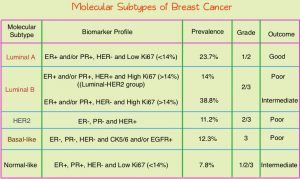
Breast cancer is heterogeneous malignancy and using global gene expression analyses, 5 breast cancer intrinsic subtypes have been established. They include Luminal A, Luminal B, HER2-enriched, Basal-like, and Normal breast-like group. Luminal A breast cancer overexpresses estrogen pathway genes and is the least proliferative, and patients have the lowest risk of recurrence with the best prognosis. In a retrospective analysis of women over age 60 years, with Luminal A, Grade 1-2, T1N0 breast cancer, treated with breast conserving surgery and endocrine therapy alone, the local recurrence rate was low (JCO 2015; 33:2035). However, the utility of combining molecular subtype (Luminal A subtype) with clinical pathological factors, to guide radiotherapy decision-making, has not been prospectively evaluated.Molecular-Subtypes-of-Breast-Cancer

LUMINA is a prospective multicenter single-arm, cohort study, in which 500 women, 55 years and older, who had undergone breast conserving surgery for breast cancer, were enrolled. Eligible patients had invasive ductal T1N0, Grade 1-2, Luminal A breast cancer, had undergone breast conserving surgery, with excision margins of at least 1 mm and sentinel lymph node biopsy, omitted radiotherapy, and had received adjuvant endocrine therapy for at least 5 years. Luminal A subtype was defined as ER 1% or more, PR more than 20%, HER2 negative and Ki67 13.25% or less. Ki67 immunohistochemistry was performed centrally in one of three Canadian laboratories using International Ki67 Working Group methods. The median patient age was 67 years, 66% had Grade 1 tumors, 88% of patients were less than 75 years, and the median tumor size was 1.1 cm. Patients were excluded if they had a lobular carcinoma (including mixed ductal-lobular carcinoma), clinical or pathological evidence of direct extension to the chest wall or skin, multifocal or multicentric disease, Grade 3 histologic features, extensive intraductal component, or evidence of lymphovascular invasion. Patients were followed every six months for the first two years and then yearly. The Primary outcome was local recurrence defined as time from enrollment to any invasive or non-invasive cancer in the ipsilateral breast. Secondary endpoints included contralateral breast cancer, Disease Free Survival, and Overall Survival.

At a median follow up of 5 years, the local recurrence rate was 2.3% and the rate of contralateral breast cancer was 1.9%. The 5-year Disease Free Survival was 89.9% and 5-year Overall Survival rate was 97.2%.

The authors concluded that among women 55 years of age and over, with low grade Luminal A breast cancer, omission of radiation therapy following breast conserving surgery and treatment with endocrine therapy alone for 5 years or more, resulted in very low rates of local recurrence at 5 years. The researchers added that approximately 30,000-40,000 women per year in North America, predominantly in the US, could avoid the morbidity, expense, and inconvenience of radiotherapy.

Omitting Radiotherapy after Breast-Conserving Surgery in Luminal A Breast Cancer. Whelan TJ, Smith S, parpia S, et al. for the LUMINA Study Investigators. N Engl J Med 2023; 389:612-619.

Tucatinib plus Trastuzumab for HER2-Positive Metastatic Colorectal Cancer

SUMMARY: ColoRectal Cancer (CRC) is the third most common cancer diagnosed in both men and women in the United States. The American Cancer Society estimates that approximately 153,020 new cases of CRC will be diagnosed in the United States in 2023 and about 52,550 patients are expected to die of the disease. The lifetime risk of developing CRC is about 1 in 23.

Approximately 15-25% of the patients with CRC present with metastatic disease at the time of diagnosis (synchronous metastases) and 50-60% of the patients with CRC will develop metastatic disease during the course of their illness. First line treatment of metastatic CRC include Oxaliplatin or Irinotecan, in combination with a Fluoropyrimidine and Leucovorin (FOLFOX or FOLFIRI), along with a VEGF targeting agent such as Bevacizumab or EGFR targeting agents such as Cetuximab and Panitumumab. Patients with Stage IV colorectal cancer are now routinely analyzed for extended RAS and BRAF mutations. KRAS mutations are predictive of resistance to EGFR targeted therapy.

Human Epidermal Growth Factor Receptor 2 (HER2) is overexpressed in 3-5% of patients with RAS wild-type metastatic colorectal cancer. HER2-positive tumors are IHC3+ by Immunohistochemistry (IHC) or IHC2+/FISH [Fluorescence in Situ Hybridization] amplified. Previously published studies have indicated that patients with HER2-positive CRC have less benefit from EGFR targeted therapies. In the HERACLES trial, a combination of two HER2 targeted therapies prolonged Overall Survival (OS) in RAS wild-type metastatic colorectal cancer.

Tucatinib (TUKYSA®) is an oral Tyrosine Kinase Inhibitor that is highly selective for the kinase domain of HER2, with minimal inhibition of Epidermal Growth Factor Receptor. Trastuzumab (HERCEPTIN®) is a humanized monoclonal antibody targeting HER2/neu oncogene.

MOUNTAINEER is a U.S. and European multicenter, open-label, randomized, prospective, Phase II study, conducted among patients with previously treated HER2-positive metastatic colorectal cancer. This U.S. investigator-sponsored trial initially consisted of a single cohort (Cohort A) of patients who received Tucatinib 300 mg orally BID in combination with Trastuzumab 8 mg/kg IV given as a loading dose on Cycle 1, Day 1, followed by maintenance dose of Trastuzumab 6 mg/kg IV on Day 1 every three weeks thereafter. Patients were treated until disease progression or unacceptable toxicity. This trial was subsequently expanded globally to include patients who were randomized to receive Tucatinib plus Trastuzumab (Cohort B) or Tucatinib monotherapy (Cohort C). Eligible patients (N=114) were required to have HER2-positive, RAS wild-type, unresectable or metastatic colorectal cancer and prior treatment with Fluoropyrimidine, Oxaliplatin, Irinotecan, and an anti-Vascular Endothelial Growth Factor (VEGF) monoclonal antibody. Patients whose tumors were MisMatch Repair (dMMR) deficient or were MicroSatellite Instability-High (MSI-H) must also have received an anti PD-1 monoclonal antibody. Patients who received prior anti-HER2 targeted therapy were excluded. HER2 amplification was identified by Next Generation Sequencing in 61% of patients, by an IHC test score of 3+ in 40%, and by an IHC test score of 2+ and FISH amplification in 32%. The median age was 56 years, 58% were male, and 77% were Caucasian. Of patients who received combination therapy, 85% had left-sided primaries, 78% had received 2 or more lines of prior therapy, and 40% had received 3 or more lines of prior therapy. Over two thirds of the patients had liver or lung metastases. The Primary endpoint was Objective Response Rate (ORR) as assessed by blinded Independent Central Review (ICR) in patients receiving the combination of Tucatinib and Trastuzumab (Cohorts A and B). Secondary endpoints included Duration of Response, Progression Free Survival (PFS), Overall Survival (OS) and safety and tolerability of the combination regimen.

At a median follow up of 20.7 months, the ORR among Cohort A and B patients treated with a combination of Tucatinib and Trastuzumab (N=84) was 38.1% and the median Duration of Response was 12.4 months. The Disease Control Rate was 71.4%. The median Progression Free Survival was 8.2 months, and median Overall Survival was 24.1 months. In the Cohort C patients who received Tucatinib monotherapy (N=30), the ORR was only 3.3% and participants who did not respond to Tucatinib monotherapy by 12 weeks or had disease progressed at any time had the option to receive the combination of Tucatinib and Trastuzumab. Tucatinib in combination with Trastuzumab was well tolerated. Grade 1 or 2 diarrhea was the most common adverse event, followed by fatigue and nausea. Treatment discontinuation due to adverse events was low at 5.8%.

It was concluded that in this largest prospective trial to date among patients with chemotherapy-refractory HER2-positive, RAS wild-type metastatic colorectal cancer, Tucatinib in combination with Trastuzumab demonstrated durable and clinically meaningful antitumor activity and is a new chemotherapy-free treatment option for this group of patients. Based on these results, the FDA in January 2023, granted accelerated approval to Tucatinib in combination with Trastuzumab for RAS wild-type, HER2-positive unresectable or metastatic colorectal cancer that has progressed following Fluoropyrimidine, Oxaliplatin, and Irinotecan-based chemotherapy. Studies are underway investigating Tucatinib plus Trastuzumab in earlier lines of therapy.

Tucatinib plus trastuzumab for chemotherapy-refractory, HER2-positive, RAS wild-type unresectable or metastatic colorectal cancer (MOUNTAINEER): a multicentre, open-label, phase 2 study. Strickler JH, Cercek A, Siena S, et al. The Lancet Oncology 2023;24:496-508.

Late Breaking Abstract – ASCO 2023: Toripalimab Plus Chemotherapy Improves Progression Free Survival in Metastatic Triple Negative Breast Cancer

SUMMARY: Breast cancer is the most common cancer among women in the US and about 1 in 8 women (12%) will develop invasive breast cancer during their lifetime. It is estimated that approximately 300,590 new cases of breast cancer will be diagnosed in 2023 and about 43,700 individuals will die of the disease, largely due to metastatic recurrence. Breast cancer is the second leading cause of cancer death in women, in the U.S.

Triple Negative Breast Cancer (TNBC) is a heterogeneous, molecularly diverse group of breast cancers and are ER (Estrogen Receptor), PR (Progesterone Receptor) and HER2 (Human Epidermal Growth Factor Receptor-2) negative. TNBC accounts for 15-20% of invasive breast cancers, with a higher incidence noted in young patients. It is usually aggressive, and tumors tend to be high grade and patients with TNBC are at a higher risk of both local and distant recurrence. Those with metastatic disease have one of the worst prognoses of all cancers with a median Overall Survival of 13 months. The majority of patients with TNBC who develop metastatic disease do so within the first 3 years after diagnosis, whereas those without recurrence during this period of time have survival rates similar to those with ER-positive breast cancers.

Previously published studies have shown that presence of tumor-infiltrating lymphocytes was associated with clinical benefit, when treated with chemotherapy and immunotherapy, in patients with TNBC, and improved clinical benefit was observed in patients with immune-enriched molecular subtypes of metastatic TNBC. Toripalimab, a checkpoint inhibitor, is a humanized IgG4K monoclonal antibody that binds to the PD-1 receptor and blocks its interaction with ligands PD-L1 and PD-L2. It thereby reverses the PD-1 pathway-mediated inhibition of the immune response, and unleashes the tumor-specific effector T cells. Toripalimab provided significant clinical activity with a favorable safety profile in several solid tumors.

The purpose of this study is to compare the efficacy and safety of Toripalimab versus placebo, in combination with nab-Paclitaxel for metastatic or recurrent TNBC. The rationale for combining chemotherapy with immunotherapy is that cytotoxic chemotherapy releases tumor-specific antigens, and immune checkpoint inhibitors such as Toripalimab when given along with chemotherapy can enhance endogenous anticancer immunity.

TORCHLIGHT is a randomized, double-blind, placebo-controlled, multi-center, Phase III trial, in which the safety and efficacy of Toripalimab plus nab-Paclitaxel was compared with placebo plus nab-Paclitaxel in patients with Stage IV or recurrent/metastatic TNBC. In this study, 531 (N=531) eligible patients were randomly assigned 2:1 to receive Toripalimab 240mg IV on Day 1 every 3 weeks (N=353) or placebo (N=178), along with nab-Paclitaxel given at 125 mg/m2 on days 1 and 8 of each cycle. Treatment was continued until disease progression or intolerable toxicity. Patients could not have received more than one line of chemotherapy in the metastatic setting and had to be eligible for taxane monotherapy. Baseline characteristics were well balanced between the treatment groups and patients were stratified based on PD-L1 expression, Paclitaxel therapy history and line of prior therapy at enrollment. In the Toripalimab group, 200 patients had PD-L1 positive disease, whereas 100 patients in the placebo group had PD-L1-positive disease. The Primary endpoint was Progression Free Survival (PFS) assessed by a Blinded Independent Central Review (BICR), first in the PD-L1-positive population and then in the Intent-To-Treat (ITT) population. Secondary endpoints included Overall Survival (OS), Objective Response Rate (ORR), Duration of Response (DoR), Disease Control Rate and Safety.

At interim analysis, with the median follow up of 14 months, a statistically significant improvement in PFS was demonstrated with Toripalimab in the PD-L1 positive subgroup. The median PFS was 8.4 months versus 5.6 months respectively (HR=0.65; P=0.01). The PFS in the overall population showed a similar trend and was 8.4 months in the Toripalimab group and 6.9 months in the placebo group (HR=0.77; P=0.04). A descriptive Overall Survival analysis showed a trend towards improved OS with Toripalimab in the PD-L1 positive group (median OS 32.8 versus 19.5 months; HR=0.61; P=0.01). In the overall population, the median OS was 33.1 versus 23.5 months (HR=0.69, P=0.01). No new safety signals were identified.

The authors concluded that, for PD-L1 positive metastatic or recurrent Triple Negative Breast Cancer patients receiving first-line treatment, the addition of Toripalimab to nab-Paclitaxel resulted in a significant improvement in Progression Free Survival with an acceptable safety profile. Patients are being followed for the final PFS and OS analysis.

TORCHLIGHT: A randomized, double-blind, phase III trial of toripalimab versus placebo, in combination with nab-paclitaxel(nab-P) for patients with metastatic or recurrent triple-negative breast cancer (TNBC). Jiang Z, Ouyang Q, Sun T, et al. J Clin Oncol 41, 2023 (suppl 17; abstr LBA1013)

Late Breaking Abstract- ASCO 2023: BCMA-directed CAR T-cell therapy Cilta-cel in Lenalidomide Refractory Multiple Myeloma

SUMMARY: Multiple Myeloma is a clonal disorder of plasma cells in the bone marrow and the American Cancer Society estimates that in the United States, 35,730new cases will be diagnosed in 2023 and 12,590 patients are expected to die of the disease. Multiple Myeloma is a disease of the elderly, with a median age at diagnosis of 69 years and characterized by intrinsic clonal heterogeneity. Almost all patients eventually will relapse, and patients with a high-risk cytogenetic profile, extramedullary disease or refractory disease have the worst outcomes. The introduction of Proteasome Inhibitors, Immunomodulatory agents and CD38 targeted therapies has resulted in higher Response Rates, as well as longer Progression Free Survival (PFS) and Overall Survival (OS), with the median survival for patients with myeloma approaching 10 years or more. Nonetheless, multiple myeloma in 2023 remains an incurable disease. Multiple myeloma patients triple refractory to Immunomodulatory drugs (IMiD), Proteasome Inhibitors (PIs), and anti-CD38 monoclonal antibodies have a poor prognosis with a median progression-free survival (PFS) of 3-4 months and a median Overall Survival (OS) of 8-9 months.

With the introduction of new combinations of antimyeloma agents in earlier lines of therapy, patients with Relapsed or Refractory myeloma often have disease that is refractory to multiple drugs. There is an urgent unmet medical need for agents with novel mechanisms of action that are safe and effective, for patients with aggressive and resistant disease.

Chimeric Antigen Receptor (CAR) T-cell therapy has been associated with long-term disease control in some hematologic malignancies and showed promising activity in a Phase 1 study involving patients with Relapsed or Refractory myeloma. B-cell Maturation Antigen (BCMA) is a member of the Tumor Necrosis Factor superfamily of proteins. It is a transmembrane signaling protein primarily expressed by malignant and normal plasma cells and some mature B cells. BCMA is involved in JNK and NF-kB signaling pathways that induce B-cell development and autoimmune responses. BCMA has been implicated in autoimmune disorders, as well as B-lymphocyte malignancies, Leukemia, Lymphomas, and Multiple Myeloma.

Anti-BCMA CAR T-Cell Therapy is a type of immunotherapy and consists of T cells collected from the patient’s blood in a leukapheresis procedure. These T cells are then stimulated by treating with interleukin 2 (IL-2) and anti-CD3 antibodies in vitro, so that they will actively proliferate and expand to large numbers. These T cells are then genetically engineered to produce special receptors on their surface called Chimeric Antigen Receptors (CAR), by transducing with a gene encoding the engineered CAR, via a retroviral vector such as lentiviral vector. These reprogrammed cytotoxic T cells with the Chimeric Antigen Receptors on their surface are now able to recognize a specific antigen such as BCMA on tumor cells. These genetically engineered and reprogrammed CAR T-cells are grown in the lab and are then infused into the patient. These cells in turn proliferate in the patient’s body and the engineered receptor on the cell surface help recognize and kill cancer cells that expresses that specific antigen such as BCMA. The patient undergoes lymphodepletion chemotherapy with Fludarabine and Cytoxan prior to the introduction of the engineered CAR T-cells. By depleting the number of circulating leukocytes, cytokine production is upregulated and reduces competition for resources, which in turn promotes the expansion of the engineered CAR T-cells.

Ciltacabtagene autoleucel (Cilta-cel), a B-cell maturation antigen (BCMA)-directed CAR T-cell therapy, is effective in heavily pretreated patients with Relapsed or Refractory multiple myeloma and was approved by the FDA in February 2022 for the treatment of adult patients with Relapsed or Refractory multiple myeloma after four or more prior lines of therapy, including a Proteasome Inhibitor (PI), an Immunomodulatory agent (IMiD), and an anti-CD38 monoclonal antibody. The researchers in this study investigated the efficacy of cilta-cel in earlier treatment lines among patients with Lenalidomide-refractory disease.

CARTITUDE-4 is an open-label, multicenter, randomized Phase III trial conducted to compare cilta-cel with the physician’s choice of either of two highly effective standard-of-care therapies, in patients with lenalidomide-refractory multiple myeloma after one to three lines of therapy. In this study a total of 419 eligible patients (N=419) were randomly assigned in a 1:1 ratio to receive either one of the standard-of-care physicians choice of PVd-Pomalidomide, Bortezomib, and Dexamethasone, DPd-Daratumumab, Pomalidomide, and Dexamethasone (N=211) or a single infusion of cilta-cel administered after the physician’s choice of bridging therapy with PVd or DPd (N=208). In the standard-of-care group, DPd was administered in 28-day cycles and PVd in 21-day cycles until disease progression. Patients in the cilta-cel group underwent apheresis, followed by at least one bridging therapy cycle, with the number of cycles based on patient clinical status and cilta-cel manufacturing time, and lymphodepletion with Cyclophosphamide 300 mg/m2 IV and Fludarabine 30 mg/m2 IV daily for 3 days. Patients then received a single cilta-cel infusion at a target dose of 0.75X10⁶ CAR-positive T cells/kg of body weight 5-7 days after the initiation of lymphodepletion. The median age was 61 yrs, median time from diagnosis was 3.2 years, about 60% of patients had high risk cytogenetic abnormalities and all patients had received 1-3 previous lines of treatment. In the cilta-cel group, 14.4% had triple-class drug resistance and 24.0% had resistance to anti-CD38 antibody. The Primary outcome was Progression Free Survival and Secondary outcomes sequentially tested included Complete Response (CR) or better, Overall Response Rate (ORR), Minimal Residual Disease (MRD) negativity, and Overall Survival (OS).

Treatment with cilta-cel resulted in a significantly lower risk of disease progression or death than standard-of-care (HR=0.26; P<0.001). The median PFS was not reached in the cilta-cel group and was 11.8 months in the standard-of-care group. Progression-free survival at 12 months was 75.9% in the cilta-cel group and 48.6% in the standard-of-care group. The ORR was 84.6% in the cilta-cel group and 67.3% in the standard-of-care group (P<0.001), the CR rate or better was 73.1% versus 21.8% (P<0.001), and MRD negativity was 60.6% versus 15.6% (P<0.001), respectively. Among the patients who had a response, an estimated 84.7% in the cilta-cel group as compared with 63.0% in the standard-of-care group continued to have a response for at least 12 months.

The most common Grade 3 or 4 adverse events in both groups were hematologic and most high-grade cytopenias in patients who received cilta-cel recovered to Grade 2 or less by day 60. Serious adverse events were reported in 44% of patients in the cilta-cel group and in 39% of patients in the standard-of-care group. Lower rates of cytopenias, Cytokine Release Syndrome, and CAR-T–related neurotoxicity were seen in this study compared to previous cilta-cel studies suggesting that cilta-cel may have a better side-effect profile when used earlier in treatment.

It was concluded that a single cilta-cel infusion resulted in a lower risk of disease progression or death, as well as rapid and deep responses, compared to standard therapies in Lenalidomide-refractory patients with multiple myeloma who had received one to three previous therapies.

Cilta-cel or Standard Care in Lenalidomide-Refractory Multiple Myeloma. San-Miguel J, Dhakal B, Yong K, et al. N Engl J Med 2023;389:335-347.

Perioperative Pembrolizumab for Early Stage Non Small Cell Lung Cancer

SUMMARY: Lung cancer is the second most common cancer in both men and women and accounts for about 13% of all new cancers and 21% of all cancer deaths. The American Cancer Society estimates that for 2023, about 238,340 new cases of lung cancer will be diagnosed and 127,070 patients will die of the disease. Lung cancer is the leading cause of cancer-related mortality in the United States. Non-Small Cell Lung Cancer (NSCLC) accounts for approximately 85% of all lung cancers. Of the three main subtypes of NSCLC, 30% are Squamous Cell Carcinomas (SCC), 40% are Adenocarcinomas and 10% are Large Cell Carcinomas. With changes in the cigarette composition and decline in tobacco consumption over the past several decades, Adenocarcinoma now is the most frequent histologic subtype of lung cancer.

The 5-year survival rate for patients diagnosed with lung cancer in the US is about 25%, which is a significant improvement over the past 5 years, in part due to earlier detection from lung cancer screening, reduction in smoking, advances in diagnostic and surgical procedures, as well as the introduction of new therapies. However, the 5-year survival rate remains significantly lower among communities of color at 20%. Early detection and screening remain an important unmet need, as 44% of lung cancer cases are not found until they are advanced. In the US, only 5.8% of those individuals at high risk were screened in 2021.

Surgical resection is the primary treatment for approximately 30% of patients with NSCLC who present with early Stage (I–IIIA) disease. These patients are often treated with platinum-based adjuvant chemotherapy to decrease the risk of recurrence. Nonetheless, 45-75% of these patients develop recurrent disease. There is therefore an unmet need for this patient population.

Immunotherapy with Immune Checkpoint Inhibitors (ICIs) has revolutionized cancer care and has become one of the most effective treatment options, by improving Overall Response Rate and prolongation of survival, across multiple tumor types. These agents target Programmed cell Death protein-1 (PD-1), Programmed cell Death Ligand-1 (PD-L1), Cytotoxic T-Lymphocyte-Associated protein-4 (CTLA-4), and many other important regulators of the immune system. Checkpoint inhibitors unleash the T cells resulting in T cell proliferation, activation, and a therapeutic response. Biomarkers predicting responses to ICIs include Tumor Mutational Burden (TMB), Mismatch Repair (MMR) status, and Programmed cell Death Ligand 1 (PD‐L1) expression.

KEYTRUDA® (Pembrolizumab) is a fully humanized, Immunoglobulin G4, anti-PD-1, monoclonal antibody, that binds to the PD-1 receptor and blocks its interaction with ligands PD-L1 and PD-L2.

KEYNOTE-671 trial is a randomized, double-blind, placebo-controlled, Phase III trial, conducted to evaluate whether a perioperative approach of combined neoadjuvant Pembrolizumab plus Cisplatin-based chemotherapy, followed by surgical resection and adjuvant Pembrolizumab therapy, would improve efficacy as compared with neoadjuvant Cisplatin-based chemotherapy and resection alone, in patients with resectable Stage II or III NSCLC. This study included patients with pathologically confirmed, resectable Stage II, IIIA, or IIIB (N2 disease-with involvement of 1 or more ipsilateral mediastinal lymph nodes or subcarinal lymph node) NSCLC. Eligible patients were randomly assigned in a 1:1 ratio to receive neoadjuvant Pembrolizumab 200 mg IV (N=397) or placebo (N=400) once every 3 weeks, each of which was given with Cisplatin-based chemotherapy for 4 cycles, followed by surgery and adjuvant Pembrolizumab 200 mg IV or placebo once every 3 weeks for up to 13 cycles. The median age was 64 years, 70% had Stage III disease, about 44% had N2 nodal stage, 57% has nonsquamous histology and 43% had squamous histology, about 36% had less than 1% PD-L1 Tumor Proportion Score (TPS), whereas 30% of patients had tumors with a TPS of 1-49% and 33% had TPS of 50% or more. The dual Primary end points were Event-Free Survival (the time from randomization to the first occurrence of local progression that precluded the planned surgery, unresectable tumor, progression or recurrence, or death), and Overall Survival. Secondary end points included major pathological response, Pathological Complete Response, and Safety.

The researchers reported the efficacy and safety data from the prespecified first interim analysis. The median follow-up was 25.2 months. Event-Free Survival at 24 months was 62.4% in the Pembrolizumab group and 40.6% in the placebo group (HR=0.58; P<0.001). The estimated 24-month Overall Survival was 80.9% in the Pembrolizumab group and 77.6% in the placebo group and this was not statistically significant (P=0.02). A major pathological response occurred in 30.2% of the patients in the Pembrolizumab group and in 11.0% of those in the placebo group (P<0.0001) and a pathological Complete Response occurred in 18.1% and 4.0%, respectively (P<0.0001). An exploratory analysis showed that the Event-Free Survival benefit was noted in the Pembrolizumab group regardless of whether participants had a major pathological response or a pathological Complete Response. The benefit with Pembrolizumab therapy appeared to be similar across both squamous and nonsquamous histologies. Approximately 45% of the patients in the Pembrolizumab group and 37% in the placebo group had treatment-related adverse events of Grade 3 or higher.

It was concluded that among patients with resectable Stage II, IIIA, or IIIB (N2 stage) NSCLC, the addition of Pembrolizumab to neoadjuvant Cisplatin-based chemotherapy, followed by surgical resection and adjuvant Pembrolizumab therapy, led to a significant improvement in Event-Free Survival, major pathological response, and Pathological Complete Response, as compared with neoadjuvant chemotherapy alone followed by surgery. It should be noted that this trial was not designed to assess the relative contribution of adjuvant Pembrolizumab.

Perioperative Pembrolizumab for Early-Stage Non–Small-Cell Lung Cancer. Wakelee H, Liberman M, Kato T, et al., for the KEYNOTE-671 Investigators. N Engl J Med 2023;389:491-503.

Selinexor Maintenance in Advanced Endometrial Cancer

SUMMARY: The American Cancer Society estimates that approximately 66,200 new cases of uterine cancer will be diagnosed in 2023 and about 13,030 individuals will die of the disease. Endometrial carcinoma is the second most prevalent gynecologic cancer in women worldwide, and its incidence has been increasing. Risk factors include age, factors that influence hormone levels such as obesity and estrogen replacement therapy, Type 2 diabetes, family history, diet and exercise, drugs such as Tamoxifen, and delayed menopause. Patients with advanced or recurrent endometrial cancer are often treated with a combination of Carboplatin and Paclitaxel. Treatment options following failure of first-line therapy for this patient group however are limited, with single agent response rates of 10-15% and 5-year survival rates of approximately 17%. There are no approved therapies in the maintenance setting for patients with advanced or recurrent endometrial cancer.

It is estimated that of the endometrial carcinoma molecular subtypes, TP53 wild-type tumors represent 75% of the newly diagnosed endometrial carcinoma and 50% of advanced/recurrent tumors. There are no specific targeted therapies available for patients with TP53 wild-type endometrial carcinoma.

Exportin 1 (XPO1) is an important nuclear export protein overexpressed in endometrial cancers. High XPO1 levels facilitate increased nuclear export of tumor suppressor proteins such as P53, P73, IkB and FOXO3a, pRb, BRCA1, as well as growth regulators such as Glucocorticoid Receptor and oncoprotein mRNA. This enables cancer cells to escape tumor suppressor protein mediated cell cycle arrest and apoptosis.

Selinexor (XPOVIO®) is first-in-class, oral selective XPO1 inhibitor that reactivates the tumor suppressor proteins by preventing nuclear transport and inhibits oncoprotein translation. Selinexor is approved in the US for the treatment of patients with Multiple Myeloma and Diffuse Large B-Cell Lymphoma. Selinexor demonstrated antitumor activity among patients with endometrial carcinoma in Phase I and II trials.

SIENDO/EC-042 is a Phase III randomized, double-blind, placebo-controlled study designed to evaluate the efficacy and safety of Selinexor as maintenance therapy in patients with TP53 wild-type advanced or recurrent endometrial carcinoma who have achieved a Partial or Complete Response after completing at least 12 weeks of platinum combination chemotherapy with or without immunotherapy for primary Stage IV or recurrent disease. Comprehensive tissue-based genomic profiling testing was performed, to identify and enroll patients whose tumors were TP53 wild-type. In this study, 263 eligible patients were randomly assigned in a 2:1 ratio to receive Selinexor 60 mg orally once weekly (N=174) or placebo weekly (N=89). The prespecified TP53 wild-type subgroup included 113 women assigned to Selinexor (N=77) or Placebo (N=36). The median age in the TP53 wild-type subgroup was 63 years and most patients had endometrioid histology and MSS/MMR proficient tumors. Patients were stratified based on whether they had primary Stage IV or recurrent disease, as well as Partial or Complete response to platinum combination chemotherapy before they were started on maintenance therapy with Selinexor. The Primary endpoint was investigator-assessed Progression Free Survival (PFS), with exploratory endpoints including histologic subtype and molecular subclassifications. Secondary end points included PFS by Blinded Independent Central Review, Overall Survival (OS), time to first subsequent therapy, and Health-Related Quality of Life. The primary analysis of Selinexor maintenance therapy showed improvements in median PFS for the intent-to-treat (ITT) population but were not clinically meaningful.

However, an exploratory analysis of a pre-specified subgroup of patients with TP53 wild-type endometrial cancer showed significant findings. At a median follow up of 25.3 months, it was noted that patients with TP53 wild-type tumors receiving Selinexor maintenance therapy had a median PFS of 27.4 months compared with 5.2 months in the placebo group, representing a 58% decrease in the risk of disease progression (HR=0.42; P=0.0003). This efficacy was observed regardless of MSS/MSI status, but women in the TP53 wild-type subgroup who had MSS/MMR proficient tumors demonstrated the greatest PFS benefit with Selinexor. In the subgroup with TP53 mutations/aberrations, the median PFS was shorter with Selinexor (4.2 months versus 5.4 months with placebo; HR=1.34: P=0.92). The most common adverse events with Selinexor in the TP53 wild-type subgroup included nausea (90.8%), vomiting (60.5%) and diarrhea (39.5%). Grade 3-4 events included neutropenia (18.4%) and thrombocytopenia (9.2%).

The authors concluded that TP53 status is a robust prognostic biomarker for endometrial carcinoma and Selinexor maintenance in TP53 wild-type endometrial carcinoma demonstrated durable Progression Free Survival benefit in a pre-specified subgroup analysis, and offers the potential to prolong response to prior systemic therapy.

Long-term follow up of selinexor maintenance in patients with TP53wt advanced or recurrent endometrial cancer: A pre-specified subgroup analysis from the phase 3 ENGOT-EN5/GOG-3055/SIENDO study. Slomovitz B. American Society of Clinical Oncology Plenary Series. July 25, 2023; virtual; abstract 427956.