Adjuvant Treatment with OPDIVO® in Muscle-Invasive Urothelial Carcinoma

SUMMARY: The American Cancer Society estimates that in the United States for 2021, about 83,730 new cases of bladder cancer will be diagnosed and approximately 17,200 patients will die of the disease. Bladder cancer is the fourth most common cancer in men, but it is less common in women. A third of the patients initially present with locally invasive or metastatic disease. Even though radical cystectomy is considered the standard of care for patients with localized Muscle Invasive Bladder Cancer (MIBC), two large randomized trials and two meta-analysis have shown greater survival benefit with neoadjuvant Cisplatin-based combination chemotherapy for patients with MIBC, compared to surgery alone. However, not all patients with MIBC benefit from neoadjuvant Cisplatin based therapy, with only 25-50% attaining a pathologic response. More than 50% of patients with MIBC or regional lymph node involvement will develop metastatic disease following radical cystectomy. There is presently no clear consensus with regards to the routine use of adjuvant Cisplatin-based chemotherapy. Further, not all patients are eligible for adjuvant or neoadjuvant Cisplatin-based chemotherapy.

OPDIVO® (Nivolumab) is a fully human, immunoglobulin G4 monoclonal antibody that binds to the PD-1 receptor and blocks its interaction with PD-L1 and PD-L2. Blocking the Immune checkpoint proteins unleashes the T cells, resulting in T cell proliferation, activation and a therapeutic response. OPDIVO® has been shown to have antitumor activity in patients with metastatic urothelial carcinoma who had previously received platinum treatment, and is presently approved by the FDA for this patient group.

CheckMate 274 is a multicenter, double-blind, randomized, Phase III trial conducted to evaluate the efficacy and safety of adjuvant OPDIVO®, as compared with placebo, in patients with muscle-invasive urothelial carcinoma following radical surgery (with or without previous neoadjuvant Cisplatin-based combination chemotherapy). A total of 709 patients with muscle-invasive urothelial carcinoma who had undergone radical surgery were randomly assigned in a 1:1 ratio to receive either OPDIVO® 240 mg as a 30-minute IV infusion (N=353) or placebo (N=356), every 2 weeks for up to 1 year. To be eligible, patients must have had radical surgery (R0, with negative surgical margins), with or without neoadjuvant Cisplatin-based chemotherapy. Patients must have had pathological evidence of urothelial carcinoma (originating in the bladder, ureter or renal pelvis) with a high risk of recurrence defined as follows: pathological stage of pT3, pT4a, or pN+ and patients not eligible for or declined adjuvant Cisplatin-based combination chemotherapy, patients who had not received neoadjuvant Cisplatin-based chemotherapy, and pathological stage of ypT2 to ypT4a or ypN+ for patients who received neoadjuvant Cisplatin. Both treatment groups were well balanced and approximately 40% of patients in both treatment groups had PD-L1 expression of 1% or more and 43% of patients had received previous neoadjuvant cisplatin therapy. The two Primary endpoints were Disease Free Survival (DFS) among all the patients, and among patients with a tumor Programmed Death-Ligand 1 (PD-L1) expression level of 1% or more. Secondary endpoints included Survival free from recurrence outside the urothelial tract, Overall Survival and Safety. The median follow up was 20.9 months among patients who received OPDIVO® and 19.5 months among those who received placebo.

The median DFS was 20.8 months in the OPDIVO® group and 10.8 months in the placebo group in the intention-to-treat population, which was nearly double that with placebo. The percentage of patients who were alive and disease-free at 6 months was 74.9% with OPDIVO® and 60.3% with placebo, in the intention-to-treat population (HR for disease recurrence or death=0.70; P<0.001). Among patients with a PD-L1 expression level of 1% or more, the percentage who were alive and disease-free at 6 months was 74.5% with OPDIVO® and 55.7% with placebo, in the Intention-to-Treat Population (HR=0.55; P<0.001). The subgroup analysis showed that there was a higher probability of DFS with OPDIVO® than with placebo, and this benefit was observed regardless of nodal status, PD-L1 status, or use or nonuse of previous neoadjuvant Cisplatin-based chemotherapy.

The median survival free from recurrence outside the urothelial tract, in the intention-to-treat population, was 22.9 months among patients who received OPDIVO® and 13.7 months with placebo. The percentage of patients who were alive and free from recurrence outside the urothelial tract at 6 months was 77% with OPDIVO® and 62.7% with placebo (HR for recurrence outside the urothelial tract or death=0.72). Among those with a PD-L1 expression level of 1% or more, the percentage who were alive and free from recurrence outside the urothelial tract at 6 months was 75.3% and 56.7%, respectively (HR=0.55). Grade 3 or higher toxicities were noted in 17.9% of patients in the OPDIVO® group and 7.2% of patients in the placebo group.

It was concluded that among patients with high risk muscle-invasive urothelial carcinoma who had undergone radical surgery with curative intent, adjuvant treatment with OPDIVO® significantly improved Disease Free Survival, compared to placebo, in both intention-to-treat population and among patients with a PD-L1 expression level of 1% or more.

Adjuvant Nivolumab versus Placebo in Muscle-Invasive Urothelial Carcinoma. Bajorin DF, Witjes JA, Gschwend JE, et al. N Engl J Med 2021;384:2102-2114.
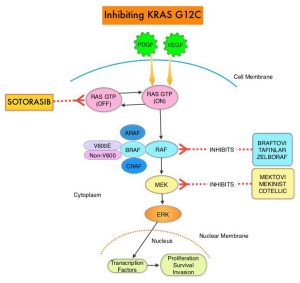
FDA Approves LUMAKRAS® for KRAS G12C-Mutated Non Small Cell Lung Cancer

SUMMARY: The FDA on May 28, 2021, granted accelerated approval to LUMAKRAS® (Sotorasib), a RAS GTPase family inhibitor, for adult patients with KRAS G12C mutated locally advanced or metastatic Non Small Cell Lung Cancer (NSCLC), as determined by an FDA approved test, who have received at least one prior systemic therapy. The FDA also approved the QIAGEN therascreen® KRAS RGQ PCR kit (tissue) and the Guardant360® CDx (plasma) as companion diagnostics for LUMAKRAS®. If no mutation is detected in a plasma specimen, the tumor tissue should be tested.

The American Cancer Society estimates that for 2021, about 235,760 new cases of lung cancer will be diagnosed and 131,880 patients will die of the disease. Lung cancer is the leading cause of cancer-related mortality in the United States. Non-Small Cell Lung Cancer (NSCLC) accounts for approximately 85% of all lung cancers. Of the three main subtypes of NSCLC, 30% are Squamous Cell Carcinomas (SCC), 40% are Adenocarcinomas and 10% are Large Cell Carcinomas. With changes in the cigarette composition and decline in tobacco consumption over the past several decades, Adenocarcinoma now is the most frequent histologic subtype of lung cancer.

The KRAS (kirsten rat sarcoma viral oncogene homologue) proto-oncogene encodes a protein that is a member of the small GTPase super family. The KRAS gene provides instructions for making the KRAS protein, which is a part of a signaling pathway known as the RAS/MAPK pathway. By relaying signals from outside the cell to the cell nucleus, the protein instructs the cell to grow, divide and differentiate. The KRAS protein is a GTPase, and converts GTP into GDP. To transmit signals, the KRAS protein must be turned on, by binding to a molecule of GTP. When GTP is converted to GDP, the KRAS protein is turned off or inactivated, and when the KRAS protein is bound to GDP, it does not relay signals to the cell nucleus. The KRAS gene is in the Ras family of oncogenes, which also includes two other genes, HRAS and NRAS. When mutated, oncogenes have the potential to change normal cells cancerous.

KRAS is the most frequently mutated oncogene in human cancers and are often associated with resistance to targeted therapies and poor outcomes. The KRAS-G12C mutation occurs in approximately 12-15% of Non Small Cell Lung Cancers (NSCLC) and in 3-5% of Colorectal cancers and other solid cancers. KRAS G12C is one of the most prevalent driver mutations in NSCLC and accounts for a greater number of patients than those with ALK, ROS1, RET, and TRK 1/2/3 mutations combined. KRAS G12C cancers are genomically more heterogeneous and occur more frequently in current or former smokers, and are likely to be more complex genomically than EGFR mutant or ALK rearranged cancers. G12C is a single point mutation with a Glycine-to-Cysteine substitution at codon 12. This substitution favors the activated state of KRAS, resulting in a predominantly GTP-bound KRAS oncoprotein, amplifying signaling pathways that lead to oncogenesis.Inhibiting-KRAS-G12C

LUMAKRAS® is a first-in-class small molecule that specifically and irreversibly inhibits KRAS-G12C and traps KRAS-G12C in the inactive GDP-bound state. Preclinical studies in animal models showed that LUMAKRAS® inhibited nearly all detectable phosphorylation of Extracellular signal-Regulated Kinase (ERK), a key downstream effector of KRAS, leading to durable complete regression of KRAS-G12C tumors.

The CodeBreaK clinical development program for LUMAKRAS® was designed to treat patients with an advanced solid tumor with the KRAS G12C mutation and address the longstanding unmet medical need for these cancers. This program has enrolled more than 800 patients across 13 tumor types since its inception.

CodeBreaK 100 is a Phase I and II, first-in-human, open-label, single arm, multicenter study, which enrolled patients with KRAS G12C-mutant solid tumors. Eligible patients must have received a prior line of systemic anticancer therapy, for their tumor type and stage of disease. The present FDA approval was based on a Phase II trial which enrolled 126 patients with NSCLC, 124 of whom had centrally evaluable lesions by RECIST criteria at baseline. Enrolled patients had locally advanced or metastatic NSCLC with a KRAS G12C mutation, who had progressed on an immune checkpoint inhibitor and/or platinum-based chemotherapy, and those with active brain metastases were excluded. Patient received LUMAKRAS® 960mg orally once daily, until disease progression or unacceptable toxicity. Imaging studies were done every 6 weeks up to week 48 and then once every 12 weeks thereafter. The Primary end point of the trial was Overall Response Rate (ORR) as assessed by blinded Independent Central Review. Secondary end points included Duration of Response (DOR), Disease Control Rate (DCR), time to recovery, Progression Free Survival (PFS), Overall Survival, and Safety. The examination of biomarkers served as an exploratory end point. Patients were followed for a median of 12.2 months.

The ORR was 37.1% and the median Duration of Response was 10 months. Three patients had a Complete Response and the Disease Control Rate was 80.6%. The median Time to response was 1.4 months and 72% of patients had an early rapid response on first CT scan at 6 weeks. Approximately 81% of patients had tumor shrinkage of any magnitude, and the median percentage of best tumor shrinkage among all responders was 60%, and these responses were durable. The median PFS was 6.8 months. In the exploratory biomarker analysis, tumor response to LUMAKRAS® was seen across subgroups, including patients with negative or low expression of PD-L1 and those with STK11 and TP53 mutations. The most common adverse reactions were diarrhea, musculoskeletal pain, nausea, fatigue, hepatotoxicity, and cough. The most common laboratory abnormalities were increase in liver function tests, anemia, hyponatremia and proteinuria.

It was concluded that patients with NSCLC have poor outcomes and limited treatment options following progression on first line treatment. LUMAKRAS® offers a new treatment option for this patient group, and it is the first KRAS-targeted therapy to be approved after nearly four decades of research. A global Phase III study (CodeBreaK 200) is underway, comparing LUMAKRAS® to Docetaxel in patients with KRAS G12C-mutated NSCLC.

CodeBreaK 100: Registrational Phase 2 Trial of Sotorasib in KRAS p.G12C Mutated Non-small Cell Lung Cancer. Li BT, Skoulidis F, Falchook G, et al. Presented at: International Association for the Study of Lung Cancer 2020 World Conference on Lung Cancer; January 28-31, 2021; virtual. Abstract PS01.07.

FDA Approves TRUSELTIQ® for Metastatic Cholangiocarcinoma

SUMMARY: The FDA on May 28, 2021, granted accelerated approval to TRUSELTIQ® (Infigratinib), a kinase inhibitor for adults with previously treated, unresectable, locally advanced or metastatic Cholangiocarcinoma with a Fibroblast Growth Factor Receptor 2 (FGFR2) fusion or other rearrangement, as detected by an FDA-approved test. The FDA also approved FoundationOne® CDx (Foundation Medicine, Inc.) for selection of patients with FGFR2 fusion or other rearrangement as a companion diagnostic device for treatment with TRUSELTIQ®.

Bile Duct cancer (Cholangiocarcinoma), comprise about 30% of all primary liver tumors and includes both intrahepatic and extrahepatic bile duct cancers. Klatskin tumor is a type of Cholangiocarcinoma that begins in the hilum, at the junction of the left and right bile ducts. It is the most common type of Cholangiocarcinoma, accounting for more than half of all cases. About 8,000 people in the US are diagnosed with Cholangiocarcinoma each year and approximately 20% of the cases are suitable for surgical resection, whereas a majority of patients at diagnosis have advanced disease. The 5-year survival is less than 5%, with limited progress made over the past two decades.

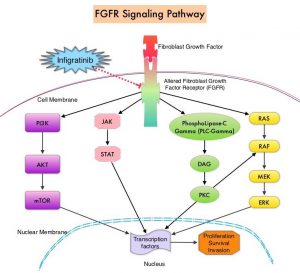
Approximately 75% of patients are diagnosed with late-stage disease, and are often treated with Gemcitabine plus Cisplatin, based on the findings of the ABC-02 study. Second line treatment options include FOLFOX regimen, which is associated with a Response Rate of about 5%, median Progression Free Survival (PFS) of about 4 months, and median Overall Survival (OS) of about 6 months. There is therefore an unmet need for new effective therapies. FGFRs (Fibroblast Growth Factor Receptors) play an important role in tumor cell proliferation and survival, migration and angiogenesis. Activating fusions, rearrangements, translocations and gene amplifications in FGFRs result in dysregulation of FGFR signaling, and may contribute to the pathogenesis of various cancers, including Cholangiocarcinoma. FGFR2 fusions or rearrangements occur almost exclusively in intrahepatic Cholangiocarcinoma, where they are observed in 10-16% of patients.FGFR-Signaling-Pathway

TRUSELTIQ® (Infigratinib) is an orally administered, ATP-competitive, Tyrosine Kinase Inhibitor of FGFR, which targets the Fibroblast Growth Factor Receptor (FGFR) protein, blocking downstream activity. In clinical studies, TRUSELTIQ® demonstrated a clinically meaningful Overall Response Rate (ORR) and Duration of Response (DOR).

The present FDA approval was based on a multicenter, open-label, single-arm, Phase II trial that enrolled 108 patients with previously treated, unresectable, locally advanced or metastatic Cholangiocarcinoma, with an FGFR2 fusion or rearrangement as determined by local or central testing. Patients received TRUSELTIQ® 125 mg orally daily for 21 days of each 28-day cycle, until unacceptable toxicity or disease progression. All patients had received at least 1 prior line of systemic therapy and 54% had received 2 or more prior lines of treatment. The median age was 53 years and all patients received prophylaxis with the oral phosphate binder Sevelamer carbonate. The co-Primary endpoints were Objective Response Rate (ORR) by Independent Central Review, and Duration of Response (DOR). Secondary endpoints included Progression Free Survival (PFS), Disease Control Rate (DCR), Overall Survival (OS), Safety and Pharmacokinetics. The median follow up was 10.6 months.

The ORR was 23%, with a median Duration of Response of 5.0 months. Among responding patients, 32% had a Duration of Response of 6 months or more. The median PFS was 7.3 months. The most common toxicities were hyperphosphatemia, increased creatinine, nail toxicity, stomatitis, dry eye, fatigue, alopecia, palmar-plantar erythrodysesthesia syndrome, arthralgia, dysgeusia, constipation, abdominal pain, dry mouth, eyelash changes, diarrhea, dry skin, decreased appetite, vision blurred and vomiting. Serious toxicities included hyperphosphatemia and retinal pigment epithelial detachment and monitoring for these adverse reactions during treatment is recommended.

It was concluded that TRUSELTIQ® administered as second or later line treatment was associated with promising anticancer activity, and represents a new therapeutic option for patients with Cholangiocarcinoma and FGFR fusions/rearrangements. A Phase III study of TRUSELTIQ® versus Gemcitabine/Cisplatin is ongoing, in the first-line setting.

Final results from a phase II study of infigratinib (BGJ398), an FGFR-selective tyrosine kinase inhibitor, in patients with previously treated advanced cholangiocarcinoma harboring an FGFR2 gene fusion or rearrangement. Javle MM, Roychowdhury S, Kelley RK, et al. DOI: 10.1200/JCO.2021.39.3_suppl.265 Journal of Clinical Oncology 39, no. 3_suppl (January 20, 2021) 265-265.

FDA Approves Bispecific Antibody RYBREVANT® for Metastatic Non Small Cell Lung Cancer

SUMMARY: The FDA on May 21, 2021, granted accelerated approval to RYBREVANT® (Amivantamab-vmjw), a bispecific antibody directed against Epidermal Growth Factor (EGF) and MET receptors, for adult patients with locally advanced or metastatic Non Small Cell Lung Cancer (NSCLC) with Epidermal Growth Factor Receptor (EGFR) exon 20 insertion mutations, as detected by an FDA-approved test, whose disease has progressed on or after Platinum-based chemotherapy. FDA also approved the Guardant360® CDx (Guardant Health, Inc.) as a companion diagnostic for RYBREVANT®.

The American Cancer Society estimates that for 2021, about 235,760 new cases of lung cancer will be diagnosed and 131,880 patients will die of the disease. Lung cancer is the leading cause of cancer-related mortality in the United States. Non-Small Cell Lung Cancer (NSCLC) accounts for approximately 85% of all lung cancers. Of the three main subtypes of NSCLC, 30% are Squamous Cell Carcinomas (SCC), 40% are Adenocarcinomas and 10% are Large Cell Carcinomas. With changes in the cigarette composition and decline in tobacco consumption over the past several decades, Adenocarcinoma now is the most frequent histologic subtype of lung cancer.

Approximately 10-15% of Caucasian patients and 35-50% of Asian patients with Adenocarcinomas, harbor activating EGFR mutations and 90% of these mutations are either exon 19 deletions or L858R substitution mutation in exon 21. EGFR exon 20 insertion mutations are the third most common after L858R and exon 19 deletions, and occur in about 2-3% patients with NSCLC and are insensitive to EGFR Tyrosine Kinase Inhibitors (TKIs) due to an altered conformation of the kinase active site. Next-Generation sequencing provides an alternative to Polymerase Chain Reaction (PCR)-based tests, which fail to identify 50% or more of exon 20 insertion mutations. Patients with EGFR exon 20 insertion mutations have a 5 year Overall Survival (OS) of 8% in the frontline setting, compared to an OS of 19% for patients with EGFR exon 19 deletions or L858R mutations. There is therefore a clinically unmet need for this patient group, as there are no approved targeted therapies available and platinum-doublet chemotherapy remains the standard of care for these patients.

Epidermal Growth Factor Receptor (EGFR) plays an important role in regulating cell proliferation, survival and differentiation, and is overexpressed in a variety of epithelial malignancies. EGFR targeted Tyrosine Kinase Inhibitors (TKIs) such as Gefitinib, Erlotinib, Afatinib, Dacomitinib and Osimertinib target the EGFR signaling cascade. However, patients eventually will develop drug resistance due to new EGFR mutations. Another important cause of drug resistance to TKIs is due to the activation of parallel RTK (Receptor Tyrosine Kinase) pathways such as Hepatocyte Growth Factor/Mesenchymal-Epithelial Transition factor (HGF/MET) pathway, thereby bypassing EGFR TKI inhibitors.

RYBREVANT® is a fully-human bispecific antibody directed against EGFR and MET receptors. RYBREVANT® binds extracellularly and simultaneously blocks ligand-induced phosphorylation of EGFR and c-MET, inhibiting tumor growth and promoting tumor cell death. Further, RYBREVANT® downregulates receptor expression on tumor cells thus preventing drug resistance mediated by new emerging mutations of EGFR or c-MET. By binding to the extracellular domain of the receptor protein, RYBREVANT® can bypass primary and secondary TKI resistance at the active site.

The present FDA approval was based on CHRYSALIS, an ongoing multicenter, non-randomized, open label, multicohort, Phase I clinical trial (NCT02609776) which included patients with locally advanced or metastatic NSCLC with EGFR exon 20 insertion mutations. The purpose of study is to evaluate the safety, pharmacokinetics, and preliminary efficacy of RYBREVANT® as a monotherapy and in combination with Lazertinib, and to determine the recommended Phase 2 dose (RP2D) (monotherapy), recommended Phase 2 combination dose (RP2CD) (combination therapy), and to determine recommended Phase 2 Dose (RP2q3W) with combination chemotherapy (RYBREVANT® in combination with standard of care Carboplatin and Pemetrexed) in 21 day treatment cycle for participants with advanced NSCLC.

In this analysis of the Phase 1 CHRYSALIS study, researchers assessed the efficacy and safety of RYBREVANT® in patients with NSCLC and EGFR exon 20 insertion mutations, who had progressed on prior Platinum-based chemotherapy, and were treated at the recommended Phase II dose of RYBREVANT® 1050 mg (1400 mg for patients weighting 80 kg or more). The median patient age was 61 years, 51% were female, and median prior lines of therapy was one. The Primary endpoint was Overall Response Rate (ORR). Secondary endpoints included Duration of Response (DOR), Clinical Benefit Rate, Progression Free Survival (PFS) and Overall Survival (OS).

It was noted that among this post-platinum cohort of patients (N=81), at a median follow up of 9.7 months, the ORR was 40%, with 4% Complete Reponses and 36% achieving Partial Responses (PR). Responses were durable with median Duration of Response of 11.1 months, with 63 % having responses of at least six months or greater duration. The median PFS was 8.3 months and median OS was 22.8 months. The Clinical Benefit Rate (PR or more, or Stable Disease of 11 weeks or more) was 74%. The most common adverse reactions (20% or more) were rash, infusion-related reactions, paronychia, fatigue, musculoskeletal pain, stomatitis, nausea, vomiting, constipation, edema, cough and dyspnea.

The authors concluded that RYBREVANT® demonstrated robust and durable antitumor activity in patients with EGFR exon 20 insertion mutations, with a manageable safety profile.

Amivantamab in Post-platinum EGFR Exon 20 Insertion Mutant Non-small Cell Lung Cancer. Sabari JK, Shu CA, Park K, et al. Presented at: IASLC 2020 World Conference on Lung Cancer Singapore. January 28-31, 2021. Abstract OA04.04

AI Derived Molecular Signature Predicts First-line Oxaliplatin-Based Chemotherapy Benefit in Advanced CRC

SUMMARY: Colorectal Cancer (CRC) is the third leading cause of cancer-related deaths in men and women in the United States. The American Cancer Society estimates that approximately 149,500 new cases of CRC will be diagnosed in the United States in 2021 and about 52,980 patients will die of the disease. The lifetime risk of developing CRC is about 1 in 23. Colorectal Cancer is a heterogeneous disease classified by its genetics, and even though the overall death rate has continued to drop, deaths from CRC among people younger than 55 years have increased 1% per year from 2008 to 2017, with 12% of CRC cases diagnosed in people under age 50. Approximately 15-25% of the patients with CRC present with metastatic disease at the time of diagnosis (synchronous metastases) and 50-60% of the patients with CRC will develop metastatic disease during the course of their illness.

First line treatment of metastatic CRC include Oxaliplatin or Irinotecan, in combination with a Fluoropyrimidine ( FOLFOX or FOLFIRI), along with a VEGF targeting agent such as Bevacizumab or EGFR targeting agents such as Cetuximab and Panitumumab. However numerous studies have failed to clearly establish that any of these combination regimens would be superior for any given patient based on clinical factors. In the TRIBE2 Phase III study, upfront FOLFOXIRI plus Bevacizumab and reintroduction after progression resulted in significant improvement in median Overall Survival (OS), compared to mFOLFOX6 plus Bevacizumab followed by FOLFIRI plus Bevacizumab, in patients with metastatic CRC. Majority of patients with mCRC receive FOLFOX-based first-line treatment, even though neuropathy almost always limits its use beyond 4 months. Oxaliplatin has also become a first line treatment option as part of FOLFOXIRI in mCRC, as part of FOLFIRINOX in advanced Pancreatic cancer and as a part of FOLFOX for other cancers such as GE Junction and Gastric cancer. A biomarker predicting the relative efficacy of these regimens is presently lacking. However, the availability of large, combined clinical and molecular datasets has enabled the development of a machine-learning approach.

The authors conducted this study to determine a patients’ likelihood of benefit from first-line treatment with FOLFOX followed by FOLFIRI versus FOLFIRI followed by FOLFOX, by taking advantage of an advanced machine-learning approach, to identify a molecular signature (FOLFOXai), predictive of treatment benefit from FOLFOX chemotherapy, by analyzing a combined dataset of comprehensive molecular profiling results and clinical outcomes data.

The researchers leveraged AI algorithms and comprehensive molecular profiling data to develop a machine-learning approach, and identified a 67-gene molecular signature (FOLFOXai), predictive of clinical benefit from FOLFOX chemotherapy, in previously untreated patients with mCRC. The molecular signature included genes involved in mediating WNT signaling (BCL9 and CDX2), epithelial-to-mesenchymal transition (EMT; INHBA, PRRX1, PBX1, and YWHAE), chromatin remodeling (EP300, ARID1A, SMARC4, and NSD3), DNA repair (WRN and BRIP1), NOTCH signaling (MAML2), and cell-cycle regulation (CNTRL and CCNE1). They then validated the putative molecular signature from a large Real World Evidence (RWE) database, a subset of cases from the randomized controlled Phase III TRIBE2 study, as well as RWE data from patients with advanced Esophageal/Gastro Esophageal Junction cancers (EC/GEJ cancers) or Pancreatic Ductal AdenoCarcinoma (PDAC) who received first-line treatments with Oxaliplatin-containing regimens.

The researchers utilized Real World Evidence (RWE) outcomes dataset from the Caris Life Sciences Precision Oncology Alliance registry, and insurance claims data from more than 10,000 physicians. The training cohort or dataset included patients who had a diagnosis of mCRC, received treatment with FOLFOX-based combination therapy, completed at least one full cycle of therapy, and completed Next-Generation DNA analysis of at least one colorectal cancer sample using a 592-gene panel. Patients were excluded if they had prior chemotherapy, including adjuvant therapy.

Two separate RWE validation cohorts were also generated, and patients in these cohorts had a diagnosis of mCRC, received first-line treatment with FOLFOX/Bevacizumab (FOLFOX/Bevacizumab cohort) or FOLFIRI-based treatment (FOLFIRI cohort), completed at least one full cycle of therapy, completed Next-Generation DNA analysis of at least one CRC sample using a 592-gene panel, and switched to an Irinotecan-containing regimen (FOLFOX/bevacizumab cohort) or to FOLFOX (FOLFIRI cohort).

For algorithm training, a TTNT (Time To Next Treatment) of 270 days was chosen to define whether a patient benefitted from receiving first-line FOLFOX. Patients with TTNT of less than 270 days were referred to as having decreased benefit to FOLFOX and others were referred to as having increased benefit. Validation studies used Time To Next Treatment (TTNT), Progression Free Survival (PFS), and Overall Survival (OS) as the primary endpoints.

A total of 105 patients with mCRC from the RWE dataset who had received first-line FOLFOX-based treatment and who had been profiled by Caris Life Sciences, were included in the training cohort. The first validation cohort included 412 patients (with RWE data on treatments and death dates) treated with FOLFOX/Bevacizumab and 55 patients who had received FOLFIRI as first-line treatments. Additional RWE datasets included 333 patients with advanced PDAC and EC/GEJC treated in first line with Oxaliplatin-containing regimens, and blinded retrospective-prospective analysis of samples from patients enrolled in the Phase III TRIBE2 study, with completed Next Generation Sequencing (NGS) analysis.

The researchers noted that
1) A 67-gene signature was cross-validated in a training cohort (N=105) which demonstrated the ability of FOLFOXai to distinguish FOLFOX-treated patients with mCRC with increased benefit from those with decreased benefit.
2) The gene signature was predictive of TTNT and OS in an independent RWE dataset of 412 patients who had received FOLFOX/bevacizumab in first line and inversely predictive of survival in RWE data from 55 patients who had received first-line FOLFIRI.
3) Blinded analysis of TRIBE2 samples confirmed that FOLFOXai was predictive of overall survival in both Oxaliplatin-containing arms (FOLFOX HR=0.629; P=0.04 and FOLFOXIRI HR=0.483; P=0.02).
4) FOLFOXai was also predictive of benefit from Oxaliplatin-containing regimens in advanced Esophageal/Gastro Esophageal Junction cancers, as well as Pancreatic Ductal AdenoCarcinoma.

It was concluded from this analysis that application of FOLFOXai molecular signature could lead to improvements of treatment outcomes for patients with mCRC and other cancers, because patients predicted to have less benefit from Oxaliplatin-containing regimens might benefit from alternative regimens, thus providing critical guidance for the choice of first line therapy. The authors added that this is the first clinically validated, machine-learning powered molecular predictor of chemotherapy efficacy in these diseases, with immediate relevance for the initial therapeutic decision-making process.

Clinical Validation of a Machine-learning–derived Signature Predictive of Outcomes from First-line Oxaliplatin-based Chemotherapy in Advanced Colorectal Cancer. Abraham JP, Magee D, Cremolini C, et al. Clin Cancer Res 2021;27:1174-1183.

70-Gene Risk Signature May Determine Long Term Benefit of Endocrine Therapy in Premenopausal Breast Cancer Patients

SUMMARY: Breast cancer is the most common cancer among women in the US and about 1 in 8 women (12%) will develop invasive breast cancer during their lifetime. Approximately 284,200 new cases of breast cancer will be diagnosed in 2021 and about 44,130 individuals will die of the disease, largely due to metastatic recurrence. Approximately 75% of patients with breast cancer are Hormone Receptor positive (Estrogen Receptor/Progesterone Receptor positive) and this is a predictor of response to endocrine therapy. In premenopausal woman, the ovary is the main source of estrogen production, whereas in postmenopausal women, the primary source of estrogen is the Aromatase enzyme mediated conversion of androstenedione and testosterone to estrone and estradiol in extragonadal/peripheral tissues.

ZOLADEX® (Goserelin) is a potent synthetic analogue of Luteinizing Hormone-Releasing Hormone (LHRH), also known as a Gonadotropin Releasing Hormone (GnRH) agonist analogue. It stimulates the production of the sex hormones Testosterone and Estrogen in a non-pulsatile (non-physiological) manner, resulting in the disruption of the endogenous hormonal feedback systems, and down-regulation of Testosterone and Estrogen production. Given that premenopausal patients with breast cancer have their disease diagnosed earlier in life, they are at an increased risk of fatal disease during their lifetime. The long term benefit of endocrine therapy, including ovarian suppression, has not been studied in this patient population.

Zipp-trial (STO-5) in one of three well defined randomized, controlled, clinical studies of adjuvant endocrine therapy, conducted between 1990 and 1997 by the Stockholm Breast Cancer Study Group. This trial included premenopausal patients with invasive breast cancer treated with a modified radical mastectomy or breast conserving surgery and axillary lymph node dissection or biopsy. Patients undergoing breast conserving surgery also received adjuvant radiotherapy to the breast (50 Gy over 5 weeks). Patients were included in study irrespective of ER status. All patients with node positive disease electively received adjuvant cytotoxic chemotherapy and those with four or more lymph node metastases received radiotherapy as well.

The Stockholm part of the Zoladex In Premenopausal Patients (ZIPP-trial, STO-5) included 924 patients and the purpose of this analysis was to examine the long-term 20-year benefit of ZOLADEX® and Tamoxifen, stratified by the molecular 70-gene risk prediction signature in this patient population. Patients were stratified by lymph node status and divided into 3 groups: patients with lymph node-negative status, those with 1-3 positive lymph nodes who had received chemotherapy, and those with 4 or more positive lymph nodes who received chemotherapy and locoregional radiotherapy. All of these patients were included in a 2X2 factorial randomization to receive ZOLADEX® 3.6 mg Subcutaneously every 28 days (N=230), Tamoxifen 40 mg orally daily (N=231), ZOLADEX® plus Tamoxifen (N=230), or no endocrine therapy (N = 233), for 2 years. Node-positive patients received adjuvant chemotherapy in addition to endocrine therapy. The median age was 46 years.

The researchers identified clinically relevant breast cancer markers by immunohistochemistry in 729 patients, of whom 610 patients had Hormone Receptor-positive tumors. Molecular risk classification data were available in 465 patients and the 70-gene signature classified patients into groups with either Low risk (N=306) or High risk of disease recurrence (N=159). Of the 610 patients with Hormone Receptor-positive tumors, 160 received ZOLADEX®, 142 received Tamoxifen, 156 received the combination, and 152 received no endocrine therapy (control group).

The researchers noted that the 20-year risk for distant recurrence was significantly reduced in the patients who received ZOLADEX®, Tamoxifen or both, compared with those who did not receive endocrine therapy. The respective Hazard Ratios (HRs) were 0.48, 0.59, and 0.67 after adjusting for prior therapy and tumor characteristics. Stratification by the 70-gene signature demonstrated that Low risk patients derived a significant benefit from Tamoxifen therapy (HR=0.38), whereas ZOLADEX® plus Tamoxifen provided less benefit to these patients ((HR=0.80 and 0.72, respectively). In contrast, patients at High risk had significant benefit from ZOLADEX® therapy (HR=0.22), whereas less benefit was observed with Tamoxifen or ZOLADEX® plus Tamoxifen (HR=0.69 and 0.64, respectively).

The authors concluded that long term endocrine therapy benefit in premenopausal patients is influenced by molecular risk classification, with significant benefit from ZOLADEX® noted in High risk patients, whereas Low risk patients benefit from Tamoxifen.

LBA1 – 20-year benefit of endocrine therapy in premenopausal breast cancer patients by the 70-gene risk signature. Johansson A, Dar H, Van ‘T Veer L, et al. DOI:https://doi.org/10.1016/j.annonc.2021.03.210

Final Analysis Confirms Superior OS Benefit with ERLEADA® in Metastatic Castrate Sensitive Prostate Cancer

SUMMARY: Prostate cancer is the most common cancer in American men with the exclusion of skin cancer, and 1 in 8 men will be diagnosed with prostate cancer during their lifetime. It is estimated that in the United States, about 248,530 new cases of prostate cancer will be diagnosed in 2021 and 34,130 men will die of the disease. The development and progression of prostate cancer is driven by androgens. Androgen Deprivation Therapy (ADT) or testosterone suppression has therefore been the cornerstone of treatment of advanced prostate cancer, and is the first treatment intervention. Androgen Deprivation Therapies have included bilateral orchiectomy or Gonadotropin Releasing Hormone (GnRH) analogues, with or without first generation Androgen Receptor (AR) inhibitors such as CASODEX® (Bicalutamide), NILANDRON® (Nilutamide) and EULEXIN® (Flutamide) or with second generation anti-androgen agents, which include ZYTIGA® (Abiraterone), XTANDI® (Enzalutamide), ERLEADA® (Apalutamide) and NUBEQA® (Darolutamide). Approximately 10-20% of patients with advanced Prostate cancer will progress to Castration Resistant Prostate Cancer (CRPC) within five years during ADT, and over 80% of these patients will have metastatic disease at the time of CRPC diagnosis.

ERLEADA® (Apalutamide) is an orally administered Androgen Receptor (AR) inhibitor that binds directly to the ligand-binding domain of the AR. ERLEADA® inhibits AR nuclear translocation, inhibits DNA binding, and impedes AR-mediated transcription. ERLEADA® is presently approved for the treatment of patients with metastatic Castration Sensitive Prostate Cancer (CSPC) and non-metastatic Castration Resistant Prostate Cancer (CRPC).

TITAN (Targeted Investigational Treatment Analysis of Novel Anti-androgen) is an international, randomized, placebo-controlled, double-blind, Phase III trial, conducted to determine whether treatment with ERLEADA® would result in longer radiographic Progression Free Survival (PFS) and Overall Survival (OS) than placebo, with an acceptable Safety profile and Health-Related Quality of Life, among patients with metastatic CSPC, who were receiving concomitant ADT. In this study a 1052 patients were randomly assigned 1:1 to receive ERLEADA® plus ADT (N=525) or placebo plus ADT (N=527). Patients received ERLEADA® 240 mg orally once daily, in addition to continuous ADT. The median age was 68 years and eligible patients had adenocarcinoma of the prostate with distant metastatic disease and were castration sensitive (patients were not receiving ADT at the time of disease progression). Previous treatment for prostate cancer was limited to no more than 6 cycles of Docetaxel, with no evidence of progression during treatment. A total of 16% of the patients had undergone prostatectomy or received radiotherapy for localized disease, and 11% had received previous Docetaxel therapy and 63% had high-volume disease. The co-Primary end points were OS and radiographic PFS (rPFS).

At the first interim analysis, with a median follow up of 22.7 months, ERLEADA® significantly improved dual Primary end points of OS (HR for death=0.67; P=0.005) and rPFS (HR for radiologic progression or death=0.48; P<0.001; Chi et al. NEJM. 2019). When this data was reported, OS information was from the first planned interim analysis, whereas rPFS data was final. TITAN study was then unblinded, allowing patients without progression who were still receiving placebo, to cross over to ERLEADA®. The authors in this publication reported the final analysis of efficacy and safety results from TITAN study.

At a median follow up was 44.0 months, the previous efficacy data was confirmed even after 39.5% of patients in the placebo group crossed over to receive ERLEADA®. Median treatment durations were 39.3 months with ERLEADA® in the ERLEADA® group, 20.2 months with placebo in the placebo group, and 15.4 months with ERLEADA® in placebo-treated patients who crossed over. In the intention-to-treat population, including patients who crossed over from the placebo group, the median Overall Survival was Not Reached in the ERLEADA® group versus 52.2 months in the placebo group (HR=0.65, P < 0.0001). The OS was superior in the ERLEADA® group compared with the placebo group despite crossover and the 4-year survival rates were 65% with ERLEADA® versus 52% with placebo. When the analysis was adjusted for crossover, the Hazard Ratio further improved to 0.52 (P<0.0001). At final analysis, cytotoxic chemotherapy had been initiated in 13.1% of ERLEADA®-treated patients versus 23.9% of placebo-treated patients (HR=0.47, P<0.0001). Secondary endpoints including second PFS (PFS2) was also in favor of ERLEADA®, and Health-Related Quality of Life (HRQoL) was maintained in the ERLEADA® group throughout the study and was not different from the placebo group. Safety was consistent with previous reports.

The authors concluded that with close to 4 years of follow up, the final analysis of the TITAN study demonstrated that among patients with metastatic Castrate Sensitive Prostate Cancer, ERLEADA® plus ADT provided an improvement in Overall Survival with a 35% reduction in risk of death, which further increased to 48% reduction, after adjusting for patients who had crossed over from placebo to ERLEADA®. Further, ERLEADA® also delayed castration resistance, and maintained Quality of Life.

Apalutamide in Patients with Metastatic Castration-Sensitive Prostate Cancer: Final Survival Analysis of the Randomized, Double-Blind, Phase III TITAN Study. Chi KN, Chowdhury S, Bjartell A, et al. J Clin Oncol. 2021 Apr 29;JCO2003488. doi: 10.1200/JCO.20.03488. Online ahead of print.

Neoadjuvant Chemotherapy in Locally Advanced Rectal Cancer

SUMMARY: The American Cancer Society estimates that 45,230 new cases of rectal cancer will be diagnosed in the US in 2021. Based on the information from the SEER database, the 5-year relative survival rates for rectal cancer, all SEER stages combined, is 67%. The current standard of care for patients with locally advanced rectal cancer (Stages T3, T4, or N+) consists of Chemoradiation followed by Total Mesorectal Excision (TME), which provides good local disease control, although distant metastases can still occur. Adjuvant chemotherapy after preoperative Chemoradiation remains controversial, as it has not shown an improvement in Overall Survival (OS). This has been attributed in part to poor treatment compliance. Phase II trials of total neoadjuvant therapy have yielded promising results but there is presently no data from Phase III trials.

The Phase III PRODIGE 23 trial sponsored by the French UNICANCER GI group, investigated the role of neoadjuvant modified FOLFIRINOX before standard preoperative chemoradiotherapy, in patients with locally advanced rectal cancer. The aim of the study was to assess whether administering neoadjuvant chemotherapy before preoperative Chemoradiation could reduce the risk of distant recurrences. In this study, 461 patients were randomly assigned 1:1 to either the neoadjuvant chemotherapy group (N=231) or the standard-of-care Chemoradiation group (N=230). Eligible patients had newly diagnosed, biopsy-proven, rectal adenocarcinoma staged cT3 or cT4 M0, with a Performance Status of 0-1. The neoadjuvant chemotherapy group received preoperative chemotherapy with FOLFIRINOX (Oxaliplatin 85 mg/m2 IV, Irinotecan 180 mg/m2 IV, Leucovorin 400 mg/m2 IV, and Fluorouracil 2400 mg/m2 IV as a continuous infusion over 46 hours every 14 days for 6 cycles), followed by Chemoradiation (50 Gy over 5 weeks along with concurrent Capecitabine 800 mg/m2 orally twice daily for 5 days per week), followed by Total Mesorectal Excision, and adjuvant chemotherapy which consisted of modified FOLFOX6 (Oxaliplatin 85 mg/m2 IV and Leucovorin 400 mg/m2 IV, followed by Fluorouracil 400 mg/m2 IV bolus and then Fluorouracil 2400 mg/m2 continuous infusion over 46 hours) every 14 days for six cycles or Capecitabine 1250 mg/m2 orally twice daily on days 1-14 every 21 days.

The Chemoradiotherapy group received preoperative Chemoradiation (50.4 Gy over 5 weeks along with Capecitabine 800 mg/m2 orally twice daily for 5 days per week), followed 7 weeks later by Total Mesorectal Excision and adjuvant chemotherapy, which consisted of 6 months (12 cycles) of modified FOLFOX or 6-8 cycles of Capecitabine. It should be noted that patients received the same schedule of Chemoradiation, the same surgery, and the same total duration of chemotherapy (6 months) in both groups.

The Primary endpoint was Disease Free Survival (DFS) at 3 years. Secondary endpoints included Overall Survival (OS), Metastasis-Free Survival (MFS), and Cancer-Specific Survival (CSS). Safety analyses were performed on treated patients. More than 90% of patients received all planned cycles of FOLFIRINOX.

At a median follow-up of 46.5 months, the 3-year DFS rates were 76% in the neoadjuvant chemotherapy group and 69% in the standard-of-care group (HR=0.69; P=0.034). This represented a 31% reduction in the DFS hazard in the neoadjuvant group. Metastasis-Free-Survival at 3 years was significantly improved in the neoadjuvant group (79% vs 72%, P=0.017) and the pathologic Complete Responses were also significantly higher in the neoadjuvant group (28% versus 12%; P<0.001).
FOLFIRINOX was reported to be well tolerated with 92% compliance rate with this regimen. There were significantly more grade 3 or 4 adverse events in the Chemoradiation group, especially neutropenia and neuropathy. There were significantly more Grade 3 or 4 adverse events associated with adjuvant chemotherapy in the Chemoradiation control group (79% versus 45%, P<0.0001). Grade 3 or 4 neutropenia, thrombocytopenia, lymphopenia and neuropathy, all occurred significantly more often in the patients who received 6 months of adjuvant therapy (Chemoradiation group), suggesting that for the same duration of chemotherapy, the perioperative approach was better tolerated than adjuvant chemotherapy.

The authors concluded that chemotherapy intensification using FOLFIRINOX before preoperative Chemoradiation significantly improved outcomes, with better tolerance and decreased neurotoxicity, compared with standard-of-care preoperative Chemoradiation, among patients with cT3 or cT4 M0 rectal cancer.

Neoadjuvant chemotherapy with FOLFIRINOX and preoperative chemoradiotherapy for patients with locally advanced rectal cancer (UNICANCER-PRODIGE 23): a multicentre, randomised, open-label, phase 3 trial. Conroy T, Bosset J-F, Etienne P-L, et al. Lancet Oncol. 2021;22:702-715.

Somatic Tumor Mutations and Risk for Thrombosis

SUMMARY: The Center for Disease Control and Prevention (CDC) estimates that approximately 1-2 per 1000 individuals develop Deep Vein Thrombosis (DVT)/Pulmonary Embolism (PE) each year in the United States, resulting in 60,000-100,000 deaths. Venous ThromboEmbolism (VTE) is the third leading cause of cardiovascular mortality, after myocardial infarction and stroke. Ambulatory cancer patients initiating chemotherapy are at varying risk for Venous Thromboembolism (VTE), which in turn can have a substantial effect on health care costs, with negative impact on quality of life.

Approximately 20% of cancer patients develop VTE and about 20% of all VTE cases occur in patients with cancer. Cancer patients have a 4-7 fold increased risk of thrombosis, compared with those without cancer, and patients with cancer and VTE are at a markedly increased risk for morbidity and mortality. The high risk of recurrent VTE, as well as bleeding in this patient group, makes anticoagulant treatment challenging.

The etiology of thrombosis in cancer is multifactorial, and the vascular system is an important interface between the malignant cells and their systemic and external environments. Genetic alterations in malignant cells, as they respond to their microenvironment, can result in inflammation, angiogenesis, and tissue repair. This in turn leads to the local and systemic activation of the coagulation system. It has been postulated that the procoagulant effect of malignant cells may be related to the release of soluble mediators such as G-CSF into the circulation or by the shedding of procoagulant Extracellular Vesicles (EVs) harboring Tissue Factor. Previously published studies had entertained the notion that certain oncogenic mutations may deregulate hemostatic genes (coagulome) in cancer cells.

The researchers conducted this study to assess potential associations between tumor molecular signatures and Cancer Associated Thrombosis, including tumor-specific mutations, and the presence of Clonal Hematopoiesis. The authors analyzed deep-coverage targeted DNA-sequencing data of more than 14,000 solid tumor samples from 11,695 patients, using the Memorial Sloan Kettering-Integrated Mutation Profiling of Actionable Cancer Targets platform, to identify somatic alterations associated with Venous ThromboEmbolism (VTE). Among the patients included, more than 15 different solid tumor types were represented and 72% had metastatic disease at time of analysis.
Among these patients, there were 693 episodes of Cancer Associated Thrombosis, and the authors in addition to looking for associations with standard clinical variables such as diagnosis, stage and therapy, also assessed potential linkage of Cancer Associated Thrombosis with oncogenic mutations. The Primary endpoint was defined as the first instance of cancer-associated Pulmonary Embolism and/or proximal/distal lower extremity Deep Vein Thrombosis.

It was noted that several genes were found to be significantly associated with the VTE risk, regardless of tumor type. Independent of tumor type, the following mutations were associated with increased risk of Cancer Associated Thrombosis: KRAS (HR=1.34 suggesting 1.34 times higher risk), STK11 (HR=2.12), KEAP1 (HR=1.84), CTNNB1 (HR=1.73), CDKN2B (HR=1.45) and MET (HR=1.83). Mutations in SETD2 were associated with a decreased risk of Cancer Associated Thrombosis (HR=0.35). Clonal Hematopoiesis (CH) is an aging associated biologic state, with genetic mutations occurring in the background of active malignancies. The presence of Clonal Hematopoiesis was not associated with an increased risk of Cancer Associated Thrombosis.

The authors from this study concluded that this is the first large-scale study to explore the link between cancer genomics and thrombosis. Somatic tumor mutations of STK11, KRAS, CTNNB1, KEAP1, CDKN2B, and MET were associated with an increased risk of VTE in patients with solid tumors. It remains unclear whether drugs targeting these genetic alterations would alter the course of Cancer Associated Thrombosis.

Genomic profiling identifies somatic mutations predicting thromboembolic risk in patients with solid tumors. Dunbar A, Bolton KL, Devlin SM, et al. Blood 2021;137:2103-2113.

Five-Year Efficacy Outcomes with KEYTRUDA® versus Chemotherapy in Metastatic NSCLC

SUMMARY: The American Cancer Society estimates that for 2021, about 235,760 new cases of lung cancer will be diagnosed and 131,880 patients will die of the disease. Lung cancer is the leading cause of cancer-related mortality in the United States. Non-Small Cell Lung Cancer (NSCLC) accounts for approximately 85% of all lung cancers. Of the three main subtypes of NSCLC, 30% are Squamous Cell Carcinomas (SCC), 40% are Adenocarcinomas and 10% are Large Cell Carcinomas.

Immunotherapy with Immune Checkpoint Inhibitors (ICIs) has revolutionized cancer care and has become one of the most effective treatment options, by improving Overall Response Rate and prolongation of survival across multiple tumor types. Immune Checkpoint Inhibitors (ICIs) target Programmed cell Death protein-1 (PD-1) receptors on T cells, as well as Programmed cell Death Ligand-1 (PD-L1), PD-L2 and Cytotoxic T-Lymphocyte-Associated protein-4 (CTLA-4), and many other important regulators of the immune system, which are upregulated in some tumor types. T-cell proliferation and cytokine production is inhibited upon binding of the PD-1 ligands PD-L1 and PD-L2, to the PD-1 receptor found on T cells.

KEYTRUDA® (Pembrolizumab) is a fully humanized, Immunoglobulin G4, anti-PD-1, monoclonal antibody, that binds to the PD-1 receptor and blocks its interaction with ligands PD-L1 and PD-L2, releasing PD-1 pathway-mediated inhibition of the immune response. Unleashing the T cells results in T cell proliferation, activation and a therapeutic response. High level of PD-L1 expression is defined as membranous PD-L1 expression on at least 50% of the tumor cells, regardless of the staining intensity. It is estimated that based on observations from previous studies, approximately 25% of the patients with advanced NSCLC have a high level of PD-L1 expression, and high level of PD-L1 expression has been associated with significantly increased response rates to KEYTRUDA®.

KEYNOTE-024 is an open-label, randomized, Phase III trial in which KEYTRUDA® administered at a fixed dose was compared with investigator’s choice of cytotoxic chemotherapy, as first line therapy, for patients with advanced NSCLC, with tumor PD-L1 expression of 50% or greater. Three hundred and five (N=305) treatment naïve patients with advanced NSCLC and PD-L1 expression on at least 50% of tumor cells, were randomly assigned in a 1:1 ratio to receive either KEYTRUDA® (N=154) or chemotherapy (N=151). Enrolled patients had no sensitizing EGFR mutations or ALK translocations. Treatment consisted of KEYTRUDA® administered at a fixed dose of 200 mg IV every 3 weeks for up to 2 years or the investigator’s choice of Platinum-based chemotherapy for 4-6 cycles. Pemetrexed (ALIMTA®) based therapy was permitted only for patients who had non-squamous tumors and these patients could receive ALIMTA® maintenance therapy after the completion of combination chemotherapy. Patients in the chemotherapy group who experienced disease progression were allowed to cross over to the KEYTRUDA® group. The Primary end point was Progression Free Survival (PFS) and Secondary end points included Overall Survival (OS), Objective Response Rate (ORR) and Safety. In an updated analysis of the KEYNOTE-024 study, after a median follow up of 25.2 months, the median OS was 30 months in the KEYTRUDA® group and 14.2 months in the chemotherapy group (HR=0.63; P=0.002). This OS benefit was maintained even after adjusting for crossover.

The authors in this publication reported the 5-year efficacy and safety outcomes from this pivotal Phase III KEYNOTE-024 trial. The median time from randomization to data cutoff was 59.9 months. Among patients initially assigned to chemotherapy, 66% received subsequent anti PD-1 or PD-L1 therapy (66% cross over rate). In the KEYTRUDA® group, 52.9% received additional anticancer therapy.

The median OS was 26.3 months for KEYTRUDA® and 13.4 months for chemotherapy (HR=0.62). Kaplan-Meier estimates of the 5-year OS rate were 31.9% for the KEYTRUDA group and 16.3% for the chemotherapy group. The ORR was 46.1% among patients in the KEYTRUDA® group versus 31.1% in the chemotherapy group and the median Duration of Response was 29.1 months in the KEYTRUDA® group and 6.3 months in the chemotherapy group.

The authors concluded that first line KEYTRUDA® provides a durable and clinically meaningful long-term Overall Survival benefit, when compared to chemotherapy, in patients with metastatic NSCLC, with PD-L1 Tumor Proportion Score of at least 50%.They added that this is first 5-year follow up of any first line Phase III immunotherapy trial for Non Small Cell Lung Cancer.

Five-Year Efficacy Outcomes With Pembrolizumab vs Chemotherapy in Metastatic NSCLC With PD-L1 Tumor Proportion Score of at Least 50%: KEYNOTE-024 Trial. Reck M , Rodríguez–Abreu D, Robinson AG, et al. DOI: 10.1200/JCO.21.00174 Journal of Clinical Oncology. Published online April 19, 2021.