Oral Relugolix Superior to Leuprolide in Advanced Prostate Cancer

SUMMARY: Prostate cancer is the most common cancer in American men with the exclusion of skin cancer, and 1 in 9 men will be diagnosed with prostate cancer during their lifetime. It is estimated that in the United States, about 191,930 new cases of prostate cancer will be diagnosed in 2020 and 33,330 men will die of the disease. The development and progression of prostate cancer is driven by androgens. Androgen Deprivation Therapy (ADT) or testosterone suppression has therefore been the cornerstone of treatment of advanced prostate cancer, and is the first treatment intervention. Androgen Deprivation Therapies have included bilateral orchiectomy or Gonadotropin Releasing Hormone (GnRH) analogues, with or without first generation Androgen Receptor (AR) inhibitors such as CASODEX® (Bicalutamide), NILANDRON® (Nilutamide) and EULEXIN® (Flutamide) or with second-generation, anti-androgen agents, which include ZYTIGA® (Abiraterone), XTANDI® (Enzalutamide), ERLEADA® (Apalutamide) and NUBEQA® (Darolutamide).

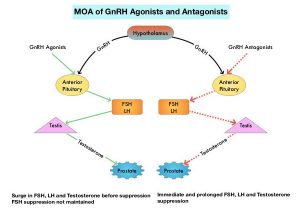
Androgen Deprivation Therapies such as GnRH analogs/Luteinizing Hormone Releasing Hormone (LHRH) agonists are standard treatment for patients with advanced prostate cancer. These agents when first administered cause an initial surge in Luteinizing Hormone, Follicle Stimulating Hormone (FSH), and testosterone levels. With continuous administration, LHRH agonists desensitize the pituitary receptor and suppress the production of Luteinizing Hormone and testosterone, thus blocking the pulsatile secretion of GnRH by the hypothalamus. LHRH agonists however do not fully suppress FSH which is a potential mitogenic growth factor for prostate cancer cells. The initial testosterone surge may result in flaring up of symptoms such as bone pain, obstructive urinary symptoms, and rarely spinal cord compression. For this reason, anti-androgen agents are recommended for the first few weeks after initiation of an LHRH agonist. LHRH agonists have been shown to increase the near-term risk of major adverse cardiovascular events, by promoting plaque destabilization and rupture.

Degarelix (FIRMAGON®) is a GnRH antagonist, and the depot injection was approved by the FDA in December 2018. Degarelix suppresses both Luteinizing Hormone and FSH, resulting in rapid testosterone suppression, without an initial testosterone surge. This agent however has to be administered monthly and approximately 40% of patients experience reactions at the injection site.MOA-of-GnRH-Agonists-and-Antagonists
Relugolix is a highly selective, GnRH antagonist that can be given orally once daily, and has a half-life of 25 hours. In multiple Phase I and Phase II studies, Relugolix has been shown to lower testosterone levels by rapidly inhibiting the pituitary release of Luteinizing Hormone and FSH. The HERO trial is a multinational, randomized, open-label, Phase III study, which evaluated the efficacy and safety of Relugolix, an oral GnRH antagonist, as compared with those of Leuprolide (LUPRON®) (GnRH agonist), in men with advanced prostate cancer. In this study, a total of 930 patients were randomly assigned in a 2:1 ratio to receive either Relugolix 120 mg orally once daily, after a single oral loading dose of 360 mg (N=622) or Leuprolide acetate 22.5 mg IM every 3 months (N=308), for 48 weeks.
Eligible patients had one of three clinical disease presentations: 1) Evidence of biochemical (PSA) or clinical relapse after local primary intervention with curative intent 2) Newly diagnosed hormone-sensitive metastatic disease, or 3) Advanced localized disease unlikely to be cured by local primary intervention with curative intent. Patients with major adverse cardiovascular events within 6 months before trial initiation were excluded. Patients were stratified according to the presence or absence of metastatic disease, and age (75 yrs or less and over 75 years). Approximately 32% of patients had metastatic disease and 50% had biochemical recurrence after definitive treatment.
The Primary endpoint was sustained testosterone suppression to castrate levels (less than 50 ng/dL) through 48 weeks. Secondary end points included noninferiority of Relugolix to Leuprolide with respect to sustained castration rate, castrate levels of testosterone on day 4, and profound castrate levels (less than 20 ng/dL) on day 15. Testosterone recovery after discontinuation of the trial drug was to be evaluated in a subgroup of patients. The median follow up time in both groups, including the 30-day safety follow-up period for adverse events, was 52 weeks.

Relugolix was associated with a significantly higher rate of maintained castrate levels of testosterone, when compared to Leuprolide. Castrate levels of testosterone were maintained through 48 weeks in 96.7% of patients in the Relugolix group compared to 88.8% of patients in the Leuprolide group. The difference of 7.9 percentage points showed noninferiority as well as superiority of Relugolix (P<0.001 for superiority) over Leuprolide. All other key Secondary end points showed superiority of Relugolix over Leuprolide (P<0.001). These endpoints included the percentage of patients with castrate levels of testosterone on day 4 (56% versus 0%) and on day 15 (98.7% versus 12%), testosterone suppression to less than 20ng/dL on day 15 (78.4% versus 1%) and confirmed PSA response of more than 50% decrease at day 15 (79.4% versus 19.8%; P<0.001). In the subgroup of 184 patients followed for testosterone recovery, the mean testosterone levels 90 days after treatment discontinuation were 288.4 ng/dL in the Relugolix group and 58.6 ng/dL in the Leuprolide group. The incidence of major adverse cardiovascular events among all the patients was 2.9% in the Relugolix group and 6.2% in the Leuprolide group (HR=0.46).

The authors concluded that in this trial involving men with advanced prostate cancer, Relugolix achieved rapid and sustained suppression of testosterone levels, that was superior to that with Leuprolide, with a 54% lower risk of major adverse cardiovascular events.

Oral Relugolix for Androgen-Deprivation Therapy in Advanced Prostate Cancer. Shore ND, Saad F, Cookson MS, et al. for the HERO Study Investigators. N Engl J Med 2020; 382:2187-2196.
FDA Approves CYRAMZA® Plus TARCEVA® for EGFR Mutated NSCLC

SUMMARY: The FDA on May 29, 2020 approved CYRAMZA® (Ramucirumab) in combination with TARCEVA® (Erlotinib) for first-line treatment of metastatic Non-Small Cell Lung Cancer (NSCLC) with Epidermal Growth Factor Receptor (EGFR) Exon 19 deletions or Exon 21 (L858R) mutations. Lung cancer is the second most common cancer in both men and women and accounts for about 14% of all new cancers and 27% of all cancer deaths. The American Cancer Society estimates that for 2020, about 228, 820 new cases of lung cancer will be diagnosed and 135,720 patients will die of the disease. Lung cancer is the leading cause of cancer-related mortality in the United States. Non-Small Cell Lung Cancer (NSCLC) accounts for approximately 85% of all lung cancers. Of the three main subtypes of NSCLC, 30% are Squamous Cell Carcinomas (SCC), 40% are Adenocarcinomas and 10% are Large Cell Carcinomas. With changes in the cigarette composition and decline in tobacco consumption over the past several decades, Adenocarcinoma now is the most frequent histologic subtype of lung cancer.

Approximately 10-15% of Caucasian patients and 35-50% of Asian patients with Adenocarcinomas, harbor activating EGFR mutations and 90% of these mutations are either Exon 19 deletions or L858R substitution mutation in Exon 21. EGFR-Tyrosine Kinase Inhibitors (TKIs) such as TARCEVA®, IRESSA® (Gefitinib) and GILOTRIF® (Afatinib), have demonstrated a 60-70% response rate as monotherapy when administered as first line treatment, in patients with metastatic NSCLC, who harbor the sensitizing EGFR mutations. However, majority of these patients experience disease progression within 9-14 months. This resistance to frontline EGFR TKI therapy has been attributed to the most common, acquired T790M “gatekeeper” point mutation in EGFR, identified in 50-60% of patients. Previously published data from the Phase III FLAURA study showed that first-line treatment with third generation TKI, TAGRISSO® (Osimertinib), was superior to first-line treatment with other first and second generation TKI’s, in patients with EGFR-mutated NSCLC. However, widespread use of TAGRISSO® has led to acquired resistance. Novel treatment approaches combining TKI’s with other targeted therapies are therefore needed.

CYRAMZA® is a recombinant human monoclonal IgG1 antibody that binds to the human Vascular Endothelial Growth Factor Receptor- 2 (VEGFR-2), preventing the interaction of VEGFR-2 with its ligands. TARCEVA® is a first generation EGFR TKI. Preclinical and clinical data strongly support dual blockade of the EGFR and VEGF pathways in EGFR-mutated metastatic NSCLC.

RELAY is an International, double-blind, Phase III trial, which included 449 eligible patients who had Stage IV NSCLC, with an EGFR Exon 19 deletion (ex19del) or Exon 21 substitution (L858R) mutation, and with no CNS metastases. Enrolled patients were randomly assigned in a 1:1 ratio to receive TARCEVA® 150 mg orally daily plus CYRAMZA® 10 mg/kg IV once every 2 weeks (N=224) or TARCEVA® plus a matching placebo (N=225). Patients were stratified by sex, EGFR mutation type, and EGFR testing methodology. The Primary endpoint was Progression Free Survival (PFS) and key Secondary endpoints included Safety, Overall Response Rate (ORR), Duration of Response, and Overall Survival (OS).

At a median follow up of 20.7 months, PFS was significantly longer in the TARCEVA® plus CYRAMZA® group compared to TARCEVA® plus placebo group (19.4 months versus 12.4 months respectively; HR=0.59; P<0.0001). This benefit was observed regardless of tumor type, and was consistent across Exon 19 and Exon 21 subgroups. The ORR was similar between the CYRAMZA® and placebo groups (76% versus 75%), but the median Duration of Response was longer in the CYRAMZA® group, compared with the placebo group (18 months versus 11 months). The OS data were not mature at the time of final PFS analysis and the median time to the second disease progression (PFS2) was not yet reached. However, interim results indicated that PFS2 was longer in the CYRAMZA® group compared to the placebo group (HR = 0.69) suggesting that PFS benefits with CYRAMZA® were preserved beyond first progression, indicating that possibility of OS benefit. Upon progression, T790M resistance mutations were detected in 43% of patients who received CYRAMZA®, and in 47% of patients who received placebo. The most common adverse events in the TARCEVA® plus CYRAMZA® combination included infections, stomatitis, hypertension, proteinuria, alopecia, epistaxis and peripheral edema.

It was concluded that TARCEVA® plus CYRAMZA® demonstrated superior PFS compared with TARCEVA® plus placebo, in treatment naïve patients with EGFR-mutated metastatic NSCLC. The combination of TARCEVA® plus CYRAMZA® will be a new additional treatment option for this patient group.

Ramucirumab plus Erlotinib in Patients with Untreated, EGFR-mutated, Advanced Non-Small-Cell Lung Cancer (RELAY): A Randomised, Double-blind, Placebo-Controlled, Phase 3 trial. Nakagawa K, Garon EB, Seto T, et al. Lancet Oncol. 2019;20:1655-1669.

FDA Approves TECENTRIQ® in Combination with AVASTIN® for Hepatocellular Carcinoma

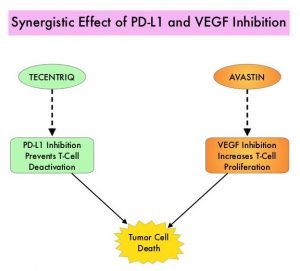
SUMMARY: The FDA on May 29, 2020, approved TECENTRIQ® (Atezolizumab) in combination with AVASTIN® (Bevacizumab) for patients with unresectable or metastatic HepatoCellular Carcinoma (HCC), who have not received prior systemic therapy. The American Cancer Society estimates that for 2020, about 42,810 new cases of primary liver cancer will be diagnosed in the US and 30,160 patients will die of their disease. Liver cancer is seen more often in men than in women and the incidence has more than tripled since 1980. This increase has been attributed to the higher rate of Hepatitis C Virus (HCV) infection among baby boomers (born between 1945 through 1965). Obesity and Type II diabetes have also likely contributed to the increasing trend. Other risk factors include alcohol, which increases liver cancer risk by about 10% per drink per day, and tobacco use, which increases liver cancer risk by approximately 50%. HepatoCellular Carcinoma (HCC) is the second most common cause of cancer-related deaths worldwide, and majority of patients typically present at an advanced stage. The prognosis for unresectable HCC remains poor and one year survival rate is less than 50% following diagnosis. NEXAVAR® was approved by the FDA in 2007 for the first line treatment of unresectable HepatoCellular Carcinoma (HCC) and the median Overall Survival was 10.7 months in the NEXAVAR® group and 7.9 months in the placebo group.Synergistic-Effect-of-PD-L1-and-VEGF-Inhibition

TECENTRIQ® (Atezolizumab) is an anti PD-L1 monoclonal antibody, designed to directly bind to PD-L1 expressed on tumor cells and tumor-infiltrating immune cells, thereby blocking its interactions with PD-1 and B7.1 receptors. PD-L1 inhibition may prevent T-cell deactivation and further enable the activation of T cells. AVASTIN® (Bevacizumab) is a recombinant humanized monoclonal IgG1 antibody that binds VEGF (Vascular Endothelial Growth Factor) and prevents the interaction of VEGF to its receptors (Flt-1 and KDR) on the surface of endothelial cells, thereby preventing endothelial cell proliferation and new blood vessel formation. AVASTIN® in addition to its established anti-angiogenic properties can further enhance TECENTRIQ®’s ability to restore anti-cancer immunity, by inhibiting VEGF-related immunosuppression, promoting T-cell tumor infiltration and enabling priming and activation of T-cell responses against tumor antigens. The use of TECENTRIQ® in combination with AVASTIN® therefore has a strong scientific rationale, as this combination can potentially enhance the immune system to combat a broad range of malignancies.

IMbrave150 is a global, open-label, multicenter, randomized, Phase III study in which a combination of TECENTRIQ® and AVASTIN® was compared with standard-of-care NEXAVAR®, in patients with previously untreated locally advanced or metastatic HCC. Patients were randomized 2:1 to receive TECENTRIQ® 1200 mg IV on day 1 along with AVASTIN® 15 mg/kg on day 1 of each 21-day cycle (N=336) or NEXAVAR® 400 mg orally twice daily, each day of the 21-day cycle (N=165). Treatment was continued until disease progression or unacceptable toxicity. The treatment groups were well balanced and enrolled patients had an ECOG performance status of 0 or 1, Child-Pugh Class A disease, and adequate hematologic and end-organ function. The two co-Primary endpoints were Overall Survival (OS) and Progression Free Survival (PFS). The key Secondary endpoints included Overall Response Rate (ORR), Time To Progression (TTP) and Duration of Response (DOR), as well as Patient-Reported Outcomes (PROs), Safety and Pharmacokinetics.

With a median follow up of 8.6 months, the OS was not yet reached in the TECENTRIQ® and AVASTIN® combination group compared with 13.2 months in the NEXAVAR® group (HR=0.58; P=0.0006). The median PFS was 6.8 months versus 4.3 months respectively (HR=0.59; P<0.0001). The ORR was 27% versus 12% (P<0.0001) based on the Independent Review Facility RECIST 1.1 criteria, in favor of the combination regimen. This benefit was seen across clinical subgroups and the combination regimen delayed deterioration of Quality of Life, compared with NEXAVAR®. Grade 3 and 4 Adverse Events were similar and occurred in 57% and 55% of the combination and control arms, respectively.

It was concluded that a combination of TECENTRIQ® and AVASTIN® demonstrated statistically significant and clinically meaningful improvement in both Overall Survival and Progression Free Survival, compared with NEXAVAR®, in treatment naïve patients with unresectable Hepatocelluar Carcinoma. The authors added that this is the first study in 11 years to show an improvement in Overall Survival with a new first line treatment option, compared to NEXAVAR®, and has the potential to be a practice changing treatment in Hepatocellular Carcinoma.

IMbrave150: Efficacy and safety results from a ph III study evaluating atezolizumab (atezo) + bevacizumab (bev) vs sorafenib (Sor) as first treatment (tx) for patients (pts) with unresectable hepatocellular carcinoma (HCC). Cheng A-L, Qin S, Ikeda M, et al. Annals of Oncology, Volume 30, 2019 Supplement 9. LBA3.

COVID-19 Associated Coagulopathy: Diagnosis and Management

SUMMARY: The SARS-CoV-2 Coronavirus (COVID-19) induced pandemic first identified in December 2019 in Wuhan, China, has contributed to significant mortality and morbidity in the US, and the number of infected cases continue to exponentially increase worldwide. Majority of the patients present with treatment-resistant pyrexia and respiratory insufficiency, with some of these patients progressing to a more severe systemic disease and multiple organ dysfunction.

One of the most important and significant poor prognostic features in patients with COVID-19 is the development of coagulopathy, which is associated with an increased risk of death. The coagulation changes seen suggest the presence of a hypercoagulable state that can potentially increase the risk of thromboembolic complications. The coagulation abnormalities mimic other systemic coagulopathies associated with severe infections, such as Disseminated Intravascular Coagulation (DIC) or Thrombotic MicroAngiopathy (TMA), but the features are distinct in that, with DIC associated with sepsis, thrombocytopenia is usually more profound, and D-dimer concentrations do not reach the high values as seen among patients with COVID-19. COVID-19 infection related coagulopathy can also be associated with increased Lactate DeHydrogenase (LDH), and in some patients strikingly high ferritin levels, reminiscent of findings in TMA.

Severe COVID-19 infection is characterized by high concentrations of proinflammatory cytokines and chemokines such as Tumor Necrosis Factor-α (TNF-α) and interleukins including IL-1 and IL-6. IL-6 can induce tissue factor expression on mononuclear cells, initiating coagulation activation and thrombin generation, whereas TNF-α and IL-1 suppress endogenous anticoagulant pathways.
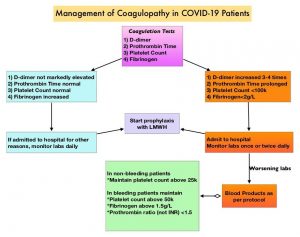
Management-of-Coagulopathy-in-COVID-19-Patients
The International Society of Thrombosis and Haemostasis (ISTH) in this publication provided an interim guidance, with the aim to help Health Care Specialists risk stratify patients admitted with COVID -19, and manage coagulopathy, which may develop in some of these patients, utilizing easily available laboratory parameters. Based on the currently available literature, majority of the patients with COVID-19, present with severe pneumonia and respiratory failure. Lymphopenia is a common hematological abnormality. The interim guidance statement by the ISTH on the management of coagulopathy is based on evolving clinical knowledge and better understanding of the pathogenesis of COVID-19.

1) Initial evaluation of COVID-19 patients should include measurement of D-dimers, Prothrombin Time, Platelet count and Fibrinogen levels.
2) Higher D-dimer levels on admission, has been reported in patients with severe COVID-19 illness, and is one of the most important predictors of mortality.
3) Modest prolongation of Prothrombin Time (15.5 seconds) has been reported at admission, in the non-survivors. Subtle changes in the PT will not be picked up if the PT is reported as International Normalized Ratio (INR). It should be noted that INR is not the same as PT ratio.
4) Thrombocytopenia at the time of admission may be, but is not a consistent prognosticator and platelet count of less than 100 × 109/L may only be seen in 5% of patients
5) Fibrinogen should be regularly monitored in COVID-19 patients, as non-survivors with severe illness usually develop Disseminated Intravascular Coagulation around day 4, with significant worsening noted at days 10 and 14.
6) In the absence of any contraindications such as active bleeding and platelet count less than 25 × 109/L, prophylactic dose Low Molecular Weight Heparin (LMWH) should be considered in all patients who require hospital admission for COVID‐19 infection, including those who are non‐critically ill, to protect patients against septic-like coagulopathy and Venous ThromboEmbolism (VTE). The anti‐inflammatory properties of LMWH may be an added benefit in COVID infection where pro‐inflammatory cytokines are markedly raised.
7) Abnormal PT or aPTT is not a contraindication for pharmacological thromboprophylaxis as Lupus-like inhibitors have been reported in some patients with COVID-19, and may be the reason for aPTT prolongation.
8) In COVID-19 patients already on anticoagulation for VTE or Atrial Fibrillation, therapeutic doses of anticoagulant therapy should be continued, but may need to be held if the platelet count is less than 30-50 x 109/L or if the fibrinogen is less than 1.0 g/L.
9) Bleeding is rare in the setting of COVID‐19 and if present should be managed by maintaining platelet counts >50×109/L (>20×109/L goal in non-bleeding patients), maintaining fibrinogen levels at >2.0 g/L, and the Prothrombin ratio at <1.5.

ISTH interim guidance on recognition and management of coagulopathy in COVID‐19. Thachil J, Tang N, Gando S, et al. J Thromb Haemost 2020 Mar 25; [e-pub]. (https://doi.org/10.1111/JTH.14810)

Dietary Supplement Use during Adjuvant Chemotherapy May Increase Risk for Breast Cancer Recurrence

SUMMARY: The Council for Responsible Nutrition reported that 77% of Americans consume dietary supplements. With the growing awareness regarding health, fitness and nutrition, the market size for dietary supplements is projected to hit a valuation of $349.4 billion by 2026.

Patients often use dietary supplements following a diagnosis of cancer, even though clinical recommendations discourage the use of antioxidant supplements during chemotherapy. One of the mechanisms of action of cytotoxic chemotherapeutic agents is through the generation of Reactive Oxygen Species (ROS). The use of dietary supplements during treatment, particularly antioxidants, could reduce the efficacy of cytotoxic agents. DELCaP study was conducted to address this concern.

DELCaP (Diet, Exercise, Lifestyle and Cancer Prognosis) trial is a prospective observational study, ancillary to an intergroup therapeutic clinical trial for high-risk breast cancer, conducted to evaluate associations between supplement use, particularly antioxidants during chemotherapy treatment, and breast cancer survival outcomes.

The Phase III SWOG S0221 trial evaluated the optimal dose and schedule of Anthracycline/Taxane adjuvant chemotherapy in women with high-risk early breast cancer. The current analysis involved a cohort of 1,134 of 2,014 patients enrolled in this study, who answered a baseline and follow-up questionnaires that included their use of dietary supplement at enrollment and during treatment. The authors then analyzed associations of dietary supplement use with clinical outcomes, after adjusting for clinical and lifestyle factors. Approximately 18% of patients used antioxidants such as Vitamins C, A, and E, Carotenoids or Coenzyme Q10 during treatment, whereas 44% of patients took multivitamins during chemotherapy.

It was noted from this analysis that the use of any antioxidant supplement (Vitamins A, C, and E, Carotenoids and Coenzyme Q10), both before and during adjuvant treatment was associated with an increased risk of recurrence versus no such use of supplements (HR=1.41; P=0.06). There was also a nonsignificant increased risk of overall mortality with the use of any antioxidant supplement (HR=1.40; P=0.14). There was a weaker relationship of outcomes with individual antioxidants and this may perhaps be due to the small numbers of patients. With regards to nonoxidants, Vitamin B12 use both before and during chemotherapy was significantly associated with poorer Disease Free Survival (HR=1.83; P<0.01) and Overall Survival (HR= 2.04; P<0.01). Use of iron during chemotherapy was also significantly associated with recurrence (HR=1.79; P<0.01), as was use both before and during treatment (HR=1.91; P=0.06). Results were similar for Overall Survival. Multivitamin use however was not associated with survival outcomes.

The researchers based on this analysis concluded that the use of antioxidant and nonantioxidant dietary supplements, but not multivitamins, before and during adjuvant chemotherapy may be associated with inferior treatment outcomes, in patients with early stage high risk breast cancer. They added that caution should be exercised by patients, when considering the use of supplements, other than a multivitamin, during chemotherapy, and patients should try to get their vitamins and minerals including antioxidants through food products..

Dietary Supplement Use During Chemotherapy and Survival Outcomes of Patients With Breast Cancer Enrolled in a Cooperative Group Clinical Trial (SWOG S0221). Ambrosone CB, Zirpoli GR, Hutson AD, et al. J Clin Oncol. 2019;38:804-814

FDA Approves ALUNBRIG® for First Line Treatment of ALK Positive Non Small Cell Lung Cancer

SUMMARY: The FDA on May 22, 2020 approved approved ALUNBRIG® (Brigatinib) for the first-line treatment of patients with ALK-positive metastatic Non Small Cell Lung Cancer (NSCLC), as detected by an FDA-approved test. Lung cancer is the second most common cancer in both men and women and accounts for about 14% of all new cancers and 27% of all cancer deaths. The American Cancer Society estimates that for 2020, about 228, 820 new cases of lung cancer will be diagnosed and 135,720 patients will die of the disease. Lung cancer is the leading cause of cancer-related mortality in the United States. Non-Small Cell Lung Cancer (NSCLC) accounts for approximately 85% of all lung cancers. Of the three main subtypes of NSCLC, 30% are Squamous Cell Carcinomas (SCC), 40% are Adenocarcinomas and 10% are Large Cell Carcinomas. With changes in the cigarette composition and decline in tobacco consumption over the past several decades, Adenocarcinoma now is the most frequent histologic subtype of lung cancer.

The discovery of rearrangements of the Anaplastic Lymphoma Kinase (ALK) gene in some patients with advanced NSCLC and adenocarcinoma histology, led to the development of agents such as XALKORI® (Crizotinib), ZYKADIA® (Ceritinib), ALECENSA® (Alectinib) and ALUNBRIG® (Brigatinib), with promising results. It has become clear that appropriate, molecularly targeted therapy for tumors with a molecular abnormality, results in the best outcomes. According to the US Lung Cancer Mutation Consortium (LCMC), two thirds of patients with advanced adenocarcinoma of the lung, have a molecular driver abnormality. The most common oncogenic drivers in patients with advanced adenocarcinoma of the lung are, KRAS in 25%, EGFR in 21% and ALK in 8% as well as other mutations in BRAF, HER2, AKT1 and fusions involving RET and ROS oncogenes. These mutations are mutually exclusive, and the presence of two simultaneous mutations, are rare.

The new approval for ALUNBRIG® was based on results from the Phase III ALTA 1L (ALK in Lung Cancer Trial of BrigAtinib in 1st Line) trial, which is a global, ongoing, randomized, open-label, comparative, multicenter study, in which investigators compared the efficacy and safety of ALUNBRIG® with XALKORI® (Crizotinib) in 275 patients with Stage IIIB/IV ALK positive, locally advanced or metastatic NSCLC, who have not received prior treatment with an ALK inhibitor, but may have received 1 prior regimen of chemotherapy or no chemotherapy in the advanced setting. Patients were randomized 1:1 to receive either ALUNBRIG® 180 mg orally once daily (N=137), with a 7-day lead-in period at 90 mg, or XALKORI® 250 mg orally twice daily (N=138). Crossover from the XALKORI® arm to receive ALUNBRIG® was permitted at BICR (Blinded Independent Review Committee)-assessed Progression Free Survival (PFS). The median age was 59 years, and 55% of patients were female. Twenty-nine percent had brain metastases at baseline with comparable pre-enrollment central nervous system (CNS) radiotherapy rates among both cohorts. Overall, 27% of patients had prior chemotherapy in the locally advanced or metastatic setting. The Primary endpoint was BIRC assessed PFS and Secondary endpoints included Objective Response Rate (ORR), Intracranial ORR, Intracranial PFS, Overall Survival (OS), safety, and tolerability.

At a median follow up of 25 months, it was noted that ALUNBRIG® reduced the risk of disease progression or death by 51% compared with XALKORI® (HR=0.49; P=0.0007), with a median PFS of 24 months as assessed by a BIRC versus 11 months for XALKORI®. The confirmed ORR as assessed by BIRC was 74% with ALUNBRIG® and 62% for XALKORI®. The median duration of response (DOR) was not reached, and 13.8 months with ALUNBRIG® and XALKORI®, respectively.

After more than two years of follow-up, ALUNBRIG® demonstrated superiority over XALKORI®, with significant anti-tumor activity observed, especially in patients with baseline brain metastases. The confirmed intracranial ORR for patients with measurable brain metastases at baseline, treated with ALUNBRIG® was 78% versus 26% for patients treated with XALKORI®. The median intracranial Duration of Response in confirmed responders with measurable brain metastases at baseline was Not Reached with ALUNBRIG® and 9.2 months with XALKORI®, respectively. The median intracranial PFS was 24 months with ALUNBRIG®, compared with 5.6 months for XALKORI®. ALUNBRIG® reduced the risk of intracranial disease progression or death by 69% in patients who had brain metastases at baseline (HR=0.31).

Additionally, patients in the ALUNBRIG® group also experienced significant improvements in Health-Related Quality of Life, with delay in the median time to worsening in Global Health Score by 27 months versus 8 months with XALKORI®, as well as delay in the time to worsening and prolonged duration of improvement in fatigue, nausea and vomiting, appetite loss, and emotional and social functioning. Further, the duration of improvement in QoL with ALUNBRIG® was Not Reached versus 12 months with XALKORI®.

It was concluded that ALUNBRIG® demonstrated a statistically and clinically significant improvement in Progression Free Survival when compared to XALKORI® in ALK inhibitor-naïve, ALK positive NSCLC, with superior efficacy especially among those with brain metastases at baseline.

Brigatinib vs crizotinib in patients with ALK inhibitor-naive advanced ALK+ NSCLC: Updated results from the phase III ALTA-1L trial. Camidge R, Kim HR, Ahn M, et al. Presented at the 2019 ESMO Asia Congress, November 23, 2019.

FDA Approves Chemotherapy-Free First Line Immunotherapy Combination in Advanced NSCLC

SUMMARY: The FDA on May 15, 2020, approved OPDIVO® (Nivolumab) in combination with YERVOY® (Ipilimumab), as first-line treatment for patients with metastatic Non-Small Cell Lung Cancer (NSCLC), whose tumors express PD-L1(1% or more), as determined by an FDA-approved test, with no Epidermal Growth Factor Receptor (EGFR) or Anaplastic Lymphoma Kinase (ALK) genomic tumor aberrations. Lung cancer is the second most common cancer in both men and women and accounts for about 14% of all new cancers and 27% of all cancer deaths. The American Cancer Society estimates that for 2020, about 228, 820 new cases of lung cancer will be diagnosed and 135,720 patients will die of the disease. Lung cancer is the leading cause of cancer-related mortality in the United States. Non-Small Cell Lung Cancer (NSCLC) accounts for approximately 85% of all lung cancers. Of the three main subtypes of NSCLC, 30% are Squamous Cell Carcinomas (SCC), 40% are Adenocarcinomas and 10% are Large Cell Carcinomas. With changes in the cigarette composition and decline in tobacco consumption over the past several decades, Adenocarcinoma now is the most frequent histologic subtype of lung cancer.

Immune checkpoints are cell surface inhibitory proteins/receptors that are expressed on activated T cells. They harness the immune system and prevent uncontrolled immune reactions by switching off the immune system T cells. Immune checkpoint proteins/receptors include CTLA-4 (Cytotoxic T-Lymphocyte Antigen 4, also known as CD152) and PD-1(Programmed cell Death 1). Checkpoint inhibitors unleash the T cells resulting in T cell proliferation, activation, and a therapeutic response. OPDIVO® (Nivolumab) is a fully human, immunoglobulin G4 monoclonal antibody that binds to the PD-1 receptor and blocks its interaction with PD-L1 and PD-L2, thereby undoing PD-1 pathway-mediated inhibition of the immune response and unleashing the T cells. OPDIVO® is presently approved for treatment of patients with metastatic NSCLC and progression on or after Platinum-based chemotherapy. YERVOY® is a fully human immunoglobulin G1 monoclonal antibody that blocks Immune checkpoint protein/receptor CTLA-4.

The present FDA approval was based on CheckMate-227, which is an open-label, multi-part, global, Phase III trial in which OPDIVO® based regimens were compared with Platinum-doublet chemotherapy in patients with first line advanced NSCLC, across non-squamous and squamous tumor histologies. In Part 1 of this trial, there were 2 cohortsPart 1a in which OPDIVO® plus low dose YERVOY® (N=396) or OPDIVO® monotherapy (N=396) was compared with chemotherapy alone (N=397), in patients whose tumors expressed PD-L1 expression of 1% or more and Part 1b in which OPDIVO® plus low dose YERVOY® (N=187) or OPDIVO® plus chemotherapy (N=177) was compared with chemotherapy alone (N=186), in patients whose tumors did not express PD-L1 (less than 1%). (In Part 2 of this trial, OPDIVO® plus chemotherapy was compared with chemotherapy alone, regardless of PD-L1 expression. Part 2 did not meet its Primary endpoint for Overall Survival for OPDIVO® plus chemotherapy versus chemotherapy alone, in patients with non-squamous NSCLC, and is published elsewhere). It should be noted that when this trial was launched, chemotherapy along with immunotherapy or immunotherapy alone was not approved for the front-line treatment of NSCLC. Therefore, dual immunotherapy combination was not compared with current standards of care such as chemotherapy plus immunotherapy.

OPDIVO® was administered at 3 mg/kg every 2 weeks, and in the combination arm, YERVOY® was administered at 1 mg/kg every 6 weeks. When administered with chemotherapy, OPDIVO® was administered at 360 mg every 3 weeks. Patients were stratified by histology, and treatment was administered until disease progression, unacceptable toxicity, or administered for 2 years for immunotherapy. There were two Co-primary endpoints in Part 1 for OPDIVO® plus YERVOY® versus chemotherapy: Overall survival (OS) in patients whose tumors express PD-L1 (assessed in patients enrolled in Part 1a) and Progression Free Survival (PFS) in patients with TMB of 10 mut/Mb or more, across the PD-L1 spectrum (assessed in patients enrolled across Parts 1a and 1b). The minimum follow up for the Primary endpoint was 29 months. Both Part 1a and Part 1b groups met their Primary endpoints.

In the Part 1a cohort with PD-L1 expression of 1% or more, the Overall Survival was significantly longer with OPDIVO® plus YERVOY®, compared to chemotherapy. The median Overall Survival was 17.1 months in the Immunotherapy combination group compared to 14.9 months in the chemotherapy group (HR=0.79; P=0.007), with a 2-year OS rates of 40.0% and 32.8%, respectively. Progression Free Survival, Objective Response Rates and Duration of Response were all greater with OPDIVO® plus YERVOY® combination, compared to chemotherapy. The median Progression Free Survival (PFS) was 5.1 months in the OPDIVO® plus YERVOY® group and 5.6 months in the platinum-doublet chemotherapy group (HR=0.82). Confirmed Overall Response Rate (ORR) was 36% and 30% respectively. Median Duration of Response was 23.2 months in the OPDIVO® plus YERVOY® group and 6.2 months in the platinum-doublet chemotherapy group. In the Part 1b cohort with PD-L1 expression of less than 1%, Overall Survival benefit was again observed with the OPDIVO® plus YERVOY® combination, compared with chemotherapy, with a median duration of 17.2 months with OPDIVO® plus YERVOY® and 12.2 months with chemotherapy. Among all the patients in the trial, the median duration of OS was 17.1 months with OPDIVO® plus YERVOY® and 13.9 months with chemotherapy. Grade 3 and 4 treatment-related Adverse Events across all patients was 33% in those treated with OPDIVO® plus YERVOY® combination and 36% with chemotherapy.

It was concluded that first-line treatment of patients with advanced NSCLC, with a combination of two immunotherapy drugs, improves Overall Survival, compared to chemotherapy, independent of the PD-L1 expression level, and offers a chemotherapy-free first line treatment option for a subset of NSCLC patients, leaving chemotherapy for later lines of therapy.

Nivolumab plus Ipilimumab in Advanced Non-Small-Cell Lung Cancer. Hellmann MD, Paz-Ares L, Bernabe Caro R, et al. N Engl J Med. 2019;381:2020-2031.

FDA Approves RUBRACA® for BRCA-Mutated Metastatic Castrate Resistant Prostate Cancer

SUMMARY: The FDA on May 15, 2020, granted accelerated approval to RUBRACA® (Rucaparib) for patients with deleterious BRCA mutation (germline and/or somatic)-associated metastatic Castration-Resistant Prostate Cancer (mCRPC), who have been treated with Androgen Receptor-directed therapy and a taxane-based chemotherapy. Prostate cancer is the most common cancer in American men with the exclusion of skin cancer, and 1 in 9 men will be diagnosed with prostate cancer during their lifetime. It is estimated that in the United States, about 191,930 new cases of prostate cancer will be diagnosed in 2020 and 33,330 men will die of the disease.

The development and progression of Prostate cancer is driven by androgens. Androgen Deprivation Therapy (ADT) or testosterone suppression has therefore been the cornerstone of treatment of advanced Prostate cancer and is the first treatment intervention. Androgen Deprivation Therapies have included bilateral orchiectomy or Gonadotropin Releasing Hormone (GnRH) analogues, with or without first generation Androgen Receptor (AR) inhibitors such as CASODEX® (Bicalutamide), NILANDRON® (Nilutamide) and EULEXIN® (Flutamide) or with second-generation, anti-androgen agents, which include, ZYTIGA® (Abiraterone), XTANDI® (Enzalutamide) and ERLEADA® (Apalutamide). ZYTIGA® inhibits CYP17A1 enzyme and depletes adrenal and intratumoral androgens, thereby impairing AR signaling. XTANDI® and ERLEADA® compete with Testosterone and Dihydrotestosterone and avidly bind to the Androgen Receptor, thereby inhibiting AR signaling, and in addition inhibit translocation of the AR into the nucleus and thus inhibits the transcriptional activities of the AR. Approximately 10-20% of patients with advanced Prostate cancer will progress to Castration Resistant Prostate Cancer (CRPC) within five years during ADT, and over 80% of these patients will have metastatic disease at the time of CRPC diagnosis. The estimated mean survival of patients with CRPC is 9-36 months, and there is therefore an unmet need for new effective therapies.

DNA damage is a common occurrence in daily life by UV light, ionizing radiation, replication errors, chemical agents, etc. This can result in single and double strand breaks in the DNA structure which must be repaired for cell survival. The two vital pathways for DNA repair in a normal cell are BRCA1/BRCA2 and PARP. The PARP (Poly ADP Ribose Polymerase), family of enzymes include, PARP1, PARP2 and PARP3. BRCA1 and BRCA2 genes recognize and repair double strand DNA breaks via Homologous Recombination (HR) pathway. Homologous Recombination is a type of genetic recombination, and is a DNA repair pathway utilized by cells to accurately repair DNA double-stranded breaks during the S and G2 phases of the cell cycle, and thereby maintain genomic integrity. Homologous Recombination Deficiency (HRD) is noted following mutation of genes involved in HR repair pathway. At least 15 genes are involved in the Homologous Recombination Repair (HRR) pathway including BRCA1, BRCA2 and ATM genes. The BRCA1 gene is located on the long (q) arm of chromosome 17 whereas BRCA2 is located on the long arm of chromosome 13. BRCA1 and BRCA2 are tumor suppressor genes and functional BRCA proteins therefore repair damaged DNA, and play an important role in maintaining cellular genetic integrity. They regulate cell growth and prevent abnormal cell division and development of malignancy.

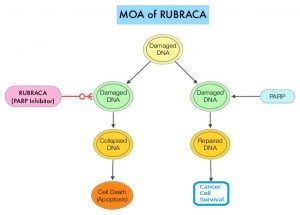
Recently published data has shown that deleterious germline and/or somatic mutations in BRCA1, BRCA2, ATM, or other Homologous Recombination DNA-repair genes, are present in about 25% of patients with advanced prostate cancer, including mCRPC. Mutations in BRCA1 and BRCA2 also account for about 20-25% of hereditary breast cancers, about 5-10% of all breast cancers, and 15% of ovarian cancers. BRCA mutations can either be inherited (Germline) and present in all individual cells or can be acquired and occur exclusively in the tumor cells (Somatic). Somatic mutations account for a significant portion of overall BRCA1 and BRCA2 aberrations. Loss of BRCA function due to frequent somatic aberrations likely deregulates HR pathway, and other pathways then come in to play, which are less precise and error prone, resulting in the accumulation of additional mutations and chromosomal instability in the cell, with subsequent malignant transformation. HRD therefore indicates an important loss of DNA repair function. PARP is a related enzymatic pathway that repairs single strand breaks in DNA. In a BRCA mutant, the cancer cell relies solely on PARP pathway for DNA repair. In the presence of a PARP inhibitor, there is synthetic lethality because of the loss of both repair pathway genes, leading to cell death. Thus PARP inhibitors are only harmful to cancer cells.MOA-of-RUBRACA

RUBRACA® is an oral, small molecule inhibitor of Poly-Adenosine diphosphate [ADP] Ribose Polymerase (PARP), presently approved by the FDA for ovarian, fallopian tube or primary peritoneal cancers. This recent FDA approval for prostate cancer patients was based on TRITON2, which is an ongoing international, multicenter, open-label, single arm, Phase II trial, in patients with BRCA-mutated mCRPC, who had been treated with Androgen Receptor-directed therapy and taxane-based chemotherapy. In this study, 115 mCRPC patients with either germline or somatic BRCA mutations were enrolled, of whom 62 patients had measurable disease at baseline. Patients received RUBRACA® 600 mg orally twice daily and concomitant GnRH analog or had prior bilateral orchiectomy. Treatment was continued until disease progression or unacceptable toxicity. The median age was 73 years, majority of patients had an ECOG performance status of 0 or 1, 18% of patients had lung metastases, 21% had liver metastases, 24% had metastases to lymph nodes alone and 40% had 10 or more bone lesions at baseline. The major efficacy outcomes of the study were Objective Response Rate (ORR) and Duration of Response (DOR) in the 62 patients with measurable disease. The median duration of follow up was 13.1 months

The confirmed ORR was 44% and the median DOR was not evaluable. Fifty six percent (56%) of patients with confirmed Objective Responses had a DOR of 6 months or more.

It was concluded that RUBRACA® demonstrates promising efficacy in patients with mCRPC with deleterious BRCA mutations. TRITON3 study is evaluating RUBRACA® versus physician’s choice of second-line AR-directed therapy or Docetaxel, in chemotherapy-naïve patients with mCRPC and alterations in BRCA1/2, who progressed on one prior AR-directed therapy.

ESMO 2019: Preliminary Results from the TRITON2 Study of Rucaparib in Patients with DNA Damage Repair-deficient mCRPC: Updated Analyses. Abida W, Campbell D, Patnaik A, et al. 2019 ESMO Annual Meeting, #ESMO19, 27 Sept – 1 Oct 2019 in Barcelona, Spain.

FDA Approves TABRECTA® for Metastatic Non-Small Cell Lung Cancer

SUMMARY: The FDA on May 6, 2020, granted accelerated approval to TABRECTA® (Capmatinib) for adult patients with metastatic Non-Small Cell Lung Cancer (NSCLC), whose tumors have a mutation that leads to Mesenchymal-Epithelial Transition (MET) exon 14 skipping, as detected by an FDA-approved test. The FDA also approved the FoundationOne CDx assay (Foundation Medicine, Inc.) as a companion diagnostic for TABRECTA®.

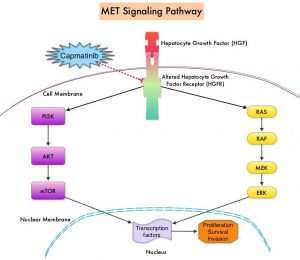
MET is a widely expressed Receptor Tyrosine Kinase and plays a pivotal role in cell growth, proliferation and survival. The MET gene encodes for a protein known as the Hepatocyte Growth Factor (HGF) Receptor. Upon binding by Hepatocyte Growth Factor (HGF), the HGF Receptor is activated, with resulting activation of the downstream RAS/RAF/MEK/ERK and PI3K/AKT/mTOR signaling pathways, thereby serving different important biological functions. Alterations in the MET gene leading to abnormal MET signaling, has been identified in different types of cancers including thyroid, lung, breast, liver, colon, kidney, ovary and gastric carcinoma.MET-Signaling-Pathway

Two key MET alterations include MET exon 14 skipping mutations and MET amplification. MET exon 14 skipping mutations occur in approximately 5% of NSCLC patients with enrichment in sarcomatoid lung cancers (22%). MET exon 14 skipping mutation is a recognized oncogenic driver and is a molecular genetic abnormality indicating the presence of a splice site mutation that results in a loss of transcription of exon 14 of the MET gene. Most exon 14 mutations occur in never-smokers and is seen in both squamous and adenocarcinoma histology. Patients whose cancers have MET exon 14 skipping generally have very high response rates to MET inhibitors and molecular testing for MET exon 14 skipping should therefore be performed on all lung cancers, because this is a targetable alteration. MET amplification has been more commonly seen in smokers, and responses in patients with MET-amplified tumors might be more variable and dependent on level of amplification, with higher responses noted in tumors with more than 5-6 fold amplification. Tumors with MET exon 14 skipping mutations usually do not harbor activating mutations in EGFR, KRAS, or BRAF or concurrent ALK, ROS1 or RET translocations. However, it appears that cMET exon 14 skipping is not mutually exclusive with cMET amplification.

TABRECTA® (Capmatinib) is a highly potent and selective, reversible inhibitor of MET tyrosine kinase. The present FDA approval was based on the primary findings from the Phase II GEOMETRY mono-1 trial, which is a non-randomized, open-label, multi-cohort, Phase II study, conducted to evaluate the efficacy and safety of single-agent TABRECTA® in adult patients with EGFR wild-type, ALK-negative, metastatic NSCLC, whose tumors have a mutation that leads to MET exon 14 skipping (METex14), as detected by an RNA-based RT-PCR. This study enrolled 97 patients with metastatic NSCLC and confirmed MET exon 14 skipping mutations, 69 of whom were previously treated and, 28 of whom, were treatment naive. The patients received TABRECTA® at 400 mg orally twice daily until disease progression or unacceptable toxicity. The median patient age was 71 years and all NSCLC histologies including sarcomatoid/carcinosarcoma were included. Majority of the patients (75%) were white and 24% were Asian. Previous treatments included immunotherapy (28%) and chemotherapy (94%), and 23% of patients received 2 prior lines of therapy. The main efficacy outcome was Overall Response Rate (ORR) and additional efficacy outcomes included Duration of Response, Time to Response, Disease Control Rate, Progression Free Survival (PFS) and Safety. Thirteen patients (N=13) in this study had brain metastases at baseline.

Among the treatment-naïve patients group, the ORR was 68% with a median Duration of Response of 12.6 months and the percentage of patients with responses for 12 months or longer was 47%. The Disease Control Rate (Complete Response plus Partial Response plus Stable Disease) was 96.4%.

Among the previously treated patients, the ORR was 41%, with a median Duration of Response of 9.7 months and the percentage of patients with responses for 12 months or longer was 32%. The Disease Control Rate was 78.3%. Among those with brain metastases at baseline, 54% had an intracranial response with TABRECTA® with 31% showing complete resolution, 23% showing partial resolution, and the intracranial Disease Control Rate was 92%. The most common adverse events (occurring in at least 20% of patients) were peripheral edema, nausea, fatigue, vomiting, dyspnea, and decreased appetite. TABRECTA® can also cause Interstitial Lung Disease, hepatotoxicity and photosensitivity.

It was concluded that TABRECTA® is a new treatment option for patients with MET exon 14 skipping- mutated advanced NSCLC, regardless of the line of therapy, with deep and durable responses, manageable toxicity profile, and is the first and only FDA approved treatment for this patient group.
Capmatinib (INC280) in METex14-mutated advanced non-small cell lung cancer (NSCLC): Efficacy data from the phase II GEOMETRY mono-1 study. Wolf J, Seto T, Han J, et al. J Clin Oncol. 2019;37(suppl; abstr 9004).

Proton Based Chemoradiotherapy Significantly Decreases Toxicities without Compromising Efficacy

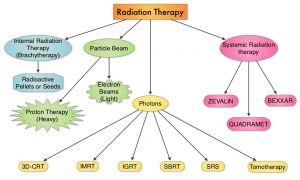
SUMMARY: Radiation Therapy involves the use of X-Rays, Gamma rays and charged particles for cancer treatment. External Beam Radiation Therapy (EBRT) is most often delivered using a linear accelerator in the form of Photon beams (either X-rays or Gamma rays). Photons have no mass and are packets of energy of an electromagnetic wave. Electrons and Protons are charged particles and Electrons are considered light particles whereas Protons are considered heavy particles. Electron beams are used to irradiate skin and superficial tumors, as they are unable to penetrate deep into the tissues. The different types of External Beam Radiation Treatments include 3-Dimensional Conformal Radiation Therapy (3D-CRT) meant to deliver radiation to very precisely shaped target areas, IMRT or Intensity Modulated Radiation Therapy which allows different areas of a tumor or nearby tissues to receive different doses of radiation, Image Guided Radiation Therapy (IGRT) which allows reduction in the planned volume of tissue to be treated, as changes in a tumor size are noted during treatment, Stereotactic RadioSurgery (SRS) which can deliver one or more high doses of radiation to a small tumor and Stereotactic Body Radiation Therapy (SBRT) or CYBERKNIFE® which is similar to SRS but also takes the normal motion of the body into account while treating malignancies involving the lung and liver.

Proton beams unlike Photons, enter the skin and travel through the tissues and deposit much of their energy at the end of their path (known as the Bragg peak), and deposit less energy along the way. This is unlike Photons which deposit energy all along the path through the tissues and the deposited dose decreases with increasing depth. As a result, with Proton beam therapy, normal tissues are exposed to less radiation compared with Photons. Despite this advantage, tissue heterogeneity such as organ motion, tumor volume changes during treatment can have a significant negative impact on target coverage for Proton beam therapy and can result in damage to the surrounding tissues and potential complications. It is well established that there is significant benefit for Proton beam therapy in certain pediatric malignancies.Types-of-Radiation-Therapy

Curative treatment with concurrent chemoradiotherapy is the standard of care for many nonmetastatic, locally advanced cancers. This treatment modality however is associated with substantial morbidity. Proton therapy as component of concurrent chemoradiotherapy might be able to reduce treatment related toxicity and achieve comparable cancer control outcomes, compared with conventional Photon radiotherapy, by reducing the radiation dose to normal tissues. There are however limited data comparing results of Proton chemoradiotherapy with Photon chemoradiotherapy, and Proton therapy remains unproven in this treatment setting. The objective of this study was to assess whether Proton therapy in the setting of concurrent chemoradiotherapy is associated with fewer hospitalizations or other adverse events and similar Disease-free and Overall Survival, compared with concurrent Photon chemoradiotherapy.

In this large single-institution, nonrandomized, comparative effectiveness, retrospective analysis, 1483 adult patients with nonmetastatic, locally advanced cancer, treated with concurrent chemoradiotherapy with curative intent were included. Three hundred ninety-one patients (N=391) received Proton therapy and 1092 patients received Photon therapy. Common tumor sites included head and neck, lung, brain, esophagus/gastric, rectum, and pancreas. The median patient age was 62 years, but patients treated with Protons were significantly older with a median age of 66 years versus 61 years, had less favorable Charlson-Deyo comorbidity scores and had lower integral radiation dose to tissues outside the target. Ninety three percent (93%) of patients in the Photon therapy group were treated with Intensity-Modulated Radiotherapy (IMRT). Baseline ECOG Performance Status was similar between the two treatment cohorts. The Primary end point was 90-day adverse events associated with unplanned hospitalizations (CTCAE version 4 – Grade 3 or more). Secondary end points included ECOG performance status decline during treatment, 90-day adverse events of at least Grade 2 that limit instrumental activities of daily living, and Disease-Free and Overall Survival. The data on adverse events and survival were gathered prospectively.

It was noted that Proton chemoradiotherapy was associated with a significantly lower relative risk of 90-day adverse events of at least Grade 3 (P=0.002), significantly lower relative risk of 90-day adverse events of at least Grade 2 (P=0.006), and decline in Performance Status during treatment (P<0.001). Proton chemoradiotherapy was associated with a two-thirds reduction in adverse events associated with unplanned hospitalizations. At a median follow up of 3.7 years for the Proton cohort and 4.2 years for the Photon cohort, there was no difference in Disease-Free or Overall Survival.

It was concluded from this analysis that in adults with locally advanced cancer, Proton chemoradiotherapy was associated with significantly reduced acute adverse events that caused unplanned hospitalizations, with similar Disease-Free and Overall Survival, compared to Photon therapy.
Comparative Effectiveness of Proton vs Photon Therapy as Part of Concurrent Chemoradiotherapy for Locally Advanced Cancer. Baumann BC, Mitra N, Harton JG, et al. Jama Oncol. 2020;6:237-246.