FDA Approves Frontline TECENTRIQ® with Carboplatin and nab-Paclitaxel for Metastatic Non-Squamous NSCLC

SUMMARY: The FDA on December 3, 2019 approved TECENTRIQ® (Atezolizumab) in combination with nab-Paclitaxel and Carboplatin for the first-line treatment of adult patients with metastatic non-squamous Non-Small Cell Lung Cancer (NSCLC), with no EGFR or ALK genomic tumor aberrations. Lung cancer is the second most common cancer in both men and women and accounts for about 14% of all new cancers and 27% of all cancer deaths. The American Cancer Society estimates that for 2019, about 228,150 new cases of lung cancer will be diagnosed and 142,670 patients will die of the disease. Lung cancer is the leading cause of cancer-related mortality in the United States. Non-Small Cell Lung Cancer (NSCLC) accounts for approximately 85% of all lung cancers. Of the three main subtypes of NSCLC, 30% are Squamous Cell Carcinomas (SCC), 40% are Adenocarcinomas and 10% are Large Cell Carcinomas. With changes in the cigarette composition and decline in tobacco consumption over the past several decades, Adenocarcinoma now is the most frequent histologic subtype of lung cancer.

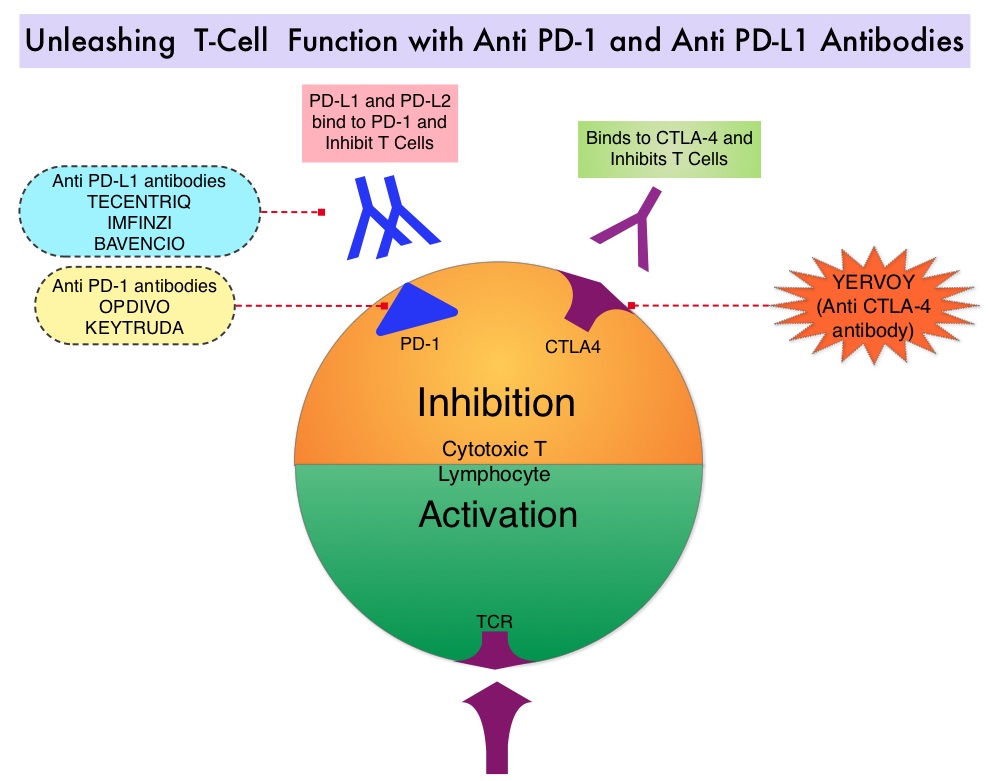
Immune checkpoints are cell surface inhibitory proteins/receptors that are expressed on activated T cells. They harness the immune system and prevent uncontrolled immune reactions by switching off the T cells of the immune system. Immuno-Oncology (IO) therapies unleash the T cells by blocking the Immune checkpoint proteins, thereby resulting in T cell proliferation, activation and a therapeutic response. Immunotherapy with PD-1 (Programmed cell Death 1) and PD-L1 (Programmed cell Death Ligand 1) inhibitors have demonstrated a clear survival benefit both as a single agent or in combination, compared with standard chemotherapy, in both treatment-naive and previously treated patients for advanced NSCLC. It is now standard therapy for patients with lung cancer. TECENTRIQ® is an anti PD-L1 monoclonal antibody, designed to directly bind to PD-L1, expressed on tumor cells and tumor-infiltrating immune cells, thereby blocking its interactions with PD-1 and B7.1 receptors and thus enabling the activation of T cells. Unleashing-T-Cell-Function-with-Anti-PD-1-and-Anti-PD-L1-Antibodies
IMpower 130 is an international, multicentre, open-label, randomized, Phase III study, evaluating the efficacy and safety of TECENTRIQ® in combination with Carboplatin and nab-Paclitaxel versus chemotherapy (Carboplatin and nab-Paclitaxel) alone, for chemotherapy-naïve patients with Stage IV non-squamous NSCLC. This study enrolled 724 patients who were randomly assigned 2:1 to receive TECENTRIQ® 1200 mg IV on Day 1, along with Carboplatin AUC 6 on Day 1 and nab-Paclitaxel 100 mg/m2 IV, on days 1, 8 and 15 of each 21-day cycle, for 4 or 6 cycles followed by maintenance TECENTRIQ®, or Carboplatin and nab-Paclitaxel alone (control group), followed by Best Supportive Care during the maintenance treatment phase or Switch maintenance to Pemetrexed every 3 weeks. Stratification factors included gender, baseline liver metastases, and PD-L1 expression. The co-Primary endpoints were investigator-assessed Progression Free Survival and Overall Survival in the intention-to-treat EGFR and ALK wild-type population. The median follow up in the population studied was 19 months.

There was a significant improvement in median Overall Survival in the TECENTRIQ® plus chemotherapy group at 18.6 months compared to 13.9 months in the chemotherapy alone group (HR=0.79; P=0.033), as well as improvement in the median Progression Free Survival (7 months versus 5.5 months, respectively, HR=0.64; P<0.0001). The most common adverse reactions reported in 20% or more of patients in the TECENTRIQ® and chemotherapy group were fatigue/asthenia, nausea, alopecia, constipation, diarrhea, and decreased appetite.

It was concluded that first-line TECENTRIQ® in combination with chemotherapy significantly improved Overall Survival and Progression Free Survival, compared to chemotherapy alone, in patients with advanced non-squamous NSCLC without ALK or EGFR mutations. This IO-chemotherapy combination is the second FDA approval for this patient population. Atezolizumab in combination with carboplatin plus nab-paclitaxel chemotherapy compared with chemotherapy alone as first-line treatment for metastatic non-squamous non-small-cell lung cancer (IMpower130): a multicentre, randomised, open-label, phase 3 trial. West H, McCleod M, Hussein M, et al. Lancet Oncol. 2019;20:924-937
First Line Combination of TECENTRIQ® and AVASTIN® Improves Survival in Hepatocellular Carcinoma

SUMMARY: The American Cancer Society estimates that for 2019, about 42,030 new cases of primary liver cancer will be diagnosed in the US and 31,780 patients will die of their disease. Liver cancer is seen more often in men than in women and the incidence has more than tripled since 1980. This increase has been attributed to the higher rate of Hepatitis C Virus (HCV) infection among baby boomers (born between 1945 through 1965). Obesity and Type II diabetes have also likely contributed to the trend. Other risk factors include alcohol, which increases liver cancer risk by about 10% per drink per day, and tobacco use, which increases liver cancer risk by approximately 50%. HepatoCellular Carcinoma (HCC) is the second most common cause of cancer-related deaths worldwide and majority of patients typically presents at an advanced stage. The prognosis for unresectable HCC remains poor and one year survival rate is less than 50% following diagnosis. NEXAVAR® was approved by the FDA in 2007 for the first line treatment of unresectable HepatoCellular Carcinoma (HCC) and the median Overall Survival was 10.7 months in the NEXAVAR® group and 7.9 months in the placebo group.

TECENTRIQ® (Atezolizumab) is an anti PD-L1 monoclonal antibody, designed to directly bind to PD-L1 expressed on tumor cells and tumor-infiltrating immune cells, thereby blocking its interactions with PD-1 and B7.1 receptors, and thus enabling the activation of T cells. AVASTIN® (Bevacizumab) is a recombinant humanized monoclonal IgG1 antibody that binds VEGF (Vascular Endothelial Growth Factor) and prevents the interaction of VEGF to its receptors (Flt-1 and KDR) on the surface of endothelial cells, thereby preventing endothelial cell proliferation and new blood vessel formation. The use of TECENTRIQ® in combination with AVASTIN® has a strong scientific rationale, as this combination can potentially enhance the immune system to combat a broad range of malignancies. AVASTIN® in addition to its established anti-angiogenic properties can further enhance TECENTRIQ®’s ability to restore anti-cancer immunity, by inhibiting VEGF-related immunosuppression, promoting T-cell tumor infiltration and enabling priming and activation of T-cell responses against tumor antigens.

IMbrave150 is a global, open-label, multicenter, randomized, Phase III study in which a combination of TECENTRIQ® and AVASTIN® was compared with standard-of-care NEXAVAR®, in patients with previously untreated locally advanced or metastatic HCC. Patients were randomized 2:1 to receive TECENTRIQ® 1200 mg IV on day 1 along with AVASTIN® 15 mg/kg on day 1 of each 21-day cycle (N=336) or NEXAVAR® 400 mg orally twice daily, each day of the 21-day cycle (N=165). Treatment was continued until disease progression or unacceptable toxicity. The treatment groups were well balanced and enrolled patients had an ECOG performance status of 0 or 1, Child-Pugh Class A disease, and adequate hematologic and end-organ function. The two co-Primary endpoints were Overall Survival (OS) and Progression Free Survival (PFS). The key Secondary endpoints included Overall Response Rate (ORR), Time To Progression (TTP) and Duration of Response (DOR), as well as Patient-Reported Outcomes (PROs), Safety and Pharmacokinetics.

With a median follow up of 8.6 months, the OS was not yet reached in the TECENTRIQ® and AVASTIN® combination group compared with 13.2 months in the NEXAVAR® group (HR=0.58; P=0.0006). The median PFS was 6.8 months versus 4.3 months respectively (HR=0.59; P<0.0001). The ORR was 27% versus 12% (P<0.0001) based on the Independent Review Facility RECIST 1.1 criteria, in favor of the combination regimen. This benefit was seen across clinical subgroups and the combination regimen delayed deterioration of Quality of Life compared with NEXAVAR®. Grade 3 and 4 Adverse Events were similar and occurred in 57% and 55% of the combination and control arms, respectively.

It was concluded that a combination of TECENTRIQ® and AVASTIN® demonstrated statistically significant and clinically meaningful improvement in both Overall Survival and Progression Free Survival compared with NEXAVAR®, in treatment naïve patients with unresectable Hepatocelluar Carcinoma. The authors added that this is the first study in 11 years to show an improvement in Overall Survival with a new first line treatment option, compared to NEXAVAR®, and has the potential to be a practice changing treatment in Hepatocellular Carcinoma. IMbrave150: Efficacy and safety results from a ph III study evaluating atezolizumab (atezo) + bevacizumab (bev) vs sorafenib (Sor) as first treatment (tx) for patients (pts) with unresectable hepatocellular carcinoma (HCC). Cheng A-L, Qin S, Ikeda M, et al. Annals of Oncology, Volume 30, 2019 Supplement 9. LBA3

Late breaking Abstract – ESMO 2019 Chemotherapy-Free First Line Immunotherapy Combination Improves Overall Survival in Advanced NSCLC

SUMMARY: Lung cancer is the second most common cancer in both men and women and accounts for about 14% of all new cancers and 27% of all cancer deaths. The American Cancer Society estimates that for 2019, about 228,150 new cases of lung cancer will be diagnosed and 142,670 patients will die of the disease. Lung cancer is the leading cause of cancer-related mortality in the United States. Non-Small Cell Lung Cancer (NSCLC) accounts for approximately 85% of all lung cancers. Of the three main subtypes of NSCLC, 30% are Squamous Cell Carcinomas (SCC), 40% are Adenocarcinomas and 10% are Large Cell Carcinomas. Immune checkpoints are cell surface inhibitory proteins/receptors that are expressed on activated T cells. They harness the immune system and prevent uncontrolled immune reactions by switching off the T cells of the immune system.

Immune checkpoint proteins/receptors include CTLA-4 (Cytotoxic T-Lymphocyte Antigen 4, also known as CD152) and PD-1(Programmed cell Death 1). Checkpoint inhibitors unleash the T cells resulting in T cell proliferation, activation, and a therapeutic response. OPDIVO® (Nivolumab) is a fully human, immunoglobulin G4 monoclonal antibody that binds to the PD-1 receptor and blocks its interaction with PD-L1 and PD-L2, thereby undoing PD-1 pathway-mediated inhibition of the immune response and unleashing the T cells. OPDIVO® is presently approved for treatment of patients with metastatic NSCLC and progression on or after Platinum-based chemotherapy. YERVOY® is a fully human immunoglobulin G1 monoclonal antibody that blocks Immune checkpoint protein/receptor CTLA-4 (Cytotoxic T-Lymphocyte Antigen 4).

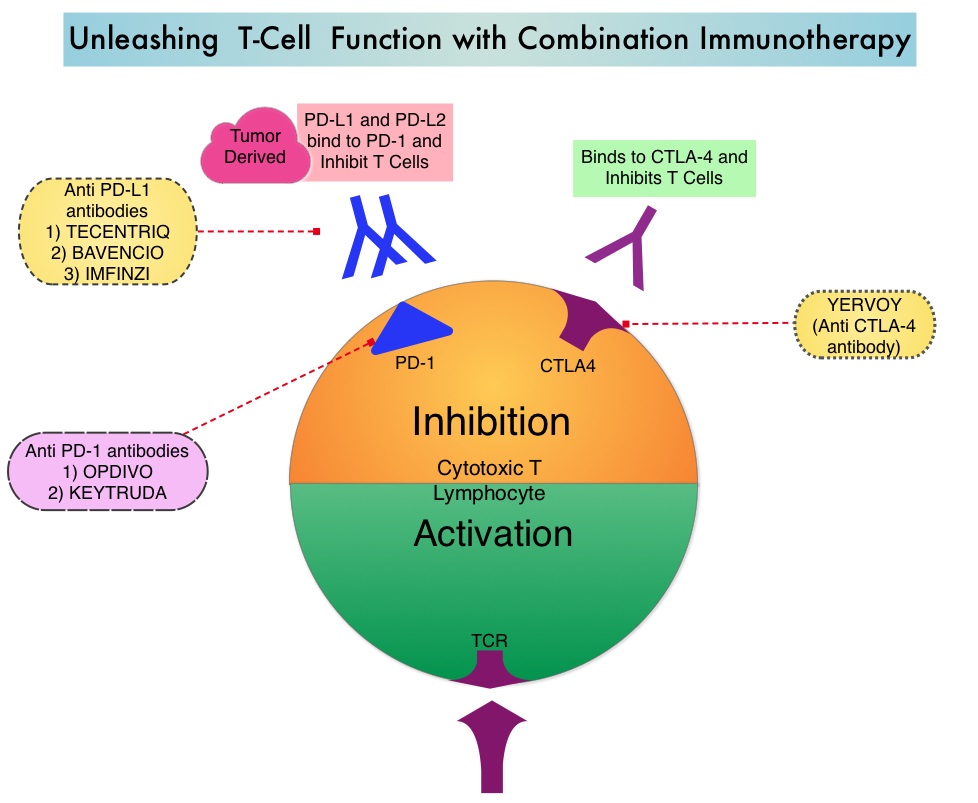
CheckMate-227 is an open-label, multi-part, global, Phase III trial in which OPDIVO® based regimens were compared with Platinum-doublet chemotherapy in patients with first line advanced NSCLC, across non-squamous and squamous tumor histologies. In Part 1 of this trial, there were 2 cohorts- Part 1a in which OPDIVO® plus low dose YERVOY® (N=396) or OPDIVO® monotherapy (N=396) was compared with chemotherapy alone (N=397), in patients whose tumors expressed PD-L1 expression of 1% or more and Part 1b in which OPDIVO® plus low dose YERVOY® (N=187) or OPDIVO® plus chemotherapy (N=177) was compared with chemotherapy alone (N=186), in patients whose tumors did not express PD-L1 (less than 1%). (In Part 2 of this trial, OPDIVO® plus chemotherapy was compared with chemotherapy alone, regardless of PD-L1 expression. Part 2 did not meet its Primary endpoint for Overall Survival for OPDIVO® plus chemotherapy versus chemotherapy alone, in patients with non-squamous NSCLC, and is published elsewhere). It should be noted that when this trial was launched, chemotherapy along with immunotherapy or immunotherapy alone was not approved for the front-line treatment of NSCLC. Therefore, dual immunotherapy combination was not compared with current standards of care such as chemotherapy plus immunotherapy.Unleashing-T-Cell-Function-with-Combination-Immunotherapy

OPDIVO® was administered at 3 mg/kg every 2 weeks, and in the combination arm, YERVOY® was administered at 1 mg/kg every 6 weeks. When administered with chemotherapy, OPDIVO® was administered at 360 mg every 3 weeks. Patients were stratified by histology, and treatment was administered until disease progression, unacceptable toxicity, or for 2 years, for immunotherapy. There were two Co-primary endpoints in Part 1 for OPDIVO® plus YERVOY® versus chemotherapy: Overall survival (OS) in patients whose tumors express PD-L1 (assessed in patients enrolled in Part 1a) and Progression Free Survival (PFS) in patients with TMB of 10 mut/Mb or more, across the PD-L1 spectrum (assessed in patients enrolled across Parts 1a and 1b). The minimum follow up for the Primary endpoint was 29 months.

Both Part 1a and Part 1b groups met their Primary endpoints. In the Part 1a cohort with PD-L1 expression of 1% or more, the Overall Survival was significantly longer with OPDIVO® plus YERVOY®, compared to chemotherapy. The median Overall Survival was 17.1 months in the Immunotherapy combination group compared to 14.9 months in the chemotherapy group (HR=0.79; P=0.007). Progression Free Survival, Objective Response Rates and Duration of Response were all greater with OPDIVO® plus YERVOY® combination, compared to chemotherapy. In the Part 1b cohort with PD-L1 expression of less than 1%, Overall Survival benefit was again observed with the OPDIVO® plus YERVOY® combination, compared with chemotherapy. Grade 3 and 4 treatment-related Adverse Events across all patients was 33% in those treated with OPDIVO® plus YERVOY® combination, 19% with single agent OPDIVO® and 36% with chemotherapy.

It was concluded that first-line treatment of patients with advanced NSCLC with a combination of two immunotherapy drugs improves Overall Survival, compared to chemotherapy, and offers a chemotherapy-free first line treatment option for a subset of NSCLC patients, leaving chemotherapy for later lines of therapy. Nivolumab + low-dose ipilimumab versus platinum-doublet chemotherapy as first-line treatment for advanced non–small cell lung cancer: CheckMate-227 part 1 final analysis. Peters S, Ramalingam SS, Paz-Ares L, et al. Presented at 2019 ESMO Congress; September 27 to October 1, 2019; Barcelona, Spain. Abstract LBA4.

Updated Analysis KEYTRUDA® Doubles Overall Survival Compared with Chemotherapy in Advanced NSCLC

SUMMARY: Lung cancer is the second most common cancer in both men and women and accounts for about 14% of all new cancers and 27% of all cancer deaths. The American Cancer Society estimates that for 2019, about 228,150 new cases of lung cancer will be diagnosed and 142,670 patients will die of the disease. Lung cancer is the leading cause of cancer-related mortality in the United States. Non-Small Cell Lung Cancer (NSCLC) accounts for approximately 85% of all lung cancers. Of the three main subtypes of NSCLC, 30% are Squamous Cell Carcinomas (SCC), 40% are Adenocarcinomas and 10% are Large Cell Carcinomas.

KEYTRUDA® (Pembrolizumab) is a fully humanized, Immunoglobulin G4, anti-PD-1, monoclonal antibody, that binds to the PD-1 receptor and blocks its interaction with ligands PD-L1 and PD-L2. It thereby reverses the PD-1 pathway-mediated inhibition of the immune response and unleashes the tumor-specific effector T cells. High level of Programmed Death-Ligand 1 (PD-L1) expression is defined as membranous PD-L1 expression on at least 50% of the tumor cells, regardless of the staining intensity. It is estimated that based on observations from previous studies, approximately 25% of the patients with advanced Non Small Cell Lung Cancer (NSCLC) have a high level of PD-L1 expression and high level of PD-L1 expression has been associated with significantly increased response rates to KEYTRUDA®.

KEYNOTE-024 is an open-label, randomized phase III trial in which KEYTRUDA® administered at a fixed dose was compared with investigator’s choice of cytotoxic chemotherapy, as first line therapy, for patients with advanced NSCLC, with tumor PD-L1 expression of 50% or greater. Three hundred and five (N=305) treatment naïve patients with advanced NSCLC and PD-L1 expression on at least 50% of tumor cells, were randomly assigned in a 1:1 ratio to receive either KEYTRUDA® (N=154) or chemotherapy (N=151). Enrolled patients had no sensitizing EGFR mutations or ALK translocations. Treatment consisted of KEYTRUDA® administered at a fixed dose of 200 mg IV every 3 weeks for up to 2 years or the investigator’s choice of platinum-based chemotherapy for 4-6 cycles. Pemetrexed (ALIMTA®) based therapy was permitted only for patients who had non-squamous tumors and these patients could receive ALIMTA® maintenance therapy after the completion of combination chemotherapy. Patients in the chemotherapy group who experienced disease progression were allowed to cross over to the KEYTRUDA® group. The Primary end point was Progression Free Survival (PFS) and Secondary end points included Overall Survival (OS), Objective Response Rate (ORR) and Safety.

It was previously reported that at a median follow up of 11.2 months, the median PFS was 10.3 months in the KEYTRUDA® group versus 6 months in the chemotherapy group (HR=0.50; P<0.001). However, median OS had not been reached in the KEYTRUDA® group at the time of that analysis. The Independent Data and Safety Monitoring Committee (IDMC) based on these results recommended stopping the trial early, to allow for use of KEYTRUDA® in patients randomly assigned to chemotherapy. Eighty two patients (N=82) assigned to chemotherapy, met criteria to cross over to the KEYTRUDA® group, upon progression.

This publication is an updated analysis of the KEYNOTE-024 study, after a median follow-up of 25.2 months. The median OS was 30 months in the KEYTRUDA® group and 14.2 months in the chemotherapy group (HR=0.63; P=0.002). When adjusted for crossover, the OS benefit was maintained and the Hazard Ratio for OS among KEYTRUDA® group versus chemotherapy group was 0.49. Further, more patients in the KEYTRUDA® group achieved 12-month OS (70.3% versus 54.8%), and an ORR response (45.5% versus 29.8%), compared to the chemotherapy group respectively. The ORR among those who crossed over to KEYTRUDA®, was 20.7%. The median Duration of Response has not yet been reached for patients assigned to KEYTRUDA® and also for those who crossed over to KEYTRUDA®. For those assigned chemotherapy, the median Duration of Response was 7.1 months. Patients in the KEYTRUDA® group had lower rates of Grade 3-5 adverse events, compared to those in the chemotherapy group (31.2% versus 53.3%), as well as a lower rate of any-grade adverse events (76.6% versus 90%).

It was concluded that in this updated analysis of KEYNOTE-024, KEYTRUDA® continued to provide improved Overall Survival benefit, inspite of the high rate of crossover, with lower rates of Adverse Events, when compared to chemotherapy, among patients with metastatic NSCLC and high PD-L1 expression. The authors added that these updated long term results support KEYTRUDA® monotherapy as a standard-of-care regimen for first line treatment of advanced NSCLC with PD-L1 expression of 50% or greater and without EGFR/ALK alterations. Updated Analysis of KEYNOTE-024: Pembrolizumab Versus Platinum-Based Chemotherapy for Advanced Non–Small-Cell Lung Cancer With PD-L1 Tumor Proportion Score of 50% or Greater. Reck M , Rodríguez–Abreu D, Robinson AG, et al. J Clin Oncol 2019;37:537-546

Antibiotic Treatment Prior to Immune Checkpoint Inhibitor Therapy has a Detrimental Effect on Response Rates and Overall Survival

SUMMARY: The American Cancer Society estimates that in 2019, there will be an estimated 1,762,450 new cancer cases diagnosed and 606,880 cancer deaths in the United States. Immunotherapy with Immune Checkpoint Inhibitors (ICIs) has revolutionized cancer care and has become one of the most effective treatment options by improving Overall Response Rate and prolongation of survival across multiple tumor types. These agents target Programmed cell death protein-1 (PD-1), Programmed cell death ligand-1 (PD-L1), Cytotoxic T-Lymphocyte-Associated protein-4 (CTLA-4), and many other important regulators of the immune system.

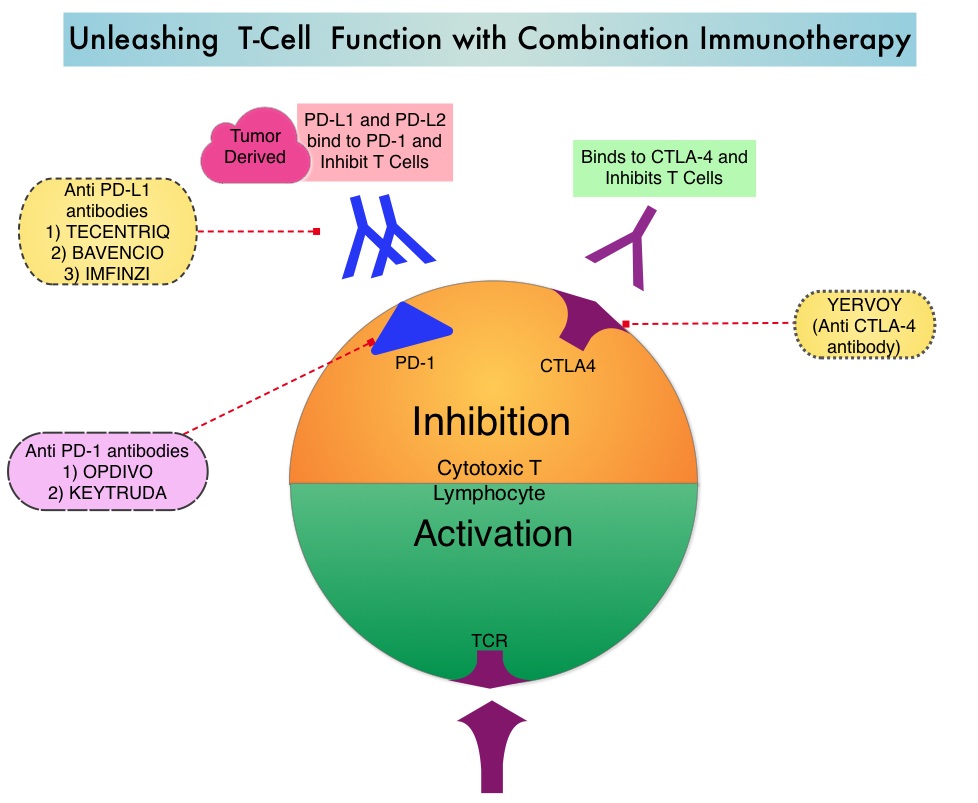
Preclinical studies have suggested that immune-based therapies for cancer may have a very complex interplay with the host’s microbiome and there may be a relationship between gut bacteria and immune response to cancer. The crosstalk between microbiota in the gut and the immune system allows for the tolerance of commensal bacteria (normal microflora) and oral food antigens and at the same time enables the immune system to recognize and attack opportunistic bacteria. Immune Checkpoint Inhibitors strongly rely on the influence of the host’s microbiome, and the gut microbial diversity enhances mucosal immunity, dendritic cell function, and antigen presentation. Broad-spectrum antibiotics can alter the bacterial composition and bacterial diversity of our gut, by killing the good bacteria. It has been postulated that this may negate the benefits of immunotherapy and influence treatment outcomes.Unleashing-T-Cell-Function-with-Combination-Immunotherapy

The authors conducted this study to determine whether there was an association between antibiotic therapy administered prior to or concurrently with ICI therapy and Overall Survival (OS) and Response Rates, in patients with cancer, treated with ICIs in routine clinical practice. In this prospective, multicenter cohort study, 196 patients with cancer who received ICI therapy were recruited at two tertiary care centers between January 2015 and April 2018. Majority of enrolled patients had Non-Small Cell Lung Cancer (N=119), but patients with Melanoma (N=38) as well as Urologic and Head and Neck cancers (N=39) were also included in the analysis. The median age was 68 years, and majority of patients had metastatic disease at the time of treatment initiation with ICIs and 96% of patients received anti-PD-1/PD-L1 therapy alone. Broad spectrum antibiotics up to 30 days prior to commencement of ICI qualified as prior antibiotic exposure whereas concurrent treatment with antibiotics was defined as antibiotic treatment from the first day of ICI treatment until cessation. Beta-lactams were the most commonly prescribed antibiotic class, and were given as a single course for less than 7 days. When antibiotics were administered concurrently with ICIs, patients tended to be treated longer and with multiple courses. The common indication for both prior and concurrent antibiotic treatment was respiratory infections, and 15% of patients received antibiotic therapy prior to ICI therapy, whereas 35% of patients received antibiotics concurrently with ICIs. The Primary endpoint was Overall Survival (OS), calculated from the time of ICI therapy commencement and radiologic response to treatment, with disease refractory to ICI therapy defined as progressive disease 6-8 weeks after the first ICI dose, without evidence of pseudoprogression.

In this analysis, antibiotic treatment prior to ICI therapy had a significant adverse effect on Overall Survival, with a median survival of only 2 months for those who received prior antibiotic treatment versus 26 months for antibiotic-naive patients (HR=7.4; P<0.001). Further, patients who had received prior antibiotic treatment had a higher likelihood of primary refractoriness to ICIs, compared to those who did not receive antibiotics (81% versus 44% (P<0.001). The poor OS outcomes when patients received antibiotic treatment prior to ICI therapy were noted, irrespective of tumor site (OS in NSCLC 26 vs 2.5 months, P<0.001, OS in Melanoma 14 vs 3.9 months, P<0.001, OS in other tumors 11 vs 1.1 months, P <0.001). Multivariate analyses confirmed that prior antibiotic therapy and response to ICI therapy were associated with OS, independent of tumor site, disease burden, and performance status. Antibiotic treatment administered concurrently with ICIs however, was not associated with worse Overall Survival.

It was concluded that treatment with antibiotics prior to therapy with Immune Checkpoint Inhibitors in routine clinical practice, is associated with a worse treatment response and Overall Survival in unselected group of patients. This study suggests that timing of antibiotic exposure may be crucial and the authors recommend that studies are urgently required to investigate antibiotic-mediated alterations of gut microbiota as a determinant of poorer outcomes, following treatment with Immune Checkpoint Inhibitors. Association of Prior Antibiotic Treatment With Survival and Response to Immune Checkpoint Inhibitor Therapy in Patients With Cancer. Pinato DJ, Howlett S, Ottaviani D, et al. JAMA Oncol. 2019, Sep 12. doi: 10.1001/jamaoncol.2019.2785. [Epub ahead of print]

Survival Benefit with KEYTRUDA® After Locally Ablative Therapy (LAT) for Oligometastatic NSCLC

SUMMARY: Lung cancer is the second most common cancer in both men and women and accounts for about 14% of all new cancers and 27% of all cancer deaths. The American Cancer Society estimates that for 2019, about 228,150 new cases of lung cancer will be diagnosed and 142,670 patients will die of the disease. Lung cancer is the leading cause of cancer-related mortality in the United States. Non-Small Cell Lung Cancer (NSCLC) accounts for approximately 85% of all lung cancers. Of the three main subtypes of NSCLC, 30% are Squamous Cell Carcinomas (SCC), 40% are Adenocarcinomas and 10% are Large Cell Carcinomas.

It is estimated that approximately 7% of patients with NSCLC present with a limited number of metastatic foci (oligometastatic). Several retrospective studies have shown that the use of Locally Ablative Therapy (LAT) to all sites of disease in oligometastatic NSCLC is associated with a significant improvement in Progression Free Survival (PFS) and Overall Survival (OS), when compared with historical data. Preclinical evidence had suggested that chemotherapy and radiotherapy may upregulate PD-L1 expression in tumor cells. Therefore, incorporating immunotherapy along with LAT has been an area of active research. In the PACIFIC trial, consolidation therapy with PD-L1 inhibitor IMFINZI® (Durvalumab), following chemoradiation, significantly improved PFS and OS among patients with locally advanced NSCLC suggesting that there is a strong biological rationale for the use of immunotherapy in patients with minimal residual disease state.

KEYTRUDA® (Pembrolizumab) is a fully humanized, Immunoglobulin G4, anti-PD-1, monoclonal antibody, that binds to the PD-1 receptor and blocks its interaction with ligands PD-L1 and PD-L2. It thereby reverses the PD-1 pathway-mediated inhibition of the immune response and unleashes the tumor-specific effector T cells. The primary objective of this study was to evaluate whether the addition of KEYTRUDA® after Locally Ablative Therapy (LAT) improves outcomes among patients with oligometastatic NSCLC, compared with historical data.

The authors conducted a single arm Phase II trial at an academic referral cancer center, and 51 eligible patients with oligometastatic NSCLC (no more than 4 metastatic sites) were enrolled. Enrolled patients had oligometastatic disease at diagnosis (synchronous disease) or who developed oligometastatic disease after initial definitive therapy (metachronous disease). There was no limit on the number of prior therapies, although patients could not have received prior therapy with a Programmed Death 1 (PD-L1) inhibitor. Any form of Locally Ablative Therapy (LAT) was acceptable and LATs included Surgery, Chemoradiotherapy, Stereotactic radiotherapy, and/or Interventional ablation. Forty five of the 51 patients enrolled received KEYTRUDA® within 4 to 12 weeks of completing LAT. Patients received KEYTRUDA® 200 mg IV every 21 days, for 8 cycles and were allowed to continue therapy for a total of 16 cycles in the absence of progressive disease or untoward toxicities. The median age was 64 years and patients were eligible regardless of their PD-L1 or molecular target status. Thirty-two patients had adequate tissue for assessment of PD-L1 status, and 29 patients had adequate tissue for assessment of CD8 T-cell infiltration. In patients undergoing testing, 34% had results positive for PD-L1 (1% or more) and 52% had CD8 T-cell infiltration of greater than 2.5%. Patients received a median of 11 cycles of KEYTRUDA®.

The two Primary efficacy end points were Progression Free Survival (PFS) from the start of Locally Ablative Therapy (PFS-L) and PFS from the start of KEYTRUDA® therapy (PFS-P). This study was powered for comparison with historical data on the first efficacy end point. Secondary outcomes included Overall Survival, Safety, and Quality of Life, as measured by the Functional Assessment of Cancer Therapy–Lung (FACT-L) instrument.

After a median follow-up of 23.2 months for surviving patients, the median PFS from the start of Locally Ablative Therapy (PFS-L) was 19.1 months, which was a statistically significant improvement from the historical median of 6.6 months (P=0.005). The median PFS from the start of KEYTRUDA® therapy (PFS-P) was 18.7 months. The mean Overall Survival rate at 12 months was 90.9% and at 24 months was 77.5%. The Progression Free Survival from the start of Locally Ablative Therapy (PFS-L) was not influenced by PD-L1 expression or CD8 T-cell tumor infiltration. Quality of Life as measured by the FACT-L scores at cycles 8 and 16 were not significantly different from FACT-L scores at baseline.

The authors concluded that KEYTRUDA® after Locally Ablative Therapy for oligometastatic NSCLC was associated with a clinically and statistically significant improvement in Progression Free Survival, compared with historical data, without a decrement in Quality of Life. They added that the Overall Survival data is encouraging but will require further follow up. Pembrolizumab After Completion of Locally Ablative Therapy for Oligometastatic Non–Small Cell Lung Cancer: A Phase 2 Trial. Bauml JM, Mick R, Ciunci C, et al. JAMA Oncol. Published online July 11, 2019. doi:10.1001/jamaoncol.2019.1449

FDA Approves KEYTRUDA® for Advanced Small Cell Lung Cancer

SUMMARY: The FDA on June 17, 2019 granted accelerated approval to KEYTRUDA® (Pembrolizumab) for patients with metastatic Small Cell Lung Cancer (SCLC) with disease progression on or after Platinum-based chemotherapy, and at least one other prior line of therapy. The American Cancer Society estimates that for 2019 about 228,150 new cases of lung cancer will be diagnosed and about 142,670 patients will die of the disease. Lung cancer is the leading cause of cancer-related mortality in the United States. Small cell lung cancer (SCLC) accounts for approximately 13-15% of all lung cancers, and is aggressive. Patients with SCLC are often treated with platinum based chemotherapy as first-line treatment, and the tumor response rates are as high as 60-80%. However, only 20% of patients with Limited Stage SCLC are cured, and majority of the patients relapse within months of completing initial therapy. Patients often receive HYCAMTIN® (Topotecan) for recurrent or progressive SCLC (second-line treatment) and after failure on second-line therapy, treatment options are limited. The 5 year survival rate for Extensive Stage SCLC is less than 5%, with a median survival of 9-10 months from the time of diagnosis.

KEYTRUDA® is a fully humanized, Immunoglobulin G4, anti-PD-1, monoclonal antibody, that binds to the PD-1 receptor and blocks its interaction with ligands PD-L1 and PD-L2. It thereby reverses the PD-1 pathway-mediated inhibition of the immune response and unleashes the tumor-specific effector T cells.

The present FDA approval was based on pooled data from two Basket studies, KEYNOTE-158 (cohort G) and KEYNOTE-028 (cohort C1), which are two multicenter, multi-cohort, non-randomized, open-label trials, evaluating KEYTRUDA® in patients with SCLC, who had disease progression on or after platinum-based chemotherapy and at least one other prior line of therapy. In Basket trials, patients with different tumor histologies receive a single treatment and have a single biomarker. Among the 83 patients evaluated in both these studies for efficacy, 64% received two prior lines of therapy and 36% received three or more lines of therapy; 60% received prior thoracic radiation therapy; 51% received prior radiation therapy to the brain. Patients in the KEYNOTE-028 were required to have tumors expressing PD-L1, whereas PD-L1 positivity was not required for KEYNOTE-158. Patients in the KEYNOTE-028 study received KEYTRUDA® 10 mg/kg IV every 2 weeks (N=19), whereas those in KEYNOTE-158 received KEYTRUDA® 200 mg IV every 3 weeks (N=64). Treatment was continued until documented disease progression, unacceptable toxicity, or a maximum of 24 months. The major efficacy outcome measures included Objective Response Rate (ORR) and Duration of Response (DOR).

Treatment with KEYTRUDA® resulted in an Overall Response Rate of 19%, with a Complete Response Rate of 2% and a Partial Response Rate of 17%. Of the responding patients, 94% had a Duration of Response (DOR) of 6 months or longer, 63% had a DOR of 12 months or longer, and 56% had a DOR of 18 months or longer. Responses ranged from 4.1 to over 35.8 months. Adverse Events were similar to those occurring in patients with other solid tumors who received KEYTRUDA® as a single agent and the common adverse reactions included fatigue, decreased appetite, cough, nausea and constipation.

It was concluded that this new indication marks the first FDA approval for KEYTRUDA® in Small Cell Lung Cancer, and provides an additional treatment option for patients with advanced stage disease, based on clinical response rates. https://www.fda.gov/drugs/resources-information-approved-drugs/fda-approves-pembrolizumab-metastatic-small-cell-lung-cancer

Late Breaking Abstract – ASCO 2019 Front-Line Keytruda® Monotherapy for Patients with Advanced Gastric or Gastroesophageal Junction Adenocarcinoma

SUMMARY: The American Cancer Society estimates that in the US, about 27,510 cases of Gastric Cancer will be diagnosed in 2019 and about 11,140 people will die of the disease. The average age at diagnosis is 68 years and Gastric Cancer is one of the leading causes of cancer-related deaths in the world. Risk factors for gastric cancer include age, gender, ethnicity, geography and infection with Helicobacter pylori. Patients with localized disease (Stage II and Stage III) are often treated with multimodality therapy and 40% of the patients may survive for 5 years or more. However, majority of the patients with Gastric and GastroEsophageal (GE) Adenocarcinoma have advanced disease at the time of initial presentation and have limited therapeutic options with little or no chance for cure. These patients frequently are treated with Platinum containing chemotherapy along with a Fluoropyrimidine and, if appropriate, HER2/neu-targeted therapy. This can however be associated with significant toxicities impacting patient’s quality of life.

KEYTRUDA® (Pembrolizumab) is a fully humanized, Immunoglobulin G4, anti-PD-1, monoclonal antibody, that binds to the PD-1 receptor and blocks its interaction with ligands PD-L1 and PD-L2. It thereby reverses the PD-1 pathway-mediated inhibition of the immune response and unleashes the tumor-specific effector T cells. KEYTRUDA® in the Phase II KEYNOTE-059 trial demonstrated promising antitumor activity and durable responses in patients with advanced Gastric/GastroEsophageal Junction cancer, who had progressed on more than 2 lines of therapy, with higher Objective Response Rates noted in patients with PD-L1-positive tumors.

KEYNOTE-062 is a randomized, phase III controlled study in which KEYTRUDA® monotherapy was compared to standard chemotherapy as first line treatment, in select patients with advanced Gastric or GastroEsophageal Junction (GEJ) Adenocarcinoma. This trial enrolled 763 newly diagnosed patients of whom 69% had Gastric Adenocarcinoma cancer and 30% had GEJ Adenocarcinoma. Patients were randomized 1:1:1 to receive KEYTRUDA® 200 mg IV every 3 weeks for up to 2 years (N=256), KEYTRUDA® plus Cisplatin 80 mg/m2 IV every three weeks along with either 5-Fluorouracil 800 mg/m2 daily on Days 1-5 every three weeks or XELODA® (Capecitabine) 1000 mg/m2 twice a day on Days 1-14 every three weeks (N=257 ) or placebo plus Cisplatin and either 5-FU or XELODA® given at a similar dose and schedule as the second group (N=250). The median patient age was 62 years and PD-L1 expression was assessed by Combined Positive Score (CPS). The Primary endpoints were Overall Survival (OS) in patients whose tumors expressed PD-L1 CPS 1 or more and CPS 10 or more in the KEYTRUDA® monotherapy group and in combination with chemotherapy group, as well as Progression Free Survival (PFS) in patients whose tumors expressed PD-L1 CPS 1 or more in the combination arm. Secondary endpoints included Overall Response Rate (ORR) and Duration of Response (DOR) in patients whose tumors express PD-L1 CPS 1 or more. In the current trial, all patients had a PD-L1 CPS of at least 1, and 281 patients (37%) had a PD-L1 CPS score of 10 or more. The median follow-up was 11.3 months.

The trial met its Primary endpoint and among patients with a PD-L1 CPS of 1 or more, Overall Survival was noninferior to chemotherapy. The median Overall Survival was 10.6 months in the KEYTRUDA® monotherapy group compared with 11.1 months in the chemotherapy group (HR=0.91). Among patients with a PD-L1 CPS 10 or more, Overall Survival with KEYTRUDA® was superior to chemotherapy. The median Overall Survival was 17.4 months for those receiving KEYTRUDA® compared with 10.8 months for those receiving chemotherapy. After 2 years, 39% of people taking KEYTRUDA® were alive compared with 22% of those taking chemotherapy (HR=0.69). The OS and PFS rates for the combination of KEYTRUDA® and chemotherapy were comparable with those of chemotherapy alone, regardless of PD-L1 CPS. The efficacy outcomes were not influenced by age, tumor size or location, histological subtype, number of metastatic sites and prior gastrectomy status.

It was concluded that KEYTRUDA® monotherapy is noninferior to chemotherapy for OS among patients with PD-L1 CPS 1 or more. There was however a clinically meaningful improvement in OS among patients with PD-L1 CPS 10 or more. Further, there was a more favorable safety profile for KEYTRUDA® over chemotherapy, making this a more desirable treatment option for elderly patients, for whom platinum based chemotherapy may not be appropriate. Pembrolizumab with or without chemotherapy versus chemotherapy for advanced gastric or gastroesophageal junction (G/GEJ) adenocarcinoma: The phase III KEYNOTE-062 study. Tabernero J, Van Cutsem E, Bang Y-J, et al. J Clin Oncol 37, 2019 (suppl; abstr LBA4007)

Late Breaking Abstract – ASCO 2019 XTANDI® Improves Overall Survival in Metastatic Hormone-Sensitive Prostate Cancer

SUMMARY: Prostate cancer is the most common cancer in American men with the exclusion of skin cancer, and 1 in 9 men will be diagnosed with Prostate cancer during their lifetime. It is estimated that in the United States, about 174,650 new cases of Prostate cancer will be diagnosed in 2019 and 31,620 men will die of the disease. The development and progression of Prostate cancer is driven by androgens. Androgen Deprivation Therapy (ADT) or testosterone suppression has therefore been the cornerstone of treatment of advanced Prostate cancer and is the first treatment intervention.

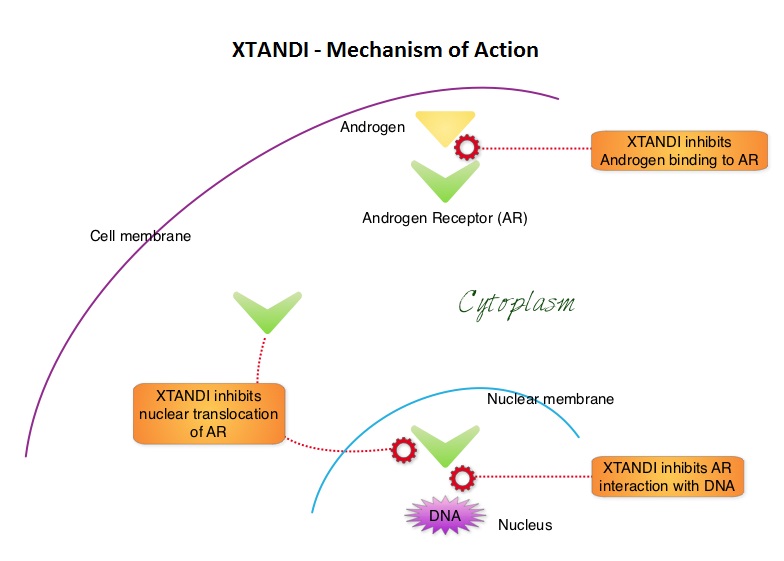
The first-generation NonSteroidal Anti-Androgen (NSAA) agents such as EULEXIN® (Flutamide), CASODEX® (Bicalutamide) and NILANDRON® (Nilutamide) act by binding to the Androgen Receptor (AR) and prevent the activation of the AR and subsequent up-regulation of androgen responsive genes. They may also accelerate the degradation of the AR. These agents have a range of pharmacologic activity from being pure anti-androgens to androgen agonists. CASODEX® is a nonsteroidal oral anti-androgen, that is often prescribed along with GnRH (Gonadotropin-Releasing Hormone) agonists for metastatic disease, or as a single agent second line hormonal therapy for those who had progressed on LHRH agonists. XTANDI® (Enzalutamide) is an orally administered, second-generation, anti-androgen, with no reported agonistic effects. It competitively inhibits androgens and AR binding to androgens as well as AR nuclear translocation and interaction with DNA. It thus inhibits several steps in the AR signaling pathway and was designed to overcome acquired resistance to first-generation nonsteroidal anti-androgens. Previously published studies have shown that XTANDI® improved Overall Survival in Castration-Resistant Prostate Cancer, regardless of whether it was used before or after Docetaxel chemotherapy. The benefits of adding Docetaxel or ZYTIGA® (Abiraterone) to testosterone suppression in men with metastatic, hormone-sensitive Prostate cancer have been established in randomized clinical trials.XTANDI - Mechanism-of-Action

ENZAMET (Enzalutamide in First Line Androgen Deprivation Therapy for Metastatic Prostate Cancer) is an open-label, international, randomized, Phase III trial, conducted to evaluate the benefits of adding XTANDI® to initial standard treatment of Androgen Deprivation Therapy (ADT) with or without early Docetaxel, among patients with metastatic hormone-sensitive Prostate cancer.

A total of 1125 men with metastatic hormone-sensitive Prostate cancer were randomly assigned 1:1 to receive either ADT plus XTANDI® or NonSteroidal Anti-Androgens (NSAA). ADT consisted of parenteral injection of a testosterone-suppressing agent (such as Goserelin, Leuprolide, or Degarelix) with either a 160 mg dose of XTANDI® daily or one of the standard NSAA’s such as CASODEX®, EULEXIN® or NILANDRON®. Of the 1,125 men enrolled in the trial, 503 men received early doses of Docetaxel, and 602 did not. The decision to initiate early treatment with Docetaxel was at the treating physician’s discretion and was administered at 75 mg/m2 IV without prednisone every 3 weeks for a maximum of six cycles. Randomized patients were stratified according to the volume of disease (High Risk- defined as the presence of visceral metastases or at least four bone lesions with at least one lesion located beyond the vertebral bodies and pelvis or low), planned use of early Docetaxel, planned use of bone antiresorptive therapy, and score on ACE-27 (Adult Comorbidity Evaluation 27), with no coexisting conditions rated as 0, mild rated as 1, moderate rated as 2, and severe or multiple conditions rated as 3. The mean age was 68 years, 45% of patients received early Docetaxel as planned treatment and over 50% of the patients had high volume disease. The Primary end point was Overall Survival (OS) and Secondary end points included Progression Free Survival (PFS) as determined by the PSA level, clinical PFS, and adverse events. The median follow up was 34 months.

At the time of the first interim analysis, there was a 33% reduction in the risk of death in the XTANDI® group compared to the standard treatment group ((HR=0.67; P<0.002) and the estimated Overall Survival at 3 years were 80% in the XTANDI® group and 72% in the standard-of-care group. The addition of XTANDI® also improved PSA Progression Free Survival with a 61% reduction in the risk of PSA progression (HR=0.39; P<0.001) and 60% improvement in clinical PFS (HR=0.40; P<0.001). The effects of XTANDI® on clinical PFS were noted in all predefined subgroups, including those with early Docetaxel treatment. Among the patient group who also received early Docetaxel treatment, there was however no significant improvement in Overall Survival. Adding XTANDI® to standard ADT was associated with a higher frequency of toxic effects, especially peripheral neuropathy, associated with the concomitant use of Docetaxel, fatigue and slightly higher risk of seizures compared to standard therapy, and more patients discontinued treatment due to adverse events in the XTANDI® group.

It was concluded that XTANDI® was associated with significantly longer Progression Free Survival and Overall Survival than standard intervention, in men with metastatic, hormone-sensitive Prostate cancer receiving Androgen Deprivation Therapy. Patients who received early Docetaxel treatment, however did not have significant survival benefit. The authors added that ENZAMET is the first metastatic hormone-sensitive Prostate cancer trial to report Overall Survival data of an androgen receptor inhibitor (XTANDI®), and outcomes among a set of patients who also concurrently received Docetaxel. Enzalutamide with Standard First-Line Therapy in Metastatic Prostate Cancer. Davis ID, Martin AJ, Stockler MR, et al. for the ENZAMET Trial Investigators and the Australian and New Zealand Urogenital and Prostate Cancer Trials Group. June 2, 2019. DOI: 10.1056/NEJMoa1903835

KEYTRUDA® versus Chemotherapy as Second-Line Treatment for Advanced Esophageal Cancer

SUMMARY: The American Cancer Society estimates that in 2019, about 17,650 new cases of esophageal cancer will be diagnosed in the US and about 16,080 individuals will die of the disease. It is the sixth most common cause of global cancer death. Squamous Cell Carcinoma is the most common type of cancer of the esophagus among African Americans, while Adenocarcinoma is more common in caucasians. About 20% of patients survive at least 5 years following diagnosis. Patients with advanced esophageal cancer following progression on first line chemotherapy have limited treatment options and have a poor prognosis.

KEYTRUDA® (Pembrolizumab) is a fully humanized, Immunoglobulin G4, anti-PD-1, monoclonal antibody, that binds to the PD-1 receptor and blocks its interaction with ligands PD-L1 and PD-L2. It thereby reverses the PD-1 pathway-mediated inhibition of the immune response and unleashes the tumor-specific effector T cells. KEYTRUDA® in the Phase II KEYNOTE-180 study demonstrated durable responses among heavily pretreated patients with advanced metastatic Adenocarcinoma or Squamous Cell Carcinoma of the Esophagus as well as tumors with PD-L1 Combined Positive Score (CPS) of 10 or higher.

KEYNOTE-181 is a global, open-label, Phase III study which included 628 patients with advanced or metastatic adenocarcinoma or squamous cell carcinoma of the esophagus, or Siewert Type I adenocarcinoma of the esophagogastric junction that had progressed after first-line standard therapy. [Adenocarcinomas arising in the vicinity of the EsophagoGastric Junction are classified (Siewert classification) into adenocarcinoma of the distal esophagus (Type I), true carcinoma of the cardia (Type II) and subcardial carcinoma (Type III)].

Patients were randomized 1:1 to KEYTRUDA® 200 mg Q3W for up to 35 cycles (approximately2 years) or investigator’s choice chemotherapy with Docetaxel 75 mg/m2 IV on day 1 of each 21 day cycle, OR Paclitaxel 80-100 mg/m2 IV on days 1, 8 and 15 of each 28-day cycle, OR Irinotecan 80 mg/m2 IV on day 1 of each 14-day cycle. Randomization was stratified by histology and region (Asia vs rest of world). The majority of patients (N=401; 64%) had Squamous Cell Carcinoma (SCC), and 222 patients had PD-L1 Combined Positive Score (CPS) of 10 or higher. The three Primary end points were Overall Survival (OS) in patients with SCC, patients with PD-L1 CPS of 10 or higher and Intent-To- Treat populations. The median follow up was 7 months.

It was noted that among the patients with a PD-L1 CPS of 10 or higher (35% of the study population), the median Overall Survival was 9.3 months with KEYTRUDA® versus 6.7 months with chemotherapy (HR=0.69; P=0.0074). The 12-month survival rate in this group was 43% versus 20% respectively. In the Squamous Cell Carcinoma subgroup (N=401), the median Overall Survival was 8.2 months with KEYTRUDA® versus 7.1 months with chemotherapy (HR=0.78; P=0.0095). These differences favoring KEYTRUDA® however, did not meet the study’s prespecified statistical boundary. In the Intent-To- Treat population, the median Overall Survival was 7.1 months in each treatment group (HR=0.89; P=0.0560), and was not statistically significant. The Progression Free Survival at 12 months among patients with a PD-L1 CPS of 10 or higher was 21% versus 7% for KEYTRUDA® and chemotherapy, respectively. Further, in this patient group, KEYTRUDA® more than doubled the Response Rates than those achieved with chemotherapy, with a longer median duration of response (9.3 versus 7.7 months respectively). Fewer patients had any grade drug-related adverse events with KEYTRUDA®, compared with chemotherapy.

The authors concluded that KEYTRUDA® significantly improved Overall Survival compared with chemotherapy, as second line therapy for patients with advanced esophageal cancer, with PD-L1 CPS of 10 or higher and also had a more favorable safety profile. They added that these data support KEYTRUDA® as a new second line standard of care for esophageal cancer with PD-L1 CPS of 10 or higher. A Phase III study of KEYTRUDA® plus chemotherapy as first line therapy for advanced esophageal cancer is underway. Pembrolizumab versus chemotherapy as second-line therapy for advanced esophageal cancer: Phase III KEYNOTE-181 study. Kojima T, Muro K, Francois E, et al. J Clin Oncol 37, 2019 (suppl 4; abstr 2)