Late Breaking Abstract – ESMO 2019 VERZENIO® plus FASLODEX® Combination Improves Overall Survival in HR+ Advanced Breast Cancer

SUMMARY: Breast cancer is the most common cancer among women in the US and about 1 in 8 women (12%) will develop invasive breast cancer during their lifetime. Approximately 268,600 new cases of invasive breast cancer will be diagnosed in 2019 and about 41,760 women will die of the disease. Cyclin Dependent Kinases (CDK) play a very important role to facilitate orderly and controlled progression of the cell cycle. Genetic alterations in these kinases and their regulatory proteins have been implicated in various malignancies. Cyclin Dependent Kinases 4 and 6 (CDK4 and CDK6), phosphorylate RetinoBlastoma protein (RB), and initiate transition from the G1 phase to the S phase of the cell cycle. RetinoBlastoma protein has antiproliferative and tumor-suppressor activity and phosphorylation of RB protein nullifies its beneficial activities. CDK4 and CDK6 are activated in hormone receptor positive breast cancer, promoting breast cancer cell proliferation. Further, there is evidence to suggest that endocrine resistant breast cancer cell lines depend on CDK4 for cell proliferation. The understanding of the role of Cyclin Dependent Kinases in the cell cycle, has paved the way for the development of CDK inhibitors.Cell-Cycle-Inhibition-by-ABEMACICLIB-A-CDK4-and-CDK6-Inhibitor
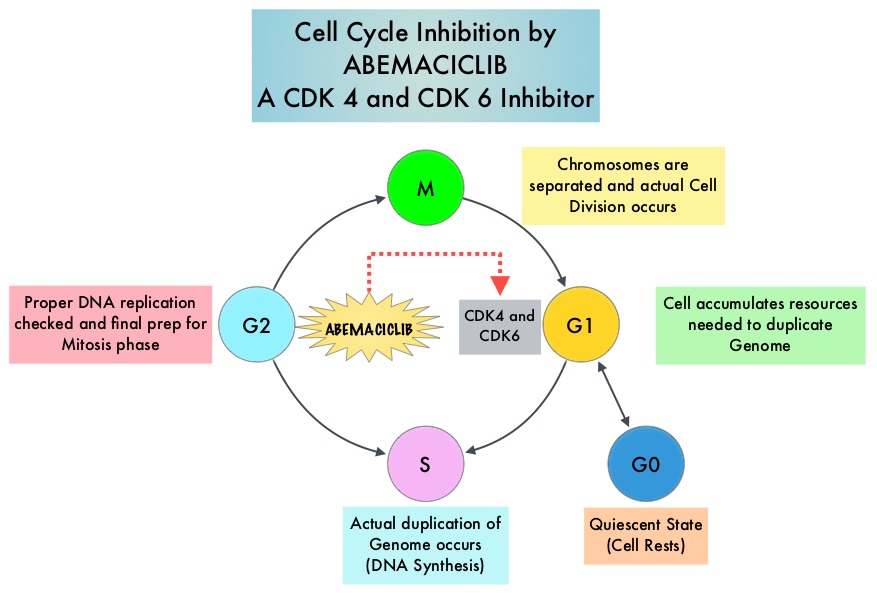
VERZENIO® (Abemaciclib) is an oral, selective inhibitor of CDK4 and CDK6 kinase activity, and prevents the phosphorylation and subsequent inactivation of the Rb tumor suppressor protein, thereby inducing G1 cell cycle arrest and inhibition of cell proliferation. VERZENIO® is structurally distinct from other CDK 4 and 6 inhibitors (such as Ribociclib and Palbociclib) and is 14 times more potent against cyclin D1/CDK 4 and cyclin D3/CDK 6, in enzymatic assays, but potentially less toxic than earlier pan-CDK inhibitors. At higher doses, only VERZENIO® causes significant cancer cell death, compared with other CDK4/6 inhibitors, suggesting that this drug may be affecting proteins, other than CDK4/6. Additionally, preclinical studies have demonstrated that VERZENIO® may have additional therapeutic benefits for a subset of tumors that are unresponsive to treatment or have grown resistant to other CDK4/6 inhibitors. It has also been shown to cross the blood-brain barrier.

The FDA approved VERZENIO® in combination with FASLODEX® (Fulvestrant) in 2017, for women with Hormone Receptor positive (HR-positive), HER2-negative, advanced or metastatic breast cancer, with disease progression following endocrine therapy. This approval was based on the MONARCH-2 study. VERZENIO® was also approved as monotherapy for women and men with HR-positive, HER2-negative advanced or metastatic breast cancer, with disease progression following endocrine therapy and prior chemotherapy in the metastatic setting, based on improved Objective Response Rate (ORR) and PFS (MONARCH-1 study).

MONARCH-2 is an International, double-blind, Phase III study in which 669 patients were randomized in a 2:1 ratio to receive either VERZENIO® plus FASLODEX® (N=446) or placebo plus FASLODEX® (N=223). Enrolled patients had HR-positive, HER2-negative metastatic breast cancer, with disease progression while receiving neoadjuvant or adjuvant endocrine therapy, within 12 months of adjuvant endocrine therapy, or while receiving endocrine therapy for metastatic breast cancer. Patients must not have received more than one endocrine therapy or any prior chemotherapy for metastatic breast cancer. Randomized patients received either VERZENIO® 150 mg or placebo orally twice daily plus FASLODEX® 500 mg IM on Day 1 and Day 15 of cycle 1 and then on Day 1 of cycle 2 and beyond (28-day cycles). Treatment was continued until disease progression or unmanageable toxicities. The mean patient age was 60 years, 82% of patients were postmenopausal, 72% had measurable disease, 56% had visceral disease, and 25% had primary endocrine therapy resistance. About 60% of patients had received chemotherapy in the adjuvant or neoadjuvant setting and 69% of the patients had prior therapy with Aromatase Inhibitors (AI). The Primary end point was Progression Free Survival (PFS), and Secondary end points included Overall Survival (OS), Objective Response Rate (ORR), Duration of Response, Clinical Benefit Rate, Quality of Life, and safety. The authors had previously reported the PFS data and the median PFS for the group receiving VERZENIO® plus FASLODEX® was 16.4 months compared with 9.3 months for those taking placebo with FASLODEX® (HR= 0.55; P<0.0001).

The authors now reported the Overall Survival (OS) data. At a median follow up of 47.7 months, the median OS with the combination of VERZENIO® plus FASLODEX® was 46.7 months compared with 37.3 months for placebo plus FASLODEX® (HR=0.757; P=0.0137). The OS benefit was consistently seen across subgroups, including those with poor prognostic factors such as visceral metastasis (HR=0.675) and primary endocrine therapy resistance (HR=0.686). The updated median PFS with VERZENIO® plus FASLODEX® was 16.9 months compared to 9.3 months with placebo plus FASLODEX® (HR=0.53; P<0.001). The time to second disease progression (PFS2) was also improved with the addition of VERZENIO® at a median 23.1 months versus 20.6 months with placebo plus FASLODEX® (HR, 0.675). VERZENIO® combination also showed a statistically significant improvement in median chemotherapy-free survival compared with placebo/FASLODEX® combination at 25.5 months and 18.2 months, respectively (HR, 0.638). The most common adverse events in the VERZENIO® versus placebo groups were diarrhea neutropenia, nausea and fatigue.

It was concluded that the addition of VERZENIO® to FASLODEX® resulted in a statistically significant improvement in Overall Survival among patients with HR-positive, HER2-negative breast cancer, who had progressed on prior endocrine therapy, significantly delaying the receipt of subsequent chemotherapy. MONARCH 2: Overall survival of abemaciclib plus fulvestrant in patients with HR+, HER2 advanced breast cancer. Sledge Jr GW, Toi M, Neven P, et al. Presented at 2019 ESMO Congress; September 27 to October 1, Barcelona, Spain. Abstract LBA6_PR.
TECENTRIQ® in Combination with Chemotherapy Improves Overall Survival in Extensive Stage Small-Cell Lung Cancer

SUMMARY: The American Cancer Society estimates that for 2019 about 228,150 new cases of lung cancer will be diagnosed and about 142,670 patients will die of the disease. Lung cancer is the leading cause of cancer-related mortality in the United States. Small cell lung cancer (SCLC) accounts for approximately 13-15% of all lung cancers and is aggressive. Patients with extensive stage SCLC are often treated with a combination of Carboplatin or Cisplatin with Etoposide as first line treatment and the tumor response rates are as high as 60-80%. However, majority of the patients relapse within months of completing initial therapy, with a median Overall Survival of approximately 10 months. Patients often receive HYCAMTIN® (Topotecan) for recurrent or progressive SCLC (second-line treatment) and after failure on second-line therapy, treatment options are limited. The 5 year survival rate for Extensive Stage SCLC is less than 5%, with a median survival of 9-10 months from the time of diagnosis.

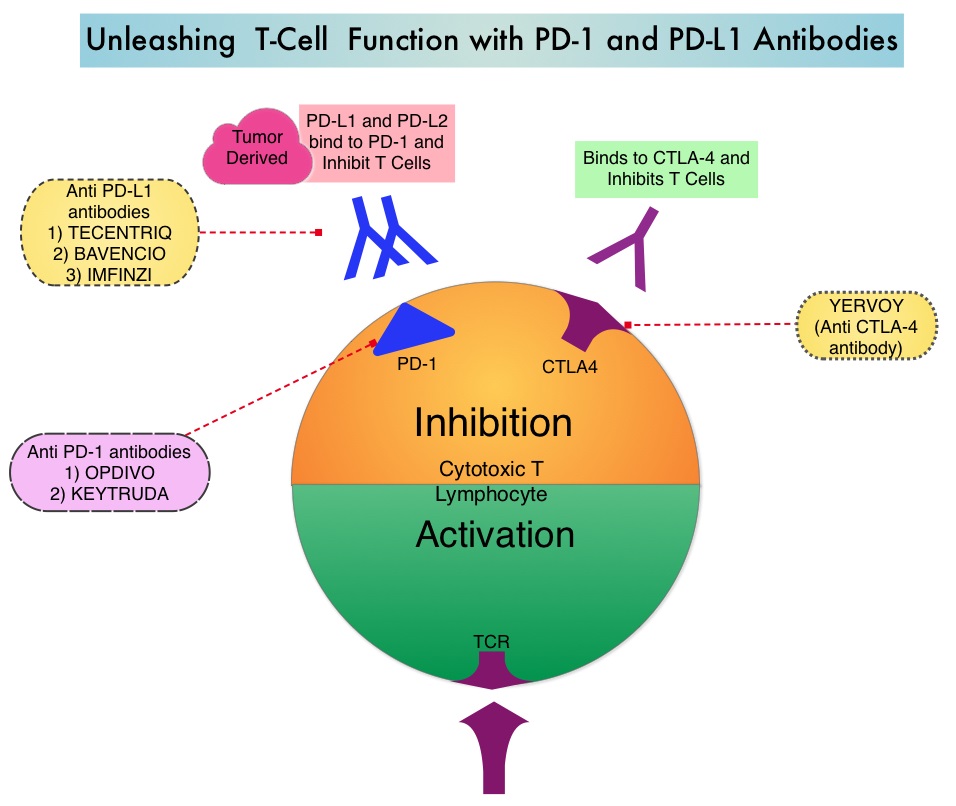
Based on the premise that SCLC has a high mutation rate, it was hypothesized that these tumors may be immunogenic and could respond to immune-checkpoint inhibitors. TECENTRIQ® (Atezolizumab) is an anti PD-L1 monoclonal antibody that directly binds to PD-L1 expressed on tumor cells and tumor-infiltrating immune cells and blocks the interaction of PD-L1 with PD-1 and B7.1 receptors and thereby enables the activation of T cells and restores tumor-specific T-cell immunity. In a phase I trial, TECENTRIQ® monotherapy demonstrated durable responses, with an acceptable safety profile in patients with relapsed or refractory SCLC. A combination of checkpoint inhibition with cytotoxic chemotherapy was therefore studied, for synergy and improved efficacy.Unleashing-T-Cell-Function-with-PD1-and-PDL1-Antibodies

The IMpower133 trial is a multinational, randomized, double-blind, placebo-controlled Phase III trial which evaluated the benefit of TECENTRIQ® plus Carboplatin and Etoposide in chemo naïve patients with extensive-stage Small-Cell Lung Cancer. Enrolled patients were randomized in a 1:1 ratio and the induction phase consisted of four cycles of Carboplatin AUC 5 mg/ml/min IV on day 1 and Etoposide 100 mg/m2 IV on days 1-3 of each 21-day cycle, with either TECENTRIQ® 1200 mg IV day 1 of each cycle (N=201) or placebo (N=202). The induction phase was followed by a maintenance phase during which patients received either TECENTRIQ® or placebo (based on previous random assignment) and treatment was continued until disease progression or unacceptable toxicities. The median age was 64 yrs and PD-L1 testing was not a requirement. Prophylactic cranial irradiation was permitted during the maintenance phase of treatment but thoracic radiation therapy was not permitted. The Primary end points were Overall Survival (OS) and Progression Free Survival (PFS) and Secondary end points included Objective Response Rate (ORR) and Duration of Response. At a median follow up of 13.9 months, the median OS was 12.3 months in the TECENTRIQ® group compared to 10.3 months in the placebo group (HR=0.70; P=0.007). The median PFS which was a Coprimary endpoint was also longer in the TECENTRIQ® group than in the placebo group (5.2 months versus 4.3 months, HR=0.77; P=0.02). This data led to the approval of TECENTRIQ® for the first line treatment of extensive-stage Small-Cell Lung Cancer.

The authors now reported the Overall Survival (OS) outcomes after a follow up of more than 2 years. At a median follow up of 22.9 months, the median OS for the patients randomized to TECENTRIQ® persisted at 12.3 months versus 10.3 months in the placebo group (HR=0.76; P =0.01). The authors noted that there was no correlation between efficacy of the TECENTRIQ® combination and blood Tumor Mutational Burden level. Further, the OS benefit was not influenced by tumor tissue PD-L1 expression. There was no change in the Adverse Events rate noted, in this updated analysis.

It was concluded that with a follow up of close to 2 years, the addition of TECENTRIQ® to standard chemotherapy, for treatment of patients with extensive stage Small Cell Lung Cancer, continues to demonstrate improved Overall Survival, compared to chemotherapy alone. IMpower133: Updated Overall Survival (OS) analysis of first-line (1L) atezolizumab (atezo) + carboplatin + etoposide in extensive-stage SCLC (ES-SCLC). Reck M, Liu SV, Mansfield AS, et al. Presented at ESMO September 27-October 1, 2019; Barcelona, Spain. Abstract 17360.

Late breaking Abstract – ESMO 2019 Chemotherapy-Free First Line Immunotherapy Combination Improves Overall Survival in Advanced NSCLC

SUMMARY: Lung cancer is the second most common cancer in both men and women and accounts for about 14% of all new cancers and 27% of all cancer deaths. The American Cancer Society estimates that for 2019, about 228,150 new cases of lung cancer will be diagnosed and 142,670 patients will die of the disease. Lung cancer is the leading cause of cancer-related mortality in the United States. Non-Small Cell Lung Cancer (NSCLC) accounts for approximately 85% of all lung cancers. Of the three main subtypes of NSCLC, 30% are Squamous Cell Carcinomas (SCC), 40% are Adenocarcinomas and 10% are Large Cell Carcinomas. Immune checkpoints are cell surface inhibitory proteins/receptors that are expressed on activated T cells. They harness the immune system and prevent uncontrolled immune reactions by switching off the T cells of the immune system.

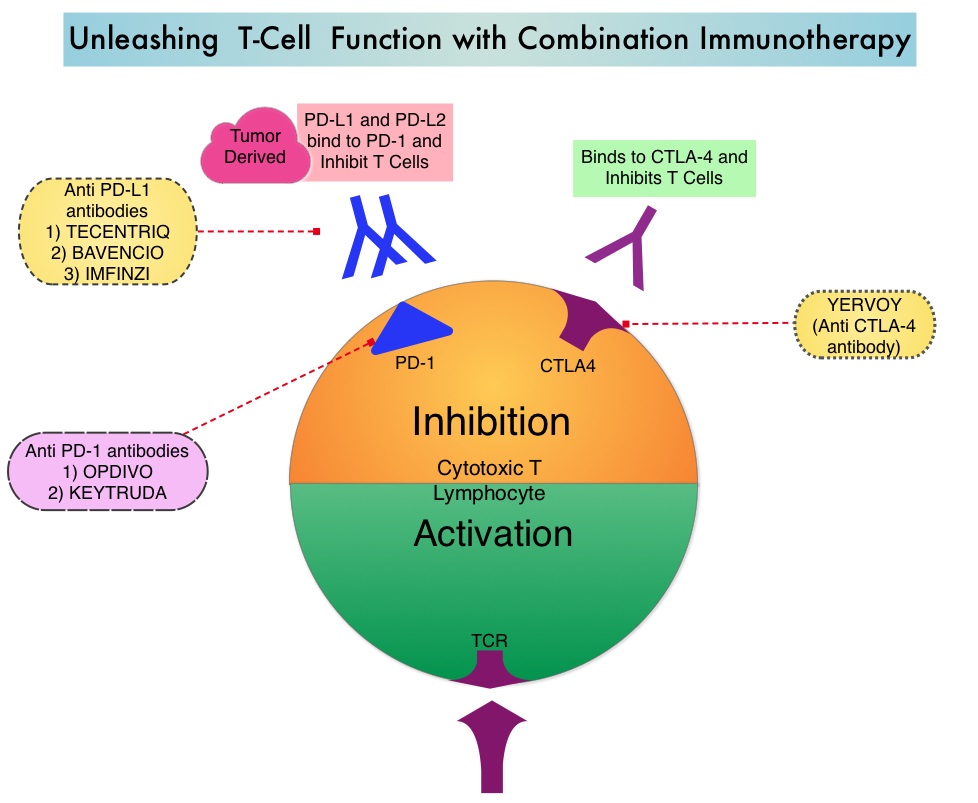
Immune checkpoint proteins/receptors include CTLA-4 (Cytotoxic T-Lymphocyte Antigen 4, also known as CD152) and PD-1(Programmed cell Death 1). Checkpoint inhibitors unleash the T cells resulting in T cell proliferation, activation, and a therapeutic response. OPDIVO® (Nivolumab) is a fully human, immunoglobulin G4 monoclonal antibody that binds to the PD-1 receptor and blocks its interaction with PD-L1 and PD-L2, thereby undoing PD-1 pathway-mediated inhibition of the immune response and unleashing the T cells. OPDIVO® is presently approved for treatment of patients with metastatic NSCLC and progression on or after Platinum-based chemotherapy. YERVOY® is a fully human immunoglobulin G1 monoclonal antibody that blocks Immune checkpoint protein/receptor CTLA-4 (Cytotoxic T-Lymphocyte Antigen 4).

CheckMate-227 is an open-label, multi-part, global, Phase III trial in which OPDIVO® based regimens were compared with Platinum-doublet chemotherapy in patients with first line advanced NSCLC, across non-squamous and squamous tumor histologies. In Part 1 of this trial, there were 2 cohorts- Part 1a in which OPDIVO® plus low dose YERVOY® (N=396) or OPDIVO® monotherapy (N=396) was compared with chemotherapy alone (N=397), in patients whose tumors expressed PD-L1 expression of 1% or more and Part 1b in which OPDIVO® plus low dose YERVOY® (N=187) or OPDIVO® plus chemotherapy (N=177) was compared with chemotherapy alone (N=186), in patients whose tumors did not express PD-L1 (less than 1%). (In Part 2 of this trial, OPDIVO® plus chemotherapy was compared with chemotherapy alone, regardless of PD-L1 expression. Part 2 did not meet its Primary endpoint for Overall Survival for OPDIVO® plus chemotherapy versus chemotherapy alone, in patients with non-squamous NSCLC, and is published elsewhere). It should be noted that when this trial was launched, chemotherapy along with immunotherapy or immunotherapy alone was not approved for the front-line treatment of NSCLC. Therefore, dual immunotherapy combination was not compared with current standards of care such as chemotherapy plus immunotherapy.Unleashing-T-Cell-Function-with-Combination-Immunotherapy

OPDIVO® was administered at 3 mg/kg every 2 weeks, and in the combination arm, YERVOY® was administered at 1 mg/kg every 6 weeks. When administered with chemotherapy, OPDIVO® was administered at 360 mg every 3 weeks. Patients were stratified by histology, and treatment was administered until disease progression, unacceptable toxicity, or for 2 years, for immunotherapy. There were two Co-primary endpoints in Part 1 for OPDIVO® plus YERVOY® versus chemotherapy: Overall survival (OS) in patients whose tumors express PD-L1 (assessed in patients enrolled in Part 1a) and Progression Free Survival (PFS) in patients with TMB of 10 mut/Mb or more, across the PD-L1 spectrum (assessed in patients enrolled across Parts 1a and 1b). The minimum follow up for the Primary endpoint was 29 months.

Both Part 1a and Part 1b groups met their Primary endpoints. In the Part 1a cohort with PD-L1 expression of 1% or more, the Overall Survival was significantly longer with OPDIVO® plus YERVOY®, compared to chemotherapy. The median Overall Survival was 17.1 months in the Immunotherapy combination group compared to 14.9 months in the chemotherapy group (HR=0.79; P=0.007). Progression Free Survival, Objective Response Rates and Duration of Response were all greater with OPDIVO® plus YERVOY® combination, compared to chemotherapy. In the Part 1b cohort with PD-L1 expression of less than 1%, Overall Survival benefit was again observed with the OPDIVO® plus YERVOY® combination, compared with chemotherapy. Grade 3 and 4 treatment-related Adverse Events across all patients was 33% in those treated with OPDIVO® plus YERVOY® combination, 19% with single agent OPDIVO® and 36% with chemotherapy.

It was concluded that first-line treatment of patients with advanced NSCLC with a combination of two immunotherapy drugs improves Overall Survival, compared to chemotherapy, and offers a chemotherapy-free first line treatment option for a subset of NSCLC patients, leaving chemotherapy for later lines of therapy. Nivolumab + low-dose ipilimumab versus platinum-doublet chemotherapy as first-line treatment for advanced non–small cell lung cancer: CheckMate-227 part 1 final analysis. Peters S, Ramalingam SS, Paz-Ares L, et al. Presented at 2019 ESMO Congress; September 27 to October 1, 2019; Barcelona, Spain. Abstract LBA4.

Late Breaking Abstract – ESMO 2019 Ripretinib Shows Dramatic Improvement in PFS in Heavily Pretreated GIST Patients

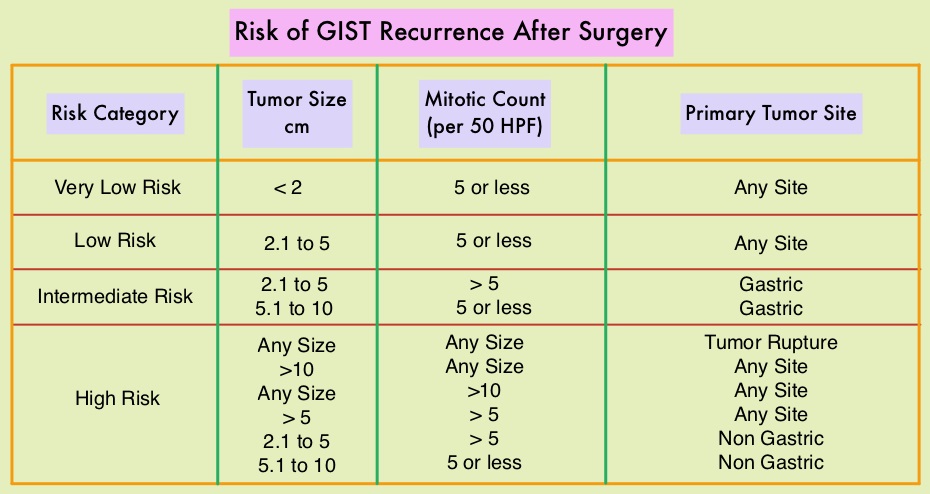
SUMMARY: The American Cancer Society estimates that in the US, about 4000-5000 cases of Gastro Intestinal Stromal Tumors (GISTs) are diagnosed each year. GI Stromal Tumor (GIST) is one of the most common types of Soft Tissue Sarcoma and can develop anywhere along the GI tract, but are primarily found in the stomach (60%) and small intestine (30%). GISTs originate from the interstitial cells of Cajal or related stem cells and are associated with activating mutations in KIT-CD117 (80%) or PDGFRA- Platelet-Derived Growth Factor Receptor-A (5-10%). These two mutations are mutually exclusive and are important in the molecular pathogenesis of these tumors. Approximately two thirds of the patients with GISTs are cured with surgery but recurrences are frequent and this risk of relapse is dependent on the tumor size, mitotic rate and primary tumor site. The risk stratification of GISTs by Joensuu, unlike the NIH criteria, takes into account primary tumor site and tumor rupture as well, which can influence outcomes.

Treatment of patients with advanced or metastatic GIST with Tyrosine Kinase Inhibitor GLEEVEC® (Imatinib) achieves high Objective Response and diseases stabilization rates. Patients with KIT exon 9 mutation have a poor prognosis compared to those with KIT exon 11 mutation (most common) and benefit from a higher dose of GLEEVEC® (800 mg daily). The majority of PDGFRA mutations affect exon 18. It should also be noted that patients with PDGFRA D842V mutation are GLEEVEC® resistant. Following progression on GLEEVEC®, FDA approved therapies include SUTENT® (Sunitinib) and STIVARGA® (Regorafenib).
Ripretinib is an orally administered kinase switch-control inhibitor of KIT and PDGFRA at the JuxtaMembrane Domain (JMD), and the main activation loop switch. The agent restores the inhibitory JMD switch, which is often deactivated in GIST, and helps to stabilize the kinase in an inactive state. Ripretinib is a KIT and PDGFRA inhibitor that blocks initiating KIT mutations in exons 9, 11, 13, 14, 17, and 18, known to be present in GIST patients, and the D816V exon 17 mutation known to be present in patients with Advanced Systemic Mastocytosis. Ripretinib inhibits PDGFRA mutations in exon 18, including the D842V mutation that drives a subset of GIST. Ripretinib was specifically designed to improve the outcomes in GIST patients by inhibiting the full spectrum of known mutations in KIT and PDGFRA.

The INVICTUS trial is an international, multicenter, randomized, double-blind, placebo-controlled Phase III trial, in which the safety, efficacy and tolerability of Ripretinib was compared to placebo, among heavily pretreated patients with advanced GIST. In this study, 129 patients were randomized in a 2:1 ratio to receive Ripretinib at 150 mg orally daily (N=85) or placebo (N=44). Previous therapies for enrolled patients included at least GLEEVEC®, SUTENT® and STIVARGA®. Two-thirds of patients had received 3 prior therapies, and a third had received more than 4 lines of therapy. The median patient age was 60 years and the most common mutation was at KIT exon 11 (58%) followed by KIT exon 9 (16%). Patients with disease progression on placebo were allowed to cross over to receive Ripretinib. The Primary endpoint was Progression Free Survival.

It was noted that Ripretinib significantly reduced the risk of disease progression or death by 85% compared to placebo, with a median PFS of 6.3 months compared to 1.0 month in the placebo group (HR=0.15, P<0.0001). This PFS benefit was consistent across all assessed patient subgroups. Additionally, Ripretinib reduced the risk of death by 64% compared to placebo, with a median OS of 15.1 months compared to 6.6 months in the placebo group (HR=0.36; P=0.0004). According to the pre-specified hierarchical testing procedure of the endpoints for the study, statistical significance for OS could not be established. The most common Adverse Events with Ripretinib included alopecia, nausea, abdominal pain, constipation and myalgias.

It was concluded that Ripretinib significantly improves Progression Free Survival and very likely also improves Overall Survival in heavily pretreated patient population with Gastrointestinal Stromal Tumors. INVICTUS: A Phase 3, International, Double-Blind, Placebo-Controlled Study to Assess the Safety and Efficacy of Ripretinib as 4th Line Therapy or more in Patients with Advanced Gastrointestinal Stromal Tumors (GIST) Who Have Received Treatment with Prior Anticancer Therapies (NCT03353753). van Mehren M, Attia S, Bauer S, et al. Presented at 2019 ESMO Congress; September 27 to October 1, 2019; Barcelona, Spain. Abstract LBA87.

Late breaking Abstract – ESMO 2019 TIBSOVO® Improves Survival in IDH1 Mutated Advanced Cholangiocarcinoma

SUMMARY: Bile Duct cancer (Cholangiocarcinoma), comprise about 30% of all primary liver tumors and includes both intrahepatic and extrahepatic bile duct cancers. Klatskin tumor is a type of Cholangiocarcinoma that begins in the hilum, at the junction of the left and right bile ducts. It is the most common type of Cholangiocarcinoma, accounting for more than half of all cases. About 8,000 people in the US are diagnosed with Cholangiocarcinoma each year and approximately 20% of the cases are suitable for surgical resection. The 5-year survival is less than 10%, with limited progress made over the past two decades. There is therefore an unmet need for new effective therapies.MOA-of-Ivosidenib

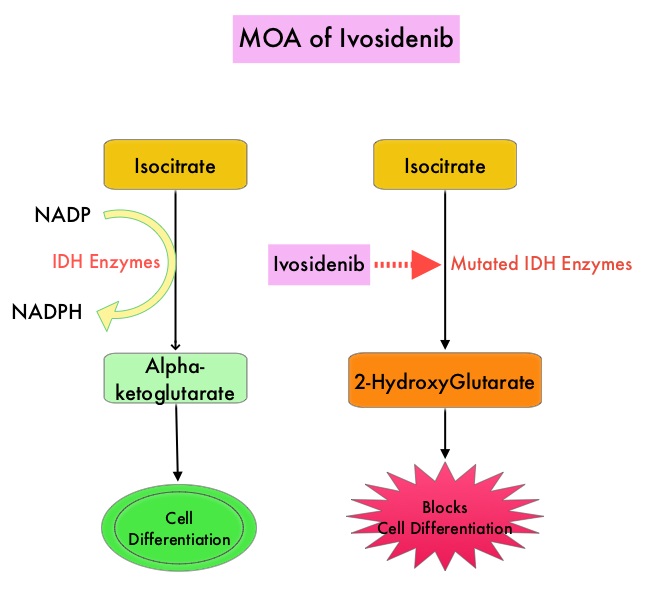
Isocitrate DeHydrogenase (IDH) is a metabolic enzyme that helps generate energy from glucose and other metabolites, by catalyzing the conversion of Isocitrate to Alpha-Ketoglutarate. Alpha-ketoglutarate is required to properly regulate DNA and histone methylation, which in turn is important for gene expression and cellular differentiation. IDH mutations lead to aberrant DNA methylation and altered gene expression thereby preventing cellular differentiation, with resulting immature undifferentiated cells. IDH mutations can thus promote leukemogenesis in Acute Myeloid Leukemia (AML) and tumorigenesis in solid tumors and can result in inferior outcomes. There are three isoforms of IDH. IDH1 is mainly found in the cytoplasm, as well as in peroxisomes, whereas IDH2 and IDH3 are found in the mitochondria, and are a part of the Krebs cycle. Approximately 20% of patients with AML, 70% of patients with Low-grade Glioma and secondary Glioblastoma, 50% of patients with Chondrosarcoma, 20% of patients with Intrahepatic CholangioCarcinoma, 30% of patients with Angioimmunoblastic T-cell lymphoma and 8% of patients with Myelodysplastic syndromes/Myeloproliferative neoplasms, are associated with IDH mutations.

TIBSOVO® (Ivosidenib) is an oral, targeted, small-molecule inhibitor of mutant IDH1. The FDA in July, 2018, approved TIBSOVO® for adult patients with relapsed or refractory AML with a susceptible IDH1 mutation. A previously published Phase I study demonstrated the safety and activity of TIBSOVO® in patients with IDH1 mutated advanced CholangioCarcinoma.

ClarIDHy is an international, randomized, double-blind, Phase III study, in which 185 patients with advanced CholangioCarcinoma with an IDH1 mutation were randomly assigned 2:1 to receive TIBSOVO® 500 mg orally once daily (N=124) or matched placebo (N=61). All patients had advanced unresectable CholangioCarcinoma. The median age was 62 years, 91% had intrahepatic CholangioCarcinoma, 92% of patients had metastatic disease and 43% had received two prior therapies. The Primary endpoint was Progression Free Survival (PFS) and Secondary endpoints included Safety, Objective Response Rate (ORR) and Overall Survival (OS). Crossover from placebo to TIBSOVO® was permitted upon radiographic disease progression.

This study met its Primary endpoint and the median PFS was 2.7 months for patients treated with TIBSOVO® compared to 1.4 months with placebo (HR=0.37; P<0.001). More importantly, the median PFS at 6 and 12 months were 32% and 22% in the TIBSOVO® group, whereas no patients randomized to the placebo group were progression-free for 6 or more months, at the time of data cutoff. There was a favorable trend in Overall Survival with TIBSOVO® and the median OS was 10.8 months for TIBSOVO® and 9.7 months for placebo (HR=0.69, one-sided P=0.06). However, the adjusted OS among the placebo group patients was 6 months, after taking into account that 57% of these patients crossed over to TIBSOVO®, and this was significantly shorter, when compared to the TIBSOVO® group (HR=0.46; P=0.0008). Most common Adverse Events were nausea, diarrhea, fatigue, cough, abdominal discomfort, ascites, anemia and vomiting.

It was concluded that treatment with TIBSOVO® among patients with advanced CholangioCarcinoma with an IDH1 mutation, resulted in significant improvement in Progression Free Survival as well as favorable Overall Survival trend, when compared to Placebo. The authors added that this is the first pivotal study demonstrating the clinical benefit of targeting IDH1 mutation in this patient group. Studies are also underway targeting another molecular alteration, FGFR2, which is detected in approximately 15% of patients with CholangioCarcinoma. ClarIDHy: A global, phase 3, randomized, double-blind study of ivosidenib (IVO) vs placebo in patients with advanced cholangiocarcinoma (CC) with an isocitrate dehydrogenase 1 (IDH1) mutation. Abou-Alfa GK, Maraculla TM, Javle M, et al. Presented at 2019 ESMO Congress; September 27 to October 1, 2019; Barcelona, Spain. Abstract LBA10_PR.

Late breaking Abstract – ESMO 2019 Targeted Therapy with LYNPARZA® Delays Progression of Advanced Prostate Cancer

SUMMARY: Prostate cancer is the most common cancer in American men with the exclusion of skin cancer, and 1 in 9 men will be diagnosed with Prostate cancer during their lifetime. It is estimated that in the United States, about 174,650 new cases of Prostate cancer will be diagnosed in 2019 and 31,620 men will die of the disease. The development and progression of Prostate cancer is driven by androgens. Androgen Deprivation Therapy (ADT) or testosterone suppression has therefore been the cornerstone of treatment of advanced Prostate cancer and is the first treatment intervention. Androgen Deprivation Therapies have included bilateral orchiectomy or Gonadotropin Releasing Hormone (GnRH) analogues, with or without first generation Androgen Receptor (AR) inhibitors such as CASODEX® (Bicalutamide), NILANDRON® (Nilutamide) and EULEXIN® (Flutamide) or with second-generation, anti-androgen agents, which include, ZYTIGA® (Abiraterone), XTANDI® (Enzalutamide) and ERLEADA® (Apalutamide). ZYTIGA® inhibits CYP17A1 enzyme and depletes adrenal and intratumoral androgens, thereby impairing AR signaling. XTANDI® and ERLEADA® compete with Testosterone and Dihydrotestosterone and avidly binds to the Androgen Receptor, thereby inhibiting AR signaling, and in addition inhibits translocation of the AR into the nucleus and thus inhibits the transcriptional activities of the AR.

Approximately 10-20% of patients with advanced Prostate cancer will progress to Castration Resistant Prostate Cancer (CRPC) within five years during ADT, and over 80% of these patients will have metastatic disease at the time of CRPC diagnosis. Among those patients without metastases at CRPC diagnosis, 33% are likely to develop metastases within two years. The estimated mean survival of patients with CRPC is 9-36 months and there is therefore an unmet need for new effective therapies.

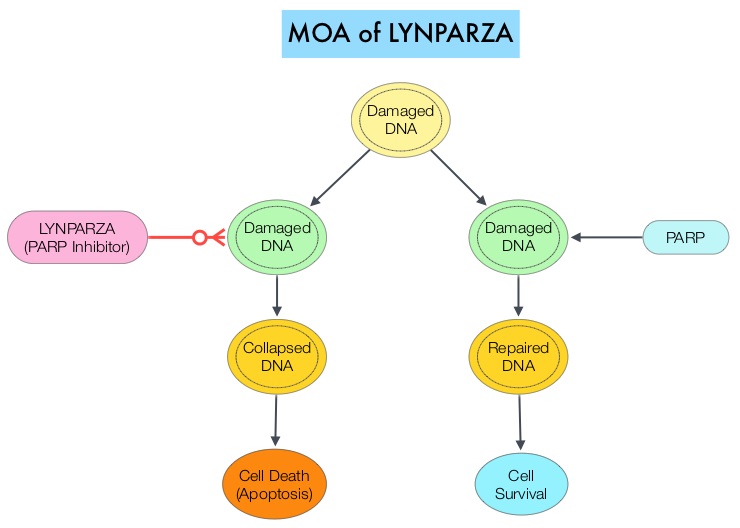
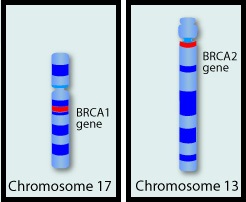
The malignant transformation of prostatic epithelial cell as well as the development of CRPC has been attributed to deleterious alterations in a variety of genes including loss-of-function alterations in Homologous Recombination repair genes such as BRCA1, BRCA2 and ATM. Homologous Recombination (HR) is a type of genetic recombination, and this DNA repair pathway is used by cells to accurately repair DNA double-stranded breaks (DSBs) and thereby maintain genomic integrity. Homologous Recombination Deficiency (HRD) is noted following mutation of genes involved in HR repair pathway. At least 15 genes are involved in the Homologous Recombination Repair (HRR) pathway including BRCA1 and BRCA2 genes. BRCA1 and BRCA2 are tumor suppressor genes and functional BRCA proteins repair damaged DNA, and play an important role in maintaining cellular genetic integrity. They regulate cell growth and prevent abnormal cell division and development of malignancy. Mutations in BRCA1 and BRCA2 account for about 20-25% of hereditary breast cancers and about 5-10% of all breast cancers. They also account for 15% of ovarian cancers, in addition to other cancers such as Colon and Prostate. BRCA mutations can either be inherited (Germline) and present in all individual cells or can be acquired and occur exclusively in the tumor cells (Somatic). Somatic mutations account for a significant portion of overall BRCA1 and BRCA2 aberrations. Loss of BRCA function due to frequent somatic aberrations likely deregulates Homologous Recombination (HR) pathway and increases sensitivity to platinum drugs. Majority of the individuals with Germline BRCA mutations (gBRCA) are positive for HR deficiency.MOA-of_LYNPARZA

The PARP (Poly ADP Ribose Polymerase) family of enzymes which include PARP1 and PARP2 repair damaged DNA. PARP inhibitors inhibit the PARP protein in cancer cells and kill tumors defective in the BRCA1 or BRCA2 genes through the concept of synthetic lethality. LYNPARZA® (Olaparib) is a first-in-class PARP inhibitor and blocks DNA damage response in tumors harboring a deficiency in Homologous Recombination Repair, as is noted in those with mutations such as BRCA1 and/or BRCA2. LYNPARZA® showed promising results in a Phase II trial (TOPARP), when given as monotherapy, in patients with BRCA1/2 or ATM gene-mutated mCRPC, who had received a prior Taxane-based chemotherapy, and at least one newer hormonal agent (ZYTIGA® or XTANDI®).

PROfound is a prospective, multicentre, randomized, open-label, Phase III trial in which the efficacy and safety of LYNPARZA® was compared with physician’s choice of either XTANDI® or ZYTIGA® in two groups of patients with mCRPC, who had progressed on prior treatment with new hormonal anticancer treatments, and had a qualifying tumor mutation in one of 15 genes involved in the Homologous Recombination Repair (HRR) pathway. Those in Cohort A (N=245) had alterations in BRCA1, BRCA2 or ATM genes while those in Cohort B (N=142) had alterations in any one of 12 other genes known to be involved in DNA repair which included BRIP1, BARD1, CDK12, CHEK1, CHEK2, FANCL, PALB2, PPP2R2A, RAD51B, RAD51C, RAD51D or RAD54L. Patients were randomized 2:1 within each cohort to receive LYNPARZA® 300 mg orally BID or physician’s choice of XTANDI® 160 mg orally QD or ZYTIGA® 1000 mg orally QD along with Prednisone 5 mg orally BID. Patient characteristics were well-balanced between arms in each treatment group, median patient age was 68 years, approximately 25% of patients had de novo metastatic disease, about 65% of patients received prior Taxane therapy and more than 20% had received two lines of chemotherapy. Patients were allowed to cross over to LYNPARZA® upon progression. The Primary endpoint was radiographic Progression-Free Survival (rPFS) in Cohort A, assessed by Blinded Independent Central Review (BICR). Secondary endpoints included Objective Response Rate (ORR), Time to pain progression and Overall Survival (OS) in Cohort A.

It was noted that in Cohort A, the median PFS was 7.4 months with LYNPARZA®, compared to 3.5 months with hormonal treatment (HR=0.34, P<0.0001). This represented a 66% greater delay in disease progression compared to hormonal therapy. In the overall population (Cohort A+B), median PFS was 5.8 months versus 3.5 months respectively (HR=0.49, P<0.0001). The interim Overall Survival analysis in Cohort A showed that median OS was 18.5 months with LYNPARZA® compared to 15 months with hormonal treatment (HR=0.64, P=0.0173). Median OS in the overall population (Cohort A+B) was 17.5 months versus 14.2 months with LYNPARZA® versus hormonal treatment, respectively (HR 0.67, P=0.0063). In Cohort A, the Objective Response Rate (ORR) was 33.3% with LYNPARZA® compared with 2.3% with the hormonal therapies (P<0.0001). The median Time to pain progression was not yet reached with LYNPARZA® compared with 9.9 months for the hormonal agents. This suggested a 56% reduction in the risk of pain progression (HR=0.44; P=0.019). The most common Adverse Events associated with LYNPARZA® were nausea, decreased appetite, anemia and fatigue.

It was concluded that in this landmark, molecularly targeted, Phase III trial, LYNPARZA® improved Progression Free Survival and Objective Response Rates, with a trend for Overall Survival, among patients with heavily pretreated metastatic CRPC, and alterations in the Homologous Recombination Repair genes. PROFOUND: Phase III study of olaparib versus enzalutamide or abiraterone for metastatic castration-resistant prostate cancer (mCRPC) with homologous recombination repair (HRR) gene alterations. Hussain M, Mateo J, Fizazi K, et al. Presented at ESMO Congress 2019; September 27-October 1, 2019; Barcelona, Spain. Abstract LBA12_PR.

Primary Breast Tumor Surgery Improves Overall Survival in HER2 Positive Advanced Breast Cancer

SUMMARY: Breast cancer is the most common cancer among women in the US and about 1 in 8 women (12%) will develop invasive breast cancer during their lifetime. Approximately 268,600 new cases of invasive breast cancer will be diagnosed in 2019 and about 41,760 women will die of the disease. The HER or erbB family of receptors consist of HER1, HER2, HER3 and HER4. Approximately 15-20% of invasive breast cancers overexpress HER2/neu oncogene, which is a negative predictor of outcomes without systemic therapy. Approximately 50% of HER2-positive breast cancers are Hormone Receptor positive. Patients with HER2-positive metastatic breast cancer are often treated with anti-HER2 targeted therapy along with chemotherapy, irrespective of hormone receptor status, and this has resulted in significantly improved treatment outcomes. HER2-targeted therapies include HERCEPTIN® (Trastuzumab), TYKERB® (Lapatinib), PERJETA® (Pertuzumab) and KADCYLA® (ado-Trastuzumab emtansine). Dual HER2 blockade with HERCEPTIN® and PERJETA®, given along with chemotherapy (with or without endocrine therapy), as first line treatment, in HER2 positive metastatic breast cancer patients, was shown to significantly improve Progression Free Survival (PFS) as well as Overall Survival. The superior benefit with dual HER2 blockade has been attributed to differing mechanisms of action and synergistic interaction between HER2 targeted therapies. Not all HER2-positive, Hormone Receptor positive metastatic breast cancer patients, are candidates for chemotherapy. These patients however may benefit from anti-HER2 targeted therapy given along with endocrine therapy.

Breast surgery is often not a consideration for patients with metastatic breast cancer. However, breast surgery can be offered for palliation of symptoms, taking into consideration the risks and benefits of such intervention, in a patient with an ulcerated, bleeding, or a fungating tumor mass, that cannot be controlled with systemic therapy. A few previously published studies which evaluated the addition of surgical resection of the primary tumor to systemic therapy, among patients with metastatic HER2-positive breast cancer, have provided mixed results, with one study showing improved outcomes. The authors therefore conducted a retrospective study to examine the impact of primary breast tumor resection on survival, in HER2-positive Stage IV breast cancer patients, treated with HER2 targeted therapy.

This retrospective cohort study included records of 3,231 women with HER2 positive Stage IV breast cancer from the National Cancer Database, from 2010 to 2012. Of these women, 89.4% had received chemotherapy/anti-HER2 targeted therapies, 37.7% had received endocrine therapy, 31.8% had received radiation and 25% of the patients had bone only metastasis. Overall, 1,130 women (35%) underwent primary breast tumor resection. The mean age of those who had surgery was 56 years and the Primary endpoints were receipt of surgery and Overall Survival (OS).

At a median follow-up of 21.2 months, the median OS for patients who had surgery was 25 months compared with 18 months for those who did not undergo surgical resection (HR=0.56; P=0.0004). This suggested a 44% reduction in the risk of death with primary breast tumor resection. Patients having Medicare/other government or private insurance, as well as those who received radiation, chemotherapy/anti-HER2 targeted therapies and endocrine therapy were more likely to have surgery. Additionally, Caucasian women were also more likely than non-Hispanic black women, to have surgery. These findings suggested that women with Medicare or private insurance as well as white women were also more likely to have surgery and less likely to die of their disease, than non-Hispanic black women, and those with Medicaid or no insurance.

It was concluded that after controlling for independent variables, surgery of the primary site, in patients with metastatic HER2 positive breast cancer who are managed with present day contemporary treatment, is associated with improved Overall Survival. Breast surgery should therefore be discussed as a part of the treatment strategy, for qualified women, in this patient group. The impact of primary tumor surgery on survival in HER2 positive stage IV breast cancer patients in the current era of targeted therapy. Mudgway R, Chavez de Paz Villaneva C, Lin AC, et al. Presented at AACR Annual Meeting; March 29 to April 3, 2019; Atlanta, GA. Abstract 4873.

Liquid Biopsy DNA Methylation Assay Highly Specific for Cancer Detection and Prognosis

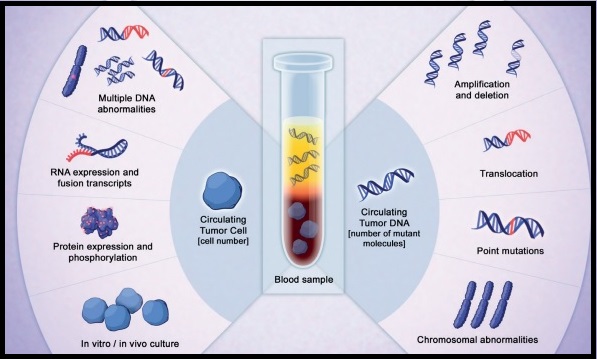
SUMMARY: Screening both healthy and high-risk populations with a peripheral blood sample (liquid biopsy) has the potential to detect cancer at an early stage, with an increased opportunity to offer curative therapies. Screening assays for cancer should be highly specific with a low rate of false-positive results and overdiagnosis. Analysis of cell-free DNA (cfDNA) with a Liquid Biopsy is presently approved to select EGFR targeted therapies (cobas EGFR mutation test), in patients with advanced Non Small Cell Lung Cancer. However, the role of cell-free DNA analysis for early detection of cancer is not well established.

The Cancer Genome Atlas (TCGA), a landmark cancer genomics program, is a joint effort between the National Cancer Institute and the National Human Genome Research Institute. This program began in 2006 and has molecularly characterized over 20,000 primary cancers and matched normal samples, across 33 different cancer types. After 12 years and contributions from over 11,000 patients, TCGA has deepened our understanding of the molecular basis of cancer, changed the way cancer patients are managed in the clinic, established a rich genomics data resource for the research community and helped advance health and science technologies.

The Circulating Cell-Free Genome Atlas (CCGA) is a prospective, multi-center, observational study and is the largest study ever initiated, to develop a noninvasive, liquid biopsy assay for early cancer detection, based on cell-free DNA (cfDNA). This study completed enrollment of approximately 15,000 participants with and without cancer (56% with 20 tumor types and all clinical stages), across 142 sites in the US and Canada. The principal goal is to develop a noninvasive cancer detection assay and the CCGA was designed to characterize the landscape of genomic cancer signals in the blood and to detect and validate GRAIL’s multi-cancer early detection blood test through three pre-planned sub-studies. The authors in 2018 previously reported that it is possible to detect early-stage lung cancer, with a high degree of specificity, from a simple blood test, using targeted sequencing and whole-genome sequencing. In this substudy, liquid biopsy could accurately detect over 40% of early-stage lung cancers (Stage I-IIIA), with 98% specificity. It was determined that whole-genome bisulfite sequencing for DNA methylation was the most effective approach for early cancer detection. Liquid-Biopsy

DNA methylation is a natural epigenetic mechanism used by cells to regulate gene expression with some regions of hypermethylation and some regions of hypomethylation, and is a chemical modification to DNA. In cancer, abnormal methylation patterns and the resulting changes in gene expression can contribute to tumor growth (hypermethylation can cause tumor-suppressor genes to be inactivated). Methylation patterns, are unique to the tumor DNA, enabling tumor detection and localization but are not of value when it comes to precision therapies. This is unlike mutations and copy number changes, which can be detected in white blood cells in individuals without cancer as well, leading to false-positives.

In two separate presentations, the authors in this present sub-study reported the results for patients with more than 20 cancer subtypes across all stages and evaluated the prognostic significance of detecting abnormal patterns of cfDNA methylation by whole-genome bisulfite sequencing (WGBS) assay. The goal of targeted methylation assay was to detect both early and advanced disease cancers, and improve clinical outcomes

Liu, MC, et al. reported outcomes for 2,301 participants (1422 had cancer and 879 did not) with more than 20 cancer types (12 prespecified and high-risk cancers included Lung, HR negative Breast, Colorectal, Anorectal, Esophageal, Gastric, Liver, Pancreatic, Head and Neck, Ovary, Myeloma and Lymphoid neoplasms) across all stages. The 12 prespecified cancers account for two thirds of all cancer deaths in the US. At 99% specificity, the sensitivity for these 12 high-risk cancers ranged from 59-86% at early stages (stages I–III). For all 20 cancer types, the overall detection rate across all stages was 55%. Additionally, a Tissue of Origin result was provided for 94% of all cancers detected and of these, the assay correctly identified the Tissue of Origin in 90% of cases, which the authors commented is critical for guiding efficient downstream workup for a positive signal.

Oxnard GR, et al. performed an exploratory longitudinal analysis and reported the results of the Overall Survival of 1,320 participants with more than 20 cancer types in this substudy, thereby evaluating the prognostic significance of detection by this assay. Across all stages of disease, cancers detected by cfDNA whole-genome bisulfite sequencing for DNA methylation were associated with significantly worse survival than those not detected by the blood test. The 2-year Overall Survival was less than 50% among patients whose cancers were detected by the assay compared with 2-year OS of over 90% for those whose cancers were not detected by this assay. The poor prognostic ability of this assay was seen in both cancers that presented with symptoms and those found via screening suggesting that DNA–based detection with this methylation assay may be an indicator of prognosis. In multivariate analysis, cancers detected by this assay had double the risk of death (HR=2.6; P< 0.001) when accounting for clinical stage, cancer type, histologic grade, age, sex, and method of diagnosis and also had comparable prognostic significance to clinical stage (P <0.001).

It was concluded from these two presentations that cfDNA test based on the presence of DNA methylation is highly specific at detecting high-risk malignancies, with very high accuracy for identifying the tissue of origin, and may also have prognostic value.

Genome-wide Cell-free DNA (cfDNA) Methylation Signatures and Effect on Tissue of Origin (TOO) Performance. Liu MC, Jamshidi A, Venn O, et al. 2019 ASCO Annual Meeting. Abstract 3049. Presented June 1, 2019.

Prognostic significance of blood-based cancer detection in plasma cell-free DNA (cfDNA): Evaluating risk of overdiagnosis. Oxnard GR, Chen X, Fung ET, et al. 2019 ASCO Annual Meeting. Abstract 1545. Presented June 3, 2019.

Late Breaking Abstract – ASCO 2019 Front-Line Keytruda® Monotherapy for Patients with Advanced Gastric or Gastroesophageal Junction Adenocarcinoma

SUMMARY: The American Cancer Society estimates that in the US, about 27,510 cases of Gastric Cancer will be diagnosed in 2019 and about 11,140 people will die of the disease. The average age at diagnosis is 68 years and Gastric Cancer is one of the leading causes of cancer-related deaths in the world. Risk factors for gastric cancer include age, gender, ethnicity, geography and infection with Helicobacter pylori. Patients with localized disease (Stage II and Stage III) are often treated with multimodality therapy and 40% of the patients may survive for 5 years or more. However, majority of the patients with Gastric and GastroEsophageal (GE) Adenocarcinoma have advanced disease at the time of initial presentation and have limited therapeutic options with little or no chance for cure. These patients frequently are treated with Platinum containing chemotherapy along with a Fluoropyrimidine and, if appropriate, HER2/neu-targeted therapy. This can however be associated with significant toxicities impacting patient’s quality of life.

KEYTRUDA® (Pembrolizumab) is a fully humanized, Immunoglobulin G4, anti-PD-1, monoclonal antibody, that binds to the PD-1 receptor and blocks its interaction with ligands PD-L1 and PD-L2. It thereby reverses the PD-1 pathway-mediated inhibition of the immune response and unleashes the tumor-specific effector T cells. KEYTRUDA® in the Phase II KEYNOTE-059 trial demonstrated promising antitumor activity and durable responses in patients with advanced Gastric/GastroEsophageal Junction cancer, who had progressed on more than 2 lines of therapy, with higher Objective Response Rates noted in patients with PD-L1-positive tumors.

KEYNOTE-062 is a randomized, phase III controlled study in which KEYTRUDA® monotherapy was compared to standard chemotherapy as first line treatment, in select patients with advanced Gastric or GastroEsophageal Junction (GEJ) Adenocarcinoma. This trial enrolled 763 newly diagnosed patients of whom 69% had Gastric Adenocarcinoma cancer and 30% had GEJ Adenocarcinoma. Patients were randomized 1:1:1 to receive KEYTRUDA® 200 mg IV every 3 weeks for up to 2 years (N=256), KEYTRUDA® plus Cisplatin 80 mg/m2 IV every three weeks along with either 5-Fluorouracil 800 mg/m2 daily on Days 1-5 every three weeks or XELODA® (Capecitabine) 1000 mg/m2 twice a day on Days 1-14 every three weeks (N=257 ) or placebo plus Cisplatin and either 5-FU or XELODA® given at a similar dose and schedule as the second group (N=250). The median patient age was 62 years and PD-L1 expression was assessed by Combined Positive Score (CPS). The Primary endpoints were Overall Survival (OS) in patients whose tumors expressed PD-L1 CPS 1 or more and CPS 10 or more in the KEYTRUDA® monotherapy group and in combination with chemotherapy group, as well as Progression Free Survival (PFS) in patients whose tumors expressed PD-L1 CPS 1 or more in the combination arm. Secondary endpoints included Overall Response Rate (ORR) and Duration of Response (DOR) in patients whose tumors express PD-L1 CPS 1 or more. In the current trial, all patients had a PD-L1 CPS of at least 1, and 281 patients (37%) had a PD-L1 CPS score of 10 or more. The median follow-up was 11.3 months.

The trial met its Primary endpoint and among patients with a PD-L1 CPS of 1 or more, Overall Survival was noninferior to chemotherapy. The median Overall Survival was 10.6 months in the KEYTRUDA® monotherapy group compared with 11.1 months in the chemotherapy group (HR=0.91). Among patients with a PD-L1 CPS 10 or more, Overall Survival with KEYTRUDA® was superior to chemotherapy. The median Overall Survival was 17.4 months for those receiving KEYTRUDA® compared with 10.8 months for those receiving chemotherapy. After 2 years, 39% of people taking KEYTRUDA® were alive compared with 22% of those taking chemotherapy (HR=0.69). The OS and PFS rates for the combination of KEYTRUDA® and chemotherapy were comparable with those of chemotherapy alone, regardless of PD-L1 CPS. The efficacy outcomes were not influenced by age, tumor size or location, histological subtype, number of metastatic sites and prior gastrectomy status.

It was concluded that KEYTRUDA® monotherapy is noninferior to chemotherapy for OS among patients with PD-L1 CPS 1 or more. There was however a clinically meaningful improvement in OS among patients with PD-L1 CPS 10 or more. Further, there was a more favorable safety profile for KEYTRUDA® over chemotherapy, making this a more desirable treatment option for elderly patients, for whom platinum based chemotherapy may not be appropriate. Pembrolizumab with or without chemotherapy versus chemotherapy for advanced gastric or gastroesophageal junction (G/GEJ) adenocarcinoma: The phase III KEYNOTE-062 study. Tabernero J, Van Cutsem E, Bang Y-J, et al. J Clin Oncol 37, 2019 (suppl; abstr LBA4007)

Late Breaking Abstract – ASCO 2019 XTANDI® Improves Overall Survival in Metastatic Hormone-Sensitive Prostate Cancer

SUMMARY: Prostate cancer is the most common cancer in American men with the exclusion of skin cancer, and 1 in 9 men will be diagnosed with Prostate cancer during their lifetime. It is estimated that in the United States, about 174,650 new cases of Prostate cancer will be diagnosed in 2019 and 31,620 men will die of the disease. The development and progression of Prostate cancer is driven by androgens. Androgen Deprivation Therapy (ADT) or testosterone suppression has therefore been the cornerstone of treatment of advanced Prostate cancer and is the first treatment intervention.

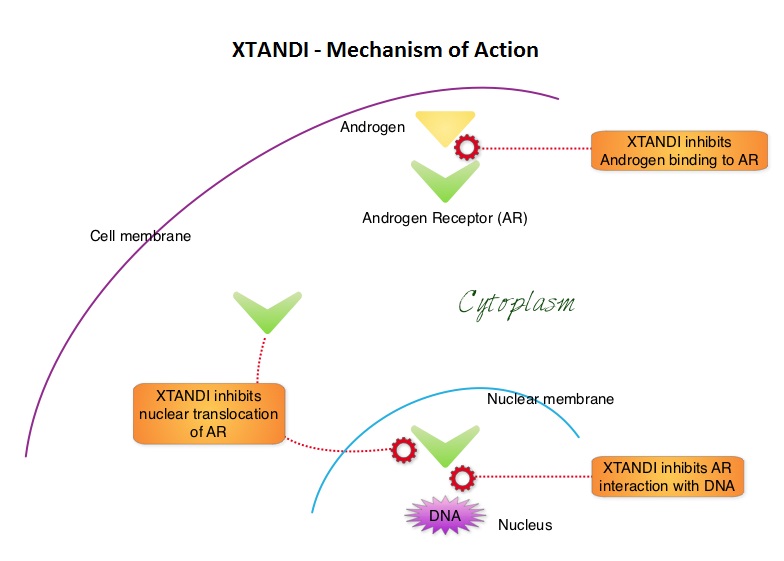
The first-generation NonSteroidal Anti-Androgen (NSAA) agents such as EULEXIN® (Flutamide), CASODEX® (Bicalutamide) and NILANDRON® (Nilutamide) act by binding to the Androgen Receptor (AR) and prevent the activation of the AR and subsequent up-regulation of androgen responsive genes. They may also accelerate the degradation of the AR. These agents have a range of pharmacologic activity from being pure anti-androgens to androgen agonists. CASODEX® is a nonsteroidal oral anti-androgen, that is often prescribed along with GnRH (Gonadotropin-Releasing Hormone) agonists for metastatic disease, or as a single agent second line hormonal therapy for those who had progressed on LHRH agonists. XTANDI® (Enzalutamide) is an orally administered, second-generation, anti-androgen, with no reported agonistic effects. It competitively inhibits androgens and AR binding to androgens as well as AR nuclear translocation and interaction with DNA. It thus inhibits several steps in the AR signaling pathway and was designed to overcome acquired resistance to first-generation nonsteroidal anti-androgens. Previously published studies have shown that XTANDI® improved Overall Survival in Castration-Resistant Prostate Cancer, regardless of whether it was used before or after Docetaxel chemotherapy. The benefits of adding Docetaxel or ZYTIGA® (Abiraterone) to testosterone suppression in men with metastatic, hormone-sensitive Prostate cancer have been established in randomized clinical trials.XTANDI - Mechanism-of-Action

ENZAMET (Enzalutamide in First Line Androgen Deprivation Therapy for Metastatic Prostate Cancer) is an open-label, international, randomized, Phase III trial, conducted to evaluate the benefits of adding XTANDI® to initial standard treatment of Androgen Deprivation Therapy (ADT) with or without early Docetaxel, among patients with metastatic hormone-sensitive Prostate cancer.

A total of 1125 men with metastatic hormone-sensitive Prostate cancer were randomly assigned 1:1 to receive either ADT plus XTANDI® or NonSteroidal Anti-Androgens (NSAA). ADT consisted of parenteral injection of a testosterone-suppressing agent (such as Goserelin, Leuprolide, or Degarelix) with either a 160 mg dose of XTANDI® daily or one of the standard NSAA’s such as CASODEX®, EULEXIN® or NILANDRON®. Of the 1,125 men enrolled in the trial, 503 men received early doses of Docetaxel, and 602 did not. The decision to initiate early treatment with Docetaxel was at the treating physician’s discretion and was administered at 75 mg/m2 IV without prednisone every 3 weeks for a maximum of six cycles. Randomized patients were stratified according to the volume of disease (High Risk- defined as the presence of visceral metastases or at least four bone lesions with at least one lesion located beyond the vertebral bodies and pelvis or low), planned use of early Docetaxel, planned use of bone antiresorptive therapy, and score on ACE-27 (Adult Comorbidity Evaluation 27), with no coexisting conditions rated as 0, mild rated as 1, moderate rated as 2, and severe or multiple conditions rated as 3. The mean age was 68 years, 45% of patients received early Docetaxel as planned treatment and over 50% of the patients had high volume disease. The Primary end point was Overall Survival (OS) and Secondary end points included Progression Free Survival (PFS) as determined by the PSA level, clinical PFS, and adverse events. The median follow up was 34 months.

At the time of the first interim analysis, there was a 33% reduction in the risk of death in the XTANDI® group compared to the standard treatment group ((HR=0.67; P<0.002) and the estimated Overall Survival at 3 years were 80% in the XTANDI® group and 72% in the standard-of-care group. The addition of XTANDI® also improved PSA Progression Free Survival with a 61% reduction in the risk of PSA progression (HR=0.39; P<0.001) and 60% improvement in clinical PFS (HR=0.40; P<0.001). The effects of XTANDI® on clinical PFS were noted in all predefined subgroups, including those with early Docetaxel treatment. Among the patient group who also received early Docetaxel treatment, there was however no significant improvement in Overall Survival. Adding XTANDI® to standard ADT was associated with a higher frequency of toxic effects, especially peripheral neuropathy, associated with the concomitant use of Docetaxel, fatigue and slightly higher risk of seizures compared to standard therapy, and more patients discontinued treatment due to adverse events in the XTANDI® group.

It was concluded that XTANDI® was associated with significantly longer Progression Free Survival and Overall Survival than standard intervention, in men with metastatic, hormone-sensitive Prostate cancer receiving Androgen Deprivation Therapy. Patients who received early Docetaxel treatment, however did not have significant survival benefit. The authors added that ENZAMET is the first metastatic hormone-sensitive Prostate cancer trial to report Overall Survival data of an androgen receptor inhibitor (XTANDI®), and outcomes among a set of patients who also concurrently received Docetaxel. Enzalutamide with Standard First-Line Therapy in Metastatic Prostate Cancer. Davis ID, Martin AJ, Stockler MR, et al. for the ENZAMET Trial Investigators and the Australian and New Zealand Urogenital and Prostate Cancer Trials Group. June 2, 2019. DOI: 10.1056/NEJMoa1903835