Long Term Overall Survival Benefit with VIDAZA® plus VENCLEXTA® in Elderly AML Patients

SUMMARY: The American Cancer Society estimates that in 2023, 20,380 new cases of Acute Myeloid Leukemia (AML) will be diagnosed in the United States and 11,310 patients will die of the disease. AML is one of the most common types of leukemia in adults and can be considered as a group of molecularly heterogeneous diseases with different clinical behavior and outcomes. A significant percentage of patients with newly diagnosed AML are not candidates for intensive chemotherapy or have disease that is refractory to standard chemotherapy. Even with the best available therapies, the 5-year Overall Survival in patients 65 years of age or older is less than 5%. Cytogenetic analysis has been part of routine evaluation when caring for patients with AML. By predicting resistance to therapy, tumor cytogenetics will stratify patients based on risk, and help manage them accordingly. Even though cytotoxic chemotherapy may lead to long term remission and cure in a minority of patients with favorable cytogenetics, patients with high-risk features such as unfavorable cytogenetics, molecular abnormalities, prior myelodysplasia, and advanced age, have poor outcomes with conventional chemotherapy alone. More importantly, with the understanding of molecular pathology of AML, personalized and targeted therapies are becoming an important part of the AML treatment armamentarium.

The pro-survival (anti-apoptotic) protein BCL2 is over expressed by AML cells and regulates clonal selection and cell survival. A new class of anticancer agents known as BH3-mimetic drugs mimic the activity of the physiologic antagonists of BCL2 and related proteins and promote apoptosis (programmed cell death). VENCLEXTA® (Venetoclax) is a second generation, oral, selective, small molecule inhibitor of BCL2 and restores the apoptotic processes in tumor cells. VIDAZA® (Azacitidine) is a hypomethylating agent that promotes DNA hypomethylation by inhibiting DNA methyltransferases. VIDAZA® has been shown to significantly improve Overall Survival (OS), when compared to conventional care regimens, in elderly unfit patients with newly diagnosed AML, who are not candidates for intensive chemotherapy. The combination of VIDAZA® and VENCLEXTA® in a previously published Phase Ib study was highly efficacious, with significant responses, duration of response and Overall Survival benefit.

VIALE-A is a Phase III, multicenter, randomized, double-blind, placebo-controlled confirmatory trial, conducted to evaluate the efficacy and safety of a combination of VIDAZA® and VENCLEXTA®, as compared with VIDAZA® plus placebo (the control regimen), in previously untreated patients with AML, who were ineligible for intensive induction therapy. In this study, 431 patients (N=431) with previously untreated AML were randomly assigned in a 2:1 ratio to receive either VIDAZA® plus VENCLEXTA® (N=286), or VIDAZA® plus placebo (N=145). Enrolled patients were ineligible for standard induction chemotherapy because of coexisting conditions, 75 years of age or older, or both. All patients received VIDAZA® 75 mg/m2 subcutaneously or IV on days 1 through 7 of every 28-day cycle. Patients in the study group also received VENCLEXTA® 100 mg orally on day 1 and 200 mg on day 2 and target dose of 400 mg on day 3, and continued daily until day 28 during cycle 1, to mitigate Tumor Lysis Syndrome. The dose of VENCLEXTA® was initiated at 400 mg daily in all subsequent 28-day cycles. In the control group, a matching placebo was administered orally, once daily, in 28-day cycles. The median age was 76 years in both groups, approximately 60% were male and 76% were Caucasian. Molecular abnormalities of interest included FLT-3, observed in 14% of patients receiving VIDAZA® plus VENCLEXTA®, IDH1/2, observed in 25% of patients, TP53, observed in 23.3% of patients and NPM1, observed in 16.6% of patients. Secondary AML was reported in 25% of the patients in the VIDAZA® plus VENCLEXTA® group and in 24% of the patients in the control group. All the patients were hospitalized on or before day 1 of cycle 1 and for at least 24 hours after receiving the final dose of VENCLEXTA®, in order to receive prophylaxis against the Tumor Lysis Syndrome and for monitoring. The Primary endpoint was Overall Survival (OS). The Secondary end points included Complete Remission (CR) rates, composite Complete Remission (Complete Remission or Complete Remission with incomplete hematologic recovery), RBC and platelet transfusion independence, and Quality of Life according to Patient-Reported Outcomes.

At a median follow up of 20.5 months, the median OS was 14.7 months in the VIDAZA® plus VENCLEXTA® group versus 9.6 months in the VIDAZA® plus placebo group (HR=0.66; P<0.001). VIDAZA® plus VENCLEXTA® combination resulted in a CR rate of 36.7% versus 17.9%; P<0.001 and composite CR of 66.4% versus 28.3%; P<0.001, when compared to the control regimen. Most responses were seen after the first 28-day cycle. The median time to first response was 1.3 versus and 2.8 months respectively, duration of CR was 17.5 months versus 13.3 months and median duration of composite CR was 17.5 months in the VIDAZA® plus VENCLEXTA® group and 13.4 months in the control group. RBC transfusion independence occurred in 59.8% of the patients in the VIDAZA® plus VENCLEXTA® group and in 35.2% of those in the control group (P<0.001), and platelet transfusion independence occurred in 68.5% and 49.7% (P<0.001), respectively. The benefits with VIDAZA® plus VENCLEXTA® were noted in almost all molecular subgroups compared to the control regimen. The response rates were highest among patients with FLT3 mutations (72.4% versus 36.4%, P=0.02) and those with IDH1 or IDH2 mutations (75.4 % versus 10.7%, P<0.001), respectively.

The researchers conducted 2 years of additional follow-up to determine the long-term survival benefit of VIDAZA® plus VENCLEXTA® combination and at this meeting reported the analysis of VIALE-A trial, after the occurrence of 100% of the pre-planned survival events. With a median follow-up of 43.2 months, the median Overall Survival (OS) benefit since the interim analysis in the overall population was maintained and was 14.7 months in the VIDAZA® plus VENCLEXTA® group versus 9.6 months in the VIDAZA® plus placebo group (HR=0.58; P<0.001). Among patients with Measurable Residual Disease (MRD) <10-3 who had achieved either Complete Remission (CR) or CR with incomplete hematologic recovery (CRi), the median OS was reached at 34.2 months in the VIDAZA® plus VENCLEXTA® group and 25.0 months in the control group. For patients in the IDH1/2 mutant subgroup, the median OS at final analysis with VIDAZA® plus VENCLEXTA® was 19.9 months and was 6.2 months in the control group (HR=0.31; P<0.001). Overall safety profiles were comparable between the treatment groups.

The 2-year follow up analysis of the VIALE-A trial confirmed the sustained Overall Survival benefit of VIDAZA® plus VENCLEXTA® combination in patients with AML, ineligible for intensive chemotherapy, with no new safety findings noted.

Long-Term Follow-up of the Phase 3 Viale-a Clinical Trial of Venetoclax Plus Azacitidine for Patients with Untreated Acute Myeloid Leukemia Ineligible for Intensive Chemotherapy. Pratz KW, Jonas BA, Pullarkat VA, et al. Presented at the 64th ASH Annual Meeting and Exposition, December 10-13, 2022, New Orleans, Louisiana. Abstract # 219

Sequential Conditioning and Allogeneic Hematopoietic Cell Transplantation WITHOUT Prior Remission-Induction Chemotherapy in AML

SUMMARY: The American Cancer Society estimates that for 2023, about 20,380 new cases of Acute Myeloid Leukemia (AML) will be diagnosed in the United States and 11,310 patients will die of the disease. AML can be considered as a group of heterogeneous diseases with different clinical behavior and outcomes. Cytogenetic analysis has been part of routine evaluation when caring for patients with AML. By predicting resistance to therapy, tumor cytogenetics will stratify patients, based on risk, and help manage them accordingly. Even though cytotoxic chemotherapy may lead to long term remission and cure in a minority of patients with favorable cytogenetics, patients with high-risk features such as unfavorable cytogenetics, molecular abnormalities, prior Myelodysplasia and advanced age, have poor outcomes with conventional chemotherapy alone.

Cytotoxic chemotherapy for AML often consists of induction therapy to achieve remission, followed by consolidation therapy. However, standard induction chemotherapy achieves Complete Remission in only 40-60% of AML patients older than 60 years of age, and majority of these patients will eventually relapse. This had been attributed to clonal evolution and epigenetic reprogramming, leading to aberrant DNA methylation, and persistence of leukemia-initiating cells. Patients with AML who are under age 55 with high-risk cytogenetics in first clinical remission, are considered for allogeneic Hematopoietic Cell Transplantation, as this has shown to offer survival advantage over conventional chemotherapy. Patients receive salvage chemotherapy, targeted therapy for FLT3-mutant and susceptible IDH mutant AML, or treatment with a BCL2 inhibitor and hypomethylating agent, if a donor is not readily available and a prolonged donor search is needed.

ASAP is a randomized Phase III trial, conducted in patients with an unfavorable risk AML who either had a poor response to first induction therapy or had a relapse after first induction therapy. This study enrolled AML patients with poor response after first induction therapy or relapsed AML, who were eligible for intensive chemotherapy and allogeneic Hematopoietic Cell Transplantation with either a matched sibling donor, an HLA-compatible (9 or more/10) unrelated donor, or ongoing donor search with two potential unrelated donors with 90% or more HLA-matching probability. This analysis included 276 patients, of whom 272 patients were treated per protocol. Patients were randomized 1:1 to a Remission Induction arm in which patients received Cytarabine 3 g/m2 IV (1 g/m2 for patients more than 60 years) twice daily on days 1-3 plus Mitoxantrone 10 mg/m2 IV on days 3-5 and subsequent allogeneic Hematopoietic Cell Transplantation (Remission Induction Strategy arm-N=134) or to Disease Control arm (DISC arm-N=138) prior to sequential conditioning and allogeneic Hematopoietic Cell Transplantation. Disease Control Strategy consisted primarily of watchful waiting, but low-dose Cytarabine and single doses of mitoxantrone were permitted for disease-control. The median age was 61 years and at randomization, 39 patients had matched sibling donor, 133 patients had an HLA-compatible unrelated donor with confirmed HLA-typing, and 104 patients had ongoing unrelated donor searches. The Primary endpoint was Disease Free Survival (DFS), defined as Complete Remission at day 56 after allogeneic Hematopoietic Cell Transplantation, although the statistical goal of the study was to show non-inferiority of the Disease Control arm. Major secondary endpoints included Overall Survival (OS) from randomization and Leukemia-Free Survival from Complete Remission at day 56. The median time to allogeneic Hematopoietic Cell Transplantation was 8 weeks in the Remission Induction Strategy arm and 4 weeks in the Disease Control arm. At 24 weeks from randomization 96% and 94% of patients had been transplanted in the Remission Induction Strategy arm and Disease Control arm, respectively.

The Primary endpoint was met with the Disease Control arm, which is the less intensive treatment strategy, meeting the Primary endpoint of DFS/Complete Remission at day 56 after allogeneic Hematopoietic Cell Transplantation. The Disease-Free Survival at day 56 was 81.3% in the Remission Induction Strategy arm and 84.1% in the Disease Control arm (P for noninferiority=0.047). Among patients who met the Primary endpoint, after a median follow-up from randomization of 37 months, there was no significant difference in the Leukemia-Free Survival or Overall Survival from day 56, in the Remission Induction Strategy arm and Disease Control arm. The Disease Control Strategy was also associated with significantly fewer Grade 3 or more adverse events, compared to the Remission Induction Strategy (23% versus 64%, P<0.001), and fewer mean number of days in hospital prior to transplant (19 versus 42 days, P<0.001).

The researchers concluded from this first randomized controlled trial that intensive remission induction chemotherapy prior to allogeneic Hematopoietic Cell Transplantation for patients with Relapsed/Refractory AML DID NOT result in a higher overall success rate and did not confer a survival advantage. It was noted that watchful waiting followed by sequential conditioning and allogeneic Hematopoietic Cell Transplantation resulted in comparable overall Complete Remission rates and survival. The researchers added that the data from this study support sequential conditioning and Hematopoietic Cell Transplantation, without prior remission-induction chemotherapy, whenever a donor is readily available. Further, the results of this study emphasize the importance of allogeneic Hematopoietic Cell Transplantation in patients with Relapsed/Refractory AML and stress the need for starting donor search at diagnosis.

In Patients with Relapsed/Refractory AML Sequential Conditioning and Immediate Allogeneic Stem Cell Transplantation (allo-HCT) Results in Similar Overall and Leukemia-Free Survival Compared to Intensive Remission Induction Chemotherapy Followed By Allo-HCT: Results from the Randomized Phase III ASAP Trial. Stelljes M, Middeke JM, Bug G, et al. 64th ASH Annual Meeting and Exposition December 10th-13,2022. Abstract#4.

FDA Approves REZLIDHIA® for Acute Myeloid Leukemia

SUMMARY: The FDA on December 1, 2022, approved REZLIDHIA® (Olutasidenib) capsules for adult patients with Relapsed or Refractory Acute Myeloid Leukemia (AML) with a susceptible IDH1 mutation, as detected by an FDA-approved test. The FDA on the same day also approved the Abbott RealTime IDH1 Assay to select patients for REZLIDHIA®.

The American Cancer Society estimates that for 2022, about 20,050 new cases of Acute Myeloid Leukemia (AML) will be diagnosed in the United States and 11,540 patients will die of the disease. AML can be considered as a group of heterogeneous diseases with different clinical behavior and outcomes. Cytogenetic analysis has been part of routine evaluation when caring for patients with AML. By predicting resistance to therapy, tumor cytogenetics will stratify patients, based on risk and help manage them accordingly. Even though cytotoxic chemotherapy may lead to long term remission and cure in a minority of patients with favorable cytogenetics, patients with high risk features such as unfavorable cytogenetics, molecular abnormalities, prior Myelodysplasia and advanced age, have poor outcomes with conventional chemotherapy alone. AML mainly affects older adults and the median age at diagnosis is 68 years. A significant majority of patients with AML are unable to receive intensive induction chemotherapy due to comorbidities and therefore receive less intensive, noncurative regimens, with poor outcomes.

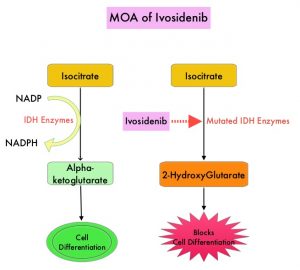
Isocitrate DeHydrogenase (IDH) is a metabolic enzyme that helps generate energy from glucose and other metabolites, by catalyzing the conversion of Isocitrate to Alpha-Ketoglutarate. Alpha-ketoglutarate is required to properly regulate DNA and histone methylation, which in turn is important for gene expression and cellular differentiation. IDH mutations lead to aberrant DNA methylation and altered gene expression, thereby preventing cellular differentiation, with resulting immature undifferentiated cells. IDH mutations can thus promote leukemogenesis in Acute Myeloid Leukemia and tumorigenesis in solid tumors and can result in inferior outcomes. There are three isoforms of IDH. IDH1 is mainly found in the cytoplasm, as well as in peroxisomes, whereas IDH2 and IDH3 are found in the mitochondria, and are a part of the Krebs cycle.

Approximately 20-25% of patients with AML, 70% of patients with Low-grade Glioma and secondary Glioblastoma, 50% of patients with Chondrosarcoma, 20% of patients with Intrahepatic Cholangiocarcinoma, 30% of patients with Angioimmunoblastic T-Cell Lymphoma and 8% of patients with Myelodysplastic syndromes/Myeloproliferative neoplasms, are associated with IDH mutations. IDH2 mutations are more common than IDH1 mutations, occurring in approximately 15% to 20% of patients with AML. The presence of IDH mutations has both prognostic and predictive value. Patients with an IDH mutation and a Nucleo¬phosmin (NPM1) mutation usually have a better prognosis whereas patients with mutations in IDH and FMS-like tyrosine kinase 3 (FLT3) do not. Further IDH mutations predict response to specific IDH1 and IDH2 inhibitors in the Relapsed and Refractory setting. The presence of an IDH mutation is therefore not only prognostic, but also predictive of response to certain therapies.

The two IDH inhibitors presently available in the US include IDHIFA® (Enasidenib), approved for the treatment of patients with Relapsed or Refractory AML with IDH2 mutation and TIBSOVO® (Ivosidenib), approved for AML patients with the IDH1 mutation who have Relapsed/Refractory disease, as well as monotherapy for newly diagnosed AML patients 75 years or older with comorbidities that preclude the use of intensive induction chemotherapy. IDHIFA® can be associated with indirect hyperbilirubinemia, which is of no clinical consequence, whereas with TIBSOVO® there is a small risk of QT interval prolongation. Both agents can lead to Differentiation Syndrome in 10-15% of patients which requires systemic steroids and hemodynamic monitoring for at least 3 days.

REZLIDHIA® is a potent, selective, oral, brain-penetrant, small molecule inhibitor of mutant IDH1, that has exhibited favorable tolerability and clinical activity in high-risk AML patients in a Phase 1 trial (Watts JM, et al. Blood 2019). The present FDA approval was based on the Phase 1/2 Study 2102-HEM-101 trial (NCT02719574), which included 147 adult patients with Relapsed or Refractory AML with an IDH1 mutation, confirmed using the above now approved assay. Enrolled patients had pathologically proven AML, except those with Acute Promyelocytic Leukemia with the t(15;17) translocation, or intermediate high, or very high-risk MDS as defined by the WHO criteria or Revised International Prognostic Scoring System. REZLIDHIA® 150 mg was given orally, twice daily, until disease progression, unacceptable toxicity, or Hematopoietic Stem Cell Transplantation. The median treatment duration was 4.7 months. Sixteen (11%) patients underwent Hematopoietic Stem Cell Transplantation following treatment with REZLIDHIA®. The Primary end points included the rate of Complete Remission (CR) plus Complete Remission with partial hematologic recovery (CRh). Secondary end points included time to response, Duration of Response, Event-Free Survival, Overall Survival, and Relapse-Free Survival.

The Complete Remission plus Complete Remission with partial hematologic recovery rate with REZLIDHIA® was 35%, with 32% CR and 2.7% CRh. The median time to CR+CRh was 1.9 months and the median duration of CR+CRh was 25.9 months. Among the 86 patients who were Red Blood Cell (RBC) and/or platelet transfusions dependent at baseline, 34% became RBC and platelet transfusion independent during any 56-day post-baseline period. Of the 61 patients who were RBC and platelet transfusions independent at baseline, 64% remained transfusion independent during any 56-day post-baseline period. The most common adverse reactions were nausea, diarrhea, constipation, mucositis, fatigue/malaise, arthralgia, fever, rash, leukocytosis, dyspnea, and transaminitis. Health care professionals and patients should be aware of the risk of Differentiation Syndrome, which can be fatal.

REZLIDHIA® is the third IDH inhibitor currently approved for the treatment of Acute Myeloid Leukemia.

https://www.fda.gov/drugs/resources-information-approved-drugs/fda-approves-olutasidenib-relapsed-or-refractory-acute-myeloid-leukemia-susceptible-idh1-mutation.

TIBSOVO® and VIDAZA® Combo Improve Survival in IDH1-Mutated Acute Myeloid Leukemia

SUMMARY: The American Cancer Society estimates that for 2022, about 20,050 new cases of Acute Myeloid Leukemia (AML) will be diagnosed in the United States and 11,540 patients will die of the disease. AML can be considered as a group of heterogeneous diseases with different clinical behavior and outcomes. Cytogenetic analysis has been part of routine evaluation when caring for patients with AML. By predicting resistance to therapy, tumor cytogenetics will stratify patients, based on risk and help manage them accordingly. Even though cytotoxic chemotherapy may lead to long term remission and cure in a minority of patients with favorable cytogenetics, patients with high risk features such as unfavorable cytogenetics, molecular abnormalities, prior Myelodysplasia and advanced age, have poor outcomes with conventional chemotherapy alone. AML mainly affects older adults and the median age at diagnosis is 68 years. A significant majority of patients with AML are unable to receive intensive induction chemotherapy due to comorbidities and therefore receive less intensive, noncurative regimens, with poor outcomes.

Isocitrate DeHydrogenase (IDH) is a metabolic enzyme that helps generate energy from glucose and other metabolites, by catalyzing the conversion of Isocitrate to Alpha-Ketoglutarate. Alpha-ketoglutarate is required to properly regulate DNA and histone methylation, which in turn is important for gene expression and cellular differentiation. IDH mutations lead to aberrant DNA methylation and altered gene expression thereby preventing cellular differentiation, with resulting immature undifferentiated cells. IDH mutations can thus promote leukemogenesis in Acute Myeloid Leukemia and tumorigenesis in solid tumors and can result in inferior outcomes. There are three isoforms of IDH. IDH1 is mainly found in the cytoplasm, as well as in peroxisomes, whereas IDH2 and IDH3 are found in the mitochondria, and are a part of the Krebs cycle. Approximately 20% of patients with AML, 70% of patients with Low-grade Glioma and secondary Glioblastoma, 50% of patients with Chondrosarcoma, 20% of patients with Intrahepatic cholangiocarcinoma, 30% of patients with Angioimmunoblastic T-cell lymphoma and 8% of patients with Myelodysplastic syndromes/Myeloproliferative neoplasms, are associated with IDH mutations.MOA-of-Ivosidenib

TIBSOVO® (Ivosidenib) is a first-in-class, oral, potent, targeted, small-molecule inhibitor of mutant IDH1. The FDA in 2018, approved TIBSOVO® for adult patients with relapsed or refractory AML with a susceptible IDH1 mutation and in 2019 approved TIBSOVO® for newly diagnosed AML with a susceptible IDH1 (Isocitrate DeHydrogenase-1) mutation, in patients who are at least 75 years old or who have comorbidities that preclude the use of intensive induction chemotherapy. VIDAZA® (Azacitidine) is a hypomethylating agent that promotes DNA hypomethylation by inhibiting DNA methyltransferases. VIDAZA® has been shown to significantly improve Overall Survival (OS) when compared to conventional care regimens in elderly unfit patients with newly diagnosed AML, who are not candidates for intensive chemotherapy. In a Phase Ib trial, TIBSOVO® in combination with VIDAZA® showed encouraging clinical activity in newly diagnosed IDH1-mutated AML patients.

AGILE is a global, double-blind, randomized, placebo-controlled, Phase III trial in which the efficacy and safety of a combination of TIBSOVO® and VIDAZA® were assessed, as compared with placebo and VIDAZA®, in patients with newly diagnosed IDH1-mutated Acute Myeloid Leukemia, who were ineligible for intensive induction chemotherapy. Patients were randomly assigned in a 1:1 ratio to receive TIBSOVO® 500 mg orally once daily combined with VIDAZA® 75 mg/m2 subcutaneously or IV for 7 days in 28-day cycles (N=72) or placebo and VIDAZA® (N=74). All the patients were to be treated for a minimum of six cycles until disease progression or unacceptable toxicities. The median patient age was 76 years, 75% had primary AML and 25% had secondary AML, 67% had intermediate cytogenetic risk and 22% had poor cytogenetic risk. Patients were stratified according to geographic region and disease status (Primary versus Secondary Acute Myeloid Leukemia). The Primary end point was Event-Free Survival, defined as the time from randomization until treatment failure (failure of complete remission by week 24), relapse from remission, or death from any cause, whichever occurred first.

At a median follow-up of 12.4 months, Event-Free Survival was significantly longer in the TIBSOVO® and VIDAZA® group than in the placebo and VIDAZA® group (HR=0.33; P=0.002). This benefit was seen across all key subgroups. The estimated probability that a patient would remain event-free at 12 months was 37% in the TIBSOVO® and VIDAZA® group and 12% in the placebo and VIDAZA® group. The median Overall Survival was 24.0 months with TIBSOVO® and VIDAZA® and 7.9 months with placebo and VIDAZA® (HR=0.44; P=0.001). Among those patients who were dependent on transfusion of red blood cells, platelets, or both at baseline, a higher percentage of patients converted to transfusion independence with TIBSOVO® and VIDAZA®, than with placebo and VIDAZA® (46% versus 18%; P=0.006). Health-Related Quality of Life scores favored TIBSOVO® and VIDAZA® across all subscales. Grade 3 or higher Adverse Events included febrile neutropenia (28% with TIBSOVO® and VIDAZA® versus 34% with placebo and VIDAZA®) and neutropenia (27% versus 16%, respectively). Differentiation syndrome of any grade occurred in 14% of the patients receiving TIBSOVO® and VIDAZA® versus 8% among those receiving placebo and VIDAZA®.

It was concluded that a combination of TIBSOVO® and VIDAZA® significantly improved Event-Free Survival, Response Rates, and Overall Survival, as compared with placebo and VIDAZA®, in patients with newly diagnosed IDH1-mutated Acute Myeloid Leukemia, who were ineligible for induction chemotherapy. The authors added that treatment with TIBSOVO® and VIDAZA® resulted in better Quality of Life and higher rates of transfusion independence.

Ivosidenib and Azacitidine in IDH1-Mutated Acute Myeloid Leukemia. Montesinos P, Recher C, Vives S, et al. N Engl J Med 2022; 386:1519-1531.

Efficacy and Safety in the Phase 3 QUAZAR® AML-001 Study of ONUREG® (azacitidine) Tablets


Written by: Thomas E Boyd, MD, Texas Oncology
Content Sponsored by: Bristol Myers Squibb
Dr. Boyd is a paid consultant for BMS and was compensated for his contribution in drafting this article.


Acute myeloid leukemia (AML) is an aggressive hematologic cancer with 5-year relative survival rates less than 30%.1 The journey for patients diagnosed with AML is very complex, and helping patients achieve remission is a major goal of initial treatment.2 Relapse after this initial therapy poses a significant roadblock to survival, as evidenced by high relapse rates and the current 5-year survival rate.1,3 There remains a critical need for therapies that extend survival.4

After a patient enters first remission, continued AML treatment is one avenue for appropriate patients.4 ONUREG® is the first and only FDA-approved continued AML treatment for adult patients with acute myeloid leukemia who achieved first complete remission (CR) or complete remission with incomplete blood count recovery (CRi) following intensive induction chemotherapy and are not able to complete intensive curative therapy.5

The efficacy and safety of ONUREG® was evaluated in the Phase 3 QUAZAR®AML-001 trial, where patients who completed intensive induction with or without consolidation therapy were randomized 1:1 to receive ONUREG or placebo orally on Days 1 through 14 of each 28-day cycle.5 Randomization was stratified by age at time of induction therapy, cytogenetic risk category at time of induction therapy, prior history of MDS/CMML, and receipt of consolidation therapy following induction therapy.5

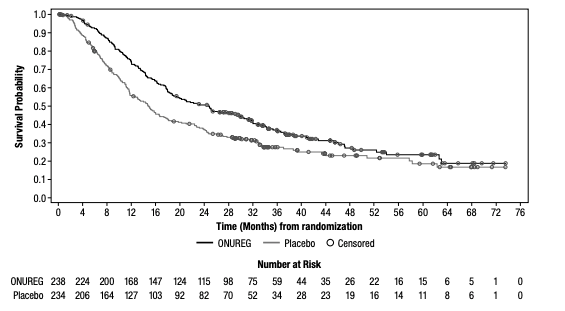
Median OS, the primary endpoint in the QUAZAR®AML-001 trial, was over 2 years (24.7 months) in the ONUREG® arm and 14.8 months in the placebo arm (hazard ratio [HR] 0.69, 95% confidence interval [CI]: 0.55-0.86; P=0.0009; Figure 1).5 This statistically significant survival benefit of ~10 months for patients with AML in first remission who received ONUREG® compared to placebo demonstrated that QUAZAR® AML-001 trial met its primary endpoint.5 Survival estimates were 73% for ONUREG® (n=168; 95% CI: 67, 78) and 56% for placebo (n=127; 95% CI: 49, 62) at 1 year, and 51% for ONUREG® (n=115; 95% CI: 44, 57) and 37% for placebo (n=82; 95% CI: 31, 43) at 2 years.6 Analyses of survival estimates at 1 and 2 years were not designed to show a difference between treatment arms.

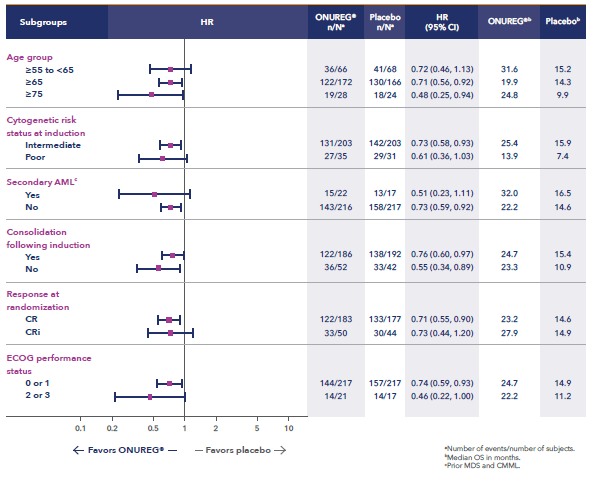
Additional analyses show the influence of ONUREG® across subgroups vs placebo for median OS (Figure 2). It is important to note that these prespecified analyses should be interpreted with caution because of potential selection bias, insufficient sample size, and a higher probability of making a false positive finding.7

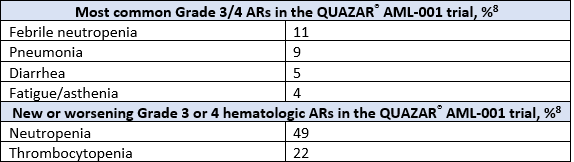
The most common adverse reactions (ARs, ≥ 10%) associated with ONUREG® treatment included nausea, vomiting, diarrhea, fatigue/asthenia, constipation, pneumonia, abdominal pain, arthralgia, decreased appetite, febrile neutropenia, dizziness, and pain in extremity.5 Serious ARs occurred in 15% of patients who received ONUREG®, and the most common Grade 3/4 ARs were febrile neutropenia (11%), pneumonia (9%), diarrhea (5%), and fatigue/asthenia (4%).5

Efficacy and safety were established by the large, multicenter QUAZAR® AML-001 trial. These results established ONUREG® as a continued treatment for adult patients with AML who achieve first complete remission (CR) or complete remission with incomplete blood count recovery (CRi) following intensive induction chemotherapy and are not able to complete intensive curative therapy.

Figure 1: Kaplan-Meier curve for OS: ITT population in QUAZAR® AML-0015
KM-for-Overall-Survival


Figure 2: Overall survival select subgroup analysis6,7
Overall-Survival


*Analysis limitations: These prespecified subgroup analyses should be interpreted with caution to determine a difference between arms in these select subgroups because of potential selection bias, insufficient sample size, and a higher probability of making a false positive finding.

IMPORTANT SAFETY INFORMATION
CONTRAINDICATIONS
ONUREG® is contraindicated in patients with known severe hypersensitivity to azacitidine or its components.
WARNINGS AND PRECAUTIONS
Risks of Substitution with Other Azacitidine Products
Due to substantial differences in the pharmacokinetic parameters, the recommended dose and schedule for ONUREG® are different from those for the intravenous or subcutaneous azacitidine products. Treatment of patients using intravenous or subcutaneous azacitidine at the recommended dosage of ONUREG® may result in a fatal adverse reaction. Treatment with ONUREG® at the doses recommended for intravenous or subcutaneous azacitidine may not be effective. Do not substitute ONUREG® for intravenous or subcutaneous azacitidine.
Myelosuppression
New or worsening Grade 3 or 4 neutropenia and thrombocytopenia occurred in 49% and 22% of patients who received ONUREG®. Febrile neutropenia occurred in 12%. A dose reduction was required for 7% and 2% of patients due to neutropenia and thrombocytopenia. Less than 1% of patients discontinued ONUREG® due to either neutropenia or thrombocytopenia. Monitor complete blood counts and modify the dosage as recommended. Provide standard supportive care, including hematopoietic growth factors, if myelosuppression occurs.
Increased Early Mortality in Patients with Myelodysplastic Syndromes (MDS)
In AZA-MDS-003, 216 patients with red blood cell transfusion-dependent anemia and thrombocytopenia due to MDS were randomized to ONUREG® or placebo. 107 received a median of 5 cycles of ONUREG® 300 mg daily for 21 days of a 28-day cycle. Enrollment was discontinued early due to a higher incidence of early fatal and/or serious adverse reactions in the ONUREG® arm compared with placebo. The most frequent fatal adverse reaction was sepsis. Safety and effectiveness of ONUREG® for MDS have not been established. Treatment of MDS with ONUREG® is not recommended outside of controlled trials.
Embryo-Fetal Toxicity
ONUREG® can cause fetal harm when administered to a pregnant woman. Azacitidine caused fetal death and anomalies in pregnant rats via a single intraperitoneal dose less than the recommended human daily dose of oral azacitidine on a mg/m2 basis. Advise pregnant women of the potential risk to a fetus. Advise females of reproductive potential to use effective contraception during treatment with ONUREG® and for at least 6 months after the last dose. Advise males with female partners of reproductive potential to use effective contraception during treatment with ONUREG® and for at least 3 months after the last dose.
ADVERSE REACTIONS
Serious adverse reactions occurred in 15% of patients who received ONUREG®. Serious adverse reactions in ≥2% included pneumonia (8%) and febrile neutropenia (7%). One fatal adverse reaction (sepsis) occurred in a patient who received ONUREG®.
Most common (≥10%) adverse reactions with ONUREG® vs placebo were nausea (65%, 24%), vomiting (60%, 10%), diarrhea (50%, 21%), fatigue/asthenia (44%, 25%), constipation (39%, 24%), pneumonia (27%, 17%), abdominal pain (22%, 13%), arthralgia (14%, 10%), decreased appetite (13%, 6%), febrile neutropenia (12%, 8%), dizziness (11%, 9%), pain in extremity (11%, 5%).
LACTATION
There are no data regarding the presence of azacitidine in human milk or the effects on the breastfed child or milk production. Because of the potential for serious adverse reactions in the breastfed child, advise women not to breastfeed during treatment with ONUREG® and for 1 week after the last dose.

Please see full Prescribing Information for ONUREG®.

References
1. National Cancer Institute. SEER Cancer Statistics Factsheets: Acute Myeloid Leukemia. http://seer.cancer.gov/statfacts/html/amyl.html. Accessed April 21, 2021.
2. Medeiros BC. Interpretation of clinical endpoints in trials of acute myeloid leukemia. Leuk Res. 2018;68:32-29.
3. Wei AH. Maintenance therapy for AML: are we there yet? Blood. 2019;133(13):1390-1392.
4. Medeiros BC, Chan SM, Daver NG, Jonas BA, Pollyea DA. Optimizing survival outcomes with post-remission therapy in acute myeloid leukemia. Am J Hematol. 2019;94:803-811.
5. ONUREG® [Prescribing Information]. Summit, NJ: Celgene Corporation; 2021.
6. Wei AH, Döhner H, Pocock C, et al. The QUAZAR AML-001 maintenance trial: results of a phase III international, randomized, double-blind, placebo-controlled study of CC-486 in patients with acute myeloid leukemia (AML) in first remission [oral presentation at ASH 2019]. Blood. 2019;134(Suppl 2):LBA-3.
7. Wei AH, Döhner H, Pocock C, et al. Oral Azacitidine Maintenance Therapy for Acute Myeloid Leukemia in First Remission. N Engl J Med. 2020;383:2526-2537.

© 2021 Celgene Corporation.
ONUREG is a trademark of Celgene Corporation, a Bristol Myers Squibb company.
QUAZAR® is a registered trademark of Celgene Corporation, a Bristol Myers Squibb company
02/22 2011-US-2100200

General Review: An Approved Treatment Option for Acute Myeloid Leukemia


Written by: Thomas E Boyd, MD, Texas Oncology
Content Sponsored by: Bristol-Myers Squibb
Dr. Boyd is a paid consultant for BMS and was compensated for his contribution in drafting this article.

Acute myeloid leukemia (AML) is a deadly disease that is more common in older adults.1 In 2021, it is estimated that there will be 20,240 new cases of AML in the United States, representing 1.1% of all new cancer cases.1 Additionally, there will be an estimated 11,400 deaths due to AML, representing 1.9% of all cancer deaths in the US in 2021.1 Once a patient is diagnosed with AML, beginning treatment as soon as possible is essential for disease management and survival.2

Currently, patients usually follow one of two paths for initial treatment of AML: conventional intensive induction chemotherapy or a less intensive option, with some patients going onto hematopoietic stem cell transplant after either initial treatment.3 The choice of treatment path is based on both patient- and disease-related characteristics such as medical fitness, age, cytogenetic and molecular testing, and risk of adverse events.2 With the progress seen in our understanding of the biology of AML, our knowledge of the molecular underpinnings of AML pathology has greatly improved over the years.4 This deeper understanding of disease at the molecular level has helped pave the way for a wave of approved therapies, with several new drug approvals beginning in 2017.5

A major goal of AML treatment is achieving remission.6 However, proliferative AML cells may still persist in remission, leading to a risk of relapse.4 Continued treatment of AML in first remission may improve overall survival.8

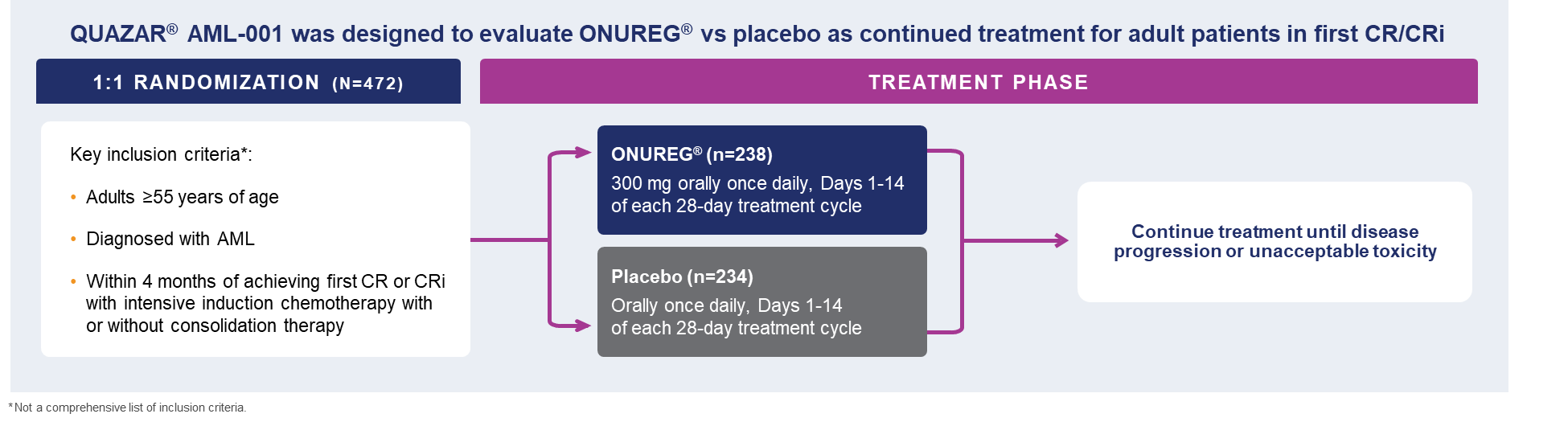
The large, multicenter QUAZAR®AML-001 trial established the efficacy and safety of ONUREG®(azacitidine) tablets, the first and only FDA-approved continued AML treatment for patients in first complete remission (CR) or complete remission with incomplete blood count recovery (CRi) following intensive induction chemotherapy and are not able to complete intensive curative therapy.8 Eligible patients were ages 55 years or older, diagnosed with AML, were within 4 months of achieving first CR or CRi with intensive induction chemotherapy, and may have received consolidation therapy.8 Patients could not enroll in the study if they were candidates for hematopoietic stem cell transplantation at the time of screening.8 Additional criteria included an ECOG performance status (PS) 0-3 and intermediate- or poor-risk cytogenetics, defined as normal cytogenetics +8, t(9;11), or other undefined, and complex (≥3 abnormalities): -5; 5q-; -7; 7q-; 11q23 – non t(9;11); inv(3); t(3;3); t(6;9); or t(9;22), respectively.8

Quazar-AML-Trial-DesignA total of 472 patients were randomized 1:1 to receive either ONUREG® 300 mg or placebo orally on Days 1 through 14 of each 28-day cycle.8 Baseline demographics and disease-related characteristics were well balanced between the ONUREG and placebo arms.8 Across both arms, 72% of patients were 65 years or older, and most patients (92%) had an ECOG PS of 0 or 1. Additionally, approximately three-quarters of patients received 1 or 2 cycles of consolidation therapy.8

With a >2-year median overall survival and a statistically significant survival benefit of ~10 months for patients with AML in first remission compared to placebo, ONUREG met its primary endpoint (24.7 months in the treated arm vs 14.8 months in the placebo arm, hazard ratio (HR) 0.69, 95% confidence interval (CI): 0.55-0.86; P=0.0009).8

The most common adverse reactions (ARs, ≥ 10%) associated with ONUREG® treatment included nausea, vomiting, diarrhea, fatigue/asthenia, constipation, pneumonia, abdominal pain, arthralgia, decreased appetite, febrile neutropenia, dizziness, and pain in extremity.8 Serious ARs occurred in 15% of patients who received ONUREG®, with select Grade 3/4 ARs shown in the table below.8 Eight percent of patients permanently discontinued ONUREG®, 35% of patients required a treatment interruption due to an AR, and 14% of patients required a dose reduction.8

Quazar-Toxicities
ONUREG® is approved for continued treatment of adult patients with acute myeloid leukemia who achieved first complete remission (CR) or complete remission with incomplete blood count recovery (CRi) following intensive induction chemotherapy and are not able to complete intensive curative therapy.8 ONUREG® is an oral hypomethylating agent, offering a convenient, once-daily dosing that patients can take at home.8 However, it is important to emphasize that ONUREG® should not be substituted for intravenous or subcutaneous azacitidine, because the indications and dosing regimen differ between these formulations.8 As the first and only FDA-approved continued AML treatment for patients in first remission, ONUREG® remains an option for appropriate patients.

IMPORTANT SAFETY INFORMATION
CONTRAINDICATIONS
ONUREG® is contraindicated in patients with known severe hypersensitivity to azacitidine or its components.
WARNINGS AND PRECAUTIONS
Risks of Substitution with Other Azacitidine Products
Due to substantial differences in the pharmacokinetic parameters, the recommended dose and schedule for ONUREG® are different from those for the intravenous or subcutaneous azacitidine products. Treatment of patients using intravenous or subcutaneous azacitidine at the recommended dosage of ONUREG® may result in a fatal adverse reaction. Treatment with ONUREG® at the doses recommended for intravenous or subcutaneous azacitidine may not be effective. Do not substitute ONUREG® for intravenous or subcutaneous azacitidine.
Myelosuppression
New or worsening Grade 3 or 4 neutropenia and thrombocytopenia occurred in 49% and 22% of patients who received ONUREG®. Febrile neutropenia occurred in 12%. A dose reduction was required for 7% and 2% of patients due to neutropenia and thrombocytopenia. Less than 1% of patients discontinued ONUREG® due to either neutropenia or thrombocytopenia. Monitor complete blood counts and modify the dosage as recommended. Provide standard supportive care, including hematopoietic growth factors, if myelosuppression occurs.
Increased Early Mortality in Patients with Myelodysplastic Syndromes (MDS)
In AZA-MDS-003, 216 patients with red blood cell transfusion-dependent anemia and thrombocytopenia due to MDS were randomized to ONUREG® or placebo. 107 received a median of 5 cycles of ONUREG® 300 mg daily for 21 days of a 28-day cycle. Enrollment was discontinued early due to a higher incidence of early fatal and/or serious adverse reactions in the ONUREG® arm compared with placebo. The most frequent fatal adverse reaction was sepsis. Safety and effectiveness of ONUREG® for MDS have not been established. Treatment of MDS with ONUREG® is not recommended outside of controlled trials.
Embryo-Fetal Toxicity
ONUREG® can cause fetal harm when administered to a pregnant woman. Azacitidine caused fetal death and anomalies in pregnant rats via a single intraperitoneal dose less than the recommended human daily dose of oral azacitidine on a mg/m2 basis. Advise pregnant women of the potential risk to a fetus. Advise females of reproductive potential to use effective contraception during treatment with ONUREG® and for at least 6 months after the last dose. Advise males with female partners of reproductive potential to use effective contraception during treatment with ONUREG® and for at least 3 months after the last dose.
ADVERSE REACTIONS
Serious adverse reactions occurred in 15% of patients who received ONUREG®. Serious adverse reactions in ≥2% included pneumonia (8%) and febrile neutropenia (7%). One fatal adverse reaction (sepsis) occurred in a patient who received ONUREG®.
Most common (≥10%) adverse reactions with ONUREG® vs placebo were nausea (65%, 24%), vomiting (60%, 10%), diarrhea (50%, 21%), fatigue/asthenia (44%, 25%), constipation (39%, 24%), pneumonia (27%, 17%), abdominal pain (22%, 13%), arthralgia (14%, 10%), decreased appetite (13%, 6%), febrile neutropenia (12%, 8%), dizziness (11%, 9%), pain in extremity (11%, 5%).
LACTATION
There are no data regarding the presence of azacitidine in human milk or the effects on the breastfed child or milk production. Because of the potential for serious adverse reactions in the breastfed child, advise women not to breastfeed during treatment with ONUREG® and for 1 week after the last dose.

Please see full Prescribing Information for ONUREG®.

References
1. National Cancer Institute. SEER Cancer Statistics Factsheets: Acute Myeloid Leukemia. http://seer.cancer.gov/statfacts/html/amyl.html. Accessed April 21, 2021.
2. Medeiros BC, Satram S. Real world treatment patterns and comparative effectiveness among elderly patients with acute myeloid leukemia in the United States. Ann Hematol Oncol. 2020;7(1):1283.
3. Burnett A, Wetzler M, Löwenberg B. Therapeutic advances in acute myeloid leukemia. J Clin Oncol. 2011;29(5):487-494.
4. Brinda B, Khan I, Parkin B, Konig H. The rocky road to personalized medicine in acute myeloid leukaemia. J Cell Mol Med. 2018;22(3):1411-1427.
5. Lai C, Doucette K, Norsworthy K. Recent drug approvals for acute myeloid leukemia. J Hematol Oncol. 2019;12(100):1-20.
6. Medeiros BC. Interpretation of clinical endpoints in trials of acute myeloid leukemia. Leuk Res. 2018;68:32-29.
7. Medeiros BC, Chan SM, Daver NG, Jonas BA, Pollyea DA. Optimizing survival outcomes with post-remission therapy in acute myeloid leukemia. Am J Hematol. 2019;94:803-811.
8. ONUREG® [Prescribing Information]. Summit, NJ: Celgene Corporation; 2021.

© 2021 Celgene Corporation.
ONUREG is a trademark of Celgene Corporation, a Bristol-Myers Squibb company.
QUAZAR is a registered trademark of Celgene Corporation, a Bristol-Myers Squibb company.
1/22 2011-US-2100199

Acute Myeloid Leukemia: Who Is an Appropriate Candidate for ONUREG® (azacitidine) Tablets?


Written by: Thomas E Boyd, MD, Texas Oncology
Content Sponsored by: Bristol-Myers Squibb Company (BMS)


Dr. Boyd is a paid consultant for BMS and was compensated for his contribution in drafting this article.

Acute myeloid leukemia (AML) is a deadly disease with most new cases affecting patients aged 65–74 years old.1 The 5-year relative survival rate for AML is 29.5%1, highlighting a need for treatment approaches that improve survival.2 Patient- and disease-related characteristics, including medical fitness, age, cytogenetic and molecular testing, and risk of adverse events, often determine treatment options.3

After careful consideration of all factors, patients can be treated with either a higher-intensity chemotherapy option or a lower-intensity therapy option, and in some cases, additional cycles of consolidation therapy may follow the higher-intensity chemotherapy option.4 Helping patients achieve remission and keeping them there is a major goal of initial induction therapy. Continued treatment of AML in first remission may improve overall survival; however, relapse due to residual AML cells is still a major concern.2 In 764 patients with AML aged 60–85 years old who received induction therapy, ~50% relapsed within 1 year and ~80% relapsed within 5 years.5 A goal of continued treatment for AML is extending overall survival (OS) in patients who have achieved first remission.2 In some instances, extending OS can be achieved with a hematopoietic stem cell transplant; but not all patients are eligible or choose to go down this treatment route.3

ONUREG® is the first and only FDA-approved therapy indicated for continued treatment of adult patients with acute myeloid leukemia who achieved first complete remission (CR) or complete remission with incomplete blood count recovery (CRi) following intensive induction chemotherapy and are not able to complete intensive curative therapy.6 The efficacy and safety of ONUREG® was evaluated in the Phase 3 multicenter, randomized, double-blind placebo-controlled QUAZAR® AML-001 study.6 Eligible patients were ages 55 years or older, diagnosed with AML, were within 4 months of achieving first CR or CRi with intensive induction chemotherapy, and may have received consolidation therapy.6 Efficacy was established by OS, where ONUREG® demonstrated >2 years median OS for patients with AML in first remission as compared to placebo (24.7 months in the treatment arm vs 14.8 months in the placebo arm, hazard ratio (HR) 0.69, 95% confidence interval (CI): 0.55-0.86; P=0.0009).6 The most common adverse reactions (ARs, ≥ 10%) associated with ONUREG® treatment were nausea, vomiting, diarrhea, fatigue/asthenia, constipation, pneumonia, abdominal pain, arthralgia, decreased appetite, febrile neutropenia, dizziness, and pain in extremity.6 Serious ARs occurred in 15% of patients who received ONUREG®, and the most common Grade 3/4 ARs are shown in the table below.6

Who is an appropriate candidate for ONUREG®? The following hypothetical examples will review some of the characteristics to consider when deciding if a patient could be appropriate for ONUREG®.

Patient A is a 67-year-old retired accountant who is active and generally healthy. Their hypertension is well managed with medication, and they have no other comorbidities. Despite no family history of leukemia or hematologic abnormalities, Patient A has just been diagnosed with de novo AML not otherwise specified with intermediate-risk cytogenetics and no actionable mutations. Their hematologist prescribes intensive induction chemotherapy with the standard 7+3 regimen, and Patient A went into first remission.

Patient A is generally healthy with a well-managed comorbidity, which results in their treatment with intensive induction chemotherapy followed by first remission. Patient A is a candidate for transplant but declines one due to concerns over graft-versus-host disease. Since Patient A chose not to proceed to transplant, then ONUREG® may be an option for them.

Patient B is a 70-year retired nurse who lives alone, with family nearby. They were recently diagnosed with AML and received 7+3 chemotherapy followed by one round of consolidation. Patient B tolerated their treatment as well as could be expected and achieved first complete remission. While they are eligible for transplant, they declined and have been under observation by their doctor for the past few months. Patient B received and tolerated intensive induction chemotherapy, achieved first remission, and declined transplant, an intensive curative option. This makes them a potential candidate for continued treatment with ONUREG®.

Ultimately, the treating physician will make the final decision, but ONUREG® is indicated as a continued treatment of adult patients with AML who achieved first CR or CRi following intensive induction chemotherapy and are not able to complete intensive curative therapy.6 Understanding a patient’s disease and journey can help set them on the path where appropriate towards a continued treatment that has demonstrated an overall survival benefit in the QUAZAR® AML-001 study.

IMPORTANT SAFETY INFORMATION
CONTRAINDICATIONS
ONUREG® is contraindicated in patients with known severe hypersensitivity to azacitidine or its components.
WARNINGS AND PRECAUTIONS
Risks of Substitution with Other Azacitidine Products
Due to substantial differences in the pharmacokinetic parameters, the recommended dose and schedule for ONUREG® are different from those for the intravenous or subcutaneous azacitidine products. Treatment of patients using intravenous or subcutaneous azacitidine at the recommended dosage of ONUREG® may result in a fatal adverse reaction. Treatment with ONUREG® at the doses recommended for intravenous or subcutaneous azacitidine may not be effective. Do not substitute ONUREG® for intravenous or subcutaneous azacitidine.
Myelosuppression
New or worsening Grade 3 or 4 neutropenia and thrombocytopenia occurred in 49% and 22% of patients who received ONUREG®. Febrile neutropenia occurred in 12%. A dose reduction was required for 7% and 2% of patients due to neutropenia and thrombocytopenia. Less than 1% of patients discontinued ONUREG® due to either neutropenia or thrombocytopenia. Monitor complete blood counts and modify the dosage as recommended. Provide standard supportive care, including hematopoietic growth factors, if myelosuppression occurs.
Increased Early Mortality in Patients with Myelodysplastic Syndromes (MDS)
In AZA-MDS-003, 216 patients with red blood cell transfusion-dependent anemia and thrombocytopenia due to MDS were randomized to ONUREG® or placebo. 107 received a median of 5 cycles of ONUREG® 300 mg daily for 21 days of a 28-day cycle. Enrollment was discontinued early due to a higher incidence of early fatal and/or serious adverse reactions in the ONUREG® arm compared with placebo. The most frequent fatal adverse reaction was sepsis. Safety and effectiveness of ONUREG® for MDS have not been established. Treatment of MDS with ONUREG® is not recommended outside of controlled trials.
Embryo-Fetal Toxicity
ONUREG® can cause fetal harm when administered to a pregnant woman. Azacitidine caused fetal death and anomalies in pregnant rats via a single intraperitoneal dose less than the recommended human daily dose of oral azacitidine on a mg/m2 basis. Advise pregnant women of the potential risk to a fetus. Advise females of reproductive potential to use effective contraception during treatment with ONUREG® and for at least 6 months after the last dose. Advise males with female partners of reproductive potential to use effective contraception during treatment with ONUREG® and for at least 3 months after the last dose.
ADVERSE REACTIONS
Serious adverse reactions occurred in 15% of patients who received ONUREG®. Serious adverse reactions in ≥2% included pneumonia (8%) and febrile neutropenia (7%). One fatal adverse reaction (sepsis) occurred in a patient who received ONUREG®.
Most common (≥10%) adverse reactions with ONUREG® vs placebo were nausea (65%, 24%), vomiting (60%, 10%), diarrhea (50%, 21%), fatigue/asthenia (44%, 25%), constipation (39%, 24%), pneumonia (27%, 17%), abdominal pain (22%, 13%), arthralgia (14%, 10%), decreased appetite (13%, 6%), febrile neutropenia (12%, 8%), dizziness (11%, 9%), pain in extremity (11%, 5%).
LACTATION
There are no data regarding the presence of azacitidine in human milk or the effects on the breastfed child or milk production. Because of the potential for serious adverse reactions in the breastfed child, advise women not to breastfeed during treatment with ONUREG® and for 1 week after the last dose.

Please see full Prescribing Information for ONUREG®.

References
1. National Cancer Institute. SEER Cancer Statistics Factsheets: Acute Myeloid Leukemia. http://seer.cancer.gov/statfacts/html/amyl.html. Accessed April 21, 2021.
2. Medeiros BC, Chan SM, Daver NG, Jonas BA, Pollyea DA. Optimizing survival outcomes with post-remission therapy in acute myeloid leukemia. Am J Hematol. 2019;94:803-811.
3. Medeiros BC, Satram S. Real world treatment patterns and comparative effectiveness among elderly patients with acute myeloid leukemia in the United States. Ann Hematol Oncol. 2020;7(1):1283.
4. Burnett A, Wetzler M, Löwenberg B. Therapeutic advances in acute myeloid leukemia. J Clin Oncol. 2011;29(5):487-494.
5. Büchner T, Berdel WE, Haferlach C, et al. Age-related risk profile and chemotherapy dose response in acute myeloid leukemia: a study by the German Acute Myeloid Leukemia Cooperative Group. J Clin Oncol. 2009;27(1):61-69.
6. ONUREG®® [Prescribing Information]. Summit, NJ: Celgene Corporation; 2021.

© 2021 Celgene Corporation.
ONUREG® is a trademark of Celgene Corporation, a Bristol-Myers Squibb company.
QUAZAR® is a registered trademark Celgene Corporation, a Bristol-Myers Squibb company.
12/21 2011-US-2100198

Long Term Survival Benefit with Maintenance ONUREG® in AML Patients

SUMMARY: The American Cancer Society has estimated that in 2021, 20,240 new cases of Acute Myeloid Leukemia (AML) were diagnosed in the United States and 11,400 patients died of the disease. AML is one of the most common types of leukemia in adults and can be considered as a group of molecularly heterogeneous diseases with different clinical behavior and outcomes. A significant percentage of patients with newly diagnosed AML are not candidates for intensive chemotherapy or have disease that is refractory to standard chemotherapy. Even with the best available therapies, the 5 year Overall Survival (OS) in patients 65 years of age or older is less than 5%. Cytogenetic analysis has been part of routine evaluation when caring for patients with AML. By predicting resistance to therapy, tumor cytogenetics will stratify patients based on risk, and help manage them accordingly. Even though cytotoxic chemotherapy may lead to long term remission and cure in a minority of patients with favorable cytogenetics, patients with high risk features such as unfavorable cytogenetics, molecular abnormalities, prior myelodysplasia and advanced age, have poor outcomes with conventional chemotherapy alone. More importantly, with the understanding of molecular pathology of AML, personalized and targeted therapies are becoming an important part of the AML treatment armamentarium.

Cytotoxic chemotherapy for AML often consists of induction therapy to achieve remission, followed by consolidation therapy. However, standard induction chemotherapy achieves Complete Remission in only 40-60% of AML patients older than 60 years of age, and majority of these patients will eventually relapse. This had been attributed to clonal evolution and epigenetic reprogramming, leading to aberrant DNA methylation, and persistence of leukemia-initiating cells.

Longer duration of first remission is associated with better survival outcomes. Postremission maintenance therapies to prevent early AML relapse has been an area of active research with little progress made until now. Patients with AML who are under age 55 with high-risk cytogenetics, in first clinical remission,are considered for allogeneic Hematopoietic Stem Cell Transplantation (HSCT), as this has shown to offer survival advantage over conventional chemotherapy. This therapeutic option however is not feasible for many elderly patients.

Oral Azacitidine (ONUREG®) is a hypomethylating agent that has a distinct pharmacokinetic as well as pharmacodynamic profile from the parenteral Azacitidine preparation, and can be administered in extended dosing schedules (for 14-21 days per 28-day treatment cycle) to sustain therapeutic activity.

ONUREG® is the first and only FDA-approved therapy indicated for continued treatment of adult patients with AML who achieved first Complete Remission (CR) or Complete Remission with incomplete blood count recovery (CRi) following intensive induction chemotherapy, and are not able to complete intensive curative therapy.

This FDA approval was based on an International, double-blind, placebo-controlled, Phase III QUAZAR AML-001 trial, in which ONUREG® was evaluated as maintenance therapy in patients with AML, who were in first remission after intensive chemotherapy. Eligible patients were 55 years of age or older, were in complete remission with or without complete blood count recovery, and were not candidates for Hematopoietic Stem Cell Transplantation. Patients (N=472) were randomly assigned to receive ONUREG® 300 mg orally (N=238) or placebo (N=234), once daily for 14 days of a 28-day cycle. The median age was 68 years. The Primary end point was Overall Survival (OS). Secondary end points included Relapse Free Survival (RFS) and Health-Related Quality of Life.

At the time of the primary analysis in 2019, with a median follow up of 41.2 months, maintenance treatment with ONUREG® significantly prolonged median OS, when compared to placebo (24.7 months versus 14.8 months; P<0.001). The median RFS was also significantly longer with ONUREG® than with placebo (10.2 months versus 4.8 months; P<0.001). These survival benefits were demonstrated in most treatment subgroups. Further, with a median follow up of 51.7 months, the median OS remained unchanged, and the median OS with oral ONUREG® was 24.7 months versus 14.8 months with placebo (HR=0.69; P=0.0008). The 3-year OS rates in the experimental and control arms were 37.4% and 27.9%, respectively and at 5 years were 26.2% and 19.2%, respectively. Overall Quality of life was preserved while on treatment with ONUREG®. The most common adverse reactions associated with ONUREG® treatment were nausea, vomiting, diarrhea, abdominal pain, constipation, fatigue/asthenia, febrile neutropenia and pneumonia.

The authors concluded that maintenance treatment with ONUREG® was associated with significantly longer Overall and Relapse Free Survival when compared to placebo, among elderly patients with AML, who were in remission after chemotherapy. This survival benefit was maintained with one additional year of follow up. The researchers added that these updated data suggests that maintenance therapy with ONUREG® provides a sustained, long term Overall Survival benefit in elderly patients with AML in first remission.

Long-Term Overall Survival (OS) with Oral Azacitidine (Oral-AZA) in Patients with Acute Myeloid Leukemia (AML) in First Remission after Intensive Chemotherapy (IC): Updated Results from the Phase 3 QUAZAR AML-001 Trial. Wei AH, Döhner H, Sayar H, et al. Blood. 2021;138(suppl 1):871. doi:10.1182/blood-2021-147501.