FDA Approves Anti-BCMA CAR T-Cell Therapy for Relapsed or Refractory Multiple Myeloma

SUMMARY: The FDA on March 26, 2021, approved ABECMA® (Idecabtagene vicleucel) for the treatment of adult patients with Relapsed or Refractory multiple myeloma after four or more prior lines of therapy, including an immunomodulatory agent, a Proteasome Inhibitor, and an anti-CD38 monoclonal antibody. This is the first FDA approved cell-based gene therapy for multiple myeloma. Multiple Myeloma is a clonal disorder of plasma cells in the bone marrow and the American Cancer Society estimates that in the United States, 34,920 new cases will be diagnosed in 2021 and 12,410 patients are expected to die of the disease. Multiple Myeloma (MM) in 2021 remains an incurable disease. Multiple Myeloma is a disease of the elderly, with a median age at diagnosis of 69 years and characterized by intrinsic clonal heterogeneity. Almost all patients eventually will relapse, and patients with a high-risk cytogenetic profile, extramedullary disease or refractory disease have the worst outcomes. The median survival for patients with myeloma is over 10 years. With the introduction of new combinations of antimyeloma agents in earlier lines of therapy, patients with Relapsed/Refractory myeloma often have disease that is refractory to multiple drugs. There is an urgent unmet medical need for agents with novel mechanisms of action that are safe and effective, for patients with aggressive and resistant disease.

Chimeric Antigen Receptor (CAR) T-cell therapy has been associated with long-term disease control in some hematologic malignancies and showed promising activity in a Phase 1 study involving patients with Relapsed or Refractory myeloma. B-cell Maturation Antigen (BCMA) is a member of the Tumor Necrosis Factor superfamily of proteins. It is a transmembrane signaling protein primarily expressed by malignant and normal plasma cells and some mature B cells. BCMA is involved in JNK and NF-kB signaling pathways that induce B-cell development and autoimmune responses. BCMA has been implicated in autoimmune disorders, as well as B-lymphocyte malignancies, Leukemia, Lymphomas, and Multiple Myeloma.Chimeric-Antigen-Receptor-T-Cell-Immunotherapy
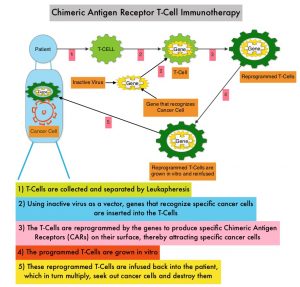
Anti-BCMA CAR T-Cell Therapy ABECMA® is a type of immunotherapy and consists of T cells collected from the patient’s blood in a leukapheresis procedure. These T cells are then stimulated by treating with interleukin 2 (IL-2) and anti-CD3 antibodies in vitro, so that they will actively proliferate and expand to large numbers. These T cells are then genetically engineered to produce special receptors on their surface called Chimeric Antigen Receptors (CAR), by transducing with a gene encoding the engineered CAR, via a retroviral vector such as lentiviral vector. These reprogrammed cytotoxic T cells with the Chimeric Antigen Receptors on their surface are now able to recognize a specific antigen such as BCMA on tumor cells. These genetically engineered and reprogrammed CAR T-cells are grown in the lab and are then infused into the patient. These cells in turn proliferate in the patient’s body and the engineered receptor on the cell surface help recognize and kill cancer cells that expresses that specific antigen such as BCMA. The patient undergoes lymphodepletion chemotherapy with Fludarabine and Cytoxan prior to the introduction of the engineered CAR T-cells. By depleting the number of circulating leukocytes, cytokine production is upregulated and reduces competition for resources, which in turn promotes the expansion of the engineered CAR T-cells.

The FDA approval was based on results from the pivotal, open-label, single-arm, multicenter, multinational, Phase II study (KarMMa trial), in which the efficacy and safety of ABECMA® was evaluated in adults with Relapsed and Refractory multiple myeloma. In this study, 128 patients with persistent disease after at least three previous regimens including a Proteasome Inhibitor, an immunomodulatory agent, and an anti-CD38 antibody, received ABECMA® target doses of 150×106 to 450×106 CAR-positive (CAR+) T cells, after receiving lymphodepleting chemotherapy. Lymphodepletion therapy consisted of Fludarabine 30 mg/m2 IV and Cyclophosphamide 300 mg/m2 IV given on 3 consecutive days, followed by 2 days of rest before ABECMA® infusion. The median patient age was 61 years and the median time from diagnosis was 6 years. About 51% of patients had a high tumor burden (50% or more bone marrow plasma cells), 39% had extramedullary disease and 35% had a high-risk cytogenetic abnormalities, defined as del(17p), t(4;14), or t(14;16). Patients had received a median of 6 previous antimyeloma regimens and 94% had received previous Autologous Hematopoietic Stem Cell Transplants. The Primary end point was an Overall Response Rate (ORR) as assessed by an Independent Review Committee (IRC) and key Secondary end point was a Complete Response or better (comprising complete and stringent Complete Responses). Other efficacy endpoints include Time to Response, Duration of Response, Progression Free Survival (PFS), Overall Survival (OS), Minimal Residual Disease (MRD) evaluated by Next-Generation Sequencing (NGS) assay, and Safety.

At a median follow up of 13.3 months, the ORR was 73% and 33% had a complete or stringent Complete Response. Of those with a complete or stringent Complete Response, 79% had MRD-negative status at a sensitivity level of 10−5, corresponding to 26% of the treated population. This benefit was consistently observed in most subgroups examined, including older patients, those who received bridging therapy, and those with aggressive disease features, including high-risk cytogenetics, triple or penta-refractory disease, a high tumor burden, and extramedullary disease. The median time to first response was 1.0 month and the median time to a Complete Response or better was 2.8 months. The estimated median Duration of Response was 10.7 months for all patients and 11.3 months among those receiving the highest target dose. The response duration increased with the depth of response. The median PFS was 8.8 months for all patients and 20.2 months in patients having a complete or stringent Complete Response. Data on Overall Survival are immature. Cellular kinetic analysis confirmed CAR+ T cells in 59% at 6 months and 36% at 12 months after infusion. Common toxicities included neutropenia, anemia and thrombocytopenia. Cytokine Release Syndrome was reported in 84% of patients including 5% Grade 3 or higher events. Neurotoxic effects developed in 18% of patients.

It was concluded that ABECMA® induced deep and durable responses in majority of heavily pretreated patients with Refractory and Relapsed myeloma, and fulfills a high unmet need for this patient group.

Idecabtagene Vicleucel in Relapsed and Refractory Multiple Myeloma. Munshi NC, Anderson LD, Shah N, et al. N Engl J Med 2021; 384:705-716
FDA Approves PEPAXTO® for Relapsed or Refractory Multiple Myeloma

SUMMARY: The FDA on February 26, 2021, granted accelerated approval to PEPAXTO® (Melphalan flufenamide) in combination with Dexamethasone for adult patients with Relapsed or Refractory multiple myeloma, who have received at least four prior lines of therapy and whose disease is refractory to at least one Proteasome Inhibitor, one immunomodulatory agent, and one CD-38 directed monoclonal antibody.

Multiple Myeloma is a clonal disorder of plasma cells in the bone marrow and the American Cancer Society estimates that in the United States, 34,920 new cases will be diagnosed in 2021 and 12,410 patients are expected to die of the disease. Multiple Myeloma (MM) in 2021 remains an incurable disease. Multiple Myeloma is a disease of the elderly, with a median age at diagnosis of 69 years and characterized by intrinsic clonal heterogeneity. Almost all patients eventually will relapse, and patients with a high-risk cytogenetic profile, extramedullary disease or refractory disease have the worst outcomes. The median survival for patients with myeloma is over 10 years. With the introduction of new combinations of antimyeloma agents in earlier lines of therapy, patients with Relapsed/Refractory myeloma often have disease that is refractory to multiple drugs. There is an urgent unmet medical need for agents with novel mechanisms of action that are safe and effective, for patients with aggressive and resistant disease.

PEPAXTO® is a novel, first-in-class peptide-drug conjugate that links a peptide carrier to a cytotoxic agent, resulting in a highly lipophilic compound. The lipophilicity allows PEPAXTO® to readily diffuse across cell membranes and get distributed into cells. Through its passive uptake into cells, the conjugated agent circumvents the development of transporter-associated resistance. The drug compound then leverages aminopeptidases, which are overexpressed in multiple myeloma cells, resulting in the release of the cytotoxic alkylating payload, which irreversibly damages tumor DNA and induces apoptosis.

The HORIZON trial is a pivotal, single-arm, multicenter, Phase II study of PEPAXTO® plus Dexamethasone in heavily pretreated patients with Relapsed or Refractory multiple myeloma. This study included 157 patients with relapsed or refractory disease, of whom 97 patients were triple-class refractory to at least one Immunomodulatory agent, one Proteasome Inhibitor, and a CD38-directed monoclonal antibody, and had received at least four prior lines of therapy. Patients received PEPAXTO® 40 mg IV on day 1 and Dexamethasone 40 mg orally (20 mg for patients 75 years of age or older) on day 1, 8, 15 and 22 of each 28-day cycle, until disease progression or unacceptable toxicity. The Primary end point was Overall Response Rate (Partial Response or better) assessed by the investigator, and Secondary end points included Duration of Response, Progression Free Survival (PFS), Overall Survival (OS), and Safety.

The FDA approval was based on the efficacy in a subgroup of patients (N=97), who were triple-class refractory and had received at least four prior lines of treatment. The Overall Response Rate for the patients within this group of patients was 23.7 % and the Median Duration of Response was 4.2 months. Among these 97 patients, 41% had extramedullary disease (N=40), an aggressive and resistant characteristic associated with poor prognosis. The most common adverse reactions in 20% or more were fatigue, fever, nausea, diarrhea and respiratory tract infection. Most common laboratory abnormalities in 50% or more were cytopenias and increased creatinine.

It was concluded that PEPAXTO® is a novel and innovative therapeutic option for patients with refractory myeloma, and is an important addition to the myeloma treatment armamentarium, in an area of unmet medical need.

Melflufen and Dexamethasone in Heavily Pretreated Relapsed and Refractory Multiple Myeloma. Richardson PG , Oriol A, Larocca A, et al. J Clin Oncol. 2021; 39:757-767

PEPAXTO® (Melphalan flufenamide)

The FDA on February 26, 2021, granted accelerated approval to PEPAXTO® in combination with Dexamethasone for adult patients with relapsed or refractory multiple myeloma who have received at least four prior lines of therapy and whose disease is refractory to at least one Proteasome Inhibitor, one immunomodulatory agent, and one CD-38 directed monoclonal antibody. PEPAXTO® is a product of Oncopeptides, Inc.

Maintenance Therapy with NINLARO® in Transplantation Ineligible Multiple Myeloma Patients

SUMMARY: Multiple Myeloma is a clonal disorder of plasma cells in the bone marrow and the American Cancer Society estimates that in the United States, 34,920 new cases will be diagnosed in 2021 and 12,410 patients are expected to die of the disease. Multiple Myeloma (MM) in 2021 remains an incurable disease. The therapeutic goal therefore is to improve Progression Free Survival (PFS) and Overall Survival (OS). Maintenance or Continuous Treatment in patients with newly diagnosed multiple myeloma following induction and consolidation, can result in significantly longer PFS and OS, compared to those patients who receive therapy for a fixed duration of time. REVLIMID® (Lenalidomide) was approved by the FDA in 2017 as maintenance therapy for patients with multiple myeloma following Autologous Stem Cell Transplant (ASCT) and to date is the only drug approved for this indication. REVLIMID® maintenance however is associated with the development of second new primary malignancies and tolerability issues.

Proteasomes are enzymes found in cells and they enable the breakdown of abnormal or mutant proteins. The amino acids from these proteins are recycled to make new proteins. Just like normal cells make proteins, so do cancerous cells. But the proteins made by the cancerous cells are ineffective and in excess. Myeloma cells depend on the Proteasomes to facilitate this metabolic function, to regulate their growth and survival. Proteasome Inhibitors (PIs) inhibit Proteasome function and are a backbone of multiple myeloma treatment. VELCADE® (Bortezomib), a Proteasome Inhibitor has shown promising activity in early clinical trials, as maintenance treatment post-ASCT. The limitations with VELCADE® as maintenance therapy include, parenteral administration and tolerability. There is therefore an unmet need for an effective oral PI maintenance therapy that is convenient for the patients, with acceptable toxicities. NINLARO® (Ixazomib) unlike VELCADE® is a second generation, oral, Proteasome Inhibitor, which disrupts protein metabolism in myeloma cells, by inhibiting Proteasomes and has an antiproliferative and pro-apoptotic effect. In the TOURMALINE-MM3 Phase III trial study, weekly NINLARO® maintenance treatment in responding patients after ASCT resulted in a significant reduction in the risk of progression and death, and was associated with a favorable safety profile.

TOURMALINE-MM4 is an International, randomized, double-blind, placebo-controlled, Phase III trial, conducted to evaluate the efficacy and safety of NINLARO® as maintenance therapy in transplant-ineligible patients after standard-of-care induction therapy. In this study, patients were randomly assigned 3:2 to receive NINLARO® 3 mg orally (N=425) or matching placebo (N=281) on days 1, 8, and 15 of 28-day cycles, as maintenance treatment for 24 months. The dose of NINLARO® was increased to 4 mg from cycle 5, if tolerated during cycles 1-4. Eligible patients had newly diagnosed multiple myeloma, not undergoing Autologous Stem Cell Transplantation (ASCT) and had achieved better than or equal to Partial Response after 6-12 months of standard induction therapy. The median patient age was 73 years and enrolled patients were stratified by induction regimen (PI-containing versus non-PI therapy), preinduction disease Stage (I or II versus III), age at randomization (less than 75 years versus 75 years or older) and response to initial therapy at screening (Complete Response-CR or Very Good Partial Response-VGPR versus Partial Response-PR). About 62% were in CR or VGPR at study entry. The Primary endpoint was Progression Free Survival (PFS). The key Secondary endpoint was Overall Survival (OS).

With a median follow up for PFS of 21.1 months, the median PFS since randomization was 17.4 versus 9.4 months (HR=0.659; P<0.001), suggesting a 34.1% reduction in risk of progression or death with NINLARO® versus placebo. Patients who achieved Complete or Very Good Partial Response postinduction benefitted the most with NINLARO® maintenance treatment, with a median PFS of 25.6 versus 12.9 months with placebo (HR=0.586; P<0.001). NINLARO® maintenance was well tolerated in this elderly population of transplantation-ineligible patients and 70.7% of patients tolerated the 3 mg dose of NINLARO® sufficiently well to escalate the dose to 4 mg. Overall rates of adverse events were similar between groups, and adverse events in the NINLARO® group were mostly grade 1-2 severity and included GI toxicities, rash, and peripheral neuropathy. No new safety signals were seen. There was no increase in new primary malignancies and there was no impact on patients’ self-reported quality of life.

It was concluded that TOURMALINE-MM4 is the first randomized Phase III trial to specifically investigate an induction-agnostic maintenance option for transplantation-ineligible patients with NDMM, and oral NINLARO® maintenance treatment prolonged Progression Free Survival with no unexpected toxicity in this patient population.

Ixazomib as Postinduction Maintenance for Patients With Newly Diagnosed Multiple Myeloma Not Undergoing Autologous Stem Cell Transplantation: The Phase III TOURMALINE-MM4 Trial. Dimopoulos MA, Spicka I, Quach H, et al. J Clin Oncol. 2020;38:4030-4041.

Genomics Identify Patients with Smoldering Myeloma at Risk of Developing Multiple Myeloma

SUMMARY: Multiple Myeloma (MM) is a clonal disorder of plasma cells in the bone marrow. It evolves from a precursor stage called Monoclonal Gammopathy of Unknown Significance (MGUS) to MM. Smoldering Multiple Myeloma (SMM) is an intermediate stage in this process of disease evolution. The risk of MGUS transforming into MM is approximately 1% per year. Smoldering Multiple Myeloma or asymptomatic MM is a precursor to MM and is characterized by at least 10% plasma cells in the bone marrow or M-spike of at least 3 g/dl, or both, but these patients have no evidence of active symptomatic Myeloma with associated end-organ damage such as hypercalcemia, renal insufficiency, anemia or bone lesions. Even though only 10% of patients with SMM progress to MM annually, over 50% of the SMM patients with high risk features will progress to MM in the first 2 years.

The current recommendations for those with SMM are periodic monitoring and treatment intervention only when disease progresses to MM. SMM patients with high risk features include those with at least 10% plasma cells in the bone marrow, a Monoclonal component (IgG monoclonal spike of at least 3 g/dL, IgA M-spike of at least 2 g/dL or a urinary Bence Jones protein level of more than 1 g per 24 hours) or only one of the above two criteria plus at least 95% abnormal plasma cells in the bone marrow, with a reciprocal decrease in one or two uninvolved immunoglobulins of more than 25%, compared to normal values.

Identifying SMM patients who are at a high risk for progression to Multiple Myeloma can allow for early intervention to prevent end-organ damage and potentially achieve long-term remission. Current prognostic models rely solely on clinical markers and do not fully capture the risk of SMM progression. The authors in this study hypothesized that genetic alterations can predict the risk of progression from SMM to overt Multiple Myeloma (MM).

The researchers conducted a multicenter study on bone marrow samples from 214 patients at the time of diagnosis with SMM, using Next-Generation Sequencing (NGS) technologies. This study included an external validation cohort of 72 patients with SMM, whose tumor DNA has been previously sequenced. Whole-Exome Sequencing was performed on 166 tumor samples, and deep targeted sequencing on 48 tumor samples. This study excluded patients who presented at diagnosis with MM related findings such as hypercalcemia, renal impairment, anemia, or bone lytic lesions or who had any myeloma-defining event. Patients with light-chain and nonsecretory SMM were however included. The median patient age was 62 years. Patients were followed up for a median of 6.8 years to identify which of these patients developed myeloma, and the researchers then cross-linked the molecular and clinical data to explore whether certain genomic abnormalities increased the risk of progression to myeloma.

It was noted that most of the genetic alterations necessary for progression to MM were already present by the time of diagnosis of SMM and were all independent risk factors of progression, after accounting for clinical risk staging. They included alterations of the MAPK pathway (KRAS and NRAS Single Nucleotide Variants-SNVs), DNA repair pathway (deletion 17p, TP53, and ATM SNVs) and amplification or translocation of MYC gene.

Patients who harbored MYC aberrations (translocations or amplifications) had the shortest median Time to Progression (8.4 versus 51.6 months; P<0.001) followed by those with MAPK pathway mutations (14.4 versus 60 months; P<0.001) and DNA repair pathway alterations (15.6 versus 50.4 months; P=0.004). These findings were validated in the external cohort of 72 patients with SMM whose tumor DNA had been previously sequenced and the researchers found that patients with any of the high-risk genetic alterations also had a higher risk of progression to MM. APOBEC (“apolipoprotein B mRNA editing enzyme, catalytic polypeptide-like”) associated mutations were enriched in patients who progressed to MM, and were associated with a shorter time to progression.

It was concluded that the genetic alterations with Smoldering Multiple Myeloma are essentially the same as full-fledged myeloma suggesting that by the time Smoldering Multiple Myeloma is diagnosed, most of the molecular abnormalities found in myeloma have already occurred. The authors added that genomic predictors of progression could identify patients at high risk of progression to Multiple Myeloma and thus improve on the precision of current clinical models. However, the role played by tumor microenvironment in the risk of disease progression, remains to be determined.

Genomic Profiling of Smoldering Multiple Myeloma Identifies Patients at a High Risk of Disease Progression. Bustoros M, Sklavenitis-Pistofidis, Park J, et al. J Clin Oncol 2020;38:2380-2389.

FDA Approves XPOVIO® for Relapsed or Refractory Multiple Myeloma

SUMMARY: The FDA on December 18, 2020 approved XPOVIO® (Selinexor) in combination with VELCADE® (Bortezomib) and Dexamethasone for the treatment of adult patients with multiple myeloma who have received at least one prior therapy. Multiple Myeloma is a clonal disorder of plasma cells in the bone marrow and the American Cancer Society estimates that in the United States, 32,270 new cases will be diagnosed in 2020 and 12,830 patients are expected to die of the disease. Multiple Myeloma (MM) in 2020 remains an incurable disease. The therapeutic goal therefore is to improve Progression Free Survival (PFS) and Overall Survival (OS). Multiple Myeloma is a disease of the elderly, with a median age at diagnosis of 69 years and characterized by intrinsic clonal heterogeneity. Almost all patients eventually will relapse, and patients with a high-risk cytogenetic profile or refractory disease have the worst outcomes. The median survival for patients with myeloma is over 10 years.

Exportin 1 (XPO1) is an important nuclear export protein overexpressed in multiple myeloma. High XPO1 levels facilitate increased nuclear export of tumor suppressor proteins such as P53, P73, IkB and FOXO3a, pRb, BRCA1, as well as growth regulators such as Glucocorticoid Receptor and oncoprotein mRNA. This enables cancer cells to escape tumor suppressor protein mediated cell cycle arrest and apoptosis. XPOVIO® is an oral selective XPO1inhibitor that reactivates the tumor suppressor proteins by preventing nuclear transport, inhibits oncoprotein translation and reactivates Glucocorticoid Receptor signaling in the presence of Dexamethasone. In a Phase Ib/II study, the combination of XPOVIO® along with VELCADE® (a Proteasome Inhibitor) and Dexamethasone induced high response rates with low rates of peripheral neuropathy.

The present FDA approval for XPOVIO® was based on findings from the BOSTON trial, which is a multicenter, open-label, randomized, controlled Phase III study, conducted to evaluate the clinical benefit of weekly XPOVIO®, VELCADE® (Bortezomib), and Dexamethasone, versus standard VELCADE® and Dexamethasone, in patients with previously treated multiple myeloma. In this study, 402 patients were randomly assigned 1:1 to receive either XPOVIO® 100 mg PO once weekly, VELCADE® 1.3 mg/m2 SC once weekly, and Dexamethasone 20 mg PO twice weekly, or VELCADE® 1.3 mg/m2 SC twice weekly for the first 24 weeks and once weekly thereafter, and Dexamethasone 20 mg four times per week for the first 24 weeks and twice weekly thereafter. The median patient age was 67 years and 32% of the patients had 2 prior lines of therapy, including prior REVLIMID® (Lenalidomide) in 38% and prior VELCADE® in 69%. Approximately 48% of the patients had high-risk cytogenetics which included del(17p), t(4;14), t(14;16) or amp(1q21). The Primary endpoint was Progression Free Survival (PFS), and Secondary endpoints included Objective Response Rate (ORR), Duration of Response (DoR), Overall Survival (OS) and Safety.

It was noted that the median PFS was 13.9 months in the XPOVIO® group and 9.5 months for the control group (HR=0.70; P=0.0075). This represented a 30% reduction in the risk of progression or death with the XPOVIO® triplet combination. This benefit was consistently noted across all subgroups including those with high-risk cytogenetics. The ORR was 76.4% in the XPOVIO® group versus 62.3% in the control group (P=0.0012), and the significantly higher ORR again was noted across subgroups. The median Duration of Response was 20.3 months versus 12.9 months in the XPOVIO® group and the control group, respectively. The most common adverse events in the XPOVIO® group included cytopenias, fatigue, nausea, diarrhea, asthenia, decreased appetite and weight loss.

It was concluded that weekly regimen of XPOVIO® given along with VELCADE® and Dexamethasone, is a novel, effective, and convenient treatment option, for patients with multiple myeloma, who have received one to three prior lines of therapy.

Once-per-week selinexor, bortezomib, and dexamethasone versus twice-per-week bortezomib and dexamethasone in patients with multiple myeloma (BOSTON): a randomised, open-label, phase 3 trial. Grosicki S, Simonova M, Spicka I, et al. Lancet. 2020;396:1563-1573.

ASH 2020: Subcutaneous DARZALEX® Plus Pomalidomide and Dexamethasone in Relapsed or Refractory Multiple Myeloma

SUMMARY: Multiple Myeloma is a clonal disorder of plasma cells in the bone marrow and the American Cancer Society estimates that in the United States, 32,270 new cases will be diagnosed in 2020 and 12,830 patients are expected to die of the disease. Multiple Myeloma (MM) in 2020 remains an incurable disease. The therapeutic goal therefore is to improve Progression Free Survival (PFS) and Overall Survival (OS). Multiple Myeloma is a disease of the elderly, with a median age at diagnosis of 69 years and characterized by intrinsic clonal heterogeneity. Almost all patients eventually will relapse, and patients with a high-risk cytogenetic profile or refractory disease have the worst outcomes. The median survival for patients with Myeloma is over 10 years.Mechanism-of-Action-of-Daratumumab

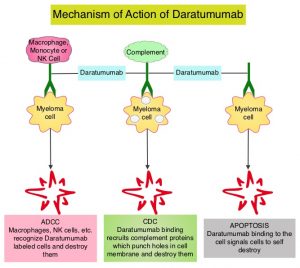
DARZALEX® is a human IgG1 antibody that targets CD38, a transmembrane glycoprotein abundantly expressed on malignant plasma cells and with low levels of expression on normal lymphoid and myeloid cells. DARZALEX® exerts its cytotoxic effect on myeloma cells by multiple mechanisms, including Antibody Dependent Cellular Cytotoxicity (ADCC), Complement Mediated Cytotoxicity and direct apoptosis. Additionally, DARZALEX® may have a role in immunomodulation by depleting CD38-positive regulator Immune suppressor cells, and thereby expanding T cells, in patients responding to therapy. DARZALEX® has activity as both a single agent and when combined with other standard regimens. POMALYST® (Pomalidomide) is a novel, oral, immunomodulatory drug which is far more potent than THALOMID® (Thalidomide) and REVLIMID®, and has been shown to be active in REVLIMID® and VELCADE® refractory patients. In the EQUULEUS Phase Ib study, intravenous DARZALEX® in combination with POMALYST® and Dexamethasone in relapsed or refractory Multiple Myeloma resulted in an Overall Response Rate (ORR) of 59% with Very Good Partial Response (VGPR) noted in 28% of patients, and Complete Response (CR) achieved in 6% of patients.

Recently published studies have concluded that the subcutaneous formulation of DARZALEX® resulted in non-inferior pharmacokinetics and efficacy compared to the current IV formulation, and also importantly offers the potential for a fixed-dose administration, shorter administration times and a lower rate of infusion-related reactions with improved safety profile.

APOLLO study is an open-label, randomized, multicenter, Phase III trial, conducted by the European Myeloma Network investigators, to evaluate SubCutaneous (SC) formulation of DARZALEX® in combination with POMALYST® (Pomalidomide) and Dexamethasone (D-Pd; N=151) versus POMALYST® (Pomalidomide) and Dexamethasone (Pd; N=153) alone in relapsed/refractory Multiple Myeloma patients who have received one or more prior lines of therapy including REVLIMID® (Lenalidomide) and a Proteasome Inhibitor. This study enrolled 304 patients with relapsed or refractory Multiple Myeloma, and prior treatment with anti-CD38 antibody or Pomalidomide was not permitted. Treatment for all patients consisted of POMALYST® 4 mg orally daily plus Dexamethasone 40 mg orally on days 1, 8, 15, and 22 (20 mg for patients aged 75 years or older), given every 28 days. Patients in the D-Pd group additionally received DARZALEX® 1800 mg SC co-formulated with recombinant human hyaluronidase PH20 (rHuPH20; ENHANZE® drug delivery technology, Halozyme, Inc.), given weekly for cycles 1 to 2, every 2 weeks for cycles 3 to 6, and every 4 weeks thereafter. The median age was 67 years, and 35% had high cytogenetic risk (presence of del17p, t[14;16], or t[4;14]). The median prior lines of therapy were 2, approximately 80% of patients were refractory to REVLIMID®, 48% of patients were refractory to a Proteosome Inhibitor, and 42% of patients were refractory to both agents. Treatment was continued until disease progression or unacceptable toxicity. The median duration of treatment was 11.5 months with D-Pd, compared with 6.6 months with Pd. The Primary endpoint was Progression Free Survival (PFS). Secondary endpoints included Overall Response Rate (ORR), Very Good Partial Response (VGPR), Complete Response (CR), MRD negativity rate, Overall Survival (OS), and Safety.

The study met its Primary endpoint of improved PFS in the primary analysis. The median PFS for the D-Pd group was 12.4 months versus 6.9 months for Pd group (HR=0.63; P=0.0018). This represented a 37% reduction in the risk of progression or death in patients treated with D-Pd. Among patients who were refractory to REVLIMID®, median PFS was 9.9 months in the D-Pd group versus 6.5 months in the Pd group. This benefit was seen across all subgroups of patients, regardless of age, stage, prior line of therapy, REVLIMID® refractoriness and cytogenetic risk. D-Pd regimen was also superior to Pd regimen in terms of other endpoints, including ORR (69% versus 46%), VGPR or better (51% versus 20%), CR (25% versus 4%), and MRD negativity (9% versus 2%). Survival data are immature and follow up is ongoing. Infusion-related events were rare, and seen in 6% of patients treated with D-Pd, and local injection-site reactions which were all Grade 1 were seen in 2% of patients in the D-Pd group. Treatment discontinuation due to treatment-related adverse events, were similar for the D-Pd and Pd groups (2% versus 3%).

It was concluded that Subcutaneous DARZALEX® given along with POMALYST® and Dexamethasone significantly reduced the risk of progression or death by 37% in patients with relapsed/refractory Multiple Myeloma, compared to POMALYST® and Dexamethasone alone. The infusion-related reaction rate was very low and median duration of injection administration was short at 5 minutes. Subcutaneous DARZALEX® thus has a high likelihood of changing clinical practice, increasing convenience for patients and decreasing treatment burden.

Apollo: Phase 3 Randomized Study of Subcutaneous Daratumumab Plus Pomalidomide and Dexamethasone (D-Pd) Versus Pomalidomide and Dexamethasone (Pd) Alone in Patients (Pts) with Relapsed/Refractory Multiple Myeloma (RRMM). Dimopoulos MA, Terpos E, Boccadoro M, et al. Presented at the 62nd ASH Annual Meeting and Exposition, 2020. Abstract 412.

FDA Approves DARZALEX® plus KYPROLIS® and Dexamethasone for Multiple Myeloma

SUMMARY: The FDA on August 20, 2020, approved KYPROLIS® (Carfilzomib) and DARZALEX® (Daratumumab), in combination with Dexamethasone, for adult patients with Relapsed or Refractory multiple myeloma, who have received one to three lines of therapy. Multiple Myeloma is a clonal disorder of plasma cells in the bone marrow and the American Cancer Society estimates that in the United States, 32, 270 new cases will be diagnosed in 2020 and 12,830 patients are expected to die of the disease. Multiple Myeloma (MM) in 2020 remains an incurable disease. The therapeutic goal therefore is to improve Progression Free Survival (PFS) and Overall Survival (OS). Multiple Myeloma is a disease of the elderly, with a median age at diagnosis of 69 years and characterized by intrinsic clonal heterogeneity. Almost all patients eventually will relapse, and patients with a high-risk cytogenetic profile or refractory disease have the worst outcomes. The median survival for patients with Myeloma is over 10 years.

REVLIMID® (Lenalidomide) in combination with VELCADE® (Bortezomib) and Dexamethasone is the preferred regimen according to the NCCN guidelines, for both transplant and non-transplant candidates with newly diagnosed Multiple Myeloma, and when given continuously or with maintenance therapy, has improved survival outcomes. Nonetheless, a significant number of patients progress while on these agents or discontinue therapy due to toxicities. There is therefore a need for effective and tolerable regimens for patients who are exposed or refractory to REVLIMID® or VELCADE®.Mechanism-of-Action-of-Daratumumab

KYPROLIS® (Carfilzomib) is a second generation selective, epoxyketone Proteasome Inhibitor and unlike VELCADE®, proteasome inhibition with KYPROLIS® is irreversible. DARZALEX® (Daratumumab) is a human IgG1 antibody that targets CD38, a transmembrane glycoprotein abundantly expressed on malignant plasma cells and with low levels of expression on normal lymphoid and myeloid cells. DARZALEX® exerts its cytotoxic effect on myeloma cells by multiple mechanisms, including Antibody Dependent Cellular Cytotoxicity (ADCC), Complement Dependent Cytotoxicity (CDC) and direct Apoptosis. Additionally, DARZALEX® may play a role in immunomodulation, by depleting CD38-positive regulator immune suppressor cells, and thereby expanding T cells, in patients responding to therapy. Both KYPROLIS® and DARZALEX® are approved as single agents, as well as in combination with other drugs, for the treatment of patients with Relapsed/Refractory Multiple Myeloma. In a Phase I study, KYPROLIS® in combination with Dexamethasone and DARZALEX® demonstrated safety and efficacy in patients Relapsed/Refractory Multiple Myeloma.

The efficacy of KYPROLIS® and DARZALEX® along with Dexamethasone was evaluated in two clinical trials, CANDOR and EQUULEUS. CANDOR is a multicenter, open-label, Phase III trial, which included Relapsed/Refractory Multiple Myeloma patients with measurable disease who had received 1-3 prior lines of therapy, with Partial Response or better to one or more lines of therapy. A total of 466 patients were randomly assigned 2:1 to receive triplet of KYPROLIS®, Dexamethasone, and DARZALEX® (KdD)- N=312 or KYPROLIS® and Dexamethasone (Kd) alone- N=154. All patients received KYPROLIS® as a 30 minute IV infusion on days 1, 2, 8, 9, 15, and 16 of each 28-day cycle (20 mg/m2 on days 1 and 2 during cycle 1 and 56 mg/m2 thereafter). DARZALEX® 8 mg/kg was administered IV on days 1 and 2 of cycle 1 and at 16 mg/kg once weekly for the remaining doses of the first 2 cycles, then every 2 weeks for 4 cycles (cycles 3-6), and every 4 weeks thereafter. All patients received Dexamethasone 40 mg oral or IV weekly (20 mg for patients over 75 years of age). The median age was 64 years, 42% and 90% received prior REVLIMID® and VELCADE® (Bortezomib) containing regimens respectively, and a third of patients were refractory to REVLIMID®. The Primary endpoint was Progression Free Survival (PFS) and Secondary endpoints included Overall Response Rate (ORR), Minimal Residual Disease (MRD)-negative status, Complete Response (CR) rate at 12 months, Overall Survival (OS), Duration of Response, and Safety.

After a median follow up of 17 months, the study met its Primary endpoint and the median PFS was not reached for the KdD arm and was 15.8 months for the Kd arm (HR=0.63; P=0.0027). This represented a 37% reduction in the risk of progression or death in the KdD group. The PFS benefit of KdD was maintained across prespecified subgroups, particularly among REVLIMID®-exposed and REVLIMID®-refractory patients. The ORR was 84.3% in the KdD group versus 74.7% in the Kd group (P=0.004), with a CR rate or better of 28.5% versus 10.4% respectively. The median time to first response was one month in both treatment groups. Patients treated with KdD achieved deeper responses which was nearly 10 times higher, with a MRD-negative Complete Response rate at 12 months of 12.5% for KdD versus 1.3% for Kd (P<0.0001). The median treatment duration was longer in the KdD group compared to the Kd group (70.1 versus 40.3 wks). The median OS was not reached in either groups, at a median follow up time of 17 months. Toxicities were generally manageable and the incidence of Adverse Events leading to treatment discontinuation was similar in both treatment groups.

EQUULEUS is an open label, multicohort trial which evaluated the combination of KYPROLIS® administered weekly on days 1, 8, and 15 of each 28-day cycle (20 mg/m2 IV on cycle 1, day 1, and if tolerated, increased to 70 mg/m2 on Cycle 1 Day 8 and thereafter) along with DARZALEX® IV and Dexamethasone (KdD). Efficacy was based on Overall Response Rate (ORR). Of the 85 patients with Relapsed or Refractory multiple myeloma who had received 1 to 3 prior lines of therapy enrolled in the KdD cohort, the ORR was 81%, with response duration of 27.5 months.

It was concluded that a combination of KYPROLIS® along with Dexamethasone and DARZALEX® resulted in a significant PFS benefit over KYPROLIS® and Dexamethasone alone, with deeper responses, and the PFS benefit of KdD was maintained across prespecified, clinically important subgroups, particularly REVLIMID®-exposed and REVLIMID®-refractory patients. The authors added that KdD regimen should be considered as a novel, efficacious, and tolerable immunomodulatory-free treatment option for Relapsed/Refractory Multiple Myeloma patients.

Carfilzomib, dexamethasone, and daratumumab versus carfilzomib and dexamethasone for patients with relapsed or refractory multiple myeloma (CANDOR): results from a randomised, multicentre, open-label, phase 3 study. Dimopoulos M, Quach H, Mateos M-V, et al. The Lancet 2020;396:186-197.