New NCCN Guidelines for the Diagnosis and Treatment of Multiple Myeloma

SUMMARY: Multiple Myeloma is a clonal disorder of plasma cells in the bone marrow and the American Cancer Society estimates that in the United States, about 30,330 new cases will be diagnosed in 2016 and 12,650 patients will die of the disease. Multiple Myeloma is a disease of the elderly, with a median age at diagnosis of 69 years and characterized by intrinsic clonal heterogeneity. With a record number of regulatory approvals for Myeloma treatment over the past 12 years, the median survival for patients with Myeloma is over 10 years. The recent new drugs approved for the treatment of relapsed/refractory Multiple Myeloma include a Histone Decetylase inhibitor (FARYDAK®) and 2 monoclonal antibodies, Daratumumab (DARZALEX®) and Elotuzumab (EMPLICITI®). The two most important determinants of Myeloma patient outcomes include, Performance Status and tumor genomics. Performance Status can be assessed using currently validated instruments and patients can be defined as Fit, Intermediate Fit, or Frail. Patients with chromosomal abnormalities t(4;14), t(14;16), t(14;20) or del 17p are considered to fall in the high risk group.
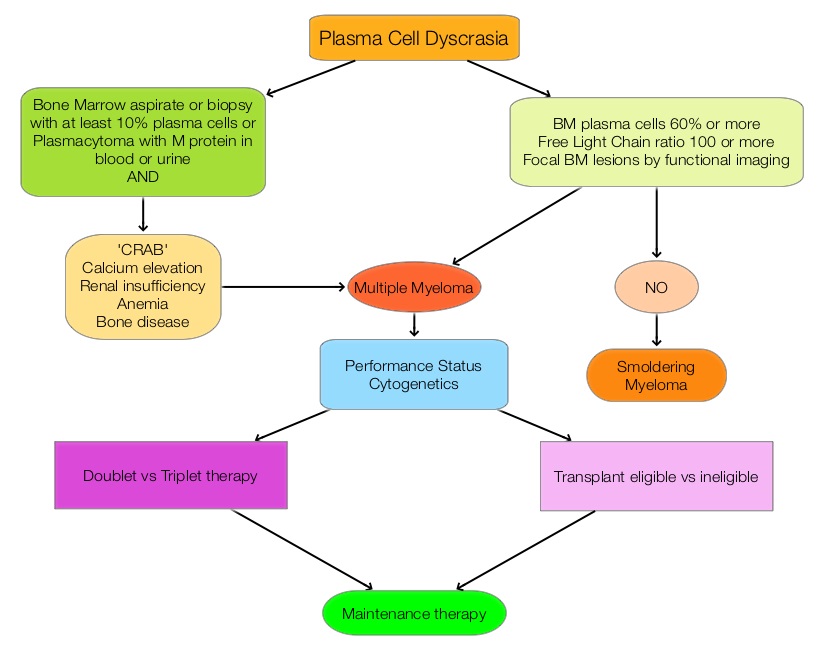
The updated Multiple Myeloma guidelines were presented at the National Comprehensive Cancer Network (NCCN) 21st Annual Conference on April 1, 2016. These guidelines include the use of the Revised International Staging System for Multiple Myeloma, treatment of asymptomatic patients even if they do not fit the CRAB criteria (Calcium elevation, Renal insufficiency, Anemia, or Bone abnormalities) and incorporation of a triplet instead of doublet for newly diagnosed Fit Myeloma patients, regardless of transplant eligibility.

Revised International Staging System for Multiple Myeloma

The revised ISS (R-ISS) combines the International Staging System (ISS) with chromosomal abnormalities detected by interphase Fluorescent In Situ Hybridization after CD138 plasma cell purification and serum Lactate DeHydrogenase (LDH).

R-ISS I: ISS stage I (serum β2-microglobulin level less than 3.5 mg/L and serum albumin level 3.5 g/dL or more), absence of high risk cytogenetics and normal LDH level (less than the upper limit of normal range)

R-ISS III: ISS stage III (serum β2-microglobulin level more than 5.5 mg/L) and high-risk cytogenetics or high LDH level

R-ISS II: Includes all the other possible combinations

New Definition of Active MM in Asymptomatic Patients Qualifying for Treatment

• Bone marrow plasmacytosis 60% or more

• Abnormal free light chain ratio 100 or more (involved kappa) or less than 0.01 (involved lambda)

• Focal bone marrow lesions detected by functional imaging such as a PET scan or a MRI

New Treatment Options

For newly diagnosed patients, who are transplant candidates or Fit non-transplant candidates, Lenalidomide/Bortezomib/Dexamethasone should be incorporated as the preferred regimen based on a phase III randomized trial showing superiority of this triplet therapy over a doublet. This triplet improved Complete Response (CR) rates (including molecular CR), Progression Free Survival (PFS), and Overall Survival (OS) compared with Lenalidomide/Dexamethasone doublet. (Blood. 2015;126:25). Another all oral triplet included in the guidelines is a combination of Lenalidomide, Ixazomib and Dexamethasone. Ixazomib (NINLARO®) is an oral proteasome inhibitor and has a half-life of 3 to 4 days and requires only once weekly administration. The combination of Carfilzomib/Lenalidomide, and Dexamethasone was included in the new guidelines as a category 2A front-line treatment, based on a phase 1/2 study (Blood. 2012;120:1801-1809). Maintenance therapy is now considered standard of care regardless of transplantation and for newly diagnosed non-transplant candidates, a new standard of care is continuous Lenalidomide/Dexamethasone, which was found to improve PFS significantly, with a favorable safety profile (N Engl J Med. 2014;371:906-917). Three drug maintenance therapy may benefit high risk patients and should be considered.

In conclusion, these latest updates reflect the rapid advances in the diagnosis and treatment of Multiple Myeloma. National Comprehensive Cancer Network (NCCN) 21st Annual Conference. Presented April 1, 2016, Hollywood, FL.
EMPLICITI® (Elotuzumab)

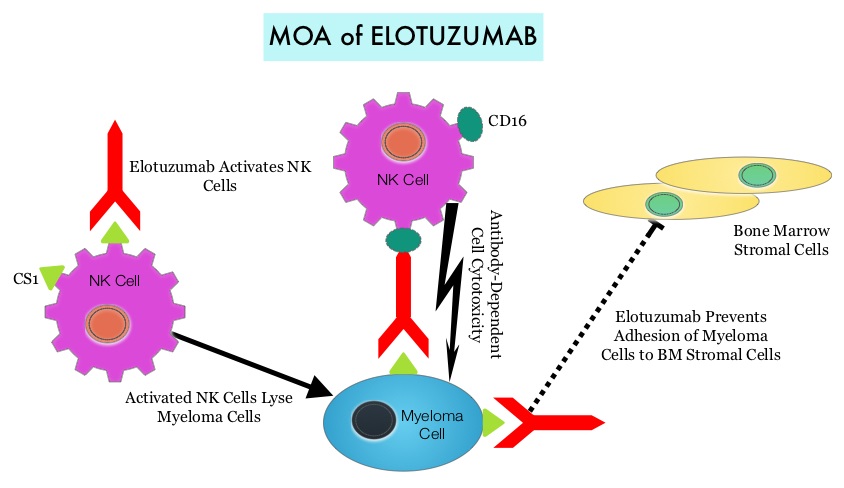
The FDA on November 30, 2015 approved EMPLICITI® in combination with Lenalidomide and Dexamethasone for the treatment of patients with Multiple Myeloma who have received one to three prior therapies. EMPLICITI® is a product of Bristol-Myers Squibb Company.

First Oral Triplet Combination – NINLARO®, REVLIMID® and Dexamethasone for Multiple Myeloma

SUMMARY: Multiple Myeloma is a clonal disorder of plasma cells in the bone marrow and the American Cancer Society estimates that in the United States, about 30,330 new cases will be diagnosed in 2016 and 12,650 patients will die of the disease. Proteasomes are enzymes found in cells and they enable the breakdown of abnormal or mutant proteins. The amino acids from these proteins are recycled to make new proteins. Myeloma cells depend on the proteasomes to facilitate this metabolic function, to regulate their growth and survival. NINLARO® (Ixazomib) unlike VELCADE® (Bortezomib) is a second generation, oral, proteasome inhibitor, which disrupts protein metabolism in Myeloma cells, by inhibiting proteasomes and has an antiproliferative and pro-apoptotic effect.

The approval of NINLARO® was based a pivotal, multicenter, randomized, double-blind, placebo-controlled, phase III trial (TOURMALINE-MM1 study), in which 722 patients with Multiple Myeloma were randomized in a 1:1 ratio to receive either a combination of NINLARO®, REVLIMID® and Dexamethasone (N=360) or a combination of Placebo, REVLIMID® and Dexamethasone (n=362). NINLARO® was administered at 4 mg PO on days 1, 8, and 15 in combination with REVLIMID® 25 mg PO on days 1 thru 21 and Dexamethasone 40 mg PO on days 1, 8, 15, and 22 of a 28 day treatment cycle. Treatment was continued until disease progression or unacceptable toxicity. Enrolled patients had received 1 to 3 prior lines of therapy, which included VELCADE® (69%), THALOMID® (45%), and REVLIMID® (12%) and 77% of the patients had relapsed Multiple Myeloma. The median age of patients was 66 years. The primary end point of the study was Progression Free survival (PFS) and secondary endpoints included Objective Response Rate (ORR), safety, and Overall Survival.

At a median follow-up of 14.7 months, the PFS with the combination of NINLARO®, REVLIMID® and Dexamethasone was 20.6 months compared with 14.7 months for the combination group of Placebo, REVLIMID® and Dexamethasone (HR= 0.74, P=0.01). This benefit in the NINLARO® group, was noted in all prespecified patient subgroups, including those with high risk cytogenetic abnormalities. The Objective Response Rate was 78% in the NINLARO® group and 72% in the placebo group, and the Complete Response plus Very Good Partial Response in these two treatment groups were 48% and 39% respectively. The median time to response was 1.1 months in the NINLARO® group and 1.9 months in the placebo group and the median duration of response was 20.5 months and 15.0 months respectively. At a median follow up of 23 months, the Overall Survival has not been reached in either study group. Serious adverse events (at least grade 3) were similar in the two study groups (47% in the NINLARO® group and 49% in the placebo group). Patients in the NINLARO® group experienced more adverse events such as thrombocytopenia, vomiting, diarrhea, peripheral neuropathy and skin rash. However, patient-reported Quality of Life was similar in both treatment groups.

The authors concluded that NINLARO® based oral triplet therapy significantly prolonged Progression Free Survival compared with REVLIMID® and Dexamethasone, in patients with relapsed/refractory Multiple Myeloma, with acceptable toxicities. Studies are underway, evaluating NINLARO® in newly diagnosed Myeloma patients as well as maintenance therapy in non-transplant patients. Oral Ixazomib, Lenalidomide, and Dexamethasone for Multiple Myeloma. Moreau P, Masszi T, Grzasko N, et al. N Engl J Med 2016; 374:1621-1634

NINLARO® (Ixazomib)

The FDA on November 20, 2015 approved NINLARO® in combination with Lenalidomide and Dexamethasone for the treatment of patients with multiple myeloma who have received at least one prior therapy. NINLARO® is the first approved oral proteasome inhibitor and is a product of Millennium Pharmaceuticals, Inc., a wholly owned subsidiary of Takeda Pharmaceutical Company Limited.

DARZALEX® (Daratumumab)

The FDA on November 16, 2015 granted accelerated approval to DARZALEX®, administered as a single agent, for the treatment of patients with multiple myeloma who have received at least three prior lines of therapy, including a Proteasome Inhibitor (PI) and an immunomodulatory agent, or who are double-refractory to a PI and an immunomodulatory agent. DARZALEX® is a product of Janssen Biotech, Inc.

Continuous Therapy Significantly Improves Outcomes compared to Fixed Duration of Therapy in Patients with Newly Diagnosed Multiple Myeloma

SUMMARY: Multiple Myeloma is a clonal disorder of plasma cells in the bone marrow and the American Cancer Society estimates that in the United States, close to 27,000 new cases will be diagnosed in 2015 and 11,240 will die of the disease. Maintenance or Continuous Treatment in patients with newly diagnosed multiple myeloma following induction and consolidation, can result in significantly longer Progression Free Survival (PFS) and Overall Survival (OS), compared to those patients who receive therapy for a fixed duration of time. Not all studies however, have shown Overall Survival benefit. It has been hypothesized that Continuous Treatment could result in resistance to therapy which in turn could reduce the duration of subsequent remission after first relapse and negatively impact overall survival.To address this controversy, the authors conducted a pooled analysis of the outcomes of three randomized phase III trials, coordinated by the same principal investigator, designed to compare Continuous Treatment to Fixed Duration Therapy, in patients with newly diagnosed multiple myeloma.

In trial RV-MM-209, patients were randomized to either induction with Lenolidomide (REVLIMID®), followed by consolidation and subsequent maintenance with REVLIMID® (Continuous Treatment) or Fixed Duration Therapy which entailed REVLIMID® based induction followed by consolidation but no maintenance therapy. In the GIMEMA0305 trial, the randomization was between Bortezomib (VELCADE®) based induction followed by maintenance treatment (Continuous Treatment) and VELCADE® induction, with no maintenance treatment (Fixed Duration Therapy). In the CC-5013-MM-015 study, the comparison was between REVLIMID® in combination with Melphalan and Prednisone followed by REVLIMID® maintenance until disease progression and placebo given along with Melphalan and Prednisone.

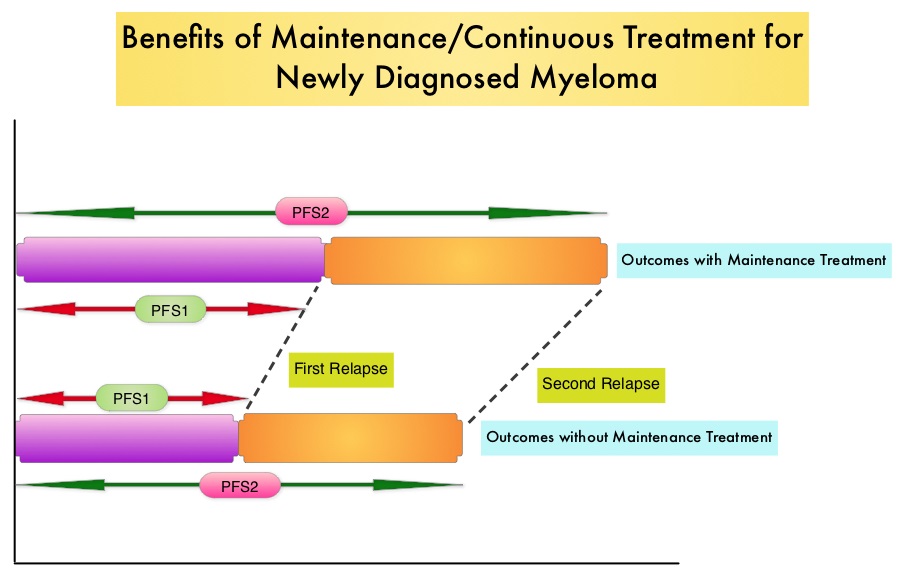
The trial investigators assessed PFS1 as the time from diagnosis to the occurrence of 1st relapse, PFS2 as time from diagnosis to the occurrence of 2nd relapse and Overall Survival as time from diagnosis to death , incorporating the duration of both 1st and 2nd remission. They then evaluated PFS1, PFS2 and OS, in newly diagnosed multiple myeloma patients who received Continuous Therapy or Fixed Duration Therapy. In this pooled analysis of three trials, 604 patients were randomized to Continuous Treatment and 614 patients were randomized to Fixed Duration Therapy. Four hundred and seventeen (N=417) in the Continuous Therapy group and 410 patients in the Fixed Duration Therapy group were eligible for comparative analysis. The median follow up was 52 months.

Patients receiving Continuous Treatment had significantly prolonged PFS1 (median 32 months versus 16 months; HR=0.47; P<0.001), PFS2 (median 55 months versus 40 months; HR=0.61; P=0.001) and OS (4 year OS 69% versus 60%; HR=0.69; P=0.003), when compared with Fixed Dose Therapy. The authors evaluated the PFS and OS from first relapse to second relapse and from first relapse to death respectively, and they noted that the outcomes were similar among patients who received Continuous Treatment or Fixed Dose Therapy following initial diagnosis.

The authors concluded that Continuous Treatment significantly improved PFS1, PFS2, and OS and findings from this pooled analysis suggested that the clinical benefit observed during first remission was not negated by a shorter second remission and Continuous Treatment did not induce tumor resistance. Continuous Treatment may be essential, as patients with multiple myeloma will always have some residual disease. It should be noted that certain institutions including the Mayo Clinic cap Continuous/Maintenance treatment at approximately 2 years, due to the lack of randomized comparative data, on the value of prolonged maintenance beyond 2 years. Continuous Therapy Versus Fixed Duration of Therapy in Patients With Newly Diagnosed Multiple Myeloma. Palumbo A, Gay F, Cavallo F, et al. J Clin Oncol 2015;33:3459-3466

FDA Approves First Oral Triplet Combination (NINLARO®, REVLIMID® and Dexamethasone) for Multiple Myeloma

SUMMARY: The FDA on November 20, 2015, approved NINLARO® (Ixazomib) in combination with REVLIMID® (Lenalidomide) and Dexamethasone for the treatment of patients with Multiple Myeloma who have received at least one prior therapy. Multiple Myeloma is a clonal disorder of plasma cells in the bone marrow and the American Cancer Society estimates that in the United States, close to 27,000 new cases will be diagnosed in 2015 and 11,240 will die of the disease. Proteasomes are enzymes found in cells and they enable the breakdown of abnormal or mutant proteins. The amino acids from these proteins are recycled to make new proteins. Myeloma cells depend on the proteasomes to facilitate this metabolic function, to regulate their growth and survival. NINLARO® (Ixazomib) unlike VELCADE® (Bortezomib), is a second generation, oral, proteasome inhibitor, which disrupts protein metabolism in Myeloma cells, by inhibiting proteasomes and has an antiproliferative and pro-apoptotic effect.

The approval of NINLARO® was based a pivotal, multicenter, randomized, double-blind, placebo-controlled, phase III trial (TOURMALINE-MM1 study), in which 722 patients with Multiple Myeloma were randomized in a 1:1 ratio to receive either a combination of NINLARO®, REVLIMID® and Dexamethasone (N=360) or a combination of Placebo, REVLIMID® and Dexamethasone (n=362). NINLARO® was administered at 4 mg PO on days 1, 8, and 15 in combination with REVLIMID® 25 mg PO on days 1 thru 21 and Dexamethasone 40 mg PO on days 1, 8, 15, and 22 of a 28 day treatment cycle. Treatment was continued until disease progression or unacceptable toxicity. Enrolled patients had received 1 to 3 prior lines of therapy, which included VELCADE® (69%), THALOMID® (45%), and REVLIMID® (12%) and 77% of the patients had relapsed Multiple Myeloma. The median age of patients was 66 years. The primary end point of the study was Progression Free survival (PFS) and secondary endpoints included Objective Response Rate (ORR), safety, and Overall Survival.

At a prespecified interim analysis, the median PFS with the combination arm of NINLARO®, REVLIMID® and Dexamethasone was 20.6 months compared with 14.7 months for the combination group of Placebo, REVLIMID® and Dexamethasone (HR= 0.74, P=0.012).Secondary end points data was not mature at the time of this analysis. Patients in the NINLARO® group experienced more adverse events which included cytopenias, vomiting, diarrhea, peripheral neuropathy and skin rash.

The authors concluded that NINLARO® based oral triplet therapy significantly prolonged Progression Free Survival compared with REVLIMID® and Dexamethasone, with acceptable toxicities. Studies are underway, evaluating NINLARO® in newly diagnosed Myeloma patients as well as maintenance therapy in non-transplant patients. Ixazomib, an Investigational Oral Proteasome Inhibitor (PI), in Combination with Lenalidomide and Dexamethasone (IRd), Significantly Extends Progression-Free Survival (PFS) for Patients (Pts) with Relapsed and/or Refractory Multiple Myeloma (RRMM): The Phase 3 Tourmaline-MM1 Study (NCT01564537). Moreau P, Masszi T, Grzasko N, et al. 2015 ASH Annual Meeting; Orlando, FL; December 5-8, 2015. Abstract 727.

Targeting CD38 with Daratumumab Monotherapy in Multiple Myeloma

SUMMARY: The FDA recently assigned a priority review designation to Daratumumab, as a treatment for patients with double refractory Myeloma. Multiple Myeloma is a clonal disorder of plasma cells in the bone marrow and the American Cancer Society estimates that in the United States, close to 27,000 new cases will be diagnosed in 2015 and 11,240 will die of the disease. The choice of first line therapy for patients with Myeloma may depend on transplant eligibility, comorbid conditions, cytogenetics and patient performance status. Following progression on first line therapy, single agent therapy with KYPROLIS® (Carfilzomib) has an Objective Response Rate of 24%, with a median duration of response of 7.4 months, in patient groups refractory to both VELCADE® (Bortezomib) and REVLIMID® (Lenalidomide). POMALYST® (Pomalidomide) in combination with Dexamethasone is superior to high dose Dexamethasone alone, with a significant improvement in the Progression Free Survival and Overall Survival, in patients with relapsed and refractory Multiple Myeloma. More recently, data became available for three triplet regimens in patients with relapsed Myeloma – 1) The addition of KYPROLIS® to REVLIMID® and Dexamethasone resulted in significant improvement in Progression Free Survival, when compared with REVLIMID® and Dexamethasone alone, in patients with relapsed Multiple Myeloma 2) A combination of FARYDAK® (Panobinostat), a histone deacetylase (HDAC) inhibitor, VELCADE® and Dexamethasone significantly improves Progression Free Survival in patients with relapsed and refractory Multiple Myeloma when compared to VELCADE® and Dexamethasone 3) Elotuzumab (HuLuc63), a monoclonal antibody that binds to the Signal Lymphocyte Activation Molecule – SLAMF7 protein (CS1, CD319), when added to REVLIMID® and Dexamethasone, reduced the risk of disease progression by 30% in patients with Relapsed/Refractory Multiple Myeloma, when compared with REVLIMID® and Dexamethasone.

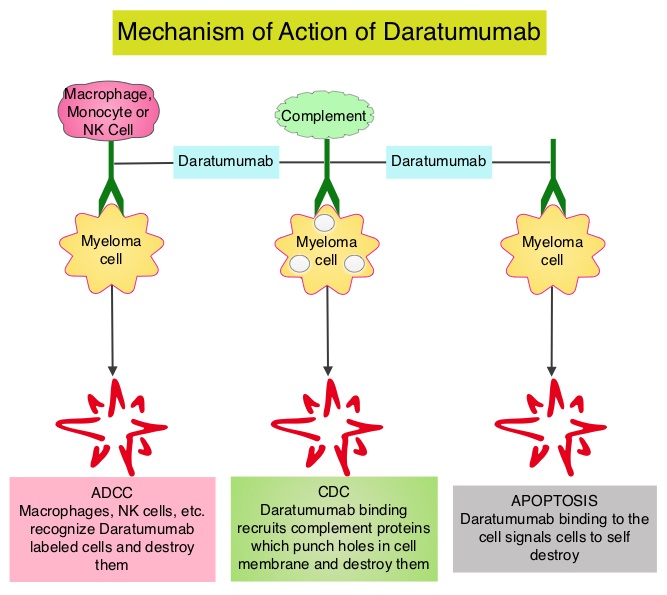
Daratumumab is a human IgG1 antibody that targets CD38, a transmembrane glycoprotein abundantly expressed on malignant plasma cells and with low levels of expression on normal lymphoid and myeloid cells. Daratumumab exerts its cytotoxic effect on myeloma cells by multiple mechanisms, including Antibody Dependent Cellular Cytotoxicity (ADCC), complement mediated cytotoxicity and direct apoptosis. Based on the anti-myeloma activity of Daratumumab in preclinical studies, a phase 1–2 clinical trial was conducted which involved patients with relapsed and refractory Myeloma, who were refractory to two or more prior lines of therapy. Patients in this study had received a median of four previous lines of therapy, 79% of the patients had disease that was refractory to their most recent therapy, including proteasome inhibitors and immunomodulators and 76% of the patients had also undergone autologous stem cell transplantation. This trial included a dose-expansion phase in which 30 patients received Daratumumab 8 mg/kg and 42 patients received 16 mg/kg, given once weekly for 8 doses, twice monthly for 8 doses, and monthly for up to 24 months. The primary end point was safety determined by frequency and severity of adverse events. Secondary end points included Objective Response Rate, duration of response, time to disease progression, Progression Free Survival, Overall Survival and pharmacokinetics.

It was noted that in the cohort that received Daratumumab 16 mg/kg, the overall response rate was 36% with a median Progression Free Survival of 5.6 months and 65% of the patients who had a response did not have disease progression at 12 months.

Infusion related reactions were mild and only 1% had grade 3 events. The other most common adverse events were pneumonia and thrombocytopenia. The authors concluded that Daratumumab has significant single agent activity in a very heavily pretreated and refractory Myeloma patient population, with a favorable safety profile. It remains to be seen if Daratumumab will be an important component of the induction, consolidation and maintenance phases, in the Myeloma treatment landscape. Targeting CD38 with Daratumumab Monotherapy in Multiple Myeloma. Lokhorst HM, Plesner T, Laubach JP, et al. N Engl J Med 2015; 373:1207-1219

KYPROLIS® (Carfilzomib)

The FDA on July 24, 2015 approved KYPROLIS® in combination with REVLIMID® (Lenalidomide) and Dexamethasone for the treatment of patients with relapsed multiple myeloma, who had received one to three prior lines of therapy. KYPROLIS® is a product of Onyx Pharmaceuticals, Inc., an Amgen subsidiary.

Monoclonal Antibody Combination Significantly Improves Progression Free Survival in Relapsed and Refractory Multiple Myeloma

SUMMARY: Multiple Myeloma is a clonal disorder of plasma cells in the bone marrow and the American Cancer Society estimates that in the United States, close to 27,000 new cases will be diagnosed in 2015 and 11,240 will die of the disease. REVLIMID® (Lenalidomide) given along with weekly Dexamethasone, was associated with significantly improved Progression Free Survival (PFS) when administered until disease progression, in patients with newly diagnosed Multiple Myeloma. This combination of REVLIMID® and weekly Dexamethasone is considered a reference regimen (Control arm) for both newly diagnosed and relapsed Multiple Myeloma. Elotuzumab (HuLuc63) is a monoclonal antibody that binds to the Signal Lymphocyte Activation Molecule – SLAMF7 protein (CS1, CD319), which is highly expressed on Myeloma cells and also expressed on Natural Killer (NK) lymphocytes in the immune system. By virtue of its dual mechanism of action, it targets and destroys Myeloma cells and also enhances the activation of Natural Killer cells. Previously published phase Ib/II study, has shown encouraging activity, when Elotuzumab was combined with REVLIMID® and Dexamethasone, in patients with Relapsed/Refractory Multiple Myeloma (RRMM). ELOQUENT-2 is an open-label phase III trial in which 646 patients with Relapsed/Refractory Multiple Myeloma were randomized in a 1:1 ratio to receive Elotuzumab in combination with REVLIMID® and Dexamethasone (N=321) or REVLIMID® and Dexamethasone alone (N=325). Enrolled patients had 1–3 prior therapies and were not REVLIMID® refractory. Prior therapies included VELCADE® (Bortezomib), THALOMID® (Thalidomide) and REVLIMID®. Approximately 35% of the enrollees were refractory to the last therapy, 32% had del(17p) and 9% had t(4;14). The median age was 66 years. Elotuzumab was administered at 10 mg/kg IV weekly for the first two cycles and then once every 2 weeks thereafter. REVLIMID® was given at 25 mg orally on days 1 thru 21 of each cycle along with Dexamethasone 40 mg weekly. In the Elotuzumab group, Dexamethasone was dosed at 28 mg orally plus 8 mg IV on the weeks when Elotuzumab was administered. The cycle duration was 28 days. Treatment was administered until disease progression or unacceptable toxicity. Primary endpoints were Progression Free Survival (PFS) and Overall Response Rate (ORR). At a median follow up of 24 months, PFS in the Elotuzumab group was 19.4 months compared to 14.9 months in the REVLIMID®/Dexamethasone alone group (HR=0.70; P=0.0004). The 1-year PFS for the Elotuzumab versus control group was 68% vs 57% respectively and the 2-year PFS was 41% vs 27%. This benefit was seen across all subgroups including those with unfavorable cytogenetics. The ORR was 79% in the Elotuzumab group and 66% in the control group. (P = 0.0002). At the time of this interim analysis, more patients in the Elotuzumab group remained on therapy (35%) compared to the control group (21%) and treatment discontinuation was mainly for disease progression. Grade 3–4 toxicities occurred in 15% or more patients in the Elotuzumab group and included neutropenia and anemia. The authors concluded that Elotuzumab with its novel immunotherapeutic mechanism of action, when added to REVLIMID® and Dexamethasone, reduced the risk of disease progression by 30% in patients with Relapsed/Refractory MultipleMyeloma, and this was accomplished with manageable toxicities. Patients in this study are being followed up for long term outcomes including Overall Survival. Lonial S, Dimopoulos MA, Palumbo A, et al. ELOQUENT-2: A phase III, randomized, open-label study of lenalidomide (Len)/dexamethasone (dex) with/without elotuzumab (Elo) in patients (pts) with relapsed/refractory multiple myeloma (RRMM). J Clin Oncol. 2015;(suppl; abstr 8508).</s