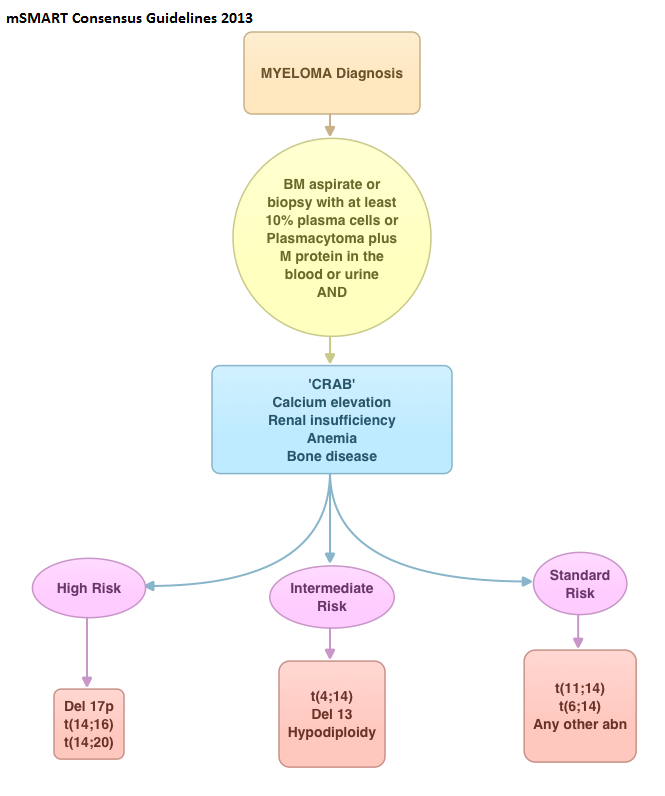
SUMMARY: The FDA on May 7, 2018 approved DARZALEX® (Daratumumab) in combination with VELCADE® (Bortezomib), a proteasome inhibitor, Melphalan, an alkylating agent and Prednisone VMP regimen), for the treatment of patients with newly diagnosed multiple myeloma who are ineligible for Autologous Stem Cell Transplant (ASCT). Multiple Myeloma is a clonal disorder of plasma cells in the bone marrow and the American Cancer Society estimates that in the United States, 30,770 new cases will be diagnosed in 2018 and 12,770 patients are expected to die of the disease. Multiple Myeloma in 2018 remains an incurable disease. The therapeutic goal therefore is to improve Progression Free Survival (PFS) and Overall Survival (OS). With a record number of regulatory approvals for myeloma treatment over the past 12 years, the median survival for patients with myeloma is over 10 years.
The incidence of multiple myeloma increases with age and the median age of patients diagnosed with multiple myeloma is approximately 70 yrs. Elderly patients with myeloma in the US are often treated with a combination of REVLIMID® (Lenalidomide) and Dexamethasone, whereas Melphalan, Prednisone, and Thalidomide (MPT) and VELCADE® (Bortezomib), Melphalan and Prednisone (VMP) are the most widely used regimens outside the US. These regimens are associated with a PFS of 18-24 months and an OS of 4-5 years. For patients with newly diagnosed multiple myeloma who are ineligible for ASCT, treatment with VMP regimen has been a standard effective regimen, based on the VISTA (Velcade as Initial Standard Therapy in Multiple Myeloma: Assessment with Melphalan and Prednisone) trial.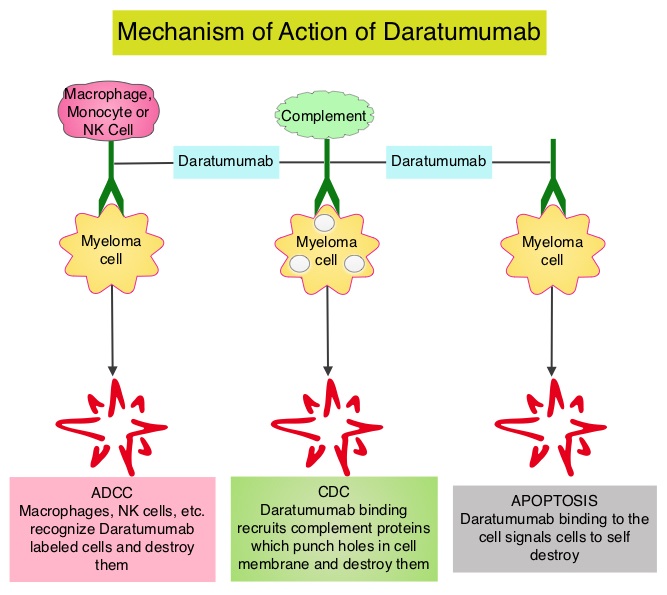
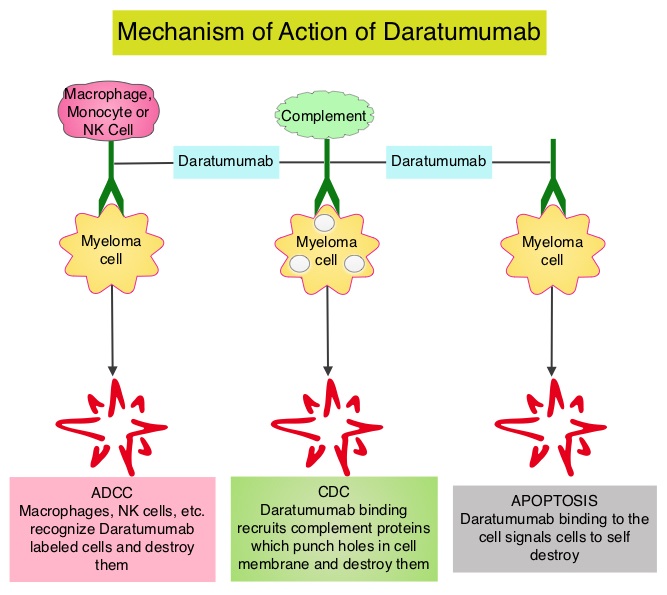
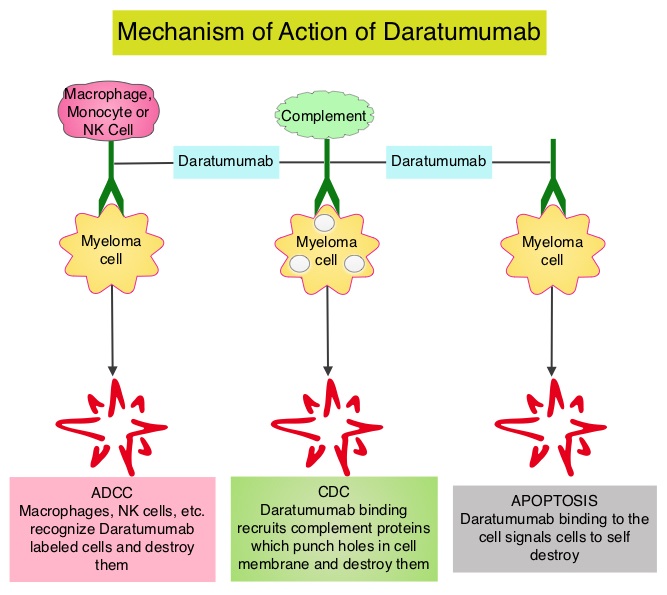
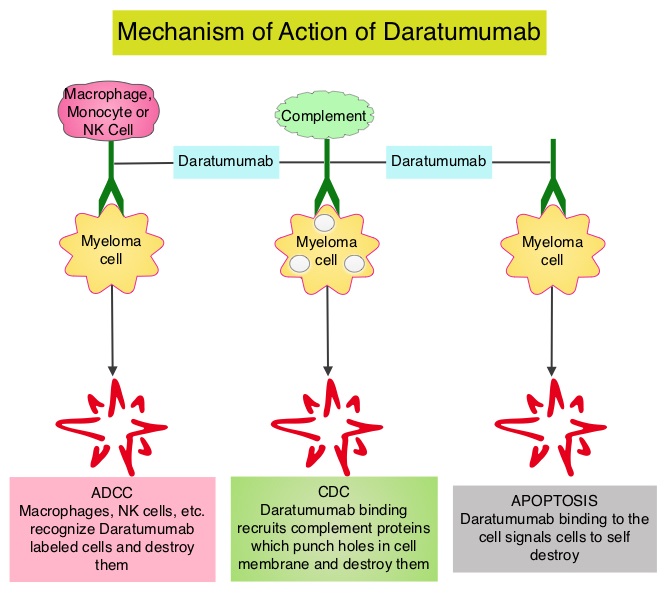
DARZALEX® (Daratumumab) is a human IgG1 antibody that targets CD38, a transmembrane glycoprotein abundantly expressed on malignant plasma cells and with low levels of expression on normal lymphoid and myeloid cells. DARZALEX® exerts its cytotoxic effect on myeloma cells by multiple mechanisms, including Antibody Dependent Cellular Cytotoxicity (ADCC), Complement Dependent Cytotoxicity (CDC) and direct Apoptosis. Additionally, DARZALEX® may have a role in immunomodulation, by depleting CD38-positive regulator immune suppressor cells, and thereby expanding T cells, in patients responding to therapy. In previously treated patients with myeloma, DARZALEX® in combination with REVLIMID® and Dexamethasone (POLLUX trial) as well as in combination with VELCADE® and Dexamethasone (CASTOR trial), induced higher Response Rates and significantly prolonged PFS, reducing the risk of disease progression or death by over 60% in previously treated myeloma patients.
ALCYONE is a multicenter, randomized, open-label, active-controlled, phase III trial in which DARZALEX® given along with VELCADE®, Melphalan and Prednisone (VMP regimen) was compared with VMP alone (control group), in patients with newly diagnosed multiple myeloma, who were ineligible for Autologous Stem Cell Transplantation (ASCT). Of the 706 enrolled patients, 350 were assigned to the DARZALEX® group and 356 to the control group. The median age was 71 yrs. All the patients received up to nine 6 week cycles of VELCADE® 1.3 mg/m2 SQ, twice weekly on weeks 1, 2, 4, and 5 of cycle 1 and once weekly on weeks 1, 2, 4, and 5 of cycles 2-9), Melphalan 9 mg/m2 orally, once daily on days 1-4 of each cycle, and Prednisone 60 mg/m2 once daily on days 1-4 of each cycle. In the study group, patients received DARZALEX® 16 mg/kg IV administered with Dexamethasone 20 mg oral or IV (to manage infusion reactions), once weekly for a total of 6 doses, every 3 weeks for a total of 16 doses and every 4 weeks thereafter until disease progression or unacceptable toxicity. The Primary end point was PFS. Secondary end points included Overall Response Rate, rates of Very Good Partial Response, Complete Response rate, Minimal Residual Disease negativity and Overall Survival.
At a median follow up of 16.5 months in a prespecified interim analysis, the 18-month PFS was 71.6% in the DARZALEX® group and 50.2% in the control group (HR=0.50; P<0.001). This meant a 50% reduction in the risk of disease progression or death when DARZALEX® was added to VMP regimen. The median PFS for DARZALEX® plus VMP had not yet been reached, compared to a median PFS of 18.1 months for patients who received VMP alone. The Overall Response Rate was 90.9% in the DARZALEX® group, as compared with 73.9% in the control group (P<0.001), and the rate of Complete Response or better (including stringent Complete Response) was 42.6%, versus 24.4% (P<0.001). In the DARZALEX® group, 22.3% of the patients were negative for Minimal Residual Disease (at a threshold of 1 tumor cell per 105 white cells), as compared with 6.2% of those in the control group (P<0.001). The most common adverse events were cytopenias noted in both treatment groups, and with the exception of infections (23% versus 15%), combining DARZALEX® with VMP regimen did not increase overall toxicities. DARZALEX® associated infusion-related reactions occurred in 28% of the patients.
It was concluded that DARZALEX® is the first monoclonal antibody approved for newly diagnosed multiple myeloma patients who are not eligible for a Autologous Stem Cell Transplant, and in combination with VMP regimen significantly improved Progression Free Survival and Response Rates. Daratumumab plus Bortezomib, Melphalan, and Prednisone for Untreated Myeloma. Mateos MV, Dimopoulos MA, Cavo M, et al. for the ALCYONE Trial Investigators. N Engl J Med 2018; 378:518-528