FDA Approves ENJAYMO® for Cold Agglutinin Disease

SUMMARY: The FDA on February 4, 2022 approved ENJAYMO® (Sutimlimab-jome) to decrease the need for Red Blood Cell transfusion due to hemolysis in adults with Cold Agglutinin Disease (CAD). CAD is a chronic and rare autoimmune hemolytic anemia estimated to impact the lives of 5,000 individuals in the U.S. and accounts for 15% of patients with Auto Immune Hemolytic Anemia. It is twice as common in women compared to men and is characterized by hemolysis triggered by exposure to cold temperatures usually 3-4 degrees C (37-39 degrees F). The median age at symptom onset is about 65 years, whereas the median age at diagnosis is about 72 years. The median survival is approximately 11 years.

Cold Agglutinin Disease is a complement-mediated disease and majority of the cases of CAD are mediated by IgM antibodies, unlike warm Auto Immune Hemolytic Anemia, which is predominantly IgG-driven. The circulating IgM antibodies in the body core are not bound to the RBC surface. However, as blood shifts toward the peripheral circulation and cools, IgM antibodies transiently bind to the RBC membrane resulting in agglutination. This in turn activates the complement cascade, binding C3b to the cell surface. As C3b-coated cells return toward the body core, IgM antibody dissociates, and the C3b-coated RBC are destroyed by receptor-specific macrophages present predominantly in the liver and to a lesser degree in the spleen, resulting in extravascular hemolysis and some element of intravascular hemolysis. The severity of hemolysis depends on the thermal amplitude, rather than the serum concentration of IgM antibodies. CAD can be Primary/Idiopathic or Secondary to different underlying disorders such as infections, lymphoproliferative disorders, immunoproliferative disorders, as well as connective tissue diseases.

Patients with CAD usually present with chronic anemia with hemoglobin levels ranging from 4.5 g/dL to 8 g/dL, and over 50% of patients require transfusion support, and therapy is often considered in 75% of the patients. In addition to hemolysis, clinical manifestations include cold-induced circulatory symptoms such as livedo reticularis, Raynaud disease, acrocyanosis and, rarely, cutaneous necrosis. Hemoglobinuria and Splenomegaly tends to be less severe. There has been no approved treatment for CAD. Therapies have included corticosteroids, alkylating agents, purine nucleoside analogs and Rituximab, with little benefit.

ENJAYMO® is a first-in-class humanized monoclonal antibody that is designed to selectively target and inhibit C1 complex in the classical complement pathway, which is part of the innate immune system. By blocking C1 complex, ENJAYMO® inhibits C1-activated hemolysis in CAD and prevents the premature destruction of normal RBC. ENJAYMO® does not inhibit the Lectin and alternative complement pathways.

CARDINAL study is an open-label, single-arm, multicenter trial conducted to assess the efficacy and safety of ENJAYMO® in patients with confirmed CAD and a recent history of RBC transfusion. In this study, eligible patients with CAD (N=24) entered Part A of the study. This consisted of a 26-week treatment period during which patients received ENJAYMO® at a dose of 6.5 g IV for patients weighing less than 75 kg, and 7.5 g IV for those weighing 75 kg or more, on days 0 and 7, after which they received an infusion every 2 weeks. After the 26-week treatment period, patients were eligible to continue to the open-label extension study (Part B). The mean patient age was 71.3 yrs and two thirds of patients had failed prior therapies. CAD diagnosis was defined as the presence of chronic hemolysis, a positive polyspecific Direct Antiglobulin Test result, a monospecific Direct Antiglobulin Test result strongly positive for C3d, a cold agglutinin titer of 1:64 or higher measured at 4°C, a Direct Antiglobulin Test result for IgG of 1+ or less, and no overt malignant disease. Patients with a diagnosis of Systemic Lupus Erythematosus (SLE) or other autoimmune disorder with antinuclear antibodies at screening, overt malignant disease, treatment with Rituximab monotherapy within 3 months before enrollment or treatment with Rituximab combined with chemotherapy within 6 months before enrollment were excluded.

The Primary end point was a composite of a normalization of the hemoglobin level to 12 g or more per deciliter or an increase in the hemoglobin level of 2 g or more per deciliter from baseline, without RBC transfusion from week 5 through week 26. Secondary end points included improvements in hemoglobin level, normalization of bilirubin and LDH level, and Quality of Life, as assessed with the use of the Functional Assessment of Chronic Illness Therapy (FACIT) Fatigue Scale (scores range from 0 to 52, with a higher score indicating less fatigue. The authors herein reported the results of Part A of the study.

The majority of patients (54%) met the prespecified Primary endpoint criteria with 63% of patients achieving a hemoglobin12 g/dL or more or an increase of at least 2 g/dL and 71% of patients remained transfusion-free after week five. Approximately 92% of patients did not use other therapies for CAD.

With regard to Secondary endpoints, there was a mean increase in the hemoglobin level of 2.29 g/dL at week 3, and 3.18 g/dL at the 26-week treatment assessment time point, from the mean baseline level of 8.6 g/dL. The mean bilirubin levels normalized by week 3, from a mean baseline level of 3.23 mg/dL and clinically meaningful reductions in fatigue were observed by week 1 and were maintained throughout the study. The activity in the classic complement pathway was rapidly inhibited, as assessed by a functional assay. Increased hemoglobin levels, reduced bilirubin levels, and reduced fatigue coincided with inhibition of the classic complement pathway. There were no cases of meningococcal infections and none of the patients experienced thromboembolism.

It was concluded that in this pivotal study, ENJAYMO® had a rapid and sustained treatment benefit in most patients with Cold Agglutinin Disease by preventing chronic hemolysis, markedly increasing hemoglobin levels, and improving quality of life.

Sutimlimab in Cold Agglutinin Disease. Röth A, Barcellini W, D’Sa S, et al. N Engl J Med 2021;384:1323-1334
Consolidation and Maintenance in Newly Diagnosed Multiple Myeloma

SUMMARY: Multiple Myeloma is a clonal disorder of plasma cells in the bone marrow and the American Cancer Society estimates that in the United States, 34,470 new cases will be diagnosed in 2022 and 12,640 patients will die of the disease. Multiple Myeloma is a disease of the elderly, with a median age at diagnosis of 69 years and characterized by intrinsic clonal heterogeneity. Almost all patients eventually will relapse, and patients with a high-risk cytogenetic profile, extramedullary disease or refractory disease have the worst outcomes. The introduction of Proteasome Inhibitors, immunomodulatory agents and CD 38 targeted therapies has resulted in higher Response Rates, as well as longer Progression Free Survival (PFS) and Overall Survival (OS), with the median survival for patients with myeloma approaching 10 years or more. Nonetheless, Multiple Myeloma (MM) in 2022 remains an incurable disease.

High Dose Melphalan followed by Autologous Stem Cell Transplantation (HDM/ASCT) remains an important treatment option for transplant eligible patients. REVLIMID® (Lenalidomide) was approved by the FDA in 2017 as maintenance therapy for patients with multiple myeloma following Autologous Stem Cell Transplant (ASCT) and to date is the only drug approved for this indication. Maintenance or Continuous Treatment in patients with newly diagnosed multiple myeloma following induction treatment can result in significantly longer PFS and OS, compared to those patients who receive therapy for a fixed duration of time.

The role of consolidation treatment for newly diagnosed, transplant-eligible patients with multiple myeloma has not been conclusively established and needed prospective evaluation. The present prospective clinical trial was conducted to study the relevance of consolidation therapy using Bortezomib, Lenalidomide, and Dexamethasone (VRD) followed by Lenalidomide maintenance, compared with Lenalidomide maintenance alone, in transplant-eligible newly diagnosed multiple myeloma patients.

The EMN02/HOVON95 trial is an open-label, Phase III study, performed by the European Myeloma Network (EMN) in which 1197 previously untreated transplant-eligible patients with symptomatic Stages I-III Multiple Myeloma were randomly assigned initially to four cycles of Bortezomib, Melphalan, and Prednisone (VMP) or High-Dose Melphalan followed by Autologous Stem Cell Transplantation (HDM/ASCT). Within 2 months after ASCT or last VMP treatment, 878 eligible patients underwent a second randomization to either two 28-day cycles of VRD consolidation treatment, which consisted of Bortezomib 1.3 mg/m2 either IV or SC once daily on days 1, 4, 8, and 11, combined with Lenalidomide 25 mg orally once daily, days 1-21 and Dexamethasone 20 mg orally once daily, on days 1, 2, 4, 5, 8, 9, 11, and 12 (N=451 – Arm B) or no consolidation (N=427 – Arm A). Patients then received Lenalidomide maintenance 10 mg orally once daily on days 1-21 of a 28-day cycle, starting 1-2 months after ASCT or consolidation, and treatment was continued until disease progression or toxicity. The Primary end point was Progression Free Survival (PFS) defined as time from second randomization to disease progression or death. Secondary end points included Partial Response or higher, Overall Survival (OS) from second randomization until death from any cause, and toxicity. Predefined high-risk prognostic subgroups for PFS were cytogenetic abnormalities defined by FISH and included deletion (17p) in 20% or more of enriched plasma cells, t(4;14) in 10% or more of enriched plasma cells, t(14;16) in 10% or more of enriched plasma cells; and amplification 1q. This was in addition to the standard clinical variables such as Hemoglobin level, Serum Creatinine and LDH. Disease assessment was performed before and after consolidation and every 2 months until progression. Bone marrow Minimal Residual Disease (MRD) assessment was performed by multicolor flow cytometry in bone marrow with a detection of 10−4 to 10−5.

At a median follow-up of 74.8 months after the second randomization, the median PFS was significantly prolonged in the VRD consolidation group, compared those who did not receive consolidation treatment (59.3 versus 42.9 months, HR=0.81; P=0.016). This PFS benefit was observed across most predefined subgroups, including Stage, standard-risk cytogenetics, and prior treatment groups. VRD consolidation was however not beneficial in patients with del(17p). Stage III disease and addition of chromosome 1q by FISH at diagnosis were significant adverse prognostic factors for PFS from second randomization. The median duration of maintenance treatment with Lenalidomide was 33 months. Complete Response (CR) or more after consolidation versus no consolidation, and before start of maintenance treatment was 34% versus 18%, respectively (P<0.001). Complete Response or more on protocol including maintenance treatment was 59% with consolidation and 46% without consolidation (P<0.001). Minimal Residual Disease analysis in a subgroup of 226 VRD-consolidated patients with CR or stringent CR or Very Good Partial Response before start of maintenance treatment demonstrated a 74% MRD-negativity rate. Toxicities related to VRD consolidation were acceptable and manageable.

It was concluded from this study that consolidation followed by maintenance treatment after either Bortezomib, Melphalan and Prednisone or High-Dose Melphalan and Autologous Stem Cell Transplantation, significantly improves Progression Free Survival and Overall Response Rate in transplant-eligible and Lenalidomide-naïve newly diagnosed patients with Multiple Myeloma, compared to maintenance treatment alone.

Consolidation and Maintenance in Newly Diagnosed Multiple Myeloma. Sonneveld P, Dimopoulos MA, Beksac M, et al. J Clin Oncol. 2021;39:3613-3622.

LAG-3 Inhibitor Relatlimab and OPVIDO® in Advanced Untreated Melanoma

SUMMARY: The American Cancer Society’s estimates that for 2022, about 99,780 new cases of melanoma of the skin will be diagnosed in the United States and 7,650 people are expected to die of the disease. The rates of melanoma have been rising rapidly over the past few decades, but this has varied by age.

A better understanding of Immune checkpoints has opened the doors for the discovery of novel immune targets. Immune checkpoints are cell surface inhibitory proteins/receptors that harness the immune system and prevent uncontrolled immune reactions. Survival of cancer cells in the human body may be related to their ability to escape immune surveillance, by inhibiting T lymphocyte activation. Under normal circumstances, inhibition of an intense immune response and switching off the T cells of the immune system is accomplished by Immune checkpoints or gate keepers. With the recognition of Immune checkpoint proteins and their role in suppressing antitumor immunity, antibodies have been developed that target the membrane bound inhibitory Immune checkpoint proteins/receptors such as CTLA-4 (Cytotoxic T-Lymphocyte Antigen 4, also known as CD152), PD-1(Programmed cell Death 1), etc. By blocking the Immune checkpoint proteins, T cells are unleashed, resulting in T cell proliferation, activation and a therapeutic response.

YERVOY® (Ipilimumab), a fully human immunoglobulin G1 monoclonal antibody that blocks Immune checkpoint protein/receptor CTLA-4 was compared with PD-1 inhibitors, OPDIVO® (Nivolumab) and KEYTRUDA® (Pembrolizumab) in patients with advanced melanoma, and both OPDIVO® and KEYTRUDA® have demonstrated superior Overall Survival (OS), Progression Free Survival (PFS), and Objective Response Rate (ORR), and with a better safety profile. In the CheckMate 067, which is a double-blind Phase III study, results from the 6.5 year analysis showed that a combination of OPDIVO® plus YERVOY® demonstrated significant improvement in OS and PFS, when compared to single agent OPDIVO® or single agent YERVOY®.

In an attempt to improve outcomes and enhance the risk-benefit profiles of immunotherapy combinations, alternate Immune checkpoints are being explored. LAG-3 (Lymphocyte-Activation Gene 3 (LAG-3), is a cell-surface receptor expressed on immune cells including activated CD4+ T cells, and negatively regulates T-cell proliferation, inhibits T-cell activation and effector T-cell function. LAG-3 is upregulated in several tumor types, including malignant melanoma.

Relatlimab is a first-in-class human IgG4 LAG-3–blocking antibody that binds to LAG-3 and restores the effector function of exhausted T cells, resulting in T cell proliferation, activation and a therapeutic response. In preclinical studies, dual inhibition of LAG-3 and PD-1 showed synergistic antitumor activity, and in a Phase I/II trial, the combination of Relatlimab and Nivolumab, demonstrated durable Objective Responses in patients with Relapsed/Refractory melanoma following treatment with PD-1 inhibitors.

RELATIVITY-047 is a Phase II/III, global, multicenter, double-blind, randomized trial in which a fixed-dose combination of Relatlimab and Nivolumab was compared with Nivolumab alone, in patients with previously untreated metastatic or unresectable melanoma. In this study, 714 patients were randomly assigned 1:1 to receive Relatlimab 160 mg and Nivolumab 480 mg in a fixed-dose combination (N=355) or single agent Nivolumab 480 mg (N=359). Both regimens were administered as an IV infusion over 60 minutes every 4 weeks, and treatment was continued until disease progression, unacceptable toxicities, or withdrawal of consent. Both treatment groups were well balanced and patients were stratified according to LAG-3 expression (1% or more versus less than 1%), PD-L1 expression (1% or more versus less than 1%), BRAF V600 mutation status, and metastasis stage (M0 or M1 with normal LDH levels versus M1 with elevated LDH levels). More patients in the Relatlimab-Nivolumab group had Stage M1c disease, and a larger proportion had three or more sites with at least one metastatic lesion. The Primary end point was Progression Free Survival (PFS) as assessed by blinded Independent Central Review. Secondary end points included Overall Survival and Objective Response Rate (ORR). The median follow up was 13.2 months and the use of subsequent therapies upon progression was similar in the two treatment groups.

The median PFS was 10.1 months with Relatlimab-Nivolumab as compared with 4.6 months with Nivolumab (HR=0.75; P=0.006). The PFS benefit at 12 months with Relatlimab-Nivolumab was 47.7% compared to 36.0% with Nivolumab. The PFS benefit was more so with Relatlimab- Nivolumab across key prespecified subgroups, compared to single agent Nivolumab. Patients with poor prognosis characteristics, such as visceral metastases, high tumor burden, elevated levels of serum LDH, or mucosal or acral melanoma, had better outcomes with Relatlimab-Nivolumab combination, than with single agent Nivolumab. Further, a benefit with Relatlimab-Nivolumab was also noted across BRAF mutant and wild-type subgroups, compared to Nivolumab. Expression of LAG-3 or PD-L1 was not useful in predicting a benefit of Relatlimab-Nivolumab over single agent Nivolumab and appears to NOT have a clear role in treatment selection.

Grade 3 or 4 toxicities occurred in 18.9% of patients in the Relatlimab-Nivolumab group and in 9.7% of patients in the single agent Nivolumab group. The Safety profile of Relatlimab-Nivolumab appeared favorable, when compared with dual checkpoint inhibition with a CTLA-4 inhibitor and PD-1 inhibitor combination (Ipilimumab-Nivolumab) in the CheckMate 067 trial, in which Adverse Events were noted in 59% of patients.

It was concluded that inhibition of two immune checkpoints, LAG-3 and PD-1, provided greater benefit with regards to Progression Free Survival, than inhibition of PD-1 alone, in patients with previously untreated metastatic or unresectable melanoma. The authors added that these results validate blocking LAG-3 in combination with PD-1 as a therapeutic strategy for patients with melanoma, and establishes LAG-3 as the third immune checkpoint pathway, thus providing more treatment options for patients with advanced melanoma.

Relatlimab and Nivolumab versus Nivolumab in Untreated Advanced Melanoma. Tawbi HA, Schadendorf D, Lipson EJ, et al. for the RELATIVITY-047 Investigators. N Engl J Med 2022;386:24-34.

Adjuvant VERZENIO® in High Risk Early Stage Breast Cancer: Updated Efficacy and Ki-67 Analysis

SUMMARY: Breast cancer is the most common cancer among women in the US and about 1 in 8 women (12%) will develop invasive breast cancer during their lifetime. Approximately 290,560 new cases of breast cancer will be diagnosed in 2022 and about 43,780 individuals will die of the disease, largely due to metastatic recurrence. About 70% of breast tumors express Estrogen Receptors and/or Progesterone Receptors, and Hormone Receptor (HR)-positive/HER2-negative breast cancer is the most frequently diagnosed molecular subtype. Majority of these patients are diagnosed with early stage disease and are often cured with a combination of surgery, radiotherapy, chemotherapy, and hormone therapy. However approximately 20% of patients will experience local recurrence or distant relapse during the first 10 years of treatment. This may be more relevant for those with high risk disease, among whom the risk of recurrence is even greater during the first 2 years while on adjuvant endocrine therapy, due to primary endocrine resistance. More than 75% of the early recurrences are seen at distant sites.

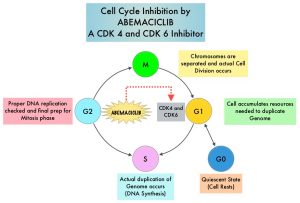
Cyclin Dependent Kinases (CDKs) play a very important role to facilitate orderly and controlled progression of the cell cycle. Genetic alterations in these kinases and their regulatory proteins have been implicated in various malignancies. CDK 4 and 6 phosphorylate RetinoBlastoma protein (RB), and initiate transition from the G1 phase to the S phase of the cell cycle. RetinoBlastoma protein has antiproliferative and tumor-suppressor activity. Phosphorylation of RB protein nullifies its beneficial activities. CDK4 and CDK6 are activated in HR-positive breast cancer, promoting breast cancer cell proliferation. Further, there is evidence to suggest that endocrine resistant breast cancer cell lines depend on CDK4 for cell proliferation. The understanding of the role of CDKs in the cell cycle, has paved the way for the development of CDK inhibitors.

Cell-Cycle-Inhibition-by-ABEMACICLIBVERZENIO® (Abemaciclib) is an oral, selective inhibitor of CDK4 and CDK6 kinase activity, and prevents the phosphorylation and subsequent inactivation of the Rb tumor suppressor protein, thereby inducing G1 cell cycle arrest and inhibition of cell proliferation. VERZENIO® is structurally distinct from other CDK 4 and 6 inhibitors (such as Ribociclib and Palbociclib) and is 14 times more potent against Cyclin D1/CDK 4 and Cyclin D3/CDK 6, in enzymatic assays, but potentially less toxic than earlier pan-CDK inhibitors. At higher doses, only VERZENIO® causes significant cancer cell death, compared with other CDK4/6 inhibitors, suggesting that this drug may be affecting proteins, other than CDK4/6. Additionally, preclinical studies have demonstrated that VERZENIO® may have additional therapeutic benefits for a subset of tumors that are unresponsive to treatment or have grown resistant to other CDK4/6 inhibitors. It has also been shown to cross the blood-brain barrier.
VERZENIO® is presently approved by the FDA as monotherapy as well as in combination with endocrine therapy for patients with HR-positive, HER2- negative advanced breast cancer. The addition of VERZENIO® to FASLODEX® (Fulvestrant) resulted in a statistically significant improvement in Overall Survival (OS) among patients with HR-positive, HER2-negative advanced breast cancer, who had progressed on prior endocrine therapy. The goal of monarchE was to evaluate the additional benefit of adding a CDK4/6 inhibitor to endocrine therapy in the adjuvant setting, for patients with HR-positive, HER2-negative, high risk, early breast cancer.

The International monarchE trial, is an open-label, randomized, Phase III study, which included 5637 patients, who were pre- and postmenopausal, with HR-positive, HER2-negative early breast cancer, and with clinical and/or pathologic risk factors that rendered them at high risk for relapse. The researchers defined high risk as the presence of four or more positive axillary lymph nodes, or 1-3 three positive axillary lymph nodes, with either a tumor size of 5 cm or more, histologic Grade 3, or centrally tested high proliferation rate (Ki-67 of 20% or more). Following completion of primary therapy which included both adjuvant and neoadjuvant chemotherapy and radiotherapy, patients were randomly assigned (1:1) to VERZENIO® 150 mg orally twice daily for 2 years plus 5-10 years of physicians choice of endocrine therapy as clinically indicated (N=2808), or endocrine therapy alone (N=2829). The median patient age was 51 years, about 43% of the patients were premenopausal, and 95% of patients had prior chemotherapy. Approximately 60% of patients had 4 or more positive lymph nodes. The Primary endpoint was Invasive Disease Free Survival (IDFS), and Secondary end points included Distant Relapse Free Survival (DRFS), Overall Survival (OS), and Safety. The researchers provided updated results from the prespecified Primary outcome analysis, additional follow-up analysis conducted at regulatory request, as well as outcomes from prespecified subpopulations, based on Ki-67 levels.

At the time of Primary outcome analysis, with a median follow up of 19 months, 1,437 patients (25.5%) had completed the 2 year treatment period and 3,281 patients (58.2%) were in the 2 year treatment period. The combination of VERZENIO® plus endocrine therapy demonstrated superior Invasive Disease Free Survival (IDFS) compared to endocrine therapy alone, with a 29% reduction in the risk of developing invasive disease (P=0.0009; HR=0.71). The 2-year IDFS in the combination group was 92.3% and 89.3% in the endocrine therapy alone treatment group, with an absolute improvement of 3.0%. Further, there was an improvement in the 2-year distant Relapse Free Survival (DRFS) rate among patients who received the combination treatment compared with those who received endocrine therapy alone, corresponding to an absolute difference of 3.0% at 2 years (93.8% versus 90.8%, respectively; HR=0.69; P<0.001).

With 8 months of additional follow up, at a median of 27 months and with 90% of patients off treatment, the benefit with the combination of VERZENIO® plus endocrine therapy was maintained for IDFS (HR=0.70; P<0.0001) and DRFS (HR=0.69; P<0.0001), demonstrating a 30% risk reduction for IDFS and 31% risk reduction for DRFS. There was continued treatment benefit over time that extended beyond the 2-year treatment period of VERZENIO®. With more patients at risk for recurrence at 3 years, the data demonstrated absolute improvements in 3-year IDFS and DRFS rates of 5.4% and 4.2%, respectively. This treatment benefit in IDFS and DRFS was noted across prespecified subgroups. Further, the benefit with VERZENIO® was consistent, regardless of Ki-67 index. Overall Survival data was immature at the time of this analysis.

It was concluded that adjuvant VERZENIO® combined with endocrine therapy continued to demonstrate statistically significant and clinically meaningful improvement in Invasive Disease Free Survival and Distant Relapse Free Survival, among patients with HR-positive, HER2-negative, node-positive, high risk, early breast cancer, regardless of Ki-67 status.

Adjuvant abemaciclib combined with endocrine therapy for high-risk early breast cancer: updated efficacy and Ki-67 analysis from the monarchE study. Harbeck N, Rastogi P, Martin M, et al. Annals of Oncology 2021;32: 1457-1459.

ENHERTU® in HER2-Mutant Non Small Cell Lung Cancer

SUMMARY: The American Cancer Society estimates that for 2022, about 236,740 new cases of lung cancer will be diagnosed and 135,360 patients will die of the disease. Lung cancer is the leading cause of cancer-related mortality in the United States. Non-Small Cell Lung Cancer (NSCLC) accounts for approximately 85% of all lung cancers. Of the three main subtypes of NSCLC, 30% are Squamous Cell Carcinomas (SCC), 40% are Adenocarcinomas and 10% are Large Cell Carcinomas. With changes in the cigarette composition and decline in tobacco consumption over the past several decades, Adenocarcinoma now is the most frequent histologic subtype of lung cancer.

The HER or erbB family of receptors consist of HER1, HER2, HER3 and HER4. HER2 is a Tyrosine Kinase Receptor expressed on the surface of several tumor types including Breast, Gastric, Lung and Colorectal cancers. It is a growth-promoting protein and HER2 overexpression/HER2 gene amplification is often associated with aggressive disease and poor prognosis in certain tumor types. However, HER2 overexpression and gene amplification are associated with distinct molecular entities and have limited therapeutic value in lung cancer.

HER2 mutations unlike HER2 overexpression and gene amplification are oncogenic drivers, and have been detected in 2 to 3% of NSCLCs. They are more often detected in female patients and never-smokers, and almost exclusively in Adenocarcinomas. Majority of of HER2 mutations (80-90%) occur in exon 20, as either a duplication or an insertion of 12 nucleotides, resulting in the addition of four amino acids (YVMA) at codon 775 in the kinase domain. This distinct molecular entity is characterized by specific pathological and clinical behavior. These acquired HER2 gene mutations have been independently associated with cancer cell growth and poor prognosis. There are currently no therapies approved specifically for the treatment HER2 mutant NSCLC, and is therefore an unmet need.

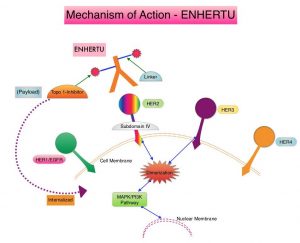
ENHERTU® (Trastuzumab Deruxtecan) is an Antibody-Drug Conjugate (ADC) composed of a humanized monoclonal antibody specifically targeting HER2, with the amino acid sequence similar to HERCEPTIN® (Trastuzumab), attached to a potent cytotoxic Topoisomerase I inhibitor payload by a cleavable tetrapeptide-based linker. ENHERTU® has a favorable pharmacokinetic profile and the tetrapeptide-based linker is stable in the plasma and is selectively cleaved by cathepsins that are up-regulated in tumor cells. Unlike KADCYLA® (ado-Trastuzumab emtansine), which is also an Antibody-Drug Conjugate, ENHERTU® has a higher drug-to-antibody ratio (8 versus 4), the released payload easily crosses the cell membrane with resulting potent cytotoxic effect on neighboring tumor cells regardless of target expression, and the released cytotoxic agent (payload) has a short half-life, minimizing systemic exposure. ENHERTU® is approved in the US for the treatment of adult patients with unresectable or metastatic HER2 positive breast cancer who received two or more prior anti-HER2 based regimens, and locally advanced or metastatic HER2-positive Gastric or GastroEsophageal Junction adenocarcinoma who have received a prior Trastuzumab based regimen. Translational research demonstrated that HER2-mutant NSCLC may preferentially internalize the HER2 receptor Antibody-Drug Conjugate complex regardless of HER2 protein expression, and overcome resistance to other HER2-targeted agents.
Mechanism-of-Action-ENHERTU
DESTINY-Lung01 is a global, multicenter, open-label, two-cohort, Phase II study, conducted to evaluate the efficacy and safety of ENHERTU® in patients with HER2 mutant or HER2 overexpressing (defined as ImmunoHistoChemistry-IHC 3+ or IHC 2+), unresectable and metastatic non-squamous NSCLC. A total of 91 patients with HER2-mutant NSCLC were enrolled between May 30, 2018, and July 21, 2020 and treated with ENHERTU®. Patients who had previously been treated with a HER2 antibody or an Antibody-Drug Conjugate were ineligible for participation, but those who had previously received a HER2 Tyrosine Kinase Inhibitor such as Afatinib, Pyrotinib, or Poziotinib were eligible. The median patient age was 60 yrs and enrolled patients had a median of two prior lines of therapy, with majority of patients having received platinum-based chemotherapy (95%) and anti-PD-1 or PD-L1 treatment (66%). About 20% of patients received Docetaxel and 14% received HER TKIs. For the majority of patients (93%), HER2 mutations were located in the kinase domain. Patients received ENHERTU® 6.4 mg/kg every 3 weeks by intravenous infusion. The Primary endpoint was Objective Response Rate (ORR) as assessed by Independent Central Review. Secondary endpoints included Disease Control Rate (DCR), Duration of Response (DoR), Progression Free Survival (PFS), Overall Survival (OS) and Safety. At the time of data cutoff, the median duration of treatment was 6.9 months and treatment was ongoing for 16% of patients.

At a median follow up 13.1 months, the ORR was 55% and the median Duration of Response was 9.3 months. Responses were observed across different HER2 mutation subtypes. The median PFS was 8.2 months and the median OS was 17.8 months. The most common Grade 3 or higher drug-related Adverse Event was neutropenia noted in 19% of patients and adjudicated drug-related Interstitial Lung Disease occurred in 26% of patients and resulted in 2 deaths.

It was concluded that ENHERTU® demonstrated promising clinical activity, with a high Objective Response Rate and durable responses, in a heavily pretreated population of patients with HER2-mutated NSCLC.

Trastuzumab Deruxtecan in HER2-Mutant Non–Small-Cell Lung Cancer. Li BT, Smit EF, Goto Y, et al., for the DESTINY-Lung01 Trial Investigators. N Engl J Med 2022; 386:241-251

Elacestrant in Metastatic Breast Cancer Progressing on CDK4/6 Therapy and ESR1-Mutant Subtype

SUMMARY: Breast cancer is the most common cancer among women in the US and about 1 in 8 women (12%) will develop invasive breast cancer during their lifetime. Approximately 290,560 new cases of breast cancer will be diagnosed in 2022 and about 43,780 individuals will die of the disease, largely due to metastatic recurrence. Approximately 70% of breast tumors express Estrogen Receptors and/or Progesterone Receptors. The most common subtype of metastatic breast cancer is Hormone Receptor-positive (HR-positive), HER2-negative breast cancer (65% of all metastatic breast tumors), and these patients are often treated with anti-estrogen therapy as first line treatment. However, resistance to hormonal therapy occurs in a majority of the patients, with a median Overall Survival (OS) of 36 months. With the development of Cyclin Dependent Kinases (CDK) 4/6 inhibitors, endocrine therapy plus a CDK4/6 inhibitor is the mainstay for the management of ER+/HER2- metastatic breast cancer as first-line therapy. Even with this therapeutic combination, most patients will eventually experience disease progression, including development of ESR1 (Estrogen Receptor gene alpha) mutations.

ESR1 is the most common acquired mutation noted in breast tumors as they progress from primary to metastatic setting. These mutations promote ligand independent Estrogen Receptor activation and have been shown to promote resistance to estrogen deprivation therapy. It appears that ESR1 mutations are harbored in metastatic ER+ breast cancers with prior Aromatase Inhibitor (AI) therapy, but not in primary breast cancers, suggesting that ESR1 mutations may be selected by prior therapy with an AI, in advanced breast cancer. In a recently published study (JAMA Oncol.2016;2:1310-1315), ESR1 mutations Y537S and D538G mutations detected in baseline plasma samples from ER+/HER- advanced breast cancer patients, was associated with shorter Overall Survival. In this study it was noted that there was a three-fold increase in the prevalence of these mutations in patients who had failed first line hormonal therapy for metastatic disease, compared with those who were initiating first line therapy for advanced breast cancer (33% versus 11%).

Fulvestrant is a parenteral, Selective Estrogen Receptor Degrader (SERD) and is the only SERD approved for the treatment of postmenopausal women with HR-positive metastatic breast cancer. However, acquired ESR1 mutations can also occur following Fulvestrant treatment, possibly because of poor bioavailability and incomplete ER blockade when administered intramuscularly. There is therefore an urgent unmet need for an alternate SERD that has activity in tumors harboring ESR1 mutations, and has improved bioavailability allowing oral administration.

Elacestrant is an oral, nonsteroidal, Selective Estrogen Receptor Degrader (SERD) that degrades the Estrogen Receptor (ER) in a dose-dependent manner and inhibits estradiol-dependent functions of ER target gene transcription induction and breast cancer cell proliferation. Estradiol-stimulated tumor growth was diminished by Elacestrant in the ER+ xenograft models derived from heavily pretreated patients, including models resistant to CDK 4/6 inhibitors, Fulvestrant and those harboring ESR1 mutations Y537S and D538G. In an early Phase I trial, Elacestrant was noted to have an acceptable safety profile, and demonstrated single-agent activity with confirmed Partial Responses in heavily pretreated patients with ER+ metastatic breast cancer.

EMERALD trial is a multicenter, International, randomized, open-label, Phase III study designed to evaluate the benefit of Elacestrant in patients with ER+ HER2- advanced or metastatic breast cancer. In this study, 477 postmenopausal women with ER+/HER2- metastatic breast cancer were randomly assigned 1:1 to receive either Elacestrant 400 mg orally daily (N=239) or the Standard of Care which included investigator’s choice of Fulvestrant or an Aromatase Inhibitor including Anastrozole, Letrozole, or Exemestane (N=238). Treatment was given until disease progression. Both treatment groups were well balanced. The median patient age was 63 years, and patients must have progressed or relapsed on or after 1 or 2 lines of endocrine therapy for advanced disease, one of which was given in combination with a CDK4/6 inhibitor, had 1 or fewer lines of chemotherapy for advanced disease, and had an ECOG performance status of 0 or 1. In the study, 48% had tumors with mutated ESR1 and these patients were evenly distributed in both treatment groups. Patients were stratified by ESR1-mutation status, prior treatment with Fulvestrant, and visceral metastases. The co-Primary end points were Progression Free Survival (PFS) in the overall population, and in those with ESR1 mutations. Overall Survival (OS) was a Secondary end point.

Treatment with Elacestrant resulted in a statistically significant and clinically meaningful improvement in PFS, compared with Standard of Care. There was a 31% reduction in the risk of progression or death in the Elacestrant group for all patients (HR=0.69; P=0.0018) and a 45% reduction in the risk of progression or death among those with ESR1 mutations (HR=0.55; P=0.0005).

The PFS at 12 months with Elacestrant was 22.3% in all patients compared with 9.4% for those receiving the Standard of Care treatment. Among the ESR1 mutation group, the 12 month PFS rate was more pronounced and was 26.8% with Elacestrant, compared to 8.2% with Standard of Care. The benefits with Elacestrant compared with Standard of Care, was consistent across multiple prespecified subgroups including patients who had received prior Fulvestrant. There also was a trend toward improved Overall Survival in patients who received Elacestrant, compared with Standard of Care. The final OS results however are not expected until late 2022. Elacestrant was well tolerated and treatment discontinuation rate was not significantly different between the two treatment groups.

It was concluded that Elacestrant is the first oral Selective Estrogen Receptor Degrader that demonstrated significant and clinically meaningful improvement in PFS compared with Standard of Care endocrine therapy in patients with ER+/ HER2- metastatic breast cancer in the second/third line after treatment with a CDK4/6 inhibitor, and has the potential to become the new standard of care in the study population.

Elacestrant, an oral selective estrogen receptor degrader (SERD), vs investigator’s choice of endocrine monotherapy for ER+/HER2- advanced/metastatic breast cancer (mBC) following progression on prior endocrine and CDK4/6 inhibitor therapy: Results of the EMERALD phase 3 trial. Bardia A, Neven P, Streich G, et al. Presented at 2021 San Antonio Breast Cancer Symposium; December 7-10, 2021; San Antonio, TX. Abstract GS2-02.

Blood Test Plus Risk Model May Predict Who May Benefit From Lung Cancer Screening

SUMMARY: The American Cancer Society estimates that for 2022, about 236,740 new cases of lung cancer will be diagnosed and 135,360 patients will die of the disease. Lung cancer is the leading cause of cancer-related mortality in the United States. Non-Small Cell Lung Cancer (NSCLC) accounts for approximately 85% of all lung cancers and Adenocarcinoma now is the most frequent histologic subtype of lung cancer.

In the National Lung Screening Trial (NLST) with Low Dose CT (LDCT) screening for lung cancer, there was a 20% reduction in mortality. Following the publication of the results of NLST, and NCCN issued guideline in 2011, the United States Preventive Services Task Force (USPSTF) recommended Lung Cancer screening with Low Dose CT scan in high risk patients. CMS in 2015 determined that there was sufficient evidence to reimburse for this preventive service. The USPSTF expanded the criteria for Lung Cancer screening in 2021 and recommended annual screening with Low-Dose CT for adults aged 50 to 80 years who have a 20 pack-year smoking history and currently smoke or have quit within the past 15 years. The new USPSTF 2021 criteria were given a B recommendation, as there was additional research needed, to improve uptake of LDCT screening and to develop biomarkers to more accurately identify individuals, who would benefit from screening.

The authors in a previously published study identified the precursor form of Surfactant Protein B (Pro-SFTPB) as predictive of Lung Cancer risk. They were also able to, in a proof-of-principle study, demonstrate that a four Marker Protein panel (4MP) consisting of Pro-SFTPB, Cancer Antigen 125, CarcinoEmbryonic Antigen, and Cytokeratin-19 fragment, has the potential to identify individuals at risk for developing Lung Cancer, better than Pro-SFTPB alone.

The purpose of this study was to determine whether a blood-based four Marker Protein biomarker panel together with the PLCOm2012 Lung Cancer prediction model would better identify individuals for Lung Cancer screening, compared with current US Preventive Services Task Force (USPSTF) criteria.

The PLCO Cancer Screening Trial was a randomized multicenter trial which evaluated the impact of screening for Prostate, Lung, Colorectal, and Ovarian cancer, on disease-specific mortality. In this study, a biorepository was created for blood specimens that were annually collected, after obtaining consent from the intervention group participants. In this study there were 42,450 individuals in the intervention group who have ever smoked, and 85% of the participants in this intervention arm had at least one blood specimen collection. Individuals with histologically-confirmed lung cancers from the ever-smoked participants in the intervention group, who were diagnosed within 6 years of study entry, and with pre-diagnostic blood specimen available (N= 552), were included in the current study.

Non cancer participants who have ever smoked (N=2193) were randomized 4:1 with lung cancer diagnosed cases and were followed for an additional 13 years during which time they remained cancer-free. For each selected participant, all blood samples collected within 6 years of study entry, or up to the time of diagnosis for lung cancer cases, were included in the study specimen set (N=10,008 blood specimens). The mean age of the study population was 65 years, and 64% were male, 60% were former smokers and 40% were current smokers. The baseline information for the PLCOm2012 model included age, race or ethnic group, education, Body Mass Index, Chronic Obstructive Pulmonary Disease, personal history of cancer, family history of lung cancer and smoking status (current versus former), intensity, duration, and quit time. Levels of the 4 marker proteins in the serum were determined using bead-based immunoassays and biomarker scores were calculated for the combined 4 marker proteins. The researchers assessed the performance of the 4 marker protein panel in combination with the PLCOm2012 lung cancer prediction model, and compared the combination with current USPSTF lung cancer screening criteria, among pre-diagnosis lung cancer, and non-lung cancer serum samples, from the PLCO Cancer Screening Trial.

Using prediagnostic case, and non-case serum samples from the PLCO Cancer Screening Trial data, a combined four-marker protein panel along with PLCO m2012 model showed statistically significant improvement in sensitivity by 11.9% and 9.9% and specificity by 12.9% and 6.9% ,compared with USPSTF 2013 and the recent USPSTF 2021 criteria, respectively. If the 4MP along with PLCOm2012 model was applied to individuals with 10 or more pack-year smoking history, the improved performance of this combination would have resulted in referral to screening of 12.6% more lung cancer cases among the 119 cases who would otherwise receive a lung cancer diagnosis within a year, as well as nonreferral of 29.6% of the 14,061 non-cases. When compared with the USPSTF 2021 criteria, the 4MP plus PLCOm2012 model would have identified for annual screening 9.2% more lung cancer cases and would have reduced referral by 13.7% among non-cases, compared with USPSTF 2021 criteria.

It was concluded that the 4MP plus PLCOm2012 model yielded superior predictive performance and sensitivity and specificity for ruling individuals into LDCT screening, compared with USPSTF 2013 or USPSTF 2021 eligibility criteria, and with the PLCOm2012 model alone. The authors added that the public health benefit is significant, as it better identifies individuals at high risk of lung cancer and expands upon the number of individuals who would be considered eligible for lung cancer screening, thereby addressing some of the limitations of current screening eligibility criteria. These findings have important implications for improving lung cancer screening programs and reducing the burden of lung cancer through personalized risk assessment.

Blood-Based Biomarker Panel for Personalized Lung Cancer Risk Assessment. Fahrmann JF, Marsh T, Irajizad E, et al. J Clin Oncol. Published online January 7, 2022. doi:10.1200/JCO.21.01460.

Defining Patient Groups With Triple Negative Breast Cancer Who Derive Benefit From KEYTRUDA® plus Chemotherapy

SUMMARY: Breast cancer is the most common cancer among women in the US and about 1 in 8 women (12%) will develop invasive breast cancer during their lifetime. Approximately 284,200 new cases of breast cancer will be diagnosed in 2021 and about 44,130 individuals will die of the disease, largely due to metastatic recurrence. Triple Negative Breast Cancer (TNBC) is a heterogeneous, molecularly diverse group of breast cancers and are ER (Estrogen Receptor), PR (Progesterone Receptor) and HER2 (Human Epidermal Growth Factor Receptor-2) negative. TNBC accounts for 15-20% of invasive breast cancers, with a higher incidence noted in young patients. It is usually aggressive, and tumors tend to be high grade and patients with TNBC are at a higher risk of both local and distant recurrence. Those with metastatic disease have one of the worst prognoses of all cancers with a median Overall Survival of 13 months. The majority of patients with TNBC who develop metastatic disease do so within the first 3 years after diagnosis, whereas those without recurrence during this period of time have survival rates similar to those with ER-positive breast cancers.

The lack of known recurrent oncogenic drivers in patients with metastatic TNBC, presents a major therapeutic challenge. It appears that there are subsets of patients with TNBC who may be inherently insensitive to cytotoxic chemotherapy. Three treatment approaches appear to be promising and they include immune therapies, PARP inhibition, and inhibition of PI3K pathway. Previously published studies have shown that presence of tumor-infiltrating lymphocytes was associated with clinical benefit, when treated with chemotherapy and immunotherapy, in patients with TNBC, and improved clinical benefit was observed in patients with immune-enriched molecular subtypes of metastatic TNBC.

KEYTRUDA® (Pembrolizumab) is a fully humanized, Immunoglobulin G4, anti-PD-1, monoclonal antibody, that binds to the PD-1 receptor and blocks its interaction with ligands PD-L1 and PD-L2. It thereby reverses the PD-1 pathway-mediated inhibition of the immune response, and unleashes the tumor-specific effector T cells. The rationale for combining chemotherapy with immunotherapy is that cytotoxic chemotherapy releases tumor-specific antigens, and immune checkpoint inhibitors such as KEYTRUDA® when given along with chemotherapy can enhance endogenous anticancer immunity. Single agent KEYTRUDA® in metastatic TNBC demonstrated durable antitumor activity in several studies, with Objective Response Rates (ORRs) ranging from 10-21% and improved clinical responses in patients with higher PD-L1 expression. When given along with chemotherapy as a neoadjuvant treatment for patients with high-risk, early-stage TNBC, KEYTRUDA® combination achieved Pathological Complete Response rate of 65%, regardless of PD-L1 expression. Based on this data, KEYTRUDA® in combination with chemotherapy was studied, for first line treatment of advanced TNBC.

KEYNOTE-355 is a randomized, double-blind, Phase III study, which evaluated the benefit of KEYTRUDA® in combination with one of the three different chemotherapy regimens, nab-Paclitaxel, Paclitaxel, or the non-taxane containing Gemzar/Carboplatin, versus placebo plus one of the three chemotherapy regimens, in patients with previously untreated or locally recurrent inoperable metastatic TNBC. In this study, 847 patients were randomized 2:1 to receive either KEYTRUDA® 200 mg IV on day 1 of each 21-day cycle along with either nab-Paclitaxel 100 mg/m2 IV on days 1, 8 and 15 of each 28-day cycle, Paclitaxel 90 mg/m2 IV on days 1, 8 and 15 of each 28-day cycle, or Gemcitabine 1000 mg/m2 IV plus Carboplatin AUC 2, IV on days 1 and 8 of each 21-day cycle (N= 566) or placebo along with one of the three chemotherapy regimens (N= 281). This study was not designed to compare the efficacy of the different chemotherapy regimens. Treatment was continued until disease progression. Patients were stratified by chemotherapy, PD-L1 tumor expression (CPS-Combined Positive Score of 1 or higher versus CPS of less than 1), and prior treatment with the same class of neoadjuvant/adjuvant chemotherapy (Yes versus No). The baseline characteristics of treatment groups were well-balanced. The co-Primary end points of the trial were Progression Free Survival (PFS) and Overall Survival (OS) in patients with PD-L1-positive tumors, and in all patients. Secondary end points were Objective Response Rate (ORR), Duration of Response, Disease Control Rate, and Safety.

In the primary analysis of the KEYNOTE-355 trial, the Overall Survival results after a median follow up of 44.1 months in the subgroup of patients with PD-L1 CPS (Combined Positive Score) of 10 or more was significantly better with first line KEYTRUDA® plus chemotherapy versus placebo plus chemotherapy (23.0 months versus 16.1 months, respectively; HR=0.73; P=0.0093). This represented a 27% reduction in the risk of death with the KEYTRUDA® combination. KEYTRUDA® in combination with chemotherapy, also significantly improved PFS in patients with CPS (Combined Positive Score) of 10 or greater. The median PFS was 9.7 months for KEYTRUDA® plus chemotherapy, compared with 5.6 months for placebo plus chemotherapy (HR=0.65, P=0.0012). This represented a 35% reduction in the risk of disease progression. However, among patients with CPS of 1 or greater, the median PFS was not considered statistically significant, based on prespecified statistical criteria.

The researchers here in presented the results of a subgroup analysis, stratified by levels of PD-L1 expression, as assessed by CPS score. In the subgroups with CPS scores of less than 1 and 1-9, Overall Survival was similar for KEYTRUDA® plus chemotherapy and placebo plus chemotherapy. However, in subgroups with CPS 10-19 and CPS 20 or more, there was sustained separation of the Overall survival curves starting at approximately 10 months and the survival was improved by about 28%.

The authors noted that the general trend for PFS was consistent with that observed for Overall Survival, with improving PFS trend among those subgroups with PD-L1 enriched CPS of 10 or more. In the subgroup of patients with a CPS of 10-19 and CPS of 20 or more, the addition of KEYTRUDA® to chemotherapy resulted in a more sustained separation of PFS curves, beginning at approximately 4 months, compared with placebo plus chemotherapy. The Hazard Ratios for these two groups were 0.70 and 0.62, respectively. Toxicities of any grade were reported in 96% of the experimental group and 95% of the placebo plus chemotherapy group. The rate of Grades 3-5 treatment-related adverse events was 68.1% and 66.9%, respectively and the majority of treatment discontinuations in this study were for progressive disease.

The researchers based on this subgroup analyses concluded that a CPS of 10 or more is a reasonable cutoff to define the population of women with metastatic Triple Negative Breast Cancer, expected to derive treatment benefit from KEYTRUDA® plus chemotherapy, lending further support to KEYTRUDA® plus chemotherapy as a standard of care treatment regimen for this group of patients.

Final results of KEYNOTE-355: randomized, double-blind, phase 3 study of pembrolizumab + chemotherapy vs placebo + chemotherapy for previously untreated locally recurrent inoperable or metastatic triple-negative breast cancer. Cortés J, Cescon DW, Rugo HS, et al. Presented at: 2021 San Antonio Breast Cancer Symposium; December 7-10, 2021; San Antonio, TX. Abstract GS1-02.

Elevated White Cell Count and Risk of Thrombotic Events in Polycythemia Vera

SUMMARY: Polycythemia Vera (P. Vera) is a clonal myeloproliferative neoplasm characterized by isolated erythrocytosis in a majority of the patients, with the remaining demonstrating leukocytosis and/or thrombocytosis along with erythrocytosis. Patients usually present with this disorder in their sixth decade and are often asymptomatic, with the diagnosis made incidentally on routine laboratory evaluation. About 30% of the patients however, may initially present with a thrombotic episode, whereas a small percentage of patients may present with disease related symptoms such as pruritus and fatigue. The conventional risk factors for thrombotic events in MyeloProliferative Neoplasms (MPN) are age more than 60 years and prior thrombosis, and the presence of both these risk factors is associated with a 7-fold increased risk of thrombosis.

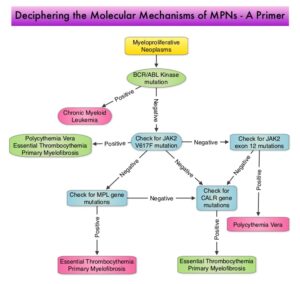
Overactivation of the JAK-STAT signal transduction pathway caused by V617F mutation has been implicated in majority of the patients with P. Vera. This pathway normally is responsible for passing information from outside the cell through the cell membrane to the DNA in the nucleus for gene transcription. Janus Kinase (JAK) family of tyrosine kinases are cytoplasmic proteins and include JAK1, JAK2, JAK3 and TYK2. JAK1 helps propagate the signaling of inflammatory cytokines whereas JAK2 is essential for growth and differentiation of hematopoietic stem cells. These tyrosine kinases mediate cell signaling by recruiting STAT’s (Signal Transducer and Activator of Transcription), with resulting modulation of gene expression. In patients with P. Vera, the aberrant myeloproliferation is the result of dysregulated JAK2-STAT signaling as well as excess production of inflammatory cytokines, associated with this abnormal signaling. JAK2 mutations such as JAK2 V617F are seen in approximately 95% of patients with P. Vera.Molecular-Mechanisms-of-MPNs

Studies have shown that JAK2 mutations that result in the overproduction of erythrocytes, leukocytes, and platelets in P. Vera also promote direct activation of leukocytes and platelets. Activated platelets and leukocytes bind to each other and activate endothelial cells, which may in turn contribute to the prothrombotic state. The prospective CYTO-PV trial published in 2011, established that maintaining hematocrit less than 45% through phlebotomies and/or cytoreductive drugs significantly decreased the risk of thrombotic events in P. Vera patients. Even though several retrospective analyses strongly suggest an association between leukocytosis and thrombosis, leukocytosis particularly at the time of the thrombotic event in P. Vera patients, no prospective trial has been conducted to assess the impact of WBC counts on thrombotic risk in P. Vera.

The REVEAL study is a large, real-world, multicenter, prospective, noninterventional, observational study, in which patients with P. Vera from US community practice and academic centers were enrolled , to evaluate the association between elevated blood counts and occurrence of thrombotic events in patients with P. Vera, using data from the REVEAL study.

This study analyzed the data of 2271 eligible patients for this analysis (78% high risk and 22% low risk). The median patient age was 66 years and 54% were male. The median disease duration was 4.1 years, 20% had a history of thrombotic events and majority of patients (53%) were receiving Hydroxyurea. Patient data was collected at diagnosis, at a 6-month period, and during follow up, 3 years from last patient enrollment, between July 2014 and August 2019 and the researchers analyzed the association between blood counts and thrombotic events. Out of 106 patients who had thrombotic events, 30 had arterial thrombotic events, most commonly, Transient Ischemic Attack and 76 had venous thrombotic events, most commonly, Deep Vein Thrombosis.

It was noted that hematocrit greater than 45% versus 45% or less (P=0.0028), WBC more than 11×109/L versus 11×109/L or less (P<0.0001), and Platelet counts more than 400×109/L versus 400×109/L or less (P=0.0170) were each associated with increased risk of thrombotic events. A WBC count of 11×109/L or more was associated with the highest thrombotic event risk compared with WBC count less than 7×10⁹/L (P<0.0001). In all models analyzed, advanced age and history of thrombotic events, were associated with increased thrombotic event risk.

The authors concluded that in this analysis of the largest real-world cohort of P. Vera patients to date, hematocrit more than 45%, as well as WBC more than 11×109/L and Platelet counts more than 400×109/L, were each associated with increased risk of thrombotic events. The authors added that these data support the incorporation of blood count values into risk stratification and treatment strategies for patients with P. Vera in clinical practice, and to move beyond the conventional risk model.

A Real-World Evaluation of the Association between Elevated Blood Counts and Thrombotic Events in Polycythemia Vera (Analysis of Data from the REVEAL Study). Gerds AT, Mesa RA, Burke JM, et al. Presented at: 2021 ASH Annual Meeting and Exposition; December 11-14, 2021; Atlanta, GA. Abstract 239.

Acute Myeloid Leukemia: Who Is an Appropriate Candidate for ONUREG® (azacitidine) Tablets?


Written by: Thomas E Boyd, MD, Texas Oncology
Content Sponsored by: Bristol-Myers Squibb Company (BMS)


Dr. Boyd is a paid consultant for BMS and was compensated for his contribution in drafting this article.

Acute myeloid leukemia (AML) is a deadly disease with most new cases affecting patients aged 65–74 years old.1 The 5-year relative survival rate for AML is 29.5%1, highlighting a need for treatment approaches that improve survival.2 Patient- and disease-related characteristics, including medical fitness, age, cytogenetic and molecular testing, and risk of adverse events, often determine treatment options.3

After careful consideration of all factors, patients can be treated with either a higher-intensity chemotherapy option or a lower-intensity therapy option, and in some cases, additional cycles of consolidation therapy may follow the higher-intensity chemotherapy option.4 Helping patients achieve remission and keeping them there is a major goal of initial induction therapy. Continued treatment of AML in first remission may improve overall survival; however, relapse due to residual AML cells is still a major concern.2 In 764 patients with AML aged 60–85 years old who received induction therapy, ~50% relapsed within 1 year and ~80% relapsed within 5 years.5 A goal of continued treatment for AML is extending overall survival (OS) in patients who have achieved first remission.2 In some instances, extending OS can be achieved with a hematopoietic stem cell transplant; but not all patients are eligible or choose to go down this treatment route.3

ONUREG® is the first and only FDA-approved therapy indicated for continued treatment of adult patients with acute myeloid leukemia who achieved first complete remission (CR) or complete remission with incomplete blood count recovery (CRi) following intensive induction chemotherapy and are not able to complete intensive curative therapy.6 The efficacy and safety of ONUREG® was evaluated in the Phase 3 multicenter, randomized, double-blind placebo-controlled QUAZAR® AML-001 study.6 Eligible patients were ages 55 years or older, diagnosed with AML, were within 4 months of achieving first CR or CRi with intensive induction chemotherapy, and may have received consolidation therapy.6 Efficacy was established by OS, where ONUREG® demonstrated >2 years median OS for patients with AML in first remission as compared to placebo (24.7 months in the treatment arm vs 14.8 months in the placebo arm, hazard ratio (HR) 0.69, 95% confidence interval (CI): 0.55-0.86; P=0.0009).6 The most common adverse reactions (ARs, ≥ 10%) associated with ONUREG® treatment were nausea, vomiting, diarrhea, fatigue/asthenia, constipation, pneumonia, abdominal pain, arthralgia, decreased appetite, febrile neutropenia, dizziness, and pain in extremity.6 Serious ARs occurred in 15% of patients who received ONUREG®, and the most common Grade 3/4 ARs are shown in the table below.6

Who is an appropriate candidate for ONUREG®? The following hypothetical examples will review some of the characteristics to consider when deciding if a patient could be appropriate for ONUREG®.

Patient A is a 67-year-old retired accountant who is active and generally healthy. Their hypertension is well managed with medication, and they have no other comorbidities. Despite no family history of leukemia or hematologic abnormalities, Patient A has just been diagnosed with de novo AML not otherwise specified with intermediate-risk cytogenetics and no actionable mutations. Their hematologist prescribes intensive induction chemotherapy with the standard 7+3 regimen, and Patient A went into first remission.

Patient A is generally healthy with a well-managed comorbidity, which results in their treatment with intensive induction chemotherapy followed by first remission. Patient A is a candidate for transplant but declines one due to concerns over graft-versus-host disease. Since Patient A chose not to proceed to transplant, then ONUREG® may be an option for them.

Patient B is a 70-year retired nurse who lives alone, with family nearby. They were recently diagnosed with AML and received 7+3 chemotherapy followed by one round of consolidation. Patient B tolerated their treatment as well as could be expected and achieved first complete remission. While they are eligible for transplant, they declined and have been under observation by their doctor for the past few months. Patient B received and tolerated intensive induction chemotherapy, achieved first remission, and declined transplant, an intensive curative option. This makes them a potential candidate for continued treatment with ONUREG®.

Ultimately, the treating physician will make the final decision, but ONUREG® is indicated as a continued treatment of adult patients with AML who achieved first CR or CRi following intensive induction chemotherapy and are not able to complete intensive curative therapy.6 Understanding a patient’s disease and journey can help set them on the path where appropriate towards a continued treatment that has demonstrated an overall survival benefit in the QUAZAR® AML-001 study.

IMPORTANT SAFETY INFORMATION
CONTRAINDICATIONS
ONUREG® is contraindicated in patients with known severe hypersensitivity to azacitidine or its components.
WARNINGS AND PRECAUTIONS
Risks of Substitution with Other Azacitidine Products
Due to substantial differences in the pharmacokinetic parameters, the recommended dose and schedule for ONUREG® are different from those for the intravenous or subcutaneous azacitidine products. Treatment of patients using intravenous or subcutaneous azacitidine at the recommended dosage of ONUREG® may result in a fatal adverse reaction. Treatment with ONUREG® at the doses recommended for intravenous or subcutaneous azacitidine may not be effective. Do not substitute ONUREG® for intravenous or subcutaneous azacitidine.
Myelosuppression
New or worsening Grade 3 or 4 neutropenia and thrombocytopenia occurred in 49% and 22% of patients who received ONUREG®. Febrile neutropenia occurred in 12%. A dose reduction was required for 7% and 2% of patients due to neutropenia and thrombocytopenia. Less than 1% of patients discontinued ONUREG® due to either neutropenia or thrombocytopenia. Monitor complete blood counts and modify the dosage as recommended. Provide standard supportive care, including hematopoietic growth factors, if myelosuppression occurs.
Increased Early Mortality in Patients with Myelodysplastic Syndromes (MDS)
In AZA-MDS-003, 216 patients with red blood cell transfusion-dependent anemia and thrombocytopenia due to MDS were randomized to ONUREG® or placebo. 107 received a median of 5 cycles of ONUREG® 300 mg daily for 21 days of a 28-day cycle. Enrollment was discontinued early due to a higher incidence of early fatal and/or serious adverse reactions in the ONUREG® arm compared with placebo. The most frequent fatal adverse reaction was sepsis. Safety and effectiveness of ONUREG® for MDS have not been established. Treatment of MDS with ONUREG® is not recommended outside of controlled trials.
Embryo-Fetal Toxicity
ONUREG® can cause fetal harm when administered to a pregnant woman. Azacitidine caused fetal death and anomalies in pregnant rats via a single intraperitoneal dose less than the recommended human daily dose of oral azacitidine on a mg/m2 basis. Advise pregnant women of the potential risk to a fetus. Advise females of reproductive potential to use effective contraception during treatment with ONUREG® and for at least 6 months after the last dose. Advise males with female partners of reproductive potential to use effective contraception during treatment with ONUREG® and for at least 3 months after the last dose.
ADVERSE REACTIONS
Serious adverse reactions occurred in 15% of patients who received ONUREG®. Serious adverse reactions in ≥2% included pneumonia (8%) and febrile neutropenia (7%). One fatal adverse reaction (sepsis) occurred in a patient who received ONUREG®.
Most common (≥10%) adverse reactions with ONUREG® vs placebo were nausea (65%, 24%), vomiting (60%, 10%), diarrhea (50%, 21%), fatigue/asthenia (44%, 25%), constipation (39%, 24%), pneumonia (27%, 17%), abdominal pain (22%, 13%), arthralgia (14%, 10%), decreased appetite (13%, 6%), febrile neutropenia (12%, 8%), dizziness (11%, 9%), pain in extremity (11%, 5%).
LACTATION
There are no data regarding the presence of azacitidine in human milk or the effects on the breastfed child or milk production. Because of the potential for serious adverse reactions in the breastfed child, advise women not to breastfeed during treatment with ONUREG® and for 1 week after the last dose.

Please see full Prescribing Information for ONUREG®.

References
1. National Cancer Institute. SEER Cancer Statistics Factsheets: Acute Myeloid Leukemia. http://seer.cancer.gov/statfacts/html/amyl.html. Accessed April 21, 2021.
2. Medeiros BC, Chan SM, Daver NG, Jonas BA, Pollyea DA. Optimizing survival outcomes with post-remission therapy in acute myeloid leukemia. Am J Hematol. 2019;94:803-811.
3. Medeiros BC, Satram S. Real world treatment patterns and comparative effectiveness among elderly patients with acute myeloid leukemia in the United States. Ann Hematol Oncol. 2020;7(1):1283.
4. Burnett A, Wetzler M, Löwenberg B. Therapeutic advances in acute myeloid leukemia. J Clin Oncol. 2011;29(5):487-494.
5. Büchner T, Berdel WE, Haferlach C, et al. Age-related risk profile and chemotherapy dose response in acute myeloid leukemia: a study by the German Acute Myeloid Leukemia Cooperative Group. J Clin Oncol. 2009;27(1):61-69.
6. ONUREG®® [Prescribing Information]. Summit, NJ: Celgene Corporation; 2021.

© 2021 Celgene Corporation.
ONUREG® is a trademark of Celgene Corporation, a Bristol-Myers Squibb company.
QUAZAR® is a registered trademark Celgene Corporation, a Bristol-Myers Squibb company.
12/21 2011-US-2100198