Tarlatamab Sets New Standard in Recurrent Small Cell Lung Cancer: Results from DeLLphi-304

SUMMARY: The American Cancer Society estimates that for 2025, about 226,650 new cases of lung cancer will be diagnosed and 124,730 patients will die of the disease. Lung cancer is the leading cause of cancer-related mortality in the United States. Small Cell Lung Cancer (SCLC) originates from neuroendocrine cells and accounts for approximately 10-15% of all lung cancers diagnosed annually in the US. It is lethal and aggressive. The 5 year survival rate for Extensive Stage SCLC (ES-SCLC) is less than 5%, with a median survival of 9-10 months from the time of diagnosis.

Treatment decisions was SCLC are typically based on the VA Lung Group 2-Staging system, which classifies disease as either Limited Stage (LS) or Extensive Stage (ES). In Limited Stage patients, the disease burden is limited to one hemithorax and regional nodes, without presence of extra-thoracic disease, and amenable to definitive-intent thoracic Radiation Therapy (RT). Extensive Stage encompasses all other SCLC patients.

Patients with ES-SCLC are often treated with chemoimmunotherapy with or without radiation in the first line setting. Nearly all patients with SCLC experience disease recurrence during or after standard platinum-based chemotherapy, underscoring the need for novel treatment strategies Second-line treatment options are limited, and the response duration is short varying from 3-5 months, with Overall Survival rarely exceeding 8 months. There are presently no approved therapies for third line and beyond and these patients face a dire prognosis.

Delta-Like Protein 3 also known as DLL3, is encoded by the DLL3 gene and is expressed on the surface of tumor cells but not in normal adult tissues. Patients with high-grade pulmonary NeuroEndocrine Tumors, Small Cell Lung Cancer (SCLC) and Large Cell NeuroEndocrine Carcinoma (LCNEC) have increased expression of DLL3 protein (increased expression seen in approximately 85-96% of the SCLC tumors), making this a a potential target in the treatment of Small Cell Lung Cancer.

Tarlatamab (IMDELLTRA®) is a first-in-class bispecific T-cell engager immunotherapy that directs the patients T cells to cancer cells expressing Delta-Like Ligand 3 (DLL3), independent of Major Histocompatibility Complex (MHC) class I. Tarlatamab binds to both DLL3 on cancer cells and CD3 on T cells, leading to T-cell–mediated lysis of cancer cells.

In May 2024, the U.S. FDA granted accelerated approval to Tarlatamab for adult patients with extensive-stage SCLC whose disease progressed after platinum-based chemotherapy. This decision was based largely on early clinical benefit observed in the Phase 2 DeLLphi-301 trial, where Tarlatamab demonstrated a 40% Overall Response Rate (ORR) in previously treated patients. Now, confirmatory results from the Phase 3 DeLLphi-304 trial further support the role of Tarlatamab in the treatment landscape, and mark a potential new standard of care for recurrent SCLC.

Phase 3 DeLLphi-304: Study Design and Population
DeLLphi-304 was a global, randomized, open-label trial comparing Tarlatamab, with standard-of-care chemotherapy which included Topotecan, Lurbinectedin, or Amrubicin, in patients with extensive-stage SCLC, whose disease progressed after platinum-based chemotherapy. A total of 509 patients were randomized 1:1 to receive either Tarlatamab (N=254) or chemotherapy (N=255). The median patient age was 65 yrs, Approximately 45% of randomized patients had current or previous brain metastases, 35% had liver metastases, 71% had received previous therapy with checkpoint inhibitors and 44% had platinum-resistant disease. Stratification factors included prior PD-L1 inhibitor treatment, chemotherapy-free interval, presence of brain metastases, and intended chemotherapy regimen. The Primary endpoint was Overall Survival (OS). Secondary endpoints included Progression-Free Survival (PFS), Objective Response Rate (ORR), Duration of Response (DOR), Disease Control Rate (DCR), Patient-Reported Outcomes (PROs), and Safety.

Tarlatamab Demonstrates Significant Survival Benefit
At a median follow-up of approximately 11 months, Tarlatamab demonstrated a statistically and clinically significant improvement in OS:

  • Median OS: 13.6 vs 8.3 months (HR 0.60; 95% CI: 0.47–0.77; P<0.001)
  • Median PFS: 4.2 vs 3.2 months (HR 0.72; 95% CI: 0.59–0.88; P<0.001)

This translated to a 40% reduction in the risk of death for patients receiving Tarlatamab. The survival benefit extended across all prespecified subgroups, including age, gender, race, and prior anti–PD-L1 therapy. The ORR was 35% in the Tarlatamab group and 20% in the chemotherapy group.

Improved Symptom Control and Quality of Life
Beyond survival, Tarlatamab provided clinically meaningful improvements in Patient-Reported Outcomes, including relief from hallmark symptoms of SCLC:

  • Dyspnea score improved at 18 weeks: –1.94 with Tarlatamab vs +7.20 with CTx (mean difference –9.14; P< 0.001)
  • Cough improvement: 16% vs 9% (Odds Ratio 2.04; P = 0.012)
  • Chest pain improvement: 9% vs 4% (Odds Ratio 1.84; P = 0.100) – not significant

These findings reflect an overall better patient experience and potential Quality-of-Life benefit with Tarlatamab therapy.

Safety Profile and Tolerability
Tarlatamab was associated with a more favorable safety profile compared to chemotherapy:

  • Grade 3 or more Treatment-Related Adverse Events (TRAEs): 27% (Tarlatamab) vs 62% (Chemotherapy)
  • Discontinuations due to TRAEs: 3% vs 6%
  • Most common Grade 3 or more TRAEs with Tarlatamab were neutropenia (4%) and lymphopenia (4%)
  • Cytokine Release Syndrome (CRS) occurred in 56% of patients (mostly grade 1-2) and was manageable in clinical settings

These safety results support Tarlatamab as a more tolerable alternative to conventional chemotherapy.

Looking Ahead: Optimizing Treatment Sequencing
While the DeLLphi-304 trial has established Tarlatamab as an effective option post-platinum therapy, questions remain regarding its integration into the broader SCLC treatment paradigm. PD-L1 inhibitors already form part of standard first-line and maintenance therapy. Early-phase studies have shown that Tarlatamab can be safely combined with anti–PD-L1 agents, and this is being further evaluated in the ongoing DeLLphi-305 trial, a Phase 3 study assessing Tarlatamab plus PD-L1 inhibition as first-line maintenance following chemotherapy. Additionally, biomarker-driven analyses from DeLLphi-304 are underway to help identify patients most likely to benefit from Tarlatamab and those who may achieve durable responses.

Conclusion
The DeLLphi-304 trial positions Tarlatamab as a practice-changing therapy for patients with SCLC that has progressed after platinum-based chemotherapy. With significant improvements in Overall and Progression-Free Survival, better symptom control, and a favorable safety profile, Tarlatamab redefines second-line treatment for a historically underserved patient population. These results not only represent a meaningful advance in SCLC therapy but also signal a broader shift toward targeted immunotherapy strategies in aggressive thoracic malignancies.

Tarlatamab in Small-Cell Lung Cancer after Platinum-Based Chemotherapy. Mountzios G, Sun L, Cho BC, et al. for the DeLLphi-304 Investigators. N Engl J Med 2025;393:349-361


Adjuvant Atezolizumab in Resected NSCLC: Five-Year Outcomes from IMpower010

SUMMARY: Lung cancer is the second most common cancer in both men and women and the American Cancer Society estimates that for 2025, about 226,650 new cases of lung cancer will be diagnosed and 124,730 patients will die of the disease. Lung cancer is the leading cause of cancer-related mortality in the United States. Non-Small Cell Lung Cancer (NSCLC) accounts for approximately 85% of all lung cancers and Adenocarcinoma is now the most frequent histologic subtype of lung cancer. Of the three main subtypes of NSCLC, 30% are Squamous Cell Carcinomas (SCC), 40% are Adenocarcinomas and 10% are Large Cell Carcinomas. With changes in the cigarette composition and decline in tobacco consumption over the past several decades, Adenocarcinoma now is the most frequent histologic subtype of lung cancer.

Surgical resection is the primary treatment for approximately 30% of patients with NSCLC who present with early stage (I–IIIA) disease. These patients are often treated with platinum-based adjuvant chemotherapy to decrease the risk of recurrence. Nonetheless, 45-75% of these patients develop recurrent disease. There is therefore an unmet need for this patient population.

Atezolizumab (TECENTRIQ®) is an anti PD-L1 monoclonal antibody, designed to directly bind to PD-L1 expressed on tumor cells and tumor-infiltrating immune cells, thereby blocking its interactions with PD-1 and B7.1 receptors expressed on activated T cells. PD-L1 inhibition may prevent T-cell deactivation and further enable the activation of T cells.

IMpower 010 is a global, multicentre, open-label, randomized Phase III study evaluating the efficacy and safety of Atezolizumab compared with Best Supportive Care (BSC), in patients with stage IB-IIIA NSCLC, following surgical resection and up to 4 cycles of adjuvant Cisplatin-based chemotherapy. In this study, 1005 patients were randomized 1:1 to receive Atezolizumab 1200 mg IV every 3 weeks for 16 cycles, or BSC. Both study groups were well balanced and eligible patients had an ECOG PS of 0-1. The Primary endpoint was Disease Free Survival (DFS) in the PD-L1-positive (1% or more) stage II-IIIA patients, all randomized stage II-IIIA patients and Intent to Treat (ITT) stage IB-IIIA populations. Key Secondary endpoints included Overall Survival (OS) in the overall study population and ITT stage IB-IIIA NSCLC patients.

Initial DFS Results at a Median Follow-Up of 32.2 Months
Adjuvant Atezolizumab demonstrated a clinically meaningful DFS advantage:

  • Stage II–IIIA, PD-L1 1% or more: 34% reduction in risk of recurrence or death vs. BSC (HR 0.66; P=0.0039); median DFS not reached vs. 35.3 months for BSC
  • Stage II–IIIA, PD-L1 50% or more: 57% risk reduction (HR 0.43)
  • All stage II–IIIA: HR 0.79 (P=0.02), median DFS gain of 7 months
  • No statistically significant DFS improvement in the ITT population
  • OS data immature at this stage

These findings led to regulatory approval of adjuvant Atezolizumab in resected stage II–IIIA PD-L1–positive NSCLC following chemotherapy.

Updated 5-Year Outcomes
Final DFS analysis and second OS interim analysis were reported with an additional 36 and 21 months of follow-up, respectively (clinical cutoff: January 26, 2024).

Disease-Free Survival:

  • Stage II–IIIA, PD-L1 ≥1% (N=476): HR 0.70 (95% CI, 0.55–0.91) – More than 30-month median DFS difference between arms
  • Stage II–IIIA, PD-L1 ≥50% (N=229): HR 0.48 (95% CI, 0.32–0.72)
  • All stage II–IIIA (N=882): HR 0.83 (95% CI, 0.69–1.00)
  • ITT (N=1005): HR 0.85 (95% CI, 0.71–1.01; P=0.07) – numerical improvement, not statistically significant
  • All randomized Stage II–IIIA (N=882): HR 0.83 (95% CI, 0.69–1.00)
  • PD-L1 ≥50% without EGFR/ALK alterations (N=209): HR 0.49 (95% CI, 0.32–0.75)

Overall Survival:

  • ITT: HR 0.97 (95% CI, 0.78–1.22)
  • Stage II–IIIA: HR 0.94 (95% CI, 0.75–1.19)
  • PD-L1 ≥1%: HR 0.77 (95% CI, 0.56–1.06)
  • PD-L1 ≥50%: HR 0.47 (95% CI, 0.28–0.77)

Since DFS in the ITT population did not cross the statistical significance boundary, formal OS testing was not conducted. OS data remain immature given a low event-to-patient ratio (~31%).

Clinical Perspective
IMpower010 remains the only Phase III trial with more than 5-year follow-up evaluating a checkpoint inhibitor as adjuvant therapy in resectable stage II–IIIA NSCLC. The most pronounced and durable benefits continue to be seen in PD-L1–selected populations, particularly those with PD-L1 50% or more and without EGFR/ALK alterations. These findings reinforce PD-L1 testing as a critical step in the adjuvant treatment algorithm for NSCLC, and they differentiate Atezolizumab from other checkpoint inhibitors evaluated in similar settings, where results have varied (e.g., KEYNOTE-091, BR.31)

Key Takeaways for Oncology Practice

  • Patient selection matters – Benefit is greatest in PD-L1–positive, especially PD-L1 50% or more
  • Durable effect – DFS benefit persists beyond 5 years in high PD-L1 subgroups
  • Ongoing OS follow-up – OS data are still maturing; future analyses may clarify survival impact
  • Safety reassurance – No new safety concerns after extended follow-up

Five-Year Survival Outcomes With Atezolizumab After Chemotherapy in Resected Stage IB-IIIA Non–Small Cell Lung Cancer (IMpower010): An Open-Label, Randomized, Phase III Trial. Felip E, Altorki N, Zhou C, et al. J Clin Oncol. 2025;43:2343-2349. 

Innovating Multiple Myeloma Care: IRAKLIA Confirms On-Body Injector for Subcutaneous Isatuximab as a Safe, Effective Alternative to IV Delivery

SUMMARY: Multiple Myeloma is a clonal disorder of plasma cells in the bone marrow and the American Cancer Society estimates that in the United States, 36,110 new cases will be diagnosed in 2025, and 12,030 patients are expected to die of the disease. Multiple Myeloma is a disease of the elderly, with a median age at diagnosis of 69 years and characterized by intrinsic clonal heterogeneity.

Newly diagnosed multiple myeloma patients are often treated with Bortezomib, Lenalidomide, and Dexamethasone (VRd), after the SWOG S0777 trial established this regimen as a standard first-line treatment, regardless of their transplantation eligibility. With the introduction of CD38 targeted therapies, new treatment combinations are being explored to increase the depth of response and attain long-term disease control.

Isatuximab-irfc (SARCLISA®) is a CD38-targeting IgG1monoclonal antibody, similar to Daratumumab (DARZALEX®), but unlike Daratumumab, is not associated with complement activation, and can therefore be more readily given to patients with asthma or Chronic Obstructive Pulmonary Disease. Further, Isatuximab targets a specific epitope on the CD38 receptor, and this distinction from Daratumumab allows use of Isatuximab in cases when Daratumumab fails.

With prevalence of multiple myeloma expected to climb further, disparities in care delivery remain a concern, often linked to treatment access, infusion-center capacity, and patient convenience. Advances in drug delivery technology, particularly subcutaneous (SC) administration, offer an opportunity to bridge these gaps. Compared with intravenous (IV) therapy, SC approaches can shorten administration time, improve comfort, and reduce healthcare resource demands.

However, conventional SC delivery of large-volume biologics can be challenging, often requiring high manual pressure over several minutes and the use of larger needles, both of which may cause discomfort and anxiety for patients and increase the physical burden for nurses. The IRAKLIA trial is the first Phase III study in multiple myeloma to evaluate an On-Body Injector (OBI) for delivering SC Isatuximab (Isa) in combination with Pomalidomide and Dexamethasone (Pd) in Relapsed/Refractory MM (RRMM).

Study Design
IRAKLIA
was a global, open-label, randomized, noninferiority Phase III trial enrolling adults with 1 or more prior lines of therapy, including Lenalidomide and a Proteasome Inhibitor. A total of 531 patients were randomized (OBI, N=263; IV, N=268). Participants were assigned 1:1 to receive either:

  • Isa OBI: 1,400 mg SC via an OBI device (Enable Injections, Inc.)
  • Isa IV: 10 mg/kg IV infusion once weekly during cycle 1, then on days 1 and 15 of subsequent cycles.

Both arms received Pomalidomide 4 mg orally, days 1–21 and Dexamethasone 40 mg orally weekly and 20 mg if 75 years or older. Baseline characteristics were generally balanced, although the OBI group had slightly more patients ≥75 years, with higher rates of advanced disease features (soft-tissue plasmacytomas, ISS stage III, reduced renal function, and Lenalidomide-refractory status).

Key coPrimary endpoints were Overall Response Rate (ORR) and steady-state trough concentration (Ctrough) at cycle 6 day 1. The trial also assessed ≥Very Good Partial Response (≥VGPR) rate, pharmacokinetics at week 4, incidence of Infusion-related Reactions (IRs), and patient-reported satisfaction.

Efficacy after 12 Month Median Follow-Up

  • ORR: 71.1% (OBI) vs 70.5% (IV); noninferiority demonstrated (RR 1.008; 95% CI, 0.903–1.126).
  • Ctrough: Higher with OBI (geometric mean ratio 1.532; 90% CI, 1.316–1.784), meeting noninferiority criteria.
  • ≥VGPR rate: Comparable-46.4% (OBI) vs 45.9% (IV).
  • Results were consistent across most subgroups, with a lower response in patients ≥75 years in the OBI arm, likely due to baseline disease imbalances.

Safety

  • Grade ≥3 treatment-emergent adverse events occurred in 81.7% (OBI) vs 76.1% (IV).
  • Infusion-related Reactions were dramatically reduced with OBI (1.5%) compared with IV (25%).
  • Injection site reactions with OBI were rare (0.4%, all grade 1–2).
  • No unexpected safety signals emerged; the profile aligned with prior Isa studies.

Patient Experience

  • Satisfaction rates were higher with OBI (70.0%) than IV (53.4%).
  • Nearly all OBI doses (99.9%) were completed without interruption.

Clinical Implications

Reduced Infusion Reactions and Improved Workflow
The marked drop in Infusion-related Reactions incidence with OBI is likely related to slower systemic absorption from interstitial tissue compared with rapid IV exposure. This improvement not only enhances patient comfort but also reduces infusion chair time and the need for monitoring, potentially enabling at-home administration by healthcare professionals in select patients.

Efficiency for Nursing Staff
OBI eliminates the sustained manual pressure required for large-volume SC pushes and replaces large-bore needles with a smaller, hidden 30-gauge needle. This reduces nurse fatigue, frees up clinical resources, and may lower patient anxiety during injections.

Potential for Home Administration and Broader Access
Given the convenience and safety profile, OBI administration could be extended beyond the infusion center. This aligns with ongoing efforts to decentralize cancer care, expand access to anti-CD38 therapy, and improve treatment adherence in multiple myeloma.

Future Directions
Isa OBI is being further evaluated in other multiple myeloma settings, including:

  • IZALCO: Isa-Kd in RRMM (NCT05704049)
  • IsaSoCut: Isa-VRd in transplant-ineligible NDMM (NCT05889221)
  • GMMG-HD8: Isa-VRd in NDMM (NCT05804032)

Upcoming analyses from IRAKLIA will also explore the feasibility of at-home dosing.

Conclusion
The Phase III IRAKLIA trial demonstrates that Isa SC delivered via OBI is noninferior to IV administration in RRMM, with equivalent efficacy, favorable pharmacokinetics, and a significantly lower Infusion-related reaction rate. This hands-free delivery method offers a practical, patient-preferred, and resource-efficient alternative to standard IV infusion, potentially transforming anti-CD38 therapy administration in multiple myeloma.

Isatuximab Subcutaneous by On-Body Injector Versus Isatuximab Intravenous Plus Pomalidomide and Dexamethasone in Relapsed/Refractory Multiple Myeloma: Phase III IRAKLIA Study. Ailawadhi S,  Špička I, Spencer A, et al. J Clin Oncol. 2025;43:2527-2537.


Endocrine Therapy Omission in ER-Low Early Stage Breast Cancer Linked to Worse Survival Outcomes

SUMMARY: Breast cancer is the most common cancer among women in the US and about 1 in 8 women (12%) will develop invasive breast cancer during their lifetime. It is estimated that in the US, approximately 316,950 new cases of female breast cancer will be diagnosed in 2025, and about 42,170 women will die of the disease, largely due to metastatic recurrence.

Background
Approximately 70% of breast tumors express Estrogen Receptors and/or Progesterone Receptors. Adjuvant Endocrine Therapy (ET) is a cornerstone in managing Estrogen Receptor (ER)–positive early-stage breast cancer, contributing significantly to reduced recurrence and improved Overall Survival (OS). However, its role in patients with ER-low disease, defined as tumors with 1%-10% ER positivity by ImmunoHistoChemistry (IHC), remains unclear and controversial.

Study Objective
The present study was conducted to determine the association between ET omission and OS in high-risk, ER-low early-stage breast cancer patients who received chemotherapy, leveraging Real-World Data from the National Cancer Database (NCDB).

Methods
A retrospective cohort analysis was conducted using the 2021 NCDB Participant User File, focusing on female patients diagnosed with Stage I–III ER-positive breast cancer between 2018 and 2020. ER-low status was defined as 1%-10% ER expression per ASCO/CAP guidelines. Progesterone Receptor (PR)–positive disease was defined as 1% or more receptor expression. This study included patients who received neoadjuvant or adjuvant chemotherapy, reflecting a high-risk population with aggressive tumor features. The study excluded male patients, Stage IV disease, noninvasive cancers, and cases with incomplete treatment or outcome data. The final cohort comprised 7,018 ER-low patients who received chemotherapy.

Key Findings

  • Endocrine Therapy (ET) Usage Patterns:
    Among patients with ER-low breast cancer receiving chemotherapy, 42% did not initiate ET within 12 months post-surgery. ET omission was more prevalent in tumors that were:

    • Progesterone Receptor (PR)–negative
    • HER2–negative
    • High grade (2 or 3)
    • High proliferative index (Ki67 ≥20%)
    • Treated with NeoAdjuvant Chemotherapy (NAC)
  • Survival Impact:
    Over a median follow-up of 3 years, 586 deaths occurred. ET omission was associated with significantly poorer OS:

    • Overall HR: 1.23 (95% CI, 1.04–1.46; P =0.02)
    • ER 1%-5% subgroup: HR 1.15 (95% CI, 0.91–1.45; P =0.24)
    • ER 6%-10% subgroup: HR 1.42 (95% CI, 1.00–2.02; P =0.048)
  • Effect in Residual Disease (RD) After NAC:
    • For patients with RD, ET omission led to worse OS (HR, 1.26; 95% CI, 1.00–1.57; P =0.046)
    • No OS difference was observed in patients who achieved pathologic Complete Response (pCR) (HR, 1.06; P =0.84)
  • 3-Year OS Estimates:
    • With ET: 92.3% (95% CI, 91.3–93.3%)
    • Without ET: 89.1% (95% CI, 87.8–90.5%)

Clinical Implications
These findings suggest that omission of ET in ER-low breast cancer is associated with an increased risk of mortality, particularly in patients with:

  • Residual disease after neoadjuvant chemotherapy
  • Tumors with higher ER expression (6%-10%)

This supports the clinical value of ET even in ER-low disease subsets, which have historically been managed more like Triple-Negative Breast Cancer (TNBC) due to their aggressive features and ambiguous endocrine responsiveness.

Guideline and Research Context
The 2010 ASCO/CAP guidelines established 1% or more ER positivity as the threshold for ET eligibility. Yet, international variation remains. Swedish guidelines, for instance, never adopted the lower threshold, and recent European discourse suggests reverting to 10% or more. Compounding the uncertainty, clinical trials often exclude ER-low tumors or treat them as TNBC. Retrospective studies from Sweden and China have shown mixed results regarding ET’s benefit in ER-low disease, further emphasizing the need for prospective data.

Discussion
Despite the relatively small proportion of ER-low tumors (3% of ER-positive breast cancer), the findings could impact the care of tens of thousands of patients globally. The biologic heterogeneity of ER-low tumors, often resembling basal-like subtypes, complicates treatment decisions. Still, evidence from this large cohort supports offering ET, particularly in patients with residual disease post-neoadjuvant chemotherapy, or tumors on the higher end of the ER-low spectrum. Additionally, the data align with emerging strategies to escalate therapy in ER-low BC, including use of CDK4/6 inhibitors (e.g., Abemaciclib, Ribociclib), which have demonstrated benefit even in this subgroup.

Limitations

  • Lack of data on ET adherence, recurrence, or cause of death
  • Short follow-up (3 years)
  • Potential confounding due to observational design
  • Lack of molecular characterization to distinguish responders

Nevertheless, sensitivity analyses confirmed the robustness of findings.

Conclusion
Omission of endocrine therapy in ER-low, early-stage breast cancer, especially following chemotherapy, is linked to inferior Overall Survival. The strongest signal of benefit is in patients with residual disease post- neoadjuvant chemotherapy and those with ER expression closer to 10%. Until randomized trials clarify endocrine sensitivity in this population, clinicians should counsel patients on the potential survival benefit of ET, even in cases with limited ER expression.

Key Takeaway for Oncologists:
In the absence of prospective trial data, Real-World Evidence supports continued use of endocrine therapy in patients with ER-low early-stage breast cancer, particularly those with residual disease after neoadjuvant chemotherapy or higher ER expression within the 1%-10% range.

Endocrine Therapy Omission in Estrogen Receptor–Low (1%-10%) Early-Stage Breast Cancer. Choong GM, Hoskin TL, Boughey JC, et al. J Clin Oncol 2025;43:1875-1885.

Neoadjuvant PD-1 Blockade Promotes Organ Preservation in Early Stage Mismatch Repair–Deficient Solid Tumors

SUMMARY: Colorectal cancer (CRC) is the third most common cancer diagnosed in both men and women in the United States. The American Cancer Society estimates that approximately 154,270 new cases of CRC will be diagnosed in the United States in 2025 and about 52,900 patients will die of the disease. The lifetime risk of developing CRC is about 1 in 23. The majority of CRC cases (about 75 %) are sporadic whereas the remaining 25 % of the patients have a family history of the disease. Only 5-6 % of patients with CRC with a family history background are due to inherited mutations in major CRC genes, while the rest are the result of accumulation of both genetic mutations and epigenetic modifications of several genes. Colorectal Cancer is a heterogeneous disease classified by its genetics, and even though the diagnosis of Colorectal Cancer in the US is dropping among people 65 years and older, the incidence has been rising in the younger age groups, with 12% of Colorectal Cancer cases diagnosed in people under age 50.

The DNA MisMatchRepair (MMR) system is responsible for molecular surveillance and works as an editing tool that identifies errors within the microsatellite regions of DNA and removes them. Defective MMR system leads to MSI (Micro Satellite Instability) and hypermutation, with the expression of tumor-specific neoantigens at the surface of cancer cells, triggering an enhanced antitumor immune response. MSI is therefore a hallmark of defective/deficient DNA MisMatchRepair (dMMR) system and occurs in 15% of all colorectal cancers. Defective MMR can be a sporadic or heritable event. Approximately 65% of the MSI high colon tumors are sporadic and when sporadic, the DNA MMR gene is MLH1. Defective MMR can manifest as a germline mutation occurring in MMR genes including MLH1, MSH2, MSH6 and PMS2. This produces Lynch Syndrome often called Hereditary Nonpolyposis Colorectal Carcinoma–HNPCC, an Autosomal Dominant disorder that is often associated with a high risk for Colorectal and Endometrial carcinoma, as well as several other malignancies including Ovary, Stomach, Small bowel, Hepatobiliary tract, Brain and Skin. MSI is a hallmark of Lynch Syndrome-associated cancers. MSI high tumors tend to have better outcomes and this has been attributed to the abundance of tumor infiltrating lymphocytes in these tumors from increase immunogenicity. These tumors therefore are susceptible to blockade with immune checkpoint inhibitors.

MSI testing is performed using a PCR or NGS based assay and MSI-High refers to instability at 2 or more of the 5 mononucleotide repeat markers and MSI-Low refers to instability at 1 of the 5 markers. Patients are considered Micro Satellite Stable (MSS) if no instability occurs. MSI-L and MSS are grouped together because MSI-L tumors are uncommon and behave similar to MSS tumors. Tumors considered MSI-H have deficiency of one or more of the DNA MMR genes. MMR gene deficiency can be detected by ImmunoHistoChemistry (IHC). NCCN Guidelines recommend MMR or MSI testing for all patients with a history of Colon or Rectal cancer. Unlike Colorectal and Endometrial cancer, where MSI-H/dMMR testing is routinely undertaken, the characterization of Lynch Syndrome across heterogeneous MSI-H/dMMR tumors is unknown.

Background
Checkpoint inhibitors have revolutionized the treatment landscape for MisMatch Repair–deficient (dMMR) metastatic solid tumors, offering durable responses across tumor types. This paradigm is now being explored in early-stage settings. Dostarlimab (JEMPERLI®) is a monoclonal antibody that binds to the PD-1 receptor and blocks its interaction with PD-L1 and PD-L2. Blocking the Immune checkpoint proteins unleashes the T cells, resulting in T cell proliferation, activation and a therapeutic response. Building on prior success in dMMR rectal cancer, this Phase 2, multicenter study investigated the feasibility of using neoadjuvant PD-1 blockade with Dostarlimab to achieve organ preservation in early-stage, surgically resectable dMMR solid tumors, potentially shifting the standard of care away from surgery and cytotoxic therapies.

Study Design and Patient Population
Conducted at Memorial Sloan Kettering Cancer Center, Hartford HealthCare, and Baptist Health Miami Cancer Institute, the study enrolled patients with newly diagnosed Stage I–III dMMR solid tumors, defined by loss of MLH1, PMS2, MSH2, or MSH6 expression on immunohistochemistry, that were amenable to curative-intent surgery. Two cohorts were formed:

  • Cohort 1: Patients with locally advanced rectal cancer.
  • Cohort 2: Patients with nonrectal dMMR solid tumors (including esophagogastric, colon, hepatobiliary, genitourinary, and gynecologic cancers).

All patients received Dostarlimab 500 mg IV every 3 weeks for 6 months (nine cycles). Clinical response was assessed within 8 weeks of completing therapy via tumor-specific imaging, endoscopy, and biopsy where applicable. Patients with residual disease were offered standard neoadjuvant therapy and surgery, while those achieving a clinical Complete Response (cCR) could opt for nonoperative management.

Primary and Exploratory Endpoints

  • Cohort 1: Co-primary endpoints were Overall Response Rate and sustained cCR at 12 months post-treatment.
  • Cohort 2: Exploratory analyses evaluated cCR rates, Recurrence-Free Survival (RFS), safety, and molecular correlates of response, including circulating tumor DNA (ctDNA).

Results
A total of 117 patients were analyzed:

  • Cohort 1 (Rectal Cancer): All 49 patients who completed therapy achieved a cCR and declined surgery. At 12 months, 37 maintained a sustained cCR, meeting the efficacy threshold.
  • Cohort 2 (Nonrectal Tumors): Of 54 patients, 35 achieved a cCR, with 33 choosing nonoperative management.

Across both cohorts:

  • 103 patients completed Dostarlimab therapy.
  • 84 (82%) achieved cCR.
  • 82 patients (80%) avoided surgery.
  • Two-year RFS: 92% (95% CI, 86–99).
  • Median follow-up for recurrence: 20 months (range, 0–60.8).
  • Safety: Most adverse events were grade 1–2 (60%), with 35% reporting no treatment-related events. No patient lost the opportunity for curative surgery due to disease progression.

Genomic and ctDNA Findings

  • Germline dMMR variants were present in 44% of patients.
  • Tumor-informed ctDNA testing tracked up to 50 tumor-specific mutations using a highly sensitive and specific assay.
  • ctDNA clearance correlated strongly with cCR: all patients with a cCR showed complete ctDNA clearance by end of treatment.
  • Persistently detectable ctDNA was associated with residual disease or eventual recurrence, reinforcing its value as a real-time, noninvasive biomarker for treatment response and residual disease monitoring.

Discussion
The findings underscore the transformative potential of neoadjuvant PD-1 blockade for early-stage dMMR cancers. Key takeaways include:

  • Tumor-Agnostic Efficacy: Dostarlimab elicited robust responses across a variety of histologies, suggesting that dMMR status, rather than tumor origin, may drive sensitivity to immunotherapy.
  • Organ Preservation: Surgery, and its associated morbidities, was avoided in the majority of patients, including those with rectal cancers where standard treatment often compromises fertility, continence, or other organ functions. Three women with rectal cancer treated in this trial successfully conceived and delivered children.
  • Variable Responses by Histology: While responses were highest in rectal, colon, hepatobiliary, and urothelial cancers, lower cCR rates were observed in prostate and upper gastrointestinal tumors. This suggests underlying biological variability despite shared dMMR status.
  • Monitoring Strategy: Integration of imaging, endoscopy, and ctDNA is critical. Liquid biopsy offered a reliable surrogate for tumor biopsy, particularly in inaccessible tumors, but caution is warranted as ctDNA alone may miss certain cases.
  • Safety and Feasibility: The 6-month regimen was generally well tolerated, and no patient lost surgical eligibility due to disease progression. This supports the feasibility of prolonged neoadjuvant immunotherapy in appropriately selected patients.

Clinical Implications and Future Directions
This study lays the groundwork for a paradigm shift in the management of early-stage dMMR tumors. However, key questions remain:

  • Long-Term Durability: While initial outcomes are promising, especially in rectal cancer, longer follow-up and additional data are necessary to confirm sustained benefit across nonrectal histologies.
  • Histology-Specific Trials: Basket trials and single-arm studies may suffice for anatomically sensitive tumors (e.g., rectum, bladder), but randomized trials may still be appropriate in less morbidly resectable cancers (e.g., colon).
  • Treatment Optimization: Determining the minimal effective duration of immunotherapy could reduce adverse events and cost. Median times to biopsy negativity (1.5 months) and imaging response (6.1 months) suggest a window for shortening therapy in responders.
  • Shared Decision-Making: Given the potential for curative nonoperative management, multidisciplinary care teams must align on strategies and engage patients in informed decision-making, particularly where standard surgery entails long-term quality-of-life tradeoffs.

Conclusion
Neoadjuvant PD-1 blockade with Dostarlimab achieved clinical Complete Responses in a substantial majority of patients with early-stage dMMR tumors, offering a path to organ preservation without compromising curative potential. These results highlight the tumor-agnostic power of checkpoint inhibitors and present a compelling case for redefining the treatment of dMMR solid tumors. As follow-up data matures and histology-specific nuances are better understood, immunotherapy may become the new cornerstone of early-stage dMMR cancer management.

Nonoperative Management of Mismatch Repair–Deficient Tumors. Cercek A, Foote MB, Rousseau B, et al. N Engl J Med 2025;392:2297-2308.

Precision Approaches in Stage III NSCLC: A New Standard of Care

SUMMARY: The American Cancer Society estimates that for 2025, about 226,650 new cases of lung cancer will be diagnosed and 124,730 patients will die of the disease. Lung cancer is the leading cause of cancer-related mortality in the United States. Non-Small Cell Lung Cancer (NSCLC) accounts for approximately 85% of all lung cancers and Adenocarcinoma is now the most frequent histologic subtype of lung cancer.

Stage III NSCLC represents a diverse and complex clinical scenario, historically guided by resectability and nodal involvement. Approximately one third of all patients with NSCLC have Stage III, locally advanced disease at the time of initial presentation and 60 to 90% of these patients have unresectable disease. However, recent ASCO guideline updates emphasize the integration of biomarker testing and precision medicine to improve outcomes across both resectable and unresectable disease.

Unresectable Stage III NSCLC with EGFR Mutation: Osimertinib Now Preferred

The Phase III LAURA trial established a new benchmark for patients with unresectable Stage III NSCLC harboring common EGFR mutations (exon 19 deletion or exon 21 L858R mutation). Osimertinib (TAGRISSO®), administered after completion of definitive chemoradiotherapy, led to a nearly 7-fold improvement in median Progression-Free Survival (39.1 vs 5.6 months; HR 0.16, P<0.001) compared with placebo. The incidence of brain metastases was also significantly reduced (8% vs 29%).

Given this magnitude of benefit and the modest toxicity profile (Grade ≥3 adverse events in 35%, including low rates of severe pneumonitis), Osimertinib is now considered the preferred consolidation therapy in this setting. Immune checkpoint inhibitors (ICIs), commonly used in other NSCLC populations, should be avoided in EGFR-mutated cases due to lack of efficacy and potential toxicity with sequential therapy.

Resected Stage III NSCLC: Targeted Adjuvant Therapies Lead the Way

EGFR-Mutated Disease – Adjuvant Osimertinib

Updated results from the Phase III ADAURA trial confirmed that adjuvant Osimertinib for 3 years significantly improves both Disease-Free Survival (DFS) and Overall Survival (OS) in patients with completely resected Stage IB–IIIA EGFR-mutated (exon 19 deletion or exon 21 L858R mutation) NSCLC. For patients with Stage IIIA, the DFS was extended to 55.1 months vs 14.4 months (HR=0.22), and 5-year OS rates reached 85% with Osimertinib compared to 67% with placebo (HR=0.37). There was greater DFS and OS benefit with adjuvant Osimertinib among patients with Stage III disease than that observed for Stage II or IB.

Platinum-based chemotherapy remains recommended before initiating Osimertinib, despite its non-mandatory use in ADAURA trial. Clinicians should counsel patients on the 3-year treatment duration plan with Osimertinib, cost considerations, and manageable toxicity profile.

ALK-Positive Disease – Adjuvant Alectinib

The Phase III ALINA trial established that 2 years of adjuvant Alectinib (ALECENSA®) as a superior alternative to chemotherapy in completely resected stage II–IIIA ALK-rearranged NSCLC. Two-year DFS was 93.8% with alectinib versus 63.0% with chemotherapy (HR=0.24; P<0.001). Alectinib also significantly reduced CNS relapse risk. While the trial did not include chemotherapy in the Alectinib arm, many experts still recommend preceding adjuvant Alectinib with four cycles of platinum–Pemetrexed doublet chemotherapy, based on known chemosensitivity in ALK-positive tumors.

Targeted Therapy for Rare Driver Mutations: Proceed with Caution

Although actionable mutations like ROS1 and RET are increasingly identified, there is limited evidence to guide adjuvant or consolidation therapy in Stage III NSCLC for these alterations. Clinicians should be cautious when extrapolating data from EGFR or ALK trials, given the lack of prospective data in this setting.

Immunotherapy in the Perioperative Setting: Expanding Options for Resectable Stage III NSCLC

Emerging data support the use of neoadjuvant and perioperative chemoimmunotherapy in resectable Stage III NSCLC without EGFR or ALK alterations. Trials such as CheckMate-816 (Nivolumab), KEYNOTE-671 (Pembrolizumab), AEGEAN (Durvalumab), and CheckMate-77T showed improvements in pathological Complete Response and Event-Free Survival when Immune Checkpoint Inhibitors (ICIs) were added to neoadjuvant chemotherapy.

These studies typically continued ICI therapy for up to one year post-surgery. Although overall survival data remain immature, perioperative immunotherapy has become a viable treatment paradigm in patients with PD-L1-positive, driver mutation-negative disease. Conversely, patients with EGFR or ALK alterations should not be offered ICIs in the adjuvant or consolidation setting.

Take-Home Message

ASCO’s guideline update underscores a paradigm shift in Stage III NSCLC, integrating molecular profiling and personalized treatment strategies. Key recommendations include:

  • Osimertinib for unresectable EGFR-mutant NSCLC post-chemoradiotherapy
  • Adjuvant Osimertinib or Alectinib in resected Stage III disease with EGFR or ALK alterations, respectively
  • Chemoimmunotherapy in resectable, driver mutation-negative Stage III NSCLC

As the treatment landscape rapidly evolves, multidisciplinary collaboration and upfront biomarker testing are essential to optimize outcomes.

Management of Stage III Non–Small Cell Lung Cancer: ASCO Guideline Rapid Recommendation Update Clinical Insights. Singh N, Früh M, Gubens MA, et al. JCO Oncol Pract. 2024;21:463-466

DESTINY-Gastric04: Trastuzumab Deruxtecan Improves Survival Over Ramucirumab Plus Paclitaxel in HER2-Positive Gastric and GEJ Cancers

SUMMARY: The American Cancer Society estimates that in the US, about 30,300 new cases of Gastric cancer will be diagnosed in 2025 and about 10,780 people will die of the disease. It is one of the leading causes of cancer-related deaths in the world. Several hereditary syndromes such as Hereditary Diffuse Gastric Cancer (HDGC), Lynch syndrome (Hereditary Nonpolyposis Colorectal Cancer) and Familial Adenomatous Polyposis (FAP) have been associated with a predisposition for stomach cancer. Additionally, one of the strongest risk factor for Gastric adenocarcinoma is infection with Helicobacter pylori (H.pylori), which is a gram-negative, spiral-shaped microaerophilic bacterium.

The Human Epidermal growth factor Receptor (HER) or erbB family of receptors, consist of HER1, HER2, HER3 and HER4. Approximately 15-20% of advanced Gastric and GastroEsophageal (GE) junction cancers, overexpress or have amplification of the HER2 oncogene. These patients often receive first line treatment with a combination of chemotherapy plus anti-HER2 antibody, Trastuzumab, as there is Overall Survival (OS) benefit with this combination regimen. Upon progression, Paclitaxel plus Ramucirumab (CYRAMZA®), an anti-VEGFR-2 antibody is recommended as second-line therapy, regardless of HER2 expression, based on OS and Progression Free Survival (PFS) data for this combination regimen. 

Trastuzumab Deruxtecan (T-DXd) (ENHERTU®) is an Antibody-Drug Conjugate (ADC) composed of a humanized monoclonal antibody specifically targeting HER2, with the amino acid sequence similar to Trastuzumab, a cleavable tetrapeptide-based linker, and a potent cytotoxic Topoisomerase I inhibitor as the cytotoxic drug (payload). T-DXd has a favorable pharmacokinetic profile and the tetrapeptide-based linker is stable in the plasma and is selectively cleaved by cathepsins that are up-regulated in tumor cells. Unlike ado-Trastuzumab emtansine (KADCYLA®), T-DXd has a higher drug-to-antibody ratio (8 versus 4), released payload easily crosses the cell membrane with resulting potent cytotoxic effect on neighboring tumor cells regardless of target expression, and the released cytotoxic agent (payload) has a short half-life, minimizing systemic exposure.

The DESTINY-Gastric04 study represents the first confirmatory Phase 3 trial evaluating T-DXd as second-line therapy against the current standard, Ramucirumab plus Paclitaxel, in patients with Trastuzumab-pretreated HER2-positive metastatic disease.

Study Design

DESTINY-Gastric04 is a global, randomized, open-label, Phase 3 trial in which 494 patients (N=494) with HER2-positive metastatic gastric or GEJ adenocarcinoma were randomly assigned in a 1:1 ratio to receive T-DXd 6.4 mg/kg IV every 3 weeks (N=246) or Ramucirumab 8 mg/kg IV days 1 and 15 every 28 days along with Paclitaxel 80 mg/m² IV days 1, 8, 15 every 28 days (N=248). Treatment continued until progression or unacceptable toxicity. No crossover was allowed during the trial. The median patient age was 64 yrs, randomized patients had an ECOG performance status of 0–1, documented HER2 positivity on post-trastuzumab tumor biopsy (IHC 3+ or IHC 2+/ISH+) and no prior history of interstitial lung disease (ILD) or pneumonitis. Approximately, two thirds of the patients had the primary tumor location in the stomach whereas one third had tumors at the GE junction. Patients were stratified based on HER2 status (IHC 3+ vs. 2+/ISH+), geographic region, and time to progression on prior therapy. The Primary end point was Overall Survival (OS). Secondary end points included Progression-Free Survival (PFS), Objective Response Rate (ORR), Disease Control Rate (DCR), Duration of Response (DoR), and safety.

Efficacy Outcomes

Overall Survival (OS):
The Overall Survival was significantly longer with T-DXd than with Ramucirumab plus Paclitaxel with a 30% reduction in the risk of death. The median OS was 14.7 months with T-DXd versus 11.4 months with Ramucirumab–Paclitaxel (HR=0.70; P=0.004). The 24-month OS rate was 29.0% with T-DXd versus 13.9% with Ramucirumab–Paclitaxel

Progression-Free Survival (PFS):
The median PFS was 6.7 months versus 5.6 months (HR=0.74; P=0.007) and 12-month PFS rate was 22.9% versus 13.6%, favoring T-DXd

Objective Response Rate (ORR):
The confirmed ORR was 44.3% with T-DXd versus 29.1% with Ramucirumab–Paclitaxel (P<0.001) and the median duration of response was 7.4 months versus 5.3 months and higher Disease Control Rate was observed in T-DXd group, reflecting both improved response and stable disease.

Safety Profile

Overall Safety:
Grade 3 or more drug-related Adverse Events were 50.0% in the T-DXd group versus 54.1% in the Ramucirumab–Paclitaxel group. Drug discontinuation due to AEs was 11.5% versus 13.3% respectively.

Interstitial Lung Disease (ILD)/Pneumonitis:
ILD occurred in 13.9% of T-DXd recipients (mostly grade 1–2) and 0.4% experienced grade 3 events versus 1.3% in the Ramucirumab–Paclitaxel group (one grade 5 event)

Clinical Interpretation

The DESTINY-Gastric04 trial reinforces the clinical value of Trastuzumab deruxtecan as a second-line option in HER2-positive gastric and GEJ cancers, demonstrating superior survival outcomes and deeper, more durable responses compared to Ramucirumab plus Paclitaxel. Notably, this benefit was achieved even in the absence of protocol-defined crossover, and despite access to post-trial HER2-targeted agents in some regions. ILD remains a recognized risk associated with T-DXd and mandates proactive monitoring and prompt intervention. Nonetheless, the overall safety profile was manageable and consistent with prior studies.

Key Takeaways for Practice

  • Trastuzumab deruxtecan offers a statistically and clinically significant OS advantage over Ramucirumab plus Paclitaxel in the second-line setting for HER2-positive gastric/GEJ cancer.
  • HER2 re-testing after progression on Trastuzumab is crucial, as HER2 loss is documented and impacts therapeutic eligibility.
  • Safety profiles of both regimens are acceptable, though clinicians must remain vigilant for ILD with T-DXd.
  • These results support the positioning of T-DXd as the preferred second-line therapy in eligible patients who retain HER2 positivity.

Future Directions

Given the survival gains observed in this trial, ongoing studies are evaluating T-DXd in earlier lines of therapy and in combination with immunotherapy. Longer follow-up and Real-World Data will further clarify optimal sequencing strategies and management of T-DXd–associated toxicities.

Precision Medicine in Practice: Timely Use of Tumor NGS Remains Suboptimal in Common Cancers

SUMMARY: Next-generation sequencing (NGS) has revolutionized the management of advanced cancers by enabling identification of tumor-specific genomic alterations for which targeted therapies are now available. National guidelines recommend early and routine NGS testing for patients with advanced or metastatic solid tumors to inform treatment decisions. In the United States, the five most prevalent advanced or metastatic solid tumors include advanced Non-Small Cell Lung Cancer (aNSCLC), metastatic Breast Cancer (mBC), metastatic Prostate Cancer (mPC), advanced Colorectal Cancer (aCRC), and metastatic Pancreatic Cancer (mPanC). For these malignancies, the integration of NGS has become increasingly critical in guiding targeted therapy selection and improving survival outcomes. Despite the approval of multiple targeted therapies for these malignancies, real-world utilization of NGS remains inconsistent.

In this study presented at the 2025 ASCO Annual Meeting, Chehade and colleagues,  evaluated patterns in NGS testing and its timing, relative to patient mortality.

Study Overview: This retrospective analysis leveraged the Flatiron Health EHR-derived de-identified database across 280 cancer clinics, spanning data from 2011 onward. The study included patients with a diagnosis of aNSCLC, mBC, mPC, aCRC, or mPanC, all of whom had records of NGS testing and a documented date of death. The researchers identified 86,536 patients with advanced non-small cell lung cancer, 36,000 with metastatic breast cancer, 35,702 with advanced colorectal cancer, 24,105 with metastatic prostate cancer and 14,964 with metastatic pancreatic cancer. About a third of patients from each cancer group received NGS testing (NSCLC, 36.3%; breast cancer, 32.1%; colorectal cancer, 41%; prostate cancer, 30.9%; and pancreatic cancer, 35.4%).

Patients were categorized based on the interval between receipt of NGS results and death:

  • More than 3 months before death
  • Within 3 months of death
  • After death

Key Findings Across cancer types, only 30% to 40% of patients received NGS testing. Among those who were tested and had a recorded date of death, the timing of NGS was as follows:

Timing of First NGS aNSCLC (N=19,958) mBC (N=5,689) mPC (N=3,397) aCRC (N=8,553) mPanC (N=3,957)
>3 mo before death          72.3%        81.6%        85.4%        85.0%         71.1%
Within 3 mo of death          25.6%        16.9%        13.5%        13.7%         26.5%
After death          2.1%        1.5%        1.1%        1.3%         2.4%

Notably, up to one in four patients with NSCLC or pancreatic cancer received their first NGS results within 3 months of death, a timeframe often too late for actionable therapeutic intervention.

Interpretation and Implications Despite advances in molecularly targeted therapies and growing guideline support for comprehensive genomic profiling, real-world testing patterns remain suboptimal:

  • Low uptake: Only about a third of eligible patients undergo NGS testing.
  • Late testing: A substantial proportion of tested patients receive results within 3 months of death.
  • Missed opportunities: Many patients are never tested—or are tested too late to benefit from life-extending therapies.

These findings highlight ongoing gaps in precision oncology implementation, especially in community-based settings.

Next Steps & Recommendations To improve the utility of NGS in oncology, efforts should focus on:

  • Earlier testing: At diagnosis or at first progression of advanced disease.
  • Workflow integration: Embedding NGS into routine clinical pathways.
  • Education: Raising awareness among clinicians and patients about the benefits of timely testing.
  • Health system support: Addressing barriers such as reimbursement, turnaround times, and tissue availability.

Conclusion: Real-World Data from this large retrospective analysis reveal late-stage testing and underutilization of life-prolonging genomic profiling. This study underscores an urgent need to optimize the timing and uptake of NGS testing in patients with advanced solid tumors. Earlier and broader testing is essential to ensure patients have access to the most effective, personalized treatment strategies, and to avoid the missed potential of life-extending therapies.

Utilization and timing of first tumor next-generation sequencing testing (NGS) in patients (pts) with five most common cancers in the USA. Chehade CH, Jo Y, Ozay ZI, et al. Doi: 10.1200/JCO.2025.43.16_suppl.11014. Abstract # 11014. Presented at: ASCO Annual Meeting; May 30-June 3, 2025; Chicago.

Practice-Changing Insights in Myeloma Prevention: DARZALEX® Shows Landmark Results in High-Risk Smoldering Myeloma (AQUILA Trial)

SUMMARY: Multiple Myeloma is a clonal disorder of plasma cells in the bone marrow and the American Cancer Society estimates that in the United States, 36,110 new cases will be diagnosed in 2025, and 12,030 patients are expected to die of the disease. Multiple Myeloma is a disease of the elderly, with a median age at diagnosis of 69 years and characterized by intrinsic clonal heterogeneity. Multiple Myeloma evolves from a precursor stage called Monoclonal Gammopathy of Unknown Significance (MGUS) to MM.

Smoldering Multiple Myeloma (SMM) is an intermediate stage in this process of disease evolution. The risk of MGUS transforming into MM is approximately 1% per year. Smoldering Multiple Myeloma or asymptomatic MM is a precursor to MM and is characterized by at least 10% plasma cells in the bone marrow or M-spike of at least 3 g/dl, or both, but these patients have no evidence of active symptomatic Myeloma with associated end-organ damage such as hypercalcemia, renal insufficiency, anemia or bone lesions. Even though only 10% of patients with SMM progress to MM annually, over 50% of the SMM patients with high risk features will progress to MM in the first 2 years.

The current recommendations for those with SMM are periodic monitoring and treatment intervention only when disease progresses to MM. SMM patients with high risk features include those with at least 10% plasma cells in the bone marrow, a Monoclonal component (IgG monoclonal spike of at least 3 g/dL, IgA M-spike of at least 2 g/dL or a urinary Bence Jones protein level of more than 1 g per 24 hours) or only one of the above two criteria plus at least 95% abnormal plasma cells in the bone marrow, with a reciprocal decrease in one or two uninvolved immunoglobulins of more than 25%, compared to normal values. Immunoparesis describes the reduction of normal/polyclonal immunoglobulin levels and is commonly seen in conditions such as MM, SMM, and MGUS. This phenomenon involves a decline in immunoglobulins not associated with the malignant clone-for instance, in IgG-type myeloma, levels of IgA and IgM are typically decreased. The severity of immunoparesis at diagnosis serves as an independent prognostic indicator in newly diagnosed multiple myeloma. Patients presenting with lower levels of uninvolved immunoglobulins tend to experience shorter Progression-Free Survival (PFS) and Overall Survival (OS).

High-risk SMM has long posed a therapeutic dilemma—patients face a substantial risk of progression to symptomatic disease, yet no standard treatment has been approved. Traditionally, observation has remained the mainstay approach, despite the documented risk of end-organ damage. Daratumumab (DARZALEX®), a CD38-targeting monoclonal antibody already approved for multiple myeloma, has now been evaluated in this pre-malignant population through the pivotal Phase 3 AQUILA trial.

Study Design: The AQUILA Trial
AQUILA was a global, multicenter, open-label, randomized Phase 3 study, evaluating the efficacy of subcutaneous Daratumumab monotherapy versus active monitoring in patients with high-risk SMM. Conducted across 124 sites in 23 countries, the trial enrolled 390 patients, randomized 1:1 to receive either subcutaneous Daratumumab 1800 mg with recombinant Hyaluronidase PH20 weekly during cycles 1–2, biweekly during cycles 3–6, and monthly thereafter for 39 cycles for 36 months, or until disease progression (N=194), or active monitoring (N=196).

Eligibility criteria included:

  • 10% or more clonal plasma cells in bone marrow
  • At least one high-risk feature, such as:
    • Serum M-protein 30 g/L or more
    • IgA subtype
    • Immunoparesis (2 or more uninvolved Ig isotypes)
    • FLC ratio between 8 and 100
    • Clonal plasma cells more than 50% but less than 60%

The Primary end point was Progression-Free Survival (PFS) defined as progression to active multiple myeloma as assessed by an Independent Review Committee in accordance with International Myeloma Working Group (IMWG) diagnostic criteria.

Efficacy Outcomes
After a median follow-up of 65.2 months, results demonstrated a clear and significant benefit for Daratumumab over observation:

  • Progression-Free Survival (PFS):
    • 5-year PFS: 63.1% with Daratumumab vs 40.8% with active monitoring
    • Hazard ratio (HR): 0.49 (95% CI: 0.36–0.67; P<0.001)
  • Overall Survival (OS):
    • 5-year OS: 93.0% with Daratumumab vs 86.9% with active monitoring
    • HR for death: 0.52 (95% CI: 0.27–0.98)

These results support a 51% reduction in risk of progression to active multiple myeloma or death with early Daratumumab intervention.

Safety Profile
Daratumumab was well tolerated:

  • Grade 3–4 hypertension was the most frequent serious AE (5.7%)
  • Treatment discontinuation due to AEs occurred in only 5.7%
  • No new safety signals were observed
  • Quality of life was maintained throughout treatment and comparable to active monitoring

Clinical Interpretation
The AQUILA trial provides the strongest evidence to date supporting early therapeutic intervention in high-risk SMM. Unlike prior trials (e.g., QuiRedex, ECOG E3A06), which demonstrated benefit with Lenalidomide-based regimens but did not lead to regulatory approval, AQUILA offers compelling long-term survival and disease control data using a well-tolerated, single-agent regimen. Importantly, patient-reported outcomes indicated no decline in quality of life, reinforcing the feasibility of early intervention.

Context & Historical Comparison

  • In QuiRedex (Rd vs monitoring), median time to progression was prolonged (9.5 vs 2.1 years), but approval was not pursued
  • ECOG E3A06 (Lenalidomide vs monitoring) showed improved PFS but no OS benefit
  • AQUILA uniquely demonstrates both PFS and OS advantages with a favorable safety profile, positioning Daratumumab as a potential new standard for early treatment of high-risk SMM

Conclusion
The AQUILA study marks a paradigm shift in the management of high-risk Smoldering Multiple Myeloma. Subcutaneous Daratumumab monotherapy not only halved the risk of progression or death but also preserved quality of life, supporting its consideration as the first active treatment option for this high-risk population. Oncologists should engage in shared decision-making with high-risk SMM patients regarding early therapeutic intervention, particularly in the context of these compelling new data.

Daratumumab or Active Monitoring for High-Risk Smoldering Multiple Myeloma. Dimopoulos MA, Voorhees PM,  Schjesvold F, et al. for the AQUILA Investigators. N Engl J Med 2025;392:1777-1788

OPDIVO QvantigTM (nivolumab + hyaluronidase-nvhy) is delivered via subcutaneous injection, streamlining administration for eligible patients1*

*3-5–minute vs 30-minute infusion of IV nivolumab. This does not account for all aspects of treatment. Actual clinic time may vary. 1,2

 Expert opinion: Saby George, MD, FACP
Dr Saby George, MD, is a paid consultant of Bristol Myers Squibb (BMS) who was compensated by BMS for his contributions to this article.

Content sponsored by Bristol Myers Squibb

Subcutaneous administration overview

While immune checkpoint inhibitors have emerged as key treatment options for certain types of cancer, they are primarily delivered through intravenous (IV) administration,3 creating a need for alternative routes of administration.4-5 A subcutaneous (SC) injection may reduce the time preparing and administering treatment compared to IV delivery, offer practice flexibility that may free up infusion chairs, and deliver treatment faster.3,5Infusion centers are overwhelmed. Infusion chairs may open up if we transition to approved SC options,” remarked Dr George.

Evaluation of comparable PK, efficacy, and safety of SC OPDIVO Qvantig with IV nivolumab

OPDIVO Qvantig is formulated with hyaluronidase to increase the dispersion and absorption of SC nivolumab.1 CheckMate 67T, a randomized, open-label, phase 3 noninferiority trial, was designed to compare the PK, efficacy, and safety of OPDIVO Qvantig (delivered as a SC injection) with IV nivolumab.1,4

 OPDIVO QVANTIG, as monotherapy, is indicated for the first-line treatment of adult patients with intermediate- or poor-risk advanced renal cell carcinoma (RCC), following treatment with intravenous nivolumab and ipilimumab combination therapy. OPDIVO QVANTIG is not indicated in combination with ipilimumab for the treatment of renal cell carcinoma. Please see additional 16 indications below.

OPDIVO QVANTIG is associated with the following Warnings and Precautions: severe and fatal immune-mediated adverse reactions including pneumonitis, colitis, hepatitis and hepatotoxicity, endocrinopathies, nephritis with renal dysfunction, dermatologic adverse reactions, other immune-mediated adverse reactions; complications of allogeneic hematopoietic stem cell transplantation (HSCT); embryo-fetal toxicity; and increased mortality in patients with multiple myeloma when OPDIVO QVANTIG is added to a thalidomide analogue and dexamethasone, which is not recommended outside of controlled clinical trials.

Please see Important Safety Information for OPDIVO QVANTIG below and US Full Prescribing Information for OPDIVO QVANTIG.

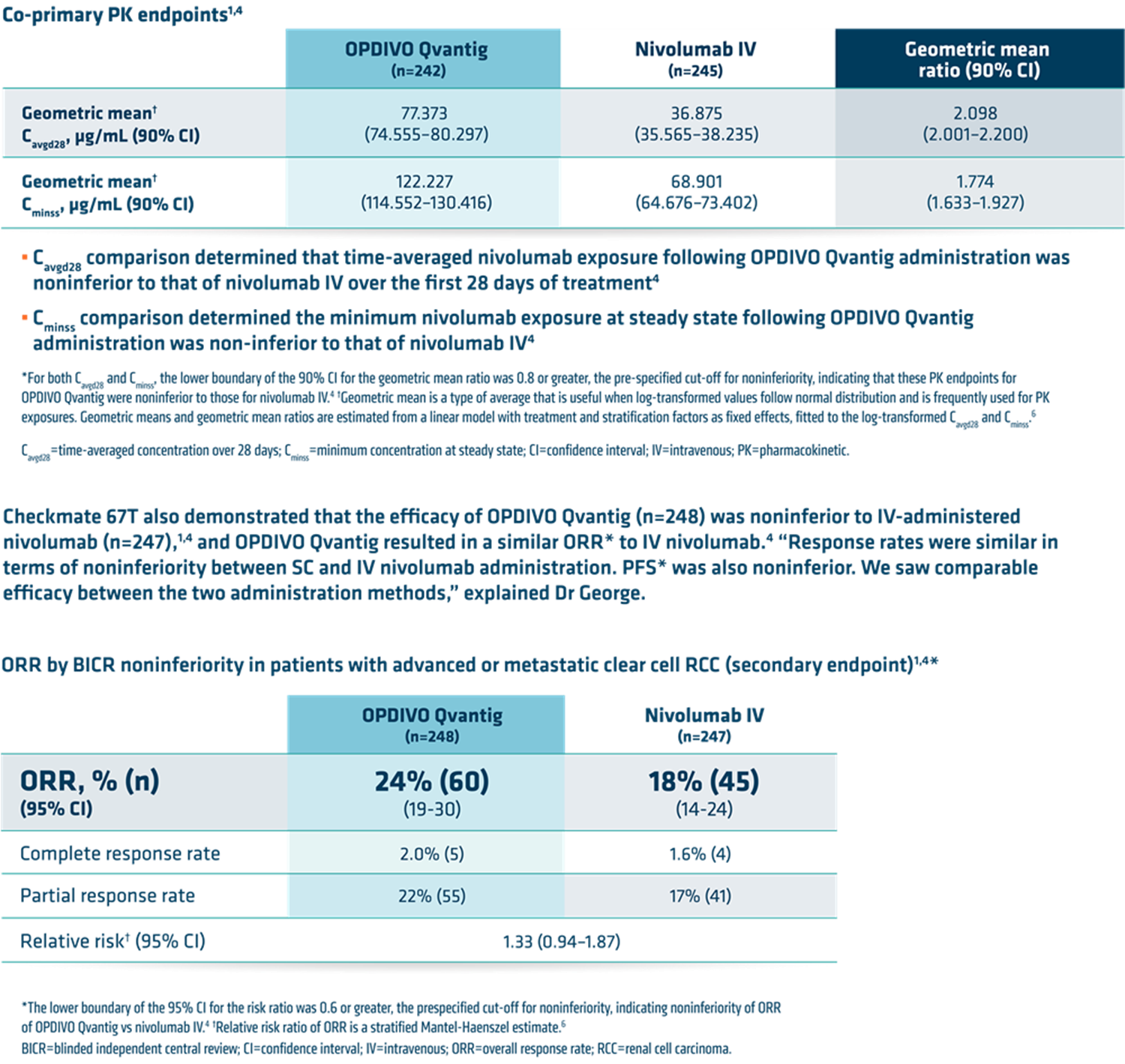
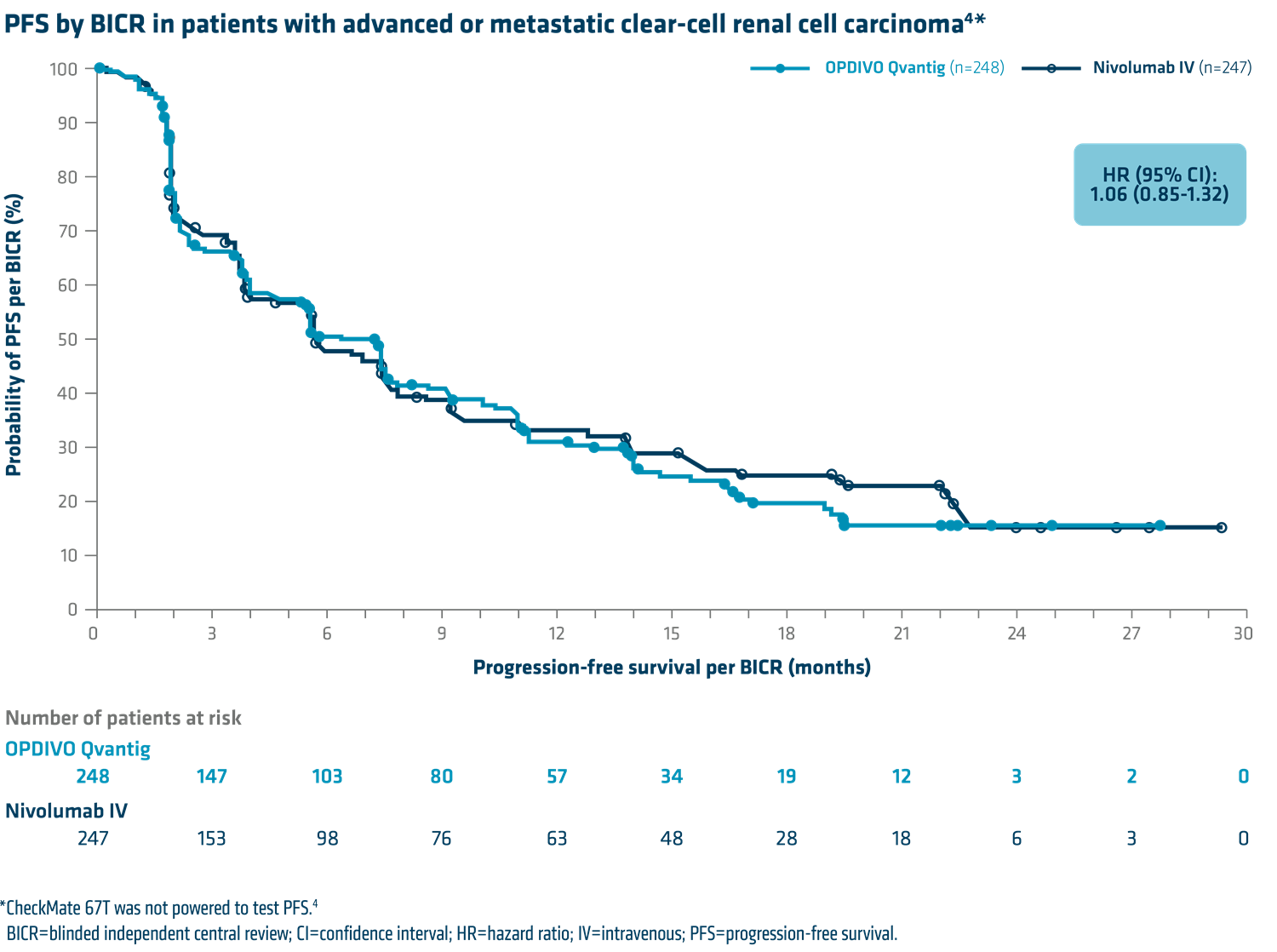
CheckMate 67T was a phase 3, randomized (1:1), open-label, noninferiority trial evaluating OPDIVO Qvantig (1,200 mg of nivolumab and 20,000 units of hyaluronidase) compared to intravenous nivolumab, in adult patients with advanced or metastatic clear-cell renal cell carcinoma (ccRCC) who received prior systemic therapy.1,4 Patients were stratified by weight (<80 kg versus ≥80 kg) and International Metastatic RCC Database Consortium (IMDC) risk score (favorable vs intermediate vs poor risk).1 A total of 495 patients were randomized to receive either OPDIVO Qvantig every 4 weeks subcutaneously (n=248) or nivolumab 3 mg/kg every 2 weeks intravenously (n=247).1,4 The co-primary endpoints were time-averaged serum concentration over 28 days (Cavgd28) and minimum serum concentration at steady state (Cminss).4 The key powered secondary endpoint was overall response rate, as assessed by blinded independent central review. The minimum follow-up time was 8 months.4

Pharmacokinetic, efficacy, and safety results

CheckMate 67T demonstrated that the PK of OPDIVO Qvantig was noninferior to that of intravenously administered nivolumab.1,4*
 

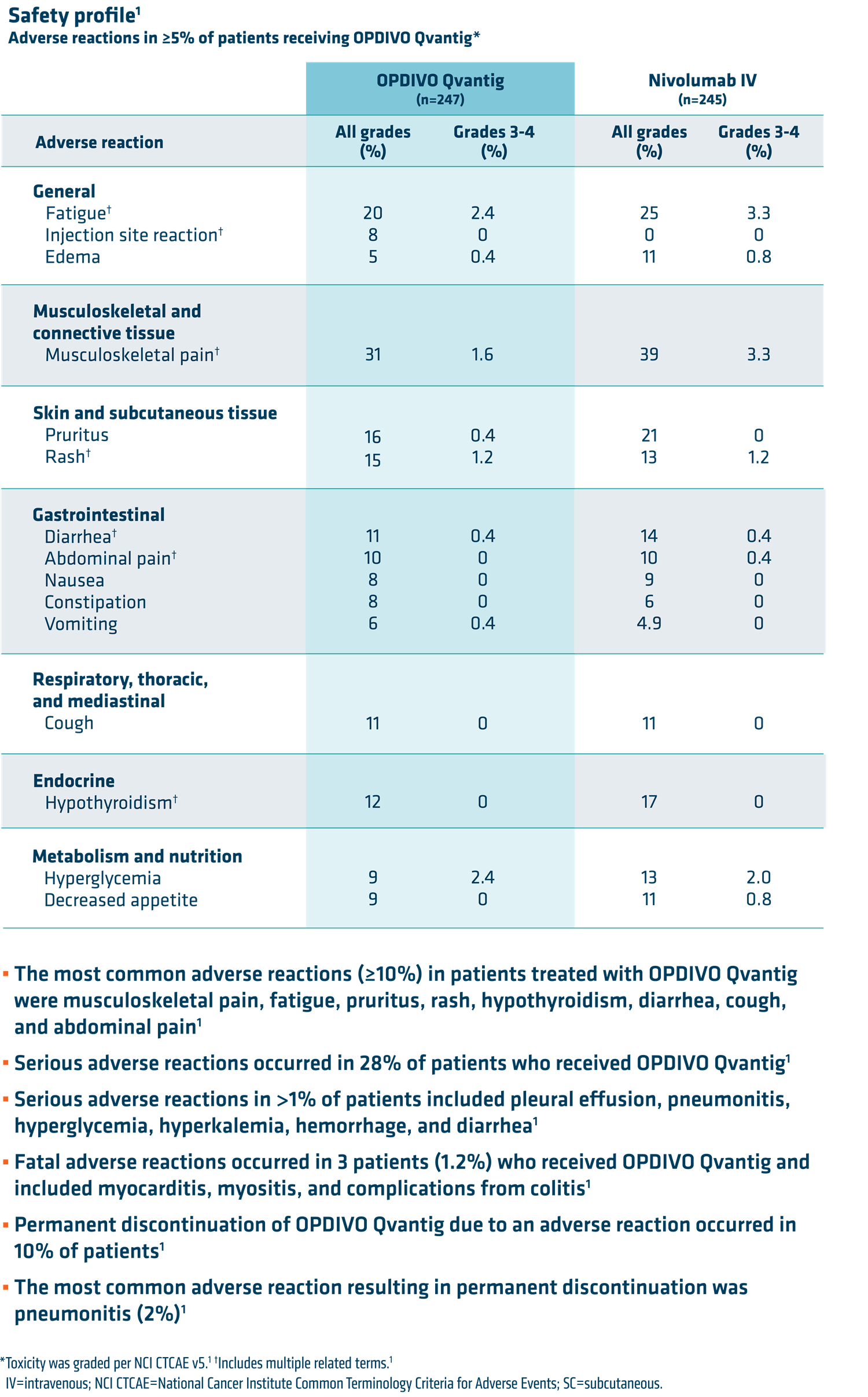
OPDIVO Qvantig resulted in a safety profile comparable with IV nivolumab.1 Dr George noted, “Safety was similar between administration methods. Rates of adverse reactions were similar for IV and SC nivolumab administration.6 Please see safety table below for more information.
Summary and conclusions

OPDIVO Qvantig resulted in comparable PK, efficacy, and safety to IV nivolumab and may be the right option for your eligible patients.1 This 3-5 minute SC injection option may reduce the steps required for preparation and time needed for administration compared to IV nivolumab.1,2* There is no need for IV preparation, dilution, weight-based dose calculations, or port access with OPDIVO Qvantig.1 According to Dr George, “For my appropriate patients, it gives me flexibility. It may save administration time.* For eligible patients, it’s great to have this subcutaneous treatment option.

*3-5–minute vs 30-minute infusion of IV nivolumab. This does not account for all aspects of treatment. Actual clinic time may vary.1,2

INDICATIONS

OPDIVO QVANTIG™ (nivolumab and hyaluronidase-nvhy), as monotherapy, is indicated for the first-line treatment of adult patients with intermediate- or poor-risk advanced renal cell carcinoma (RCC), following treatment with intravenous nivolumab and ipilimumab combination therapy.
Limitations of Use: OPDIVO QVANTIG is not indicated in combination with ipilimumab for the treatment of renal cell carcinoma.

OPDIVO QVANTIG™ (nivolumab and hyaluronidase-nvhy), in combination with cabozantinib, is indicated for the first-line treatment of adult patients with advanced renal cell carcinoma (RCC).

OPDIVO QVANTIG™ (nivolumab and hyaluronidase-nvhy), as monotherapy, is indicated for the treatment of adult patients with advanced renal cell carcinoma (RCC) who have received prior anti-angiogenic therapy.

OPDIVO QVANTIG™ (nivolumab and hyaluronidase-nvhy), as monotherapy, is indicated for the treatment of adult patients with unresectable or metastatic melanoma.

OPDIVO QVANTIG™ (nivolumab and hyaluronidase-nvhy), as monotherapy, is indicated for the treatment of adult patients with unresectable or metastatic melanoma following treatment with intravenous nivolumab and ipilimumab combination therapy.
Limitations of Use: OPDIVO QVANTIG is not indicated in combination with ipilimumab for treatment of unresectable or metastatic melanoma.

OPDIVO QVANTIG™ (nivolumab and hyaluronidase-nvhy), as monotherapy, is indicated for the adjuvant treatment of adult patients with completely resected Stage IIB, Stage IIC, Stage III, or Stage IV melanoma.

OPDIVO QVANTIG™ (nivolumab and hyaluronidase-nvhy), in combination with platinum-doublet chemotherapy, is indicated as neoadjuvant treatment of adult patients with resectable (tumors ≥4 cm or node positive) non-small cell lung cancer (NSCLC).

OPDIVO QVANTIG™ (nivolumab and hyaluronidase-nvhy), in combination with platinum-doublet chemotherapy, is indicated for the neoadjuvant treatment of adult patients with resectable (tumors ≥4 cm or node positive) non-small cell lung cancer (NSCLC) and no known epidermal growth factor receptor (EGFR) mutations or anaplastic lymphoma kinase (ALK) rearrangements, followed by OPDIVO QVANTIG as monotherapy in the adjuvant setting after surgical resection.

OPDIVO QVANTIG™ (nivolumab and hyaluronidase-nvhy), as monotherapy, is indicated for the treatment of adult patients with metastatic non-small cell lung cancer (NSCLC) with progression on or after platinum-based chemotherapy. Patients with EGFR or ALK genomic tumor aberrations should have disease progression on FDA-approved therapy for these aberrations prior to receiving OPDIVO QVANTIG.
Limitations of Use: OPDIVO QVANTIG is not indicated in combination with ipilimumab for the treatment of metastatic NSCLC.

OPDIVO QVANTIG™ (nivolumab and hyaluronidase-nvhy), as monotherapy, is indicated for the treatment of adult patients with recurrent or metastatic squamous cell carcinoma of the head and neck (SCCHN) with disease progression on or after platinum-based therapy.

OPDIVO QVANTIG™ (nivolumab and hyaluronidase-nvhy), as monotherapy, is indicated for the adjuvant treatment of adult patients with urothelial carcinoma (UC) who are at high risk of recurrence after undergoing radical resection of UC.

OPDIVO QVANTIG™ (nivolumab and hyaluronidase-nvhy), in combination with cisplatin and gemcitabine, is indicated for the first-line treatment of adult patients with unresectable or metastatic urothelial carcinoma (UC).

OPDIVO QVANTIG™ (nivolumab and hyaluronidase-nvhy), as monotherapy, is indicated for the treatment of adult patients with locally advanced or metastatic urothelial carcinoma (UC) who have disease progression during or following platinum-containing chemotherapy or have disease progression within 12 months of neoadjuvant or adjuvant treatment with platinum-containing chemotherapy.

OPDIVO QVANTIG™ (nivolumab and hyaluronidase-nvhy), as monotherapy, is indicated for the adjuvant treatment of completely resected esophageal or gastroesophageal junction cancer with residual pathologic disease in adult patients who have received neoadjuvant
chemoradiotherapy (CRT).

OPDIVO QVANTIG™ (nivolumab and hyaluronidase-nvhy), in combination with fluoropyrimidine- and platinum-containing chemotherapy, is indicated for the first-line treatment of adult patients with unresectable advanced or metastatic esophageal squamous cell carcinoma (ESCC) whose tumors express PD-L1 (≥1%).
Limitations of Use: OPDIVO QVANTIG is not indicated in combination with ipilimumab for the treatment of patients with unresectable advanced or metastatic ESCC.

OPDIVO QVANTIG™ (nivolumab and hyaluronidase-nvhy), as monotherapy, is indicated for the treatment of adult patients with unresectable advanced, recurrent or metastatic esophageal squamous cell carcinoma (ESCC) after prior fluoropyrimidine-and platinum-based chemotherapy.

OPDIVO QVANTIG™ (nivolumab and hyaluronidase-nvhy), in combination with fluoropyrimidine- and platinum-containing chemotherapy, is indicated for the treatment of adult patients with advanced or metastatic gastric cancer, gastroesophageal junction cancer, and esophageal adenocarcinoma whose tumors express PD-L1 (≥1%).

IMPORTANT SAFETY INFORMATION 

Severe and Fatal Immune-Mediated Adverse Reactions

  • Immune-mediated adverse reactions, which may be severe or fatal, can occur in any organ system or tissue. While immune-mediated adverse reactions usually manifest during treatment, they can also occur after discontinuation of OPDIVO QVANTIG. Early identification and management are essential to ensure safe use of OPDIVO QVANTIG. Monitor for signs and symptoms that may be clinical manifestations of underlying immune-mediated adverse reactions. Evaluate clinical chemistries including liver enzymes, creatinine, and thyroid function at baseline and periodically during treatment. In cases of suspected immune-mediated adverse reactions, initiate appropriate workup to exclude alternative etiologies, including infection. Institute medical management promptly, including specialty consultation as appropriate.
  • Withhold or permanently discontinue OPDIVO QVANTIG depending on severity (please see Section 2 Dosage and Administration in the accompanying Full Prescribing Information). In general, if OPDIVO QVANTIG interruption or discontinuation is required, administer systemic corticosteroid therapy (1 to 2 mg/kg/day prednisone or equivalent) until improvement to Grade 1 or less. Upon improvement to Grade 1 or less, initiate corticosteroid taper and continue to taper over for at least 1 month. Consider administration of other systemic immunosuppressants in patients whose immune-mediated adverse reactions are not controlled with corticosteroid therapy.
  • Toxicity management guidelines for adverse reactions that do not necessarily require systemic steroids (e.g., endocrinopathies and dermatologic reactions) are discussed below.

Immune-Mediated Pneumonitis

  • OPDIVO QVANTIG can cause immune-mediated pneumonitis. The incidence of pneumonitis is higher in patients who have received prior thoracic radiation.
  • Immune-mediated pneumonitis occurred in 2.8% (7/247) of patients receiving OPDIVO QVANTIG, including Grade 3 (0.8%) and Grade 2 (2.0%) adverse reactions.

Immune-Mediated Colitis

  • OPDIVO QVANTIG can cause immune-mediated colitis. A common symptom included in the definition of colitis was diarrhea. Cytomegalovirus (CMV) infection/reactivation has been reported in patients with corticosteroid-refractory immune-mediated colitis. In cases of corticosteroid-refractory colitis, consider repeating infectious workup to exclude alternative etiologies.
  • Immune-mediated colitis occurred in 2.8% (7/247) of patients receiving OPDIVO QVANTIG, including Grade 3 (0.4%) and Grade 2 (2.4%) adverse reactions.

Immune-Mediated Hepatitis and Hepatotoxicity

  • OPDIVO QVANTIG can cause immune-mediated
  • Immune-mediated hepatitis occurred in 2.4% (6/247) of patients receiving OPDIVO QVANTIG, including Grade 3 (1.6%), and Grade 2 (0.8%) adverse reactions. Intravenous nivolumab in combination with cabozantinib can cause hepatic toxicity with higher frequencies of Grade 3 and 4 ALT and AST elevations compared to intravenous nivolumab alone. Consider more frequent monitoring of liver enzymes as compared to when the drugs are administered as single agents. With the combination of intravenous nivolumab and cabozantinib, Grades 3 and 4 increased ALT or AST were seen in 11% (35/320) of patients. 

Immune-Mediated Endocrinopathies

  • OPDIVO QVANTIG can cause primary or secondary adrenal insufficiency, immune-mediated hypophysitis, immune-mediated thyroid disorders, and Type 1 diabetes mellitus, which can present with diabetic ketoacidosis. Withhold OPDIVO QVANTIG depending on severity (please see section 2 Dosage and Administration in the accompanying Full Prescribing Information). For Grade 2 or higher adrenal insufficiency, initiate symptomatic treatment, including hormone replacement as clinically Hypophysitis can present with acute symptoms associated with mass effect such as headache, photophobia, or visual field defects. Hypophysitis can cause hypopituitarism; initiate hormone replacement as clinically indicated. Thyroiditis can present with or without endocrinopathy. Hypothyroidism can follow hyperthyroidism; initiate hormone replacement or medical management as clinically indicated. Monitor patients for hyperglycemia or other signs and symptoms of diabetes; initiate treatment with insulin as clinically indicated.
  • Adrenal insufficiency occurred in 2% (5/247) of patients receiving OPDIVO QVANTIG, including Grade 3 (0.8%) and Grade 2 (1.2%) adverse Adrenal insufficiency occurred in 4.7% (15/320) of patients with RCC who received intravenous nivolumab with cabozantinib, including Grade 3 (2.2%) and Grade 2 (1.9%) adverse reactions. Hypophysitis occurred in 0.6% (12/1994) of patients treated with single agent intravenous nivolumab, including Grade 3 (0.2%) and Grade 2 (0.3%). Thyroiditis occurred in 0.4% (1/247) of patients receiving OPDIVO QVANTIG, including a Grade 1 (0.4%) adverse reaction.
  • Hyperthyroidism occurred in 0.8% (2/247) of patients receiving OPDIVO QVANTIG, including Grade 2 (0.4%) adverse reactions. Hypothyroidism occurred in 9% (23/247) of patients receiving OPDIVO QVANTIG, including Grade 2 (5.7%) adverse reactions.
  • Grade 3 diabetes occurred in 4% (1/247) of patients receiving OPDIVO QVANTIG.

Immune-Mediated Nephritis with Renal Dysfunction

  • OPDIVO QVANTIG can cause immune-mediated
  • Grade 2 immune-mediated nephritis and renal dysfunction occurred in 1.2% (3/247) of patients receiving OPDIVO QVANTIG.

Immune-Mediated Dermatologic Adverse Reactions

  • OPDIVO QVANTIG can cause immune-mediated rash or dermatitis. Exfoliative dermatitis, including Stevens-Johnson Syndrome, toxic epidermal necrolysis (TEN), and DRESS (drug rash with eosinophilia and systemic symptoms), has occurred with PD-1/PD-L1 blocking antibodies. Topical emollients and/or topical corticosteroids may be adequate to treat mild to moderate non-exfoliative Withhold or permanently discontinue OPDIVO QVANTIG depending on severity (please see section 2 Dosage and Administration in the accompanying Full Prescribing Information).
  • Immune-mediated rash occurred in 7% (17/247) of patients, including Grade 3 (0.8%) and Grade 2 (2.8%) adverse reactions.

Other Immune-Mediated Adverse Reactions

  • The following clinically significant immune-mediated adverse reactions occurred at an incidence of <1% (unless otherwise noted) in patients who received OPDIVO QVANTIG or intravenous nivolumab as single agent or in combination with chemotherapy or immunotherapy, or were reported with the use of other PD-1/PD-L1 blocking antibodies. Severe or fatal cases have been reported for some of these adverse reactions: cardiac/vascular: myocarditis, pericarditis, vasculitis; nervous system: meningitis, encephalitis, myelitis and demyelination, myasthenic syndrome/myasthenia gravis (including exacerbation), Guillain-Barré syndrome, nerve paresis, autoimmune neuropathy; ocular: uveitis, iritis, and other ocular inflammatory toxicities can occur; gastrointestinal: pancreatitis to include increases in serum amylase and lipase levels, gastritis, duodenitis; musculoskeletal and connective tissue: myositis/polymyositis, rhabdomyolysis, and associated sequelae including renal failure, arthritis, polymyalgia rheumatica; endocrine: hypoparathyroidism; other (hematologic/immune): hemolytic anemia, aplastic anemia, hemophagocytic lymphohistiocytosis (HLH), systemic inflammatory response syndrome, histiocytic necrotizing lymphadenitis (Kikuchi lymphadenitis), sarcoidosis, immune thrombocytopenic purpura, solid organ transplant rejection, other transplant (including corneal graft) rejection.
  • Some ocular IMAR cases can be associated with retinal detachment. Various grades of visual impairment, including blindness, can occur. If uveitis occurs in combination with other immune-mediated adverse reactions, consider a Vogt-Koyanagi-Harada–like syndrome, as this may require treatment with systemic corticosteroids to reduce the risk of permanent vision loss.

Complications of Allogeneic Hematopoietic Stem Cell Transplantation

  • Fatal and other serious complications can occur in patients who receive allogeneic hematopoietic stem cell transplantation (HSCT) before or after being treated with OPDIVO QVANTIG. Transplant-related complications include hyperacute graft-versus-host disease (GVHD), acute GVHD, chronic GVHD, hepatic veno-occlusive disease (VOD) after reduced intensity conditioning, and steroid-requiring febrile syndrome (without an identified infectious cause). These complications may occur despite intervening therapy between OPDIVO QVANTIG and allogeneic HSCT.
  • Follow patients closely for evidence of transplant-related complications and intervene promptly. Consider the benefit versus risks of treatment with OPDIVO QVANTIG prior to or after an allogeneic HSCT.

Embryo-Fetal Toxicity

  • Based on its mechanism of action and data from animal studies, OPDIVO QVANTIG can cause fetal harm when administered to a pregnant woman. In animal reproduction studies, administration of nivolumab to cynomolgus monkeys from the onset of organogenesis through delivery resulted in increased abortion and premature infant Advise pregnant women of the potential risk to a fetus. Advise females of reproductive potential to use effective contraception during treatment with OPDIVO QVANTIG and for 5 months after the last dose.

Increased Mortality in Patients with Multiple Myeloma when Nivolumab Is Added to a Thalidomide Analogue and Dexamethasone

  • In randomized clinical trials in patients with multiple myeloma, the addition of a PD-1 blocking antibody, including intravenous nivolumab, to a thalidomide analogue plus dexamethasone, a use for which no PD-1 or PD-L1 blocking antibody is indicated, resulted in increased Treatment of patients with multiple myeloma with a PD-1 or PD-L1 blocking antibody in combination with a thalidomide analogue plus dexamethasone is not recommended outside of controlled clinical trials.

Lactation

  • There are no data on the presence of nivolumab or hyaluronidase in human milk, the effects on the breastfed child, or the effects on milk production. Because of the potential for serious adverse reactions in the breastfed child, advise women not to breastfeed during treatment and for 5 months after the last dose of OPDIVO Qvantig.

Serious Adverse Reactions

  • In Checkmate 67T, serious adverse reactions occurred in 28% of patients who received OPDIVO QVANTIG (n=247). Serious adverse reactions in >1% of patients included pleural effusion (1.6%), pneumonitis (1.6%), hyperglycemia (1.2%), hyperkalemia (1.2%), hemorrhage (1.2%) and diarrhea (1.2%). Fatal adverse reactions occurred in 3 patients (1.2%) who received OPDIVO QVANTIG and included myocarditis, myositis, and colitis complications. In Checkmate 037, serious adverse reactions occurred in 41% of patients receiving intravenous nivolumab (n=268). Grade 3 and 4 adverse reactions occurred in 42% of patients receiving intravenous nivolumab. The most frequent Grade 3 and 4 adverse drug reactions reported in 2% to <5% of patients receiving intravenous nivolumab were abdominal pain, hyponatremia, increased aspartate aminotransferase, and increased lipase. In Checkmate 066, serious adverse reactions occurred in 36% of patients receiving intravenous nivolumab (n=206). Grade 3 and 4 adverse reactions occurred in 41% of patients receiving intravenous The most frequent Grade 3 and 4 adverse reactions reported in ≥2% of patients receiving intravenous nivolumab were gamma-glutamyltransferase increase (3.9%) and diarrhea (3.4%). In Checkmate 067, the most frequent (≥10%) serious adverse reactions in the intravenous nivolumab arm (n=313) were diarrhea (2.2%), colitis (1.9%), and pyrexia (1.0%). In Checkmate 067, serious adverse reactions (74% and 44%), adverse reactions leading to permanent discontinuation (47% and 18%) or to dosing delays (58% and 36%), and Grade 3 or 4 adverse reactions (72% and 51%) all occurred more frequently in the intravenous nivolumab plus intravenous ipilimumab arm (n=313) relative to the intravenous nivolumab arm (n=313). The most frequent (≥10%) serious adverse reactions in the intravenous nivolumab plus intravenous ipilimumab arm and the intravenous nivolumab arm, respectively, were diarrhea (13% and 2.2%), colitis (10% and 1.9%), and pyrexia (10% and 1.0%).
  • In Checkmate 816, serious adverse reactions occurred in 30% of patients (n=176) who were treated with intravenous nivolumab in combination with platinum-doublet Serious adverse reactions in >2% included pneumonia and vomiting. No fatal adverse reactions occurred in patients who received intravenous nivolumab in combination with platinum-doublet chemotherapy. In Checkmate 77T, serious adverse reactions occurred in 21% of patients who received intravenous nivolumab in combination with platinum-doublet chemotherapy as neoadjuvant treatment (n=228). The most frequent (≥2%) serious adverse reactions was pneumonia. Fatal adverse reactions occurred in 2.2% of patients, due to cerebrovascular accident, COVID-19 infection, hemoptysis, pneumonia, and pneumonitis (0.4% each). In the adjuvant phase of Checkmate 77T, 22% of patients experienced serious adverse reactions (n=142). The most frequent serious adverse reaction was pneumonitis/ILD (2.8%). One fatal adverse reaction due to COVID-19 occurred. In Checkmate 017 and 057, serious adverse reactions occurred in 46% of patients receiving intravenous nivolumab (n=418). The most frequent serious adverse reactions reported in ≥2% of patients receiving intravenous nivolumab were pneumonia, pulmonary embolism, dyspnea, pyrexia, pleural effusion, pneumonitis, and respiratory failure. In Checkmate 057, fatal adverse reactions occurred; these included events of infection (7 patients, including one case of Pneumocystis jirovecii pneumonia), pulmonary embolism (4 patients), and limbic encephalitis (1 patient). In Checkmate 214, serious adverse reactions occurred in 59% of patients receiving intravenous nivolumab plus intravenous ipilimumab (n=547). The most frequent serious adverse reactions reported in ≥2% of patients were diarrhea, pyrexia, pneumonia, pneumonitis, hypophysitis, acute kidney injury, dyspnea, adrenal insufficiency, and colitis. In Checkmate 9ER, serious adverse reactions occurred in 48% of patients receiving intravenous nivolumab and cabozantinib (n=320). The most frequent serious adverse reactions reported in ≥2% of patients were diarrhea, pneumonia, pneumonitis, pulmonary embolism, urinary tract infection, and hyponatremia. Fatal intestinal perforations occurred in 3 (0.9%) patients.
  • In Checkmate 025, serious adverse reactions occurred in 47% of patients receiving intravenous nivolumab (n=406). The most frequent serious adverse reactions reported in ≥2% of patients were acute kidney injury, pleural effusion, pneumonia, diarrhea, and In Checkmate 141, serious adverse reactions occurred in 49% of patients receiving intravenous nivolumab (n=236). The most frequent serious adverse reactions reported in ≥2% of patients receiving intravenous nivolumab were pneumonia, dyspnea, respiratory failure, respiratory tract infection, and sepsis. In Checkmate 275, serious adverse reactions occurred in 54% of patients receiving intravenous nivolumab (n=270). The most frequent serious adverse reactions reported in ≥ 2% of patients receiving intravenous nivolumab were urinary tract infection, sepsis, diarrhea, small intestine obstruction, and general physical health deterioration. In Checkmate 274, serious adverse reactions occurred in 30% of patients receiving intravenous nivolumab (n=351). The most frequent serious adverse reaction reported in ≥ 2% of patients receiving intravenous nivolumab was urinary tract infection. Fatal adverse reactions occurred in 1% of patients; these included events of pneumonitis (0.6%). In Checkmate 901, serious adverse reactions occurred in 48% of patients receiving intravenous nivolumab in combination with chemotherapy. The most frequent serious adverse reactions reported in ≥2% of patients who received intravenous nivolumab with chemotherapy were urinary tract infection (4.9%), acute kidney injury (4.3%), anemia (3%), pulmonary embolism (2.6%), sepsis (2.3%), and platelet count decreased (2.3%). Fatal adverse reactions occurred in 3.6% of patients who received intravenous nivolumab in combination with chemotherapy; these included sepsis (1%). In Checkmate 238, serious adverse reactions occurred in 18% of patients receiving intravenous nivolumab (n=452). Grade 3 or 4 adverse reactions occurred in 25% of intravenous nivolumab-treated patients (n=452). The most frequent Grade 3 and 4 adverse reactions reported in ≥2% of intravenous nivolumab-treated patients were diarrhea and increased lipase and amylase. In Attraction-3, serious adverse reactions occurred in 38% of patients receiving intravenous nivolumab (n=209). Serious adverse reactions reported in ≥2% of patients who received intravenous nivolumab were pneumonia, esophageal fistula, interstitial lung disease, and pyrexia. The following fatal adverse reactions occurred in patients who received intravenous nivolumab: interstitial lung disease or pneumonitis (1.4%), pneumonia (1.0%), septic shock (0.5%), esophageal fistula (0.5%), gastrointestinal hemorrhage (0.5%), pulmonary embolism (0.5%), and sudden death (0.5%). In Checkmate 577, serious adverse reactions occurred in 33% of patients receiving intravenous nivolumab (n=532). A serious adverse reaction reported in ≥2% of patients who received intravenous nivolumab was pneumonitis. A fatal reaction of myocardial infarction occurred in one patient who received intravenous nivolumab. In Checkmate 648, serious adverse reactions occurred in 62% of patients receiving intravenous nivolumab in combination with chemotherapy (n=310). The most frequent serious adverse reactions reported in ≥2% of patients who received intravenous nivolumab with chemotherapy were pneumonia (11%), dysphagia (7%), esophageal stenosis (2.9%), acute kidney injury (2.9%), and pyrexia (2.3%). Fatal adverse reactions occurred in 5 (1.6%) patients who received OPDIVO in combination with chemotherapy; these included pneumonitis, pneumatosis intestinalis, pneumonia, and acute kidney injury. In Checkmate 648, serious adverse reactions occurred in 69% of patients receiving intravenous nivolumab in combination with intravenous ipilimumab (n=322). The most frequent serious adverse reactions reported in ≥2% who received intravenous nivolumab in combination with intravenous ipilimumab were pneumonia (10%), pyrexia (4.3%), pneumonitis (4.0%), aspiration pneumonia (3.7%), dysphagia (3.7%), hepatic function abnormal (2.8%), decreased appetite (2.8%), adrenal insufficiency (2.5%), and dehydration (2.5%). Fatal adverse reactions occurred in 5 (1.6%) patients who received intravenous nivolumab in combination with intravenous ipilimumab; these included pneumonitis, interstitial lung disease, pulmonary embolism, and acute respiratory distress syndrome. In Checkmate 649, serious adverse reactions occurred in 52% of patients treated with intravenous nivolumab in combination with chemotherapy (n=782). The most frequent serious adverse reactions reported in ≥2% of patients treated with intravenous nivolumab in combination with chemotherapy were vomiting (3.7%), pneumonia (3.6%), anemia, (3.6%), pyrexia (2.8%), diarrhea (2.7%), febrile neutropenia (2.6%), and pneumonitis (2.4%). Fatal adverse reactions occurred in 16 (2.0%) patients who were treated with intravenous nivolumab in combination with chemotherapy; these included pneumonitis (4 patients), febrile neutropenia (2 patients), stroke (2 patients), gastrointestinal toxicity, intestinal mucositis, septic shock, pneumonia, infection, gastrointestinal bleeding, mesenteric vessel thrombosis, and disseminated intravascular coagulation. In Checkmate 76K, serious adverse reactions occurred in 18% of patients receiving intravenous nivolumab (n=524). Adverse reactions which resulted in permanent discontinuation of intravenous nivolumab in >1% of patients included arthralgia (1.7%), rash (1.7%), and diarrhea (1.1%). A fatal adverse reaction occurred in 1 (0.2%) patient (heart failure and acute kidney injury).
  • The most frequent Grade 3-4 lab abnormalities reported in ≥1% of intravenous nivolumab-treated patients were increased lipase (2.9%), increased AST (2.2%), increased ALT (2.1%), lymphopenia (1.1%), and decreased potassium (1.0%).

Common Adverse Reactions 

  • In Checkmate 67T, the most common adverse reactions (≥10%) in patients treated with OPDIVO QVANTIG (n=247) were musculoskeletal pain (31%), fatigue (20%), pruritus (16%), rash (15%), hypothyroidism (12%), diarrhea (11%), cough (11%), and abdominal pain (10%). In Checkmate 037, the most common adverse reaction (≥20%) reported with intravenous nivolumab (n=268) was rash (21%). In Checkmate 066, the most common adverse reactions (≥20%) reported with intravenous nivolumab (n=206) vs dacarbazine (n=205) were fatigue (49% vs 39%), musculoskeletal pain (32% vs 25%), rash (28% vs 12%), and pruritus (23% vs 12%). In Checkmate 067, the most common (≥20%) adverse reactions in the intravenous nivolumab arm (n=313) were fatigue (59%), rash (40%), musculoskeletal pain (42%), diarrhea (36%), nausea (30%), cough (28%), pruritus (27%), upper respiratory tract infection (22%), decreased appetite (22%), headache (22%), constipation (21%), arthralgia (21%), and vomiting (20%). In Checkmate 067, the most common (≥20%) adverse reactions in the intravenous nivolumab plus intravenous ipilimumab arm (n=313) were fatigue (62%), diarrhea (54%), rash (53%), nausea (44%), pyrexia (40%), pruritus (39%), musculoskeletal pain (32%), vomiting (31%), decreased appetite (29%), cough (27%), headache (26%), dyspnea (24%), upper respiratory tract infection (23%), arthralgia (21%), and increased transaminases (25%).
  • In Checkmate 816, the most common (>20%) adverse reactions in the intravenous nivolumab plus chemotherapy arm (n=176) were nausea (38%), constipation (34%), fatigue (26%), decreased appetite (20%), and rash (20%). In Checkmate 77T, the most common adverse reactions (reported in ≥20%) in patients receiving intravenous nivolumab in combination with chemotherapy (n= 228) were anemia (39.5%), constipation (32.0%), nausea (28.9%), fatigue (28.1%), alopecia (25.9%), and cough (21.9%). In Checkmate 017 and 057, the most common adverse reactions (≥20%) in patients receiving intravenous nivolumab (n=418) were fatigue, musculoskeletal pain, cough, dyspnea, and decreased appetite. In Checkmate 214, the most common adverse reactions (≥20%) reported in patients treated with intravenous nivolumab plus intravenous ipilimumab (n=547) were fatigue (58%), rash (39%), diarrhea (38%), musculoskeletal pain (37%), pruritus (33%), nausea (30%), cough (28%), pyrexia (25%), arthralgia (23%), decreased appetite (21%), dyspnea (20%), and vomiting (20%). In Checkmate 9ER, the most common adverse reactions (≥20%) in patients receiving intravenous nivolumab and cabozantinib (n=320) were diarrhea (64%), fatigue (51%), hepatotoxicity (44%), palmar-plantar erythrodysaesthesia syndrome (40%), stomatitis (37%), rash (36%), hypertension (36%), hypothyroidism (34%), musculoskeletal pain (33%), decreased appetite (28%), nausea (27%), dysgeusia (24%), abdominal pain (22%), cough (20%) and upper respiratory tract infection (20%). In Checkmate 025, the most common adverse reactions (≥20%) reported in patients receiving intravenous nivolumab (n=406) vs everolimus (n=397) were fatigue (56% vs 57%), cough (34% vs 38%), nausea (28% vs 29%), rash (28% vs 36%), dyspnea (27% vs 31%), diarrhea (25% vs 32%), constipation (23% vs 18%), decreased appetite (23% vs 30%), back pain (21% vs 16%), and arthralgia (20% vs 14%). In Checkmate 141, the most common adverse reactions (≥10%) in patients receiving intravenous nivolumab (n=236) were cough (14%) and dyspnea (14%) at a higher incidence than investigator’s In Checkmate 275, the most common adverse reactions (≥ 20%) reported in patients receiving intravenous nivolumab (n=270) were fatigue (46%), musculoskeletal pain (30%), nausea (22%), and decreased appetite (22%). In Checkmate 274, the most common adverse reactions (20%) reported in patients receiving intravenous nivolumab (n=351) were rash (36%), fatigue (36%), diarrhea (30%), pruritus (30%), musculoskeletal pain (28%), and urinary tract infection (22%). In Checkmate 901, the most common adverse reactions (reported in ≥20% of patients) were nausea (52%), fatigue (48%), musculoskeletal pain (33%), constipation (30%), decreased appetite (30%), rash (25%), vomiting (23%), and peripheral neuropathy (20%). In Checkmate 238, the most common adverse reactions (≥20%) reported in intravenous nivolumab-treated patients (n=452) vs ipilimumab-treated patients (n=453) were fatigue (57% vs 55%), diarrhea (37% vs 55%), rash (35% vs 47%), musculoskeletal pain (32% vs 27%), pruritus (28% vs 37%), headache (23% vs 31%), nausea (23% vs 28%), upper respiratory infection (22% vs 15%), and abdominal pain (21% vs 23%). The most common immune-mediated adverse reactions were rash (16%), diarrhea/colitis (6%), and hepatitis (3%). In Attraction-3, the most common adverse reactions (≥20%) in intravenous nivolumab-treated patients (n=209) were rash (22%) and decreased appetite (21%). In Checkmate 577, the most common adverse reactions (≥20%) in patients receiving intravenous nivolumab (n=532) were fatigue (34%), diarrhea (29%), nausea (23%), rash (21%), musculoskeletal pain (21%), and cough (20%). In Checkmate 648, the most common adverse reactions (≥20%) in patients treated with intravenous nivolumab in combination with chemotherapy (n=310) were nausea (65%), decreased appetite (51%), fatigue (47%), constipation (44%), stomatitis (44%), diarrhea (29%), and vomiting (23%). In Checkmate 648, the most common adverse reactions reported in ≥20% of patients treated with intravenous nivolumab in combination with intravenous ipilimumab were rash (31%), fatigue (28 %), pyrexia (23%), nausea (22%), diarrhea (22%), and constipation (20%). In Checkmate 649, the most common adverse reactions (≥20%) in patients treated with intravenous nivolumab in combination with chemotherapy (n=782) were peripheral neuropathy (53%), nausea (48%), fatigue (44%), diarrhea (39%), vomiting (31%), decreased appetite (29%), abdominal pain (27%), constipation (25%), and musculoskeletal pain (20%). In Checkmate 76K, the most common adverse reactions (≥20%) reported with intravenous nivolumab (n=524) were fatigue (36%), musculoskeletal pain (30%), rash (28%), diarrhea (23%) and pruritus (20%).

Surgery Related Adverse Reactions

  • In Checkmate 77T, 5.3% (n=12) of the intravenous nivolumab-treated patients who received neoadjuvant treatment, did not receive surgery due to adverse reactions. The adverse reactions that led to cancellation of surgery in intravenous nivolumab-treated patients were cerebrovascular accident, pneumonia, and colitis/diarrhea (2 patients each) and acute coronary syndrome, myocarditis, hemoptysis, pneumonitis, COVID-19, and myositis (1 patient each).

Please see US Full Prescribing Information for OPDIVO QVANTIG.

References:

  1. OPDIVO Qvantig [package insert]. Princeton, NJ: Bristol-Myers Squibb Company.
  2. OPDIVO [package insert]. Princeton, NJ: Bristol-Myers Squibb Company.
  3. Bittner B et al. BioDrugs. 2018;32:425-440.
  4. Albiges L et al. Ann Oncol. 2025;36(1):99-107.
  5. Bittner B, Schmidt J. BioDrugs. 2024;38(1):23-46.
  6. George S et al. Oral presentation at ASCO GU 2024. Abstract LBA360.

© 2025 Bristol-Myers Squibb Company. OPDIVO QvantigTM and the related logo are trademarks of Bristol-Myers Squibb Company.

1992-US-2500197   05/25