ASH 2018 Four Cycles of Chemotherapy Equally Effective as Six Cycles in Diffuse Large B-Cell Lymphoma

SUMMARY: The American Cancer Society estimates that in 2019, about 74,200 people will be diagnosed with Non Hodgkin Lymphoma (NHL) in the United States and about 19,970 individuals will die of this disease. Diffuse Large B-Cell Lymphoma (DLBCL) is the most common of the aggressive Non-Hodgkin lymphoma’s in the United States, and the incidence has steadily increased 3-4% each year. More than half of patients are 65 or older at the time of diagnosis and the incidence is likely to increase with the aging of the American population. The etiology of Diffuse Large B-Cell Lymphoma is unknown. Contributing risk factors include immunosuppression (AIDS, transplantation setting, autoimmune diseases), UltraViolet radiation, pesticides, hair dyes, and diet. DLBCL is a neoplasm of large B cells and the most common chromosome abnormality involves alterations of the BCL-6 gene at the 3q27 locus, which is critical for germinal center formation. Two major molecular subtypes of DLBCL arising from different genetic mechanisms have been identified, using gene expression profiling: Germinal Center B-cell-like (GCB) and Activated B-Cell-like (ABC). Patients in the GCB subgroup have a higher five year survival rate, independent of clinical IPI (International Prognostic Index) risk score, whereas patients in the ABC subgroup have a significantly worse outcome. Regardless, R-CHOP regimen (RITUXAN®-Rituximab, Cyclophosphamide, Doxorubicin, Vincristine, and Prednisone), given every 21 days, for 6 cycles, delivered with curative intent, is the current standard of care for patients of all ages, with newly diagnosed DLBCL, regardless of molecular subtype. The MInT trial (MabThera International Trial Group) published in The Lancet Oncology in 2006 established that for a subgroup of young DLBCL patients with favorable prognosis (age-adjusted International Prognostic Index (aaIPI) of 0 and no bulky disease, 6 cycles CHOP-like chemotherapy plus RITUXAN® resulted in a 3-year Event Free Survival of 89%, Progression Free Survival of 95% and Overall Survival of 98% (Lancet Oncol 2006;7:379-391).

The International Prognostic Index includes the following risk factors and one point is assigned to each risk factor (Age greater than 60 years, ECOG PS of 2, 3 or 4, elevated serum LDH, more than one Extranodal site and Stages III or IV disease). Age-Adjusted IPI is a simplified version and can be used when comparing patients within an age group (i.e. 60 years or younger, or over 60 years) and includes only 3 of the above factors (Performance Status, LDH and Stage).

Treatment with CHOP-like chemotherapy can result in delayed toxicities including cardiotoxicity and second malignancies. De-escalating chemotherapy can reduce toxicities and cost, while improving patient convenience. The authors conducted the FLYER trial to evaluate whether a shorter chemotherapy course of 4 cycles of R-CHOP plus 2 cycles of RITUXAN® alone was non-inferior to the standard treatment of 6 cycles of R-CHOP.

The FLYER trial is an international, multicenter, randomized phase III study in which 592 treatment naïve patients with favorable risk (age 18-60 years, tumor size less than 7.5 cm), Stage I or II DLBCL, were randomly assigned to receive either 6 cycles of R-CHOP, or 4 cycles of R-CHOP plus 2 cycles of RITUXAN®. For this final analysis, 588 patients were evaluable. Each treatment cycle was 21 days. Radiotherapy was not part of the planned treatment, with the exception of prophylactic radiotherapy of the contralateral testis, in patients with Testicular lymphoma. Both treatment groups were well balanced. The mean age was 48 years, 99% were classified as IPI = 0 and 1% as IPI = 1. The Primary endpoint was Progression Free Survival (PFS).

At a median follow up of 66 months, there was no significant difference in the PFS between the two treatment groups (P=0.76). The 3-year Progression Free Survival (PFS) rate was 94% for patients who received 6 cycles of R-CHOP (N=295) compared with 96% for those who received 4 cycles of R-CHOP followed by 2 cycles of RITUXAN® (N=293). The 3-year Overall Survival (OS) rate was 98% among those who received 6 cycles of R-CHOP versus 99% for those who received 4 cycles of R-CHOP followed by 2 cycles of RITUXAN® (P=0.89). There was also no significant difference in the Relapse Rate between the two treatment groups (4-5%). Grade 3 and 4 nonhematologic as well as hematologic Adverse Events were higher in those patients who received 6 cycles of R-CHOP versus the 4 cycles of R-CHOP.

The authors concluded that in this randomized, noninferiority, phase III study, 2 fewer cycles of R-CHOP greatly reduced toxicity without compromising efficacy, in young treatment naïve patients, with low-risk Diffuse Large B-Cell Lymphoma. Data on outcomes in the Germinal Center B-cell-like (GCB) versus Activated B-Cell-like (ABC) subsets is not available. Excellent outcome of young patients (18-60 years) with favourable-prognosis diffuse large B-cell lymphoma (DLBCL) treated with 4 cycles CHOP plus 6 applications of rituximab: results of the 592 patients of the FLYER trial of the Dshnhl/GLA. Poeschel V, Held G, Ziepert M, et al. Presented at ASH Annual Meeting and Exposition: December 4-8, 2018; San Diego, California. Abstract 781.

Late Breaking Abstract – ASH 2018 IMBRUVICA® and RITUXAN® Combination Superior to FCR in Younger Patients with CLL

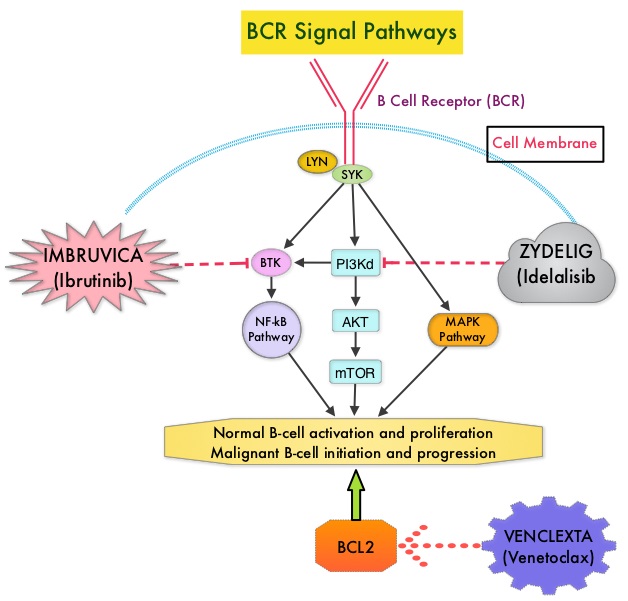
SUMMARY: The American Cancer Society estimates that for 2018, about 20,940 new cases of Chronic Lymphocytic Leukemia (CLL) will be diagnosed in the US and 4,510 patients will die of the disease. CLL accounts for about 25% of the new cases of leukemia and the average age at the time of diagnosis is around 71 years. B-cell CLL is the most common type of leukemia in adults, accounting for about 11% of all hematologic malignancies. Chemoimmunotherapy with Fludarabine, Cyclophosphamide, and Rituximab (FCR) has long been the gold standard and the most commonly used treatment regimen for younger, fit, treatment naïve patients with chronic lymphocytic leukemia. This is based on phase III trial data showing improvement in both Progression Free Survival (PFS) and Overall Survival (OS) compared with chemotherapy alone. FCR regimen however is associated with significant toxicities and cannot be tolerated by all CLL patients. IMBRUVICA® (Ibrutinib) is an oral, irreversible inhibitor of BTK and inhibits cell proliferation and promotes programmed cell death (Apoptosis) by blocking B-cell activation and signaling. IMBRUVICA® in phase III trials showed improved PFS and OS when compared to Chlorambucil in previously untreated, elderly patients with CLL. Nonetheless, the efficacy of IMBRUVICA® as a first-line treatment for younger CLL patients (70 years or younger), compared to the most efficacious regimen such as FCR, is unknown.BCR-Signal-Pathways

E1912, led by the ECOG-ACRIN Research Group (ECOG-ACRIN), is a randomized phase III study in which IMBRUVICA® (Ibrutinib) plus RITUXAN® (Rituximab) was compared to Fludarabine, Cyclophosphamide, and RITUXAN® (FCR) chemotherapy regimen, in previously untreated patients aged 70 years or younger with Chronic Lymphocytic Leukemia (CLL) or Small Lymphocytic Lymphoma (SLL). In this trial, 529 patients were randomly assigned in a 2:1 ratio to receive IMBRUVICA® 420 mg orally daily until disease progression along with RITUXAN® 50 mg/m2 on day 1 of cycle 2, 325 mg/m2 on day 2 of cycle 2, 500 mg/m2 on day 1 of cycles 3-7 (N=354) or six courses of Fludarabine 25 mg/m2 IV along with Cyclophosphamide 250 mg/m2 IV days 1-3 and RITUXAN® 50 mg/m2 IV on day 1 of cycle 1, 325 mg/m2 on day 2 of cycle 1, 500 mg/m2 on day 1 of cycles 2-6, given every 28 days (N=175). The median age was 58 years and 40% of the patients were 60 years of age or older. The Primary endpoint was Progression Free Survival (PFS) and the Secondary endpoint was Overall Survival (OS).

With a median follow up of 33.4 months, at the first interim analysis, IMBRUVICA® plus RITUXAN® significantly improved PFS compared to FCR (HR=0.35; P<0.0001), with a 65% reduction in the risk of progression or death with IMBRUVICA® plus RITUXAN® compared with FCR. The combination of IMBRUVICA® plus RITUXAN® also demonstrated improved OS (HR=0.17; P=0.0003) and this suggested that IMBRUVICA® plus RITUXAN® combination reduced the risk of death by 83% compared with FCR. In a subgroup analysis, the PFS benefit with IMBRUVICA® plus RITUXAN® was seen independent of age, sex, Performance Status (0-2), disease stage, as well as presence or absence of cytogenetic abnormality, deletion 11q23. At the time of this analysis, IMBRUVICA® plus RITUXAN® was also superior to FCR among IGHV unmutated patients (HR=0.26; P<0.0001), suggesting a 74% reduction in the risk of progression or death with IMBRUVICA® plus RITUXAN®, compared to FCR. A statistically significant benefit however was not observed among those with IGHV mutations, although there was a positive trend noted (HR=0.44; P=0.07). Treatment-related Grade 3 and 4 toxicities were significantly lower with IMBRUVICA® compared with FCR (58% versus 72%, respectively; P=0.004). FCR was more frequently associated with Grade 3 and 4 neutropenia (44% versus 23%) as well as infectious complications (18% versus 7%).

It was concluded that a combination of IMBRUVICA® and RITUXAN®, significantly improved PFS and OS, when compared to FCR, with fewer toxicities, among patients 70 years of age or under, with previously untreated CLL. The authors noted that these findings have immediate practice changing implications and establish IMBRUVICA® – based therapy as the most effective first-line therapy for untreated patients with CLL. Randomized Phase III Study of Ibrutinib (PCI-32765)-Based Therapy Vs. Standard Fludarabine, Cyclophosphamide, and Rituximab (FCR) Chemoimmunotherapy in Untreated Younger Patients with Chronic Lymphocytic Leukemia (CLL): A Trial of the ECOG-ACRIN Cancer Research Group (E1912. Shanafelt TD, Wang V, Kay NE, et al. Presented at the 2018 ASH Annual Meeting. December 1-4, 2018; San Diego. Abstract LBA-4.

Axillary Radiotherapy is an Alternative to Complete Lymph Node Dissection in Early-Stage Breast Cancer

SUMMARY: Breast cancer is the most common cancer among women in the US and about 1 in 8 women (12%) will develop invasive breast cancer during their lifetime. Approximately 266,120 new cases of invasive breast cancer will be diagnosed in 2018 and about 40,920 women will die of the disease. Axillary lymph node evaluation is an important part of breast cancer staging and the presence of axillary lymph metastases decreases the 5-year survival rate by 28-40%. Axillary lymph node status remains the most powerful predictor of breast cancer recurrence and survival. Axillary Lymph Node Dissection (ALND) was first advocated in the 18th century as part of the treatment of invasive breast cancer and has been standard practice until 2 decades back. ALND can be associated with significant morbidities such as upper limb lymphedema, pain, and sensitivity disorders and this can have a major psychological impact on breast cancer patients. Sentinel Lymph Node Biopsy (SLNB) which was introduced into clinical practice in the mid 1990’s, however has now become the standard for Stage I and II breast cancer. The sentinel node is the first lymph node(s) to which cancer cells are most likely to metastasize from a primary tumor. With the introduction of intraoperative lymphatic mapping in the 1990s, Sentinel Lymph Node Biopsy (SLNB) has now gained general acceptance and if the sentinel node is negative for metastatic disease or only has minimal disease, then no further axillary surgery is indicated. Unlike Axillary Lymph Node Dissection (ALND), SLNB is associated with a lower incidence of lymphedema/ seroma at the surgery site, paresthesias and restriction of joint movement. Nine randomized clinical trials have not shown any difference in mortality among patients who underwent ALND or SLNB for either lymph node metastases or negative sentinel lymph nodes, validating Sentinel Lymph Node Biopsy (SLNB). The American Society of Clinical Oncology (ASCO) first published guidelines on the use of SLNB for patients with early stage breast cancer in 2005, based on one randomized clinical trial. Since then, ASCO updated Clinical Practice Guideline based on additional information from 9 randomized clinical trials and13 cohort studies pertinent to SLNB and ALND.

Patients with T1-2 tumors with positive Sentinel Lymph Node Biopsy usually undergo complete ALND and there is increasing controversy about whether ALND is always necessary. AMAROS is a multicenter, randomized phase III trial, sponsored by the European Organisation for Research and Treatment of Cancer (EORTC), in which the effectiveness of complete Axillary Lymph Node Dissection (ALND) was compared with axillary Radiation Therapy (RT), in patients with invasive breast cancer. The rationale was that Radiation Therapy uses high-energy x-rays to damage tumor cells and may be a less invasive treatment and causes fewer side effects than complete ALND. This study was conducted to evaluate whether axillary RT could yield comparable outcomes to ALND with fewer adverse side effects, in this patient population. This trial enrolled 4806 patients with early-stage, clinically node-negative breast cancer of whom 1425 patients had a positive sentinel lymph node biopsy. Of these patients, 744 were randomly assigned to undergo complete ALND, whereas 681 patients received axillary RT. Both treatment groups were well balanced. The first 5-year follow up data published in 2013 showed that upper extremity lymphedema occurred significantly less often in those who received Radiotherapy compared with those who underwent complete ALND, and recent Quality of life and morbidity data supported these earlier findings.

The authors herein presented the 10 year follow up data of the AMAROS trial. It was noted that at 10 years, 1.82% of patients assigned to axillary RT had an axillary recurrence compared with 0.93% of those assigned to complete ALND, and this suggested that there was no significant difference (P=0.36). Further, there was no significant difference in the distant metastasis–free survival or Overall Survival between the two treatment groups. The distant metastasis–free survival was 78.2% among those assigned to axillary RT and 81.7% among those assigned to complete ALND and Overall Survival in the two treatment groups was 81.4% and 84.6%, respectively. It was noted that there was a higher 10-year cumulative incidence of second primaries among patients assigned to axillary RT compared with those assigned to complete Axillary Lymph Node Dissection (12% versus 8.3%). It remains unclear whether the addition of the radiation will increase the risk of second primary cancers.

It was concluded that axillary Radiotherapy is noninferior to complete Axillary Lymph Node Dissection in terms of locoregional control and this trial suggests that some patients with a positive sentinel lymph node biopsy may be appropriate candidates for axillary Radiotherapy. Rutgers, E. Radiotherapy or surgery of the axilla after a positive sentinel node in breast cancer patients: 10-year results of the EORTC AMAROS trial. Presented at the 2018 San Antonio Breast Cancer Symposium; December 4-8; San Antonio, Texas.(Abstract GS4-01)

Luspatercept Reduces Blood Transfusion Requirements in MDS and Beta-Thalassemia

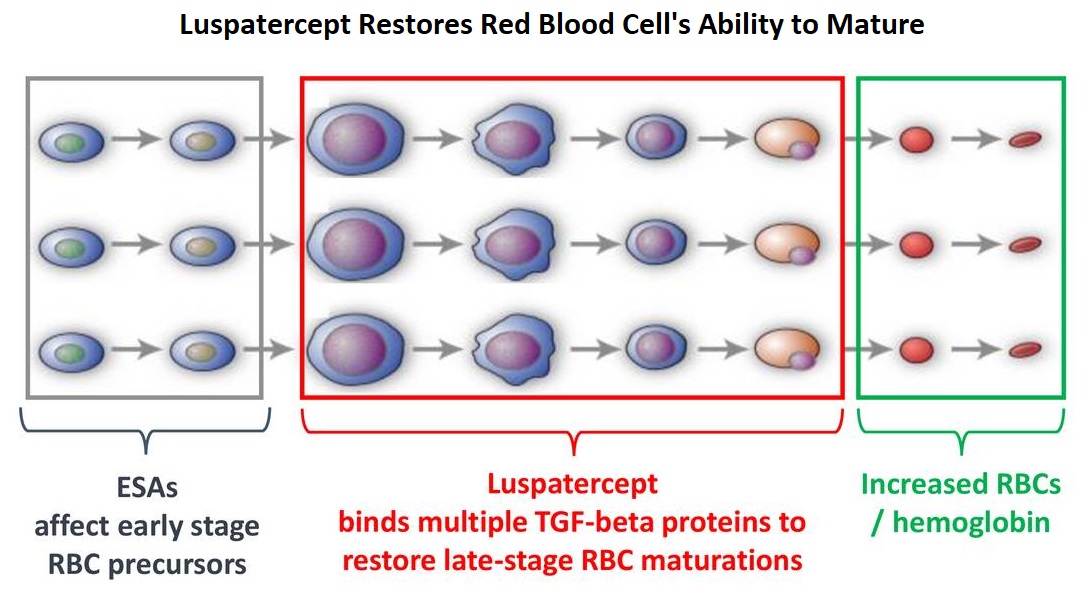
SUMMARY: Anemia is a common finding in patients with MyeloDysplastic Syndromes (MDS) and Beta-Thalassemia. These patients are in chronic need for transfusions which in turn can result in iron overload. Erythropoiesis Stimulating Agents (ESAs) are first-line therapy for anemia associated with lower-risk non-del(5q) MDS. ESAs such as Darbepoetin alfa and Epoetin alfa are re-engineered and recombinant DNA technology products of Erythropoietin (EPO), and they stimulate erythropoiesis by binding and activating the EPO receptor. There are however few treatment options for patients who are refractory to, unresponsive to, or ineligible for ESAs. There is therefore an unmet clinical need for safe and effective treatment options, to reduce the RBC transfusion burden in these patients. Beta-Thalassemia is an inherited hemoglobinopathy associated with an erythroid maturation defect and is characterized by ineffective erythropoiesis and impaired RBC maturation.Luspatercept-Restores-Red-Blood-Cell's-Ability-to-Mature

Luspatercept is a soluble fusion protein and is first-in-class erythroid maturation agent that enhances erythropoiesis by promoting late-stage Red Blood Cell precursor differentiation and maturation. It targets select Transforming Growth Factor (TGF)-β superfamily ligands such as GDF11, that regulate late-stage erythropoiesis. This results in a reduction in aberrant Smad2/3 signaling thereby promoting late-stage Red Blood Cell precursor differentiation and maturation. The following two, separate phase III studies have shown reduced blood transfusions requirements in two separate patient populations.

The MEDALIST trial is a randomized, double-blind, placebo-controlled phase III study which evaluated the efficacy and safety of Luspatercept in patients with anemia secondary to MDS, defined as very low-risk, low-risk, or Intermediate-risk with Ring Sideroblasts, according to the Revised International Prognostic Scoring System. Eligible patients were refractory, intolerant, or ineligible to receive ESAs and required RBC transfusions. A total of 229 patients (N=229) were randomized 2:1 to receive either Luspatercept at a starting dose level of 1mg/kg SC with titration up to 1.75 mg/kg if needed (N=153), or placebo SC (N=76), every 3 weeks for 24 weeks or more. The median age was 71 years and median time from diagnosis was 41.8 months. Approximately 95% of patients had previously received ESAs and 90% had an SF3B1 mutation. The Primary endpoint was RBC transfusion independence for 8 weeks or more between week 1 and 24. A key secondary endpoint was RBC transfusion independence for 12 weeks or more between week 1 and 24.

Among those receiving Luspatercept, 38% achieved the Primary endpoint of RBC transfusion independence for 8 weeks or more compared with 13.2% receiving placebo (P<0.0001). Further among those receiving Luspatercept, 28.1% achieved the key secondary endpoint of RBC transfusion independence for 12 weeks or more compared with 7.9% receiving placebo (P=0.0002). Additionally, patients receiving Luspatercept were more likely to achieve an mHI-E (modified hematologic improvement-erythroid) response, defined as a reduction in transfusion of 4 or more RBC units per 8 weeks or a mean hemoglobin increase of 1.5 g/dL or more per 8 weeks in the absence of transfusions, compared with patients receiving placebo (52.9% versus 11.8% during weeks 1-24; P<0.0001).

It was concluded that treatment with Luspatercept significantly decreased transfusion requirements among patients with low or Intermediate-risk MDS with Ring Sideroblasts.

The BELIEVE trial is a randomized, double-blind, placebo-controlled phase III study conducted to determine the efficacy and safety of Luspatercept in adult Beta-Thalassemia patients requiring regular RBC transfusions. In this study, 336 patients with Beta-Thalassemia or Hemoglobin E/ Beta-Thalassemia were randomized in a 2:1 to receive Luspatercept, at a starting dose of 1mg/kg with titration up to 1.25 mg/kg, or placebo, SC every 3 weeks for 48 weeks or more. Patients in both treatment groups continued to receive RBC transfusions and iron chelation therapy to maintain the same baseline Hgb level. Enrolled patients were 18 years or older and required regular RBC transfusions of 6-20 units in the 24 weeks prior to randomization with no transfusion-free period 35 days or more during that time. The median age was 30 years and 58% of patients were female. Patients received a median of 6 RBC units in the 12 weeks prior to treatment and 58% of patients in each treatment group had undergone splenectomy. The Primary endpoint was a 33% or more reduction in transfusion burden (with a reduction of 2 or more RBC units) during weeks 13–24, when compared with a 12-week baseline period.

It was noted that 21.4% of patients in the Luspatercept group achieved the Primary endpoint compared with 4.5% patients in the placebo group (P<0.0001). Towards the end of the trial, 20% of patients overall had decreased their transfusion units by one third or more, and 10% of patients had decreased their transfusions units by half or more. Overall, 70.5% of patients receiving Luspatercept achieved a 33% or more RBC transfusion reduction over any consecutive 12 weeks compared with 29.5% patients receiving placebo (P<0.0001).

It was concluded that treatment with Luspatercept resulted in significant reductions in RBC transfusion requirement, in adults with transfusion-dependent Beta-Thalassemia.

The most common adverse events included fatigue and muscle pain. It remains to be seen if Luspatercept would have similar efficacy in patients with high-risk MDS and patients with lower-risk MDS without ring sideroblasts.

The Medalist Trial: results of a phase 3, randomized, double-blind, placebo-controlled study of luspatercept to treat anemia in patients with very low-, low-, or intermediate-risk myelodysplastic syndromes (MDS) with ring sideroblasts (RS) who require red blood cell (RBC) transfusion. Fenaux P, Platzbecker U, Mufti GJ, et al. Presented at: 2018 ASH Annual Meeting; Dec. 1-4, 2018; San Diego. Abstract 1. https://ash.confex.com/ash/2018/webprogram/Paper110805.html

The Believe Trial: Results of a Phase 3, Randomized, Double-Blind, Placebo-Controlled Study of Luspatercept in Adult Beta-Thalassemia Patients Who Require Regular Red Blood Cell (RBC) Transfusions. Cappellini MD, Viprakasit V, Taher A, et al. Presented at: 2018 ASH Annual Meeting; Dec. 1-4, 2018; San Diego. Abstract 163. https://ash.confex.com/ash/2018/webprogram/Paper112435.html

Testing for BRCA1 and BRCA2 Mutations May Not Be Adequate in Breast Cancer Patients

SUMMARY: Breast cancer is the most common cancer among women in the US and about 1 in 8 women (12%) will develop invasive breast cancer during their lifetime. It is estimated that 266,120 new cases of invasive breast cancer will be diagnosed in 2018 and 40,920 women are expected to die from the disease. DNA can be damaged due to errors during its replication or as a result of environmental exposure to ultraviolet radiation from the sun or other toxins. The tumor suppressor genes such as BRCA1 (Breast Cancer 1) and BRCA2 help repair damaged DNA and thus play an important role in maintaining cellular genetic integrity, failing which these genetic aberrations can result in malignancies. The BRCA1 gene is located on the long (q) arm of chromosome 17 whereas BRCA2 is located on the long arm of chromosome 13. Mutations in BRCA1 and BRCA2 account for about 20 to 25 percent of hereditary breast cancers and about 5 to 10 percent of all breast cancers.These mutations can be inherited from either of the parents and a child has a 50 percent chance of inheriting this mutation and the deleterious effects of the mutations are seen even when an individual’s second copy of the gene is normal.

Breast cancer patients have a 5-12% lifetime risk of a second primary cancer. It remains unclear however whether patients with breast cancer and another primary cancer have mutations in genes other than BRCA1 and BRCA2, compared to those with a single breast cancer. There are well established data on the cancer risks, associated with different gene mutations. The authors hypothesized that among these patients, a number of factors including environmental exposures and genetic predisposition, may play a role in the development of more than one primary cancer in their lifetime. Recently published study suggested that there was a 85% cumulative breast cancer risk by age 60 years, among those with mutations in the TP53 gene (Cancer2016;122(23):3673-3681). Further with the increasing recognition that germline mutations in genes may have clinical and treatment implications, majority of patients are feeling comfortable opting for upfront multiple genetic mutation testing.

The researchers in this study looked at a panel of 15 actionable mutations beyond BRCA and the gene panel included TP53, PALB2, CDH1, PTEN, STK11, CHEK2, ATM, NBN, MSH6, PMS2, MSH2, MLH1, CDKN2A, MUTYH monoallelic, and CHEK2 Low Risk. Two cohorts of BRCA1 and BRCA2 negative patients were studied. The first cohort included high-risk breast cancer patients with either a single breast cancer (N=464) or breast cancer and an additional primary cancer (N=551). The second cohort comprised of patients with familial breast cancer (inherited risk) with either a single breast cancer (N=1464) or breast cancer and another primary cancer (N=340).

In a total of 891 patients in both cohorts who had breast cancer and an additional primary cancer, there was twice the risk of inheriting mutations in genes other than BRCA1 and BRCA2. In cohort 1, the mutation rate among patients who had breast cancer and an additional primary cancer was 8.7% compared to 4.1% among those with single breast cancer (P=0.003) and in cohort 2, the mutation rate was 8.2% versus 4.2%, respectively (P=0.003).

There was however a differences in individual gene mutation rates between the two cohorts. Among patients with breast cancer and an additional primary cancer in cohort 1, mutations in TP53 and MSH6 were significantly higher, whereas among the patients in cohort 2 with familial breast cancer, mutations in ATM, CHEK2 and PALB2 were significantly higher both in those with breast cancer and another primary cancer and those with a single breast cancer.

The authors concluded that patients with multiple primary cancers should be offered multiplex panel testing to identify patients at risk. Identifying mutations, especially mutations in the TP53 gene may have a bearing on appropriate recommendations such as risk-reducing bilateral mastectomy or mastectomy instead of a lumpectomy in this patient group. Thus, risk assessment using multiple genetic testing panels can be beneficial for clinical care and surveillance. Inherited mutations in breast cancer patients with and without multiple primary cancers. Maxwell KN, Vijai V, Lilyquist J, et al. DOI: 10.1200/JCO.2018.36.15_suppl.1503 Journal of Clinical Oncology 36, no. 15_suppl (May 2018) 1503-1503.

Survival Benefit Significantly More in North America with Frontline ADCETRIS® Chemotherapy Combination in Advanced Classical Hodgkin Lymphoma

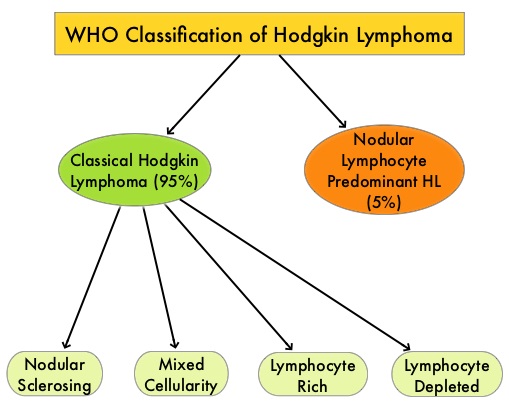
SUMMARY: The American Cancer Society estimates that in the United States for 2018, about 8,500 new cases of Hodgkin Lymphoma will be diagnosed and about 1,050 patients will die of the disease. Hodgkin Lymphoma is classified into two main groups – Classical Hodgkin Lymphomas and Nodular Lymphocyte Predominant type, by the World Health Organization. The Classical Hodgkin Lymphomas include Nodular sclerosing, Mixed cellularity, Lymphocyte rich, Lymphocyte depleted subtypes and accounts for approximately 10% of all malignant lymphomas. Nodular sclerosis Hodgkin Lymphoma histology, accounts for approximately 80% of Hodgkin lymphoma cases in older children and adolescents in the United States. Classical Hodgkin Lymphoma is a malignancy of primarily B lymphocytes and is characterized by the presence of large mononucleated Hodgkin (H) and giant multinucleated Reed-Sternberg (RS) cells, collectively known as Hodgkin and Reed-Sternberg cells (HRS).WHO-Classification-of-Hodgkin-Lymphoma

For patients with Hodgkin Lymphoma, the goal of first-line chemotherapy is cure. A positive PET scan following first-line chemotherapy is indicative of incomplete response with residual disease and warrants subsequent chemotherapy or radiation. Advanced stage (Stage III-IV) Classical Hodgkin Lymphoma has a cure rate of approximately 70-80% when treated in the first-line setting with a combination of Doxorubicin, Bleomycin, Vinblastine, and Dacarbazine (ABVD). This regimen which was developed more than 40 years ago is less expensive, easy to administer, is generally well tolerated and is often used in first line setting. Nonetheless, this regimen which contains Bleomycin can cause pulmonary toxicity, the incidence of which is higher in older patients and in those who receive consolidation radiotherapy to the thorax.

ADCETRIS® (Brentuximab vedotin) is an Antibody-Drug Conjugate (ADC) that targets CD30, which is a surface antigen, expressed on Reed-Sternberg cells, in patients with Classical Hodgkin Lymphoma. This ADC consists of an anti-CD30 monoclonal antibody linked to MonoMethyl Auristatin E (MMAE), an antimicrotubule agent. Upon binding to the CD30 molecule on the cancer cells, MMAE is released into the cancer cell, resulting in cell death. ADCETRIS® is presently approved by the FDA for previously untreated Stage III or IV Classical Hodgkin Lymphoma (cHL), in combination with chemotherapy, for treatment of Classical Hodgkin lymphoma at high risk of relapse or progression, as post-autologous Hematopoietic Stem Cell Transplantation (auto-HSCT) consolidation, and for treatment of Classical Hodgkin Lymphoma after failure of auto-HSCT or after failure of at least two prior multi-agent chemotherapy regimens, in patients who are not auto-HSCT candidates.

ECHELON-1 study, which is an international, open-label, randomized, multicenter, phase III trial, compared A+AVD with ABVD, as frontline therapy in patients with Stage III or IV Classical Hodgkin Lymphoma. This study included 1334 previously untreated patients with Stage III or IV Classical Hodgkin Lymphoma, who were randomly assigned in a 1:1 ratio to receive A+AVD (N=664), which consisted of ADCETRIS® 1.2 mg/kg , Doxorubicin 25 mg/m2, Vinblastine 6 mg/m2 and Dacarbazine 375 mg/m2 or ABVD (N=670), which consisted of Doxorubicin 25 mg/m2, Bleomycin 10 units/m2, Vinblastine 6 mg/m2 and Dacarbazine 375 mg/m2, given intravenously on days 1 and 15 of each 28-day cycle, for up to 6 cycles. The Primary end point was “modified” Progression Free Survival (mPFS), defined as progression, death, or the receipt of additional treatment, for patients not achieving CR at the completion of frontline therapy. It was previously reported that at a median follow up of 24.6 months, the 2 year modified PFS in the A+AVD and ABVD groups were 82.1% and 77.2% respectively (HR=0.77; P=0.04), suggesting an approximately 5% benefit with A+AVD.

The North American subgroup analysis of the ECHELON-1 study was conducted because of potential regional differences in the outcomes in the primary study and mPFS benefit was not equally distributed globally. The authors in this prespecified analysis examined the efficacy and safety of A+AVD vs ABVD in North America, as these patients accounted for approximately 40% of the over 1300 patients included in the ECHELON-1 study. This population group included 497 North American patients with advanced Classical Hodgkin Lymphoma, randomized 1:1 to receive up to six cycles of A+AVD or ABVD.

This subgroup analysis revealed an absolute difference of 10.6% in the mPFS per IRF-Independent Review Facility (A+AVD and ABVD groups were 84.3% and 73.7% respectively, HR=0.60; P=0.012) and an 11.7% difference in PFS per investigator review (A+AVD and ABVD groups were 88.1% and 76.4% respectively, HR=0.50; P=0.002), at 2 years. This analysis suggested that a larger proportion of patients in North America benefitted with the A+AVD regimen (10%-12% in North America as opposed to 5% globally). It is postulated that there may be biologic differences in the disease, regional differences in drug metabolism and differences in practice patterns, between countries. Toxicity profile was similar globally. There was a higher incidence of neutropenia in the A+AVD group and G-CSF prophylaxis should be a part of the regimen when A+AVD is used, in contrast to ABVD. Use of G-CSF primary prophylaxis was associated with a lower rate of ADCETRIS® dose delays and dose reductions compared to those without. There was a higher incidence of peripheral neuropathy in the A+AVD group as well, with majority of these events being grade 1 and 2, and this improved or resolved over time. Pulmonary toxicity was lower in patients receiving A+AVD compared to those receiving ABVD.

It was concluded that for patients treated in North America on the ECHELON-1 trial, the absolute difference between A+AVD and ABVD at 2 years for mPFS by IRF was 10.6% and for PFS per Investigator review was 11.7% (10%-12% benefit in North America as opposed to 5% globally). A prospective clinical trial is planned in advanced stage Hodgkin Lymphoma patients treated with A+AVD, to confirm these safety and efficacy findings, in the North American community setting. Brentuximab vedotin (BV) plus chemotherapy in patients with newly diagnosed advanced stage Hodgkin lymphoma (HL): North American results. Ramchandren R, Advani RH, Ansell SM, et al. J Clin Oncol.2018;36(suppl; abstr 7541). doi: 10.1200/JCO.2018.36.15.

FDA Approves KEYTRUDA® for Cervical Cancer

SUMMARY: The FDA on June 12, 2018, approved KEYTRUDA® (Pembrolizumab) for patients with recurrent or metastatic Cervical cancer with disease progression on or after chemotherapy, whose tumors express PD-L1 (Combined Positive Score-CPS, of 1 or more) as determined by an FDA-approved test. The American Cancer Society estimates that for Cervical cancer in the US for 2018, about 13,240 new cases of invasive Cervical cancer will be diagnosed and about 4,170 women will die of the disease. Cervical pre-cancers are diagnosed far more often than invasive Cervical cancer. Cervical cancer is most frequently diagnosed in women between the ages of 35 and 44 and in the US. Hispanic women are most likely to get Cervical cancer, followed by African-Americans, Asians and Pacific Islanders, and whites.

Approximately 5% of new diagnoses of Cervical cancer accounts for stage IV disease. However, metastatic disease develops in 15-60% of women, usually within the first two years of completing primary treatment. A select group of women with locally recurrent or limited metastatic disease may be potentially cured with surgical resection or radiotherapy. This however may not be feasible in the majority of cases. Patients with recurrent and metastatic Cervical cancer have a poor prognosis, with limited systemic treatment options. There is currently no consensus on the standard of care for second-line systemic treatment of recurrent or metastatic Cervical cancer, and as such represents a significant unmet clinical need.

KEYTRUDA® (Pembrolizumab) is a fully humanized, Immunoglobulin G4, anti-PD-1, monoclonal antibody, that binds to the PD-1 receptor and blocks its interaction with ligands PD-L1 and PD-L2. It thereby reverses the PD-1 pathway-mediated inhibition of the immune response and unleashes the tumor-specific effector T cells.

The FDA approval was based on KEYNOTE-158 study, which is a multicenter, non-randomized, open-label, multi-cohort phase II basket study trial, investigating the antitumor activity of KEYTRUDA® in 11 different advanced cancer types, who had progressed on standard-of-care therapy. Basket Trial by definition allows the testing of one drug on a single mutation in a variety of tumor types, at the same time, thereby potentially increasing the number of patients who are eligible to receive certain drugs. KEYTRUDA® was investigated in 98 patients with recurrent or metastatic Cervical cancer, enrolled in a single cohort of the KEYNOTE- 158 trial.

Key eligibility criteria for this cohort included patients with histologically or cytologically confirmed advanced Cervical cancer who had progressed on or intolerant to one or more lines of standard therapy and had tumor sample available for biomarker analysis. Patients were treated with KEYTRUDA® 200 mg IV every 3 weeks until documented disease progression or unacceptable toxicity..PD-L1 positivity, defined as a Combined Positive Score (CPS) of 1 or more, was evaluated retrospectively by ImmunoHistoChemistry (IHC) using the PD-L1 IHC 22C3 pharmDx Kit. Median age was 46 years and 77 patients (79%) of enrolled patients had PD-L1 positive tumors. Primary endpoint was Objective Response Rate (ORR) assessed by independent central review. Secondary endpoints included Duration of Response (DOR), Progression Free Survival (PFS), Overall Survival (OS) and safety.

With a median follow up time of 11.7 months, the ORR in the 77 PD-L1 positive patients was 14.3% including 2.6% Complete Responses and 11.7% Partial Responses. The estimated median response duration was not reached, 91% had response duration of 6 months or more, and no responses were observed in patients whose tumors did not have PD-L1 expression (CPS less than 1). The most common adverse reactions in at least 10% of patients were fatigue, fever, nausea, vomiting, diarrhea/colitis, abdominal pain, constipation, hypothyroidism, and dyspnea. KEYTRUDA® was discontinued due to adverse reactions in 8% of patients.

It was concluded that KEYTRUDA® is the first anti-PD-1 therapy approved for the treatment of advanced Cervical cancer, providing an important new second-line option for certain patients with this disease, with durable antitumor activity and manageable toxicity profile. Pembrolizumab treatment of advanced cervical cancer: Updated results from the phase 2 KEYNOTE-158 study. Chung HC, Schellens JH, Delord J, et al. J Clin Oncol 36, 2018 (suppl; abstr 5522)

KISQALI® plus FASLODEX® Improve Progression Free Survival in Advanced Breast Cancer

SUMMARY: Breast cancer is the most common cancer among women in the US and about 1 in 8 women (12%) will develop invasive breast cancer during their lifetime. Approximately 266,120 new cases of invasive breast cancer will be diagnosed in 2018 and about 40,920 women will die of the disease. Approximately 70% of breast tumors express Estrogen Receptors and/or Progesterone Receptors and these patients are often treated with anti-estrogen therapy as first line treatment. However, resistance to hormonal therapy occurs in a majority of the patients.

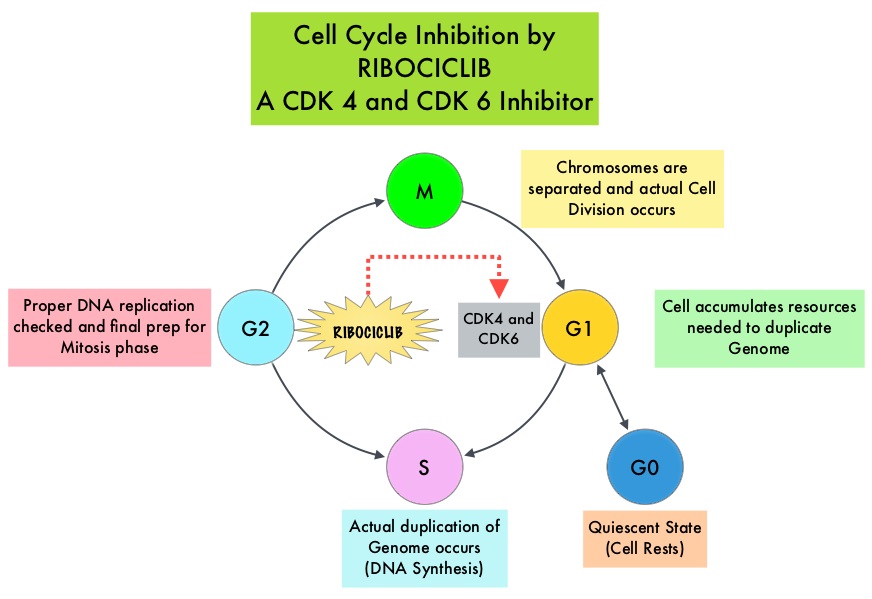
Cyclin Dependent Kinases (CDK) play a very important role to facilitate orderly and controlled progression of the cell cycle. Genetic alterations in these kinases and their regulatory proteins have been implicated in various malignancies. Cyclin Dependent Kinases 4 and 6 (CDK4 and CDK6) phosphorylate RetinoBlastoma protein (RB), and initiate transition from the G1 phase to the S phase of the cell cycle. RetinoBlastoma protein has antiproliferative and tumor-suppressor activity and phosphorylation of RB protein nullifies its beneficial activities. CDK4 and CDK6 are activated in hormone receptor positive breast cancer, promoting breast cancer cell proliferation. Further, there is evidence to suggest that endocrine resistant breast cancer cell lines depend on CDK4 for cell proliferation. The understanding of the role of Cyclin Dependent Kinases in the cell cycle, has paved the way for the development of CDK inhibitors.Cell-Cycle-Inhibition-by-RIBOCICLIB-A-CDK4-and-CDK6-Inhibitor

KISQALI® (Ribociclib) is an orally bioavailable, selective, small-molecule inhibitor of CDK4/6 that blocks the phosphorylation of RetinoBlastoma protein, thereby preventing cell-cycle progression and inducing G1 phase arrest. KISQALI® in combination with an Aromatase Inhibitor has been approved by the FDA for pre and perimenopausal women with HR (Hormone Receptor)-positive, HER2-negative advanced or metastatic breast cancer, as initial endocrine-based therapy. The efficacy of KISQALI® was evaluated in two prior randomized phase III studies. In the MONALEESA-2 trial which evaluated KISQALI® in combination with FEMARA® (Letrozole) compared to FEMARA® alone, in postmenopausal women with HR-positive, HER2-negative advanced breast cancer who received no prior therapy for their advanced breast cancer, the addition of KISQALI® to FEMARA® significantly prolonged Progression Free Survival (PFS) compared to FEMARA® alone. In the MONALEESA-7 study, KISQALI® in combination with Tamoxifen or a Non-Steroidal Aromatase Inhibitor plus ZOLADEX® (Goserelin) was compared with Tamoxifen or an Aromatase Inhibitor plus ZOLADEX®, in premenopausal or perimenopausal women with HR-positive, HER2- negative advanced breast cancer, who had not previously received endocrine therapy for advanced disease. In this study of premenopausal women, KISQALI® plus endocrine therapy significantly improved PFS compared with placebo plus endocrine therapy

MONALEESA-3 is a randomized, double-blind, placebo-controlled Phase III study which compared the efficacy of KISQALI® in combination with FASLODEX® with FASLODEX® alone, among postmenopausal women with HR-positive, HER2-negative advanced breast cancer who received no prior or only one line of prior endocrine therapy for advanced disease. In this trial, 726 women were randomized, of whom 367 were treatment-naïve and 345 patients had received up to one line of prior endocrine therapy for advanced disease. . Patients were randomized 2:1 to receive KISQALI® plus FASLODEX® (N=484) or placebo plus FASLODEX® (N=242). Treatment consisted of KISQALI® 600 mg orally daily 3 weeks on and 1 week off and FASLODEX® 500 mg IM on day 1 of each 28-day cycle, with an additional dose given on day 15 of cycle 1. Patients were stratified by the presence or absence of lung or liver metastases and prior endocrine therapy (first-line versus second-line). The median age in both groups was 63 years. The Primary endpoint was Progression Free Survival. Secondary end points included Overall Survival, Overall Response Rate, and Safety. The median time from randomization to data cutoff was 20.4 months.

Among all randomized patients, the median PFS in the KISQALI® plus FASLODEX® group was 20.5 months compared to 12.8 months in the FASLODEX® plus placebo group (HR= 0.59; P<0.001). This represented a 41% reduction in the risk of disease progression. The PFS benefit was consistent among the 367 patients who were treatment-naïve (HR=0.57) and 345 patients had received up to one line of prior endocrine therapy for advanced disease (HR=0.56). In the subgroup of patients taking KISQALI® plus FASLODEX® as first-line treatment, the median PFS was not reached and 70% were estimated to remain Progression Free at median follow up of 16.5 months. Among those patients with measurable disease at baseline, the Overall Response Rate was 40.9% for the KISQALI® plus FASLODEX® arm versus 28.7% for FASLODEX® plus placebo group (P=0.003). At first interim analysis, the Overall Survival data were immature. The most common grade 3/4 Adverse Events in patients receiving KISQALI® plus FASLODEX® compared to FASLODEX® alone were neutropenia (53.4% versus 0%) and leukopenia (14.1% versus 0%).

It was concluded that KISQALI® plus FASLODEX® might represent a new, first or second-line treatment option for patients with Hormone Receptor-positive, Human Epidermal growth factor Receptor 2-negative advanced breast cancer. MONALEESA-3 is the only randomized Phase III trial to study a CDK4/6 inhibitor plus FASLODEX® in the first-line setting, with demonstrable efficacy in patients with de novo advanced breast cancer and those who had not received adjuvant therapy in more than a year. Ribociclib (RIB) + fulvestrant (FUL) in postmenopausal women with hormone receptor-positive (HR+), HER2-negative (HER2 –) advanced breast cancer (ABC): Results from MONALEESA-3. Slamon DJ, Neven P, Chia SKL, et al. J Clin Oncol. 2018: 36, (suppl; abstr 1000).

Late Breaking Abstract – ASCO 2018 Broad Range of MSI-H tumors Linked with Lynch Syndrome

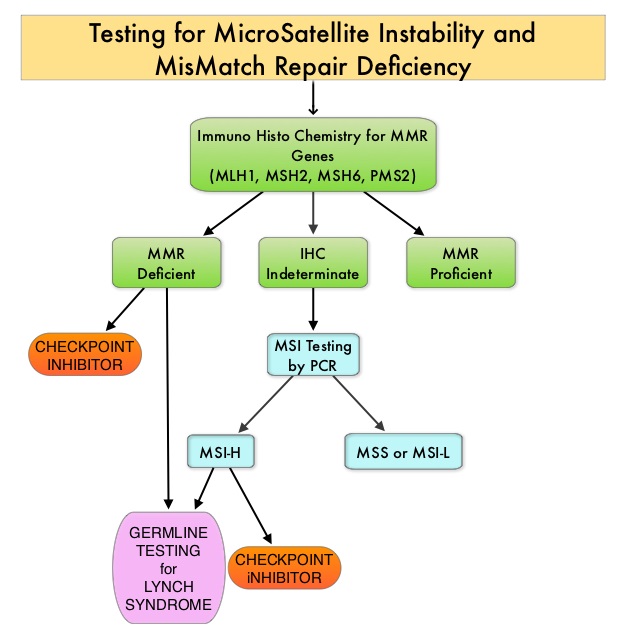
SUMMARY: The FDA in 2017 granted accelerated approval to KEYTRUDA® (Pembrolizumab), a PD-1 blocking antibody, for adult and pediatric patients with unresectable or metastatic, MicroSatellite Instability-High (MSI-H) or MisMatch Repair Deficient (dMMR) solid tumors that have progressed following prior treatment, and who have no satisfactory alternative treatment options. This has led to routine MSI-H/dMMR testing in advanced solid tumors. The DNA MisMatchRepair (MMR) system is responsible for molecular surveillance and works as an editing tool that identifies errors within the microsatellite regions of DNA and removes them. Defective MMR system leads to MSI (Micro Satellite Instability) and hypermutation, triggering an enhanced antitumor immune response. MSI is therefore a hallmark of defective/deficient DNA MisMatchRepair (dMMR) system and occurs in 15% of all colorectal cancers.Testing-for-MicroSatellite-Instability-and-MisMatch-Repair-Deficiency

Defective MisMatchRepair can be a sporadic or heritable event. Defective MisMatchRepair can manifest as a germline mutation occurring in MisMatchRepair genes including MLH1, MSH2, MSH6, PMS2 and EPCAM. This produces Lynch Syndrome often called Hereditary Nonpolyposis Colorectal Carcinoma – HNPCC, an Autosomal Dominant disorder, that is often associated with a high risk for Colorectal and Endometrial carcinoma, as well as several other malignancies including Ovary, Stomach, Small bowel, Hepatobiliary tract, Brain and Skin. MSI is a hallmark of Lynch Syndrome-associated cancers. MSI tumors tend to have better outcomes and this has been attributed to the abundance of tumor infiltrating lymphocytes in these tumors from increase immunogenicity. These tumors therefore are susceptible to blockade with immune checkpoint inhibitors. MSI testing is performed using a PCR based assay and MSI-High refers to instability at 2 or more of the 5 mononucleotide repeat markers and MSI-Low refers to instability at 1 of the 5 markers. Patients are considered Micro Satellite Stable (MSS) if no instability occurs. MSI-L and MSS are grouped together because MSI-L tumors are uncommon and behave similar to MSS tumors. Tumors considered MSI-H have deficiency of one or more of the DNA MisMatchRepair genes. MMR gene deficiency can be detected by ImmunoHistoChemistry (IHC). NCCN Guidelines recommend MMR or MSI testing for all patients with a history of Colon or Rectal cancer. Unlike Colorectal and Endometrial cancer, where MSI-H/dMMR testing is routinely undertaken, the characterization of Lynch Syndrome across heterogeneous MSI-H/dMMR tumors is unknown.

The aim of the study was to determine the prevalence of germline mutations in the DNA mismatch repair genes diagnostic of Lynch Syndrome, across MSI-H tumors. The researchers in this study analyzed 15,045 tumor samples collected from patients with more than 50 different types of cancer using a comprehensive genomic test called MSK-IMPACT (Integrated Mutation Profiling of Actionable Cancer Targets), a next-generation sequencing platform. The MSK-IMPACT assay is a qualitative in-vitro diagnostic test that uses targeted next-generation sequencing of Formalin Fixed Paraffin-Embedded (FFPE) tumor tissue matched with normal specimens, from patients with solid tumors, to detect tumor gene alterations in a broad multigene panel. It is the first multiplex tumor profiling test to receive FDA authorization. The MSK-IMPACT test can look for gene mutations and other errors in all solid tumors, regardless of their origin.

Scores of less than 3, 3-9 and 10 or more were designated MSS, MSI-Indeterminate (MSI-I) or MSI-H status, respectively. Germline mutations were assessed in MLH1, MSH2, MSH6, PMS2, EPCAM. ImmunoHistoChemical staining (IHC) for dMMR, and tumor signatures in Lynch Syndrome patients were assessed.

Of the tumor samples analyzed, 93.2% were MSS, 4.6% were MSI-I, and 2.2% were MSI-H. Germline mutations indicative of Lynch Syndrome were identified in 0.3% of microsatellite-stable tumors, 1.9% of MSI-I tumors, and 16.3% of MSI-H tumors (P<0.001). The authors noted that nearly 50% of patients with MSI-H/MSI-I tumors identified as having Lynch Syndrome, had cancers other than colorectal or endometrial carcinoma – the two malignancies that are typically seen with Lynch Syndrome. The cancer types identified that were previously not linked to or rarely, linked to the Lynch Syndrome, included Mesothelioma, Sarcoma, Adrenocortical cancer, Melanoma, Prostate and Ovarian germ cell cancer. Nearly 40% of these patients did not meet the genetic testing criteria for Lynch Syndrome. MMR-deficiency was found in 98.3% of MSI-I/MSI-H tumor samples.

It was concluded that MSI-H/dMMR tumors, regardless of cancer type and irrespective of the family history, should prompt germline testing for the evaluation of Lynch Syndrome. This will increase the ability to recognize Lynch Syndrome, not only in the patients tested, but also in at-risk family members, thus enabling the implementation of enhanced surveillance and risk reduction measures. Pan-cancer microsatellite instability to predict for presence of Lynch syndrome. Schwark AL, Srinivasan P, Kemel Y, et al. J Clin Oncol 36, 2018 (suppl; abstr LBA1509)

POMALYST® Combination Significantly Improves Progression Free Survival in Relapsed/Refractory Myeloma

SUMMARY: Multiple Myeloma is a clonal disorder of plasma cells in the bone marrow and the American Cancer Society estimates that in the United States, 30,770 new cases will be diagnosed in 2018 and 12,770 patients are expected to die of the disease. Multiple Myeloma in 2018 remains an incurable disease. The therapeutic goal therefore is to improve Progression Free Survival (PFS) and Overall Survival (OS). POMALYST® (Pomalidomide) is a novel, oral, immunomodulatory drug which is far more potent than THALOMID® (Thalidomide) and REVLIMID® (Lenalidomide), and has been shown to be active in REVLIMID® and VELCADE® (Bortezomib) refractory patients. POMALYST® is approved by the FDA for use in combination with Dexamethasone for the treatment of patients with Multiple Myeloma who have received at least 2 prior therapies including REVLIMID® and a Proteasome Inhibitor, and have had disease progression on or within 60 days of completing their last therapy.

POMALYST® has demonstrated synergistic anti-myeloma activity with Dexamethasone and Proteasome Inhibitors. It has been shown to inhibit proliferation of REVLIMID® resistant cells in preclinical studies. With the increasing use of REVLIMID® as first line treatment for patients with Multiple Myeloma, there is a clinically relevant unmet medical need for patients who have progressed on REVLIMID®. The authors herein report the outcomes of a first phase III trial, comparing a combination of POMALYST®, VELCADE® and low dose Dexamethasone (PVd) with VELCADE® and Dexamethasone (Vd), in an entirely post-REVLIMID® treated population.

OPTIMISMM is an international, open label phase III study in which 559 patients with Relapsed/Refractory Multiple Myeloma were randomized in a 1:1 ratio to receive POMALYST® in combination with VELCADE® and low dose Dexamethasone (PVd – N=281) or VELCADE® and Dexamethasone (Vd – N=278). Patients in both treatment groups received VELCADE® 1.3 mg/m² SC, on days 1, 4, 8, and 11 of cycles 1 thru 8, and on days 1 and 8 of cycle 9 and beyond, of each 21 day cycle. Dexamethasone was given to all patients at 20 mg orally daily (10 mg/day if more than 75 years of age) on the days of and after VELCADE® treatment. In the experimental arm, patients received POMALYST® 4 mg orally daily on days 1 thru 14, of each 21 day cycle. The median age was 67.5 years and both treatment groups were well balanced. All patients had prior treatment with REVLIMID® and 70% were refractory to this agent, whereas 72% of the patients had prior treatment with VELCADE® and 68% were refractory to the last treatment. The median number of prior treatment lines was 2 and approximately 40% of the patients in both treatment groups had one prior line of therapy. The percentage of patients with high-risk cytogenetics such as del(17p), t(4;14), and or t(14;16]), was similar in both treatment groups. The Primary endpoint was Progression Free Survival (PFS) and Secondary endpoints included Overall Survival (OS), Overall Response Rate (ORR), Duration of Response, and Safety.

At a median follow up of 16 months, the median PFS was 11.2 months with PVd compared with 7.1 months with Vd alone (HR=0.61; P<0.0001). This meant a 39% reduction in the risk of progression or death with POMALYST®, VELCADE® and low dose Dexamethasone combination, compared with VELCADE® and low dose Dexamethasone alone. This PFS benefit was noted regardless of age, performance status, high-risk cytogenetics, number of prior therapies, and types of prior therapy. The OS data are not mature. The most common side effects of the drug combinations were neutropenia, infections, and thrombocytopenia, which were manageable.

It was concluded that in the treatment of Multiple Myeloma, there remains an unmet medical need for those patients who have received REVLIMID® based therapies and are in early relapse. OPTIMISMM is the only phase III study to date in early Relapsed/Refractory Multiple Myeloma, that has demonstrated a significant and clinically meaningful PFS improvement in patients who have previously received REVLIMID® and especially those who are refractory to REVLIMID®, suggesting that the combination of POMALYST®, VELCADE® and low dose Dexamethasone may be a new standard of care in patients with Relapsed/Refractory Multiple Myeloma, with prior exposure to REVLIMID®. Pomalidomide (POM), bortezomib, and low‐dose dexamethasone (PVd) vs bortezomib and low-dose dexamethasone (Vd) in lenalidomide (LEN)-exposed patients (pts) with relapsed or refractory multiple myeloma (RRMM): Phase 3 OPTIMISMM trial. Richardson PG, Rocafiguera AO, Beksac M, et al. J Clin Oncol 36, 2018 (suppl; abstr 8001)