White Wine May Increase Melanoma Risk in UV-spared sites

SUMMARY: It is estimated that in the US, about 87,110 new cases of melanoma will be diagnosed in 2017 and about 9,730 patients will die of the disease. The incidence of melanoma has been on the rise for the past three decades. Alcohol related cancers account for 5.8% of all cancer deaths worldwide and there is compelling epidemiological evidence supporting that alcohol causes cancer of the oropharynx, larynx, oesophagus, liver, colon, rectum and breast (seven sites).

The mechanism of alcohol related carcinogenesis is not well understood and may vary from each target organ. Alcohol is predominantly metabolized in the liver to acetaldehyde, which is a carcinogen. Acetaldehyde is then converted into acetic acid radicals also known as acetyl radicals. There is strong evidence to suggest that acetaldehyde damages DNA. This mechanism of alcohol related carcinogenesis has been implicated in cancer of the oropharynx, larynx, esophagus and liver. With regards to breast cancer, breast tissue may be more susceptible to alcohol than other sites. Even moderate alcohol intake has been associated with increased levels of circulating sex hormones which in turn can activate cellular proliferation.

Even though the association between alcohol consumption and increased risk of numerous cancers is well known, there has been little or no evidence to associate alcohol consumption to melanoma. The authors in this study investigated whether alcohol intake was associated with risk of melanoma, by using data from three large prospective cohort studies, which included 210,252 participants. These individuals were followed for a mean of 18.3 years. The participants responded to questionnaires approximately every 4 years from 1984 to 2007 and provided information on their alcohol intake. A standard drink was defined at 12.8 grams of alcohol (one drink is considered to be 12 ounces of beer, 5 ounces of wine, or 1.5 ounces of hard liquor).

In this pooled analysis, a total of 1,374 cases of invasive melanoma were documented during the follow up period. Higher alcohol intake was associated with an increased incidence of invasive melanoma (HR=1.14; P=0.04). When analyzed by the type of alcoholic beverages and after adjusting for other alcoholic beverages, white wine consumption was associated with an increased risk of melanoma (HR 1.13; P<0.01). It was also noted that alcohol consumption-related melanoma risk, was higher in the UV-spared sites such as the torso which receives less sun exposure, compared with UV-exposed sites such as head, neck, or extremities. Individuals who consumed 20 grams or more of alcohol a day were 73% more likely to be diagnosed with melanomas of the trunk compared to nondrinkers (HR=1.3;P=0.02), whereas only 2% of the individuals were more likely to be diagnosed with melanoma of the head, neck and extremities compared with non drinkers (HR=1.02; P=0.25).

The researchers noted that there was no evidence that age, smoking history, caffeine intake, physical activity, hair color, mole count or BMI, modified the association between alcohol intake and melanoma, when these results were stratified by those variables. It was hypothesized that white wine may have higher levels of pre-existing acetaldehyde (which gives the pleasant fruity aroma), than beer or hard liquors and the antioxidants in the red wine may offset the carcinogenic risks associated with acetaldehyde.

The authors concluded that these findings support the American Cancer Society Guidelines for Cancer Prevention, to limit alcohol intake, and alcohol consumption was associated with a modest increase in the risk of melanoma, particularly on parts of the body that are less sun exposed. Alcohol Intake and Risk of Incident Melanoma: A Pooled Analysis of Three Prospective Studies in the United States. Rivera A, Nan H, Li T, et al. Cancer Epidemiol Biomarkers Prev. 2016;25:1550-1558
Adjuvant Therapy with YERVOY® Improves Overall Survival in Stage III Melanoma

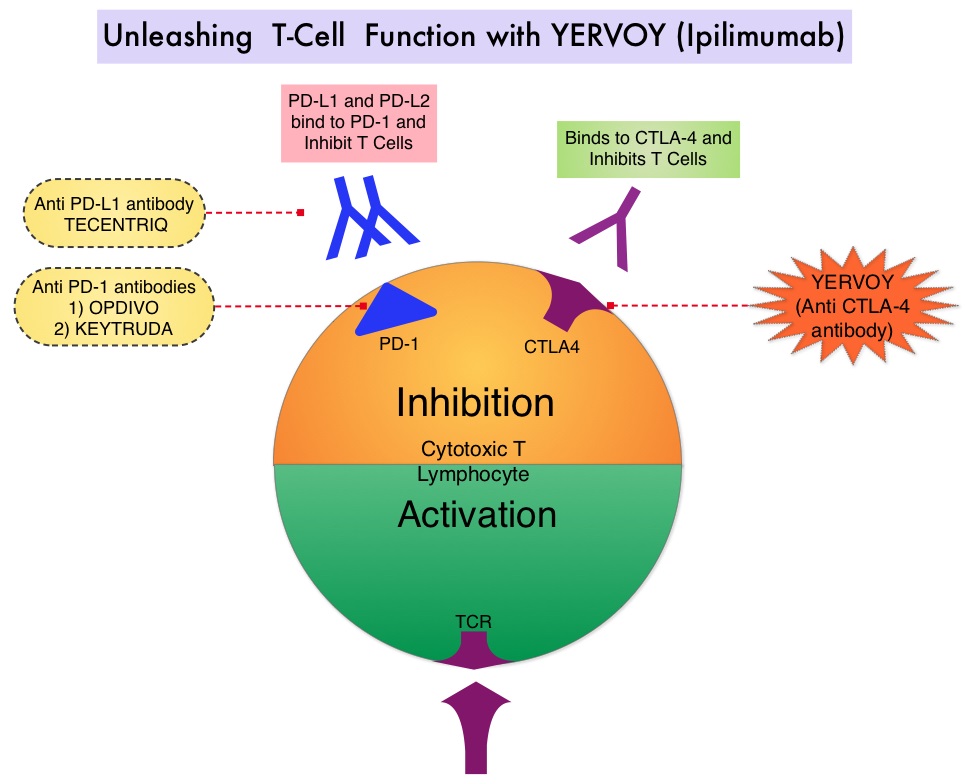
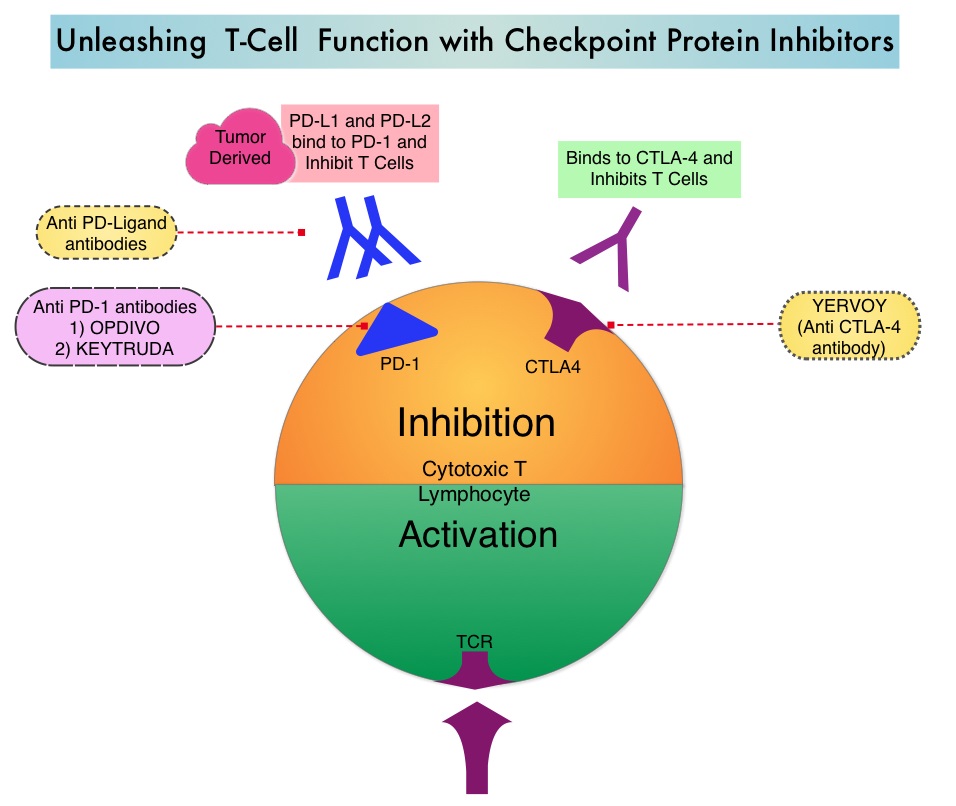
SUMMARY: It is estimated that in the US, approximately 76,380 new cases of melanoma will be diagnosed in 2016 and approximately 10,130 patients will die of the disease. The incidence of melanoma has been on the rise for the past three decades. Stage III malignant melanoma is a heterogeneous disease and the risk of recurrence is dependent on the number of positive nodes as well as presence of palpable versus microscopic nodal disease. Further, patients with a metastatic focus of more than 1 mm in the greatest dimension in the affected lymph node, have a significantly higher risk of recurrence or death than those with a metastasis of 1 mm or less. Patients with stage IIIA disease have a disease-specific survival rate of 78%, whereas those with stage IIIB and stage IIIC disease have a disease-specific survival rates of 59% and 40% respectively. Immune checkpoints are cell surface inhibitory proteins/receptors that harness the immune system and prevent uncontrolled immune reactions. With the recognition of Immune checkpoint proteins (“gate keepers”) and their role in suppressing antitumor immunity, antibodies have been developed that target the membrane bound inhibitory Immune checkpoint proteins/receptors such as CTLA-4 (Cytotoxic T-Lymphocyte Antigen 4, also known as CD152), PD-1(Programmed cell Death 1), etc. By blocking the Immune checkpoint proteins, one would expect to unleash the T cells, resulting in T cell proliferation, activation and a therapeutic response.

YERVOY® is a fully human immunoglobulin G1 monoclonal antibody, that blocks Immune checkpoint protein/receptor CTLA-4. YERVOY® was approved by the FDA in 2015 as adjuvant therapy for patients with malignant melanoma based on a phase III trial (EORTC 18071) in which adjuvant YERVOY® was compared with placebo in patients with resected stage III melanoma. At a median follow-up of 2.7 years, adjuvant YERVOY® was associated with significantly prolonged Recurrence Free Survival compared with placebo (HR=0.75; P=0.001). In this study, YERVOY® was dosed at 10 mg/kg and this dose was chosen based on a phase II trial that evaluated YERVOY® administered at three dose levels – 0.3 mg/kg, 3 mg/kg and 10 mg/kg. This trial demonstrated that the 10 mg/kg dose had the greatest efficacy for treatment of advanced melanoma, but had more toxicity.

The authors have now reported the efficacy of adjuvant therapy with YERVOY® in patients with high-risk stage III melanoma after complete lymph node dissection, at a median follow up of 5.3 years. EORTC 18071 is a randomized, double-blind, phase III trial in which patients who had undergone complete resection of stage III cutaneous melanoma were randomly assigned in a 1:1 ratio to receive YERVOY® at a dose of 10 mg/kg (N=475) or placebo (N=476), every 3 weeks for four doses and then every 3 months for up to 3 years or until disease recurrence or unacceptable toxicities. The Primary end point was Recurrence Free Survival and Secondary end points included Overall Survival, distant metastasis-free survival and safety.

At a median follow up of 5.3 years, the 5-year Recurrence Free Survival was 40.8% in the YERVOY® group compared with 30.3% in the placebo group (HR for recurrence or death = 0.76; P<0.001) and the 5-year Overall Survival was 65.4% in the YERVOY® group compared with 54.4% in the placebo group (HR for death = 0.72; P=0.001). The later meant a 28% reduction in the risk of death. The distant metastasis-free survival rate at 5 years was 48.3% in the YERVOY® group compared with 38.9% in the placebo group (HR for death or distant metastasis = 0.76; P=0.002). Grade 3 or 4 adverse events occurred in 54.1% of the patients in the YERVOY® group compared to 26.2% in the placebo group, and this was significant. Grade 3 or 4 Immune-related adverse events occurred in 41.6% of the patients in the YERVOY® group compared to 2.7% in the placebo group.

It was concluded that adjuvant therapy with YERVOY® at a dose of 10 mg/kg for high-risk stage III melanoma, significantly improves Recurrence Free Survival, Overall Survival, and distant metastasis-free survival, when compared to placebo. Given the potentially severe toxicities with this dose level of YERVOY®, the risks and benefits of this treatment has to be discussed with the patients and this treatment option should be reserved for experienced centers. Prolonged Survival in Stage III Melanoma with Ipilimumab Adjuvant Therapy. Eggermont AM, Chiarion-Sileni V, Grob J-J, et al. October 8, 2016DOI: 10.1056/NEJMoa1611299

Impressive 5-Year Survival Rates for Patients with Metastatic Melanoma Treated with OPDIVO®

SUMMARY: It is estimated that in the US, approximately 76,380 new cases of melanoma will be diagnosed in 2016 and approximately 10,130 patients will die of the disease. The incidence of melanoma has been on the rise for the past three decades. A better understanding of Immune checkpoints has opened the doors for the development of various immunotherapies. Immune checkpoints are cell surface inhibitory proteins/receptors that harness the immune system and prevent uncontrolled immune reactions. Survival of cancer cells in the human body may be related to their ability to escape immune surveillance, by inhibiting T lymphocyte activation. Under normal circumstances, inhibition of an intense immune response and switching off the T cells of the immune system is accomplished by Immune checkpoints or gate keepers. With the recognition of Immune checkpoint proteins and their role in suppressing antitumor immunity, antibodies have been developed that target the membrane bound inhibitory Immune checkpoint proteins/receptors such as CTLA-4 (Cytotoxic T-Lymphocyte Antigen 4, also known as CD152), PD-1(Programmed cell Death 1), etc. By blocking the Immune checkpoint proteins, one would expect to unleash the T cells, resulting in T cell proliferation, activation and a therapeutic response.

OPDIVO® (Nivolumab) is a fully human, immunoglobulin G4 monoclonal antibody that targets PD-1 receptor. In 2014, Topalian and Colleagues reported their finding of an early phase I trial (J Clin Oncol 2014;32:1020-1030), in which patients with advanced Melanoma (N = 107) who had 1-5 prior systemic therapies received OPDIVO® monotherapy. The median age of patients in this study was 61 years and patients received OPDIVO® every 2 weeks for up to 96 weeks. The median Overall Survival for these patients was 16.8 months and 1 and 2 year survival rates were 62% and 43%, respectively. It was noted that some patients had durable responses that persisted even after treatment was discontinued. This patient group was followed for Overall Survival, Progression Free Survival (PFS), long term safety and response duration, after discontinuing treatment with OPDIVO®. The authors have now reported the results of this extended follow up, with 5 year Overall Survival (OS) data from this study.

The 5 year Overall Survival in all 107 patients was 34% and the median OS was 20.3 months for those who received the approved dose of 3 mg/kg of OPDIVO® and 17.3 months in all 107 patients. As a comparison, according to the National Cancer Institute’s Surveillance, Epidemiology, and End Results (SEER) data, the 5 year OS rate for metastatic Melanoma patients diagnosed during the study period was 16.6%. The OS rates in this study appeared to have plateaued at 48 months. The Progression Free Survival at 30 months following treatment was 25.7% for those who received the approved dose of 3 mg/kg of OPDIVO® and 18.6% for all patients. The most common side effects across the entire cohort included fatigue, rash, diarrhea, pruritus and nausea.

The authors concluded that this analysis represents the first and longest follow up to date, testing an anti–PD1 immunotherapy in any specific disease. Monotherapy with OPDIVO® in heavily pretreated advanced Melanoma patients can result in more than a third of patients (34%) being alive, 5 years after starting treatment. Durable, long-term survival in previously treated patients with advanced melanoma (MEL) who received nivolumab (NIVO) monotherapy in a phase I trial. Hodi FS, Kluger H, Sznol M, et al. 2016 AACR Annual Meeting. Abstract CT001

KEYTRUDA® (Pembrolizumab)

The FDA on December 18, 2015 expanded the label to include the approval of KEYTRUDA® injection for the treatment of patients with unresectable or metastatic Melanoma. This expansion now includes the initial treatment of patients with unresectable or metastatic Melanoma with KEYTRUDA®. KEYTRUDA® is a product of Merck Sharp & Dohme Corp.

COTELLIC® (Cobimetinib)

The FDA on November 10, 2015 approved COTELLIC® Tablets for the treatment of patients with unresectable or metastatic melanoma with BRAF V600E or V600K mutation, in combination with Vemurafenib. COTELLIC® is not indicated for treatment of patients with wild-type BRAF melanoma. COTELLIC® is a product of Genentech, Inc.

IMLYGIC® (Talimogene laherparepvec)

The FDA on October 27, 2015 approved IMLYGIC®, a genetically-modified oncolytic viral therapy indicated for the local treatment of unresectable cutaneous, subcutaneous, and nodal lesions in patients with melanoma, recurrent after initial surgery. IMLYGIC® is a product of Amgen, Inc.

BRAF Inhibitors versus Immunotherapy in Patients with BRAF V600-Mutant Metastatic Melanoma

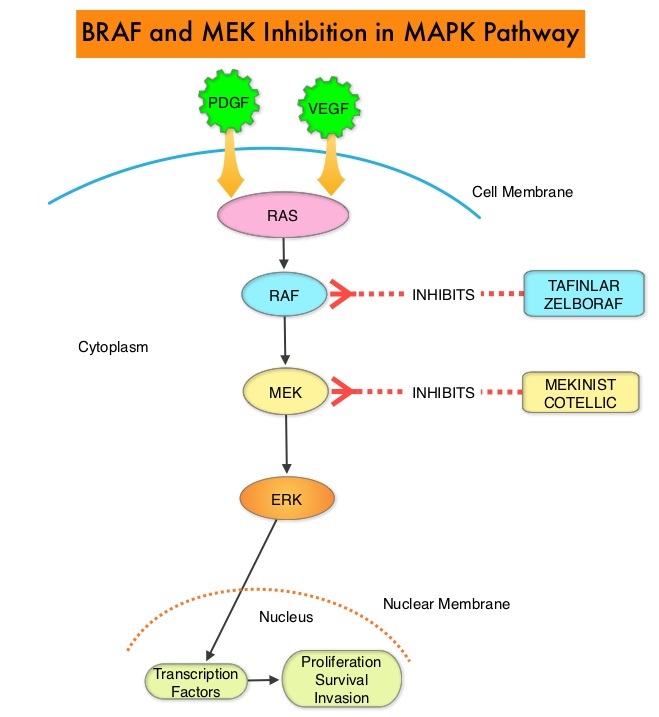
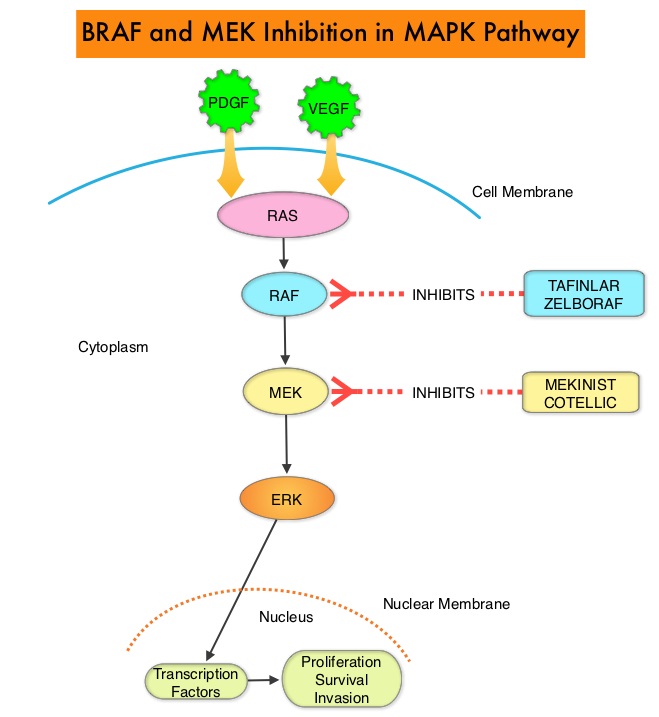
SUMMARY: It is estimated that in the US, approximately 76,380 new cases of melanoma will be diagnosed in 2016 and approximately 10,130 patients will die of the disease. The incidence of melanoma has been on the rise for the past three decades. The approval of the combination of MEKINIST® (Trametinib) and TAFINLAR® (Dabrafenib), to treat patients with advanced melanoma, was based on the understanding of the biological pathways of this malignancy. The Mitogen-Activated Protein Kinase pathway (MAPK pathway) is an important signaling pathway which enables the cell to respond to external stimuli. This pathway plays a dual role, regulating cytokine production and participating in cytokine dependent signaling cascade. The MAPK pathway of interest is the RAS-RAF-MEK-ERK pathway. The RAF family of kinases includes ARAF, BRAF and CRAF signaling molecules. BRAF is a very important intermediary of the RAS-RAF-MEK-ERK pathway. BRAF mutations have been demonstrated in 6%-8% of all malignancies. The most common BRAF mutation in melanoma is at the V600E/K site and is detected in approximately 50% of melanomas. In the BREAK-3 randomized phase III trial, TAFINLAR® (Dabrafenib), a selective oral BRAF inhibitor demonstrated a statistically significant improvement in Progression Free Survival (PFS) and Response Rate (RR) compared to Dacarbazine (DTIC), in patients with advanced BRAF V600E/K mutated melanoma. However, Squamous Cell carcinomas were seen in about 6% of the patients treated with BRAF inhibitors. Paradoxical activation of the MAPK pathway in cells without a BRAF mutation (BRAF wild-type cells) has been implicated in the emergence of drug resistance and increased incidence of BRAF-inhibitor induced skin tumors. The addition of a MEK inhibitor such as MEKINIST® (Trametinib) to a BRAF inhibitor such as TAFINLAR®, has addressed some of these limitations, in previously published studies, with improvement in PFS. MEKINIST® is a potent and selective inhibitor of MEK gene, which is downstream from RAF in the MAPK pathway and has been shown to significantly improve PFS, RR and Overall Survival (OS), when compared to chemotherapy, in advanced melanoma patients with BRAF V600E/K mutations. A combination of BRAF inhibitor TAFINLAR® and MEK inhibitor MEKINIST®, significantly improved OS, as compared with monotherapy with BRAF inhibitor, with a 31% relative reduction in the risk of death, in previously untreated patients with metastatic melanoma, with BRAF V600E or V600K mutations. This benefit was accomplished without increased overall toxicity. However, approximately 50% of patients progress after 12 months, although a significant number of patients experience long-term benefit without progression.

The purpose of this study was to identify the clinical predictors and analyze the clinical correlates of those who had prolonged survival. The authors in this manuscript report the updated OS results of a previously published study, in which BRAF inhibitor-naive patients were treated with a combination of TAFINLAR® and MEKINIST®. Additionally, the authors in this study also report the clinical factors associated with long term survival. The original open-label phase I and II study of combination therapy with TAFINLAR® and MEKINIST® (N Engl J Med. 2012;367:1694-1703) had four parts (parts A, B, C, and D). The present analysis evaluated the outcomes of a total of 78 BRAF inhibitor-naive patients, enrolled in part B (N= 24) and part C (N= 54), who received the phase III dose (optimal dose) of oral TAFINLAR® 150 mg twice daily combined with oral MEKINIST® 2 mg once daily. The remaining cohorts in parts B and C and all cohorts in parts A and D did not receive the phase III dose of the combination therapy and therefore are not described here.

It was noted that among patients in part B of the study, the 1 year Progression Free Survival (PFS) was 44%, 2 year PFS was 22% and 3 year PFS was 18%. Among patients in part C, the 1 year PFS was 41%, 2 year PFS was 25% and 3 year PFS was 21%. The median Overall Survival (OS) was 27.4 months in part B and 25 months in part C with an OS at 1, 2, and 3 years of 72%, 60%, and 47%, respectively, for part B and 80%, 51%, and 38%, respectively, for part C. Prolonged survival was associated with good prognostic factors such as metastases in fewer than three organ sites and lower baseline LDH (Lactate Dehydrogenase) levels. The 3 year OS was 62% in patients with normal baseline LDH levels and 63% in those who had a complete response.

The authors concluded that a combination of TAFINLAR® and MEKINIST® results in a median OS of more than 2 years in BRAF V600 mutation-positive metastatic melanoma, with approximately 20% of the patients remaining progression free at 3 years. Good prognostic features at baseline, were predictive of durable responses. With dilemma facing clinicians, whether to choose MAP Kinase inhibitors versus Immunotherapy, as first line therapy for this patient group, the longest follow up data presented, demonstrating durable benefit with a combination TAFINLAR® and MEKINIST®, should be very reassuring. Overall Survival and Durable Responses in Patients With BRAF V600-Mutant Metastatic Melanoma Receiving Dabrafenib Combined With Trametinib. Long GV, Weber JS, Infante JR, et al. JCO JCO629345; published online on January 25, 2016

FDA Approves COTELLIC® in Combination with ZELBORAF® for Advanced Melanoma

SUMMARY: The U.S. FDA on November 10, 2015, approved COTELLIC® (Cobimetinib) for the treatment of patients with unresectable or metastatic melanoma, with a BRAF V600E or V600K mutation, in combination with ZELBORAF® (Vemurafenib). The American Cancer Society estimates that for 2015, approximately 74,000 new melanomas will be diagnosed in the United States and about 10,000 people are expected to die of the disease. The Mitogen-Activated Protein Kinase pathway (MAPK pathway) is an important signaling pathway, which enables the cell to respond to external stimuli. This pathway plays a dual role regulating cytokine production and participating in cytokine dependent signaling cascade. The MAPK pathway of interest is the RAS-RAF-MEK-ERK pathway. The RAF family of kinases includes ARAF, BRAF and CRAF signaling molecules. BRAF is a very important intermediary of the RAS-RAF-MEK-ERK pathway. The most common BRAF mutation in melanoma is at the V600E/K site and is detected in approximately 50% of melanomas. In the BRIM 3 randomized, phase III study, ZELBORAF® (Vemurafenib), a selective oral inhibitor of mutated BRAF demonstrated significant improvement in Progression Free Survival and Overall Survival compared to Dacarbazine. Squamous cell carcinoma’s were seen in about 6% of the patients treated with BRAF inhibitors. Paradoxical activation of the MAPK pathway in cells without a BRAF mutation has been implicated in the emergence of drug resistance and increased incidence of BRAF-inhibitor induced skin tumors. MEK gene is downstream from RAF in the MAPK pathway. The addition of a selective inhibitor of MEK gene such as COTELLIC® (Cobimetinib) to a BRAF inhibitor such as ZELBORAF®, has addressed some of these limitations, in previously published studies, with improvement in Objective Response rates and decrease in the incidence of cutaneous secondary cancers.

coBRIM is an international, multicenter, randomized, phase III study in which the efficacy and safety of COTELLIC® combined with ZELBORAF®, was evaluated in previously untreated patients, with advanced BRAF-mutated melanoma. Four hundred and ninety five (N=495) patients were randomly assigned in a 1:1 ratio to receive ZELBORAF® 960 mg orally twice daily along with either COTELLIC® 60 mg orally once daily on days 1-21 (N=247) or matching placebo (N=248), of a 28 day cycle. BRAF V600 mutation-positive status was detected using the cobas 4800 BRAF V600 mutation test. The median age of the study group was 55 years and patient demographics in both treatment groups were well balanced. About 60% of the patients, had stage IV disease. The primary endpoint for the study was Progression Free Survival (PFS) and secondary endpoints included Overall Survival (OS), Objective Response Rate (ORR), and duration of response.

The primary analysis published in NEJM demonstrated a significant improvement in the median PFS (9.9 months vs 6.2 months) as well as ORR (68% vs 45%) with the combination of ZELBORAF® and COTELLIC® compared to ZELBORAF® and placebo respectively. In this updated analysis submitted to the FDA, the median PFS with the combination of ZELBORAF® and COTELLIC® was 12.3 versus 7.2 months for ZELBORAF® alone (HR= 0.56; P <0.001). There was also a statistically significant improvement in OS based on an interim analysis, with the median OS not reached (NR) in the combination group versus 17 months in the single agent ZELBORAF® group (HR=0.63; P=0.0019). The ORR were 70% and 50% in the ZELBORAF® and COTELLIC® and single agent ZELBORAF® groups, respectively (P<0.001).

The most common adverse reactions were diarrhea, photosensitivity reaction, nausea, pyrexia and vomiting. Treatment-related discontinuation rates in the combination and single agent groups were similar at 13% and 12%, respectively. It was concluded that in patients with unresectable or metastatic melanoma, with a BRAF V600E or V600K mutation, a combination of COTELLIC® and ZELBORAF® delays disease progression and improves survival compared to single agent ZELBORAF®. Update of progression-free survival (PFS) and correlative biomarker analysis from coBRIM: Phase III study of cobimetinib (cobi) plus vemurafenib (vem) in advanced BRAF-mutated melanoma. Larkin JMG, Yan Y, McArthur GA, et al. J Clin Oncol. 2015;33 (suppl; abstr 9006).

YERVOY® (Ipilimumab)

The FDA on October 28, 2015 approved YERVOY® injection for the additional indication of adjuvant treatment of patients with Cutaneous Melanoma, with pathologic involvement of regional lymph nodes of more than 1 mm, who have undergone complete resection, including total lymphadenectomy. YERVOY® is a product of Bristol-Myers Squibb Company.